エタンスルホニルクロリド
Ethanesulfonyl chloride
データを補完しています。しばらくしてからページを更新すると最新の内容を表示できます
基本情報
- CAS
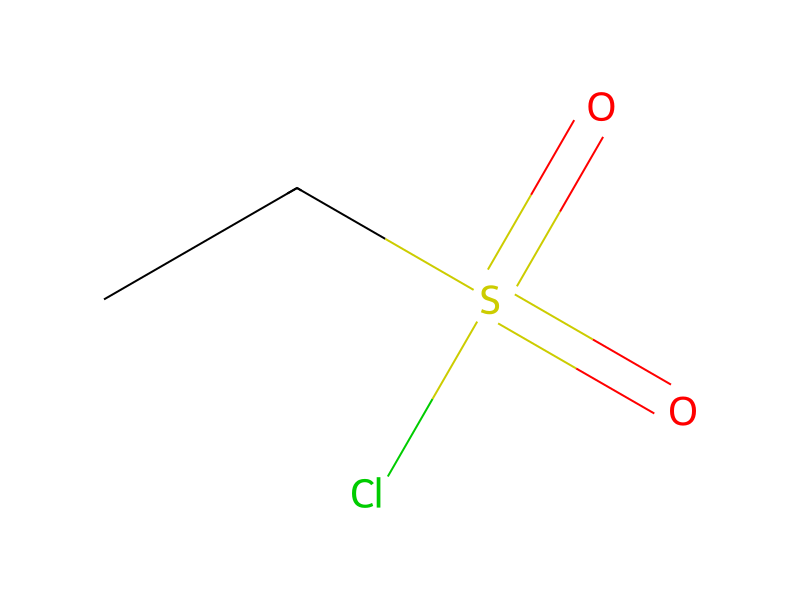
594-44-5- 標準SMILES
CCS(=O)(=O)Cl- InChIKey
FRYHCSODNHYDPU-UHFFFAOYSA-N- 分子式
- C2H5ClO2S
- 平均分子量
- 128.58 g/mol
- 単同位体質量
- 127.96987808
名称と識別子
- 優先名称
- Ethanesulfonyl chloride
- IUPAC
- ethanesulfonyl chloride
- 現地名
- エタンスルホニルクロリド
- 英語名
- Ethanesulfonyl chloride
- 分子式
- C2H5ClO2S
- 分子量
- 128.58
名称と別名
ETHANESULFONYL CHLORIDEEthylsulfonyl chlorideEthylsulfochloride1-Ethanesulfonyl chlorideEthanesulphonyl chlorideTL 77ethylsulfuryl chlorideEINECS 209-842-5NSC 8649UNII-B56ZOC898AEthane sulfochlorideBRN 0773865
名称をさらに表示
エタンスルホニルクロリドエチルスルホンクロリドエタン-1-スルホン酸クロリドエタンスルホン酸クロリドエタンスルホニル=クロリドエタンスルフォニルクロライド塩化エタンスルホニルエチルスルホニルクロリドエタンスルホニル クロリドethanesulflonyl chloridetl771,2-Ethane-disulfonicethylsulfurylchlorideTirofiban Impurity 72Ethyl sulfone chloride
B56ZOC898AHSDB 7487NSC-8649DTXSID0060486EC 209-842-54-04-00-00034 (Beilstein Handbook Reference)ETHANESULPHONYL CHLORIDE [HSDB]1-Ethanesulfonyl chloride(ChemID)
データベース識別子
- CAS
594-44-5- PubChem CID
- 11667
- DTXSID
DTXSID0060486- UNII
- B56ZOC898A
- EC Number
- 209-842-5
- Nikkaji
- J53.955D
物性
構造計算による物性補完中
- XLogP
- 0.8
- 極性表面積
- 42.5 Ų
- 水素結合供与体数
- 0
- 水素結合受容体数
- 2
- 回転可能結合数
- 1
- 重原子数
- 6
- 形式電荷
- 0
- 複雑度
- 108
実験および物理化学的性質
Chemical ClassesToxic Gases & Vapors -> Acid Halides
SpringerMaterials PropertiesBoiling point
Color/Form
Oil
Pale yellow
Solubility
Soluble in carbon disulfide
Slightly soluble (decomposes) in water and alcohol; very soluble in ether and dichloromethane.
Boiling Point177.5 °C
DecompositionWhen heated to decomposition it emits very toxic fumes of /hydrogen chloride and sulfur oxide/.
Vapor Pressure1.29 [mmHg]
Refractive IndexIndex of refraction: 1.4531 at 20 °C
Physical DescriptionPale yellow liquid; [HSDB] Colorless or yellow liquid; [MSDSonline]
物理化学的性質
- 融点
安全と法規制
安全情報は参考情報です。供給元の安全データシート(SDS)、適用法令、専門家による評価に代わるものではありません。
GHS分類
GHS Classification
Danger
H302 (96.6%): Harmful if swallowed [Warning Acute toxicity, oral]
P260, P261, P262, P264, P270, P271, P280, P284, P301+P317, P301+P330+P331, P302+P352, P302+P361+P354, P304+P340, P305+P354+P338, P316, P317, P319, P320, P321, P330, P361+P364, P362+P364, P363, P403+P233, P405, and P501 (click each P-code to see the statement)
Aggregated GHS information provided per 58 reports by companies from 11 notifications to the ECHA C&L Inventory. Each notification may be associated with multiple companies.
危険有害性情報
Regulatory Information
Status: Active Update: 06-01-2022 https://echa.europa.eu/registration-dossier/-/registered-dossier/11864
Ethanesulphonyl chloride: Does not have an individual approval but may be used under an appropriate group standard
Hazards Summary
A lachrymator; All rats exposed to 1273 ppm died within 30 to 130 minutes; 4-hr LC50 (rat) = approximately 86 ppm; Rats exposed to lethal concentrations have lacrimation, salivation, gasping, and pulmonary hemorrhage; [HSDB] Reacts violently with water; A corrosive substance that can cause injury to the skin, eyes, and respiratory tract; Inhalation may cause chemical pneumonitis; Effects in high-dose animal studies include acute pulmonary edema; [MSDSonline]
Hazard Classes and CategoriesAcute Tox. 4 (96.6%)
Skin, Eye, and Respiratory Irritations/Ethanesulfonyl chloride is a/ lachrymator ...
安全と保護具
Disposal Methods
SRP: The most favorable course of action is to use an alternative chemical product with less inherent propensity for occupational exposure or environmental contamination. Recycle any unused portion of the material for its approved use or return it to the manufacturer or supplier. Ultimate disposal of the chemical must consider: the material's impact on air quality; potential migration in soil or water; effects on animal, aquatic, and plant life; and conformance with environmental and public health regulations.
化学と産業
用途と製造
Uses
Used to make sulfonyl-substituted imides, methide lithium salts, and pentafluoroethanesulfonyl fluoride, a fluorinated surfactant; [HSDB]
Intermediate in the syntheses of new, low-cost, non-fluorinated, sulfonyl-substituted imide and methide lithium salts.
Intermediate in the preparation of the fluorinated surfactant pentafluoroethanesulfonyl fluoride.
U.S. ProductionProduction volumes for non-confidential chemicals reported under the Inventory Update Rule. [Table#7143]
Methods of Manufacturing
Alkanesulfonyl chlorides are manufactured from mercaptans or disulfides and chlorine using a loop reactor having an ejector, wherein mercaptan or disulfide is dispersed or dissolved into circulating aqueous solvent before the ejector and alowed to react with chlorine supplied through the aspirator of the ejector.
Mercaptans or disulfide in aqueous solvents are reacted with chlorine gas in dark to produce alkanesulfonyl chloride without chloro chain byproducts. Thus, ... ethyl mercaptan was reacted with ... chlorine gas over 4 hours in /the/ dark in ... pure water keeping the reaction temperature under 20 °C to give ethanesulfonyl chloride.
General Manufacturing InformationEthanesulfonyl chloride: ACTIVE
応用分野
用途有機合成原料。
上流・下流製品情報
上流原料
下流製品
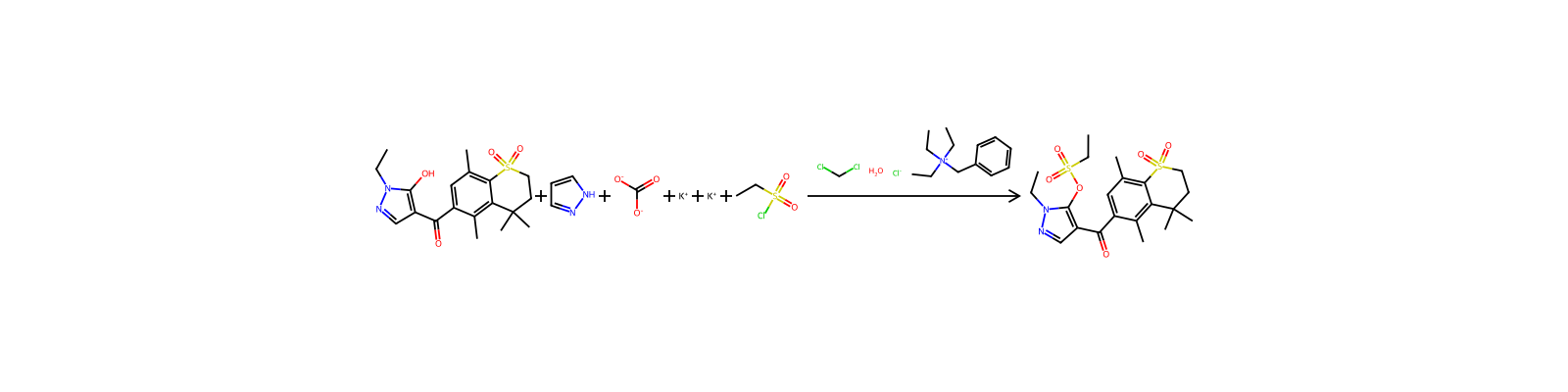
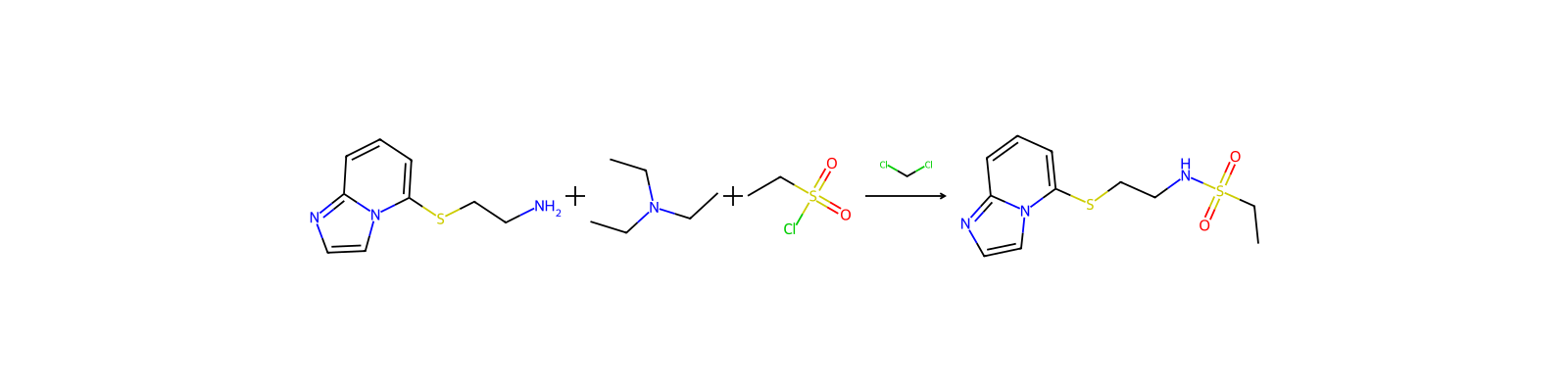
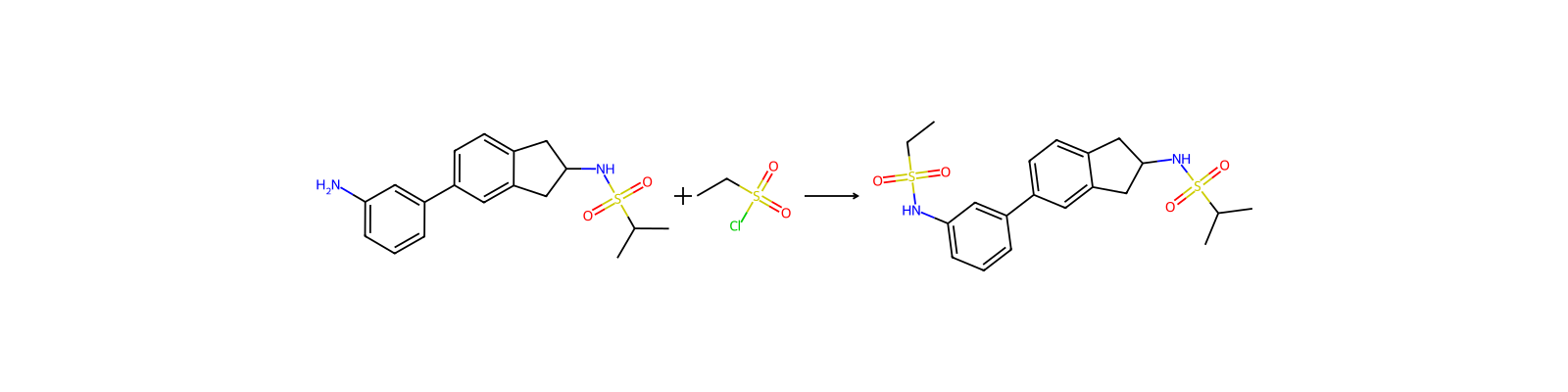
関連反応
704 件



化合物ノート
読み込み中…