
9-フェニルアントラセン
9-Phenylanthracene
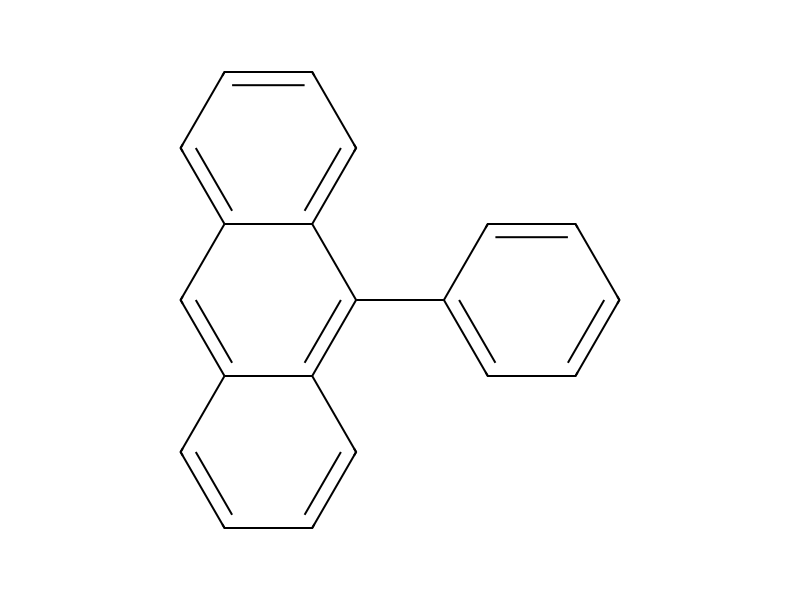
基本情報
- CAS
602-55-1- 標準SMILES
c1ccc(-c2c3ccccc3cc3ccccc23)cc1- InChIKey
LUBXLGUQZVKOFP-UHFFFAOYSA-N- 分子式
- C20H14
- 平均分子量
- 254.3 g/mol
- 単同位体質量
- 254.10955045
名称と識別子
- 優先名称
- 9-Phenylanthracene
- IUPAC
- 9-phenylanthracene
- 現地名
- 9-フェニルアントラセン
- 英語名
- 9-phenylanthracene
- 分子式
- C20H14
- 分子量
- 254.33
名称と別名
9-PHENYLANTHRACENEAnthracene, 9-phenyl-EINECS 210-019-8DC63Z5S1UPNSC 90796NSC-90796DTXSID3075254UNII-DC63Z5S1UPAnthracene, 9phenylRefChem:108184Anthracene, 9-phenyl-(8CI)DTXCID2042771
名称をさらに表示
9-フェニルアントラセン9-フェニルアントラセン標準品9‐フェニルアントラセン標準品9-phenylantracenePhenylanthracene,98%anthracene,9-phenyl-9-Phenylanthracene97%9-Phenylanthracene>9-phenylanthracene-D99-Phenylanthracene,98%9-Phenylanthracene 97%
Anthracene, 9-phenyl-(8CI)(9CI)210-019-8LUBXLGUQZVKOFP-UHFFFAOYSA-N602-55-1MFCD000012529-phenyl-anthraceneNSC907969-Phenylanthracene, 98%
データベース識別子
- CAS
602-55-1- PubChem CID
- 11766
- DTXSID
DTXSID3075254- UNII
- DC63Z5S1UP
- EC Number
- 210-019-8
- Nikkaji
- J79.700F
物性
構造計算による物性
- XLogP
- 6
- 極性表面積
- 0 Ų
- 水素結合供与体数
- 0
- 水素結合受容体数
- 0
- 回転可能結合数
- 1
- 重原子数
- 20
- 形式電荷
- 0
- 複雑度
- 292
実験および物理化学的性質
PolymersOther Classes -> Polycyclic Aromatic Hydrocarbons
SpringerMaterials PropertiesAngular frequency
LogP6.01
Vapor Pressure0.00000009 [mmHg]
Physical DescriptionSolid; [Aldrich MSDS]
物理化学的性質
- 融点
- 153 · 153-155 °C (lit.)
- 沸点
- 417 °C · 417 °C (lit.)
- 比重(密度)
- 1.118 · 1.1180 (estimate)
- 屈折率
- 1.704 · 1.7040 (estimate)
- 貯蔵温度
- Sealed in dry,Room Temperature
- 溶解性
- Chloroform (Slightly), Ethyl Acetate (Slightly)
- 外見
- 個体
- 色
- オフホワイトからペールブラウン
- BRN
- 1910570 · 1910570
- InChI
- InChI=1S/C20H14/c1-2-8-15(9-3-1)20-18-12-6-4-10-16(18)14-17-11-5-7-13-19(17)20/h1-14H
- InChIKey
安全と法規制
安全情報は参考情報です。供給元の安全データシート(SDS)、適用法令、専門家による評価に代わるものではありません。
GHS分類
GHS Classification
Warning
H400 (100%): Very toxic to aquatic life [Warning Hazardous to the aquatic environment, acute hazard]
P273, P391, and P501 (click each P-code to see the statement)
Aggregated GHS information provided per 39 reports by companies from 2 notifications to the ECHA C&L Inventory. Each notification may be associated with multiple companies.
危険有害性情報
Hazards SummaryMay cause irritation; [Aldrich MSDS] See POLYCYCLIC AROMATIC HYDROCARBONS.
Hazard Classes and CategoriesAquatic Acute 1 (100%)
安全データ
- wgk
- 3
- ridadr
- UN 3077 9/PG 3
- hs_code
- 29029090
- risk_code
- 50/53
- hazard_code
- N
- safety_code
- 60-61
- hazard_class
- 9
- Hazard Classifications
- Aquatic Acute 1Aquatic Chronic 1
- ストレージクラス
- 11 - Combustible Solids
化学と産業
応用分野
使用9-Phenylanthracene is used to synthesize organic light-emitting material intermediates.
調製方法
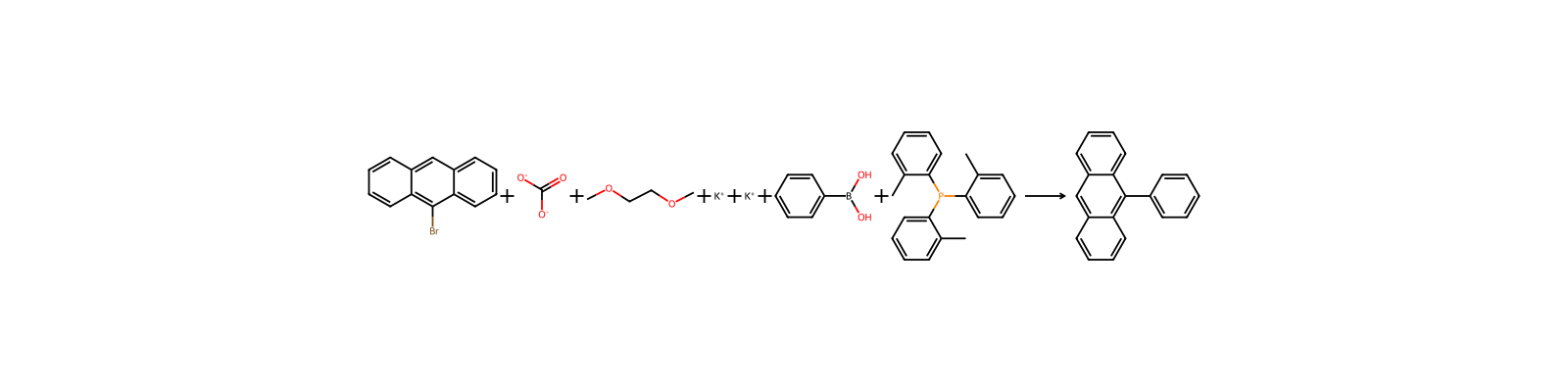
製造方法The synthesis of 9-phenylanthracene involved mixing phenylboronic acid (2.13 g, 17.49 mmol), 9-bromoanthracene (3 g, 11.66 mmol), Pd(PPh3)4 (140 mg, 0.12 mmol), K2CO3 (16 mL, 2 M), and ethanol (8 mL) in a 100 mL flask with anhydrous toluene (32 mL). The mixture was refluxed for 48 h under nitrogen. After cooled to room temperature, the reaction mixture was quenched with dilute hydrochloric acid solution and extracted with CH2Cl2. The organic extracts were dried over anhydrous MgSO4 and concentrated by rotary evaporation. The crude product was further purified by silica gel column chromatography (CH2Cl2/petroleum ether (1:4,v/v)) to get a white powder (2.43 g, 81.9 %). 1H NMR (500 MHz, CDCl3) δ 8.53 (s, 1H), 8.08 (d, J = 8.5 Hz, 2H), 7.70 – 7.67 (m, 2H), 7.63 – 7.54 (m, 3H), 7.50 – 7.45 (m, 4H), 7.37 (ddd, J = 8.7, 6.5, 1.2 Hz, 2H). EI-MS (m/z): Calculated for C20H14: 254.33. Found [M+]: 253.02.Synthesis of 9-phenylanthracene
純化方法Chromatograph it on alumina in *C6H6 and recrystallise it from AcOH or toluene. [Beilstein 5 H 725, 5 II 639, 5 III 2462.]
上流・下流製品情報
上流原料
関連反応
39,452 件


化合物ノート
読み込み中…