ホームMCPワークベンチSkills
ホームワークベンチ通知マイページ
llms.txt · MCPガイドプライバシーポリシー · 利用規約 · サポートv1.8.0
  1. ホーム
  2. /化合物

トリフェニルアミン

Triphenylamine

HCID 11775
ノートを作成反応を作成見積依頼を出す
印刷プレビュー
基本情報概要名称と識別子物性安全と法規制化学と産業関連反応化合物ノート
部分構造検索類似構造を探す

基本情報

CAS
603-34-9
標準SMILES
c1ccc(N(c2ccccc2)c2ccccc2)cc1
InChIKey
ODHXBMXNKOYIBV-UHFFFAOYSA-N
分子式
C18H15N
平均分子量
245.3 g/mol
単同位体質量
245.12044948

概要

Crystals or off-white lumpy solid. (NTP, 1992)

名称と識別子

優先名称
Triphenylamine
IUPAC
N,N-diphenylaniline
現地名
トリフェニルアミン
英語名
Triphenylamine
分子式
C18H15N
分子量
245.32

名称と別名

TRIPHENYLAMINEN,N-DiphenylanilineBenzenamine, N,N-diphenyl-Triphenyl amineN,N-DiphenylbenzenamineAmine, triphenylCCRIS 4887UNII-NJS65M2DS2HSDB 2098AI3-17278EINECS 210-035-5NJS65M2DS2
名称をさらに表示
トリフェニルアミンN,N-ジフェニルアニリンニトリロトリスベンゼンTriphenylaminTriphenylamine (TPA)Three anilineamine,triphenylTrisphenylamineTriphenylamine99+%Triphenylamine,98%Triphenylamine >
NSC 66458N,N-DIPHENYLANILINE [HSDB]NSC-66458DTXSID4022076N,NDiphenylanilineN,NDiphenylbenzenamineRefChem:191895Triphenyl amine (ACGIH)

データベース識別子

CAS
603-34-9
PubChem CID
11775
DTXSID
DTXSID4022076
ChEMBL
CHEMBL3819197
UNII
NJS65M2DS2
EC Number
210-035-5
Nikkaji
J54.231H

物性

構造計算による物性

XLogP
5.7
極性表面積
3.2 Ų
水素結合供与体数
0
水素結合受容体数
1
回転可能結合数
3
重原子数
19
形式電荷
0
複雑度
202

実験および物理化学的性質

PolymersNitrogen Compounds -> Amines, Polyaromatic
SpringerMaterials PropertiesAngular frequency
LogP · 3 件

log Kow= 5.74

5.74

5.22

Density · 4 件

0.774 at 32 °F (NTP, 1992) - Less dense than water; will float

0.774 @ 0 °C/0 °C

0.77 g/cm³

0.77

Color/Form · 3 件

MONOCLINIC CRYSTALS FROM METHANOL, ETHYL ACETATE, BENZENE

Exist as colorless monoclinic prisms

Colorless solid

Solubility · 4 件

less than 1 mg/mL at 68 °F (NTP, 1992)

Insoluble in water, slightly soluble in ethanol, and soluble in ethyl ether and benzene

Solubility in water: very poor

Insoluble

Flash Point · 2 件

180 °C

180 °C o.c.

Boiling Point · 4 件

657 to 658 °F at 760 mmHg ; 383-401 °F at 10-22 mmHg (NTP, 1992)

365 °C

365 °C

689 °F

Decomposition

安全と法規制

安全情報は参考情報です。供給元の安全データシート(SDS)、適用法令、専門家による評価に代わるものではありません。

GHS分類

GHS Classification · 6 件

Warning

H315 (100%): Causes skin irritation [Warning Skin corrosion/irritation]

P261, P264, P264+P265, P271, P280, P302+P352, P304+P340, P305+P351+P338, P319, P321, P332+P317, P337+P317, P362+P364, P403+P233, P405, and P501 (click each P-code to see the statement)

Aggregated GHS information provided per 49 reports by companies from 4 notifications to the ECHA C&L Inventory. Each notification may be associated with multiple companies.

Not Classified

Warning

危険有害性情報

Regulatory Information · 2 件

Chemical: Benzenamine, N,N-diphenyl-

Triphenyl amine: Does not have an individual approval but may be used under an appropriate group standard

Fire Hazards · 2 件

The flash point of this chemical has not been determined, but it is probably combustible. (NTP, 1992)

Combustible. Gives off irritating or toxic fumes (or gases) in a fire. Finely dispersed particles form explosive mixtures in air.

Health HazardsExcerpt from NIOSH Pocket Guide for Triphenylamine:
Hazards SummaryEastman Kodak reported no adverse health effects after extensive use of this chemical. [HSDB] A mild skin and eye irritant; [ICSC]
Reactive GroupAmines, Phosphines, and Pyridines
Special ReportsACGIH. Documentation of the threshold limit values and biological exposure indices; 6th Ed: 1658-1659 (1991). TLV-TWA, 5 mg/cu m.
Reactivity Profile · 1 件

TRIPHENYLAMINE neutralizes acids in exothermic reactions to form salts plus water. May be incompatible with isocyanates, halogenated organics, peroxides, phenols (acidic), epoxides, anhydrides, and acid halides. Flammable gaseous hydrogen may be generated in combination with strong reducing agents, such as hydrides.

化学と産業

用途と製造

Uses · 2 件

Produced by Eastman Kodak to coat film bases; [HSDB]

Coated on film bases as primary photoconductor

General Manufacturing Information · 2 件

Benzenamine, N,N-diphenyl-: ACTIVE

Industrial experience with triphenylamine at the Eastman Kodak Company demonstrated that no injuries occurred as a result of handling of the compound and that no special precautions were necessary for triphenylamine other than those used for the routine control of organic compounds.

応用分野 · 2 件

解説トリフェニルアミン,板状晶.融点127 ℃,沸点365 ℃.エーテル,ベンゼンに可溶.森北出版「化学辞典(第2版)

使用Organic light-emitting diode (OLED) devices have received much attention, because they are expected to be a next generation display and light source, thanks to lightweight and flexible organic materials. Triphenylamine is a propeller-like structural chromophore with a nitrogen atom center. The compound has a large steric hindrance and hyper conjugation electronic effect, which can enhance the stability of the nitrogen atomic radical. Triphenylamine materials also have a high hole mobility due to their unique free radicals nature. Many hole transport materials based on triphenylamine derivatives (TPD) are widely usable,because they are heat-resistant and amorphous.In addition to the TPDs, oxadiazole derivatives (PBD) having an electron transport property, Alq3 as a host material,and blue emissive distylyl derivatives are fundamental materials for amorphous OLED devices. It is used in the manufacture of photographic film. Triphenylamines (TPAs) are highly fluorescent compounds that are efficient to induce cell death upon visible light excitation. Triphenylamine is used in organic light-emitting diode as hole-transporters and as a pharmaceutical intermediate. It is coated on film bases as primary photoconductor.

調製方法

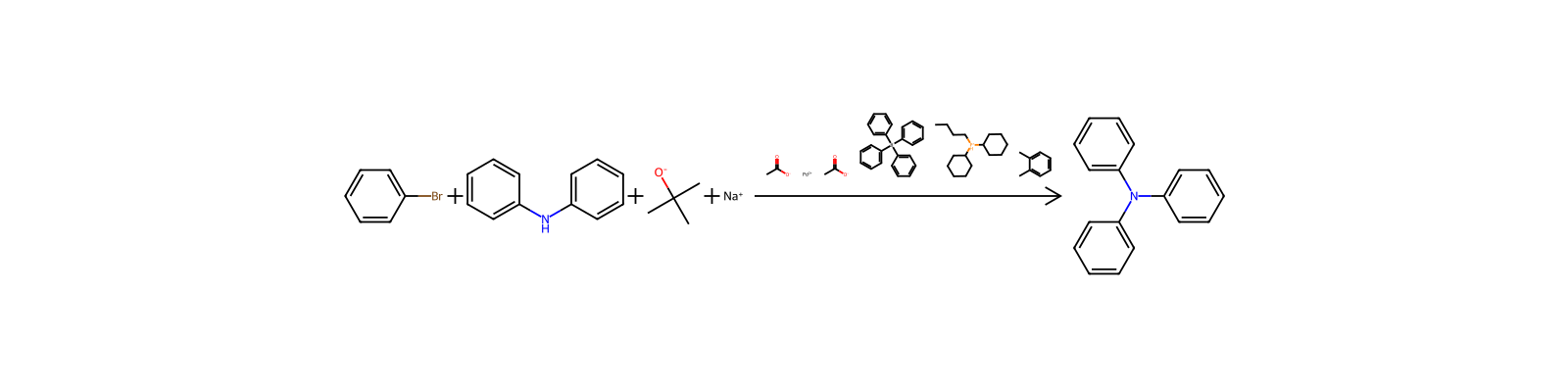
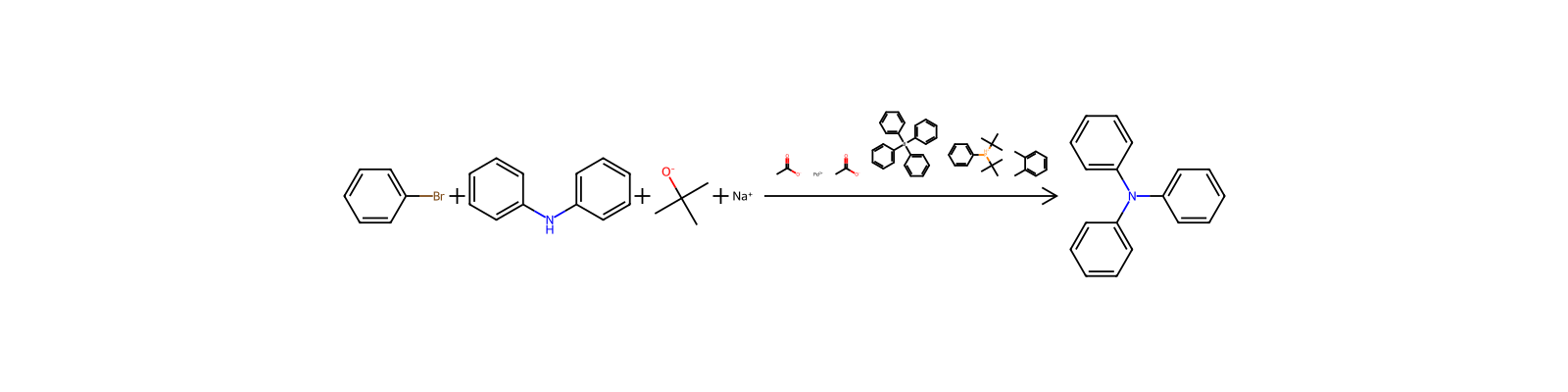
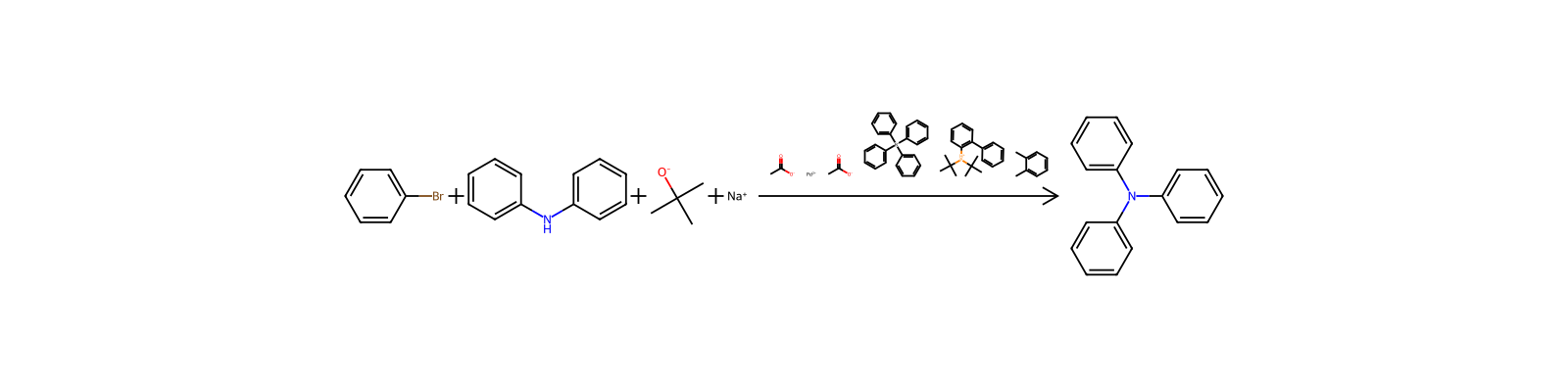
製造方法Triphenylamine can be prepared by the arylation reaction of diphenylamine.

純化方法Crystallise the amine from EtOH or from *benzene/absolute EtOH, diethyl ether and pet ether. It is sublimed under vacuum and carefully dried in a vacuum line. Store it in the dark under nitrogen. [Beilstein 12 IV 276.]

関連反応

83 件
反応記録を作成
HRID 13886 の反応式
HRID 13886生成物としてuspto-grants-2010_06
HRID 13905 の反応式
HRID 13905生成物としてuspto-grants-2010_06
HRID 13907 の反応式
HRID 13907生成物としてuspto-grants-2010_06
HRID 13908 の反応式
HRID 13908生成物としてuspto-grants-2010_06
HRID 13909 の反応式
HRID 13909生成物としてuspto-grants-2010_06
HRID 13910 の反応式
HRID 13910生成物としてuspto-grants-2010_06
HRID 35013 の反応式
HRID 35013生成物としてuspto-grants-1988_08
HRID 53409 の反応式
HRID 53409反応物としてuspto-grants-1997_04
1 / 11 ページ

化合物ノート

読み込み中…

このページの内容基本情報概要名称と識別子物性安全と法規制化学と産業関連反応化合物ノート
その他の操作
ノートを作成反応を作成見積依頼を出す
When heated to decomposition it emits toxic fumes of /nitrogen oxides/.
Melting Point · 4 件

261 °F (NTP, 1992)

127 °C

126.5 °C

261 °F

Vapor Pressure · 2 件

0.000392 [mmHg]

3.92X10⁻⁴ mm Hg @ 25 °C

Refractive IndexIndex of refraction= 1.353 @ 16 °C/D

物理化学的性質

融点
124 · 124-128 °C (lit.)
沸点
347 · 347-348 °C (lit.)
比重(密度)
0.774 · 0.7740
屈折率
1.353 · 1.3530 (estimate)
闪点
365 °C · 365°C
貯蔵温度
Sealed in dry,Room Temperature
溶解性
クロロホルム(わずかに)
酸解離定数(Pka)
-3.04 · -3.04±0.30(Predicted)
外見
結晶性粉末
色
オフホワイトからややベージュ
水溶解度
不溶性
BRN
2050487 · 2050487
安定性
安定。可燃性。強力な酸化剤とは相容れない。
InChI
1S/C18H15N/c1-4-10-16(11-5-1)19(17-12-6-2-7-13-17)18-14-8-3-9-15-18/h1-15H
InChIKey
ODHXBMXNKOYIBV-UHFFFAOYSA-N
SMILES
c1ccc(cc1)N(c2ccccc2)c3ccccc3
CAS データベース
603 · 603-34-9(CAS DataBase Reference)
NISTの化学物質情報
Benzenamine, N,N-diphenyl-(603-34-9)
EPAの化学物質情報
Triphenylamine (603-34-9)

化学的性質

化学的特性Triphenylamine is a colorless crystalline solid.

Chemical DangersDecomposes on burning. This produces toxic fumes including nitrogen oxides. The solution in water is a weak base. Reacts with acids, strong oxidants and halogens.
Physical DangersDust explosion possible if in powder or granular form, mixed with air.
Air and Water ReactionsInsoluble in water.
NIOSH RecommendationsRecommended Exposure Limit: 10 Hr Time-Weighted Avg: 5 mg/cu m.
Hazard Classes and Categories · 2 件

Skin Irrit. 2 (100%)

Acute toxicity (Oral) - Category 5

安全と保護具

Fire Fighting · 2 件

Fires involving this material can be controlled with a dry chemical, carbon dioxide, foam or Halon extinguisher. (NTP, 1992)

Use water spray, powder, alcohol-resistant foam, carbon dioxide.

First Aid Measures · 4 件

Fresh air, rest.

Rinse and then wash skin with water and soap.

First rinse with plenty of water for several minutes (remove contact lenses if easily possible), then refer for medical attention.

Rinse mouth.

First Aid · 2 件

EYES: First check the victim for contact lenses and remove if present. Flush victim's eyes with water or normal saline solution for 20 to 30 minutes while simultaneously calling a hospital or poison control center. Do not put any ointments, oils, or medication in the victim's eyes without specific instructions from a physician. IMMEDIATELY transport the victim after flushing eyes to a hospital even if no symptoms (such as redness or irritation) develop.

(General first aid procedures)

Safe StorageSeparated from acids, strong oxidants and halogens.
Nonfire Spill Response · 1 件

SMALL SPILLS AND LEAKAGE: If a spill of this chemical occurs, FIRST REMOVE ALL SOURCES OF IGNITION, then you should dampen the solid spill material with acetone and transfer the dampened material to a suitable container. Use absorbent paper dampened with acetone to pick up any remaining material. Seal your contaminated clothing and the absorbent paper in a vapor-tight plastic bag for eventual disposal. Solvent wash all contaminated surfaces with acetone followed by washing with a soap and water solution. Do not reenter the contaminated area until the Safety Officer (or other responsible person) has verified that the area has been properly cleaned.

Disposal Methods · 1 件

SRP: At the time of review, criteria for land treatment or burial (sanitary landfill) disposal practices are subject to significant revision. Prior to implementing land disposal of waste residue (including waste sludge), consult with environmental regulatory agencies for guidance on acceptable disposal practices.

Spillage DisposalPersonal protection: particulate filter respirator adapted to the airborne concentration of the substance. Sweep spilled substance into covered sealable containers. If appropriate, moisten first to prevent dusting.
Preventive Measures · 2 件

The worker should wash daily at the end of each work shift.

Workers whose clothing may have become contaminated should change into uncontaminated clothing before leaving the work premises.

Eye PreventionWear safety goggles.
Fire PreventionNO open flames. Closed system, dust explosion-proof electrical equipment and lighting. Prevent deposition of dust.
Inhalation RiskA harmful concentration of airborne particles can be reached quickly when dispersed, especially if powdered.
Skin PreventionProtective gloves.

毒性情報

Target OrgansSkin
Exposure Routes · 2 件

The substance can be absorbed into the body by ingestion.

inhalation, ingestion, skin and/or eye contact

Signs and Symptoms · 3 件

Redness.

Redness.

In Animals: irritation skin

ICSC Environmental DataEnvironmental effects from the substance have not been investigated adequately.
Human Toxicity Excerpts · 1 件

Industrial experience with triphenyl amine ... demonstrated that no injuries occurred as a result of handling of the compound & that no special precautions were necessary for triphenyl amine other than those used for the routine control of organic compounds.

Non-Human Toxicity Excerpts · 2 件

SCREENING TEST IN RATS INDICATED ORAL LD50...TO BE BETWEEN 3200-6400 MG/KG, WHILE IN MICE LD50 VARIED FROM 1600-3200 MG/KG. INTRAPERITONEALLY IN BOTH SPECIES LD50 WAS GREATER THAN 6400 MG/KG. DEATHS OCCURRED IN...ORAL ADMIN IN RATS UP TO 6 DAYS AFTER ADMIN & UP TO 2 DAYS IN...MICE. IP NO DEATHS OCCURRED @ 6400 MG/KG LEVEL.

A 10% SOLN OF COMPD IN MIXT OF 9:1 ACETONE: CORN OIL APPLIED TO DEPILATED SKIN OF GUINEA PIG UNDER OCCLUSIVE COVERING @ CONCN OF 5-20 ML/KG FOR 24 HR PRODUCED ONLY SLIGHT ERYTHEMA WITHOUT EDEMA. CRYSTALS OF SOLID COMPD PLACED IN CONJUNCTIVAL SAC OF RABBIT'S EYE PRODUCED NO EVIDENCE OF DAMAGE AT ANY TIME DURING 2-WEEK PERIOD. ...WAS FOUND NOT TO BE SKIN SENSITIZER IN GUINEA PIG.

Probable Routes of Human ExposureINFORMATION MADE AVAILABLE BY EASTMAN KODAK COMPANY REVEALS THAT NO INJURIES HAVE OCCURRED AS RESULT OF HANDLING OF TRIPHENYL AMINE & THAT NO SPECIAL PRECAUTIONS ARE NECESSARY OTHER THAN THOSE USED FOR ROUTINE HANDLING OF ORGANIC COMPD.
Antidote and Emergency Treatment · 2 件

Basic treatment: Establish a patent airway. Suction if necessary. Watch for signs of respiratory insufficiency and assist ventilations if necessary. Administer oxygen by nonrebreather mask at 10 to 15 L/min. Monitor for pulmonary edema and treat if necessary ... . Monitor for shock and treat if necessary ... . Anticipate seizures and treat if necessary ... . For eye contamination, flush eyes immediately with water. Irrigate each eye continuously with normal saline during transport ... . Do not use emetics. For ingestion, rinse mouth and administer 5 ml/kg up to 200 ml of water for dilution if the patent can swallow, has a strong gag reflex, and does not drool. Administer activated charcoal ... . Cover skin burns with dry sterile dressings after decontamination ... . /Organic bases/Amines and related compounds/

Advanced treatment: Consider orotracheal or nasotracheal intubation for airway control in the patient who is unconscious or has severe pulmonary edema. Positive-pressure ventilation techniques with a bag-valve-mask device may be beneficial. Monitor cardiac rhythm and treat arrhythmias as necessary ... . Start an IV with D5W /SRP: "To keep open", minimal flow rate/. Use lactated Ringer's if signs of hypovolemia are present. Watch for signs of fluid overload. Administer 1% solution methylene blue if patient is symptomatic with severe hypoxia, cyanosis, and cardiac compromise not responding to oxygen. ... . Consider drug therapy for pulmonary edema ... . For hypotension with signs of hypovolemia, administer fluid cautiously. If patient is unresponsive to these measures, vasopressors may be helpful. Watch for signs of fluid overload ... . Treat seizures with diazepam (Valium) ... . Use proparacaine hydrochloride to assist eye irrigation ... . /Organic bases/Amines and related compounds/

Non-Human Toxicity Values · 5 件

LD50 Mouse Oral 1600-3200 mg/kg Deaths were /SRP: occurred/ up to 2 days after admin.

LD50 Rat Oral 3200-6400 mg/kg Deaths were /SRP: occurred/ up to 11 days after admin.

LD50 Rat & Mouse Intraperitoneal >6400 mg/kg

LD50 Rat oral 3200 mg/kg

LD50 Mouse oral 1600 mg/kg

安全データ

OEB
B
OEL
TWA: 5 mg/m3
wgk
2
tsca
TSCA listed
rtecs
YK2680000
hs_code
29214980
risk_code
36/38-36/37/38-38-36
安衛法
57,57-2
hazard_code
Xi
hazard_note
Irritant
safety_code
26-28-37/39-26,37/39
ストレージクラス
11 - Combustible Solids
有毒物質データの
603-34-9(Hazardous Substances Data)

毒性と防護

毒性LD50 3200 mg/kg(ラット,経口).

上流・下流製品情報

上流原料

ジフェニルアミンアニリンブロモベンゼン塩酸

下流製品

ビス(4-ホルミルフェニル)フェニルアミンN,N-ビス(4-ヨードフェニル)アニリントリス(4-ヨードフェニル)アミン4-フルオロ-N,N-ジフェニルアニリン9-フェニルカルバゾール4-ヨードトリフェニルアミン[4-(4,4,5,5-テトラメチル-1,3,2-ジオキサボロラン-2-イル)フェニル]ジフェニルアミントリス(4-アミノフェニル)アミンN,N-ビス(4-ビフェニルイル)-N-(4-ブロモフェニル)アミンBenzoic acid, 4,4'-(phenylimino)bis-