ホームMCPワークベンチSkills
ホームワークベンチ通知マイページ
llms.txt · MCPガイドプライバシーポリシー · 利用規約 · サポートv1.8.0
  1. ホーム
  2. /化合物

m-トルアルデヒド

3-Methylbenzaldehyde

HCID 12105
ノートを作成反応を作成見積依頼を出す
印刷プレビュー
基本情報概要名称と識別子物性安全と法規制化学と産業関連反応化合物ノート
部分構造検索類似構造を探す

基本情報

CAS
620-23-5
標準SMILES
Cc1cccc(C=O)c1
InChIKey
OVWYEQOVUDKZNU-UHFFFAOYSA-N
分子式
C8H8O
平均分子量
120.15 g/mol
単同位体質量
120.05751487

概要

M-tolualdehyde is a tolualdehyde compound with the methyl substituent at the 3-position. It has a role as a plant metabolite.

名称と識別子

優先名称
3-Methylbenzaldehyde
IUPAC
3-methylbenzaldehyde
現地名
m-トルアルデヒド
英語名
m-Tolualdehyde
分子式
C8H8O
分子量
120.15

名称と別名

3-MethylbenzaldehydeM-TOLUALDEHYDE620-23-53-tolualdehydeBenzaldehyde, 3-methyl-m-Methylbenzaldehyde3-Tolylaldehydem-Tolyl aldehydeDTXSID6060717OWH6650C4YNSC-1244FEMA NO. 3068, M-
名称をさらに表示
m-トルアルデヒド1-メチル-3-ホルミルベンゼン3-トルアルデヒド3-メチルベンズアルデヒドm-メチルベンズアルデヒド1-ホルミル-3-メチルベンゼン3-メチルベンゼンカルボアルデヒドmメチルベンズアルデヒド3‐メチルベンズアルデヒドM-トルアルデヒド, 97%, STAB. WITH 0.1% HYDROQUINONEM-トルアルデヒド, STABILIZEDm-トルイル酸アルデヒド3-METHYLBENZALDEHYDE (STABILISED WITH HY3-Tolulaldehydem-TolulaldehydeAKOS BBS-00003269M-TOLUIC ALDEHYDE
NSC-89859CHEBI:28476RefChem:800392DTXCID1043203210-632-0m-Toluylaldehyde3-methyl-benzaldehydeM-FORMYLTOLUENE

データベース識別子

CAS
620-23-5
PubChem CID
12105
DTXSID
DTXSID6060717
ChEMBL
CHEMBL4475423
ChEBI
CHEBI:28476
UNII
OWH6650C4Y
EC Number
210-632-0
Nikkaji
J45.959C

物性

構造計算による物性

XLogP
2
極性表面積
17.1 Ų
水素結合供与体数
0
水素結合受容体数
1
回転可能結合数
1
重原子数
9
形式電荷
0
複雑度
98.7

実験および物理化学的性質

SpringerMaterials Properties13C nuclear magnetic resonance spectrum
Density1.0189 g/cu cm at 21 °C
Flavoring AgentsEU Flavoring substances
SolubilityMiscible with ethanol, ethyl ether; very soluble in acetone; soluble in benzene, chloroform
Boiling Point · 2 件

199 °C

199.00 °C. @ 760.00 mm Hg

Melting Point< 25 °C
Refractive IndexIndex of refraction: 1.5413 at 21 °C/D
Physical DescriptionSolid

物理化学的性質

融点
25 °C · <25 °C
沸点
199 °C · 199 °C(lit.)
比重(密度)
1.019 g/mL · 1.019 g/mL at 25 °C(lit.)
屈折率
20 · n20/D 1.541(lit.)
FEMA

安全と法規制

安全情報は参考情報です。供給元の安全データシート(SDS)、適用法令、専門家による評価に代わるものではありません。

GHS分類

GHS Classification · 4 件

Warning

H319 (98.5%): Causes serious eye irritation [Warning Serious eye damage/eye irritation]

P264+P265, P280, P305+P351+P338, and P337+P317 (click each P-code to see the statement)

Aggregated GHS information provided per 272 reports by companies from 9 notifications to the ECHA C&L Inventory.

危険有害性情報

Regulatory Information · 3 件

Chemical: Benzaldehyde, 3-methyl-

Commission Regulation (EC) No 1565/2000 (Repealed by Com. Implementing Reg. (EU) No 872/2012)

Benzaldehyde, 3-methyl-: Does not have an individual approval but may be used under an appropriate group standard

Other Safety InformationIMAP assessments - Benzaldehyde, 3-methyl-: Human health tier I assessment
Hazard Classes and CategoriesEye Irrit. 2A (98.5%)

安全と保護具

Disposal Methods · 1 件

SRP: The most favorable course of action is to use an alternative chemical product with less inherent propensity for occupational exposure or environmental contamination. Recycle any unused portion of the material for its approved use or return it to the manufacturer or supplier. Ultimate disposal of the chemical must consider: the material's impact on air quality; potential migration in soil or water; effects on animal, aquatic, and plant life; and conformance with environmental and public health regulations.

毒性情報

Environmental Fate · 3 件

化学と産業

薬理情報

Metabolism/Metabolites · 3 件

... m-Xylene (m-XYL) has been shown to alter cytochrome P-450 (CYP) activity in an organ- and isozyme-specific manner. The purpose of this work was to determine if the metabolism of m-XYL to the inhibitory metabolite m-tolualdehyde (m-ALD) is the cause of inhibition of CYP isozymes following in vivo inhalation exposure to m-XYL (100, 300 ppm), 3-methylbenzyl alcohol (3-MBA) (50, 100 ppm), or m-ALD (50, 100 ppm). A single 6-hr inhalation exposure of rats to m-XYL inhibited pulmonary CYPs 2B1, 2E1, and 4B1 in a dose-dependent manner. Inhalation of 3-MBA inhibited pulmonary CYPs 2B1 and 4B1 in a dose-dependent manner. m-ALD inhibited pulmonary CYPs 2B1 and 2E1 in a dose-dependent manner, while 4B1 activity was increased dose dependently. Nasal mucosa CYP 2B1 and 2E1 activity was inhibited following exposure to m-XYL dose dependently, 3-MBA inhibited nasal mucosa CYPs 2E1 and 4B1 dose dependently. CYPs 2B1, 2E1, and 4B1 were inhibited in a dose-dependent fashion following inhalation of m-ALD. Following high-performance liquid chromatography (HPLC) analysis, m-ALD was detected after in vivo exposure to m-XYL, m-ALD, and 3-MBA in a dose-dependent manner, with highest m-ALD levels in the nasal mucosa and lung. Alteration of cytochrome P-450 activity by m-XYL could result in increased or decreased toxicity, changing the metabolic profiles of xenobiotics in coexposure scenarios in an organ-specific manner.

p-Tolualdehyde was oxidized to p-toluic acid by resting cells of pseudomonas aeruginosa. Perillaldehyde dehydrogenase, isolated from soil pseudomonad, catalyzed the oxidn of m- & p-tolualdehyde but not o-tolualdehyde.

Aldehydes are readily oxidized to organic acids. Oxidation of aldehydes is catalyzed by aldehyde dehydrogenase, which has been found in the brain, erythrocytes, liver, kidney, heart, and placenta. /Aldehydes/

Cellular LocationsCytoplasm

用途と製造

General Manufacturing InformationBenzaldehyde, 3-methyl-: ACTIVE

応用分野

使用m-Tolualdehyde is an aromatic aldehyde used as a fragrance agent in food and cosmetics. 3-Methylbenzaldehyde is also used as a reagent in the preparation of a wide range of pharmaceutical compou nds such as anti-inflammatory agents.

関連反応

95 件
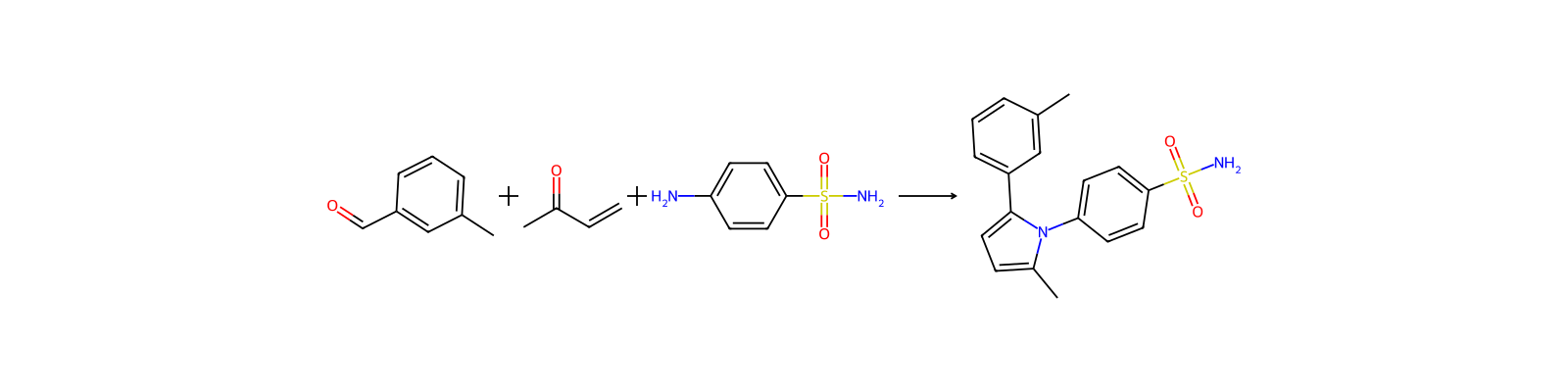
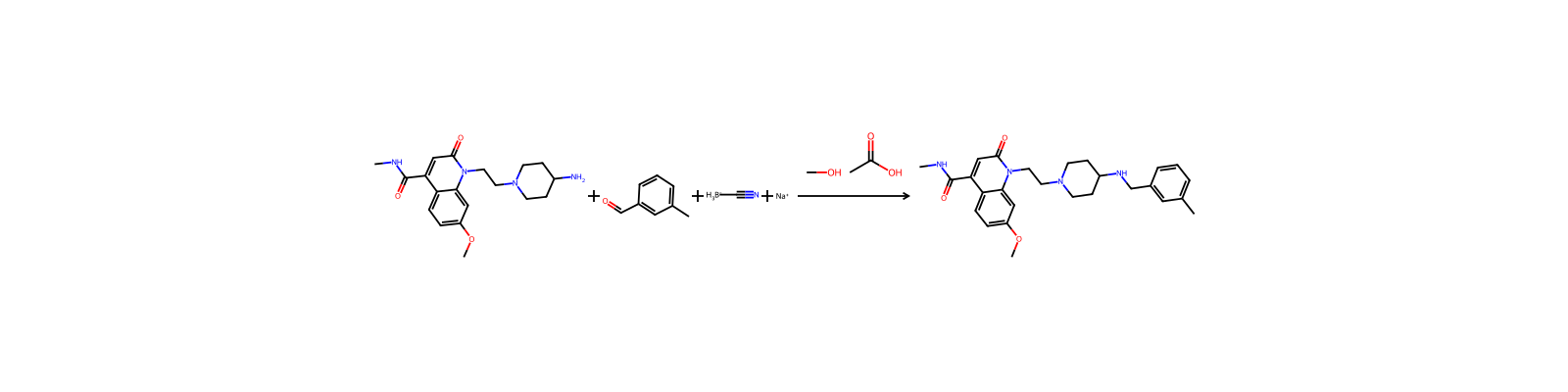
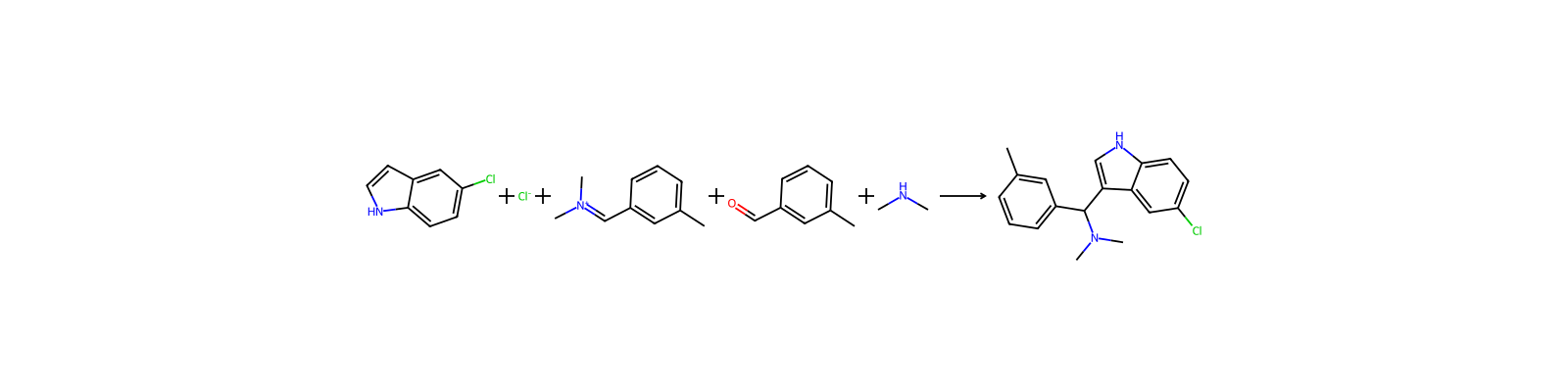
反応記録を作成
HRID 9070 の反応式
HRID 9070反応物としてuspto-grants-2006_08
HRID 18645 の反応式
HRID 18645反応物としてuspto-grants-2010_06
HRID 30236 の反応式
HRID 30236反応物としてuspto-grants-2008_09
HRID 33066 の反応式
HRID 33066反応物としてuspto-grants-2008_09
HRID 39948 の反応式
HRID 39948反応物としてuspto-grants-2013_09
HRID 77663 の反応式
HRID 77663反応物としてuspto-grants-2014_09
HRID 112451 の反応式
HRID 112451反応物としてTraining data from https://doi.org/10.1039/C8SC04228D (2/10)
HRID 123862 の反応式
HRID 123862反応物としてTraining data from https://doi.org/10.1039/C8SC04228D (2/10)
1 / 12 ページ

化合物ノート

読み込み中…

このページの内容基本情報概要名称と識別子物性安全と法規制化学と産業関連反応化合物ノート
その他の操作
ノートを作成反応を作成見積依頼を出す
3068 · 3068 | TOLUALDEHYDES (MIXED O,M,P)
闪点
173 °F · 173 °F
貯蔵温度
2 · Inert atmosphere,2-8°C
溶解性
クロロホルム(微量)、酢酸エチル(微量)
外見
液体
比重
1.019 · 1.019
色
無色~茶黄色
臭い (Odor)
100 %で。甘いフルーティーチェリーベンズアルデヒドフェノール · 100.00%で。甘いフルーティーチェリーベンズアルデヒドフェノール
においのタイプ
フルーティーな
水溶解度
わずかに溶ける
BRN
741964 · 741964
Henry's Law Constant
3.5 · 3.5×10-1 mol/(m3Pa) at 25℃, Brockbank (2013)
主な用途
洗浄剤化粧品フレーバーそして香料食品および飲料パーソナルケア
化粧品成分の機能
香料
InChI
1S/C8H8O/c1-7-3-2-4-8(5-7)6-9/h2-6H,1H3
InChIKey
OVWYEQOVUDKZNU-UHFFFAOYSA-N
SMILES
[H]C(=O)c1cccc(C)c1
LogP
2.1 · 2.10
CAS データベース
620 · 620-23-5(CAS DataBase Reference)
NISTの化学物質情報
3 · 3-CH3C6H4CHO(620-23-5)
EPAの化学物質情報
3 · Benzaldehyde, 3-methyl- (620-23-5)

化学的性質

化学的特性clear yellow to brownish liquid

TERRESTRIAL FATE: Based on a classification scheme(1), an estimated Koc value of 53(SRC), determined from a structure estimation method(2), indicates that 3-methylbenzaldehyde is expected to have high mobility in soil(SRC). Volatilization of 3-methylbenzaldehyde from moist soil surfaces is expected to be an important fate process(SRC) given an estimated Henry's Law constant of 3.0X10⁻⁵ atm-cu m/mole(SRC), developed using a fragment constant estimation method(3). 3-Methylbenzaldehyde is not expected to volatilize from dry soil surfaces(SRC) based upon an estimated vapor pressure of 0.38 mm Hg(SRC), determined from a fragment constant method(4). Based on limited information, 3-methylbenzaldehyde is expected to biodegrade in soil(SRC). A Pseudomonas strain was able to utilize 3-methylbenzaldehyde as the sole carbon source(5); a yeast strain grown with both this compound and either sucrose or pyruvate biodegraded 3-methylbenzaldehyde to the respective aromatic carbinol or alcohol(6).

AQUATIC FATE: Based on a classification scheme(1), an estimated Koc value of 53(SRC), determined from a structure estimation method(2), indicates that 3-methylbenzaldehyde is not expected to adsorb to suspended solids and sediment(SRC). Volatilization from water surfaces is expected(3) based upon an estimated Henry's Law constant of 3.0X10⁻⁵ atm-cu m/mole(SRC), developed using a fragment constant estimation method(4). Using this Henry's Law constant and an estimation method(3), volatilization half-lives for a model river and model lake are 1.5 and 14 days, respectively(SRC). According to a classification scheme(5), an estimated BCF of 11(SRC), from an estimated log Kow of 2.26(6) and a regression-derived equation(7), suggests the potential for bioconcentration in aquatic organisms is low(SRC). 3-Methylbenzaldehyde is not expected to undergo hydrolysis in the environment due to the lack of functional groups that hydrolyze under environmental conditions(3). Based on limited data, biodegradation of 3-methylbenzaldehyde will take place in water. A Pseudomonas strain was able to utilize 3-methylbenzaldehyde as the sole carbon source(8); a yeast strain grown with both this compound and either sucrose or pyruvate biodegraded 3-methylbenzaldehyde to the respective aromatic carbinol or alcohol(9).

ATMOSPHERIC FATE: According to a model of gas/particle partitioning of semivolatile organic compounds in the atmosphere(1), 3-methylbenzaldehyde, which has an estimated vapor pressure of 0.38 mm Hg at 25 °C(SRC), determined from a fragment constant method(2), is expected to exist solely as a vapor in the ambient atmosphere. Vapor-phase 3-methylbenzaldehyde is degraded in the atmosphere by reaction with photochemically-produced hydroxyl radicals(SRC); the half-life for this reaction in air is estimated to be 23 hrs(SRC), calculated from its rate constant of 1.7X10⁻¹¹ cu cm/molecule-sec at 25 °C(3). The reactivity of 3-methylbenzaldehyde (1 ppm) with NOx (0.5 ppm) in light was measured in a smog chamber as 2.36 ppb/min(4). 3-Methylbenzaldehyde contains chromophores that absorb at wavelengths >290 nm(5) and therefore may be susceptible to direct photolysis by sunlight(SRC).

Food Survey Values3-Methylbenzaldehyde has been identified as a volatile in cooked beef(1).
Effluent Concentrations · 2 件

3-Methylbenzaldehyde has been possibly identified in exhaust gases from gasoline engines, diesel engines and in diesel blowby(1). 3-Methylbenzaldehyde was found in highway tunnels in Tuscarora; light duty trucks emitted 0.067 mg/km traveled or 0.238 mg/L fuel used, heavy duty trucks emitted 1.062 mg/km traveled or 1.594 mg/L fuel used(2). 3-Methylbenzaldehyde was detected in the emissions from ten four-stroke lawn mower engines at 0.13% of total emissions(3). Fine aerosol emission rates of 3-methylbenzaldehyde from heavy-duty diesel trucks, noncatalyst-equipped and catalyst-equipped automobiles were 1.6, 3.5 and 0.53 ug/km, respectively(4). 3-Methylbenzaldehyde was not detected in road dust particles collected from paved streets in a residential area of Pasadena, CA in May 1988, was detected in brake lining particles at a concn of 0.11 ug/g of particle sample and in tire wear particles at a concn of 1.4 ug/g of particle sample(5). Operation of a four-stroke outboard motor resulted in the exhaust emission of 6.4 mg/10 min of 3-methylbenzaldehyde into the water(6).

3-Methylbenzaldehyde/4-methylbenzaldehyde was measured in the emissions of burnt wood at 12 and 27 mg/kg of pine and eucalyptus, but was not detected in the emissions of burnt oak(1).

Soil Adsorption/Mobility · 1 件

Using a structure estimation method based on molecular connectivity indices(1), the Koc of 3-methylbenzaldehyde can be estimated to be 53(SRC). According to a classification scheme(2), this estimated Koc value suggests that 3-methylbenzaldehyde is expected to high mobility in soil.

Atmospheric Concentrations · 3 件

URBAN/SUBURBAN: 3-Methylbenzaldehyde, analyzed in Athens, Greece, June to December 2000, was detected at Patission Street at concns of 2.4-3.9 ug/cu m(1). 3-Methylbenzaldehyde was detected in air from San Paulo, Brazil at 0.090-0.831 ppb in samples taken July 1988(2). 3-Methylbenzaldehyde was found at an avg concn of 0.24 ppb in Los Angeles(3).

RURAL/REMOTE: 3-Methylbenzaldehyde, analyzed outside of Athens, Greece, June to December 2000, was detected at Likovrisi at concns of 2.4-2.8 ug/cu m(1). 3-Methylbenzaldehyde was identified in forest air collected in the Southern Black Forest, Germany, at unreported concentrations(2).

SOURCE DOMINATED: A field monitoring study along a highway in Raleigh, NC in May 1983 detected 3-methylbenzaldehyde levels of 3.01-14.27 ppb; the primary source of the 3-methylbenzaldehyde was considered to be exhaust from cars and trucks(1).

Human Toxicity Excerpts/SIGNS AND SYMPTOMS/ No evidence of skin sensitization was found in volunteers treated with dilute solutions. /Tolualdehydes/
Artificial Pollution Sources · 1 件

The primary source of the 3-methylbenzaldehyde was considered to be exhaust from cars and trucks(1) and has been detected in exhaust from light duty trucks(2), heavy duty trucks(2), heavy-duty diesel trucks(3), noncatalyst-equipped and catalyst-equipped automobiles(3), four-stroke lawn mower engines(4) and four-stroke outboard motors(5). 3-Methylbenzaldehyde was also detected in brake lining particle samples and in tire wear particle samples(6).

Environmental Biodegradation · 1 件

PURE CULTURE: A Pseudomonas strain, isolated from soil, was able to utilize 3-methylbenzaldehyde as the sole carbon source, giving 0.22, 0.27, and 0.40 um O2 consumed/min/mg dry weight cells, for cells previously grown on m-xylene, p-xylene, and p-methylbenzyl alcohol, respectively(1). The rates of formation of aromatic carbinol and aromatic alcohol from a yeast culture grown in both 3-methylbenzaldehyde and sucrose are 0.45 and 0.87 g/L, respectively for a 1 hr incubation(2). The rates of formation of aromatic carbinol and aromatic alcohol from a yeast culture grown in both 3-methylbenzaldehyde and pyruvate are 1.35 and 0.20 g/L, respectively, for a 1 hr incubation(2).

Environmental Bioconcentration · 1 件

An estimated BCF of 11 was calculated in fish for 3-methylbenzaldehyde(SRC), using an estimated log Kow of 2.26(1) and a regression-derived equation(2). According to a classification scheme(3), this BCF suggests the potential for bioconcentration in aquatic organisms is low(SRC).

Volatilization from Water/Soil · 1 件

The Henry's Law constant for 3-methylbenzaldehyde is estimated as 3.0X10⁻⁵ atm-cu m/mole(SRC) using a fragment constant estimation method(1). This Henry's Law constant indicates that 3-methylbenzaldehyde is expected to volatilize from water surfaces(2). Based on this Henry's Law constant, the volatilization half-life from a model river (1 m deep, flowing 1 m/sec, wind velocity of 3 m/sec)(2) is estimated as 1.5 days(SRC). The volatilization half-life from a model lake (1 m deep, flowing 0.05 m/sec, wind velocity of 0.5 m/sec)(2) is estimated as 14 days(SRC). 3-Methylbenzaldehyde's Henry's Law constant indicates that volatilization from moist soil surfaces may occur(SRC). 3-Methylbenzaldehyde is not expected to volatilize from dry soil surfaces(SRC) based upon an estimated vapor pressure of 0.38 mm Hg(SRC), determined from a fragment constant method(3).

Non-Human Toxicity Excerpts · 4 件

/LABORATORY ANIMALS: Acute Exposure/ Tolualdehyde was a skin irritant in rabbits. ...Sensitization reactions were apparently induced in guinea-pigs. /Tolualdehydes/

/LABORATORY ANIMALS: Acute Exposure/ In rats, the acute oral and dermal toxicity were low ... /Tolualdehydes/

/LABORATORY ANIMALS: Subchronic or Prechronic Exposure/ In rats, ... pituitary gland weight was reduced following repeated oral administration. /Tolualdehydes/

/GENOTOXICITY/ There was no evidence of mutagenicity in Ames bacterial tests. /Tolualdehydes/

Environmental Abiotic Degradation · 1 件

The rate constant for the vapor-phase reaction of 3-methylbenzaldehyde with photochemically-produced hydroxyl radicals has been measured as 1.7X10⁻¹¹ cu cm/molecule-sec at 25 °C(1). This corresponds to an atmospheric half-life of about 23 hours at an atmospheric concentration of 5X10+5 hydroxyl radicals per cu cm(1). The reactivity of 3-methylbenzaldehyde was measured using the smog chamber method where the aldehyde is irradiated in a mixture with nitric oxide and air; the reactivity of 1 ppm of 3-methylbenzaldehyde with 0.5 ppm of NOx was measured as 2.36 ppb/min(2). 3-Methylbenzaldehyde is not expected to undergo hydrolysis in the environment due to the lack of functional groups that hydrolyze under environmental conditions(3). 3-Methylbenzaldehyde contains chromophores that absorb at wavelengths >290 nm(3) and therefore may be susceptible to direct photolysis by sunlight(SRC).

安全データ

F
10-23
wgk
3
tsca
TSCA listed
rtecs
CU7033700
ridadr
NA 1993 / PGIII
hs_code
29122900
risk_code
36/38
化審法
(3)-2659
消防法
危-4-3-III
hazard_code
Xi
safety_code
23-24/25-37/39-26-22
hazard_class
AIR SENSITIVE
ストレージクラス
10 - Combustible liquids
有毒物質データの
620-23-5(Hazardous Substances Data)

上流・下流製品情報

下流製品

3-(3-メチルフェニル)プロピオン酸7-メチル-1-インダノン1-(3-カルボキシアルデヒドベンジル)ピペリジンα-ブロモ-m-キシレンα-クロロ-m-キシレンイソフタル酸Benzenemethanol, 3-methyl-α-phenyl-, (αS)-2-(3-メチルフェニル)チアゾリジン(2E)-1-(2-クロロフェニル)-3-(3-メチルフェニル)プロプ-2-エン-1-オン[(3-メチルフェニル)メチル](プロピル)アミン

補足説明

定義ChEBI: A tolualdehyde compound with the methyl substituent at the 3-position.