
HRID 234406反応物として
2,5-Dimethylfuran
データを補完しています。しばらくしてからページを更新すると最新の内容を表示できます
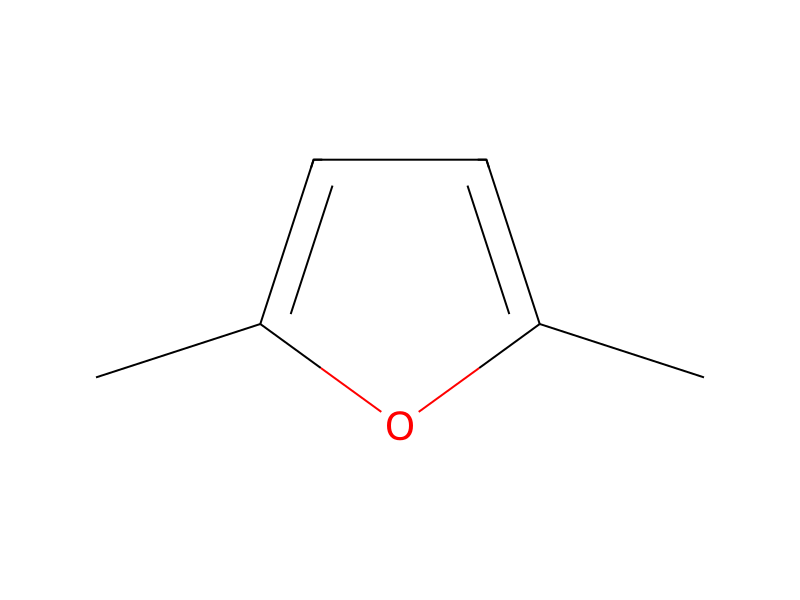
625-86-5Cc1ccc(C)o1GSNUFIFRDBKVIE-UHFFFAOYSA-N2,5-dimethylfuran is a clear yellow oily liquid. Aromatic caustic odor. (NTP, 1992)
625-86-5DTXSID7022093CHEMBL1416448CHEBI:89052Other Classes -> Ethers, Other
Flammable agents - 3rd degree
2.24
2.24
0.8883 at 68 °F (NTP, 1992) - Less dense than water; will float
0.892-0.898
less than 1 mg/mL at 72.5 °F (NTP, 1992)
Slightly soluble in water
Soluble (in ethanol)
198 to 201 °F at 760 mmHg (NTP, 1992)
92.00 to 94.00 °C. @ 760.00 mm Hg
93 °C
安全情報は参考情報です。供給元の安全データシート(SDS)、適用法令、専門家による評価に代わるものではありません。
This chemical does not meet GHS hazard criteria for 62.8% (91 of 145) of all reports.
Danger
H225 (37.2%): Highly Flammable liquid and vapor [Danger Flammable liquids]
P210, P233, P240, P241, P242, P243, P264, P270, P280, P301+P317, P303+P361+P353, P330, P370+P378, P403+P235, and P501 (click each P-code to see the statement)
Aggregated GHS information provided per 145 reports by companies from 11 notifications to the ECHA C&L Inventory. Each notification may be associated with multiple companies.
Chemical: Furan, 2,5-dimethyl-
Commission Regulation (EC) No 1565/2000 (Repealed by Com. Implementing Reg. (EU) No 872/2012)
Furan, 2,5-dimethyl- is listed on the EPA's Chemical Data Reporting (CDR) system. Manufacturers and importers of Furan, 2,5-dimethyl- are required to report information about their production and use of this chemical to the EPA under the Toxic Substances Control Act (TSCA). (40 eCFR Part 711)
Furan, 2,5-dimethyl-: Does not have an individual approval but may be used under an appropriate group standard
The New Jersey Worker and Community Right to Know Act requires public and private employers to provide information about hazardous substances at their workplaces. (N.J.S.A. 34:5A-1 et. seq.)
SYMPTOMS: Exposure to this compound may cause skin, eye and mucous membrane irritation. Other symptoms of exposure include conjunctivitis, corneal damage, nausea, vomiting, abdominal pain, headache, dizziness, cyanosis, dermatitis, collapse, respiratory distress, convulsions, blistering and ulceration of skin, gangrene, erythema, vertigo, lowered body temperature, chronic lung disease, kidney and liver damage, and coma.
A volatile constituent of tobacco smoke and roasted coffee aroma; Also a human metabolite of n-hexane; [CDC] Used as flavoring agent or adjuvant; [FDA]
Its blood concentration can be used as a biomarker for smoking. While it may be abbreviated DMF, it should not be confused with dimethylformamide.
Flavouring Agent -> FLAVOURING_AGENT -> JECFA Functional Classes
Flavoring Agents -> JECFA Flavorings Index
All Other Basic Organic Chemical Manufacturing
Furan, 2,5-dimethyl-: ACTIVE
天然物の起源Reported found in beef, chicken, cocoa, coffee, egg, malt, rice, and rum.
使用2,5-Dimethylfuran is a major metabolite of hexane with singlet oxygen scavenging ability. It is used as biofuel, biomaker for smoking, pharmaceutical intermediate and in organic synthesis. It is also used to analyze samples for the derivatization of carbonyl-containing compounds to their oximes.
一般的な説明Clear yellow oily liquid. Aromatic caustic odor.


-81 °F (NTP, 1992)
-63 °C
53 mmHg at 72 °F ; 174 mmHg at 124 °F; 404 mmHg at 167 °F (NTP, 1992)
25.9 [mmHg]
化学的特性clear colorless to amber liquid
2,5-Dimethylfuran
B*: Compounds that form peroxides on concentration (distillation/evaporation)
Fábos et al.
Flam. Liq. 2 (37.2%)
Flammable agents - 3rd degree
EYES: First check the victim for contact lenses and remove if present. Flush victim's eyes with water or normal saline solution for 20 to 30 minutes while simultaneously calling a hospital or poison control center. Do not put any ointments, oils, or medication in the victim's eyes without specific instructions from a physician. IMMEDIATELY transport the victim after flushing eyes to a hospital even if no symptoms (such as redness or irritation) develop.
SMALL SPILLS AND LEAKAGE: If you spill this chemical, FIRST REMOVE ALL SOURCES OF IGNITION. Then, use absorbent paper to pick up all liquid spill material. Your contaminated clothing and absorbent paper should be sealed in a vapor-tight plastic bag for eventual disposal. Solvent wash all contaminated surfaces with 60-70% ethanol followed by washing with a soap and water solution. Do not reenter the contaminated area until the Safety Officer (or other responsible person) has verified that the area has been properly cleaned.
RECOMMENDED RESPIRATOR: When working with this chemical, wear a NIOSH-approved full face chemical cartridge respirator equipped with the appropriate organic vapor cartridges. If that is not available, a half face respirator similarly equipped plus airtight goggles can be substituted. However, please note that half face respirators provide a substantially lower level of protection than do full face respirators. (NTP, 1992)