テトラメチル尿素
Tetramethylurea
データを補完しています。しばらくしてからページを更新すると最新の内容を表示できます
基本情報
- CAS
632-22-4- 標準SMILES
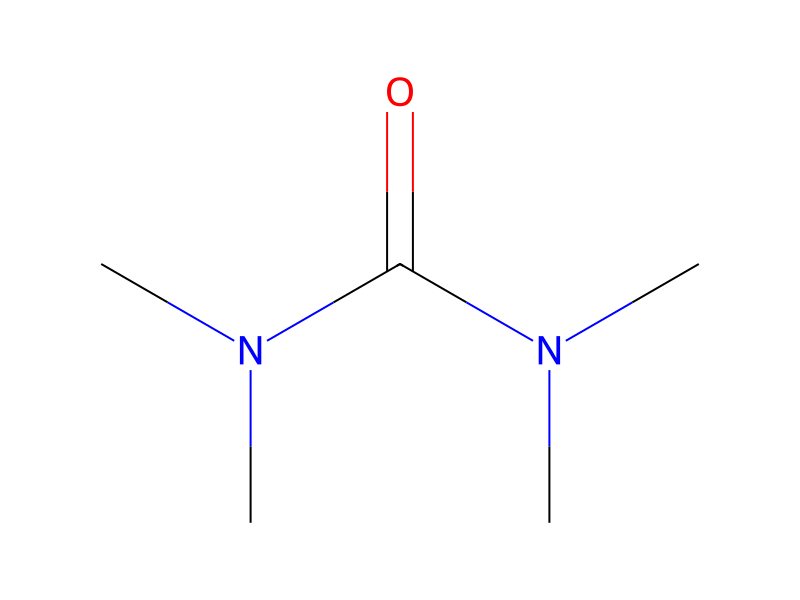
CN(C)C(=O)N(C)C- InChIKey
AVQQQNCBBIEMEU-UHFFFAOYSA-N- 分子式
- C5H12N2O
- 平均分子量
- 116.16 g/mol
- 単同位体質量
- 116.094963
概要
1,1,3,3-tetramethylurea is a member of the class of ureas that is urea substituted by methyl groups at positions 1, 1, 3 and 3 respectively. Metabolite observed in cancer metabolism. It has a role as a human metabolite.
名称と識別子
- 優先名称
- Tetramethylurea
- IUPAC
- 1,1,3,3-tetramethylurea
- 現地名
- テトラメチル尿素
- 英語名
- 1,1,3,3-Tetramethylurea
- 分子式
- C5H12N2O
- 分子量
- 116.16
名称と別名
1,1,3,3-TetramethylureaTETRAMETHYLUREA632-22-4TemurUrea, tetramethyl-N,N,N',N'-TetramethylureaTetramethylureeUrea, 1,1,3,3-tetramethyl-NSC-914882O1EJ64031DTXSID1060893CHEBI:84278
名称をさらに表示
テトラメチル尿素1,1,3,3-テトラメチル尿素テムルN,N,N',N'-テトラメチル尿素1,1,3,3‐テトラメチル尿素tetramethyl-ureOlaparib Impurity 381,1,3,3-tetramethyl-ure((CH3)2N)2CO
RefChem:188798DTXCID1043750211-173-9TMUurea, N,N,N',N'-tetramethyl-Tetramethyl UreaNSC 91488BRN 0773898
データベース識別子
- CAS
632-22-4- PubChem CID
- 12437
- DTXSID
DTXSID1060893- ChEMBL
CHEMBL11949- ChEBI
CHEBI:84278- UNII
- 2O1EJ64031
- EC Number
- 211-173-9
- Nikkaji
- J6.897G
物性
構造計算による物性補完中
- XLogP
- 0.2
- 極性表面積
- 23.6 Ų
- 水素結合供与体数
- 0
- 水素結合受容体数
- 1
- 回転可能結合数
- 0
- 重原子数
- 8
- 形式電荷
- 0
- 複雑度
- 78.4
実験および物理化学的性質
Chemical ClassesNitrogen Compounds -> Urea Compounds
SpringerMaterials PropertiesSchoenflies notation
LogP
log Kow = 0.19
0.19
OdorFAINT, PLEASANT
Density0.9687 @ 20 °C/4 °C
Color/FormLIQUID
Solubility
MISCIBLE WITH WATER, PETROLEUM ETHER, ALL COMMON SOLVENTS
SLIGHTLY SOL IN ALCOHOL
water solubility = 1X10+6 mg/l
Flash PointABOUT 75 °C
Boiling Point176.5 °C
Melting Point-1.2 °C
Vapor Pressurevaopr pressure = 13.9 mm Hg @ 71 °C
Refractive IndexINDEX OF REFRACTION: 1.4493 @ 25 °C/D
安全と法規制
安全情報は参考情報です。供給元の安全データシート(SDS)、適用法令、専門家による評価に代わるものではありません。
GHS分類
GHS Classification
Danger
H302 (97.4%): Harmful if swallowed [Warning Acute toxicity, oral]
P203, P264, P270, P280, P301+P317, P318, P330, P405, and P501 (click each P-code to see the statement)
Aggregated GHS information provided per 116 reports by companies from 8 notifications to the ECHA C&L Inventory. Each notification may be associated with multiple companies.
Danger
H227: Combustible liquid [Warning Flammable liquids]
危険有害性情報
Regulatory Information
Chemical: Urea, tetramethyl-
Tetramethylurea: Does not have an individual approval but may be used under an appropriate group standard
Fire PotentialFIRE HAZARD: MODERATE, VIA HEAT, FLAME & OXIDIZERS.
Hazards Summary
Teratogenic effects observed in mice dosed by SC injection; IV doses of 150 mg/kg daily for five days produced weight loss in dogs, monkeys, and mice; [HSDB] A strong skin irritant, but not a sensitizer in guinea pigs; Temporary kidney injury and possible liver injury observed in two week feeding study of male rats at 450 mg/kg; [EPA] Causes general anesthesia and somnolence in IP lethal-dose study of mice; [RTECS] Teratogenic effects and fetal loss observed in studies of rodents; No human data on reproductive or lactation effects; [REPROTOX] An irritant; [Alfa Aesar MSDS]
Special ReportsREVIEW OF PREPN, MFR, PROPERTIES AND USE AS SOLVENT AND AS REAGENT: LUTTRINGHAUS, DIRKSEN, AGNEW CHEM INT ED 3, 260 (1964).[The Merck Index. 9th ed. Rahway, New Jersey: Merck & Co., Inc., 1976., p. 1190]
Hazard Classes and Categories
Acute Tox. 4 (97.4%)
Flammable liquids - Category 4
安全と保護具
化学と産業
用途と製造
Uses
Used as solvent and reagent; [Merck Index]
SOLVENT & REAGENT
U.S. Exports
(1972) No Data
(1975) No Data
U.S. Imports
(1972) No Data
(1975) No Data
U.S. Production
(1972) PROBABLY GREATER THAN 4.54X10+5 GRAMS
(1975) PROBABLY LESS THAN 4.54X10+5 GRAMS
Methods of ManufacturingPREPN: LAWSON, CROOM, J ORG CHEM, 28, 232 (1963).
General Manufacturing InformationUrea, N,N,N',N'-tetramethyl-: ACTIVE
応用分野
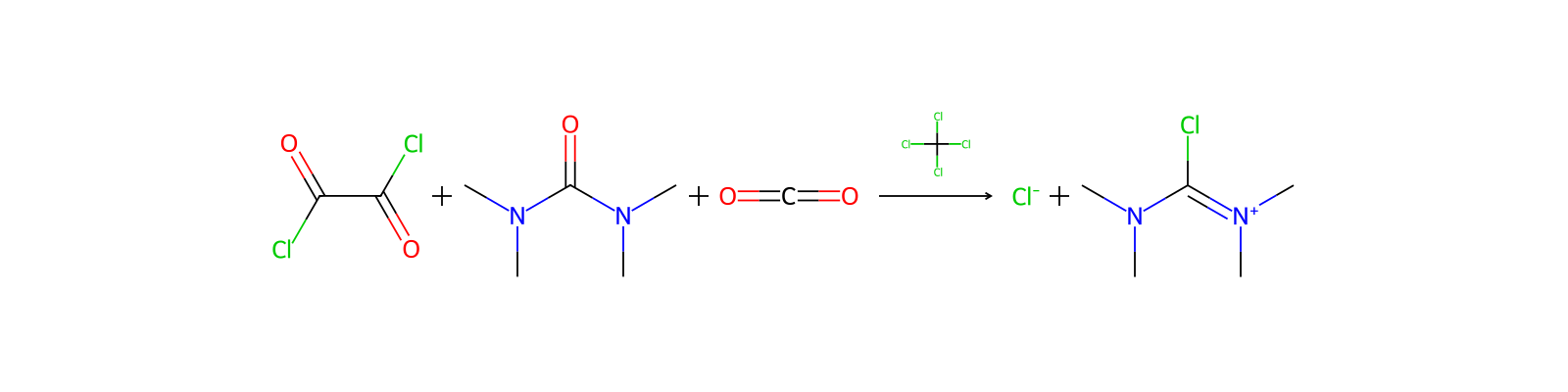
使用Tetramethylurea is used as a solvent in dyestuff industries, in condensation reaction and intermediates in surfactant. It is utilized for base catalyzed isomerization and alkylation hydrocyanation due to its low permittivity. It reacts with oxalyl chloride to prepare tetramethyl chloroformamidinium chloride, which is used for the conversion of carboxylic acids and dialkyl phosphates to anhydrides and pyrophosphates respectively.
調製方法
製造方法The reaction of dimethylamine with phosgene in the presence of e. g. 50 % sodium hydroxide solution and subsequent extraction with 1,2-dichloroethane yields tetramethylurea in 95% yield.
純化方法Dry it over BaO and distil it under nitrogen. It denatures proteins in H2O. [Elbaum & Herskovits Biochemistry 13 1268 1974, Kane Anal Biochem 53 350 1973, Beilstein 4 IV 225.]
上流・下流製品情報
関連反応
56 件




化合物ノート
読み込み中…