

基本情報
- 標準SMILES
C1COCO1- InChIKey
WNXJIVFYUVYPPR-UHFFFAOYSA-N- 分子式
- C3H6O2
- 平均分子量
- 74.08 g/mol
- 単同位体質量
- 74.03677943
概要
Dioxolane appears as a clear colorless liquid. Slightly denser than water. Vapors heavier than air.
名称と識別子
- 優先名称
- 1,3-Dioxolane
- IUPAC
- 1,3-dioxolane
- 現地名
- 1,3-ジオキソラン
- 英語名
- 1,3-Dioxolane
- 分子式
- C3H6O2
- 分子量
- 74.08
名称と別名
1,3-DIOXOLANE646-06-0DIOXOLANEGlycolformal1,3-DioxacyclopentaneFormal glycol1,3-DioxolanEthylene glycol formalGlycol formalGlycol methylene ether1,3-Dioxole, dihydro-5-Crown-2
名称をさらに表示
1,3-ジオキソラン1,3-ジオキサシクロペンタンエチレングリコールメチレンエーテルエチレンメチレンエーテルグリコールホルマールジオキソラン1,3‐ジオキソランDioxolan1,3-Dioxalane1,3-Dioxlane1,3-DioxoLl,3-DioxolaneDioxlanedioxolanne
DTXSID4027284Y57RBG19JLELCOTAL DXDTXCID107284CHEBI:87597RefChem:72794CHEBI:39430211-463-5
データベース識別子
- CAS
646-06-0- PubChem CID
- 12586
- DTXSID
DTXSID4027284- ChEMBL
CHEMBL3187281- ChEBI
CHEBI:87597- UNII
- Y57RBG19JL
- EC Number
- 211-463-5
- Nikkaji
- J1.719A
物性
構造計算による物性
- XLogP
- -0.4
- 極性表面積
- 18.5 Ų
- 水素結合供与体数
- 0
- 水素結合受容体数
- 2
- 回転可能結合数
- 0
- 重原子数
- 5
- 形式電荷
- 0
- 複雑度
- 24.1
実験および物理化学的性質
Chemical Classes
Flammable agents - 3rd degree
Volatile Organic Compound (VOC)
SolventsSolvents -> Ethers (<C12)
SpringerMaterials PropertiesSchoenflies notation
LogPlog Kow = -0.37
Density
1.0600 at 20 °C/4 °C
A cyclic acetal; bulk density (wt/gal): 8.2 lb at 20 °C
1.066 @ 20°C
Color/FormWater-white liquid
Solubility
Soluble in ethanol, ether, acetone
Miscible in water
Flash Point35 °F (2 °C) (Open cup)
Boiling Point
78 °C
78 °C @760 [mm Hg]
DecompositionWhen heated to decomposition it emits acrid smoke and fumes.
Melting Point
-95 °C
-97.2 °C
Vapor Density2.6 (Air= 1)
物理化学的性質
- 融点
- -95 °C · -95 °C (lit.)
- 沸点
- 75 · 75-76 °C/1.013 hPa
- 比重(密度)
- 1.06 g/mL · 1.06 g/mL at 25 °C (lit.)
- 蒸気密度
- 2.6 · 2.6 (vs air)
- 蒸気圧
- 70 mm · 70 mm Hg ( 20 °C)
- 屈折率
- 20 · n20/D 1.401(lit.)
- 闪点
- 35 °F · 35 °F
- 貯蔵温度
- 20 °C · Store at <= 20°C.
- 溶解性
- 1000 g/l可溶 · 1000g/l可溶
- 外見
- 液体
- 色
- ホワイトからオフホワイト
- 臭い (Odor)
- Mild, ethereal odor
- 爆発限界(explosive limit)
- 2.1 · 2.1-20.5%(V)
- 水溶解度
- 溶ける
- 比熱容量
- 1.59 J/ · Cp(liquid): 1.59 J/(g·K), at 25℃
- BRN
- 102453 · 102453
- Henry's Law Constant
- 4.3 · 4.3×10-1 mol/(m3Pa) at 25℃, Ondo and Dohnal (2007)
- 安定性
- 4 ℃以下 · 4℃以下
- 化粧品成分の機能
- 溶媒
- InChI
- 1S/C3H6O2/c1-2-5-3-4-1/h1-3H2
- InChIKey
- WNXJIVFYUVYPPR-UHFFFAOYSA-N
- SMILES
- C1COCO1
- LogP
- -0.37 at · -0.37 at 20℃
- 表面張力
- 32.55 mN/m · 32.55mN/m at 298.15K
- CAS データベース
- 646 · 646-06-0(CAS DataBase Reference)
- NISTの化学物質情報
- 1 · 1,3-Dioxolane(646-06-0)
- EPAの化学物質情報
- 1 · 1,3-Dioxolane (646-06-0)
化学的性質
化学的特性Colourless Liquid. Miscible with water, soluble in alcohol, ether and benzene. The azeotrope formed with water, the azeotrope is 70-73°C, and the water content is 6.7%. Decolorize bromine water.
安全と法規制
GHS分類
GHS Classification
Danger
H225: Highly Flammable liquid and vapor [Danger Flammable liquids]
P210, P233, P240, P241, P242, P243, P280, P303+P361+P353, P370+P378, P403+P235, and P501 (click each P-code to see the statement)
Danger
H225 (100%): Highly Flammable liquid and vapor [Danger Flammable liquids]
P203, P210, P233, P240, P241, P242, P243, P264+P265, P280, P303+P361+P353, P305+P351+P338, P318, P337+P317, P370+P378, P403+P235, P405, and P501 (click each P-code to see the statement)
危険有害性情報
Regulatory Information
Regulation (EC) No 1935/2004 (amended)
1,3-Dioxolane is listed on the EPA's Chemical Data Reporting (CDR) system. Manufacturers and importers of 1,3-Dioxolane are required to report information about their production and use of this chemical to the EPA under the Toxic Substances Control Act (TSCA). (40 eCFR Part 711)
Status: Active Update: 30-11-2022 https://echa.europa.eu/registration-dossier/-/registered-dossier/15807
1,3-Dioxolane: HSNO Approval: HSR001141 Approved with controls
The New Jersey Worker and Community Right to Know Act requires public and private employers to provide information about hazardous substances at their workplaces. (N.J.S.A. 34:5A-1 et. seq.)
DOT LabelFlammable Liquid
Fire Hazards
Excerpt from ERG Guide 127 [Flammable Liquids (Water-Miscible)]:
· HIGHLY FLAMMABLE: Will be easily ignited by heat, sparks or flames.
Fire Potential
A very dangerous fire hazard when exposed to heat or flame.
Flammable, dangerous fire risk.
Health Hazards
Excerpt from ERG Guide 127 [Flammable Liquids (Water-Miscible)]:
· Inhalation or contact with material may irritate or burn skin and eyes.
Hazards SummaryIn animal studies, 1,3-dioxolane is a CNS depressant and has some effects on the liver; [HSDB] A skin irritant and severe eye irritant; Blood (leukopenia) and reproductive changes occur in animal studies. [ACGIH]
DOT ID and Guide1166 127
Reactive GroupEthers
Special Reports
EPA/Office of Pollution Prevention and Toxics; High Production Volume (HPV) Challenge Program's Robust Summaries and Test Plans for 1,3-Dioxolane (November 2000). Summarizes information on usage patterns, toxicity, and ecological effects supplied by industry to the US EPA's HPV Challenge Program. Available from: http://cfpub.epa.gov/hpv-s/ as of September 06, 2006.
TSCA Requirements
Pursuant to section 8(d) of TSCA, EPA promulgated a model Health and Safety Data Reporting Rule. The section 8(d) model rule requires manufacturers, importers, and processors of listed chemical substances and mixtures to submit to EPA copies and lists of unpublished health and safety studies. 1,3-Dioxolane is included on this list.
Reactivity AlertsHighly Flammable
Reactivity Profile
Ethers, such as DIOXOLANE, can act as bases. They form salts with strong acids and addition complexes with Lewis acids. The complex between diethyl ether and boron trifluoride is an example. Ethers may react violently with strong oxidizing agents. In other reactions, which typically involve the breaking of the carbon-oxygen bond, ethers are relatively inert.
安全と保護具
Fire FightingExcerpt from ERG Guide 127 [Flammable Liquids (Water-Miscible)]:
Accidental Release Measures
· CALL 911. Then call emergency response telephone number on shipping paper. If shipping paper not available or no answer, refer to appropriate telephone number listed on the inside back cover.
· ELIMINATE all ignition sources (no smoking, flares, sparks or flames) from immediate area.
First Aid
Excerpt from ERG Guide 127 [Flammable Liquids (Water-Miscible)]:
General First Aid:
Exposure Control and Personal Protection
· Wear positive pressure self-contained breathing apparatus (SCBA).
50.0 [ppm]
Fire Fighting Procedures
If material on fire or involved in fire: Do not extinguish fire unless flow can be stopped. Use water in flooding quantities as fog. Solid streams of water may be ineffective. Cool all affected containers with flooding quantities of water. Apply water from as far a distance as possible. Use "alcohol" foam, dry chemial or carbon dioxide. /Dioxolane/
Nonfire Spill ResponseExcerpt from ERG Guide 127 [Flammable Liquids (Water-Miscible)]:
Disposal Methods
SRP: The most favorable course of action is to use an alternative chemical product with less inherent propensity for occupational exposure or environmental contamination. Recycle any unused portion of the material for its approved use or return it to the manufacturer or supplier. Ultimate disposal of the chemical must consider: the material's impact on air quality; potential migration in soil or water; effects on animal, aquatic, and plant life; and conformance with environmental and public health regulations.
Preventive Measures
If material not on fire and not involved in fire: Keep sparks, flames, and other sources of ignition away. Keep material out of water sources and sewers. Build dikes to contain flow as necessary. Attempt to stop leak if without undue personnel hazard. Use water spray to disperse vapors and dilute standing pools of liquid. /Dioxolane/
Personnel protection: Avoid breathing vapors. Keep upwind. ... Do not handle broken packages unless wearing appropriate personal protective equipment. Wash away any material which may have contacted the body with copious amounts of water or soap and water. /Dioxolane/
Isolation and Evacuation
Excerpt from ERG Guide 127 [Flammable Liquids (Water-Miscible)]:
Immediate precautionary measure
Threshold Limit Values (TLV)
20.0 [ppm]
20 ppm [1997]
Protective Action Criteria (PAC)
300 [mg/m3]
500 [mg/m3]
3000 [mg/m3]
Personal Protective Equipment (PPE)Excerpt from ERG Guide 127 [Flammable Liquids (Water-Miscible)]:
毒性情報
Ecotoxicity Values
EC50; Species: Daphnia magna (Water flea); Conditions: freshwater; static; Concentration: 7650000 ug/L (95% confidence limit: 6955000 to 8415000 ug/L) for 24 hr; Effect: intoxication, immobile /formulated product/
EC50; Species: Daphnia magna (Water flea); Conditions: freshwater; static; Concentration: 6950000 ug/L (95% confidence limit: 6203000 to 7787000 ug/L) for 48 hr; Effect: intoxication, immobile /formulated product/
LC50; Species: Cyprinodon variegatus (Sheepshead minnow); Conditions: saltwater; static; Concentration: 12000000 ug/L (95% confidence limit: 9871000 to 14588000 ug/L) for 48 hr /formulated product/
LC50; Species: Cyprinodon variegatus (Sheepshead minnow); Conditions: saltwater; static; Concentration: 10000000 ug/L (95% confidence limit: 8294000 to 12057000 ug/L) for 96 hr /formulated product/
Environmental Fate
TERRESTRIAL FATE: Based on a classification scheme(1), an estimated Koc value of 15(SRC), determined from a log Kow of -0.37(2) and a regression-derived equation(3), indicates that 1,3-dioxolane is expected to have very high mobility in soil(SRC). Volatilization of 1,3-dioxolane from moist soil surfaces is expected to be an important fate process(SRC) given a Henry's Law constant of 2.45X10⁻⁵ atm-cu m/mole(4). 1,3-Dioxolane is expected to volatilize from dry soil surfaces(SRC) based upon a vapor pressure of 79 mm Hg(5). Biodegradation data were not available(SRC, 2006).
AQUATIC FATE: Based on a classification scheme(1), an estimated Koc value of 15(SRC), determined from a log Kow of -0.37(2) and a regression-derived equation(3), indicates that 1,3-dioxolane is not expected to adsorb to suspended solids and sediment(SRC). Volatilization from water surfaces is expected(3) based upon a Henry's Law constant of 2.45X10⁻⁵ atm-cu m/mole(4). Using this Henry's Law constant and an estimation method(3), volatilization half-lives for a model river and model lake are 33 hours and 13 days, respectively(SRC). The aquatic oxidation rate for the reaction of 1,3-dioxolane with photochemically produced hydroxyl radicals has been experimentally determined to be 4.0X10+9 L/mol-s (pH not stated)(5). Based on this rate and a hydroxyl radical concn of 1X10-17 mol/L in water under continuous sunlight(6), the half-life for the aquatic oxidation of 1,3-dioxolane can be estimated to be 200 days(SRC). According to a classification scheme(7), an estimated BCF of 3(SRC), from its log Kow(2) and a regression-derived equation(8), suggests the potential for bioconcentration in aquatic organisms is low(SRC). Biodegradation data were not available(SRC, 2006).
ATMOSPHERIC FATE: According to a model of gas/particle partitioning of semivolatile organic compounds in the atmosphere(1), 1,3-dioxolane, which has a vapor pressure of 79 mm Hg at 20 °C(2), is expected to exist solely as a vapor in the ambient atmosphere. Vapor-phase 1,3-dioxolane is degraded in the atmosphere by reaction with photochemically-produced hydroxyl radicals(SRC); the half-life for this reaction in air is estimated to be 37 hours(SRC), calculated from its rate constant of 1.04X10⁻¹¹ cu cm/molecule-sec at 25 deg(3).
Adverse EffectsNeurotoxin - Acute solvent syndrome
Ecotoxicity Excerpts
/AQUATIC SPECIES/ ... Dioxolane was tested for growth inhibition of / the green algae/ Selenastrum capricornutum ... Algae growth was measured out to 14 days past initial exposure at levels of 1000, 5000 or 10,000 mg/L with counts recorded on day 3 and later. Significant inhibition was seen only at 5000 mg/L and above ... 1000 mg/L was determined to be the NOEC.
/AQUATIC SPECIES/ ... Sheepshead minnows (Cyprinodon variegates, five per group) were exposed to dioxolane at concentrations of 7500, 11,000, 13,000, 15,000 and 25,000 mg/L ... the 48-hr LC50 was reported to be 12,000 mg/L and ... the 96-hour LC50 was reported to be 10,000 mg/L. A clear dose-response was established with a 24-hour mortality of 5/5 at 25,000 mg/L.
Effluent Concentrations1,3-Dioxolane was qualitatively detected in 4 samples of final effluents taken from 3 publicly owned treatment works (POTWs) and 1 oil refinery in Lockport (oil refinery), Roselle, Danville, and Decatur, Illinois(1).
Soil Adsorption/Mobility
The Koc of 1,3-dioxolane is estimated as 15(SRC), using a log Kow of -0.37(1) and a regression-derived equation(2). According to a classification scheme(3), this estimated Koc value suggests that 1,3-dioxolane is expected to have very high mobility in soil.
TSCA Test Submissions
The ability of trimethyl phosphite to induce morphological transformation in the C3H/10T 1/2 mouse cell line (Cell Transformation Assay) was evaluated. Based on preliminary toxicity tests (exposure time=18 hrs), trimethyl phosphite in acetone was tested at concentrations of 0, 128, 256, 512, 1024 and 2048 ul/ml, with cell survival ranging from 71.6% to 40.9&% at 128 and 1024 ul/ml, respectively. Trimethyl phosphite did not induce transformation at any of the concentrations tested in this study.
In a one-generation reproduction study, male Charles River rats (5/group) were orally exposed to 1,3-dioxolane in their drinking water at concentrations of 0, 0.5 or 1.0% for 90 days prior to mating with previously untreated females (10/group, 2/male). Treatment continued through the mating period. Dams and pups were examined with respect to survival and body weight through postpartum day (PD) 21 and the animals were retained for further experimentation. Significant differences were observed between treated and control animals in the following: decreased maternal body weights (high-dose group on PD 1 and 4, male weights not reported), decreased rates of coupling and parturition, and increased number of stillborn pups, (both treatment levels), decreased survival of pups (both treatment groups, zero 24-hour survival rate for high-dose group pups), and decreased numbers of pups (high-dose group). No significant differences were observed between treated and control animals in the following: parental mortality, fecundity or female fertility indices, gross external abnormalities, and pup body weights.
In a one-generation reproduction study, male Charles River rats (5/control and 0.5% groups, 4/1.0% group) were orally exposed to 1,3-dioxolane in their drinking water at concentrations of 0, 0.5 or 1.0% for 90 days prior to mating with previously untreated females (10/control and 0.5% groups, 8/1.0% group, all groups 2 females/male). Treatment continued through the mating period for both sexes, and for the dams also through gestation, lactation and the 10-day rest period after weaning of the F1a pups and before the second mating with untreated, proven males. There were no treatments during the remainder of these tests. Dams and F1b pups were examined with respect to survival and body weight through postpartum day 21, the F1b pups were retained for further testing, and the dams were sacrificed and subjected to histopathological examination. Significant differences observed between treated and control animals in the following: decreased fecundity index, incidence of parturition, and female fertility index (both treatment levels), and decreased pup survival (low-dose group at days 12 and 21, high-dose group at day 21). No significant differences were observed between treated and control animals in the following: parental mortality, male fertility index, number of pups born, stillborn, cannibalized, or viable pups (at birth or on lactation days 1, 4, 12 and 21), maternal or pup body weights, gross maternal pathologic examination, weights maternal organs (adrenals, both gonads, liver, pituitary, and uterus), and maternal histopathologic examination.
In a one-generation reproduction study, male Charles River rats (5/group) were orally exposed to dioxolane (1,3-dioxolane) in their drinking water at concentrations of 0, 0.01, 0.03 or 0.10% for 90 days prior to mating with previously untreated females (10/group, 2 females/male). Treatment continued through mating, gestation and lactation. Dams and pups were examined with respect to survival and body weight through postpartum day (PD) 21 and the animals were retained for further experimentation. A significant difference was observed between treated and control animals in decreased male pup body weight (low-dose group on lactation day 21). No significant differences were observed between treated and control animals in the following: maternal mortality, mating and fertility indices, male and female fertility, incidence of parturition, gross abnormalities in pups, number of pups delivered stillborn or viable, or cannibalized (lactation days 1, 4, 12 or 21), survival indices, female pup body weight, and female parental body weight.
For more TSCA Test Submissions (Complete) data for 1,3-DIOXOLANE (11 total), please visit the HSDB record page.
Artificial Pollution Sources1,3-Dioxolane's production and use as a low-boiling solvent and extractant for oils, fats, waxes, dyes and cellulose derivatives(1) may result in its release to the environment through various waste streams(SRC).
Environmental Bioconcentration
An estimated BCF of 3 was calculated in fish for 1,3-dioxolane(SRC), using a log Kow of -0.37(1) and a regression-derived equation(2). According to a classification scheme(3), this BCF suggests the potential for bioconcentration in aquatic organisms is low(SRC).
Volatilization from Water/Soil
The Henry's Law constant for 1,3-dioxolane is 2.45X10⁻⁵ atm-cu m/mole(1). This Henry's Law constant indicates that 1,3-dioxolane is expected to volatilize from water surfaces(2). Based on this Henry's Law constant, the volatilization half-life from a model river (1 m deep, flowing 1 m/sec, wind velocity of 3 m/sec)(2) is estimated as 33 hours(SRC). The volatilization half-life from a model lake (1 m deep, flowing 0.05 m/sec, wind velocity of 0.5 m/sec)(2) is estimated as 13 days(SRC). 1,3-Dioxolane's Henry's Law constant indicates that volatilization from moist soil surfaces may occur(SRC). 1,3-Dioxolane is expected to volatilize from dry soil surfaces(SRC) based upon a vapor pressure of 79 mm Hg(3).
Non-Human Toxicity Excerpts
/LABORATORY ANIMALS: Acute Exposure/ Dioxolane rated 8 on rabbit eyes /on a scale of 1 to 10 with 10 being the most severe./[Grant, W.M. Toxicology of the Eye. 3rd ed. Springfield, IL: Charles C. Thomas Publisher, 1986., p. 1032]
/LABORATORY ANIMALS: Acute Exposure/ ... The DL50 and CL50 values for 1,3,5-trioxane and 1,3-dioxolane come to 8.5 g/kg m.c. and 5.8 g/kg m.c. respectively, and CL50 greater than 26000 mg/m3 and 87000 mg/m3 of air. Only 1,3-dioxolane may be absorbed through intact skin. ... The compounds exhibit irritating effects upon the eyeball and eye protective apparatus. Only 1,3-dioxolane induces skin irritation under repeated exposure.[Czajkowska T et al; Med pr 38 (3): 184-90 (1987)]
/LABORATORY ANIMALS: Acute Exposure/ Acute inhalation studies revealed that the 4-hour acute LC50 is 68.4 mg/L in Sprague-Dawley rats. Nominal exposure concentrations ... were 201.9, 88.4, 67.9, 60.6 and 37.9 ... mg/L. Respiratory and neuromuscular abnormalities were the immediate responses to the test material during the exposure and during the four hour-post-exposure observation periods. Severity and incidences of these findings followed a concentration-related pattern. During the 14-day post-exposure observation period, all survivors appeared to recover by day 4. Most surviving animals appeared to regain pre-exposure body weights by Day 7 and showed normal weight gain patterns during the second week. Necropsy findings revealed high incidences of lung and liver discoloration as well as bladders distended with fluid and gastrointestinal tracts distended with gas in animals dying prior to scheduled sacrifice. The frequency of these findings appeared to be concentration related.[EPA/Office of Pollution Prevention and Toxics; High Production Volume (HPV) Challenge Program's Robust Summaries and Test Plans for 1,3-Dioxolane (November 2000). Available from, as of September 06, 2006: http://cfpub.epa.gov/hpv-s/]
/LABORATORY ANIMALS: Acute Exposure/ ... 5 albino rats (Sprague-Dawley CD)/sex/group /was admin by/ oral gavage /at/ 2500, 3500, 5000, 7100, 10000 mg/kg. LD50 /was/ 5.2 g/kg with 95% confidence limits of 4.3 to 6.1 g/kg. Mortality /for/ males /at each/ dose level /was/ 0, 2, 1, 5, 5 /and for/ females 0, 0, 2, 5, 5. Clinical signs /at/ 2500 mg/kg /were/ ataxia (1 female from 2 to 4 hours after dosing), respiratory rate decrease (3 animals, 2 to 4 hours) /and/ motor activity decrease (all animals 1 to 4 hours); /at/ 3500 mg/kg /were/ ataxia (2 females 2 or 4 hours after dosing), fine tremors (1 male, 4-hours after dosing only), respiratory rate decrease (5 animals, 2 to 4 hours), motor activity decrease (9/10 animals starting at 1 hour, decreasing to 2 animals at 24 hours), piloerection (3 animals, 2 hours to day-2), /and/ prostration (3 animals, from 2 to 4 hours); /at/ 5000 mg/kg /were/ ataxia (1 male, only at 2 to 4 hours after dosing), fine tremors (1 female 1 to 4 hours after dosing), respiratory rate decrease (5 animals, 2 to 4 hours), motor activity decrease (9 animals starting at 1 hour, decreasing to 4 animals at 24 hours), prostration (5 animals total, various times from 1 to 24 hours), /and/ hypothermia (2 animals at 4 or 24 hours after dosing); /at/ 7100 mg/kg /were/ respiratory rate decrease (8 animals total, various 1 to 24 hours after dosing), motor activity decrease (1 animal 1 to 2 hours after dosing), prostration (8 animals total, various times from 1 to 24 hours), /and/ hypothermia (4 animals at 4 or 24 hours after dosing); /at/ 10000 mg/kg /were/ respiratory rate decrease (6 animals total, various 1 to 4 hours after dosing), labored breathing (2 animals at 1 hour after dosing only), prostration (9 animals total, various times from 1 to 4 hours), /and/ hypothermia (1 animal at 2 hours after dosing).[EPA/Office of Pollution Prevention and Toxics; High Production Volume (HPV) Challenge Program's Robust Summaries and Test Plans for 1,3-Dioxolane (November 2000). Available from, as of September 06, 2006: http://cfpub.epa.gov/hpv-s/]
For more Non-Human Toxicity Excerpts (Complete) data for 1,3-DIOXOLANE (36 total), please visit the HSDB record page.
Environmental Abiotic Degradation
The rate constant for the vapor-phase reaction of 1,3-dioxolane with photochemically-produced hydroxyl radicals has been measured as 1.04X10⁻¹¹ cu cm/molecule-sec at 25 °C(1). This corresponds to an atmospheric half-life of about 37 hours at an atmospheric concentration of 5X10+5 hydroxyl radicals per cu cm(2). The aquatic oxidation rate for the reaction of 1,3-dioxolane with photochemically produced hydroxyl radicals has been experimentally determined to be 4.0X10+9 L/mol-s (pH not stated)(3). Based on this rate and a hydroxyl radical concn of 1X10-17 mol/L in water under continuous sunlight(4), the half-life for the aquatic oxidation of 1,3-dioxolane can be estimated to be 200 days(SRC). 1,3-Dioxolane is not expected to undergo hydrolysis in the environment due to the lack of functional groups that hydrolyze under environmental conditions(5).
法規制情報
TSCA Requirements
Pursuant to section 8(d) of TSCA, EPA promulgated a model Health and Safety Data Reporting Rule. The section 8(d) model rule requires manufacturers, importers, and processors of listed chemical substances and mixtures to submit to EPA copies and lists of unpublished health and safety studies. 1,3-Dioxolane is included on this list.
Atmospheric Standards
This action promulgates standards of performance for equipment leaks of Volatile Organic Compounds (VOC) in the Synthetic Organic Chemical Manufacturing Industry (SOCMI). The intended effect of these standards is to require all newly constructed, modified, and reconstructed SOCMI process units to use the best demonstrated system of continuous emission reduction for equipment leaks of VOC, considering costs, non air quality health and environmental impact and energy requirements. Dioxilane is produced, as an intermediate or a final product, by process units covered under this subpart.
安全データ
- wgk
- 1
- tsca
- TSCA listed
- rtecs
- JH6760000
- ridadr
- UN 1166
- 毒性
- LD50 orally in Rabbit: 3000 mg/kg LD50 dermal Rabbit 9074 mg/kg
- PRTR法
- 第一種指定化学物質
- hs_code
- 29329970
- risk_code
- 11
- 化審法
- (5)-500
- 安衛法
- 57,57-2
- 消防法
- 危-4-1-II
- hazard_code
- F
- safety_code
- 16
- hazard_class
- 3
- packing_group
- II
- 自然発火温度
- 525 °F
- Hazard Classifications
- Eye Irrit. 2Flam. Liq. 2Repr. 1B
- ストレージクラス
- 3 - Flammable liquids
- 有毒物質データの
- 646-06-0(Hazardous Substances Data)
化学と産業
薬理情報
MeSH Pharmacological ClassificationChemical agents that increase the rate of genetic mutation by interfering with the function of nucleic acids. A clastogen is a specific mutagen that causes breaks in chromosomes.
Absorption, Distribution and Excretion
The compound was able to penetrate human skin.
The site of uptake of inhaled vapors profoundly influences which respiratory tract tissues receive the highest doses. How the site of uptake depends on the physicochemical properties of inhaled vapors has been the subject of experiment and speculation for decades, but remains undefined. Using techniques that distinguish between vapor uptake in the nose and lung during cyclic breathing by Beagle dogs, uptake of the vapors of 2,4-dimethypentane, propyl ether, butanone, dioxolane, and ethanol was examined. These compounds have blood/air partition coefficients ranging from 1 to 2000. The effect of altering respiratory rates on vapor uptake was examined for 2,4-dimethypentane and dioxolane vapors. Deposition of vapors in the nasal cavity during inhalation was highly dependent on the partition coefficient. Vapor deposited in the nasal mucosa during inhalation was desorbed to a substantial extent during exhalation. Lung uptake of total inhaled vapor was limited by the amount available after passage through the nose, but in no case did it exceed 50% of the available amount. The data suggest that the diffusion of vapor molecules through the tissue barrier separating the air/tissue interface from the tissue/blood interface constitutes a significant resistance for both nasal uptake and lung uptake of many inhaled vapors. The data were used to validate a mathematical model describing nasal uptake of vapors.
... Three beagle dogs were exposed to dioxolane at nominal vapor concentrations of 500 ppm; vapor sampling was triggered for the entire inspiratory and expiratory portions of the breathing cycle during 10-min exposures. After correcting data to account for vapor that desorbed from the nasal passages during exhalation (after initially being absorbed in the nose during inhalation), net nasal uptake of dioxolane was 66.6%. Lung uptake was 2.1% for dioxolane. It can be concluded from this study that upper respiratory tract uptake of dioxolane is an important absorption mechanism for dogs under these experimental conditions. Upper respiratory tract absorption is likely to also be an important uptake mechanism in humans.
用途と製造
Uses
Used as a solvent and extractant for fats, waxes, and dyes; Used in the production of phenolic-novolak resins; [HSDB] Used as a monomer to produce polyacetals and a solvent for polyesters, vinyls, and epoxys; May be used as a paint stripper; [ACGIH]
Painting (Solvents) [Category: Paint]
Low-boiling solvent and extractant for oils, fats, waxes, dyes, and cellulose derivatives.
CROSSLINKING AGENT FOR PHENOLIC NOVOLAK RESINS
Electrolyte. Solvent. Acetal resin co-monomer.
The primary uses for dioxolane are co-monomer for manufacture of polyacetals and other polymers, solvent for chemical reactions (including inorganic salts), stabilizer for halogenated organic solvents, and as a starting material or reagent for organic synthesis.
U.S. Production
2023: 10,000,000 - <50,000,000 lb
This chemical is listed as a High Production Volume (HPV) (65FR81686). Chemicals listed as HPV were produced in or imported into the U.S. in >1 million pounds in 1990 and/or 1994. The HPV list is based on the 1990 Inventory Update Rule. (IUR) (40 CFR part 710 subpart B; 51FR21438).
(1979) PROBABLY GREATER THAN 2.27X10+6 GRAMS
(1981) PROBABLY GREATER THAN 2.27X10+6 GRAMS
Production volumes for non-confidential chemicals reported under the Inventory Update Rule. [Table#5530]
Consumer UsesSolvent
Industry UsesIntermediate
Methods of Manufacturing
1,3-Dioxolanes are formed by reacting ethylene glycol with carbonyl compounds ... Acetalization to the cyclic 1,3-dioxolane proceeds more readily than acetal formation from straight-chain alcohols. If water is removed from the reaction mixture, an excellent yield can be obtained. ... 1,3-Dioxolanes can also be formed from ethylene glycol by transacetalization.
Reaction of formaldehyde with ethylene glycol.
Household ProductsInformation on 4 consumer products that contain Ethylene glycol methylene ether in the following categories is provided:
General Manufacturing Information
Paint and Coating Manufacturing
1,3-Dioxolane: ACTIVE
応用分野
解説C3H6O2(74.08).1,3-ジオキソランは,エチレングリコールとパラホルムアルデヒドとを酸触媒の存在下に加熱反応させると得られる.融点-95 ℃,沸点75~76 ℃.d2041.066.n20D1.397.水,エタノール,エーテル,アセトンに可溶.臭素水を脱色する.カチオン重合性があり,重合度2000以上のホモポリマーやトリオキサンと開環共重合して,安定なアセタール樹脂を与える.森北出版「化学辞典(第2版)
用途リチウム電池?コンデンサー溶媒、エンジニアリングプラスチック原料
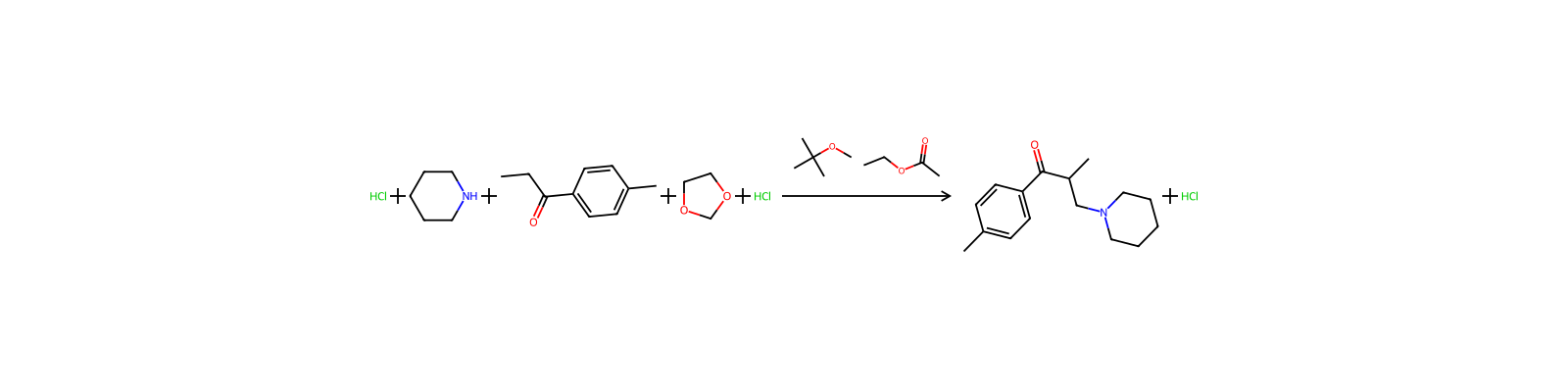
使用1,3-Dioxolane is an intermediate for the preparation of Acyclovir (A192400). Also, 1,3-Dioxolane is used in the synthesis of new Vandetanib (V097100) analogs.
一般的な説明A clear colorless liquid. Flash point 35°F. Slightly denser than water. Vapors heavier than air.
調製方法
純化方法Dry it with solid NaOH, KOH or CaSO4, and distil it from sodium or sodium amalgam. Barker et al. [J Chem Soc 802 1959] heated 34mL of dioxalane under reflux with 3g of PbO2 for 2hours, then cooled and filtered. After adding xylene (40mL) and PbO2 (2g) to the filtrate, the mixture is fractionally distilled. Addition of xylene (20mL) and sodium wire to the main fraction (b 70-71o) led to a vigorous reaction, following which the mixture was again fractionally distilled. Xylene and sodium additions are made to the main fraction (b 73-74o) before it is finally distilled. [Beilstein 19/1 V 6.]
上流・下流製品情報
上流原料
下流製品
サプライヤー50 社
国药集团化学试剂有限公司86-21-63210123 · [email protected]
梯希爱(上海)化成工业发展有限公司021-67121386 · [email protected]
上海阿拉丁生化科技股份有限公司400-6206333 13167063860 · [email protected]
艾特(浙江)供应链管理有限公司15553101207 18615619105
河北创海生物科技有限公司+86-86-13131129325 · [email protected]
爱斯特(成都)生物制药股份有限公司+86-28-85122536 85324413 · [email protected]
Baoji Guokang Healthchem co.,ltd+8615604608665 15604608665 · [email protected]
Dayang Chem (Hangzhou) Co.,Ltd.+86-0571-88938639 17705817739 · [email protected]
Syntechem Co.,Ltd[email protected]
上海迈瑞尔生化科技有限公司4006356688 18621169109 · [email protected]
济南源茂化工有限公司15665725027 18854103888 · [email protected]
阿法埃莎(中国)化学有限公司400-6106006 · [email protected]
安耐吉化学&3A(安徽泽升科技股份有限公司)400-0056266 · [email protected]
上海瀚鸿科技股份有限公司021-54306202 13764082696 · [email protected]
Zhejiang J&C Biological Technology Co.,Limited+1-2135480471 · [email protected]
合肥天健化工有限公司551-65418679 15856988503;15837135945 · [email protected]
山东西亚化学有限公司13355009207 13355009207 · [email protected]
玛雅试剂+86 (573) 82222445 (0)18006601000 452520369 · [email protected]
四川库利南科技有限公司400-1166-196 18981987031 · [email protected]
天津希恩思生化科技有限公司400 638 7771 · [email protected]
南京维奥化工有限公司Please Send Email 18652950785 · [email protected]
济南利扬化工有限公司18866405560; 18866405560 · [email protected]
斯百全化学(上海)有限公司021-021-021-67601398-809-809-809 15221380277 · [email protected]
艾科试剂4008-755-333 18080918076 · [email protected]
上海思域化工科技有限公司86-21-34053660 · [email protected]
赛默飞世尔科技(中国)有限公司800-810-5118 · [email protected]
北京伊诺凯科技有限公司400-810-7969 010-59572699 · [email protected]
上海遐瑞医药科技有限公司+86 21 61551611
TCI AMERICA800-4238616 · [email protected]
TOKYO CHEMICAL INDUSTRY CO., LTD.03-36680489 · [email protected]
TCI Europe320-37350700 · [email protected]
上海卓锐化工有限公司021-69180038
上海康泺新材料科技有限公司021-021-51601195 19512239872
北京环宇世纪化学科技有限公司hysj_bj.com
湖北鑫源顺医药化工有限公司13971561712, 13995564702, 027-50664929 · [email protected]
上海将来实业股份有限公司021-61552785 · [email protected]
安徽科迪达化工有限公司0554-2106669 · [email protected]
HBCChem, Inc.+1-510-219-6317 · [email protected]
日照力德士化工有限公司010-51268198 · [email protected]
上海爱蝶实业有限公司021-58957966 18930537195 · [email protected]
成都零六生物科技有限公司400-1166-196 13458535857 · [email protected]
广拓化学(上海)有限公司021-60899189-8001 18918189673 · [email protected]
上海恒岳化工科技有限公司51691706 13391095697 · [email protected]
上海麦克林生化科技股份有限公司15221275939 15221275939 · [email protected]
上海有朋化工有限公司021-69005955 13701776567 · [email protected]
上海凯赛化工有限公司021-33516722 13701817765 · [email protected]
上海彤源化工有限公司021-021-69182866 13701855675 · [email protected]
凯试(上海)科技有限公司021-50135380 · [email protected]
上海蓝润化学有限公司021-69515658 ; 69515628 13701998368 · [email protected]
上海容立化学科技有限公司021-69992220 13701886816 · [email protected]
補足説明
定義本品は、次の化学式で表される有機化合物である。
定義ChEBI: 1,3-dioxolane is a cyclic acetal that is pentane in which the carbon atoms at positions 1 and 3 are replaced by oxygen atoms respectively. It is a dioxolane and a cyclic acetal.
関連反応
83 件



関連ノート
読み込み中…