
2,6-ジ-tert-ブチル-1,4-ベンゾキノン
2,6-Di-t-butyl-p-benzoquinone
データを補完しています。しばらくしてからページを更新すると最新の内容を表示できます

基本情報
- CAS
719-22-2- 標準SMILES
CC(C)(C)C1=CC(=O)C=C(C(C)(C)C)C1=O- InChIKey
RDQSIADLBQFVMY-UHFFFAOYSA-N- 分子式
- C14H20O2
- 平均分子量
- 220.31 g/mol
- 単同位体質量
- 220.14632988
概要
2,6-Di-tert-butylbenzoquinone is a member of 1,4-benzoquinones.
名称と識別子
- 優先名称
- 2,6-Di-t-butyl-p-benzoquinone
- IUPAC
- 2,6-ditert-butylcyclohexa-2,5-diene-1,4-dione
- 現地名
- 2,6-ジ-tert-ブチル-1,4-ベンゾキノン
- 英語名
- 2,6-Di-tert-butyl-p-benzoquinone
- 分子式
- C14H20O2
- 分子量
- 220.31
名称と別名
719-22-22,6-Di-tert-butyl-P-benzoquinone2,6-Di-tert-butylcyclohexa-2,5-diene-1,4-dione2,6-Di-tert-butyl-1,4-benzoquinone2,6-Di-tert-butylbenzoquinone2,6-DI-T-BUTYL-P-BENZOQUINONE2,5-Cyclohexadiene-1,4-dione, 2,6-bis(1,1-dimethylethyl)-2,6-Bis(1,1-dimethylethyl)-2,5-cyclohexadiene-1,4-dionep-Benzoquinone, 2,6-di-tert-butyl-2,6-Di-t-butyl-1,4-benzoquinoneNSC 14448CCRIS 7070
名称をさらに表示
2,6-ジ-tert-ブチル-1,4-ベンゾキノン2,6-ジ-tert-ブチル-2,5-シクロヘキサジエン-1,4-ジオン2,6-ジtert-ブチル-2,5-シクロヘキサジエン-1,4-ジオン2,6-ジtert-ブチル-1,4-ベンゾキノン2,6-ジ(1,1-ジメチルエチル)-1,4-ベンゾキノンBHT-キノン2,6-ジ-tert-ブチル-p-ベンゾキノン2,6-ジ(tert-ブチル)-p-ベンゾキノン2,6-ジ(tert-ブチル)-2,5-シクロヘキサジエン-1,4-ジオン2,6-ビス(1,1-ジメチルエチル)-2,5-シクロヘキサジエン-1,4-ジオン3,5-ジ-tert-ブチル-p-ベンゾキノン3,5-ジ-tert-ブチル-1,4-ベンゾキノン2,6-ビス(1,1-ジメチルエチル)-1,4-ベンゾキノン2,6ジtブチル1,4ベンゾキノン2,6-ジ-tert-ブチル-p-キノン2,6-ジ(TERT-ブチル)ベンゾ-1,4-キノンDBQBHT-QBHT-quinone2,6-Di-tert-butylquinoneDibutylpbenzoquinone
HSDB 27753,5-di-tert-butylquinoneEINECS 211-946-0NSC-144484C9D8L0Y0TAI3-610492,6-di-tert-butylbenzo-1,4-quinone3,5-DI-TERT-BUTYL-P-BENZOQUINONE
データベース識別子
- CAS
719-22-2- PubChem CID
- 12867
- DTXSID
DTXSID7021493- ChEMBL
CHEMBL3185121- ChEBI
CHEBI:89187- UNII
- 4C9D8L0Y0T
- EC Number
- 211-946-0
- Nikkaji
- J65.911H
物性
構造計算による物性補完中
- XLogP
- 3.4
- 極性表面積
- 34.1 Ų
- 水素結合供与体数
- 0
- 水素結合受容体数
- 2
- 回転可能結合数
- 2
- 重原子数
- 16
- 形式電荷
- 0
- 複雑度
- 359
実験および物理化学的性質
Chemical Classes
Other Classes -> Aromatic Ketones
Antioxidant
SpringerMaterials PropertiesChemical shift
LogP
log Kow = 4.42
4.42
Color/FormYellow crystals
Melting Point
65-67 °C
65-67 °C
Vapor Pressure0.000411 [mmHg]
Physical Description
Yellow solid; [HSDB] Orange crystalline powder; [MSDSonline]
Solid
物理化学的性質
- 融点
- 65 · 65-67 °C(lit.)
- 沸点
- 75 · 75-80 °C (0.7 mmHg)
- 比重(密度)
- 1.0106 · 1.0106 (rough estimate)
- 屈折率
- 1.497 · 1.4970 (estimate)
- 闪点
- 110 ° · >110°(230°F)
- 貯蔵温度
- -20 °C · Amber Vial, -20°C Freezer, Under inert atmosphere
- 溶解性
- クロロホルム(微量)、メタノール(微量)
- 外見
- 結晶または結晶性粉末
- 色
- オレンジからブラウン
- 水溶解度
- 水に不溶。
- BRN
- 1911512 · 1911512
- Henry's Law Constant
- 6.2 · 6.2×102 mol/(m3Pa) at 25℃, HSDB (2015)
- 安定性
- Light sensitive
- InChI
- 1S/C14H20O2/c1-13(2,3)10-7-9(15)8-11(12(10)16)14(4,5)6/h7-8H,1-6H3
- InChIKey
- RDQSIADLBQFVMY-UHFFFAOYSA-N
- SMILES
- CC(C)(C)C1=CC(=O)C=C(C1=O)C(C)(C)C
- CAS データベース
- 719 · 719-22-2(CAS DataBase Reference)
- NISTの化学物質情報
- 2 · 2,5-Cyclohexadiene-1,4-dione, 2,6-bis(1,1-dimethylethyl)-(719-22-2)
- EPAの化学物質情報
- 2 · 2,6-Di-tert-butylbenzoquinone (719-22-2)
化学的性質
化学的特性ORANGE TO BROWN CRYSTALS OR CRYSTALLINE POWDER
安全と法規制
安全情報は参考情報です。供給元の安全データシート(SDS)、適用法令、専門家による評価に代わるものではありません。
GHS分類
GHS Classification
Warning
H315 (100%): Causes skin irritation [Warning Skin corrosion/irritation]
P261, P264, P264+P265, P271, P280, P302+P352, P304+P340, P305+P351+P338, P319, P321, P332+P317, P337+P317, P362+P364, P403+P233, P405, and P501 (click each P-code to see the statement)
Aggregated GHS information provided per 47 reports by companies from 5 notifications to the ECHA C&L Inventory. Each notification may be associated with multiple companies.
危険有害性情報
Hazards SummaryAn irritant; Effects in high-dose animal studies include ulceration of the nasal septum and hemorrhage; [MSDSonline] See Quinone.
Hazard Classes and CategoriesSkin Irrit. 2 (100%)
安全と保護具
Disposal Methods
SRP: At the time of review, criteria for land treatment or burial (sanitary landfill) disposal practices are subject to significant revision. Prior to implementing land disposal of waste residue (including waste sludge), consult with environmental regulatory agencies for guidance on acceptable disposal practices.
毒性情報
Environmental Fate
TERRESTRIAL FATE: Based on a recommended classification scheme(3), an estimated Koc value of 6000(SRC), determined from a measured log Kow(2) and a recommended regression-derived equation(1), indicates that suggests that 2,6-di-t-butyl-p-benzoquinone will be essentially immobile in soil(3). In an unconfined aquifer, however, 2,6-di-t-butyl-p-benzoquinone was transported an estimated 2710 meters over a 43 year period(2,4). 2,6-Di-t-butyl-p-benzoquinone is not expected to volatilize from moist soil surfaces based on an estimated Henry's Law constant of 1.6X10⁻⁸ atm-cu m/mole(5,SRC). It may, however, volatilize from the surface of dry soils given an estimated vapor pressure of 4.1X10⁻⁴ mm Hg(6,SRC). Incomplete information is available regarding the biodegradation potential of 2,6-di-t-butyl-p-benzoquinone; Rhine River water which was subjected to bank filtration had lower concentrations of 2,6-di-t-butyl-p-benzoquinone than the original water(7). Adsorption to soil however, was not measured(7,SRC)).
AQUATIC FATE: 2,6-Di-t-butyl-p-benzoquinone should adsorb to suspended solids and organic matter in the water column based on an estimated Koc of 6100(1,SRC) from an experimental log Kow(2) and a suggested classification scheme(3). 2,6-Di-t-butyl-p-benzoquinone (at 0.3 ug/L) had a half-life in Rhine River water of 3.4 days; measurements were made at Lobith and 24.5 hours later at Gorinchem(4). Loss of this compound during this stretch of river may have been due to adsorption to particulates or to biodegradation(4,SRC). An estimated BCF value of 1400(1,SRC), from an experimental log Kow(2), suggests that 2,6-di-t-butyl-p-benzoquinone will bioconcentrate in aquatic organisms. This compound has been detected in fish from the Great Lakes(5). 2,6-Di-t-butyl-p-benzoquinone is not expected to volatilize from water surfaces based on an estimated Henry's Law constant of 1.6X10⁻⁸ atm-cu m/mole(SRC) using a fragment constant estimation method(6).
ATMOSPHERIC FATE: Based on an estimated vapor pressure of 4.1X10⁻⁴ mm Hg at 25 °C(1,SRC), 2,6-di-t-butyl-p-benzoquinone should exist in both the vapor phase and particulate phase in the ambient atmosphere(2,SRC). 2,6-Di-t-butyl-p-benzoquinone should degrade in the vapor phase by reaction with photochemically produced hydroxyl radicals with an estimated half-life of about 17 hours(3,SRC). Particulate-phase 2,6-di-t-butyl-p-benzoquinone may be physically removed from the air by wet and dry deposition(SRC).
Effluent Concentrations1 of 21 samples of wastewater from the photographic industry contained unreported concentrations of 2,6-di-t-butyl-p-benzoquinone(1). 1 of 10 POTW plants sampled contained 2,6-di-t-butyl-p-benzoquinone in the final effluent(2).
Soil Adsorption/Mobility
Based on an experimental log Kow of 4.42(1), the Koc of 2,6-di-t-butyl-p-benzoquinone is estimated as approximately 6100 using a regression-derived equation(2,SRC). According to a suggested classification scheme(3), this estimated Koc value suggests that 2,6-di-t-butyl-p-benzoquinone will be immobile in soil(SRC). Sewage which had been through secondary treatment was subjected to rapid infiltration; the concentration of 2,6-di-t-butyl-p-benzoquinone in the initial sewage was from 0.022-0.037 ug/L and ranged from barely detected to 0.005 ug/L in the groundwater below the rapid infiltration beds(4). It was believed that the loss of this compound was due to adsorption as the sewage had already been through secondary treatment(4). In an unconfined aquifer, however, 2,6-di-t-butyl-p-benzoquinone was shown to have been transported for a considerable distance(between 1940-1983, estimated 2710 m)(1,5).
Atmospheric ConcentrationsURBAN/SUBURBAN: 2,6-Di-t-butyl-p-benzoquinone was detected in the personal air (1 of 8 samples total) of 12 people located either in New Jersey or North Carolina(1).
Human Toxicity ExcerptsChronic neurotoxic effects include vision disturbances. /From table/ /Quinones/
Fish/Seafood ConcentrationsComposite fish samples (lake trout, walleye) were found to contain 2,6-di-t-butyl-p-benzoquinone in 3 of 8 locations in the Great Lakes (two sites in Lake Erie, one site in Lake Michigan)(1).
Artificial Pollution Sources
VOLATILE POLLUTANTS, INCLUDING 2,6-DI-T-BUTYL-P-BENZOQUINONE, WERE PRODUCED FROM SEVERAL RUBBER GOODS MANUFACTURING PROCESSES & ANALYZED BY GAS CHROMATOGRAPHY/MASS SPECTROMETRY. THEIR CUMULATIVE CONCN RANGED FROM 25-27,000 UG/CU M.
2,6-Di-t-butyl-p-benzoquinone's production and subsequent use as an oxidant and polymerization catalyst(1), may result in its release to the environment through various waste streams(SRC). 2,6-Di-t-butyl-p-benzoquinone is also an environmental product of the oxidation of 2,6-di-t-butyl phenol, a common antioxidant additive(2,3).
Environmental Biodegradation
2,6-Di-t-butyl-p-benzoquinone (at 0.3 ug/l) had a half-life in Rhine River water of 3.4 days; measurements were made at Lobith and 24.5 hours later at Gorinchem(1). Degradation of this compound was believed due to aerobic and anaerobic biodegradation(1); however, adsorption to suspended solids and organic matter in the water column was not measured(1,SRC). 2,6-di-t-butyl-p-benzoquinone (at 2 ug/L) initially present in Rhine River water was not detected once the water was passed through a bank filtration process(2). It was not specified whether the loss of this compound was due to biodegradation or adsorption(2,SRC).
Sediment/Soil Concentrations
2,6-Di-t-butyl-p-benzoquinone was present in Pawtuxet River sediment located downstream of a plant which produced antioxidants (at concentrations of 1 ppm to 80 ppm(1). 2,6-Di-t-butyl-p-benzoquinone was present in sediment (0.1-40 ppm) located downstream from a specialty chemicals manufacturing plant(2).
Environmental Bioconcentration
An estimated BCF value of 1400 was calculated for 2,6-di-t-butyl-p-benzoquinone, using a measured log Kow of 4.42(1) and a recommended regression-derived equation(2,SRC). This BCF value suggests that 2,6-di-t-butyl-p-benzoquinone will bioconcentrate in aquatic organisms(2,SRC).This compound was detected in fish in the Great Lakes(3) suggesting that bioconcentration may occur(SRC).
Volatilization from Water/Soil
The Henry's Law constant for 2,6-di-t-butyl-p-benzoquinone is estimated as 1.6X10⁻⁸ atm-cu m/mole(SRC) using a fragment constant estimation method(1). This indicates that 2,6-di-t-butyl-p-benzoquinone will essentially not volatilize from water surfaces(2,SRC).
Non-Human Toxicity ExcerptsAcute neurotoxic effects reported in animals include convulsions; medullary paralysis. /From table/ /Quinones/
安全データ
- wgk
- 3
- tsca
- TSCA listed
- rtecs
- DK3970000
- hs_code
- 29146990
- risk_code
- 36/37/38
- hazard_code
- Xi
- safety_code
- 26-36-36/37/39-22
- Hazard Classifications
- Eye Irrit. 2Skin Irrit. 2STOT SE 3
- ストレージクラス
- 11 - Combustible Solids
- 有毒物質データの
- 719-22-2(Hazardous Substances Data)
化学と産業
薬理情報
Metabolism/Metabolites
THE URINARY & FECAL EXCRETION OF 3 NEW METABOLITES OF BUTYLATED HYDROXYTOLUENE (BHT, 3,5-DI-TERT-BUTYL-4-HYDROXYTOLUENE) WERE REVEALED BY GAS CHROMATOGRAPHY AFTER IP ADMIN TO MALE WISTAR RATS. THE STRUCTURES OF THESE METABOLITES, 2,6-DI-TERT-BUTYL-P-BENZOQUINONE, 2,6-DI-TERT-BUTYLHYDROQUINONE, & 2,6-DI-TERT-BUTYL-4-((METHYLTHIO)METHYL)PHENOL WERE IDENTIFIED BY COMPARISON OF GAS CHROMATOGRAPHIC & MASS SPECTRAL DATA WITH THOSE OF AUTHENTIC SAMPLES.
Quinones (ie, 6,12-dione) have been shown to undergo oxidation-reduction cycles involving quinone, hydroquinone, and molecular oxygen, resulting in the formation of oxygen radicals and semiquinone radicals. /Quinones/
Cellular LocationsMembrane
用途と製造
Uses
Used as an oxidant and polymerization catalyst; [HSDB]
Oxidant, polymerization catalyst
General Manufacturing Information2,5-Cyclohexadiene-1,4-dione, 2,6-bis(1,1-dimethylethyl)-: ACTIVE
応用分野
使用2.6-Di-tert-butyl-p-benzoquinone was used as a treatment agent to improve germination, plant health and yield.
調製方法
純化方法It can be recrystallised from MeOH and sublimes in a vacuum. [Beilstein 7 IV 2116.]
上流・下流製品情報
上流原料
下流製品
関連反応
47 件
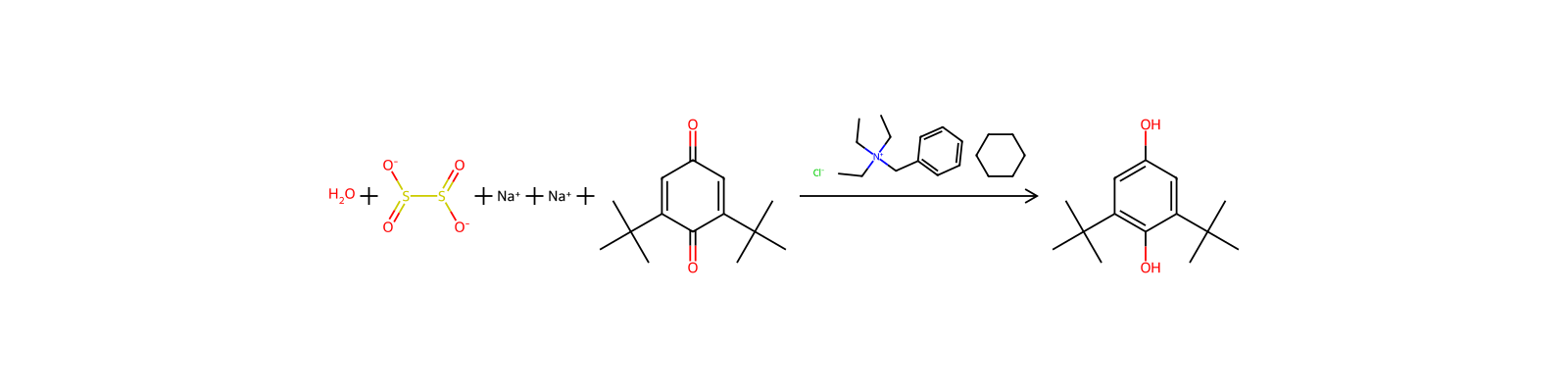
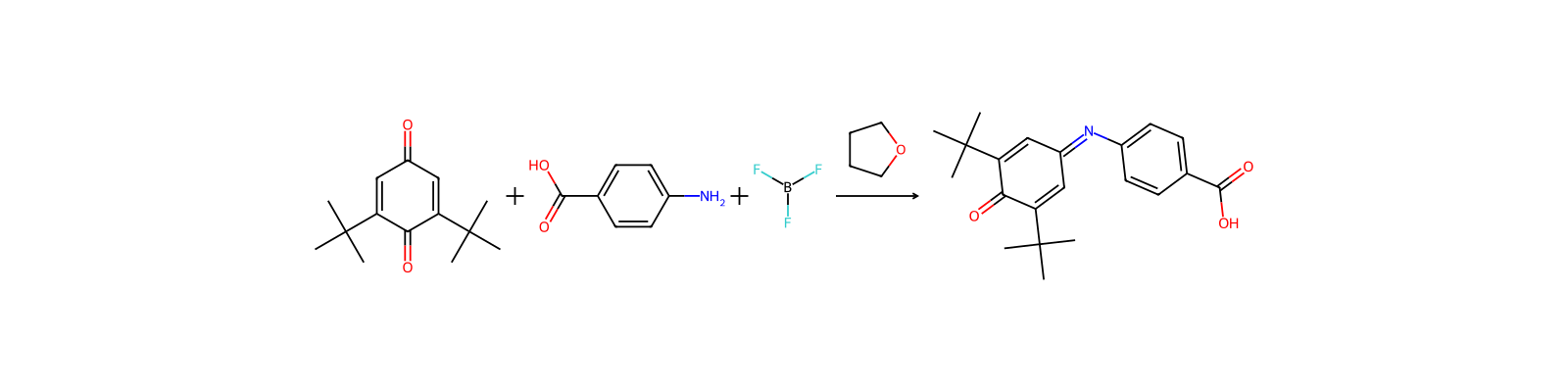
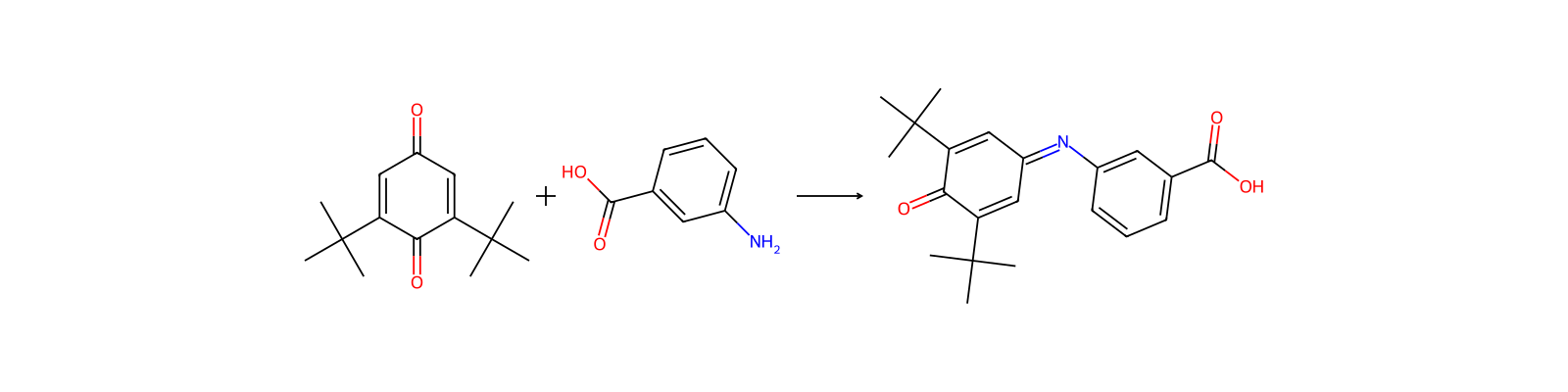

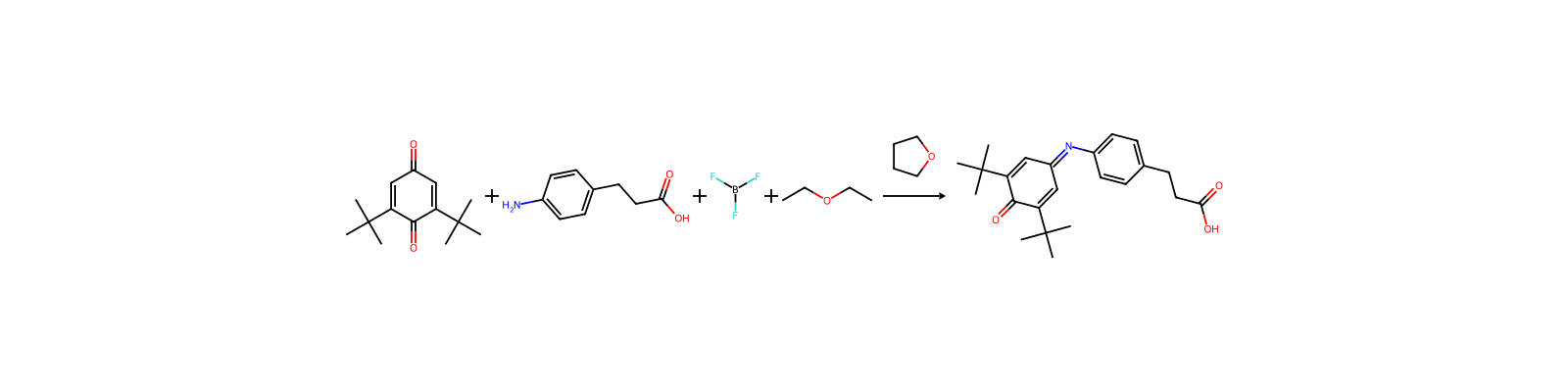

化合物ノート
読み込み中…