ホームMCPワークベンチSkills
ホームワークベンチ通知マイページ
llms.txt · MCPガイドプライバシーポリシー · 利用規約 · サポートv1.8.0
  1. ホーム
  2. /化合物

3-メチル-3-ブテン-2-オン

Methyl isopropenyl ketone

HCID 13143
ノートを作成反応を作成見積依頼を出す
印刷プレビュー

データを補完しています。しばらくしてからページを更新すると最新の内容を表示できます

基本情報概要名称と識別子物性安全と法規制化学と産業関連反応化合物ノート
部分構造検索類似構造を探す

基本情報

CAS
54789-11-6
標準SMILES
C=C(C)C(C)=O
InChIKey
ZGHFDIIVVIFNPS-UHFFFAOYSA-N
分子式
C5H8O
平均分子量
84.12 g/mol
単同位体質量
84.05751487

概要

Methyl isopropenyl ketone, stabilized appears as a clear colorless liquid. Flash point of 52 °F. Denser than water and insoluble in water. Hence sinks in water. Vapors heavier than air.

名称と識別子

優先名称
Methyl isopropenyl ketone
IUPAC
3-methylbut-3-en-2-one
現地名
3-メチル-3-ブテン-2-オン
英語名
3-Methyl-3-buten-2-one
分子式
C5H8O
分子量
84.12

名称と別名

3-Methyl-3-buten-2-one814-78-83-Methylbut-3-en-2-oneIsopropenyl methyl ketone3-Buten-2-one, 3-methyl-METHYL ISOPROPENYL KETONEMethyl butenone2-Methyl-1-buten-3-oneKetone, methyl isopropenylPropen-2-yl methyl ketone3-Methyl-3-butene-2-one3-Methyl-3-buten-2-on
名称をさらに表示
3-メチル-3-ブテン-2-オンイソプロペニルメチルケトンメチルイソプロペニルケトン3-メチル-3-ブテン-2-オンSTABILIZED WITH HQ3-Methyl-3-buten-2-one (stabilized with HQ)Stabilizedwithhqmethylbutenone[qr]CH2=C(CH3)C(=O)CH3Methylisopropenylketon3-Methylene-2-butanone
2-Methyl-1-butene-3-one3-Butene-2-one, 3-methylCCRIS 5317HSDB 11643-Methyl-3-buten-2-on [German]EINECS 212-405-1NSC 24150UN1246

データベース識別子

CAS
54789-11-6、814-78-8
PubChem CID
13143
DTXSID
DTXSID9052557
ChEBI
CHEBI:88437
UNII
F64867GQVB
EC Number
212-405-1
Nikkaji
J35.118K

物性

構造計算による物性補完中

XLogP
0.9
極性表面積
17.1 Ų
水素結合供与体数
0
水素結合受容体数
1
回転可能結合数
1
重原子数
6
形式電荷
0
複雑度
81.9

実験および物理化学的性質

Chemical ClassesFlammable agents - 3rd degree
PolymersPlastics & Rubber -> Other Monomers
SpringerMaterials PropertiesBoiling point
Odor · 2 件

PLEASANT

PUNGENT

TasteSWEET
Food AdditivesFLAVORING AGENT OR ADJUVANT -> FDA Substance added to food
Density · 2 件

0.85 at 68 °F (USCG, 1999) - Less dense than water; will float

0.8527 AT 20 °C/4 °C

Color/FormCLEAR, COLORLESS LIQUID
SolubilitySOL IN ALCOHOL
Flash Point · 3 件

less than 73 °F (USCG, 1999)

9 °C

49 °F CC; 9 °C CC

Boiling Point · 3 件

208 °F at 760 mmHg (USCG, 1999)

98 °C

97.00 to 99.00 °C. @ 760.00 mm Hg

安全と法規制

安全情報は参考情報です。供給元の安全データシート(SDS)、適用法令、専門家による評価に代わるものではありません。

GHS分類

GHS Classification · 6 件

Danger

H225 (100%): Highly Flammable liquid and vapor [Danger Flammable liquids]

P210, P233, P240, P241, P242, P243, P260, P261, P262, P264, P264+P265, P270, P271, P280, P284, P301+P316, P302+P352, P303+P361+P353, P304+P340, P305+P351+P338, P316, P319, P320, P321, P330, P332+P317, P337+P317, P361+P364, P362+P364, P370+P378, P403+P233, P403+P235, P405, and P501 (click each P-code to see the statement)

Aggregated GHS information provided per 130 reports by companies from 8 notifications to the ECHA C&L Inventory. Each notification may be associated with multiple companies.

Danger

H225: Highly Flammable liquid and vapor [Danger Flammable liquids]

危険有害性情報

Regulatory Information · 3 件

Chemical: 3-Buten-2-one, 3-methyl-

3-Buten-2-one, 3-methyl-: Does not have an individual approval but may be used under an appropriate group standard

The New Jersey Worker and Community Right to Know Act requires public and private employers to provide information about hazardous substances at their workplaces. (N.J.S.A. 34:5A-1 et. seq.)

DOT LabelFlammable Liquid
Fire Hazards · 2 件

Behavior in Fire: May polymerize and explode. (USCG, 1999)

· HIGHLY FLAMMABLE: Will be easily ignited by heat, sparks or flames.

Fire PotentialFlammable, dangerous fire risk
Health Hazards · 2 件

Inhalation causes irritation of nose and throat. Liquid may cause severe damage to eyes, resulting possibly in some permanent impairment of vision; vapor produces tears. If not removed promptly from skin, liquid may cause delayed pain and blistering. Ingestion causes irritation of mouth and stomach. (USCG, 1999)

· Inhalation or contact with material may irritate or burn skin and eyes.

化学と産業

薬理情報

Cellular LocationsCytoplasm

用途と製造

Uses · 3 件

Used to make plastics; [HSDB]

MFR OF PLASTICS

AS MONOMER IN COMMERCIAL COPOLYMERS; SOLVENT

U.S. Exports(1986) No Data
U.S. Imports(1986) No Data
U.S. Production(1986) No Data
Methods of Manufacturing · 2 件

...MADE COMMERCIALLY EITHER BY CATALYTIC HYDRATION OF ISOPROPYL ACETYLENE OR BY CONDENSATION OF ACETYLENE WITH ACETONE TO FORM DIMETHYL ETHYNYL CARBINOL, WHICH IS THEN REACTED WITH ACETIC ACID TO FORM DIMETHYL ACETYL CARBINOL ACETATE. THIS IS THEN PYROLYZED TO METHYL ISOPROPENYL KETONE. IT CAN ALSO BE MADE BY REACTING BUTANONE WITH FORMALDEHYDE IN PRESENCE OF CAUSTIC TO YIELD 2-METHYL-3-KETO-BUTANOL, WHICH IS IN TURN CRACKED TO...2-METHYL-1-BUTENE-3-ONE.

CONDENSATION OF METHYL ETHYL KETONE WITH FORMALDEHYDE IN PRESENCE OF NaOH

General Manufacturing Information · 2 件

3-Buten-2-one, 3-methyl-: ACTIVE

Inhibitor of polymerization: up to 1% hydroquinone. /inhibited/

応用分野 · 3 件

用途耐油性ゴム配合剤

使用Plastics.

一般的な説明A clear colorless liquid. Flash point of 52°F. Denser than water and insoluble in water. Hence sinks in water. Vapors heavier than air.

調製方法

3-Methyl-3-buten-2-one is produced by acid-catalyzed condensation of 2-butanone with formaldehyde in the liquid phase. A further possibility is the methylolization of 2- butanone under alkaline conditions followed by elimination of water:

関連反応

9 件
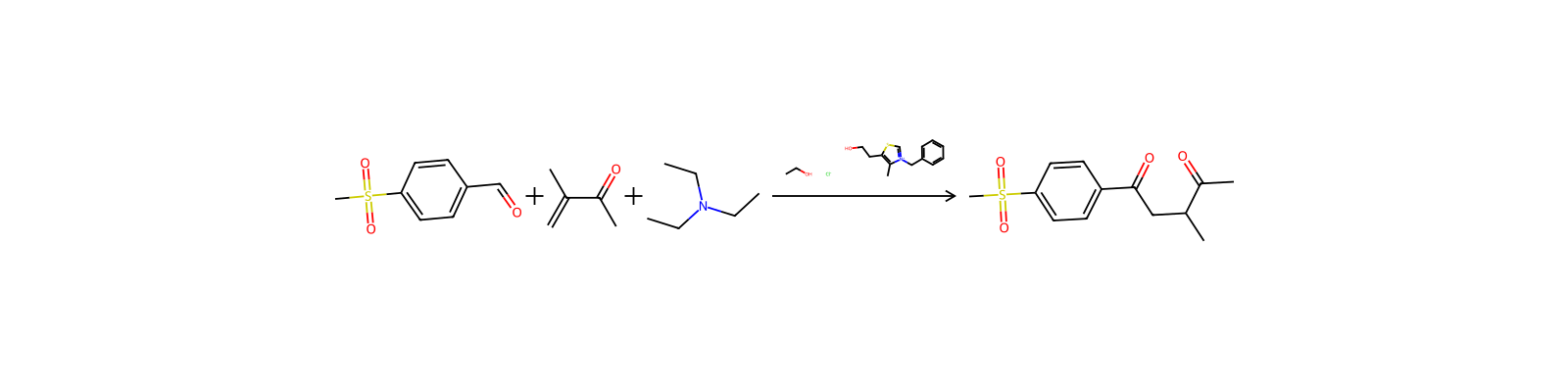
反応記録を作成
HRID 396748 の反応式
HRID 396748反応物としてuspto-grants-2003_08
HRID 497178 の反応式
HRID 497178反応物としてuspto-grants-2005_09
HRID 1597495 の反応式
HRID 1597495反応物としてuspto-grants-2001_09
HRID 1657677 の反応式
HRID 1657677反応物としてuspto-grants-1976_06
HRID 1657678 の反応式
HRID 1657678反応物としてuspto-grants-1976_06
HRID 1808913 の反応式
HRID 1808913反応物としてuspto-grants-2013_01
HRID 1838633 の反応式
HRID 1838633反応物としてuspto-grants-2004_01
HRID 1861601 の反応式
HRID 1861601反応物としてuspto-grants-2003_03
1 / 2 ページ

化合物ノート

読み込み中…

このページの内容基本情報概要名称と識別子物性安全と法規制化学と産業関連反応化合物ノート
その他の操作
ノートを作成反応を作成見積依頼を出す
Melting Point · 3 件

-65 °F (USCG, 1999)

-54 °C

-54 °C

物理化学的性質

融点
-54 °C · -54°C
沸点
98 °C · 98°C
比重(密度)
0 · 0,86 g/cm3
屈折率
1.421 to · 1.4210 to 1.4250
闪点
9 °C · 9°C
貯蔵温度
Freezer
水溶解度
Slightly soluble in water
溶解性
Chloroform (Sparingly), Ethyl Acetate (Slightly), Methanol (Slightly)
外見
clear liquid
色
Colorless to Light yellow
臭い (Odor)
非常に刺激的です。楽しい;甘い。
Henry's Law Constant
9.8 · 9.8×10-2 mol/(m3Pa) at 25℃, Yaws (2003)
InChI
1S/C5H8O/c1-4(2)5(3)6/h1H2,2-3H3
InChIKey
ZGHFDIIVVIFNPS-UHFFFAOYSA-N
SMILES
CC(=C)C(C)=O
LogP
0.561 · 0.561 (est)
CAS データベース
814 · 814-78-8
NISTの化学物質情報
3 · 3-Buten-2-one, 3-methyl-(814-78-8)
EPAの化学物質情報
3 · 3-Buten-2-one, 3-methyl- (814-78-8)

化学的性質

化学的特性Colorless or light yellow transparent liquid

Hazards Summary · 1 件

Highly toxic by inhalation, skin absorption, and ingestion; A skin, eye, and respiratory tract irritant; Strong lachrymator; [HSDB] Readily polymerizes; Explosive in air at 1.8-9.0%; [Hawley] Methyl isopropenyl ketone, stabilized (UN1246) has warning of explosive polymerization; [ERG 2016]

DOT ID and Guide1246 127P
Reactive GroupKetones
Reactivity AlertsHighly Flammable
Reactivity Profile · 1 件

METHYL ISOPROPENYL KETONE tends to polymerize; this reaction is mostly suppressed by the inhibitor. Can polymerize if heated or contaminated. If confined in a container when polymerization is initiated, the container may violently rupture (USCG, 1999).

Flammable Limits(PERCENT PER VOL): LOWER: 1.8; UPPER 9.0
DOT Emergency Guidelines · 5 件

/GUIDE 127P: FLAMMABLE LIQUIDS (POLAR/WATER-MISCIBLE)/ Fire or Explosion: HIGHLY FLAMMABLE: Will be easily ignited by heat, sparks or flames. Vapors may form explosive mixtures with air. Vapors may travel to source of ignition and flash back. Most vapors are heavier than air. They will spread along ground and collect in low or confined areas (sewers, basements, tanks). Vapor explosion hazard indoors, outdoors or in sewers. Those substances designated with a "P" may polymerize explosively when heated or involved in a fire. Runoff to sewer may create fire or explosion hazard. Containers may explode when heated. Many liquids are lighter than water. /Methyl isopropenyl ketone, inhibited; Methyl isopropenyl ketone, stabilized/

/GUIDE 127P: FLAMMABLE LIQUIDS (POLAR/WATER-MISCIBLE)/ Health: Inhalation or contact with material may irritate or burn skin and eyes. Fire may produce irritating, corrosive and/or toxic gases. Vapors may cause dizziness or suffocation. Runoff from fire control may cause pollution. /Methyl isopropenyl ketone, inhibited; Methyl isopropenyl ketone, stabilized/

/GUIDE 127P: FLAMMABLE LIQUIDS (POLAR/WATER-MISCIBLE)/ Public Safety: CALL Emergency Response Telephone Number ... . As an immediate precautionary measure, isolate spill or leak area for at least 50 meters (150 feet) in all directions. Keep unauthorized personnel away. Stay upwind. Keep out of low areas. Ventilate closed spaces before entering. /Methyl isopropenyl ketone, inhibited; Methyl isopropenyl ketone, stabilized/

/GUIDE 127P: FLAMMABLE LIQUIDS (POLAR/WATER-MISCIBLE)/ Protective Clothing: Wear positive pressure self-contained breathing apparatus (SCBA). Structural firefighters' protective clothing will only provide limited protection. /Methyl isopropenyl ketone, inhibited; Methyl isopropenyl ketone, stabilized/

For more DOT Emergency Guidelines (Complete) data for METHYL ISOPROPENYL KETONE (8 total), please visit the HSDB record page.

安全と保護具

Fire FightingExcerpt from ERG Guide 127 [Flammable Liquids (Water-Miscible); polymerization hazard]:
Accidental Release Measures · 2 件

· CALL 911. Then call emergency response telephone number on shipping paper. If shipping paper not available or no answer, refer to appropriate telephone number listed on the inside back cover.

· ELIMINATE all ignition sources (no smoking, flares, sparks or flames) from immediate area.

First Aid · 2 件

INHALATION: remove victim from exposure; give artificial respiration if needed; call physician.

General First Aid:

Exposure Control and Personal Protection· Wear positive pressure self-contained breathing apparatus (SCBA).
Fire Fighting ProceduresDry chemical, foam, carbon dioxide. Water may be ineffective. /inhibited/
Storage Conditions · 2 件

...MATERIALS WHICH ARE TOXIC AS STORED OR WHICH CAN DECOMPOSE INTO TOXIC COMPONENTS...SHOULD BE STORED IN A COOL, WELL VENTILATED PLACE, OUT OF THE DIRECT RAYS OF THE SUN, AWAY FROM AREAS OF HIGH FIRE HAZARD, AND SHOULD BE PERIODICALLY INSPECTED. INCOMPATIBLE MATERIALS SHOULD BE ISOLATED...

/Store/...at subzero temp to prevent polymerization.

Nonfire Spill ResponseExcerpt from ERG Guide 127 [Flammable Liquids (Water-Miscible); polymerization hazard]:
Preventive MeasuresA MAXIMUM CONCN OF 0.3 PPM FOR REPEATED EXPOSURES SHOULD BE LOW ENOUGH TO PREVENT LOCAL & SYSTEMIC TOXICITY. ENGINEERING FEATURES...SHOULD INCLUDE GOOD VENTILATION.
Isolation and Evacuation · 2 件

Excerpt from ERG Guide 127 [Flammable Liquids (Water-Miscible); polymerization hazard]:

Immediate precautionary measure

Personal Protective Equipment (PPE) · 3 件

Goggles or face shield; rubber gloves. (USCG, 1999)

PROTECTIVE EQUIPMENT, INCLUDING OCCLUSIVE EYE PROTECTION TO PREVENT EYE DAMAGE BY VAPORS SHOULD BE...USED.

...rubber gloves /inhibited/

Emergency Response Planning GuidelinesCAUTION: The majority of these products have a very low flash point. Use of water spray when fighting fire may be inefficient.

毒性情報

Adverse EffectsLacrimator (Lachrymator) - A substance that irritates the eyes and induces the flow of tears.
Human Toxicity Excerpts · 3 件

...A DEFINITE SKIN IRRITANT. ...DEVELOPMENT OF BLISTERING & PAIN MAY NOT OCCUR IMMEDIATELY UPON CONTACT. SEVERAL MINUTES MAY ELAPSE BEFORE SUCH MANIFESTATIONS ARISE.

...MODERATE TO HIGH DEGREE OF TOXICITY BY SINGLE ORAL EXPOSURE. EYE CONTACT...MAY RESULT IN SEVERE DAMAGE RESULTING...IN...PERMANENT IMPAIRMENT OF VISION... VAPORS ARE ALSO HIGHLY TOXIC AS WELL AS IRRITATING TO THE RESPIRATORY PASSAGES.

METHYL ISOPROPENYL KETONE IS HIGHLY TOXIC BY THE ORAL, PERCUTANEOUS, & RESPIRATORY ROUTES. TOPICAL EXPOSURE TO THE SKIN MAY BE MODERATELY IRRITATING WHILE TOPICAL OR VAPOR EXPOSURE TO THE EYE MAY BE SEVERELY IRRITATING.

Non-Human Toxicity Excerpts · 2 件

When tested by application to rabbit eyes, methyl isopropenyl ketone was found to cause severe irritation & damage. ...moderate irritant to rabbit skin particularly when applied under a wrap. ... Rats survived a 90-min exposure to nominal vapor concn of 524 ppm, but exhibited...irritation of ocular & nasal tissues. At a nominal vapor of 1455 ppm for 30 min.../irritation/ & deaths occurred in minutes. Animals dying during these exposures were cyanotic & died in convulsions.

7-hr exposures of rats, guinea pigs, & rabbits for 20 exposures in 28 days at...30 ppm resulted in...ocular & nasal irritation in all species, death & weight loss in rats, & decreased growth in guinea pigs. In rats, the lungs were severely affected &...changes were found in the kidneys & spleen. Leukocytosis was also observed. Organs of other species were not significantly affected. One hundred 7-hr exposures of 15 ppm...to rats, guinea pigs, & rabbits over 140-day period produced ocular & nasal irritation in all animals. Also, mortality, leukocytosis, & slight renal damage characterized by increased kidney weight & slight tubular damage occurred in the rats.

Probable Routes of Human Exposure · 1 件

Short-term exposures...ranging from 0.291 to 14.5 ppm have been reported. There was a questionable odor but no irritation at 0.291 ppm. At 0.77 ppm, there was an immediate definite odor & the vapors were evident to the eyes after a few min. At 1.45 & 2.91 ppm, eye irritation was apparent. At 14.5 ppm, there was an immediate strong odor with eye irritation...after 2 min. Ocular irritation rapidly increased in severity with time. ... Industrial exposures are likely to be by inhalation, skin & eye contact. Its strong irritating & lacrimatory properties may not prevent toxicity because these effects are often not immediately sensed.

Toxicity DataLCLo (rat) = 125 ppm/4h

安全データ

wgk
WGK 3
tsca
TSCA listed
rtecs
EN0175000
ridadr
UN 1246 (METHYL ISOPROPENYL KETONE, STABILIZED)
hs_code
29141900
risk_code
11-23/24/25-36/37/38-27-25
化審法
(2)-564
消防法
危-4-1-II
hazard_code
F,T+
safety_code
16-29-33-36/37/39-45-28-26
hazard_class
3
packing_group
II
Hazard Classifications
Acute Tox. 1 DermalAcute Tox. 3 OralEye Irrit. 2Flam. Liq. 2Skin Irrit. 2STOT SE 3
ストレージクラス
3 - Flammable liquids
有毒物質データの
814-78-8(Hazardous Substances Data)

上流・下流製品情報

上流原料

Cyclopropane, 1,1-difluoro-2,2-dimethyl-1,3-Butadiene, 2-fluoro-3-methyl-3-ヒドロキシ-3-メチル-2-ブタノン3-メチル-2-ブテナール3-メチル-3-ブテン-1-インアセチレンアセトン3-メチル-1-ブチン-3-オール

下流製品

メタノール, メトキシ-3-メチル-2-ヘプタノン2,3,5-トリメチルピリジン3-メチル-3-ブテン-2-オンジメチルヒドラゾン