ホームMCPワークベンチSkills
ホームワークベンチ通知マイページ
化工社オープンプロジェクト:[email protected]AIアクセス:llms.txt · MCPガイドプライバシーポリシー · 利用規約 · サポートv1.7.8
  1. ホーム
  2. /化合物

D-Xylose

HCID 135191
ノート反応
基本情報概要名称と識別子物性安全と法規制化学と産業関連反応化合物ノート
部分構造検索類似構造を探す

基本情報

CAS
10257-31-5
標準SMILES
OC1OC[C@@H](O)[C@H](O)[C@H]1O
InChIKey
SRBFZHDQGSBBOR-IOVATXLUSA-N
分子式
C5H10O5
平均分子量
150.13 g/mol
単同位体質量
150.05282342

概要

D-xylopyranose is D-Xylose in its pyranose form.

名称と識別子

優先名称
D-Xylose
IUPAC
(3R,4S,5R)-oxane-2,3,4,5-tetrol
英語名
Xyloside
分子量
0

名称と別名

D-xylopyranoseXYLOPYRANOSE(3R,4S,5R)-oxane-2,3,4,5-tetrol(3R,4S,5R)-Tetrahydro-2H-pyran-2,3,4,5-tetraolxylopyranosideXylomedd-xylopyranosideD XyloseDTXSID0023745Xylo-PfanCHEBI:53455Xylose, pure
名称をさらに表示
Xyloside
Xyl (SNFG)RefChem:53270GlyTouCan:G53308XGCHEBI:65327G53308XG200-400-7958-170-5(2R,3S,4R)-2,3,4,5-Tetrahydroxypentanal

データベース識別子

CAS
10257-31-5、25990-60-7、50855-32-8、58-86-6、7261-26-9
PubChem CID
135191
DTXSID
DTXSID601370204
ChEMBL
CHEMBL1236821
ChEBI
CHEBI:53455
EC Number
200-400-7、247-395-8、958-170-5
Nikkaji
J236.514F

物性

構造計算による物性

XLogP
-2.5
極性表面積
90.2 Ų
水素結合供与体数
4
水素結合受容体数
5
回転可能結合数
0
重原子数
10
形式電荷
0
複雑度
117

実験および物理化学的性質

Chemical ClassesBiological Agents -> Monosaccharides and Derivatives
Cosmetics · 2 件

Cosmetic ingredients (Xylose) -> CIR (Cosmetic Ingredient Review)

Humectant

TasteVery sweet
Food AdditivesFLAVORING AGENT OR ADJUVANT, NUTRITIVE SWEETENER -> FDA Substance added to food
Density1.525 @ 20 °C/4 °C
Color/Form · 2 件

Monoclinic needles or prisms

White crystalline powder

Solubility · 2 件

1 g dissolves in 0.8 ml water; sol in pyridine & hot alc

555.0 mg/mL

Human Drugs · 2 件

FDA approved drugs -> Active ingredient

FDA approved drugs -> Active ingredient

DecompositionWhen heated to decomposition it emits acrid smoke and irritating vapors.
Melting Point · 2 件

153-154 °C

90.5 °C

安全と法規制

安全情報は参考情報です。供給元の安全データシート(SDS)、適用法令、専門家による評価に代わるものではありません。

GHS分類

GHS Classification · 6 件

This chemical does not meet GHS hazard criteria for 100% (313 of 313) of all reports.

Not Classified

Aggregated GHS information provided per 313 reports by companies from 2 notifications to the ECHA C&L Inventory.

Warning

H315 (100%): Causes skin irritation [Warning Skin corrosion/irritation]

P261, P264, P264+P265, P271, P280, P302+P352, P304+P340, P305+P351+P338, P319, P321, P332+P317, P337+P317, P362+P364, P403+P233, P405, and P501 (click each P-code to see the statement)

危険有害性情報

Regulatory Information · 5 件

Chemical: D-Xylose

Chemical: Xylose

REACH registered substance: Xylose (EC: 200-400-7)

Xylose: Does not have an individual approval but may be used under an appropriate group standard

D-Xylose: Does not have an individual approval but may be used under an appropriate group standard

Other Safety Information · 2 件

IMAP assessments - Xylose: Environment tier I assessment

IMAP assessments - D-Xylose: Human health tier I assessment

Hazards SummaryMay cause irritation; [Alfa Aesar MSDS]
Hazard Classes and Categories · 2 件

Not Classified

Skin Irrit. 2 (100%)

安全と保護具

Disposal Methods · 1 件

SRP: At the time of review, criteria for land treatment or burial (sanitary landfill) disposal practices are subject to significant revision. Prior to implementing land disposal of waste residue (including waste sludge), consult with environmental regulatory agencies for guidance on acceptable disposal practices.

化学と産業

薬理情報

Protein BindingReadily accessible data regarding the protein binding of xylose within the context of the human body is not available.
Pharmacodynamics · 1 件

Xylose is often used as a parent sugar alcohol from which the commonly used food additive sweetener, xylitol, can be derived via the hydrogenation of xylose. Xylitol possesses many characteristics that make it a healthy and effective alternative to regular sugar. For example, although it looks and tastes exactly like ordinary sugar, having a 100% relative sweetness versus normal sucrose, it also has a low impact on blood sugar and insulin secretion and a minimal caloric value of 2.4 calories/gm. Furthermore, xylitol is non-fermentable and thus cannot be transformed to acids by oral bacteria, allowing it to restore a proper alkaline/acid balance in the mouth. Various studies cite this effect for allowing xylitol products like chewing gum to be effective at reducing dental caries. Altogether, these characteristics make xylose and its xylitol metabolite an effective alternative sweetener for healthy food choices for individuals who may be diabetic or for individuals simply wanting to make healthy dietary choices for their bodies.

Mechanism of Action · 1 件

Xylose is metabolized into various chemical intermediates that can play critical functions in the biological homeostasis of the human body. Via the oxido-reductase metabolism pathway of xylose in eukaryotic organisms, xylose is ultimately catabolized into (D)-xylulose-5-phosphate, which functions as an intermediate in the pentose phosphate pathway. Within the pentose phosphate pathway, NADPH, pentose 5-carbon sugars, and ribose 5-phosphate are generated as materials and precursors for the synthesis of nucleotides. In particular, xylulose-5-phosphate can be used to directly generate glycerinaldehyde-3-phosphate in the pathway. Other studies have also demonstrated that xylulose-5-phosphate may also play a role in gene expression, perhaps by promoting ChREBP transcription factor in the well-fed state.

Biological Half-LifeThe elimination half-life observed in healthy individuals is 75 minutes.
Metabolism/Metabolites · 6 件

The most common and traditional metabolism pathway for xylose is the oxidoreductase pathway (or xylose reductase-xylitol dehydrogenase, XR-XDH pathway). In this pathway, xylose is first reduced to xylitol using the xylitol dehydrogenase (XDH) enzyme with NADH or NADPH. The resultant xylitol is subsequently oxidized to D-xylulose by the xylitol dehydrogenase (XDH) enzyme while utilizing the cofactor NAD. Finally, the D-xylulose is phosphorylated by an ATP utilizing kinase (xylulose kinase enzyme) to generate D-xylulose-5-phosphate, which serves as an intermediate in the pentose phosphate pathway for nucleotide synthesis.

関連反応

8 件
反応記録を作成
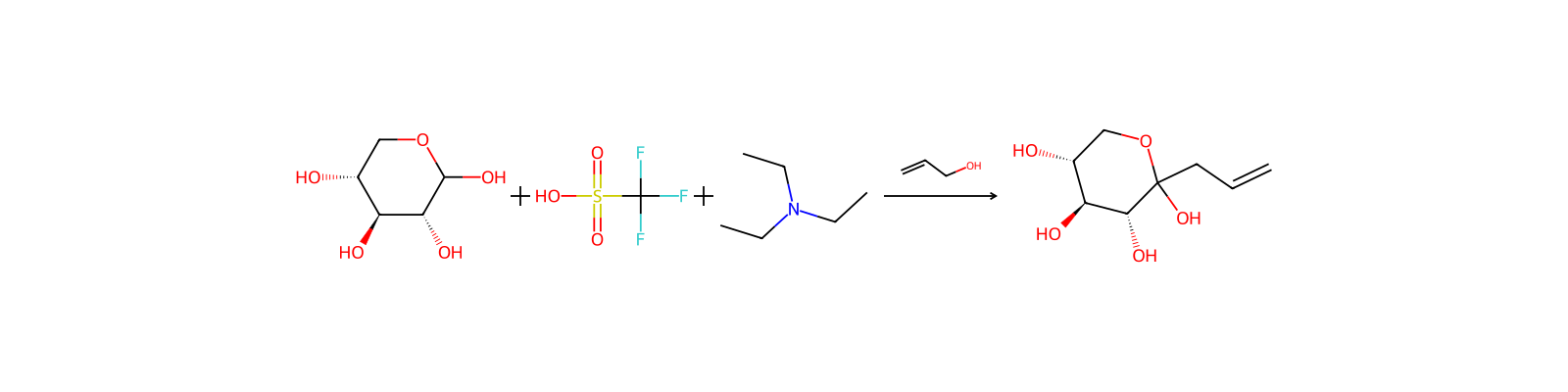
HRID 264582 の反応式
HRID 264582生成物としてuspto-grants-1997_07
HRID 264583 の反応式
HRID 264583生成物としてuspto-grants-1997_07
HRID 264584 の反応式
HRID 264584生成物としてuspto-grants-1997_07
HRID 583167 の反応式
HRID 583167反応物としてuspto-grants-1999_07
HRID 1417179 の反応式
HRID 1417179反応物としてuspto-grants-1999_03
HRID 1492650 の反応式
HRID 1492650生成物としてuspto-grants-1994_12
HRID 1492651 の反応式
HRID 1492651生成物としてuspto-grants-1994_12
HRID 1781266 の反応式
HRID 1781266反応物としてuspto-grants-1997_05

化合物ノート

読み込み中…

このページの内容基本情報概要名称と識別子物性安全と法規制化学と産業関連反応化合物ノート
Optical Rotation
Specific optical rotation: +92 deg & +18.6 deg (16 hr, 10%) @ 20 °C/D
Physical Description · 2 件

Solid; [Merck Index] White crystalline powder; Hygroscopic; [Alfa Aesar MSDS]

Solid

毒性情報

Interactions · 3 件

D-XYLOSE RELIEVED INHIBITION BY PUROMYCIN & CYCLOHEXIMIDE OF INCORPORATION OF ACETATE INTO CHONDROITIN SULFATE IN WHOLE TIBIAS & FEMURS OF EMBRYONIC CHICKEN CARTILAGE.

ADDN OF GUAR TO ORAL DOSAGE OF D-XYLOSE SLOWED DOWN GI ABSORPTION OF D-XYLOSE IN VOLUNTEERS. TOTAL AMT ABSORBED & PLASMA T/2 OF D-XYLOSE WERE NOT AFFECTED.

CONCOMITANT ADMIN OF INDOMETHACIN, NEOMYCIN, PHENFORMIN, COLCHICINE, OR LARGE DOSES OF AMINOSALICYLIC ACID WITH D-XYLOSE INHIBITS INTESTINAL ABSORPTION OF D-XYLOSE /REDUCING/ QUANTITIES OF SUGAR BEING EXCRETED...ASPIRIN /REDUCES URINARY EXCRETION OF D-XYLOSE/ APPARENTLY BY ALTERING RENAL FUNCTION.

Environmental Fate · 3 件

TERRESTRIAL FATE: Based on a classification scheme(1), an estimated Koc value of 2(SRC), determined from an estimated log Kow of -1.98(2,SRC) and a regression-derived equation(3), indicates that D-xylose is expected to have very high mobility in soil(SRC). Volatilization of D-xylose from moist soil surfaces is not expected to be an important fate process(SRC) given an estimated Henry's Law constant of 1.2X10⁻⁹ atm-cu m/mole(SRC), using a fragment constant estimation method(4). D-Xylose is not expected to volatilize from dry soil surfaces(SRC) based upon an estimated vapor pressure of 6.4X10⁻⁷ mm Hg(SRC), determined from a fragment constant method(5). D-Xylose is a simple monosaccharide and should be readily biodegradable in the environment(SRC).

AQUATIC FATE: Based on a classification scheme(1), an estimated Koc value of 2(SRC), determined from an estimated log Kow of -1.98(2,SRC) and a regression-derived equation(3), indicates that D-xylose is not expected to adsorb to suspended solids and sediment in water(SRC). Volatilization from water surfaces is not expected(3) based upon an estimated Henry's Law constant of 1.2X10⁻⁹ atm-cu m/mole(SRC), developed using a fragment constant estimation method(4). According to a classification scheme(5), an estimated BCF of 1(SRC), from its log Kow(2) and a regression-derived equation(3), suggests the potential for bioconcentration in aquatic organisms is low(SRC). D-Xylose was biodegraded 63 percent in a 15-day river die away test(6).

ATMOSPHERIC FATE: According to a model of gas/particle partitioning of semivolatile organic compounds in the atmosphere(1), D-xylose, which has an estimated vapor pressure of 9.6X10⁻⁷ mm Hg at 25 °C(2), is expected to exist in both the vapor and particulate phases in the ambient atmosphere. Vapor-phase D-xylose is degraded in the atmosphere by reaction with photochemically-produced hydroxyl radicals(SRC); the half-life for this reaction in air is estimated to be 5 hours(SRC) from its estimated rate constant of 7.4X10⁻¹¹ cu cm/molecule-sec at 25 °C(SRC), determined from a fragment constant estimation method(3). Particulate-phase D-xylose may be removed from the air by wet and dry deposition(SRC).

Toxicity SummarySafe in the present practices of use and concentration. Ingredient, concentration, and use information are available in documents discoverable at https://cir-reports.cir-safety.org
Soil Adsorption/Mobility · 1 件

The Koc of D-xylose is estimated as approximately 2(SRC), using an estimated log Kow of -1.98(1,SRC) and a regression-derived equation(2). According to a classification scheme(3), this estimated Koc value suggests that D-xylose is expected to have very high mobility in soil(SRC).

Natural Pollution Sources · 1 件

D-Xylose is found naturally in plant materials, especially wood (maple, cherry) in straw and hulls(1). It is not found in the free state, but occurs as xylan, a polysaccharide built from xylose units and occurring in association with cellulose(1).

Human Toxicity Excerpts · 3 件

LOW INCIDENCE OF SIDE EFFECTS. NAUSEA, INTESTINAL BLOATING, BORBORYGMI, CRAMPING, ABDOMINAL DISCOMFORT, & DIARRHEA OCCUR FREQUENTLY FOLLOWING 25-G ORAL DOSE...RARELY OCCUR FOLLOWING 5-G ORAL DOSE, EXCEPT IN VERY SMALL INFANTS /ADVERSE EFFECT, ORAL/

XYLOSE WAS NONCARIOGENIC AFTER 1 WK AS COMPARED TO SUCROSE CONTROL.

NON-TOXIC

Artificial Pollution SourcesD-Xylose's production and use as a non-nutritive sweetener(1) and as a tanning or dyeing agent(2) may result in its release to the environment through various waste streams(SRC).
Environmental Biodegradation · 1 件

D-Xylose is a simple monosaccharide and should be readily biodegradable in the environment(SRC). D-Xylose was biodegraded 63 percent in a 15-day river die away test(1). D-Xylose has been shown to biodegrade to acetic acid in the presence of acetogenic bacteria(2).

Carcinogen ClassificationNo indication of carcinogenicity to humans (not listed by IARC).
Environmental Bioconcentration · 1 件

An estimated BCF of 1 was calculated for D-xylose(SRC), using an estimated log Kow of -1.98(1,SRC) and a regression-derived equation(2). According to a classification scheme(3), this BCF suggests the potential for bioconcentration in aquatic organisms is low(SRC).

Volatilization from Water/Soil · 1 件

The Henry's Law constant for D-xylose is estimated as 1.2X10⁻⁹ atm-cu m/mole(SRC) using a fragment constant estimation method(1). This Henry's Law constant indicates that D-xylose is expected to be essentially nonvolatile from water surfaces(2). D-Xylose's Henry's Law constant(1) indicates that volatilization from moist soil surfaces is not expected(SRC). D-Xylose is not expected to volatilize from dry soil surfaces(SRC) based upon an estimated vapor pressure of 9.6X10⁻⁷ mm Hg(SRC), determined from a fragment constant method(3).

Non-Human Toxicity Excerpts · 1 件

IT HAS BEEN SHOWN TO PRODUCE CATARACTS IN WEANLING RATS, BUT OLDER RATS ARE RESISTANT TO THIS EFFECT...CONSISTS OF OPACIFICATION OF LENS WHICH IS TRANSIENT, IN CONTRAST TO PERMANENT OPACITY PRODUCED BY GALACTOSE. ... INFLUENCE OF AGE OF RATS APPEARS TO BE DUE TO DIFFERENCES IN METABOLISM &...IN CONCN OF XYLOSE...IN BLOOD.

...RAT-LIVER MICROSOMES CATALYZE THE TRANSFER OF...XYLOSE TO BILIRUBIN, FROM...UDP-XYLOSE...

ABOUT 60% OF ABSORBED XYLOSE IS METABOLIZED TO CARBON DIOXIDE & WATER, D-THREITOL, & OTHER UNIDENTIFIED METABOLITES /HUMAN, ORAL/.

AFTER IP INJECTION OF (14)C-LABELED D-XYLOSE INTO GUINEA PIGS, 10.8 OF RADIOACTIVITY WAS RECOVERED AS EXPIRED CARBON DIOXIDE IN 4 HR & 41.3 AS URINARY (14)CARBON IN 5 HR. APPROX 60 OF URINARY RADIOACTIVITY WAS D-XYLOSE.

(14)C-LABELED D-XYLONIC ACID WAS OXIDIZED TO LABELED CARBON DIOXIDE BY INTACT ANIMALS & IN VITRO BY KIDNEY & LIVER. OXIDATION OF D-XYLOSE BY GUINEA PIG PROBABLY INVOLVES ITS INITIAL CONVERSION TO D-XYLONIC ACID & SUBSEQUENT DECARBOXYLATION.

IN VITRO KIDNEY & LIVER COULD OXIDIZE D-XYLOSE TO CARBON DIOXIDE. LIVER EXTRACT COULD CATALYZE CONVERSION TO D-XYLONIC ACID WITH PYRIDINE NUCLEOTIDE AS COFACTOR. THIS ENZYME ACTIVITY WAS DIFFERENT FROM HEPATIC GLUCOSE DEHYDROGENASE.

Absorption, Distribution and Excretion · 6 件

When 12 normal healthy subjects were given an intravenous D-xylose dosing of 10 grams and then an oral dose of 25 grams a week later, the observed absorption percentage was about 69.4% (p < 0.002) and the observed absorption rate was approximately 1.03/hr (p< 0.05). The maximum concentration observed in the subjects was 0.53 mg/L with 71 minutes being the time to reach the maximum concentration. The absolute bioavailability recorded was 69%.

In patients with normal kidney function, renal excretion accounts for approximately half (50%) of their total D-xylose elimination. Any non-renal D-xylose elimination is presumed to be hepatic clearance.

The volume of distribution observed for d-xylose in normal healthy subjects is 0.22 L/kg.

The renal clearance rate observed in healthy individuals is 89 ml/min. The accompanying plasma and non-renal clearances are 180 and 91 ml/min, respectively.

XYLOSE HAS BEEN SHOWN TO GET INTO AQ HUMOR /OF RATS/ FROM GENERAL CIRCULATION & THEREFORE TO HAVE ACCESS TO LENS.

/ABSORBED/ FROM GI TRACT...5-G DOSES...ABSORBED MORE RAPIDLY & COMPLETELY THAN ARE 25-G DOSES...AT LEAST 60%...ABSORBED IN PROXIMAL PART OF SMALL INTESTINE... NOT DEPENDENT UPON PRESENCE OF BILE OR PANCREATIC JUICE.../PEAK BLOOD LEVELS/ 1 TO 2 HR...TO 0 AFTER...5 HR /HUMAN, ORAL 5 OR 25 G/.

Tissue LocationsErythrocyte
Cellular LocationsCytoplasm

用途と製造

Uses · 6 件

CIR ingredient: Xylose

Found in many plant materials, especially wood, straw, and hulls; Used in tanning, dyeing, diabetic foods, and medical diagnosis (intestinal function); [Merck Index] Used as a flavoring agent and nutritive sweetener; [FDA]

Leather Tanning and Processing [Category: Industry]

In tanning, dyeing, & as diabetic food

Nonnutritive sweetner

MEDICATION

Methods of ManufacturingIsolation from corn cobs by boiling with 8% sulfuric acid. Peanut shells & cottonseed hulls also are practical sources of xylose.
Formulations/PreparationsGrades: Reagent, Technical
Household ProductsInformation on 5 consumer products that contain Xylose in the following categories is provided:
Use ClassificationCosmetics -> Humectant
General Manufacturing Information · 2 件

D-Xylose: ACTIVE

Upon heating with water in closed tube to 140 °C or by boiling with dil H2SO4 furfurol is formed. Hydrazones of D-xylose are more sol than those of L-arabinose & used to separate the 2 sugars.

サプライヤー3 社

南京世洲生物科技有限公司025-025-85560043 17301488900 · [email protected]
成都标样生物科技有限公司028-81700200 13308200041 · [email protected]
南京世洲生物科技有限公司18351873721 · [email protected]