ホームMCPワークベンチSkills
ホームワークベンチ通知マイページ
llms.txt · MCPガイドプライバシーポリシー · 利用規約 · サポートv1.8.0
  1. ホーム
  2. /化合物

メチルホスホン酸

Methylphosphonic acid

HCID 13818
ノートを作成反応を作成見積依頼を出す
印刷プレビュー

データを補完しています。しばらくしてからページを更新すると最新の内容を表示できます

基本情報概要名称と識別子物性安全と法規制化学と産業関連反応化合物ノート
部分構造検索類似構造を探す

基本情報

CAS
993-13-5
標準SMILES
CP(=O)(O)O
InChIKey
YACKEPLHDIMKIO-UHFFFAOYSA-N
分子式
CH5O3P
平均分子量
96.022 g/mol
単同位体質量
95.99763065

概要

Methylphosphonic acid is a one-carbon compound that is phosphonic acid in which the hydrogen attached to the phosphorus is substituted by a methyl group. It is a member of phosphonic acids and a one-carbon compound. It is functionally related to a phosphonic acid. It is a conjugate acid of a methylphosphonate(1-).

名称と識別子

優先名称
Methylphosphonic acid
IUPAC
methylphosphonic acid
現地名
メチルホスホン酸
英語名
Methylphosphonic acid
分子式
CH5O3P
分子量
96.02

名称と別名

Methylphosphonic acid993-13-5Methanephosphonic acidPhosphonic acid, methyl-METHYL PHOSPHONIC ACID329W4YM10ZNSC-119358DTXSID5047748CHEBI:45129RefChem:818680DTXCID9027732213-607-2
名称をさらに表示
メチル-ホスホナートメチルホスホン酸NSC 119358Methylphosphonicacid,98%Methanephosphonic acid,98%Methylphosphonic acid ,97.5%Methanephosphonic acid, 98% 5GRMethanephosphonic acid, 98% 25GR
p-methylphosphonic acidPhosphonic acid, P-methyl-MFCD00002137CHEMBL122938CH5O3PPHOSPHONOMETHYL GROUPUNII-329W4YM10ZHSDB 6762

データベース識別子

CAS
993-13-5
PubChem CID
13818
DTXSID
DTXSID5047748
ChEMBL
CHEMBL122938
ChEBI
CHEBI:45129
UNII
329W4YM10Z
EC Number
213-607-2
Nikkaji
J554A

物性

構造計算による物性補完中

XLogP
-1.6
極性表面積
57.5 Ų
水素結合供与体数
2
水素結合受容体数
3
回転可能結合数
0
重原子数
5
形式電荷
0
複雑度
61.3

実験および物理化学的性質

Chemical ClassesOther Classes -> Organic Acids
PesticidesEnvironmental transformation -> Pesticide transformation products (metabolite, successor)
Color/FormWhite solid
Solubility · 2 件

Soluble in ethanol and ethyl ether; insoluble in benzene

In water, >20,000 mg/l (no temperature reported)

Boiling PointDecomposes
Melting Point108.5 °C
Vapor Pressure0.000002 [mmHg]
Physical Description · 2 件

Liquid

White solid; [HSDB] White flakes or crystalline solid; [MSDSonline]

Dissociation ConstantspKa1= 2.12; pKa2= 7.29

物理化学的性質

融点
105 · 105-107 °C(lit.)

安全と法規制

安全情報は参考情報です。供給元の安全データシート(SDS)、適用法令、専門家による評価に代わるものではありません。

GHS分類

GHS Classification · 4 件

Danger

H302 (91.9%): Harmful if swallowed [Warning Acute toxicity, oral]

P260, P264, P264+P265, P270, P280, P301+P317, P301+P330+P331, P302+P361+P354, P304+P340, P305+P354+P338, P316, P317, P321, P330, P363, P405, and P501 (click each P-code to see the statement)

Aggregated GHS information provided per 86 reports by companies from 6 notifications to the ECHA C&L Inventory. Each notification may be associated with multiple companies.

危険有害性情報

Regulatory Information · 5 件

Chemical: Phosphonic acid, methyl-

Phosphonic acid, P-methyl- is listed on the EPA's Chemical Data Reporting (CDR) system. Manufacturers and importers of Phosphonic acid, P-methyl- are required to report information about their production and use of this chemical to the EPA under the Toxic Substances Control Act (TSCA). (40 eCFR Part 711)

PMN - indicates a commenced PMN (Pre-Manufacture Notices) substance.

Status: Active Update: 23-06-2022 https://echa.europa.eu/registration-dossier/-/registered-dossier/10587

Phosphonic acid, methyl-: Does not have an individual approval but may be used as a component in a product covered by a group standard. It is not approved for use as a chemical in its own right.

Hazards SummaryA corrosive substance that can cause injury to the skin, eyes, and respiratory tract; Inhalation may cause chemical pneumonitis; [MSDSonline]
Special Reports · 1 件

WHO; Diseases Caused by Phosphorus and Its Toxic Compounds; Early Detection of Occupational Diseases pg 53-62 (1986). Review of diseases and health related effects resulting from exposure to phosphorus or phosphorus cmpd. /Phosphorus or phosphorus cmpd/

Hazard Classes and CategoriesAcute Tox. 4 (91.9%)

安全と保護具

化学と産業

薬理情報

Metabolism/Metabolites · 1 件

For the verification of the use of chemical warfare agents (CWA), sarin, soman and VX, a simple rapid and accurate method which allows us to simultaneously determine their degradation products, isopropyl methylphosphonic acid (IPMPA), pinacolyl methylphosphonic acid (PMPA), ethyl methylphosphonic acid (EMPA) and methylphosphonic acid (MPA), in human serum, was explored by indirect photometric detection ion chromatography (IPD-IC) which employs an anion-exchange column. IC analysis was performed after sample preparation with an Ag+-form cation-exchange resin cartridge, and the four methylphosphonic acids could be separated well. The proposed conditions are as follows: eluent, 0.5 mM phthalic acid-0.1 mM Tris (hydroxymethyl) aminomethane-5% acetonitrile; flow-rate, 1.0 ml/min; temperature, 50 degrees C; UV detector, 266 nm. All four methylphosphonic acids were eluted within 30 min with hardly any disturbance by impurities in the serum. Linear calibration curves were obtained for methylphosphonic acid, ethyl methylphosphonic acid and isopropyl methylphosphonic acid in the concentration range from 50 ng/ml to 1 ug/ml and for pinacolyl methylphosphonic acid from 100 ng/ml to 1 ug/ml. The relative standard deviation for the methylphosphonic acids ranged from 3.8 to 6.9% at 500 ng/ml and the detection limits were 40 ng/ml for methylphosphonic acid, ethyl methylphosphonic acid and isopropyl methylphosphonic acid and 80 ng/ml for pinacolyl methylphosphonic acid. The method would be suitable for analysis of human serum samples.

用途と製造

Uses · 5 件

Breakdown product of the nerve agents sarin, soman, and VX; Used in the production of lubricant additives, to treat textiles, and to simulate chemical warfare agents; [HSDB]

Textiles (Fiber & Fabric Manufacturing) [Category: Industry]

Organic synthesis

Used in the production of lubricant additives and for treating textiles.

Chemical warfare simulant

U.S. Production2023: 50,000 - <250,000 lb
Industry UsesFlame retardant

関連反応

7 件
反応記録を作成
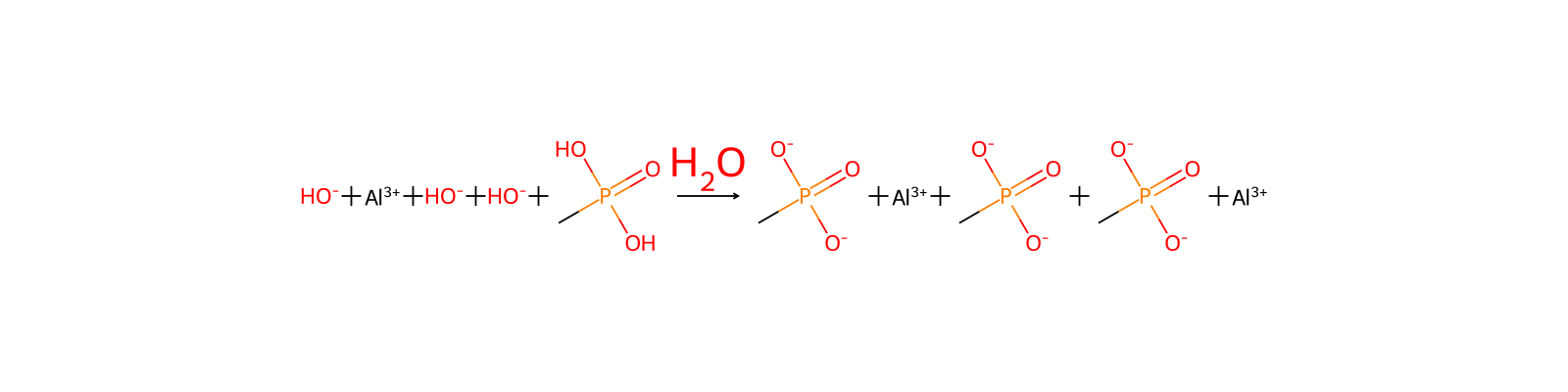
HRID 234593 の反応式
HRID 234593反応物としてuspto-grants-1997_01
HRID 247560 の反応式
HRID 247560反応物としてuspto-grants-1987_11
HRID 810191 の反応式
HRID 810191反応物としてTest data from https://doi.org/10.1039/C8SC04228D
HRID 905255 の反応式
HRID 905255反応物としてuspto-grants-1983_12
HRID 1464227 の反応式
HRID 1464227反応物としてuspto-grants-1994_04
HRID 1614661 の反応式
HRID 1614661反応物としてuspto-grants-1993_03
HRID 2371566 の反応式
HRID 2371566反応物としてuspto-grants-1992_03

化合物ノート

読み込み中…

このページの内容基本情報概要名称と識別子物性安全と法規制化学と産業関連反応化合物ノート
その他の操作
ノートを作成反応を作成見積依頼を出す
沸点
265.2 · 265.2±23.0 °C(Predicted)
比重(密度)
1.495 · 1.495±0.06 g/cm3(Predicted)
蒸気圧
0 Pa · 0Pa at 20℃
貯蔵温度
-20 °C · -20°C
溶解性
2 O: · H2O: 可溶2.88 g (30 mL 中)、透明、無色
外見
結晶性粉末
酸解離定数(Pka)
1 · pK1:2.38;pK2:7.74 (25°C)
色
ホワイトからオフホワイト
PH
0.9 · 0.9-1.4
水溶解度
水、アルコールに溶ける。
BRN
1739372 · 1739372
安定性
安定。強酸化剤、強塩基とは相容れない。
LogP
-1.556 at · -1.556 at 20℃
EPAの化学物質情報
Phosphonic acid, P-methyl- (993-13-5)

化学的性質

化学的特性white crystals or flakes

Disposal Methods · 1 件

SRP: At the time of review, criteria for land treatment or burial (sanitary landfill) disposal practices are subject to significant revision. Prior to implementing land disposal of waste residue (including waste sludge), consult with environmental regulatory agencies for guidance on acceptable disposal practices.

Protective Action Criteria (PAC) · 3 件

5.7 [mg/m3]

62 [mg/m3]

370 [mg/m3]

Personal Protective Equipment (PPE) · 1 件

Respiratory protection (supplied-air respirator with full facepiece or self-contained breathing apparatus) should be available where these compounds are manufactured or used and should be worn in case of emergency and overexposure. /Phosphorus compounds/

毒性情報

Environmental Fate · 3 件

TERRESTRIAL FATE: Based on a classification scheme(1), an estimated Koc value of 1(SRC), determined from a structure estimation method(2), indicates that methyl phosphonic acid is expected to have very high mobility in soil(SRC). In soils with high metal content, methyl phosphonic acid may adsorb to metal oxide surfaces(3,4). Methyl phosphonic acid is expected to exist in the dissociated form in the environment based on its pKa of 2.12(5). Dissociated methyl phosphonic acid will not volatilize from moist or dry soils(SRC). Some microorganisms and bacterial cells have been shown to cleave the C-P bond producing methane gas(6-8); however, this occurs only when the C-P compound is the sole phosphorus source. Most soil environments are not characterized by a lack of phosphorus(7); therefore, biodegradation in soil may not be an important removal process(SRC).

AQUATIC FATE: Based on a classification scheme(1), an estimated Koc value of 1(SRC), determined from an estimation method(2), indicates that methylphosphonic acid is not expected to adsorb to suspended solids and sediment(SRC). A pKa of 2.12(3) indicates methyl phosphonic acid will exist almost entirely in the dissociated form at pH values of 5 to 9. Therefore volatilization from water surfaces is not expected to be an important fate process(SRC). The half-life for the OH radical reaction with methyl phosphonic acid in water can be estimated to be approximately 18 years based on an experimental rate constant of 1.2X10+8 /Mole/sec(4) and an average OH concn of 1X10-17(5). According to a classification scheme(6), an estimated BCF of 3(SRC), from an estimated log Kow of -0.70(7) and a regression-derived equation(8), suggests the potential for bioconcentration in aquatic organisms is low. Biodegradation in water to methane gas may be an important removal process if methyl phosphonic acid is the sole phosphorus source especially in marine water where there is a low phosphorus content(9).

ATMOSPHERIC FATE: A pKa of 2.12(1) indicates methyl phosphonic acid will exist almost entirely in the dissociated form in the ambient environment. Since dissociated compounds are not volatile, methyl phosphonic acid will only exist in the particulate phase in the atmosphere. Particulate phase methyl phosphonic acid will be removed from the atmosphere by wet and dry deposition(SRC). Based on its high water solubility, 2.0X10+4 mg/l(2), wet deposition will be an important atmospheric removal process(SRC).

Adverse EffectsDermatotoxin - Skin burns.
Effluent Concentrations · 1 件

The concn of P-CH3 bond expressed as methyl phosphonic acid was reported to be 11.0 ug/l in industrial polluted waste water in the Federal Republic of Germany(1). The concn of P-CH3 bond expressed as methyl phosphonic acid was reported to be 2.4 ug/l in drainage water from an industrial waste deposit near Davamyran (Sweden) on March 26, 1980 and treated waste water from an industrial waste deposit in Kansas City (USA)(1).

Soil Adsorption/Mobility · 1 件

The adsorption of methylphosphonic acid onto solid silt particles in a river sample was negligible(1). Based on a classification scheme(2), an estimated Koc value of 1(SRC), determined from a structure estimation method(3), indicates that methyl phosphonic acid is expected to have very high mobility in soil(SRC). In soils with high metal content, methyl phosphonic acid may adsorb to metal oxide surfaces(4,5). Methyl phosphonic acid is expected to exist in the dissociated form in the environment based on its pKa1 of 2.12 and pKa2 of 7.29(6). Dissociated methyl phosphonic acid is expected to be highly mobile in soil environments(SRC).

Artificial Pollution Sources · 1 件

Methylphosphonic acid may be released to the environment during its production and use as a chemical warfare simulant(1). Methylphosphonic acid is a degradation product of the nerve agents sarin (GB), soman(2), and VX(3). It is also a degradation product of the two pesticides, O,O-bis(2,4,5-trichlorophenyl)methylphosphonate(4) and mecarphon (no longer being produced)(2) and O-ethyl S-2 diisopropyl-aminoethylmethyl-phosphonothioate(1). Methylphosphonic acid is a degradation product of the flame retardants dimethyl methyl phosphonate, Fyrol 58 and Antiblaze 19(5). Another source of methyl phosphonic acid in the environment may be methylphospholane dichloride(5). Therefore, methyl phosphonic acid may be released to the environment in waste streams during the production and use of these compounds(1,5).

Environmental Biodegradation · 1 件

Methyl phosphonic acid is expected to be resistant to biodegradation under environmental conditions(1-3). Compounds containing the C-P bond resist cleavage during metabolism in mammals and higher plants(4). In pure culture studies, the microorganism, Pseudomonas testosteroni, has been shown to cleave the C-P bond(5) and some bacterial cells were also shown to cleave the C-P bond(6,7); however, this occurs only when the C-P compound is the sole phosphorus source. Based on a pure culture study, the predominant degradation product of Escherichia coli growth on methyl phosphonic acid is methane gas(8).

Environmental Bioconcentration · 1 件

An estimated BCF of 3 was calculated for methyl phosphonic acid(SRC), using an estimated log Kow of -0.70(1) and a regression-derived equation(2). According to a classification scheme(3), this BCF suggests the potential for bioconcentration in aquatic organisms is low. Furthermore, methyl phosphonic acid will be highly dissociated under environmental conditions (pH 5-9) based on its pKa values (pKa1 of 2.12 and pKa2 of 7.29(4)) and methyl phosphonic acid in the dissociated form will not bioconcentrate in aquatic organisms(SRC).

Volatilization from Water/SoilA pKa of 2.12(1) indicates methyl phosphonic acid will exist almost entirely in the dissociated form at pH values of 5 to 9. Therefore volatilization from water surfaces is not expected to be an important fate process(SRC).
Non-Human Toxicity Excerpts · 5 件

Four genotoxic rat carcinogens, previously reported as negative in the standard hepatocyte/DNA repair assay, were studied in hepatocyte cultures derived from the livers of rats pretreated with the hepatic mixed function oxidase inducers, Aroclor and 3-methylcholanthrene. Cytembena and dimethyl hydrogen phosphite induced positive dose dependent DNA repair responses in Aroclor and 3-methylcholanthrene pretreated cultures, while 2,4-, 2,6-toluene diisocyanate, and ziram were negative for unschedule synthesis in cultures from both pretreatments. The results from this study indicate that pretreatment with hepatic mixed function oxidase inducers lowers the false negative detection rate of various genotoxic rat carcinogens and other organ specific genotopins and significantly increases the sensitivity of the in vitro rat hepatocyte/DNA repair assay.

The development of lung neoplasms following chronic dimethyl hydrogen phosphite administration was studied in rodents. Male Fischer 344 rats and B6C3F1 mice of both sexes received dimethyl hydrogen phosphite by oral gavage in doses of 0, 100, or 200 mg/kg body weight 5 days a week for 103 weeks, while female rats received dimethyl hydrogen phosphite via the same route in doses of 0, 50, or 100 mg/kg for an identical period of time. A dose related toxicity was observed in the lungs of dimethyl hydrogen phosphite treated male and female rats. Lung lesions were most prevalent among high dose male rats, which received twice the dimethyl hydrogen phosphite dose administered to high dose female rats. These pulmonary lesions included alevolar epithelial hyperplasia, chemically related pneumonia, alveolar/bronchiolar adenoma, alveolar/bronchiolar carcinoma, and squamous cell carcinoma. Dimethyl hydrogen phosphite administration also caused the development of neoplastic and non neoplastic lesions in the forestomachs of male rats, with a similar but less pronounced effect being noted in female rats. The non neoplastic lesions associated with dimethyl hydrogen phosphite administration included mineralization of the cerebellum in male rats and focal calcification of the testes in male mice. The authors conclude that evidence of dimethyl hydrogen phosphite carcinogenicity is clear in male rats and equivocal in female rats, while no evidence exists to support dimethyl hydrogen phosphite carcinogenicity in mice of either sex.

Pathological and biochemical effects induced by dimethyl hydrogen phosphite were studied in rats. Male Fischer 344 rats were administered 0 or 200 mg/kg dimethylhydrogen phosphite by oral gavage for 4, 5, or 6 wk. Some animals were treated for 4 wk and maintained for 1 or 2 wk of recovery. No overt signs of toxicity were seen in any animals. The weights of the forestomachs of treated rats were significantly increased. The other organ weights were not significantly affected by dimethyl hydrogen phosphite. Forestomach weights of rats treated for 4 wk returned to the control value after 1 wk of recovery. Epithelial hyperplasia, hyperkeratosis, subepithelial inflammation, and edema were seen in the forestomachs of rats given dimethyl hydrogen phosphite for 6 wk. No treatment related changes were seen in the glandular stomach or lungs. Serum angiotensin converting enzyme activity was increased in all treated rats. Angiotensin converting enzyme activity in rats treated for 4 wk decreased to near the control value after 2 wk recovery. The nonprotein sulfhydryl content of the forestomach was increased and carboxylesterase activity in the forestomach and lungs was reduced in rats given dimethyl hydrogen phosphite for 6 wk. In rats given a single oral or iv dose of 1000 mg/kg dimethyl hydrogen phosphite, and killed 0.5 to 8 hr later, nonprotein sulfhydryl content was significantly reduced in that dimethyl hydrogen phosphite, a known forestomach carcinogen for Fischer 344 rats, induces early and possibly preneoplastic changes in the forestomach.

Environmental Abiotic Degradation · 1 件

The resistance of methyl phosphonic acid to hydrolysis, photolysis, and thermal decomposition has been thoroughly substantiated in the literature(1-5). Methyl phosphonic acid in the ionized form can be oxidized to phosphoric acid when treated with ozone in an aqueous medium(6-7). The half-life for the OH radical reaction with methyl phosphonic acid in water can be estimated to be approximately 18 years based on an experimental rate constant of 1.2X10+8 /Mole/sec(8) and an average OH concn of 1X10-17(9). Oxidation of methyl phosphonic acid in basic solution has been shown to occur by a photochemically initiated reaction(10). Methylphosphonic acid is not expected to undergo hydrolysis in the environment due to the lack of hydrolyzable functional groups(11) nor to directly photolyze due to the lack of absorption in the environmental UV spectrum(>290 nm).

Probable Routes of Human ExposureOccupational exposure to methylphosphonic acid may occur through inhalation and dermal contact with this compound at workplaces(SRC) where methylphosphonic acid is produced or used as a chemical warfare simulant(1).
Environmental Water Concentrations · 3 件

SURFACE WATER: Compounds containing the phosphorus-methyl linkage expressed as methyl phosphonic acid were quantitatively reported at concn ranging from 0.35-1.23 ug/l in samples taken from the river Rhine, Netherlands and at concn of 0.21 and 0.25 ug/l in two samples from the river Muese, Netherlands in the period of August, 1975 to April, 1978(1). The analytical method first hydrolyzed the sample so that all compounds containing the P-CH3 bond would be converted to methyl phosphonic acid and then the methyl phosphonic acid was esterifed to trimethyl methylphosphonate for analytical detection(1). In the same study, concn of P-CH3 bond expressed as methyl phosphonic acid were reported at concn of 0.25 ug/l and 0.5 ug/l in Maarsseveen Lake and Viagtwedde Lake, respectively(1).

SURFACE WATER: The concn of P-CH3 bond expressed as methyl phosphonic acid was reported to be 0.09 ug/l in water from the river Meuse (Dinant, Belgium) in April, 1980(1). The concn of P-CH3 bond expressed as methyl phosphonic acid was reported to be 0.39 ug/l in industrially polluted water from the river Schelde (Helchin, Belgium) in April, 1980 and 0.17 ug/l in water from the river Renkajoki (Renko, Finland) sampled on April 22, 1980(1). The concn of P-CH3 bond expressed as methyl phosphonic acid was reported to be 0.11 ug/l in water from the River Bow (Canada), sampled 60 km from the glacier source on May 13, 1980(1). The concn of P-CH3 bond expressed as methyl phosphonic acid was reported to be 0.31 ug/l in industrial polluted water from the river South Saskatchewan, sampled at 450 km from the source and 250 km from Calgary (Canada) on May 21, 1980(1).

SURFACE WATER: The concn of P-CH3 bond expressed as methyl phosphonic acid was reported to be 0.45 ug/l in surface water in the Federal Republic of Germany. The concn of P-CH3 bond expressed as methyl phosphonic acid was reported to be 0.29 ug/l in industrially polluted surface water from the river Tervajoki sampled at Janankala (Finland) on May 5, 1980(1). The concn of P-CH3 bond expressed as methyl phosphonic acid was reported to be 0.18 ug/l in water from the Lake of Maarseveen (The Netherlands) on August 4, 1980. The concn of P-CH3 bond expressed as methyl phosphonic acid was reported to range from 0.21-2.65 ug/l in industrial polluted water from the river Rhine, sampled at Bergambacnt (The Netherlands) in the period of 1979-1980(1). The concn of P-CH3 bond expressed as methyl phosphonic acid was reported to be 0.02 ug/l in water from the lake Gittsjon (Sweden) beneath the ice on April 11, 1980(1). The concn of P-CH3 bond expressed as methyl phosphonic acid was reported to be 0.30 ug/l in water from the river Ume (Gimonas, Sweden) on April 21, 1980(1).

安全データ

F
10
wgk
3
tsca
TSCA listed
ridadr
UN 3261 8/PG 2
hs_code
29310099
risk_code
22-34-39/23/24/25-23/24/25-11
化審法
(2)-1995
hazard_code
C,T,F
safety_code
26-36/37/39-45-36/37-16-7
hazard_class
8
packing_group
II
有毒物質データの
993-13-5(Hazardous Substances Data)
Use Classification
Environmental transformation -> Pesticide transformation products (metabolite, successor)
General Manufacturing Information · 3 件

Synthetic Dye and Pigment Manufacturing

Phosphonic acid, P-methyl-: ACTIVE

Methyl phosphonic acid is a degradation product of the nerve agents sarin, soman, and VX.

応用分野

使用Methylphosphonic acid is used to produce methyl-phosphonic acid dichloride by chlorination.

調製方法 · 1 件

純化方法Methylphosphonic acid [993-13-5] M 96.0, m 104-106o, 105-107o, 108o, pK 1 2.12, pK 2 7.29. If it tests for Cl-, then add H2O and evaporate to dryness, repeat several times till free from Cl-. The residue solidifies to a wax-like solid. Alternatively, dissolve the acid in the minimum volume of H2O, add charcoal, warm, filter and evaporate to dryness in a vacuum over P2O5. [Kosolapoff J Am Chem Soc 75 3379 1953.] The di-Na salt is prepared from 24g of acid in 50mL of dry EtOH, and a solution of 23g Na dissolved in 400mL EtOH is added. A white precipitate is formed, but the mixture is refluxed for 30minutes to complete the reaction. Filter off the solid and recrystallise it from 50% EtOH. Dry the crystals in a vacuum desiccator. [Thompson J Chem Soc 3292 1952, Beilstein 4 IV 3498.]

上流・下流製品情報

上流原料

Phosphonic acid, P-methyl-, bis(1,1-dimethylethyl) esterサリン(3S-trans)-3-(t-butyloxycarbonylaMino)-1-hydroxy-4-Methyl-2-azetidinoneN-[(3,5-ジメチル-4-イソオキサゾリル)メチル]フタルイミドイソプロピルメチルホスホン酸エステルメチルホスホン酸ジブチルメチルホスホン酸ジクロリドクロロメチルホスホン酸

下流製品

boile water treatment agent NS-4022-アミノ-4-(メチルホスホニル)ブタン酸アンモニウム炭酸ネオジム一水和物グリシン-N,N-ビス(メチレンホスホン酸)酸化ランタン4-ホスホノ-3-アザブタン酸メチルホスホン酸 ジフェニルメチルホスホン酸エチル

Dimethyl hydrogen phosphite, an intermediate in the production of insecticides or herbicides, was administered by oral gavage for 2 yr to male Fischer 344/N rats and male and female B6C3F1 mice at doses of 0, 100, or 200 mg/kg and to female Fischer 344/N rats at doses of 0, 50 or 100 mg/kg. Dose related toxicity was seen in the lungs of treated male and female rats. The lung lesions were most prevalent in the high dose male rat group which received a dose twice that given to the high dose female rats. Lung lesions included alveolar epithelial hyperplasia, chemically related pneumonia, alveolar-bronchiolar adenoma, alveolar-bronchiolar carcinoma, and squamous cell carcinoma. Dimethyl hydrogen phosphite also caused neoplastic and nonneoplastic lesions of the forestomach in male rats; a similar but less pronounced effect was observed in female rats. Nonneoplastic lesions associated with administration of dimethyl hydrogen phosphite included mineralization of the cerebellum in male rat and focal calcification of the testis in male mice. Under the conditions of this study, there was clear evidence for carcinogenicity for male rats, equivocal evidence for carcinogenicity in female rats, and no evidence for carcinogenicity in either male or female mice. Dimethyl hydrogen phosphite caused the highest incidence of lung tumors in the male rat of all chemicals studied to date in the National Cancer Institute-National Toxicology Program Carcinogenesis Testing Program.

In a chronic study by the National Toxicology Program, dimethyl hydrogen phosphite caused neoplastic and nonneoplastic changes in the lungs and forestomach of F344/N rats following gavage administration for 2 years. The current investigation was designed to study the effect of a short term exposure on a series of biochemical systems in target and nontarget tissues which may be involved in the metabolism and/or the manifestation of dimethyl hydrogen phosphite toxicity. Rats were treated daily with a dose similar to that used in the NTP study (200 mg/kg) for 4, 5, or 6 weeks. Two groups of animals were also treated for 4 weeks and then treatment was discontinued and the rats were allowed to recover for 1 or 2 weeks. An equal number of animals was treated similarly with the vehicle and used as control. The microsomal and soluble fractions were separated from liver, lungs kidneys, forestomach, and glandular stomach from the 6 week treatment group. Another group of rats treated for 6 weeks was prepared for pathology examination of the lungs, forestomach, and glandular stomach. There was a significant increase in the weight of the forestomach of rats treated for 4, 5, or 6 weeks relative to control animals, while no significant difference was observed in the weight of liver, lungs, kidneys, and glandular stomach. The forestomach weight of rats treated for 4 weeks returned to the control value after 1 week of recovery. Microscopic examination of the forestomach of rats treated for 6 weeks revealed a thickened stratified squamous epithelium characterized by hyperplasia, hyperkeratosis, and subepithelial inflammation and edema. There were no microscopic changes in the lungs or glandular stomach of animals treated for 6 weeks. The activity of angiotensin converting enzyme in the serum of rats treated for 4, 5, or 6 weeks was significantly increased over that of control animals. The activity of this enzyme returned to near levels seen in the control animals after 1 week of recovery following 4 weeks of treatment. No treatment related effect was observed in the activities of the microsomal p-nitroanisole demethylase, soluble glutathione S-transferase, and soluble superoxide dismutase in the five tissues studied. There was a significant increase in the level of nonprotein soluble sulfhydryls in the forestomach but in no other tissue of rats treated for 6 weeks. Also the activity of soluble carboxylesterase was significantly reduced in the lungs and forestomach, but not in any other tissue of the 6 week treated rats.