
HRID 435430生成物として
Chromium(III) acetate
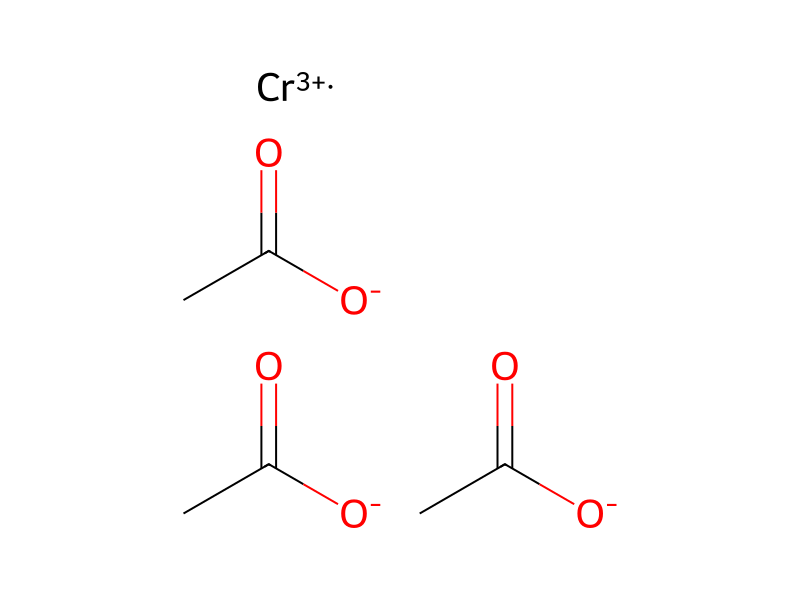
1066-30-4CC(=O)[O-].CC(=O)[O-].CC(=O)[O-].[Cr+3]WYYQVWLEPYFFLP-UHFFFAOYSA-KChromic acetate appears as a grayish green to bluish green powder. The primary hazard is the threat to the environment. Immediate steps should be taken to limit its spread to the environment. It is used in tanning and in textile dyeing.
1.3 (USCG, 1999) - Denser than water; will sink
1.56 g/cu cm at 22.95 °C (OECD Guideline 109 (Density of Liquids and Solids))
In water, 675 g/L at 20 °C, pH 5 (OECD Guideline 105 (Water Solubility))
2 g/L of acetone at 15 °C; 45.4 g/L of methanol at 15 °C
安全情報は参考情報です。供給元の安全データシート(SDS)、適用法令、専門家による評価に代わるものではありません。
This chemical does not meet GHS hazard criteria for 91.6% (2156 of 2353) of all reports.
Not Classified
Aggregated GHS information provided per 2353 reports by companies from 7 notifications to the ECHA C&L Inventory.
Danger
H315 (100%): Causes skin irritation [Warning Skin corrosion/irritation]
P261, P264, P264+P265, P272, P273, P280, P302+P352, P305+P351+P338, P321, P332+P317, P333+P317, P337+P317, P362+P364, and P501 (click each P-code to see the statement)
Chemical: Acetic acid, chromium(3+) salt
Acetic acid, chromium(3+) salt (3:1) is listed on the EPA's Chemical Data Reporting (CDR) system. Manufacturers and importers of Acetic acid, chromium(3+) salt (3:1) are required to report information about their production and use of this chemical to the EPA under the Toxic Substances Control Act (TSCA). (40 eCFR Part 711)
REACH registered substance: Chromium triacetate (EC: 213-909-4)
REACH registered substance: Chromium acetate (EC: 241-562-9)
Acetic acid, chromium(3+) salt: Does not have an individual approval but may be used as a component in a product covered by a group standard. It is not approved for use as a chemical in its own right.
The New Jersey Worker and Community Right to Know Act requires public and private employers to provide information about hazardous substances at their workplaces. (N.J.S.A. 34:5A-1 et. seq.)
INHALATION: Irritating. It can produce ulcerations in the respiratory system, perforation of the nasal septum, pneumonitis and bronchial carcinoma. EYES: Irritation. SKIN: May cause dermatitis to exposed skin. Can produce ulcerations and sensitizing reactions. (USCG, 1999)
Chromium is absorbed from oral, inhalation, or dermal exposure and distributes to nearly all tissues, with the highest concentrations found in kidney and liver. Bone is also a major storage site and may contribute to long-term retention. Hexavalent chromium's similarity to sulfate and chromate allow it to be transported into cells via sulfate transport mechanisms. Inside the cell, hexavalent chromium is reduced first to pentavalent chromium, then to trivalent chromium by many substances including ascorbate, glutathione, and nicotinamide adenine dinucleotide. Chromium is almost entirely excreted with the urine. (A12, L16)
Used as a mordant in dyeing textiles and polymers, a hardener in photographic emulsions, an oxidation catalyst, a polymerization catalyst, a curing agent for acrylamide polymers, and a tanning agent; [HSDB]
Leather Tanning and Processing [Category: Industry]
For chromium(III) acetate (USEPA/OPP Pesticide Code: 021102) there are 0 labels match. /SRP: Not registered for current use in the U.S., but approved pesticide uses may change periodically and so federal, state and local authorities must be consulted for currently approved uses./
As mordant in dyeing; in tanning; in hardening photographic emulsions; to improve light stability and dye affinity of textiles and polymers; in catalyst for polymerization of olefins; as an oxidation catalyst.
Basic chromium acetates are used as mordants in calico printing and worsted top printing, and also for fixing vigoureux dyes. Combinations of basic chromium(III) acetate and basic chromium(III) formate also find application in the textile industry as mordants. In addition, chromium(III) acetate is used as a starting compound in the production of organic chromium dyes.
Cross-links arylamide polymers.
2023: 75,000 - <500,000 lb
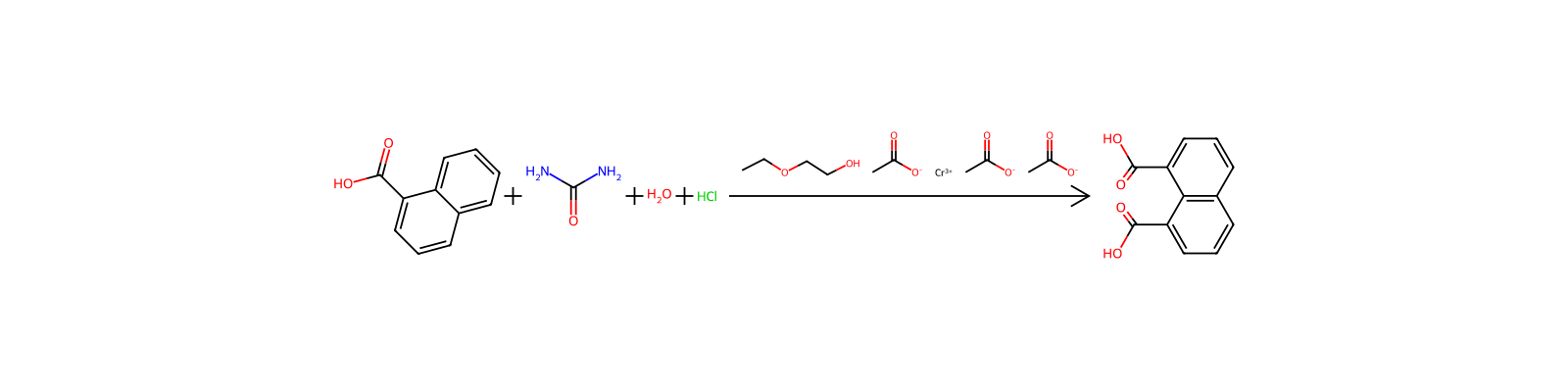
1066-30-4、17593-70-3、39430-51-8DTXSID4020327Chromic acetate appears as a grayish green to bluish green powder. The primary hazard is the threat to the environment. Immediate steps should be taken to limit its spread to the environment. It is used in tanning and in textile dyeing.
Dry Powder; Liquid; Dry Powder
Blue-green solid; Soluble in water; [HSDB]
化学的特性Chromic acetate is a gray-green powder or blue-green pasty mass
CrIII compounds do not cause chrome ulcerations but may cause allergic dermatitis in workers with prior sensitization to CrVI compounds. [ILO Encyclo] CrIII is an essential trace mineral in the human diet. [ATSDR Case Studies] Toxic by ingestion; Skin sensitization among workers handling trivalent chromium salts appears to be a rare event. [IPCS-CICADS] An irritant; [MSDSonline]
D007; A solid waste containing chromium may or may not become characterized as a hazardous waste when subjected to the Toxicity Characteristic Leaching Procedure listed in 40 CFR 261.24, and if so characterized, must be managed as a hazardous waste. /Chromium/
D007; A waste containing chromium may or may not be characterized as a hazardous waste following testing by the Toxicity Characteristic Leaching Procedure as prescribed by the Resource Conservation and Recovery Act (RCRA) regulations. /Chromium/
Persons in charge of vessels or facilities are required to notify the National Response Center (NRC) immediately, when there is a release of this designated hazardous substance, in an amount equal to or greater than its reportable quantity of 1000 lb or 454 kg. The toll free number of the NRC is (800) 424-8802. The rule for determining when notification is required is stated in 40 CFR 302.4 (section IV. D.3.b).
Respiratory protection from soluble chromic and chromous salts while fighting fires: self-contained breathing apparatus with a full facepiece operated in pressure-demand or other positive pressure mode. /Sol chromic & chromous salts/
/When fire fighting wear/ self-contained breathing apparatus, with a full facepiece, operated in pressure-demand or other positive pressure mode. /Chromic acid & chromates/
Generators of waste (equal to or greater than 100 kg/mo) containing this contaminant, EPA hazardous waste number D007, must conform with USEPA regulations in storage, transportation, treatment and disposal of waste. /Chromium/
SRP: Wastewater from contaminant suppression, cleaning of protective clothing/equipment, or contaminated sites should be contained and evaluated for subject chemical or decomposition product concentrations. Concentrations shall be lower than applicable environmental discharge or disposal criteria. Alternatively, pretreatment and/or discharge to a permitted wastewater treatment facility is acceptable only after review by the governing authority and assurance that "pass through" violations will not occur. Due consideration shall be given to remediation worker exposure (inhalation, dermal and ingestion) as well as fate during treatment, transfer and disposal. If it is not practicable to manage the chemical in this fashion, it must be evaluated in accordance with EPA 40 CFR Part 261, specifically Subpart B, in order to determine the appropriate local, state and federal requirements for disposal.
The following wastewater treatment technology has been investigated for chromium: Concentration process: Biological Treatment. /Chromium/
The following wastewater treatment technology has been investigated for chromium: Concentration process: Chemical Precipitation. /Chromium/
For more Disposal Methods (Complete) data for CHROMIUM(III) ACETATE (7 total), please visit the HSDB record page.
Work clothing that becomes wet or significantly contaminated should be removed and replaced. /Chromic acid and cromates; Chromium(II) compounds (as Cr); Chromium(III) compounds/
The worker should immediately wash the skin when it becomes contaminated. /Chromic acid and chromates; Chromium(II) compounds (as Cr); Chromium(III) compounds/
Workers whose clothing may have become contaminated should change into uncontaminated clothing before leaving the work premises. /Chromic acid and cromates/
SRP: Contaminated protective clothing should be segregated in a manner such that there is no direct personal contact by personnel who handle, dispose, or clean the clothing. The completeness of the cleaning procedures should be considered before the decontaminated protective clothing is returned for reuse by the workers. Contaminated clothing should not be taken home at the end of shift, but should remain at employee's place of work for cleaning.
0.003 [mg/m3], as Cr(III), inhalable particulate matter
8 hr Time Weighted Avg (TWA): 0.5 mg/cu m. /Chromium and Cr(III) inorganic compounds, as Cr/
A4; Not classifiable as a human carcinogen. /Chromium and Cr(III) inorganic compounds, as Cr/
Excursion Limit Recommendation: Excursions in worker exposure levels may exceed 3 times the TLV-TWA for no more than a total of 30 minutes during a work day, and under no circumstances should they exceed 5 times the TLV-TWA, provided that the TLV-TWA is not exceeded. /Chromium and Cr(III) inorganic compounds, as Cr/
0.040 [mg/m3]
78 [mg/m3]
470 [mg/m3]
Rubber gloves, safety glasses, laboratory coat. If powder becomes airborne, wear approved mechanical filter respirator. (USCG, 1999)
Respirator Recommendations: Up to 2.5 mg/cu m: /Chromium(II) compounds (as Cr); Chromium(III) compounds (as Cr)/[Table#2628]
Respirator Recommendations: Up to 5 mg/cu m: /Chromium(II) compounds (as Cr); Chromium (III) compounds (as Cr)/[Table#2629]
Respirator Recommendations: Up to 12.5 mg/cu m: /Chromium(II) compounds (as Cr); Chromium (III) compounds (as Cr)/[Table#2630]
Respirator Recommendations: Up to 25 mg/cu m: /Chromium(II) compounds (as Cr); Chromium (III) compounds (as Cr)/[Table#2631]
For more Personal Protective Equipment (PPE) (Complete) data for CHROMIUM(III) ACETATE (6 total), please visit the HSDB record page.
25 mg Cr(III)/m3 (NIOSH, 2024)
25 mg/cu m (as Cr(III)). /Chromium(III) compounds (as Cr)/
LC50; Species: Oryzias latipes (Japanese Medaka); Conditions: freshwater, static, 10 °C; Concentration: 450000 ug/L for 24 hr /total Cr ion/
LC50; Species: Oryzias latipes (Japanese Medaka); Conditions: freshwater, static, 20 °C; Concentration: 420000 ug/L for 24 hr /total Cr ion/
LC50; Species: Oryzias latipes (Japanese Medaka); Conditions: freshwater, static, 30 °C; Concentration: 420000 ug/L for 24 hr /total Cr ion/
LC50; Species: Oryzias latipes (Japanese Medaka); Conditions: freshwater, static, 10 °C; Concentration: 420000 ug/L for 48 hr /total Cr ion/
For more Ecotoxicity Values (Complete) data for CHROMIUM(III) ACETATE (6 total), please visit the HSDB record page.
IDENTIFICATION AND USE: Chromium (III) acetate is a blue-violet crystalline powder. It is not registered for current pesticide use in the U.S., but approved pesticide uses may change periodically and so federal, state and local authorities must be consulted for currently approved uses. It is used in dyeing; in tanning; in hardening photographic emulsions; as oxidation catalyst; to improve light stability and dye affinity of textiles and polymers; and in catalyst for polymerization of olefins. HUMAN EXPOSURE AND TOXICITY: There is no data. ANIMAL STUDIES: In studies in which chromium (III) acetate was administered by the oral route to mice and rats and by intrapleural and intramuscular administration to rats, the incidence of tumors was not increased. Salmonella typhimurium strain TA102, particularly suited to the detection of oxidative mutagens, was the most sensitive out of 9 strains of S. typhimurium his- in revealing the mutagenicity of Cr(VI) compounds. The rank of sensitivity was the following: TA102, TA100, TA97, TA92, TA1978, TA98, TA1538 and TA1537, TA1535 being the only insensitive strain. Cr(III) compounds (chromic acetate, chromic nitrate and chromic potassium sulfate) were totally inactive with all strains.
Trivalent chromium may also form complexes with peptides, proteins, and DNA, resulting in DNA-protein crosslinks, DNA strand breaks, DNA-DNA interstrand crosslinks, chromium-DNA adducts, chromosomal aberrations and alterations in cellular signaling pathways. It has been shown to induce carcinogenesis by overstimulating cellular regulatory pathways and increasing peroxide levels by activating certain mitogen-activated protein kinases. It can also cause transcriptional repression by cross-linking histone deacetylase 1-DNA methyltransferase 1 complexes to CYP1A1 promoter chromatin, inhibiting histone modification. Chromium may increase its own toxicity by modifying metal regulatory transcription factor 1, causing the inhibition of zinc-induced metallothionein transcription. (A12, L16, A34, A35, A36)
Chromium in its trivalent state is not very toxic, but it may be oxidized to hexavalent chromium. Breathing hexavalent chromium can cause irritation to the lining of the nose, nose ulcers, runny nose, and breathing problems, such as asthma, cough, shortness of breath, or wheezing. Ingestion of hexavalent chromium causes irritation and ulcers in the stomach and small intestine, as well as anemia. Skin contact can cause skin ulcers. (L16)
Using OECD Guideline 121 (Estimation of the Adsorption Coefficient (Koc) on Soil and on Sewage Sludge using High Performance Liquid Chromatography (HPLC)), chromium (III) acetate was estimated to have a log Koc of <1.5 (Koc of 31.6)(1). According to a classification scheme(2), this estimated Koc value suggests that chromium (III) acetate is expected to have very high mobility in soil.
Chromium (VI) anions can be considered to be mobile in sediments in the environment, except possibly under highly acidic conditions(1). In contrast chromium (III), the oxidation state in which chromium is present in acetic acid, chromium salt, appears to be much more strongly adsorbed to soils and sediments than chromium (VI)(1). The adsorption of chromium (III) onto soil follows the pattern typical of cationic metals and increases with increasing pH (lowering pH results in increased protonation of the adsorbent leading to fewer adsorption sites for the cationic metal) and the organic matter content of the soil and decreases when other competing (metal) cations are present(1). Certain dissolved organic ligands may also reduce the adsorption of chromium (III) to the solid phase by forming complexes which enhance the solubility of chromium (III) in the aqueous phase(1).
Using OECD Guideline 301A (new version) (Ready Biodegradability: DOC Die Away Test) with an adapted activated sludge inoculum, chromium (III) acetate (at 40 mg/L) was found to be readily biodegradable with 33.8, 84.5, 89.3 and 91.8% degradation after 1, 3 ,7 and 9 days of incubation, respectively(1).
/LABORATORY ANIMALS: Chronic Exposure or Carcinogenicity/ ... No tumors occurred after 2 yr at site of 8 intrapleural implantations over 13 MO of 25 mg chromic(iii) acetate in gelatin capsules to 42 rats.
/LABORATORY ANIMALS: Chronic Exposure or Carcinogenicity/ Groups of 54 male and 54 female swiss mice that received 5 mg/L chromic(III) acetate in drinking water for life developed no more tumors than did control mice. No difference was found in the survival of females compared with controls, but treated males died 100 days earlier than control males (831 versus 957 days); only 60% of the males survived 18 months. ... Chromic(III) acetate was given in drinking water at ... 5 mg/L to 46 male & 50 female long evans rats for lifespan ... /did not significantly/ incr ... incidence of tumors at various sites ... of either sex as compared with controls. ... Tumor-bearing ... were: 16/39 treated males, 18/35 treated females; 9/35 male controls and 15/35 female controls ... .
/LABORATORY ANIMALS: Chronic Exposure or Carcinogenicity/ In groups of 22-34 rats that received im implantations of various chromium compounds, the following incidences of implantation-site tumors (type unspecified) ... observed after 27 mo: calcium chromate(VI), 9/32 (22 alive at 1 yr), ... sodium dichromate(VI), 0/33 (25 alive at 1 yr), ... chromic(III) acetate, 1/34 (30 alive at 1 yr); and sintered calcium chromate(VI), 12/34 (22 alive at 1 yr). None of 32 control rats given implants of sheep fat alone developed local tumors (30 alive at 1 yr).
/LABORATORY ANIMALS: Chronic Exposure or Carcinogenicity/ Experiments in mice, rats, hamsters, guinea-pigs and rabbits to investigate the carcinogenicity of chromic(III) acetate, chromic(III) oxide, ... chromium(VI) trioxide, chromium metal, ... sodium chromate(VI), ... sodium dichromate(VI), ... chromium(III) sulfate ... were inadequate to evaluate the carcinogenicity of these chromium compounds.
For more Non-Human Toxicity Excerpts (Complete) data for CHROMIUM(III) ACETATE (7 total), please visit the HSDB record page.
WEIGHT OF EVIDENCE CHARACTERIZATION: Applying the criteria for evaluating the overall weight of evidence for carcinogenicity to humans outlined in EPA's guidelines for risk assessment (1986), trivalent chromium is most appropriately designated a Group D -- Not classified as to its human carcinogenicity. Using the Proposed Guidelines for Carcinogen Risk Assessment (1996), there are inadequate data to determine the potential carcinogenicity of trivalent chromium ... However, the classification of hexavalent chromium as a known human carcinogen raises a concern for the carcinogenic potential of trivalent chromium. HUMAN CARCINOGENICITY DATA: Occupational exposure to trivalent chromium and other chromium compounds by inhalation has been studied in the chromate manufacturing and ferrochromium industries; however, exposures all include mixed exposures to both Cr(III) and Cr(VI). Cr(VI) species is the likely etiological agent in reports of excess cancer risk in chromium workers. Data addressing exposures to Cr(III) alone are not available and data are inadequate for an evaluation of human carcinogenic potential. ... ANIMAL CARCINOGENICITY DATA: The data from oral and inhalation exposures of animals to trivalent chromium do not support documentation of the carcinogenicity of trivalent chromium. IARC concluded that animal data are inadequate for the evaluation of the carcinogenicity of Cr(III) compounds. Furthermore, although there is sufficient evidence of respiratory carcinogenicity associated with exposure to chromium, the relative contribution of Cr(III), Cr(VI), metallic chromium, or soluble versus insoluble chromium to carcinogenicity cannot be elucidated... /Chromium (III), insoluble salts/
A4; Not classifiable as a human carcinogen. /Chromium and Cr(III) inorganic compounds/
Evaluation: There is inadequate evidence in humans for the carcinogenicity of metallic chromium and of chromium(III) compounds. There is inadequate evidence in experimental animals for the carcinogenicity of metallic chromium, barium chromate and chromium(III) compounds. Overall evaluation: Metallic chromium and chromium(III) compounds are not classifiable as to their carcinogenicity to humans (Group 3). /Metallic chromium and chromium(III) compounds/
D007; A solid waste containing chromium may or may not become characterized as a hazardous waste when subjected to the Toxicity Characteristic Leaching Procedure listed in 40 CFR 261.24, and if so characterized, must be managed as a hazardous waste. /Chromium/
Persons in charge of vessels or facilities are required to notify the National Response Center (NRC) immediately, when there is a release of this designated hazardous substance, in an amount equal to or greater than its reportable quantity of 1000 lb or 454 kg. The toll free number of the NRC is (800) 424-8802. The rule for determining when notification is required is stated in 40 CFR 302.4 (section IV. D.3.b).
Chromic acetate is designated as a hazardous substance under section 311(b)(2)(A) of the Federal Water Pollution Control Act and further regulated by the Clean Water Act Amendments of 1977 and 1978. These regulations apply to discharges of this substance. This designation includes any isomers and hydrates, as well as any solutions and mixtures containing this substance.
Toxic pollutant designated pursuant to section 307(a)(1) of the Federal Water Pollution Control Act and is subject to effluent limitations. /Chromium and compounds/
EPA 100 ug/L
Maximum contaminant level for inorganic contaminants: Contaminant: Chromium; MCL 0.1 mg/L. /Chromium/
(1977) AT LEAST 4.54X10+6 G
(1982) PROBABLY GREATER THAN 2.27X10+6 G
Non-confidential 2012 Chemical Data Reporting (CDR) information on the production and use of chemicals manufactured or imported into the United States. Chemical: Acetic acid, chromium(3+) salt (3:1). National Production Volume: Withheld.
Industrial preparation: Stover; Drew, USA patents 2650239; 2678328 (1953, 1954 both to Socony-Vacuum Oil).
Action of acetic acid on chromium hydroxide. The solution is evaporated and crystallized.
Solutions of chromic acetate are produced by dissolving freshly prepared hydrous chromic oxide in acetic acid. Commercial mixtures ... with sodium acetate have been prepared by reduction of sodium dichromate with glucose or corn sugar in the presence of acetic acid.
... Chromium(III) hydroxide hydrate is dissolved in dilute acetic acid, and the solid is obtained by drying on drums or in a spray drier.
The commercial material, usually sold as a concentrated solution of the basic acetate.
50% solution grade; powder grade
All Other Basic Organic Chemical Manufacturing
Acetic acid, chromium(3+) salt (3:1): ACTIVE
用途染料、塗料原料。
用途クローム媒染剤、なめし皮
使用Textile mordant, tanning, polymerization and oxidation catalyst, emulsion hardener.
一般的な説明A grayish green to bluish green powder. The primary hazard is the threat to the environment. Immediate steps should be taken to limit its spread to the environment. Chromic acetate is used in tanning and in textile dyeing.