
基本情報
- 標準SMILES
CC(=O)c1ccncc1- InChIKey
WMQUKDQWMMOHSA-UHFFFAOYSA-N- 分子式
- C7H7NO
- 平均分子量
- 121.14 g/mol
- 単同位体質量
- 121.05276385
名称と識別子
- 優先名称
- 4-Acetylpyridine
- IUPAC
- 1-pyridin-4-ylethanone
- 現地名
- 4-アセチルピリジン
- 英語名
- 4-Acetylpyridine
- 分子式
- C7H7NO
- 分子量
- 121.14
名称と別名
4-Acetylpyridine1122-54-91-pyridin-4-ylethanoneMethyl 4-pyridyl ketoneEthanone, 1-(4-pyridinyl)-Ketone, methyl 4-pyridylPyridine, 4-acetyl-4-Pyridyl methyl ketone1-(4-PYRIDINYL)ETHANONENSC-111G47437IOW7DTXSID0022147
名称をさらに表示
4-アセチルピリジンメチル4-ピリジニルケトンメチル4-ピリジルケトン1-(4-ピリジル)エタノンメチル(4-ピリジル)ケトン1-(ピリジン-4-イル)エタノン1-(4-ピリジニル)エタノン4‐アセチルピリジン1-(ピリジン-4-イル)エタン-1-オン1-pyridin-4-yl-ethanoneNSC 1114-Acetylpyridi4-acetyl-pyridin4-Acttylpyridine4-acetyl pyrdineAKOS BBS-00003233Acetylpyridine,4-
RefChem:517351DTXCID402147214-350-91-(pyridin-4-yl)ethan-1-one4-Acetyl pyridine1-(pyridin-4-yl)ethanone1-(4-pyridyl)ethanoneMFCD00006433
データベース識別子
- CAS
1122-54-9- PubChem CID
- 14282
- DTXSID
DTXSID0022147- ChEMBL
CHEMBL445953- UNII
- G47437IOW7
- EC Number
- 214-350-9
- Nikkaji
- J41.571E
物性
構造計算による物性
- XLogP
- 0.5
- 極性表面積
- 30 Ų
- 水素結合供与体数
- 0
- 水素結合受容体数
- 2
- 回転可能結合数
- 1
- 重原子数
- 9
- 形式電荷
- 0
- 複雑度
- 105
実験および物理化学的性質
Density1.111 at 74.1 °F (NTP, 1992) - Denser than water; will sink
Solubilitygreater than or equal to 100 mg/mL at 66 °F (NTP, 1992)
Flash Pointgreater than 200 °F (NTP, 1992)
Boiling Point414 °F at 760 mmHg (NTP, 1992)
Vapor Pressure4.9 mmHg at 77 °F ; 6.1 mmHg at 94.1 °F (NTP, 1992)
Physical Description4-acetylpyridine is a dark amber liquid. (NTP, 1992)
Kovats Retention Index
1112
1800;1801
物理化学的性質
- 融点
- 13 · 13-16 °C(lit.)
- 沸点
- 212 °C · 212 °C(lit.)
- 比重(密度)
- 1.095 g/mL · 1.095 g/mL at 25 °C(lit.)
- 屈折率
- 20 · n20/D 1.529(lit.)
- 闪点
- 230 °F · >230 °F
- 貯蔵温度
- Inert atmosphere,Room Temperature
- 溶解性
- クロロホルム、酢酸エチル
- 酸解離定数(Pka)
- 1 · pK1: 3.505(+1) (25°C)
- 外見
- 液体
- 比重
- 1.11 · 1.110 (20/4℃)
- 色
- 茶色がかった黄色
- 水溶解度
- 不溶性
- BRN
- 107629 · 107629
- Henry's Law Constant
- 1.6 · 1.6×102 mol/(m3Pa) at 25℃, Abraham et al. (1994)
- InChI
- 1S/C7H7NO/c1-6(9)7-2-4-8-5-3-7/h2-5H,1H3
- InChIKey
- WMQUKDQWMMOHSA-UHFFFAOYSA-N
- SMILES
- CC(=O)c1ccncc1
- LogP
- 0.48 · 0.480
- CAS データベース
- 1122 · 1122-54-9(CAS DataBase Reference)
- NISTの化学物質情報
- 1 · Ethanone, 1-(4-pyridinyl)-(1122-54-9)
- EPAの化学物質情報
- 4 · 4-Acetylpyridine (1122-54-9)
化学的性質
化学的特性clear light yellow to brownish liquid
安全と法規制
GHS分類
GHS Classification
This chemical does not meet GHS hazard criteria for 63.6% (89 of 140) of all reports.
Warning
H315 (36.4%): Causes skin irritation [Warning Skin corrosion/irritation];H319 (34.3%): Causes serious eye irritation [Warning Serious eye damage/eye irritation];H335 (32.9%): May cause respiratory irritation [Warning Specific target organ toxicity, single exposure; Respiratory tract irritation]
P261, P264, P264+P265, P271, P280, P302+P352, P304+P340, P305+P351+P338, P319, P321, P332+P317, P337+P317, P362+P364, P403+P233, P405, and P501 (click each P-code to see the statement)
Aggregated GHS information provided per 140 reports by companies from 11 notifications to the ECHA C&L Inventory. Each notification may be associated with multiple companies.;Reported as not meeting GHS hazard criteria per 89 of 140 reports by companies.;There are 10 notifications provided by 51 of 140 reports by companies with hazard statement code(s).;Information may vary between notifications depending on impurities, additives, and other factors. The percentage value in parenthesis indicates the notified classification ratio from companies that provide hazard codes. Only hazard codes with percentage values above 10% are shown. For more detailed information, please visit ECHA C&L website.
危険有害性情報
Regulatory Information
Commission Regulation (EC) No 1565/2000 (Repealed by Com. Implementing Reg. (EU) No 872/2012)
Methyl 4-pyridyl ketone: Does not have an individual approval but may be used under an appropriate group standard
DOT LabelPoison
Fire HazardsThis chemical is probably combustible. (NTP, 1992)
Health Hazards
SYMPTOMS: Symptoms of exposure to this compound may include irritation of the skin, eyes, mucous membranes and upper respiratory tract.;ACUTE/CHRONIC HAZARDS: This compound may be harmful by ingestion, inhalation or skin absorption. It is irritating to the skin, eyes, mucous membranes and upper respiratory tract. When heated to decomposition it emits toxic fumes of carbon monoxide, carbon dioxide and nitrogen oxides. (NTP, 1992)
Reactive GroupAmines, Phosphines, and Pyridines;Ketones
Reactivity Profile
4-ACETYLPYRIDINE is incompatible with strong oxidizing agents and strong reducing agents. (NTP, 1992). Amines are chemical bases. They neutralize acids to form salts plus water. These acid-base reactions are exothermic. The amount of heat that is evolved per mole of amine in a neutralization is largely independent of the strength of the amine as a base. Amines may be incompatible with isocyanates, halogenated organics, peroxides, phenols (acidic), epoxides, anhydrides, and acid halides. Flammable gaseous hydrogen is generated by amines in combination with strong reducing agents, such as hydrides.
Air and Water ReactionsSoluble in water.
Hazard Classes and CategoriesSkin Irrit. 2 (36.4%);Eye Irrit. 2A (34.3%);STOT SE 3 (32.9%)
安全と保護具
Fire FightingFires involving this material can be controlled with a dry chemical, carbon dioxide or Halon extinguisher. (NTP, 1992)
First Aid
EYES: First check the victim for contact lenses and remove if present. Flush victim's eyes with water or normal saline solution for 20 to 30 minutes while simultaneously calling a hospital or poison control center. Do not put any ointments, oils, or medication in the victim's eyes without specific instructions from a physician. IMMEDIATELY transport the victim after flushing eyes to a hospital even if no symptoms (such as redness or irritation) develop.;SKIN: IMMEDIATELY flood affected skin with water while removing and isolating all contaminated clothing. Gently wash all affected skin areas thoroughly with soap and water. If symptoms such as redness or irritation develop, IMMEDIATELY call a physician and be prepared to transport the victim to a hospital for treatment.;INHALATION: IMMEDIATELY leave the contaminated area; take deep breaths of fresh air. If symptoms (such as wheezing, coughing, shortness of breath, or burning in the mouth, throat, or chest) develop, call a physician and be prepared to transport the victim to a hospital. Provide proper respiratory protection to rescuers entering an unknown atmosphere. Whenever possible, Self-Contained Breathing Apparatus (SCBA) should be used; if not available, use a level of protection greater than or equal to that advised under Protective Clothing.;INGESTION: DO NOT INDUCE VOMITING. If the victim is conscious and not convulsing, give 1 or 2 glasses of water to dilute the chemical and IMMEDIATELY call a hospital or poison control center. Be prepared to transport the victim to a hospital if advised by a physician. If the victim is convulsing or unconscious, do not give anything by mouth, ensure that the victim's airway is open and lay the victim on his/her side with the head lower than the body. DO NOT INDUCE VOMITING. IMMEDIATELY transport the victim to a hospital. (NTP, 1992)
Nonfire Spill Response
SMALL SPILLS AND LEAKAGE: If you should spill this chemical, use absorbent paper to pick up all liquid spill material. Seal the absorbent paper, as well as any of your clothing which may be contaminated, in a vapor-tight plastic bag for eventual disposal. Wash any surfaces you may have contaminated with a soap and water solution. Do not reenter the contaminated area until the Safety Officer (or other responsible person) has verified that the area has been properly cleaned.;STORAGE PRECAUTIONS: You should store this chemical under ambient temperatures and away from oxidizing materials and acids. (NTP, 1992)
Isolation and Evacuation
Excerpt from ERG Guide 153 [Substances - Toxic and/or Corrosive (Combustible)]:;IMMEDIATE PRECAUTIONARY MEASURE: Isolate spill or leak area in all directions for at least 50 meters (150 feet) for liquids and at least 25 meters (75 feet) for solids.;SPILL: Increase the immediate precautionary measure distance, in the downwind direction, as necessary.;FIRE: If tank, rail tank car or highway tank is involved in a fire, ISOLATE for 800 meters (1/2 mile) in all directions; also, consider initial evacuation for 800 meters (1/2 mile) in all directions. (ERG, 2024)
Personal Protective Equipment (PPE)
MINIMUM PROTECTIVE CLOTHING: If Tyvek-type disposable protective clothing is not worn during handling of this chemical, wear disposable Tyvek-type sleeves taped to your gloves.;RECOMMENDED RESPIRATOR: Where the neat test chemical is weighed and diluted, wear a NIOSH-approved half face respirator equipped with an organic vapor/acid gas cartridge (specific for organic vapors, HCl, acid gas and SO2) with a dust/mist filter. (NTP, 1992)
法規制情報
Regulatory Information
Commission Regulation (EC) No 1565/2000 (Repealed by Com. Implementing Reg. (EU) No 872/2012)
Methyl 4-pyridyl ketone: Does not have an individual approval but may be used under an appropriate group standard
安全データ
- F
- 8
- wgk
- 3
- tsca
- TSCA listed
- rtecs
- OB5426000
- hs_code
- 29333999
- risk_code
- 36/37/38-36/38-22
- 化審法
- (5)-3706
- 消防法
- 危-4-3-III
- hazard_code
- Xi,Xn
- hazard_note
- Irritant
- safety_code
- 26-36-37/39
- Hazard Classifications
- Acute Tox. 4 Oral
- ストレージクラス
- 10 - Combustible liquids
化学と産業
用途と製造
General Manufacturing InformationEthanone, 1-(4-pyridinyl)-: ACTIVE
応用分野
用途有機合成原料。
使用4-Acetylpyridine is a acetylated pyridine used in the preparation of nitrogen containing bicyclic heterocycles and other organic compounds. 4-Acetylpyridine is also present in mainstream cigarette smo ke.
一般的な説明Dark amber liquid.
上流・下流製品情報
下流製品
サプライヤー50 社
国药集团化学试剂有限公司86-21-63210123 · [email protected]
梯希爱(上海)化成工业发展有限公司021-67121386 · [email protected]
上海阿拉丁生化科技股份有限公司400-6206333 13167063860 · [email protected]
INTATRADE GmbH+49 3493/605464 · [email protected]
爱斯特(成都)生物制药股份有限公司+86-28-85122536 85324413 · [email protected]
北京安司莫森技术有限公司010-82954736 13391601435 · [email protected]
韶远科技(上海)有限公司021-50795510 4000665055 · [email protected]
科瑞迪化学400-821-5857 021-64326257 · [email protected]
上海迈瑞尔生化科技有限公司4006356688 18621169109 · [email protected]
武汉易泰科技有限公司上海分公司18930552037 · [email protected]
阿法埃莎(中国)化学有限公司400-6106006 · [email protected]
上海德默医药科技有限公司400-021-7337 2355568890 · [email protected]
安耐吉化学&3A(安徽泽升科技股份有限公司)400-0056266 · [email protected]
武汉凯威斯科技有限公司86-027-67849912 · [email protected]
上海瀚鸿科技股份有限公司021-54306202 13764082696 · [email protected]
上海相辉医药科技有限公司13761987713 · [email protected]
上海景颜化工科技有限公司13817811078 · [email protected]
Pure Chemistry Scientific Inc.001-857-928-2050 or 1-888-588-9418 · [email protected]
上海隆盛化工有限公司58099637 13585536065 · [email protected]
孝感深远化工有限公司15527621225; 15527621225 · [email protected]
山东西亚化学有限公司13355009207 13355009207 · [email protected]
玛雅试剂+86 (573) 82222445 (0)18006601000 452520369 · [email protected]
四川库利南科技有限公司400-1166-196 18981987031 · [email protected]
天津希恩思生化科技有限公司400 638 7771 · [email protected]
南京维奥化工有限公司Please Send Email 18652950785 · [email protected]
河南多贝化工有限公司0370-2785118 17550508557 · [email protected]
北京泰亚杰科技有限公司021-33690831-8001 13552411790;18616022633 · [email protected]
上海源叶生物科技有限公司13636370518 · [email protected]
上海思域化工科技有限公司86-21-34053660 · [email protected]
苏州思变化学技术有限公司0512-65617459 18915409046 · [email protected]
赛默飞世尔科技(中国)有限公司800-810-5118 · [email protected]
北京伊诺凯科技有限公司400-810-7969 010-59572699 · [email protected]
上海特伯化学科技有限公司+86-21-60341587 · [email protected]
江苏艾康生物医药研发有限公司025-66113011 13913916777 · [email protected]
上海健超生物科技有限公司150-2103-5486 18017383231 · [email protected]
TCI AMERICA800-4238616 · [email protected]
TOKYO CHEMICAL INDUSTRY CO., LTD.03-36680489 · [email protected]
TCI Europe320-37350700 · [email protected]
深圳振强药物研发有限公司0755-66853366 13670046396 · [email protected]
深圳康特腾科技有限公司86-0755-86635001 · [email protected]
越林试剂021-62960152 · [email protected]
上海睿升化工科技有限公司+86-021-50935922
无锡中坤生化科技有限公司+86 0510-85629785
常州东辰医药科技有限公司0519-88995800 13815038136;13815038136 · [email protected]
湖北鑫源顺医药化工有限公司13971561712, 13995564702, 027-50664929 · [email protected]
上海将来实业股份有限公司400-0066400 13621662912 · [email protected]
上海将来实业股份有限公司021-61552785 · [email protected]
安徽科迪达化工有限公司0554-2106669 · [email protected]
HBCChem, Inc.+1-510-219-6317 · [email protected]
上海石洋化工有限公司021-56795766 · [email protected]
関連反応
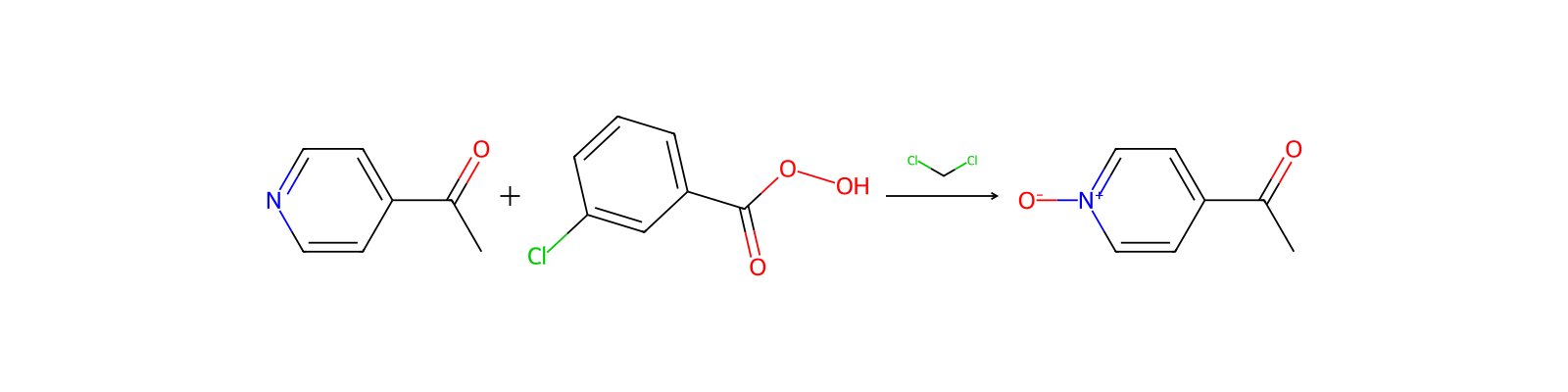
188 件


関連ノート
読み込み中…