データを補完しています。通常は 1 分以内に完了します
基本情報
- CAS
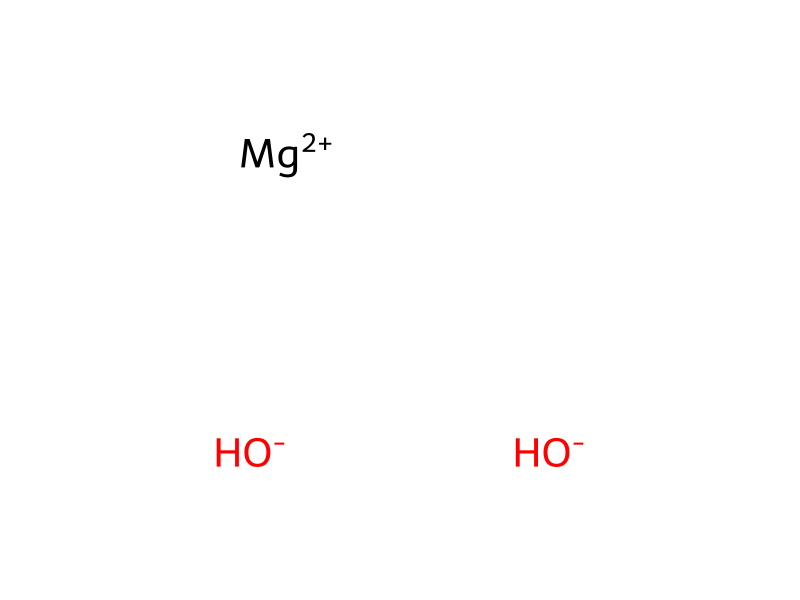
1309-42-8- 標準SMILES
[Mg+2].[OH-].[OH-]- InChIKey
VTHJTEIRLNZDEV-UHFFFAOYSA-L- 分子式
- H2MgO2
- 平均分子量
- 58.32 g/mol
概要
Magnesium hydroxide is an inorganic compound. It is naturally found as the mineral brucite. Magnesium hydroxide can be used as an antacid or a laxative in either an oral liquid suspension or chewable tablet form. Additionally, magnesium hydroxide has smoke suppressing and flame retardant properties and is thus used commercially as a fire retardant. It can also be used topically as a deodorant or for the relief of canker sores (aphthous ulcers).
名称と識別子
- 優先名称
- Mint-O-Mag
- IUPAC
- magnesium dihydroxide
名称と別名
名称をさらに表示
データベース識別子
- CAS
1309-42-8、1317-43-7- PubChem CID
- 14791
- EC Number
- 215-274-9
物性
構造計算による物性補完中
- 極性表面積
- 2 Ų
- 水素結合供与体数
- 2
- 水素結合受容体数
- 2
- 回転可能結合数
- 0
- 重原子数
- 3
- 形式電荷
- 0
- 複雑度
- 2.8
化学と産業
薬理情報
Pharmacodynamics
As an antacid, magnesium hydroxide suspension neutralizes gastric acid by reacting with hydrochloric acid in the stomach to form magnesium chloride and water. It is practically insoluble in water and does not have any effect until it reacts with the hydrochloric acid in the stomach. There, it decreases the direct acid irritant effect and increases the pH in the stomach leading to inactivation of pepsin. Magnesium hydroxide enhances the integrity of the mucosal barrier of the stomach as well as improving the tone of both the gastric and esophageal sphincters. As a laxative, the magnesium hydroxide works by increasing the osmotic effect in the intestinal tract and drawing water in. This creates distension of the colon which results in an increase in peristaltic movement and bowel evacuation.
Mechanism of Action
The suspension of magnesium hydroxide is ingested and enters the stomach. According to the amount ingested, the magnesium hydroxide will either act as an antacid or a laxative. Through the ingestion of 0.5-1.5 grams (in adults) the magnesium hydroxide will act by simple acid neutralization in the stomach. The hydroxide ions from the magnesium hydroxide suspension will combine with the acidic H+ ions of the hydrochloric acid made by the stomachs parietal cells. This neutralization reaction will result in the formation of magnesium chloride and water. Through the ingestion of 2-5 grams (in adults) the magnesium hydroxide acts as a laxative in the colon. The majority of the suspension is not absorbed in the intestinal tract and will create an osmotic effect to draw water into the gut from surrounding tissues. With this increase of water in the intestines, the feces will soften and the intraluminal volume of the feces will increase. These effects still stimulate intestinal motility and induce the urge to defecate. Magnesium hydroxide will also release cholecystokinin (CCK) in the intestines which will accumulate water and electrolytes in the lumen and furthermore increase intestinal motility.
Metabolism/Metabolites
Unless a patient is deficient in magnesium, very little is absorbed by the intestine. Overall, about 15%-50% of the magnesium hydroxide suspension is absorbed systemically. However, it does not undergo any metabolism as it is rapidly excreted in the urine.
Absorption, Distribution and Excretion
About 15%-50% of magnesium hydroxide is absorbed very slowly through the small intestine.
After oral administration, up to 50% of the magnesium hydroxide suspension may be absorbed as magnesium ions through the small intestines and then rapidly excreted in the urine through the kidneys. The unabsorbed drug is mainly excreted in the feces and saliva.
The peak action and distribution of magnesium hydroxide are variable.
Magnesium hydroxide is mainly excreted in the urine by the kidneys. Since the kidneys play a major role in its clearance, individuals with renal failure are at risk of hypermagnesemia with long term consumption as the appropriate amounts of magnesium may not be excreted.
サプライヤー100 社
関連反応
現在のフィルター条件では反応記録がありません。
化合物ノート
読み込み中…