
基本情報
- 標準SMILES
O=C(C=Cc1ccccc1)C=Cc1ccccc1.O=C(C=Cc1ccccc1)C=Cc1ccccc1.[Pd]- InChIKey
UKSZBOKPHAQOMP-UHFFFAOYSA-N- 分子式
- C34H28O2Pd
- 平均分子量
- 575 g/mol
- 単同位体質量
- 574.11241614
概要
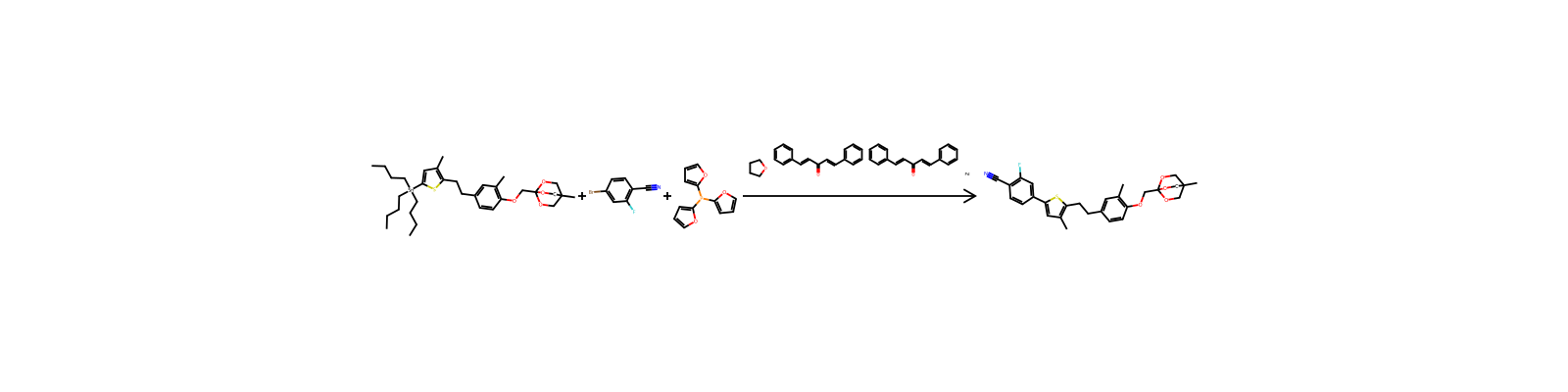
Bis(1,5-diphenyl-1,4-pentadien-3-one) palladium(0) is a chemical compound of palladium. Palladium is a chemical element with the chemical symbol Pd and an atomic number of 46. It is found as a free metal alloyed with gold and other platinum group metals and in the rare minerals cooperite and polarite. (L794)
名称と識別子
- 優先名称
- 1,5-Diphenylpenta-1,4-dien-3-one;palladium
- IUPAC
- bis(1,5-diphenylpenta-1,4-dien-3-one);palladium
名称と別名
32005-36-01,5-diphenylpenta-1,4-dien-3-one;palladiumBis((1,2,4,5-eta)-1,5-diphenyl-1,4-pentadien-3-one)palladiumC34H28O2PdPalladium(0) bis(dibenzylideneacetone)Bis(dibenzylideneacetone) Palladium(0)tris-(dibenzylideneacetone)dipalladium(0)SCHEMBL19685bis(dibenylideneacetone) palladiumbis(dibenzylidenacetone) palladiumDTXSID70953892UKSZBOKPHAQOMP-UHFFFAOYSA-N
名称をさらに表示
bis(dibenzylideneacetone) palladiumpalladium bis(dibenzylideneacetone)bis (dibenzylideneacetone) palladiumbis(dibenzylidene acetone) palladiumZH0006Bis-(dibenzylidene acetone) palladiumAKOS030228490bis(dibenzylideneacetone)palladium (0)
データベース識別子
- CAS
32005-36-0- PubChem CID
- 154270
- DTXSID
DTXSID70953892- EC Number
- 608-691-6
物性
構造計算による物性
- 極性表面積
- 34.1 Ų
- 水素結合供与体数
- 0
- 水素結合受容体数
- 2
- 回転可能結合数
- 8
- 重原子数
- 37
- 形式電荷
- 0
- 複雑度
- 272
安全と法規制
GHS分類
GHS Classification
Warning
H315 (10.8%): Causes skin irritation [Warning Skin corrosion/irritation]
P261, P264, P264+P265, P272, P280, P302+P352, P305+P351+P338, P321, P332+P317, P333+P317, P337+P317, P362+P364, and P501 (click each P-code to see the statement)
Aggregated GHS information provided per 37 reports by companies from 7 notifications to the ECHA C&L Inventory. Each notification may be associated with multiple companies.
危険有害性情報
Hazard Classes and CategoriesSkin Irrit. 2 (10.8%)
毒性情報
Health EffectsContact with palladium may cause palladium sensitivity and allergy. Animal studies have shown that palladium may damage the liver and kidney. (L798)
Toxicity Summary
Due to their ability to form strong complexes with both inorganic and organic ligands, palladium ions can disturb cellular equilibria, replace other essential ions, and interact with functional groups of macromolecules, such as proteins or DNA. Palladium complexes binding to DNA and RNA leads to strand breakage. Palladium ions are able to inhibit most major cellular functions, including DNA and RNA synthesis. Palladium compounds have been shown to bind to and inhibit various enzymes, including creatine kinase and prolyl hydroxylase. (L798)
Signs and SymptomsSkin contact with palladium may cause contact dermatitis, erythema, and oedema. (L798)
Carcinogen ClassificationNo indication of carcinogenicity to humans (not listed by IARC).
化学と産業
薬理情報
Metabolism/Metabolites
Palladium may be absorbed through oral, dermal, and inhalation exposure. Once in the body it distributes to the kidney, liver, spleen, lymph nodes, adrenal gland, lung and bone. Palladium's ability to form complexes allows it the bind to amino acids, proteins, DNA, and other macromolecules. Palladium and its metabolites are excreted in the urine and faeces. (A21)
関連反応
55 件




関連ノート
読み込み中…