

基本情報
- CAS
1663-39-4- 標準SMILES
C=CC(=O)OC(C)(C)C- InChIKey
ISXSCDLOGDJUNJ-UHFFFAOYSA-N- 分子式
- C7H12O2
- 平均分子量
- 128.17 g/mol
- 単同位体質量
- 128.08372962
概要
structure in first source
名称と識別子
- 優先名称
- tert-Butyl acrylate
- IUPAC
- tert-butyl prop-2-enoate
- 現地名
- アクリル酸tert-ブチル
- 英語名
- tert-Butyl acrylate
- 分子式
- C7H12O2
- 分子量
- 128.17
名称と別名
tert-Butyl acrylate1663-39-4tert-Butyl propenoateAcrylic acid, tert-butyl ester2-PROPENOIC ACID, 1,1-DIMETHYLETHYL ESTERDTXSID802965292M2CD1O3GNSC-20950DTXCID409652RefChem:894614216-768-7tert-butyl prop-2-enoate
名称をさらに表示
アクリル酸tert-ブチルアクリル酸1,1-ジメチルエチルプロペン酸tert-ブチル1,1-ジメチルエチルアクリラートt-ブチルアクリレ-トアクリル酸 t-ブチルアクリル酸tertブチルアクリル酸t-ブチルアクリル酸 tert-ブチルtert-ブチル=アクリラートアクリル酸=ターシャリ‐ブチルアクリル酸tert-ブチル (stabilised with MEHQ)TBATERTIARY-BUTYL ACRYLATETERT-BUTYL ACRYLATE (TBA)tert-butylpropenoateAcrylic acid tert-butylTBA tert-Butyl acrylate
t-Butyl acrylateAcrylic Acid tert-Butyl Ester2-propenoic acid tert-butyl ester1,1-dimethylethyl 2-propenoatetert-Butyl 2-propenoateMFCD00008809tert-Butyl Acrylate (stabilized with MEHQ)acrylics
データベース識別子
- CAS
1663-39-4- PubChem CID
- 15458
- DTXSID
DTXSID8029652- ChEMBL
CHEMBL3560064- UNII
- 92M2CD1O3G
- EC Number
- 216-768-7
- Nikkaji
- J82.107A
物性
構造計算による物性
- XLogP
- 1.7
- 極性表面積
- 26.3 Ų
- 水素結合供与体数
- 0
- 水素結合受容体数
- 2
- 回転可能結合数
- 3
- 重原子数
- 9
- 形式電荷
- 0
- 複雑度
- 119
実験および物理化学的性質
PolymersPlastics & Rubber -> (Meth)acrylates
SpringerMaterials PropertiesOptical coefficient
Density0.879 AT 25 °C
Color/FormLIQUID
Flash Point66 °F OC
Boiling Point120 °C
Food Contact SubstancesFCS -> FDA Inventory of Food Contact Substances Listed in 21 CFR
Refractive IndexINDEX OF REFRACTION: 1.4080 AT 25 °C/D
Physical Description
Liquid
Liquid; [HSDB] Clear colorless liquid; Stabilized with 10-20 ppm of methyl ether of hydroquinone to prevent spontaneous polymerization; [OECD SIDS]
物理化学的性質
- 融点
- -69 °C · -69°C
- 沸点
- 61 · 61-63 °C/60 mmHg (lit.)
- 比重(密度)
- 0.875 g/mL · 0.875 g/mL at 25 °C (lit.)
- 蒸気圧
- 20 hPa · 20hPa at 23.4℃
- 屈折率
- 20 · n20/D 1.410(lit.)
- 闪点
- 63 °F · 63 °F
- 貯蔵温度
- Flammables area
- 溶解性
- Chloroform (Slightly), Methanol (Slightly)
- 外見
- 液体
- 色
- クリア
- 水溶解度
- 2 g/L · 2g/L
- BRN
- 1742329 · 1742329
- InChI
- 1S/C7H12O2/c1-5-6(8)9-7(2,3)4/h5H,1H2,2-4H3
- InChIKey
- ISXSCDLOGDJUNJ-UHFFFAOYSA-N
- SMILES
- CC(C)(C)OC(=O)C=C
- LogP
- 2.32 at · 2.32 at 25℃
- CAS データベース
- 1663 · 1663-39-4(CAS DataBase Reference)
- NISTの化学物質情報
- Tert-butyl acrylate(1663-39-4)
- EPAの化学物質情報
- 2 · 2-Propenoic acid, 1,1-dimethylethyl ester (1663-39-4)
化学的性質
化学的特性clear liquid
安全と法規制
GHS分類
GHS Classification
Danger
H225: Highly Flammable liquid and vapor [Danger Flammable liquids]
P210, P233, P240, P241, P242, P243, P261, P264, P270, P271, P272, P273, P280, P301+P317, P302+P352, P303+P361+P353, P304+P340, P317, P319, P321, P330, P332+P317, P333+P317, P362+P364, P370+P378, P391, P403+P233, P403+P235, P405, and P501 (click each P-code to see the statement)
This chemical does not meet GHS hazard criteria for 0.2% (1 of 556) of reports.
Danger
H225 (99.8%): Highly Flammable liquid and vapor [Danger Flammable liquids]
危険有害性情報
Regulatory Information
Chemical: 2-Propenoic acid, 1,1-dimethylethyl ester
2-Propenoic acid, 1,1-dimethylethyl ester is listed on the EPA's Chemical Data Reporting (CDR) system. Manufacturers and importers of 2-Propenoic acid, 1,1-dimethylethyl ester are required to report information about their production and use of this chemical to the EPA under the Toxic Substances Control Act (TSCA). (40 eCFR Part 711)
Status: Active Update: 07-03-2023 https://echa.europa.eu/registration-dossier/-/registered-dossier/12806
2-Propenoic acid, 1,1-dimethylethyl ester: Does not have an individual approval but may be used as a component in a product covered by a group standard. It is not approved for use as a chemical in its own right.
Fire PotentialFLAMMABLE, DANGEROUS FIRE RISK.
Hazards Summary
Allergic contact dermatitis reported in workers handling dental prostheses; [Kanerva, p. 1739] Flammable liquid that poses a fire risk; Emergency treatment: Irritants; [HSDB] May polymerize; A skin and respiratory tract irritant; May cause skin sensitization; Harmful by ingestion, inhalation, and skin absorption; [Alfa Aesar MSDS] Butyl acrylates, stabilized (UN2348) has warning of explosive polymerization; [ERG 2016]
DOT Emergency Guidelines
/GUIDE 130P: FLAMMABLE LIQUIDS (NON-POLAR/WATER-IMMISCIBLE/NOXIOUS)/ Fire or Explosion: HIGHLY FLAMMABLE: Will be easily ignited by heat, sparks or flames. Vapors may form explosive mixtures with air. Vapors may travel to source of ignition and flash back. Most vapors are heavier than air. They will spread along ground and collect in low or confined areas (sewers, basements, tanks). Vapor explosion hazard indoors, outdoors or in sewers. Those substances designated with a "P" may polymerize explosively when heated or involved in a fire. Runoff to sewer may create fire or explosion hazard. Containers may explode when heated. Many liquids are lighter than water. /Butyl acrylates; Butyl acrylates, inhibited; Butyl acrylates, stabilized/
/GUIDE 130P: FLAMMABLE LIQUIDS (NON-POLAR/WATER-IMMISCIBLE/NOXIOUS)/ Health: May cause toxic effects if inhaled or absorbed through skin. Inhalation or contact with material may irritate or burn skin and eyes. Fire will produce irritating, corrosive and/or toxic gases. Vapors may cause dizziness or suffocation. Runoff from fire control or dilution water may cause pollution. /Butyl acrylates; Butyl acrylates, inhibited; Butyl acrylates, stabilized/
/GUIDE 130P: FLAMMABLE LIQUIDS (NON-POLAR/WATER-IMMISCIBLE/NOXIOUS)/ Public Safety: CALL Emergency Response Telephone Number ... . As an immediate precautionary measure, isolate spill or leak area for at least 50 meters (150 feet) in all directions. Keep unauthorized personnel away. Stay upwind. Keep out of low areas. Ventilate closed spaces before entering. /Butyl acrylates; Butyl acrylates, inhibited; Butyl acrylates, stabilized/
/GUIDE 130P: FLAMMABLE LIQUIDS (NON-POLAR/WATER-IMMISCIBLE/NOXIOUS)/ Protective Clothing: Wear positive pressure self-contained breathing apparatus (SCBA). Structural firefighters' protective clothing will only provide limited protection. /Butyl acrylates; Butyl acrylates, inhibited; Butyl acrylates, stabilized/
For more DOT Emergency Guidelines (Complete) data for 2-PROPENOIC ACID, 1,1-DIMETHYLETHYL ESTER (8 total), please visit the HSDB record page.
Hazard Classes and Categories
Flam. Liq. 2 (99.8%)
Flammable liquid - category 2
Flammable liquids - Category 2
Flam. Liq. 2
安全と保護具
Preventive MeasuresADEQUATE EXHAUST VENTILATION SHOULD BE PROVIDED TO PROTECT THE WORKER FROM INHALATION OF FUMES. WORKERS SHOULD BE PROVIDED WITH HAND PROTECTION & EYE & FACE PROTECTION. MAINTENANCE & GOOD HOUSEKEEPING SHOULD BE ENSURED. /ACRYLIC RESINS/
毒性情報
Adverse EffectsSkin Sensitizer - An agent that can induce an allergic reaction in the skin.
Human Toxicity ExcerptsTHE LOWER-MOLECULAR-WT ESTERS OF ACRYLIC ACIDS ARE IRRITANTS TO SKIN, EYES, & MUCOUS MEMBRANES. /ESTERS OF ACRYLIC ACID/
Toxicity DataLC50 (rat) = 7,000 mg/m3/4hr
安全データ
- F
- 10
- wgk
- 2
- tsca
- TSCA listed
- ridadr
- UN 1993 3/PG 2
- hs_code
- 29161290
- risk_code
- 11-20/21/22-37/38-43-52/53-51/53
- 化審法
- (2)-989
- 消防法
- 危-4-1-II
- hazard_code
- F,Xn,N
- safety_code
- 16-25-37-61
- hazard_class
- 3
- packing_group
- III
- Hazard Classifications
- Acute Tox. 3 InhalationAcute Tox. 4 DermalAcute Tox. 4 OralAquatic Chronic 2Flam. Liq. 2Skin Irrit. 2Skin Sens. 1STOT SE 3
- ストレージクラス
- 3 - Flammable liquids
- 有毒物質データの
- 1663-39-4(Hazardous Substances Data)
化学と産業
用途と製造
Uses
Used as a monomer for acrylic resins used in surface coatings; [HSDB] Used as an intermediate for homopolymers and copolymers; Also used as a feedstock for chemical synthesis; [OECD SIDS]
Plastic Composites Manufacturing [Category: Industry]
MONOMER FOR ACRYLIC RESINS
MONOMER FOR ACRYLIC RESINS USED IN SURFACE COATINGS
U.S. Exports
(1979) No Data
(1981) No Data
U.S. Imports
(1979) No Data
(1981) No Data
U.S. Production
2023: 75,000 - <500,000 lb
(1979) No Data
(1981) No Data
Industry UsesIntermediate
Methods of ManufacturingREACTION OF ISOBUTYLENE WITH METHACRYLIC ACID; REACTION OF TERT-BUTYL ALCOHOL WITH METHACRYLOYL CHLORIDE
Formulations/PreparationsCOMMERCIAL GRADE CONTAINS 100 PPM HYDROQUINONE MONOMETHYL ETHER AS STABILIZER.
General Manufacturing Information
Plastics Material and Resin Manufacturing
2-Propenoic acid, 1,1-dimethylethyl ester: ACTIVE
応用分野
用途ラジカル重合コモノマーとして用いられ、ポリマーはラッカー、エナメル、エマルジョン塗料、接着剤?不織布バインダー、紙加工用などに用いられる。アニオン重合により結晶性ポリマーも得られる。
用途合成樹脂原料(塗料、接着剤)。
使用tert-Butyl acrylate is a monomer used in the production of poly(tert-butyl acrylate) polymers, poly(acrylic acid) polyelectrolyte brushes and 3-(3-methyl-but-3-enyloxy)-propionic acid tert-butyl ester. It is also used in paints, coatings, high polymer paper conditioner, nursing polymer products and carbonyl reforming polyolefin. Further, it serves as an important raw material in organic synthesis.
調製方法
製造方法Acrylic acid, strongly acidic cation exchange resin, a polymerization inhibitor A, B polymerization inhibitor, liquefied isobutene was 320 parts by mass of the parts, 35 parts, 20 parts, 5 parts, 430 parts. After a dropping time of 3 hours, the esterification reaction temperature was maintained at 10 ° C. After the addition was completed, 10 ° C was under insulation, and thermal insulation was 7 hours. Quality copies obtained 450 parts of tert-butyl acrylate, and the yield was 99.7%.
上流・下流製品情報
下流製品
サプライヤー100 社
国药集团化学试剂有限公司86-21-63210123 · [email protected]
梯希爱(上海)化成工业发展有限公司021-67121386 · [email protected]
衢州润东化工有限公司0570-8789886 18892685668 · [email protected]
上海阿拉丁生化科技股份有限公司400-6206333 13167063860 · [email protected]
合肥翰刚医药科技有限公司+8618062405514 · [email protected]
河北创海生物科技有限公司+86-86-13131129325 · [email protected]
爱斯特(成都)生物制药股份有限公司+86-28-85122536 85324413 · [email protected]
Hebei Yanxi Chemical Co., Ltd.+86-17531190177 · [email protected]
北京安司莫森技术有限公司010-82954736 13391601435 · [email protected]
科瑞迪化学400-821-5857 021-64326257 · [email protected]
Syntechem Co.,Ltd[email protected]
上海迈瑞尔生化科技有限公司4006356688 18621169109 · [email protected]
阿法埃莎(中国)化学有限公司400-6106006 · [email protected]
上海德默医药科技有限公司400-021-7337 2355568890 · [email protected]
安耐吉化学&3A(安徽泽升科技股份有限公司)400-0056266 · [email protected]
石家庄斯迪亚诺精细化工有限公司0311-89250318 13582355795 · [email protected]
上海瀚鸿科技股份有限公司021-54306202 13764082696 · [email protected]
山东洛克化工有限公司17653113209 13065062079 · [email protected]
上海沃化化工有限公司021-57681602-802 17302146015 · [email protected]
合肥天健化工有限公司551-65418679 15856988503;15837135945 · [email protected]
Yonghan international Co.,ltd0086-13812939817 · [email protected]
山东西亚化学有限公司13355009207 13355009207 · [email protected]
玛雅试剂+86 (573) 82222445 (0)18006601000 452520369 · [email protected]
四川库利南科技有限公司400-1166-196 18981987031 · [email protected]
天津希恩思生化科技有限公司400 638 7771 · [email protected]
艾科试剂4008-755-333 18080918076 · [email protected]
上海思域化工科技有限公司86-21-34053660 · [email protected]
赛默飞世尔科技(中国)有限公司800-810-5118 · [email protected]
TCI AMERICA800-4238616 · [email protected]
TOKYO CHEMICAL INDUSTRY CO., LTD.03-36680489 · [email protected]
TCI Europe320-37350700 · [email protected]
上海贤鼎生物科技有限公司4009209199 · [email protected]
无锡中坤生化科技有限公司+86 0510-85629785
上海倍卓生物科技有限公司021-61119791,13386096464 · [email protected]
安徽科迪达化工有限公司0554-2106669 · [email protected]
日照力德士化工有限公司010-51268198 · [email protected]
山东强森化工有限公司18805331268 · [email protected]
美岚实业(上海)有限公司021-58958189 · [email protected]
上海爱蝶实业有限公司021-58957966 18930537195 · [email protected]
成都零六生物科技有限公司400-1166-196 13458535857 · [email protected]
广拓化学(上海)有限公司021-60899189-8001 18918189673 · [email protected]
雷丁试剂0510-85629785 18013409632 · [email protected]
上海麦克林生化科技股份有限公司15221275939 15221275939 · [email protected]
上海嵩爰化工科技有限公司010-1234567 18521000990 · [email protected]
上海有朋化工有限公司021-69005955 13701776567 · [email protected]
江苏艾康生物医药研发有限公司025-66028182 17714375163 · [email protected]
上海凯赛化工有限公司021-33516722 13701817765 · [email protected]
上海彤源化工有限公司021-021-69182866 13701855675 · [email protected]
上海孚一生物科技有限公司+86 (21) 61124340
成都润泽本土化工有限公司13096311329 028-88469284 616445927 · [email protected]
関連反応
734 件


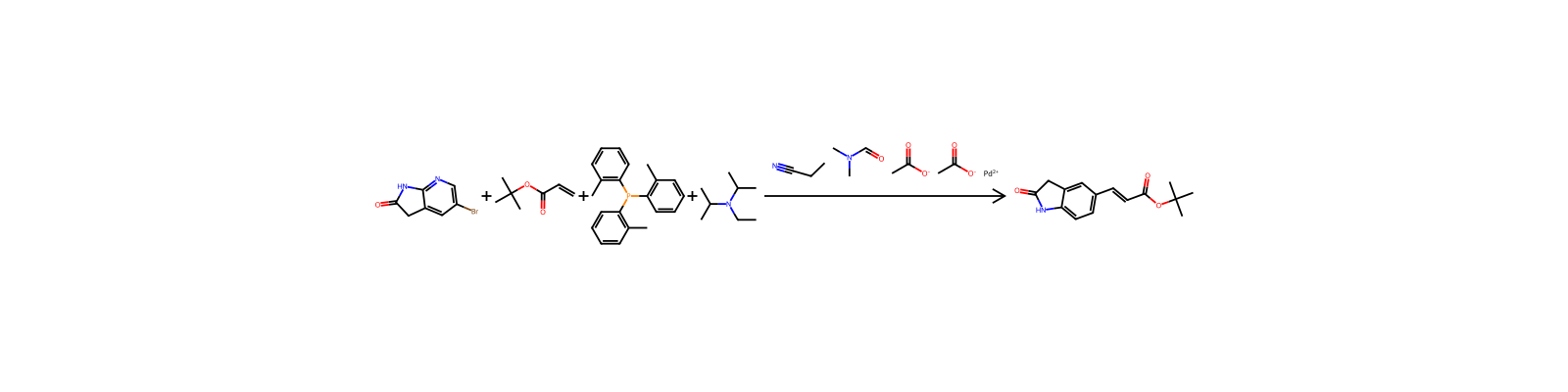

化合物ノート
読み込み中…