
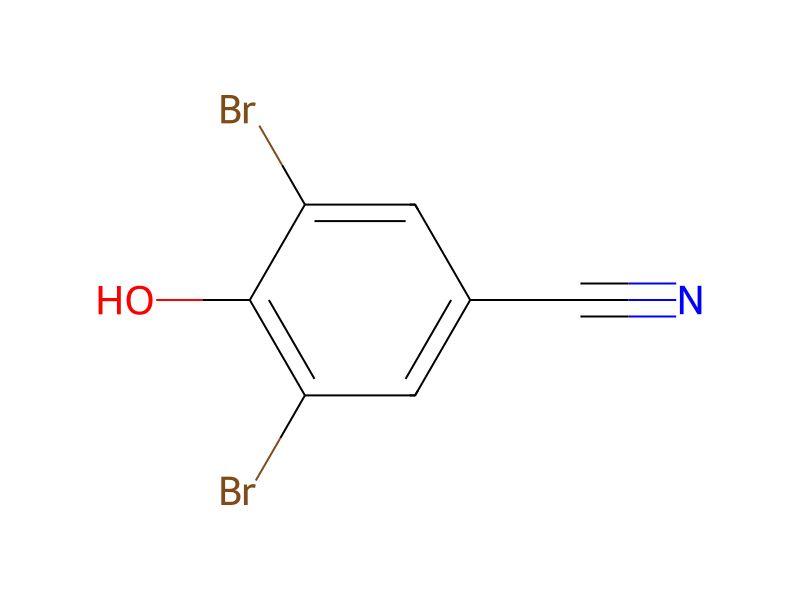
基本情報
- 標準SMILES
N#Cc1cc(Br)c(O)c(Br)c1- InChIKey
UPMXNNIRAGDFEH-UHFFFAOYSA-N- 分子式
- C7H3Br2NO
- 平均分子量
- 276.91 g/mol
- 単同位体質量
- 274.85813792
概要
Bromoxynil can cause developmental toxicity according to state or federal government labeling requirements.
名称と識別子
- 優先名称
- Bromoxynil
- IUPAC
- 3,5-dibromo-4-hydroxybenzonitrile
- 現地名
- 3,5-ジブロモ-4-ヒドロキシベンゾニトリル
- 英語名
- Bromoxynil
- 分子式
- C7H3Br2NO
- 分子量
- 276.91
名称と別名
BROMOXYNIL3,5-Dibromo-4-hydroxybenzonitrile1689-84-5BrominalBrominilBroxynilSabreBrominexLabuctrilPardnerToplan2,6-Dibromo-4-cyanophenol
名称をさらに表示
ブロモキシニルブロキシニルサブレ3,5-ジブロモ-4-ヒドロキシベンゾニトリルパルドナーブクトリルトプランブロミナールME-4-ブロミナルブロミニルラブクトリルラブクトリル252,6-ジブロモ-4-シアノフェノールブロモキシニル標準品3·5ジブロモ4ヒドロキシベンゾニトリルCS_N-11345-250MG_ブロモキシニルブロミナール標準品ブロミナール STANDARDブロミナール Standard, 100 µg/mL in MeOHブロミナル標準品Torchs2132BucriltersetEMBLEMKALEISBROMOX
BrittoxBuctrilLabuctril 25Chipco buctrilME 4 BrominalNu-lawn weederOxytril MBromotril
データベース識別子
- CAS
1689-84-5- PubChem CID
- 15531
- DTXSID
DTXSID3022162- ChEMBL
CHEMBL453905- ChEBI
CHEBI:17192- UNII
- J46EK95K0P
- EC Number
- 216-882-7
- Nikkaji
- J7.557D
物性
構造計算による物性
- XLogP
- 3.5
- 極性表面積
- 44 Ų
- 水素結合供与体数
- 1
- 水素結合受容体数
- 2
- 回転可能結合数
- 0
- 重原子数
- 11
- 形式電荷
- 0
- 複雑度
- 176
実験および物理化学的性質
SpringerMaterials PropertiesFusion temperature
Pesticides
Pesticide -> EPA IRIS
Herbicides
Active substance -> EU Pesticides database: Not approved
Pesticides -> Herbicides, Other
Pesticides -> Herbicides -> Nitrile herbicides
Herbicides, Transformation products
LogP
log Kow = 2.70
2.7
OdorODORLESS WHEN PURE
Color/Form
WHITE CRYSTALLINE SOLID
LIGHT BUFF TO CREAMY POWDER
Colorless solid
White to slightly yellow crystalline solid
Solubility
IN WATER 130 PPM (0.013%) WT/VOL @ 20-25 °C; IN ETHANOL 7% WT/VOL @ 20-25 °C; IN LIGHT PETROLEUM & XYLENE 1-2% WT/VOL @ 20-25 °C
IN DIMETHYLFORMAMIDE 61% WT/VOL @ 20-25 °C; IN BENZENE 1% WT/VOL @ 20-25 °C; IN METHANOL 9% WT/VOL @ 20-25 °C; IN ACETONE 17% WT/VOL AT 20-25 °C
Solubility in (g/L) at 25 °C: acetone 170; tetrahydrofuran 410
In dimethylformamide 610, acetone, cyclohexanone 170, methanol 90, ethanol 70, mineral oils <20, benzene 10 (all in g/L, 25 °C)
In water, 130 mg/L at 25 °C
CorrosivityNon-corrosive
Endocrine DisruptorsPotential endocrine disrupting compound
DecompositionWhen heated to decomp it emits highly toxic fumes of /nitrogen oxides, hydrogen cyanide and hydrogen bromide/.
Melting Point
MP: 194-195 °C (sublimes at 135 °C/0.15 mm Hg)
MP: 188-192 °C /Technical bromoxynil (approx 95% pure)/
Vapor Pressure
0.00000005 [mmHg]
1.7X10⁻¹ mPa /1.28X10-6 mm Hg/ at 25 °C
Physical Description
Bromoxynil is a colorless solid. Melting point 382-384 °F (194-195 °C). Sublimes at 275 °F (135 °C) under pressure of 0.15 mmHg. Used as a herbicide.
Colorless, white, beige, or slightly yellow odorless solid; [HSDB] Off-white powder; [MSDSonline]
物理化学的性質
- 融点
- 189 · 189-191 °C(lit.)
- 沸点
- 265.6 · 265.6±40.0 °C(Predicted)
- 比重(密度)
- 2.0926 · 2.0926 (rough estimate)
- 屈折率
- 1.64 · 1.6400 (estimate)
- 貯蔵温度
- 0 · 0-6°C
- 溶解性
- DMSO (Slightly), Methanol (Slightly)
- 外見
- 個体
- 酸解離定数(Pka)
- 4.06 · 4.06(at 25℃)
- 色
- バフ、クリーミー
- 水溶解度
- 0.13 G/L · 0.13 G/L (25℃)
- Merck
- 13 · 13,1426
- BRN
- 2364039 · 2364039
- Henry's Law Constant
- 7.4 · 7.4×102 mol/(m3Pa) at 25℃, Mackay et al. (2006)
- 主な用途
- 農業洗浄剤化粧品環境食品および飲料パーソナルケア
- InChI
- 1S/C7H3Br2NO/c8-5-1-4(3-10)2-6(9)7(5)11/h1-2,11H
- InChIKey
- UPMXNNIRAGDFEH-UHFFFAOYSA-N
- SMILES
- Oc1c(Br)cc(cc1Br)C#N
- CAS データベース
- 1689 · 1689-84-5(CAS DataBase Reference)
- NISTの化学物質情報
- 3 · Benzonitrile, 3,5-dibromo-4-hydroxy-(1689-84-5)
- EPAの化学物質情報
- Bromoxynil (1689-84-5)
化学的性質
化学的特性Bromoxynil is a colorless to white crystalline solid or tan powder. Odorless (pure).
安全と法規制
GHS分類
GHS Classification
Danger
H301: Toxic if swallowed [Danger Acute toxicity, oral]
P203, P260, P261, P264, P270, P271, P272, P273, P280, P284, P301+P316, P302+P352, P304+P340, P316, P318, P320, P321, P330, P333+P317, P362+P364, P391, P403+P233, P405, and P501 (click each P-code to see the statement)
Danger
H301 (100%): Toxic if swallowed [Danger Acute toxicity, oral]
P203, P260, P261, P264, P270, P271, P272, P273, P280, P284, P301+P316, P302+P352, P304+P340, P316, P318, P320, P321, P330, P333+P317, P362+P364, P391, P403+P233, P405, and P501 (click each P-code to see the statement)
危険有害性情報
Regulatory Information
Hazard Traits - Developmental Toxicity
Regulation (EC) No 1107/2009 (amended)
04/58/EC, Reg. (EU) 2017/841, Reg. (EU) 2018/917, Reg. (EU) 2019/707, Reg. (EU) 2020/1276, Reg. (EU) 2020/869, Reg. (EU) No 540/2011
Bromoxynil: HSNO Approval: HSR003315 Approved with controls
The New Jersey Worker and Community Right to Know Act requires public and private employers to provide information about hazardous substances at their workplaces. (N.J.S.A. 34:5A-1 et. seq.)
Other Safety InformationIMAP assessments - Benzonitrile, 3,5-dibromo-4-hydroxy-: Human health tier I assessment
DOT LabelPoison
Fire HazardsExcerpt from ERG Guide 154 [Substances - Toxic and/or Corrosive (Non-Combustible)]:
Health HazardsExcerpt from ERG Guide 154 [Substances - Toxic and/or Corrosive (Non-Combustible)]:
Hazards Summary
Mildly irritating to eyes and abraded skin of rabbits; No significant adverse effects were observed in a three month high-dose feeding study with rats; Dermal and inhalation studies with 10% solution had the same outcome; Four workers in a manufacturing plant making both bromoxynil and ioxynil developed typical symptoms of uncoupler poisoning including excessive perspiration, thirst, fever, emesis, myalgia, and weight loss. ... The effects reversed rapidly after exposure ceased. [HSDB] May cause skin sensitization; [eChemPortal: ESIS] An irritant; May cause skin sensitization; [MSDSonline] Effects in high-dose animal studies include changes in structure or function of salivary glands, zonal hepatitis (hepatocellular necrosis), and other changes to liver; [RTECS] At maternally toxic doses in rodents, supernumerary ribs and reduced fetal weights were observed; No human pregnancy effects are known; [REPROTOX] See Benzonitrile.
Reactive GroupAlcohols and Polyols
Special Reports
USEPA/Office of Pesticide Programs; Reregistration Eligibility Decision Document - Bromoxynil, EPA 738-R-98-013 (December 1998). The RED summarizes the risk assessment conclusions and outlines any risk reduction measures necessary for the pesticide to continue to be registered in the U.S.[Available from, as of January 26, 2012:: http://www.epa.gov/pesticides/reregistration/status.htm]
FIFRA Requirements
Tolerances are established for residues of the herbicide bromoxynil, including its metabolites and degradates, in or on the commodities in the table below. Compliance with the tolerance levels is to be determined by measuring only bromoxynil, 3,5-dibromo-4-hydroxybenzonitrile, resulting from application of its octanoic and/or heptanoic acid ester, in or on the commodities.[Table#3215]
Tolerances are established for residues of the herbicide bromoxynil, 3,5-dibromo-4-hydroxybenzonitrile, including its metabolites and degradates, in or on the commodities in the table below. Compliance with the tolerance levels is to be determined by measuring only bromoxynil and its metabolite, 3,5-dibromo-4-hydroxybenzoic acid (DBHA), resulting from application of its octanoic and/or heptanoic acid ester, in or on the commodities:[Table#3216]
As the federal pesticide law FIFRA directs, EPA is conducting a comprehensive review of older pesticides to consider their health and environmental effects and make decisions about their continued use. Under this pesticide reregistration program, EPA examines newer health and safety data for pesticide active ingredients initially registered before November 1, 1984, and determines whether the use of the pesticide does not pose unreasonable risk in accordance to newer saftey standards, such as those described in the Food Quality Protection Act of 1996. Pesticides for which EPA had not issued Registration Standards prior to the effective date of FIFRA '88 were divided into three lists based upon their potential for human exposure and other factors, with List B containing pesticides of greater concern than those on List C, and with List C containing pesticides of greater concern than those on List D. 3,5-Dibromo-4-hydroxybenzonitrile is found on List B. Case No: 2070; Pesticide type: herbicide; Case Status: OPP is reviewing data from the pesticide's producers regarding its human health and/or environmental effects, or OPP is determining the pesticide's eligibility for reregistration and developing the Reregistration Eligibility Decision (RED) document.; Active ingredient (AI): 3,5-Dibromo-4-hydroxybenzonitrile; Data Call-in (DCI) Date(s): 06/05/91; AI Status: The producers of the pesticide have made commitments to conduct the studies and pay the fees required for reregistration, and are meeting those commitments in a timely manner.
Based on the reviews of the generic data for the active ingredient bromoxynil, the Agency has sufficient information on the health effects of bromoxynil and on its potential for causing adverse effects in fish and wildlife and the environment. The Agency has determined that bromoxynil products, labeled and used as specified in this Reregistration Eligibility Decision, will not pose unreasonable risks to humans or the environment. Therefore, the Agency concludes that products containing bromoxynil for all uses are eligible for reregistration, provided the registrant follows all requirements as set forth in this document.
Reactivity ProfileBROMOXYNIL is a weak acid.
DOT Hazard Classification
Bromoxynil
Marine pollutant
Air and Water ReactionsNo rapid reaction with air. No rapid reaction with water.
安全と保護具
Fire FightingExcerpt from ERG Guide 154 [Substances - Toxic and/or Corrosive (Non-Combustible)]:
First AidExcerpt from ERG Guide 154 [Substances - Toxic and/or Corrosive (Non-Combustible)]:
Exposure Control and Personal Protection2.0 [mg/m3], inhalable fraction, as CN[German Research Foundation (DFG)]
Fire Fighting Procedures
Extinguishing Media: Carbon dioxide or dry chemical for small fires. Water spray or alcohol-type foam for large fires.
If material on fire or involved in fire: Extinguish fire using agent suitable for type of surrounding fire. (Material itself does not burn or burns with difficulty.) Use water in flooding quantities as fog. Use "alcohol" foam, dry chemical or carbon dioxide. /Bromoxynil octanoate/
Fire fighters should use self contained breathing apparatus and full turnout gear. Prevent runoff of fire water. Avoid exposure to smoke. /Moxy 2E/
Storage Conditions
Store at temperatures above 3 °F. If allowed to freeze, remix before using. Do not contaminate water, food, or feed by storage ... of this chemical.
Metal drums (up to 450 kg), cans in a wooden box (up to 75 kg package gross wt),cans in a fiberboard box (up to 20-l receptacles, up to 40 kg package weight), glass bottles (up to 15 l) with inert filler in a wood box (up to 75 kg package gross wt), or plastic bottles (up to 5 l) in a fiberboard box (up to 55 kg package gross wt). Paper or plastic bags for solid formulations (up to 5 kg) in a wood box (up to 75 kg) or a fiberboard box (up to 40 kg package gross wt).
Safe Storage of Pesticides. Always store pesticides in their original containers, complete with labels that list ingredients, directions for use, and first aid steps in case of accidental poisoning. Never store pesticides in cabinets with or near food, animal feed, or medical supplies. Do not store pesticides in places where flooding is possible or in places where they might spill or leak into wells, drains, ground water, or surface water. /Residential users/
Cleanup Methods
Do not contaminate /receiving/ water when disposing of equipment washwaters. /Moxy 2E/
Containment for contaminated soils includes spill immobilization with bentonite or clay injection, collection and treatment of leachates as for contaminated waters, physical removal of immobilized residues, pH adjustment to 8.0.
Environmental considerations: Land spill: Dig a pit, pond, lagoon, holding area to contain liquid or solid material. /SRP: If time permits, pits, ponds, lagoons, soak holes, or holding areas should be sealed with an impermeable flexible membrane liner./ Cover solids with a plastic sheet to prevent dissolving in rain or fire fighting water. /Bromoxynil octanoate/
Environmental considerations: Water spill: Use natural barriers or oil spill control booms to limit spill travel. Use natural deep water pockets, excavated lagoons, or sand bag barriers to trap material at bottom. Use mechanical dredges or lifts to remove immobilized masses of pollutants and precipitates. /Bromoxynil octanoate/
For more Cleanup Methods (Complete) data for BROMOXYNIL (6 total), please visit the HSDB record page.
Nonfire Spill ResponseExcerpt from ERG Guide 154 [Substances - Toxic and/or Corrosive (Non-Combustible)]:
Disposal Methods
SRP: The most favorable course of action is to use an alternative chemical product with less inherent propensity for occupational harm/injury/toxicity or environmental contamination. Recycle any unused portion of the material for its approved use or return it to the manufacturer or supplier. Ultimate disposal of the chemical must consider: the material's impact on air quality; potential migration in soil or water; effects on animal and plant life; and conformance with environmental and public health regulations.
SRP: Wastewater from contaminant suppression, cleaning of protective clothing/equipment, or contaminated sites should be contained and evaluated for subject chemical or decomposition product concentrations. Concentrations shall be lower than applicable environmental discharge or disposal criteria. Alternatively, pretreatment and/or discharge to a permitted wastewater treatment facility is acceptable only after review by the governing authority and assurance that "pass through" violations will not occur. Due consideration shall be given to remediation worker exposure (inhalation, dermal and ingestion) as well as fate during treatment, transfer and disposal. If it is not practicable to manage the chemical in this fashion, it must be evaluated in accordance with EPA 40 CFR Part 261, specifically Subpart B, in order to determine the appropriate local, state and federal requirements for disposal.
Do not contaminate water, food, or feed by ... disposal of this chemical.
Product residues and sorbent media may be packaged in 17 hr epoxy-lined drums and disposed of at an EPA-approved disposal site. Destruction by high temperature incineration with scrubbing equipment, chemical oxidation, alkaline hydrolysis, or microwave plasma detoxification if available. Encapsulation by organic polyester resin or silicate fixation.
For more Disposal Methods (Complete) data for BROMOXYNIL (6 total), please visit the HSDB record page.
Preventive Measures
SRP: The scientific literature for the use of contact lenses by industrial workers is inconsistent. The benefits or detrimental effects of wearing contact lenses depend not only upon the substance, but also on factors including the form of the substance, characteristics and duration of the exposure, the uses of other eye protection equipment, and the hygiene of the lenses. However, there may be individual substances whose irritating or corrosive properties are such that the wearing of contact lenses would be harmful to the eye. In those specific cases, contact lenses should not be worn. In any event, the usual eye protection equipment should be worn even when contact lenses are in place.
Use this product only in accordance with its labeling and with the Worker Protection Standard, 40 CFR part 170. /Moxy 2E/
For terrestrial uses, do not apply directly to water, or to areas where surface water is present or to intertidal areas below the mean high water mark. Do not apply when weather conditions favor drift from target areas. /Moxy 2E/
Do not apply this product in a way that will contact workers or other persons, either directly or through drift. Only protected handlers may be in the area during application. /Moxy 2E/
For more Preventive Measures (Complete) data for BROMOXYNIL (16 total), please visit the HSDB record page.
Isolation and EvacuationExcerpt from ERG Guide 154 [Substances - Toxic and/or Corrosive (Non-Combustible)]:
Allowable Tolerances
Tolerances are established for residues of the herbicide bromoxynil, including its metabolites and degradates, in or on the commodities in the table below. Compliance with the tolerance levels is to be determined by measuring only bromoxynil, 3,5-dibromo-4-hydroxybenzonitrile, resulting from application of its octanoic and/or heptanoic acid ester, in or on the commodities. [Table#3213]
Tolerances are established for residues of the herbicide bromoxynil, 3,5-dibromo-4-hydroxybenzonitrile, including its metabolites and degradates, in or on the commodities in the table below. Compliance with the tolerance levels is to be determined by measuring only bromoxynil and its metabolite, 3,5-dibromo-4-hydroxybenzoic acid (DBHA), resulting from application of its octanoic and/or heptanoic acid ester, in or on the commodities: [Table#3214]
Permissible Exposure Limit (PEL)5.0 [mg/m3], as CN
毒性情報
Treatment
EYES: irrigate opened eyes for several minutes under running water. INGESTION: do not induce vomiting. Rinse mouth with water (never give anything by mouth to an unconscious person). Seek immediate medical advice. SKIN: should be treated immediately by rinsing the affected parts in cold running water for at least 15 minutes, followed by thorough washing with soap and water. If necessary, the person should shower and change contaminated clothing and shoes, and then must seek medical attention. INHALATION: supply fresh air. If required provide artificial respiration.
Health Effects
Exposure to high levels of cyanide for a short time harms the brain and heart and can even cause coma, seizures, apnea, cardiac arrest and death. Chronic inhalation of cyanide causes breathing difficulties, chest pain, vomiting, blood changes, headaches, and enlargement of the thyroid gland. Skin contact with cyanide salts can irritate and produce sores. Bromine vapour causes irritation and direct damage to the mucous membranes. Elemental bromine also burns the skin. The bromide ion is a central nervous system depressant and chronic exposure produces neuronal effects. This is called bromism and can result in central reactions reaching from somnolence to coma, cachexia, exicosis, loss of reflexes or pathologic reflexes, clonic seizures, tremor, ataxia, loss of neural sensitivity, paresis, papillar edema of the eyes, abnormal speech, cerebral edema, delirium, aggressiveness, and psychoses. (L625, L626, L627, L96, L97)
Ecotoxicity Values
LC50; Species: Colinus virginianus (Northern Bobwhite Quail) age 13 days; diet 2010 ppm for 8 days (95% confidence interval: 1250-5000 ppm)
LD50; Species: Colinus virginianus (Northern Bobwhite Quail) age 22 weeks; oral via capsule 217 mg/kg (95% confidence interval: 164-282 mg/kg)
LC50; Species: Anas platyrhynchos (Mallard Duck) age 8 days; diet 1380 ppm for 8 days (95% confidence interval: 1187-1605 ppm)
LC50; Species: Coturnix japonica (Japanese quail) diet >5,000 ppm for 5 days
For more Ecotoxicity Values (Complete) data for BROMOXYNIL (30 total), please visit the HSDB record page.
Environmental Fate
TERRESTRIAL FATE: Based on a classification scheme(1), a reported Koc value of 302(2) indicates that bromoxynil is expected to have moderate mobility in soil(SRC). The pKa of bromoxynil is 3.86(3), indicating that this compound will almost entirely exist in the anion form in the environment and anions generally do not adsorb more strongly to soils containing organic carbon and clay than their neutral counterparts(4). Volatilization from moist soil is not expected because the compound exists as an anion and anions do not volatilize. Bromoxynil is not expected to volatilize from dry soil surfaces(SRC) based upon a vapor pressure of 1.28X10⁻⁷ mm Hg at 25 °C(3). Bromoxynil is rapidly biodegraded by soil microorganisms(5); the major biodegradation products in soil are 3,5-dibromo-4-hydroxybenzoic acid and 3,5-dibromo-4-hydroxybenzamide(6,7), suggesting that biodegradation is an important environmental fate process in soil(SRC).
AT 25 °C, 50% OF BROMOXYNIL APPLIED TO REGINA HEAVY CLAY WAS DEGRADED IN 2 WK. AMIDE & ACID WERE DETECTED ... .
BROMOXYNIL ... /IS/ EXTREMELY EFFECTIVE INHIBITOR OF NITRIFICATION IN SOILS. 50%INHIBITION WAS OBSERVED @ CONCN BELOW 50 PPM.
No evidence of residual problems when applied at the rate of 0.5-1.0 lb/acre.
For more Environmental Fate (Complete) data for BROMOXYNIL (8 total), please visit the HSDB record page.
Food Survey ValuesBromoxynil was not found above the 0.5 ppm detection limit on any of the 6970 produce samples tested in San Antonio, TX from 1989-1991(1).
Adverse EffectsOccupational hepatotoxin - Secondary hepatotoxins: the potential for toxic effect in the occupational setting is based on cases of poisoning by human ingestion or animal experimentation.
Exposure RoutesOral (L626) ; inhalation (L626) ; dermal (L626)
Toxicity Summary
Organic nitriles decompose into cyanide ions both in vivo and in vitro. Consequently the primary mechanism of toxicity for organic nitriles is their production of toxic cyanide ions or hydrogen cyanide. Cyanide is an inhibitor of cytochrome c oxidase in the fourth complex of the electron transport chain (found in the membrane of the mitochondria of eukaryotic cells). It complexes with the ferric iron atom in this enzyme. The binding of cyanide to this cytochrome prevents transport of electrons from cytochrome c oxidase to oxygen. As a result, the electron transport chain is disrupted and the cell can no longer aerobically produce ATP for energy. Tissues that mainly depend on aerobic respiration, such as the central nervous system and the heart, are particularly affected. Cyanide is also known produce some of its toxic effects by binding to catalase, glutathione peroxidase, methemoglobin, hydroxocobalamin, phosphatase, tyrosinase, ascorbic acid oxidase, xanthine oxidase, succinic dehydrogenase, and Cu/Zn superoxide dismutase. Cyanide binds to the ferric ion of methemoglobin to form inactive cyanmethemoglobin. (L97)
Ecotoxicity Excerpts
/AQUATIC SPECIES/ The acute toxicities of technical-grade bromoxynil octanoate (BO) and two commercial formulations, Buctril and Bronate, to <24-hr-old neonate Daphnia magna (Straus) were determined in soft, hard, and oligosaline water. In addition, effects of life stage, feeding, aging the herbicide, and exposure duration on BO toxicity to daphnids were investigated. Regardless of formulation, life stage, and water quality, BO was found to be extremely to highly toxic to daphnids in standard tests; 48-hr EC50 values ranged from 41 to 161 ug/L. Bromoxynil octanoate was the most toxic to neonates in soft water and the least toxic in hard water. The acute toxicities of the three bromoxynil herbicides to a given age group of daphnids were similar within the same water type. Overall, neonates and 7-day-old adults were more sensitive than 14- or 15-day-old adults to each herbicide. Feeding daphnids during the toxicity test significantly decreased BO toxicity compared to not feeding them. Aging BO (as Buctril) in hard water decreased its toxicity, and the rate of deactivation was rapid, with an estimated half-life of biological activity of 13 hr. Daphnids immobilized by exposures to toxic BO concentrations for = 6 hr recovered their mobility, whereas exposures of 18 and 24 hr to BO produced toxic effects in daphnids similar to those exposed for 48 hr. These results indicated that standard continuous exposure tests may not adequately predict the acute toxicity of BO to freshwater animals in the field. /Bromoxynil octanoate/
/AQUATIC SPECIES/ Two chronic toxicity tests were conducted in which Daphnia magna were either continuously or intermittently exposed to bromoxynil octanoate (as Buctril) for 28 days. In the intermittent exposure test, daphnids were exposed to daily pulses of bromoxynil octanoate with 24 hr mean concentration equal to those in the continuous exposure test, and the peak concentration were three times the 24 hr mean values. After 28 days of continuous exposure to bromoxynil octanoate, survival of daphnids was reduced at 80 ug/L, whereas mean number of young per adult, intrinsic rate of natural increase, and mean weight of adults were all reduced at 40 ug/L. Intermittent exposures to daily pulses of bromoxynil octanoate for 28 days caused reduced survival of daphnids at 24 hr mean concentration : 40 ug/L and reduced mean number of young per adult, intrinsic rate of natural increase, and mean weight of adults at 24 hr mean concentration 20 ug/L. The estimated geometric mean-maximum acceptable toxicant concentration of bromoxynil octanoate based on 24 hr mean nominal values were 28 ug/L for continuous exposures and 14 ug/L for intermittent exposures. These results demonstrated that continuous exposure studies may not be adequate in assessing herbicide toxicity to aquatic biota when concentrations fluctuate temporally. /Bromoxynil octanoate/
/AQUATIC SPECIES/ Marine unicellular algae, Skeletonema costatum, Thalassiosira pseudonana, and Chlorella sp, were exposed to the 5 industrial brominated compounds and the herbicide, bromoxynil, in six algal growth media. EC50s of bromoxynil varied with growth medium. It is concluded that responses to toxicants in different media are the results of interactions between algae, growth medium, toxicant, and solvent carrier.
/AQUATIC SPECIES/ Effect of Ca, HCO3-, and pH on toxicity of bromoxynil to Leuciscus idus was investigated. Ca had no effect on fish mortality, and increase in HCO3-concentration decreased bromoxynil toxicity indirectly with pH being major factor affecting toxicity. It was more toxic in water with low acid capacity or carbonate hardness than in water with higher pH. Medial lethal concentration in free phenolic form was 0.002 mg/L.
For more Ecotoxicity Excerpts (Complete) data for BROMOXYNIL (10 total), please visit the HSDB record page.
Signs and Symptoms
Cyanide poisoning is identified by rapid, deep breathing and shortness of breath, general weakness, giddiness, headaches, vertigo, confusion, convulsions/seizures and eventually loss of consciousness. Bromine vapour causes irritation and direct damage to the mucous membranes. Symptoms include lacrimation, rhinorrhoea, eye irritation with mucous secretions from the oropharyngeal and upper airways, coughing, dyspnoea, choking, wheezing, epistaxis, and headache. The bromide ion is a central nervous system depressant producing ataxia, slurred speech, tremor, nausea, vomiting, lethargy, dizziness, visual disturbances, unsteadiness, headaches, impaired memory and concentration, disorientation and hallucinations. This is called bromism. (L626, L627, L96, L97)
Effluent Concentrations
The yearly surface losses of bromoxynil through runoff of 1.0 cm of water from winter wheat plots that were planted in December and managed under various management systems ranged from below detection to 3.01 g/ha(1). Although the herbicide was applied as the octanoate ester, no ester was detected in the runoff. The concentration of a herbicide in runoff water will depend on how soon after application it rained and how much rain fell. In test plots on which rain fell six days after application, the concentration of bromoxynil ranged from 0.256 to 0.594 umol/L and no bromoxynil octanoate was detected(1). The estimated discharge of bromoxynil into two rivers draining prairie agricultural watersheds in Manitoba, Canada, the Ochre and the Turtle, during 1984 was 15 g and 432 g, respectively(2). The monthly highs of 11.0 g for the Ochre and 384 g for the Turtle were in June(2).
EPA IRIS Information
Bromoxynil
2 x 10 ^-2 mg/kg-day
法規制情報
FIFRA Requirements
Tolerances are established for residues of the herbicide bromoxynil, including its metabolites and degradates, in or on the commodities in the table below. Compliance with the tolerance levels is to be determined by measuring only bromoxynil, 3,5-dibromo-4-hydroxybenzonitrile, resulting from application of its octanoic and/or heptanoic acid ester, in or on the commodities.[Table#3215]
Tolerances are established for residues of the herbicide bromoxynil, 3,5-dibromo-4-hydroxybenzonitrile, including its metabolites and degradates, in or on the commodities in the table below. Compliance with the tolerance levels is to be determined by measuring only bromoxynil and its metabolite, 3,5-dibromo-4-hydroxybenzoic acid (DBHA), resulting from application of its octanoic and/or heptanoic acid ester, in or on the commodities:[Table#3216]
As the federal pesticide law FIFRA directs, EPA is conducting a comprehensive review of older pesticides to consider their health and environmental effects and make decisions about their continued use. Under this pesticide reregistration program, EPA examines newer health and safety data for pesticide active ingredients initially registered before November 1, 1984, and determines whether the use of the pesticide does not pose unreasonable risk in accordance to newer saftey standards, such as those described in the Food Quality Protection Act of 1996. Pesticides for which EPA had not issued Registration Standards prior to the effective date of FIFRA '88 were divided into three lists based upon their potential for human exposure and other factors, with List B containing pesticides of greater concern than those on List C, and with List C containing pesticides of greater concern than those on List D. 3,5-Dibromo-4-hydroxybenzonitrile is found on List B. Case No: 2070; Pesticide type: herbicide; Case Status: OPP is reviewing data from the pesticide's producers regarding its human health and/or environmental effects, or OPP is determining the pesticide's eligibility for reregistration and developing the Reregistration Eligibility Decision (RED) document.; Active ingredient (AI): 3,5-Dibromo-4-hydroxybenzonitrile; Data Call-in (DCI) Date(s): 06/05/91; AI Status: The producers of the pesticide have made commitments to conduct the studies and pay the fees required for reregistration, and are meeting those commitments in a timely manner.
Based on the reviews of the generic data for the active ingredient bromoxynil, the Agency has sufficient information on the health effects of bromoxynil and on its potential for causing adverse effects in fish and wildlife and the environment. The Agency has determined that bromoxynil products, labeled and used as specified in this Reregistration Eligibility Decision, will not pose unreasonable risks to humans or the environment. Therefore, the Agency concludes that products containing bromoxynil for all uses are eligible for reregistration, provided the registrant follows all requirements as set forth in this document.
State Drinking Water Guidelines(FL) FLORIDA 140 ug/l
安全データ
- wgk
- 3
- rtecs
- DI3150000
- ridadr
- UN 2811 6.1/PG 3
- 毒性
- LD50 orally in mice: 111 mg/kg (Carpenter, 1964)
- risk_code
- 25-26-43-50/53-63
- hazard_code
- T+,N
- safety_code
- 27/28-36/37-45-60-61-63-28A-28-27
- hazard_class
- 6.1(b)
- packing_group
- III
- 毒劇物取締法
- III
- Hazard Classifications
- Acute Tox. 1 InhalationAcute Tox. 3 OralAquatic Acute 1Aquatic Chronic 1Repr. 2Skin Sens. 1
- ストレージクラス
- 6.1A - Combustible acute toxic Cat. 1 and 2very toxic hazardous materials
- 有毒物質データの
- 1689-84-5(Hazardous Substances Data)
化学と産業
薬理情報
Mechanism of Action
/Bromoxynil/ is a fairly potent mitochondria uncoupler in vitro with AUC50 value in rat liver mitochondria of 3.2 uM, an activity which is about 5- to 10-fold higher than that of 2,4-DNP. The signs and symptoms of acute poisoning in vertebrates (including humans) are in reasonable accord with uncoupling being the primary mechanism of toxicity.
In addition to uncoupling oxidative & photosynthetic phosphorylation, higher concentrations of ... Bromoxynil also inhibits electron transport in isolated mitochondria and chloroplasts. ... Bromoxynil had no effect on in vitro activities of proteolytic & amylolytic enzymes isolated from plants.
Metabolism/Metabolites
The available data show that once absorbed, bromoxynil octanoate is converted to bromoxynil phenol. Essentially all bromoxynil octanoate was rapidly and nearly completely converted to bromoxynil phenol via ester hydrolysis. In special distribution studies, the only chemical species identified in tissues was bromoxynil phenol per se; no bromoxynil octanoate was identified in tissues. In urine, the only major species was free and conjugated bromoxynil phenol with no bromoxynil octanoate being present. In feces, however, some bromoxynil octanoate was identified. /Bromoxynil octanoate/
Bromoxynil heptaonate and octanoate were metabolized to bromoxynil phenol via ester hydrolysis. /Bromoxynil heptaonate and octanoate/
The octanoate ester was rapidly and completely converted to the free phenol and excreted in the urine either as the phenol or its conjugates. The heptanoate is also converted to the phenol rapidly and completely in vivo.
Nine days after feeding bromoxynil /to cows/, less than 20% of herbicide was excreted in urine as parent compound. Acid hydrolysis of urine released additional 11% of herbicide as unknown conjugate. Bromoxynil was stable when incubated with rumen juice and beef liver.
For more Metabolism/Metabolites (Complete) data for BROMOXYNIL (6 total), please visit the HSDB record page.
Organic nitriles are converted into cyanide ions through the action of cytochrome P450 enzymes in the liver. Cyanide is rapidly absorbed and distributed throughout the body. Cyanide is mainly metabolized into thiocyanate by either rhodanese or 3-mercaptopyruvate sulfur transferase. Cyanide metabolites are excreted in the urine. (L96)
Absorption, Distribution and Excretion
The absorption, distribution, excretion and metabolism of bromoxynil octanoate were studied in male and female Sprague Dawley rats given single oral doses of (14)C-bromoxynil octanoate by gavage at dose levels of 2 or 20 mg/kg or at a dose level of 2 mg/kg following 14 days of unlabeled bromoxynil octanoate administered by oral gavage at a dose level of 2 mg/kg/day. Results were similar regardless of dosing regimen. The rate of absorption in both sexes was such that peak plasma concentrations of radioactivity were not reached until 7-10 hours after dosing. Radioactivity was distributed in most tissues; highest concentrations were observed in blood, plasma, liver, kidneys and thyroid (especially in females). Levels of radioactivity in tissues were generally higher in females than in males. Most radioactivity was excreted in the urine (about 84-89% in males and 76-80% in females at 7 days) and considerably lesser amounts in the feces (about 6-10% in both males and females at 7 days). Excretion was more rapid in males than in females. Retention of radioactivity in tissues after 7 days was about 2-3% in males and 7-9% in females. /Bromoxynil octanoate/
/In rats/ bromoxynil heptanoate and octanoate are rapidly absorbed and widely distributed in most tissues. Most of the radioactivity was excreted in the urine, mostly in the form of bromoxynil phenol. There was no significant retention in tissues after 7 days. /Bromoxynil heptaonate and octanoate/
A study with the octanoate ester in rats showed that after an oral dose, uptake was moderate. Peak plasma levels were attained 7 to 10 hrs after dosing. Most of the dose was eliminated within 7 days, primarily in the urine.
Dermal uptake studies in rats show an absorption in 24 hours of 11 to 18% for the octanoate depending on concentration, and about 3% for the phenol.
For more Absorption, Distribution and Excretion (Complete) data for BROMOXYNIL (8 total), please visit the HSDB record page.
用途と製造
Uses
Used as post-emergence contact herbicide for cereals, conservation land, seedling alfalfa, field corn, popcorn, and other crops; [HSDB]
Farming (Pesticides) [Category: Industry]
For Bromoxynil (USEPA/OPP Pesticide Code: 035301) ACTIVE products with label matches. /SRP: Registered for use in the U.S. but approved pesticide uses may change periodically and so federal, state and local authorities must be consulted for currently approved uses./
Selective, postemergence, contact herbicide.
Bromoxynil and its esters are widely used as selective contact herbicides for post-emergent control of broad-leaved weed. They are often included in mixtures with other herbicides to broaden the spectrum of control.
Bromoxynil is used as a herbicide. It is not permitted for homeowner use and is used for mainly for post-emergent control of annual broadleaf weeds. It is especially effective in the control of weeds in cereal, corn, sorghum, onions, flax, mint, turf, and on non-cropland. (L594)
Consumption Patterns
An estimated 2.5 to 3.0 million lbs a.i. are applied annually in the US, with usage varying from year to year ... 91% is allocated for 3 crops
Its usage in the US is estimated as ... 2.63 million pounds in 1990.
Methods of Manufacturing
Bromoxynil is produced by reaction of sodium hypobromide with 4-hydroxybenzonitrile.
Bromoxynil may be made by: (1) bromination of 4-hydroxybenzaldehyde followed by reaction with hydroxylamine to give the oxime, followed by dehydration of the oxime to the nitrile, or; (2) the action of sodium hypobromite as the brominating agent on 4-hydroxybenzonitrile.
Bromoxynil can be prepared by action of ... hydroxylamine on 3,5-dibromo-4-hydroxybenzaldehyde followed by dehydration of resulting aldoxime.
Formulations/Preparations
USEPA/OPP Pesticide Code 035301; Trade Names: Brominal; Buctril; Brittox; Brominal plus; Brominex; Broxynil; Chipco Buctril; Chipco crab-kleen; ENT 20852; M&B 10064; NU-lawn weeder; Oxytril M.
Bromoxynil is ... utilized as its octanoate ester and its potassium salt. Use has also been made of the heptanoate ester. The esters are propesticides which are readily converted to bromoxynil in vivo by esterase activity. Bromoxynil has also been used as the butyrate ester but this was voluntarily withdrawn from the US market in 1989 due to concerns regarding its developmental toxicity.
BROMOXYNIL IS CONVENIENTLY FORMULATED AS 25% (WT/VOL EQUIV) SOLN OF ITS K SALT IN AQ TETRAHYDROFURFURYL ALCOHOL. COMMERCIALLY, BROMOXYNIL IS AVAILABLE ONLY IN MIXTURE WITH SALTS OF PHENOXYALKANOIC ACIDS SUCH AS MECOPROP OR FORMULATIONS OF THE OCTANOYL ESTER.
Emulsifiable concentrate, water-soluble powder.
For more Formulations/Preparations (Complete) data for BROMOXYNIL (11 total), please visit the HSDB record page.
Use Classification
Pesticides -> Herbicides -> Nitrile herbicides
Herbicides, Transformation products
Environmental transformation -> Pesticides (parent, predecessor)
General Manufacturing Information
The WHO Recommended Classification of Pesticides by Hazard identifies bromoxynil (technical grade) as Class II: moderately hazardous; Main Use: herbicide.
Avoid contact with fish and wildlife.
SALTS ARE SUITABLE FOR USE IN HARD WATER TO 600 PPM HARDNESS. SHOULD NOT BE MIXED WITH OTHER PESTICIDES WITHOUT FIRST MAKING A COMPATIBILITY TEST. ESTER FORMULATIONS ARE NOT AFFECTED BY HARD WATER.
THE OIL SOLUBLE AMINE AND ESTER HAVE THE CAPACITY TO RESIST REMOVAL FROM FOLIAGE BY RAIN, THE SODIUM SALT DOES NOT SINCE IT IS WATER SOLUBLE.
For more General Manufacturing Information (Complete) data for BROMOXYNIL (8 total), please visit the HSDB record page.
応用分野
用途有機合成原料。
使用Bromoxynil is a nitrile herbicide. Bromoxynil is effective in post-emergent control of broad leaf weeds in cereal, corn, sorghum, onions, flax, mint, turf, and on non-cropland.
一般的な説明Colorless solid. Melting point 382-384°F (194-195°C). Sublimes at 275°F (135°C) under pressure of 0.15 mm Hg. Used as a herbicide.
上流・下流製品情報
上流原料
下流製品
補足説明
定義ChEBI: A dibromobenzene that is 2,6-dibromophenol substituted by a cyano group at position 4.
関連反応
25 件

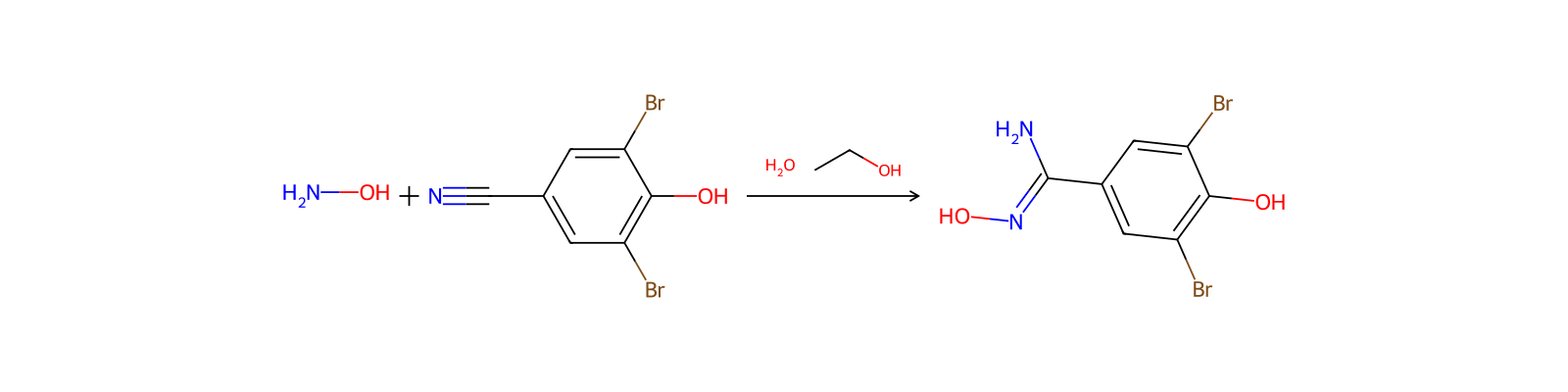

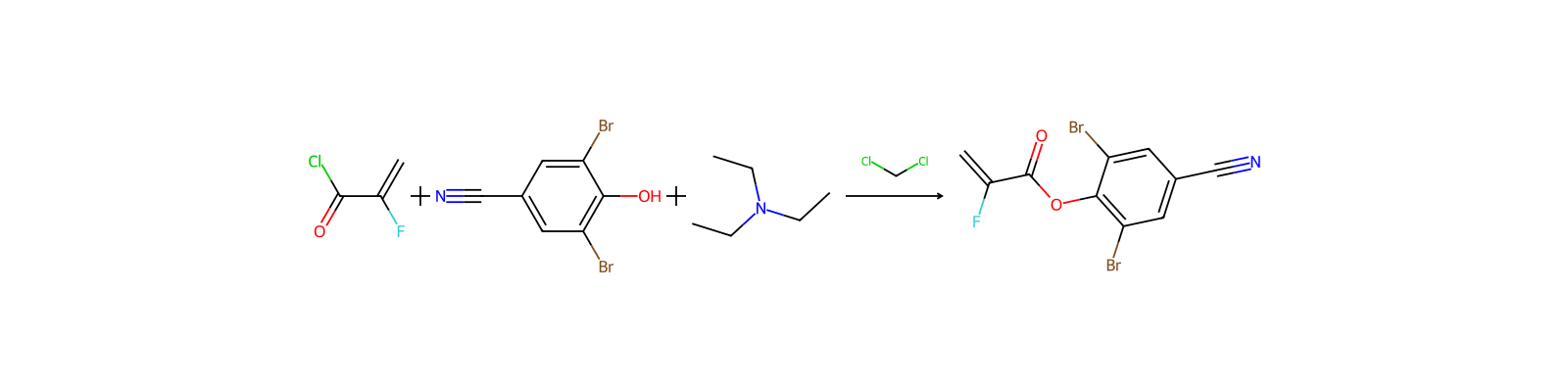
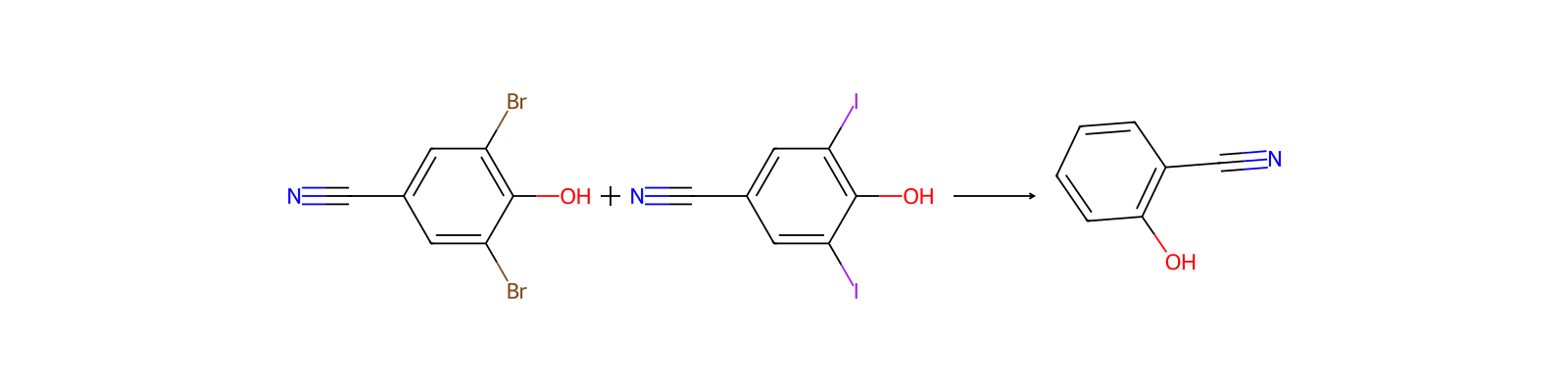
関連ノート
読み込み中…