
基本情報
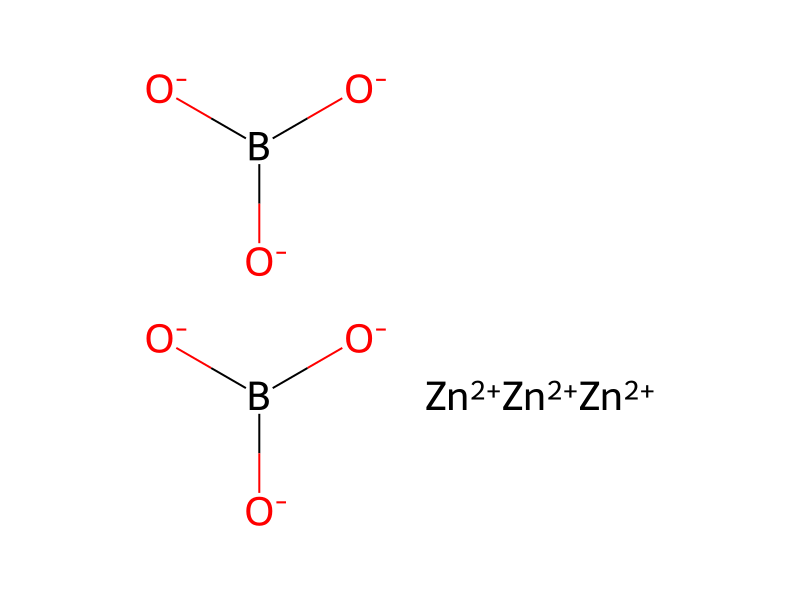
- 標準SMILES
[O-]B([O-])[O-].[O-]B([O-])[O-].[Zn+2].[Zn+2].[Zn+2]- InChIKey
BIKXLKXABVUSMH-UHFFFAOYSA-N- 分子式
- B2O6Zn3
- 平均分子量
- 313.8 g/mol
- 単同位体質量
- 309.77552512
概要
Zinc borate appears as a white powder of variable composition. (typically 45% ZnO, 34% B2O3 and 20% H2O). Slightly soluble in water. The primary hazard is the threat to the environment. Immediate steps should be taken to limit its spread to the environment. It is used as a fungus and mildew inhibitor, to fire proof textiles, and for other uses.
名称と識別子
- 優先名称
- Boric acid (HBO2), zinc salt (2:1)
- IUPAC
- trizinc diborate
- 現地名
- ホウ酸亜鉛
- 英語名
- Zinc borate
- 分子式
- B2O6Zn3
- 分子量
- 313.79
名称と別名
Boric acid (HBO2), zinc salt (2:1)RefChem:1080091DTXSID901340531238-763-914720-55-9ZINC BORATEtrizinc;diborateFirebrake ZB21LB2V459EDiboron zinc tetraoxideBonrex FCFlamtard Z 10
名称をさらに表示
ほう酸亜鉛ジンクボレートZinc Borate, HeMiheptahydratezn100zb237zb112borax23352ZnO·3B2O3ZincBoratePure
ZT (fire retardant)Alcanex FR 100Alcanex FRC 600Climax ZB 467Zinc borate (3/2)Borax 2335ZB 467 LiteZINC BORATE [HSDB]
データベース識別子
- CAS
1332-07-6、14720-55-9- PubChem CID
- 167155
- DTXSID
DTXSID6091554- UNII
- 21LB2V459E
- EC Number
- 215-566-6、238-763-9
物性
構造計算による物性
- 極性表面積
- 138 Ų
- 水素結合供与体数
- 0
- 水素結合受容体数
- 6
- 回転可能結合数
- 0
- 重原子数
- 11
- 形式電荷
- 0
- 複雑度
- 8
実験および物理化学的性質
Chemical ClassesMetals -> Metalloid Compounds (Boron)
CosmeticsAntimicrobial
pHpH = 7.6 (in deionized water)
OdorNone
Density
2.7 at 68 °F (USCG, 1999) - Denser than water; will sink
3.64 g/cu cm
Density: 40 to 40 lbs/cu ft (bulk)
Color/Form
White, amorphous powder
White granular
Solubility
Soluble in dilute acids; slightly soluble in water
0.3% in water at 20 °C
Melting Point980 °C
Physical Description
Zinc borate appears as a white powder of variable composition. (typically 45% ZnO, 34% B2O3 and 20% H2O). Slightly soluble in water. The primary hazard is the threat to the environment. Immediate steps should be taken to limit its spread to the environment. It is used as a fungus and mildew inhibitor, to fire proof textiles, and for other uses.
White odorless solid; Powder (ceramic grade) = 99.95% pure; Commercial grade = about 50% zinc oxide and 30% boric anhydride; [HSDB] White powder; [MSDSonline]
Other Experimental Properties
White amorphous powder; MF: 3ZnO.2B2O3; MW: 383.466; Density/Specific gravity: 3.64 g/cu cm; Slightly sol in cold water; Soluble in dilute acid. 27043-84-1 /Zinc borate; 27043-84-1/
White crystals; MF: 2ZnO.3B2O3.3.5H20; MW: 434.69; MP: 980 °C; density = 4.22 g/cu cm; insoluble in water. 12513-27-8 /Zinc borate hemiheptahydrate/
White powder; MF: 2ZnO.3B2O3.5H20; MW: 461.753; Density: 3.64 g/cu cm; solubility in water = 0.007 g/100 g water at 25 °C; slightly soluble in hydrochloric acid. 12536-65-2 /Zinc pentahydrate/
White hygroscopic solid; MF: ZnO(B2O3)2.6H2O; MW: 429.305; MP: 100 °C; Density: 2.57 g/cu cm; very soluble in water. 13517-27-6 /Zinc hexahydrate/
物理化学的性質
- 融点
- 980 °C · 980 °C
- 比重(密度)
- 3.64 g/cm3 · 3.64 g/cm3
- 化粧品成分の機能
- 皮膚コンディショニング - 保湿剤
- LogP
- -0.292 · -0.292 (est)
- CAS データベース
- 1332 · 1332-07-6(CAS DataBase Reference)
- EPAの化学物質情報
- Zinc borate (1332-07-6)
化学的性質
化学的特性亜鉛ボレートは化学式で表されるZn3BO32という化合物ですこの物質は亜鉛とホウ素の化合物の一つであり特に耐火性材料顔料ゴム製品の補強材としての応用が見られます亜鉛ボレートの独特な化学的および物理的性質は多岐にわたる産業での利用を促進しています
化学的特性White, amorphous powder. Soluble in dilute acids; slightly soluble in water. Nonflammable.
化学性质耐火性高温環境下での安定性が高く防火材料としての用途に優れています防腐性木材や繊維製品に使用される際防腐剤として機能し材料の耐久性を向上させます紫外線保護紫外線を吸収する能力があり塗料やプラスチック製品の紫外線劣化を防ぐために利用されます
安全と法規制
GHS分類
GHS Classification
Warning
H319: Causes serious eye irritation [Warning Serious eye damage/eye irritation]
P264+P265, P280, P305+P351+P338, and P337+P317 (click each P-code to see the statement)
危険有害性情報
Regulatory Information
PMN - indicates a commenced PMN (Pre-Manufacture Notices) substance.
Zinc borate: Does not have an individual approval but may be used under an appropriate group standard
The New Jersey Worker and Community Right to Know Act requires public and private employers to provide information about hazardous substances at their workplaces. (N.J.S.A. 34:5A-1 et. seq.)
Fire PotentialNonflammable
Health HazardsInhalation of dust may irritate nose and throat. Ingestion can cause gastrointestinal disturbances, convulsions, central nervous depressions, skin eruptions, shock, and death. Contact with eyes or skin causes irritation. (USCG, 1999)
Hazards Summary
Toxic by ingestion; A skin and eye irritant; [HSDB]; Zinc salts are irritating to the GI tract; No cumulative effects except digestive disorders; [EPA OHM/TADS] Has not been tested for reproductive or other chronic effects; [NJ-HSFS] An irritant; [MSDSonline] See Boric acid.
Reactive GroupNon-Redox-Active Inorganic Compounds
Special Reports
Zinc and Health. Current Bibliographies in Medicine 98-3. Public Services Division/National Library of Medicine. 3619 citations January, 1990-June, 1998.[Available from, as of November 2, 1998: http://www.nlm.nih.gov/archive/20040831/pubs/cbm/zinc.html]
USEPA; Ambient Water Quality Criteria Doc: Zinc (1980) EPA 400/5-80-079
USEPA; Ambient Water Quality Criteria Doc: Zinc (1987) EPA 400/5-87-003
Arvidson, B. A Review of Axonal Transport of Metals. Toxicology 88: 1-14 (19994) Recent findings regarding axonal transport of metals, including zinc.
For more Special Reports (Complete) data for ZINC BORATE (6 total), please visit the HSDB record page.
Reactivity ProfileZINC BORATE has weak oxidizing or reducing powers. Slightly soluble in water. Not water-reactive.
Air and Water ReactionsSlightly soluble in water.
CERCLA Reportable Quantities
Persons in charge of vessels or facilities are required to notify the National Response Center (NRC) immediately, when there is a release of this designated hazardous substance, in an amount equal to or greater than its reportable quantity of 1000 lb or 454 kg. The toll free number of the NRC is (800) 424-8802. The rule for determining when notification is required is stated in 40 CFR 302.4 (section IV. D.3.b).
Clean Water Act Requirements
Zinc borate is designated as a hazardous substance under section 311(b)(2)(A) of the Federal Water Pollution Control Act and further regulated by the Clean Water Act Amendments of 1977 and 1978. These regulations apply to discharges of this substance. This designation includes any isomers and hydrates, as well as any solutions and mixtures containing this substance.
Toxic pollutant designated pursuant to section 307(a)(1) of the Federal Water Pollution Control Act and is subject to effluent limitations. /Zinc and compounds/
For total recoverable zinc the criterion to protect freshwater aquatic life ... is 47 ng/L as a 24 hr average ... at hardnesses of 50, 100, and 200 mg/L as CaCO3 the concentration of total recoverable zinc should not exceed 180, 320, 570 ug/L at any time. /Soluble zinc salts/
For total recoverable zinc the criterion to protect saltwater aquatic life ... is 58 ug/L as a 24 hr average and the concentration should not exceed 170 ug/L at any time. /Soluble zinc salts/
Hazard Classes and CategoriesSerious eye damage/eye irritation - Category 2
Standard Transportation Number49 633 89; Zinc borate
安全と保護具
First AidINHALATION: move to fresh air.
Exposure Control and Personal Protection0.1 [mg/m3], respirable fraction, 2 mg/m3 (inhalable fraction)-for Zn inorg. compds.[German Research Foundation (DFG)]
Fire Fighting ProceduresIf material involved in fire: extingiush fire using agent suitable for type of surrounding fire. Material itself does not burn or burns with difficulty.
Cleanup Methods
Environmental considerations: Land spill: Dig a pit, pond, lagoon, or holding area to contain liquid or solid material. /SRP: If time permits, pits, ponds, lagoons, soak holes, or holding areas should be contained with a flexible impermeable membrane liner./ Cover solids with a plastic sheet to prevent dissolving in rain or fire fighting water.
Environmental considerations: Water spill: Neutralize with agricultural lime (CaO), crushed limestone (CaCO3), or sodium bicarbonate (NaHCO3). Add soda ash (Na2CO3). Adjust pH to neutral (pH 7). Use mechanical dredges or lifts to remove immobilized masses of pollutants and precipitates.
Disposal Methods
SRP: The most favorable course of action is to use an alternative chemical product with less inherent propensity for occupational harm/injury/toxicity or environmental contamination. Recycle any unused portion of the material for its approved use or return it to the manufacturer or supplier. Ultimate disposal of the chemical must consider: the material's impact on air quality; potential migration in soil or water; effects on animal and plant life; and conformance with environmental and public health regulations.
Preventive Measures
If material not involved in fire: Keep material out of water sources and sewers. Build dikes to contain flow as necessary. Keep upwind. Wear appropriate chemical protective gloves, boots and goggles. Avoid breathing vapors or dust. Wash away any material which may have contacted the body with copious amounts of water or soap and water.
SRP: The scientific literature for the use of contact lenses in industry is conflicting. The benefit or detrimental effects of wearing contact lenses depend not only upon the substance, but also on factors including the form of the substance, characteristics and duration of the exposure, the uses of other eye protection equipment, and the hygiene of the lenses. However, there may be individual substances whose irritating or corrosive properties are such that the wearing of contact lenses would be harmful to the eye. In those specific cases, contact lenses should not be worn. In any event, the usual eye protection equipment should be worn even when contact lenses are in place.
Minimum Risk LevelIntermediate Oral: 0.3 mg/kg/day (L134)
Chronic Oral: 0.3 mg/kg/day (L134)
Personal Protective Equipment (PPE)
Dust mask; goggles or face shield; protective gloves (USCG, 1999)
/NIOSH certified respirator/; goggles or face shield; protective gloves
毒性情報
TreatmentZinc poisoning is treated symptomatically, often by administering fluids such as water or milk, or with gastric lavage. (L49)
Health EffectsChronic exposure to zinc causes anemia, atazia, lethargy, and decreases the level of good cholesterol in the body. It is also believed to cause pancreatic and reproductive damage. (L49)
Ecotoxicity Values
LC50; Species: Anas platyrhynchos (Mallard duck) age 10 days; diet >5620 ppm for 8 days
LD50; Species: Colinus virginianus (Northern Bobwhite Quail) age 5 months; oral via capsule >2250 mg/kg
EC50; Species: Daphnia magna (Water Flea) age <24 hr; Conditions: freshwater, static; Concentration: 75000 ug/L for 48 hr (95% confidence interval: 50000-120000 ug/L); Effect: intoxication, immobilization /100% purity formulation/
LC50; Species: Lepomis macrochirus (Bluegill); Conditions: freshwater, static; Concentration: >335000 ug/L for 96 hr /100% purity formulation/
LC50; Species: Oncorhynchus mykiss (Rainbow Trout); Conditions: freshwater, static; Concentration: 2700 ug/L for 96 hr (95% confidence interval: 1800-3400 ug/L) /100% purity formulation/
Exposure RoutesOral (L49) ; inhalation (L49) ; dermal (L49)
Toxicity Summary
Anaemia results from the excessive absorption of zinc suppressing copper and iron absorption, most likely through competitive binding of intestinal mucosal cells. Unbalanced levels of copper and zinc binding to Cu,Zn-superoxide dismutase has been linked to amyotrophic lateral sclerosis (ALS). Stomach acid dissolves metallic zinc to give corrosive zinc chloride, which can cause damage to the stomach lining. Metal fume fever is thought to be an immune response to inhaled zinc. (L48, L49, A49)
Ecotoxicity Excerpts
/BIRDS and MAMMALS/ Avian acute oral study indicated that the bobwhite quail (Colinus virginianus), based on signs of toxicity, mortality, reduction of body weight gain and feed consumption was characterized as practically non-toxic to bobwhite quail. The LD50 was determined to be >2250 mg/kg, the highest dosage tested.
/BIRDS and MAMMALS/ In avian dietary studies, the LC50 value of zinc borate in the mallard ducklings (Anas platyrhynchos) is estimated to be greater than 5,620 ppm. No mortality occurred in either the control or treated groups. A slight reduction in body weight was observed at the 6,520 ppm concentration during the exposure period. There was no effect on feed consumption at any concentration tested.
/AQUATIC SPECIES/ The acute toxicity of zinc borate to bluegill sunfish (Lepomis macrochirus) was tested under static conditions at mean concentrations of 94, 137, 182, 248, and 335 ppm. The 96 hr LC50 for bluegill sunfish was shown to be greater than 335 ppm. These results indicate that zinc borate is practically nontoxic to the fish species tested.
Signs and Symptoms
Ingestion of large doses of zinc causes stomach cramps, nausea, and vomiting. Acute inhalation of large amounts of zinc causes metal fume fever, which is characterized by chills, fever, headache, weakness, dryness of the nose and throat, chest pain, and coughing. Dermal contact with zinc results in skin irritation. (L49)
Carcinogen ClassificationNo indication of carcinogenicity to humans (not listed by IARC).
Non-Human Toxicity Excerpts
/GENOTOXICITY/ In the Salmonella/microsomal Assay (Ames Bioassay) for bacterial mutagenic activity, zinc borate did not elicit any mutagenic response in Salmonella tester strains when tested either with or without a metabolic activation system.
/OTHER TOXICITY INFORMATION/ In a dermal sensitization study involving guinea pigs, zinc borate showed no evidence of /sensitization/.
/OTHER TOXICITY INFORMATION/ Primary Dermal Irritation/Corrosivity in Albino Rabbits - The Primary Irritation Index of zinc borate in rabbits was found to be 0. Therefore, it is not considered to be an irritant or corrosive.
/OTHER TOXICITY INFORMATION/ Zinc borate was shown to be an eye irritant producing mild conjunctivitis in albino rabbits.
Probable Routes of Human Exposure
According to the 2006 TSCA Inventory Update Reporting data, the number of persons reasonably likely to be exposed in the industrial manufacturing, processing, and use of zinc borate is 100 to 999; the data may be greatly underestimated(1).
NIOSH (NOES Survey 1981-1983) has statistically estimated that 20,343 workers (4,266 of these were female) were potentially exposed to zinc borate in the US(1). Occupational exposure to zinc borate may occur through inhalation and dermal contact with this compound at workplaces where zinc borate is produced or used(SRC).
Antidote and Emergency Treatment
Immediate first aid: Remove patient from contact with the material. Ensure that adequate decontamination has been carried out. If patient is not breathing, start artificial respiration, preferably with a demand-valve resuscitator, bag-valve-mask device, or pocket mask, as trained. Perform CPR as necessary. Immediately flush contaminated eyes with gently flowing water. Do not induce vomiting. If vomiting occurs, lean patient forward or place on left side (head-down position, if possible) to maintain an open airway and prevent aspiration. Keep patient quiet and maintain normal body temperature. Obtain medical attention. /Zinc and related compounds/
Basic treatment: Establish a patent airway (oropharyngeal or nasopharyngeal airway, if needed). Suction if necessary. Watch for signs of respiratory insufficiency and assist ventilations if necessary. Administer oxygen by nonrebreather mask at 10 to 15 L/min. Monitor for pulmonary edema and treat if necessary ... . Anticipate seizures and treat if necessary ... . Monitor for shock and treat if necessary ... . For eye contamination, flush eyes immediately with water. Irrigate each eye continuously with 0.9% saline (NS) during transport ... . Do not use emetics. For ingestion, rinse mouth and administer 5 mL/kg up to 200 mL of water for dilution if the patient can swallow, has a strong gag reflex, and does not drool. Administer activated charcoal ... . /Zinc and related compounds/
Advanced treatment: Consider orotracheal or nasotracheal intubation for airway control in the patient who is unconscious, has severe pulmonary edema, or is in severe respiratory distress. Positive-pressure ventilation techniques with a bag valve mask device may be beneficial. Consider drug therapy for pulmonary edema ... . Consider administering a beta agonist such as albuterol for severe bronchospasm ... . Monitor cardiac rhythm and treat arrhythmias if necessary ... . Start IV administration of D5W /SRP: "To keep open", minimal flow rate/. Use 0.9% saline (NS) or lactated Ringer's (LR) if signs of hypovolemia are present. For hypotension with signs of hypovolemia, administer fluid cautiously. Consider vasopressors if patient is hypotensive with a normal fluid volume. Watch for signs of fluid overload ... . Treat seizures with diazepam or lorazepam ... . Use proparacaine, hydrochloride to assist eye irrigation ... . /Zinc and related compounds/
Immediate first aid: Ensure that adequate decontamination has been carried out. If patient is not breathing, start artificial respiration, preferably with a demand-valve resuscitator, bag-valve-mask device, or pocket mask, as trained. Perform CPR as necessary. Immediately flush contaminated eyes with gently flowing water. Do not induce vomiting. If vomiting occurs, lean patient forward or place on left side (head-down position, if possible) to maintain an open airway and prevent aspiration. Keep patient quiet and maintain normal body temperature. Obtain medical attention. /Boron and Related Compounds/
For more Antidote and Emergency Treatment (Complete) data for ZINC BORATE (6 total), please visit the HSDB record page.
Non-Human Toxicity Values
LD50 Rabbits (male and female albino rabbits) dermal greater than 10 g/kg
LD50 Rat(male) oral greater than 10 g/kg
法規制情報
CERCLA Reportable Quantities
Persons in charge of vessels or facilities are required to notify the National Response Center (NRC) immediately, when there is a release of this designated hazardous substance, in an amount equal to or greater than its reportable quantity of 1000 lb or 454 kg. The toll free number of the NRC is (800) 424-8802. The rule for determining when notification is required is stated in 40 CFR 302.4 (section IV. D.3.b).
Clean Water Act Requirements
Zinc borate is designated as a hazardous substance under section 311(b)(2)(A) of the Federal Water Pollution Control Act and further regulated by the Clean Water Act Amendments of 1977 and 1978. These regulations apply to discharges of this substance. This designation includes any isomers and hydrates, as well as any solutions and mixtures containing this substance.
Toxic pollutant designated pursuant to section 307(a)(1) of the Federal Water Pollution Control Act and is subject to effluent limitations. /Zinc and compounds/
For total recoverable zinc the criterion to protect freshwater aquatic life ... is 47 ng/L as a 24 hr average ... at hardnesses of 50, 100, and 200 mg/L as CaCO3 the concentration of total recoverable zinc should not exceed 180, 320, 570 ug/L at any time. /Soluble zinc salts/
For total recoverable zinc the criterion to protect saltwater aquatic life ... is 58 ug/L as a 24 hr average and the concentration should not exceed 170 ug/L at any time. /Soluble zinc salts/
State Drinking Water Guidelines
(AZ) ARIZONA 5000 ug/L /Zinc/
(MN) MINNESOTA 2000 ug/L /Zinc/
Federal Drinking Water Guidelines
EPA 5000 ug/L /Zinc/
EPA 2000 ug/L /Zinc, Lifetime health advisory/
安全データ
- tsca
- TSCA listed
- 毒性
- Zinc borate 2ZnO3B2O3·3.5H2O has an acute oral toxicity in rats LD50 >10000 mg/kg body weight and acute dermal toxicity in rabbits LD50>10000 mg/kg body weight. It is not a skin irritant and gives a negative response in the Ames mutagenicity test (Kirk-Othmer, 1994).
- PRTR法
- 1-405
- 毒劇物取締法
- III
- 有毒物質データの
- 1332-07-6(Hazardous Substances Data)
化学と産業
薬理情報
Metabolism/Metabolites
Zinc can enter the body through the lungs, skin, and gastrointestinal tract. Intestinal absorption of zinc is controlled by zinc carrier protein CRIP. Zinc also binds to metallothioneins, which help prevent absorption of excess zinc. Zinc is widely distributed and found in all tissues and tissues fluids, concentrating in the liver, gastrointestinal tract, kidney, skin, lung, brain, heart, and pancreas. In the bloodstream zinc is found bound to carbonic anhydrase in erythrocytes, as well as bound to albumin, _2-macroglobulin, and amino acids in the the plasma. Albumin and amino acid bound zinc can diffuse across tissue membranes. Zinc is excreted in the urine and faeces. (L49)
用途と製造
Uses
Used as flame retardant (PVC, cellulosics, unsaturated halogenated polyesters, polymers, elastomers, paper, paperboard, textiles, and textile coatings), fungicide, and ceramics flux; [HSDB]
Pulp and Paper Processing [Category: Industry]
For zinc borate (USEPA/OPP Pesticide Code: 128859) ACTIVE products with label matches. /SRP: Registered for use in the U.S. but approved pesticide uses may change periodically and so federal, state and local authorities must be consulted for currently approved uses./
Medicine, fireproofing textiles, fungistat and mildew inhibitor, flux in ceramics
Fungicide
Effective in enhancing the flame-inhibiting powers of chlorine
U.S. ProductionProduction volume for non-confidential chemicals reported under the 2006 Inventory Update Rule. Chemical: Boric acid, zinc salt. Aggregated National Production Volume: < 500,000 pounds.
Methods of ManufacturingInteraction of the oxides at 500-1000 °C or of zinc oxide slurries with solution of boric acid or borax.
Formulations/Preparations
Typical composition: zinc oxide 45%, borate 34%. May have 20% water of hydration.
Commercial grades contain 45-52% zinc oxide, 29-35% boric anhydride.
Powder, 99.95+% grade, ceramic grade
Borogard ZB (U.S. Borax, Inc), Zinc borate 100%.
For more Formulations/Preparations (Complete) data for ZINC BORATE (7 total), please visit the HSDB record page.
Household ProductsInformation on 1 consumer products that contain Zinc borate in the following categories is provided:
Use ClassificationCosmetics -> Antimicrobial
General Manufacturing Information
Boric acid (HBO2), zinc salt (2:1): INACTIVE
Zinc borates can be used alone, although it is not as effective in increasing flame resistance as when used in combination with other halogen synergists such as antimony oxide ... also used with alumina trihydrate to form a glass-like substance that inhibits polymer degradation /Zinc borates/
応用分野
用途樹脂充てん剤,難燃剤,難燃助剤(化学工業日報社)
使用Zinc borate is prepared as an insoluble double salt from water-soluble zinc and boron compounds. Compounds having varying amounts of zinc, boron, and water of hydration are available. The ratio of these components affects the temperature at which the flame-inhibiting powers are activated, as well as the temperature at which they can be processed. Zinc borates can either be used alone or in combination with other halogen synergists, such as antimony oxide. In some instances zinc borate is also used with alumina trihydrate to form a glass-like substance that inhibits polymer degradation.
調製方法
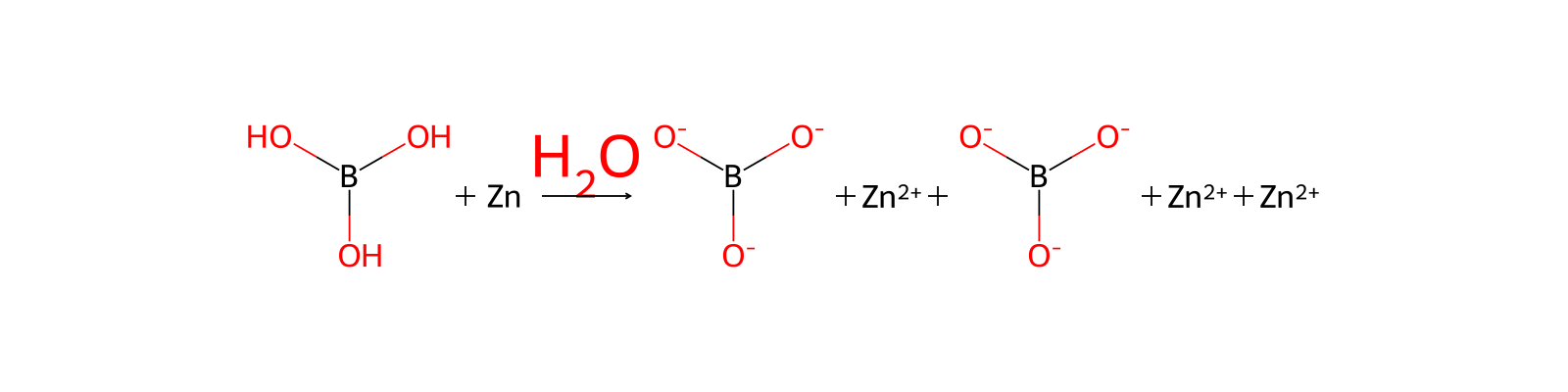
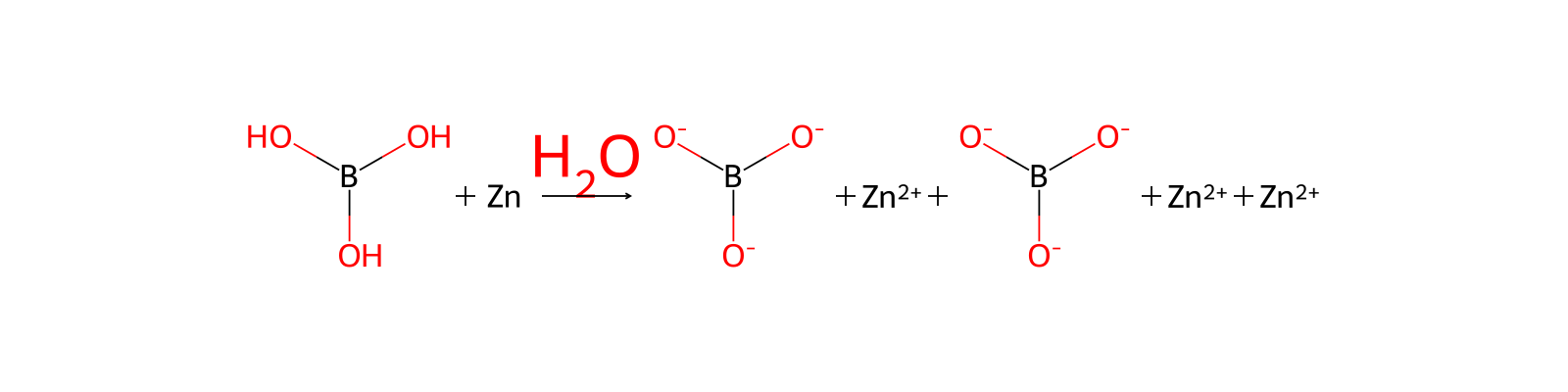
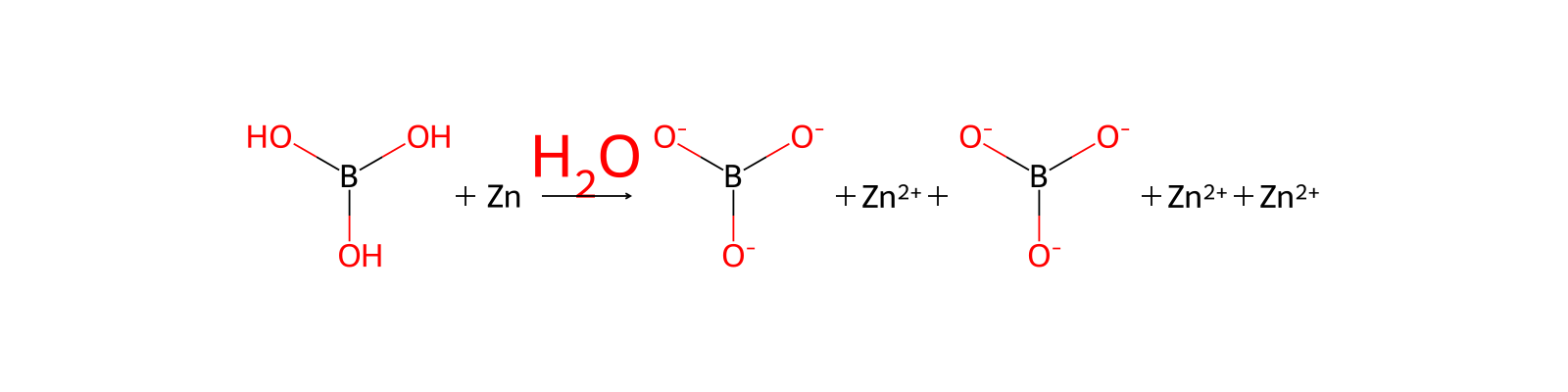
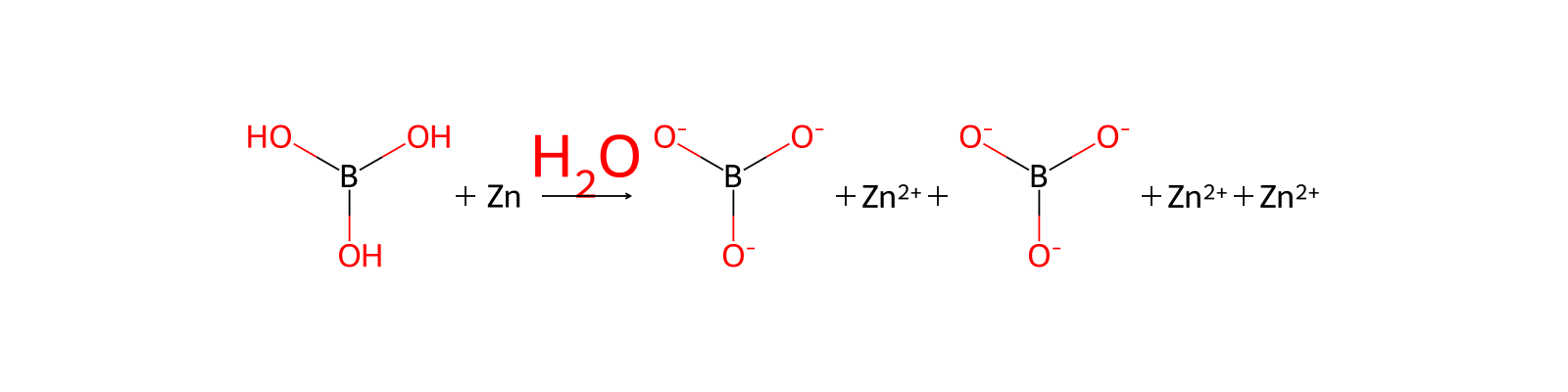
Zinc borate (2ZnO·3B2O3·3.5H2O) in general is produced with the reaction between zinc oxide and boric acid. Boric acid is solved in water between temperatures 95ºC and 98ºC and zinc oxide and seed crystal of 2ZnO·3B2O3·3.5H2O is added to this solution at a certain stoichiometric ratio. The reaction continues for a while by mixing and the zinc borate formed is filtered, dried and ground. The boric acid solution is fed to the system as reflux.
上流・下流製品情報
上流原料
下流製品
サプライヤー50 社
北京华美互利生物化工010-56205725 · [email protected]
湖北永阔科技有限公司027-59223108 15972152991 · [email protected]
上海阿拉丁生化科技股份有限公司400-6206333 13167063860 · [email protected]
Shandong chuangyingchemical Co., Ltd.18853181302 · [email protected]
湖北万得化工有限公司15377098680 15377098680 · [email protected]
南通润丰石油化工有限公司66017690 19952660367 · [email protected]
Career Henan Chemica Co+86-0371-86658258 +86-13203830695 · [email protected]
毕佳索(上海毕得医药科技股份有限公司)400-6005915 · [email protected]
上海麦克林生化科技股份有限公司021-50706066 15221275939 · [email protected]
湖北成丰化工有限公司13125175253 · [email protected]
武汉欣扬瑞和化学科技有限公司13720274133 · [email protected]
上海毕得医药科技股份有限公司400-1647117 13681763483 · [email protected]
Dayang Chem (Hangzhou) Co.,Ltd.+86-0571-88938639 17705817739 · [email protected]
江苏豪隆化工有限公司0513-89083520 13328092525 · [email protected]
郑州鸿晟医药科技有限公司0371-55695890 15637198702 · [email protected]
武汉绿景丰华生物科技有限公司19972070065 · [email protected]
江苏普乐司生物科技有限公司0513-66017706 18551496367 · [email protected]
安耐吉化学&3A(安徽泽升科技股份有限公司)400-0056266 · [email protected]
武汉卡诺斯科技有限公司027-83238443 15327105076 · [email protected]
湖北广奥生物科技有限公司027-02702759223056 18162699093 · [email protected]
河北茹麒科技有限公司176-03256889 17603256889 · [email protected]
山东西亚化学有限公司13355009207 13355009207 · [email protected]
四川库利南科技有限公司400-1166-196 18981987031 · [email protected]
南京化学试剂股份有限公司025-58369808 17895012682 · [email protected]
Hebei Qige Biological Technology Co. Ltd+86 +8618733132031
武汉吉业升化工有限公司027-13545242311 13545242311 · [email protected]
斯百全化学(上海)有限公司021-021-021-67601398-809-809-809 15221380277 · [email protected]
艾科试剂4008-755-333 18080918076 · [email protected]
北京环宇世纪化学科技有限公司hysj_bj.com
上海将来实业股份有限公司400-0066400 13621662912 · [email protected]
北京奥秘佳得医药科技有限公司+86-13522808617 · [email protected]
杭州杰恒化工有限公司0571-87396432 · [email protected]
成都润泽本土化工有限公司13096311329 028-88469284 616445927 · [email protected]
湖北巨胜科技有限公司027-59599241 18871490274 · [email protected]
康迪斯化工(湖北)有限公司13343438265 · [email protected]
九鼎化学(上海)科技有限公司4009209199 · [email protected]
上海谱振生物科技有限公司4001650900 13817534909 · [email protected]
厦门志信化学有限公司+86-5922680277 +86-13806087780 · [email protected]
昆山中莱特贸易有限公司0512-55170668 13913095008;13770601296 · [email protected]
上海玻尔化学试剂有限公司19102157732 · [email protected]
上海珈得尔化学技术有限公司021-4007787-550 400-7787-550 · [email protected]
成都润泽本土化工有限公司028-88469284 18000562381 · [email protected]
北京华威锐科化工科技有限公司89508211 18501085097 · [email protected]
上海源叶生物科技有限公司13636370518 · [email protected]
舟山广兴化学有限公司15698059122 15698059122 · [email protected]
湖北齐飞医药化工有限公司027-59322506 18071128681 · [email protected]
山东西亚化学有限公司4009903999 13395398332 · [email protected]
河北贞佳新材料有限公司0319-5925599 13315915972
上海新平精细化学品有限公司18221735425 · [email protected]
深圳市森迪生物科技有限公司18126413629 0755-23311925 2355327053 · [email protected]
関連反応
8 件



関連ノート
読み込み中…