
(トリフェニルホスホラニリデン)酢酸メチル
Acetic acid, 2-(triphenylphosphoranylidene)-, methyl ester
データを補完しています。しばらくしてからページを更新すると最新の内容を表示できます

基本情報
- CAS
2605-67-6- 標準SMILES
COC(=O)C=P(c1ccccc1)(c1ccccc1)c1ccccc1- InChIKey
NTNUDYROPUKXNA-UHFFFAOYSA-N- 分子式
- C21H19O2P
- 平均分子量
- 334.3 g/mol
- 単同位体質量
- 334.11226684
名称と識別子
- 優先名称
- Acetic acid, 2-(triphenylphosphoranylidene)-, methyl ester
- IUPAC
- methyl 2-(triphenyl-λ5-phosphanylidene)acetate
- 現地名
- (トリフェニルホスホラニリデン)酢酸メチル
- 英語名
- Methyl (triphenylphosphoranylidene)acetate
- 分子式
- C21H19O2P
- 分子量
- 334.35
名称と別名
2605-67-6Methyl (triphenylphosphoranylidene)acetate(Carbomethoxymethylene)triphenylphosphoraneAcetic acid, (triphenylphosphoranylidene)-, methyl ester(Triphenylphosphoranylidene)acetic acid methyl esterTriphenyl(carbomethoxymethylene)phosphoraneMethyl triphenylphosphoranylideneacetateAcetic acid, 2-(triphenylphosphoranylidene)-, methyl ester((Methoxycarbonyl)methylene)triphenylphosphoraneEINECS 220-018-4[(Methoxycarbonyl)methylene]triphenylphosphoraneNSC 117573
名称をさらに表示
(トリフェニルホスホラニリデン)酢酸メチル2-オキソ-2-メトキシエチリデントリフェニルホスホラン2-(トリフェニルホスホラニリデン)酢酸メチルトリフェニルホスフィニデン酢酸メチルトリフェニルホスホラニリデン酢酸メチルトリフェニル(2-オキソ-2-メトキシエチリデン)ホスホラン(メトキシカルボニルメチレン)トリフェニルホスホラン2-(トリフェニルホスフィニデン)酢酸メチル(カルボメトキシメチレン)トリフェニルホスホラン(トリフェニル-λ5-ホスファニリデン)メチル アセタート酢酸(トリフェニルホスホラニリデン)メチル(METHOXYCARBONYLMETHYLENE)TRIPHENYLPHOSPHORANEmethyl 2-(triphenyl-λ-phosphanylidene)acetateCMETPPAURORA KA-874idene)acetatemethyl 2-(triphenyl-Aceticacid,(triphenylphosphoranylideneMethyl (triphenylphosphoranylidene)acet
NSC 407395DTXSID6062549RefChem:552122DTXCID5037440220-018-4InChI=1/C21H19O2P/c1-23-21(22)17-24(18-11-5-2-6-12-18,19-13-7-3-8-14-19)20-15-9-4-10-16-20/h2-17H,1HMethyl 2-(triphenylphosphoranylidene)acetateCARBOMETHOXYMETHYLENE TRIPHENYLPHOSPHORANE
データベース識別子
- CAS
2605-67-6- PubChem CID
- 17453
- DTXSID
DTXSID6062549- ChEMBL
CHEMBL1715161- UNII
- D9MZ753Q8K
- EC Number
- 220-018-4
- Nikkaji
- J24.865G
物性
構造計算による物性補完中
- XLogP
- 4
- 極性表面積
- 26.3 Ų
- 水素結合供与体数
- 0
- 水素結合受容体数
- 2
- 回転可能結合数
- 5
- 重原子数
- 24
- 形式電荷
- 0
- 複雑度
- 400
実験および物理化学的性質
SpringerMaterials PropertiesCrystal structure
物理化学的性質
- 融点
- 168 · 168-172 °C (lit.)
- 沸点
- 165 · 165~170℃
- 比重(密度)
- 1.17 · 1.17±0.1 g/cm3(Predicted)
- 貯蔵温度
- Keep in dark place,Sealed in dry,Room Temperature
- 溶解性
- アセトニトリル(微量)、クロロホルム(微量)
- 外見
- 粉
- 色
- ホワイトからオフホワイト
- 水溶解度
- 不溶性
- BRN
- 618430 · 618430
- InChI
- InChI=1S/C21H19O2P/c1-23-21(22)17-24(18-11-5-2-6-12-18,19-13-7-3-8-14-19)20-15-9-4-10-16-20/h2-17H,1H3
- InChIKey
- NTNUDYROPUKXNA-UHFFFAOYSA-N
- SMILES
- C(OC)(=O)C=P(C1=CC=CC=C1)(C1=CC=CC=C1)C1=CC=CC=C1
- CAS データベース
- 2605 · 2605-67-6(CAS DataBase Reference)
- EPAの化学物質情報
- Acetic acid, (triphenylphosphoranylidene)-, methyl ester (2605-67-6)
安全と法規制
安全情報は参考情報です。供給元の安全データシート(SDS)、適用法令、専門家による評価に代わるものではありません。
GHS分類
GHS Classification
This chemical does not meet GHS hazard criteria for 50% (2 of 4) of reports.
Danger
H301 (50%): Toxic if swallowed [Danger Acute toxicity, oral]
P261, P264, P264+P265, P270, P271, P280, P301+P316, P302+P352, P304+P340, P305+P351+P338, P319, P321, P330, P332+P317, P337+P317, P362+P364, P403+P233, P405, and P501 (click each P-code to see the statement)
Aggregated GHS information provided per 4 reports by companies from 2 notifications to the ECHA C&L Inventory. Each notification may be associated with multiple companies.
危険有害性情報
Regulatory Information
Chemical: Acetic acid, (triphenylphosphoranylidene)-, methyl ester
REACH registered substance: Methyl (triphenylphosphoranylidene)acetate (EC: 220-018-4)
Hazard Classes and CategoriesAcute Tox. 3 (50%)
安全データ
- wgk
- 3
- tsca
- TSCA listed
- hs_code
- 29319090
- risk_code
- 36/37/38-25
- hazard_code
- T,Xi
- hazard_note
- Irritant
- safety_code
- 22-24/25-36-26
- ストレージクラス
- 11 - Combustible Solids
化学と産業
用途と製造
General Manufacturing InformationAcetic acid, 2-(triphenylphosphoranylidene)-, methyl ester: ACTIVE
応用分野
用途有機合成原料。
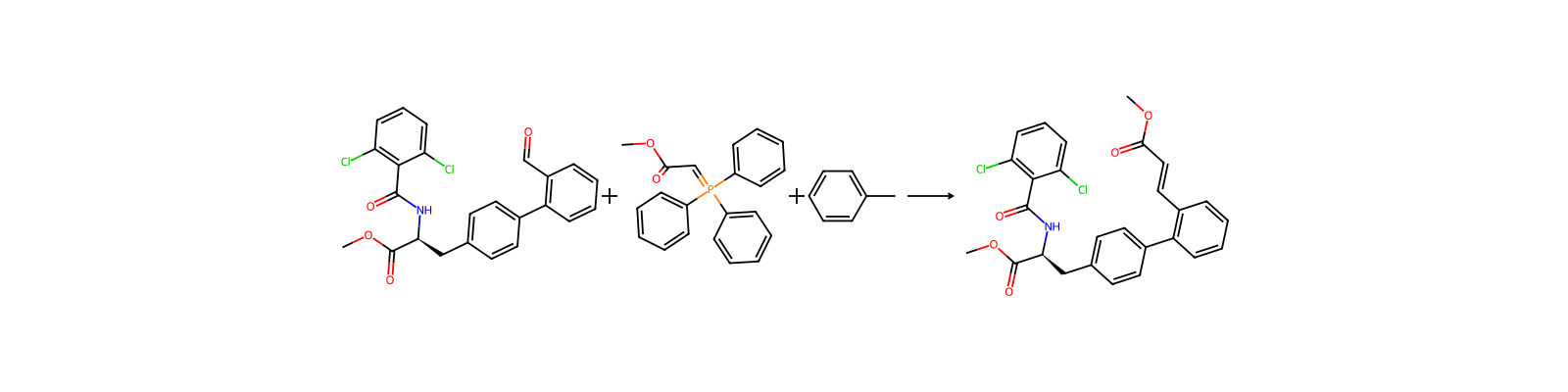
使用(Methoxycarbonylmethylene)triphenylphosphorane is used in olefination reactions. Wittig reagent for the two-carbon homologation of aldehydes to α,β-unsaturated esters. it undergoes the Wittig reaction with aldehydes to give substituted methyl acrylates. used in an efficient synthesis of pyrazoles via reaction with methyl diazoacetate in the presence of triethylamine. It is used in the preparation of (triphenylphosphoranylidene)-ketene. The Wittig reaction we performed in class involved the reaction of 2-nitrobenzaldehyde (1) with methyl (triphenylphosphoranylidene) acetate (2) to produce methyl (2E)-3-(2-nitrophenyl) acrylate (3) with a triphenylphosphine oxide (4) side product, and took place in a silica gel matrix to ensure even product dispersion for chromatography.
調製方法
純化方法Crystallise it by dissolving in it AcOH and adding pet ether (b 40-50o) to give colourless plates. UV max (A 1mm ): 222nm (865) and 268nm (116) [Isler et al. Helv Chim Acta 40 1242 1957]. [Beilstein 16 IV 977.]
上流・下流製品情報
下流製品
関連反応
461 件


化合物ノート
読み込み中…