
基本情報
- 標準SMILES
COc1ccc(N)c(OC)c1- InChIKey
GEQNZVKIDIPGCO-UHFFFAOYSA-N- 分子式
- C8H11NO2
- 平均分子量
- 153.18 g/mol
- 単同位体質量
- 153.07897859
概要
2,4-dimethoxyaniline is a black crystalline solid. (NTP, 1992)
名称と識別子
- 優先名称
- 2,4-Dimethoxyaniline
- IUPAC
- 2,4-dimethoxyaniline
- 現地名
- 2,4-ジメトキシアニリン
- 英語名
- 2,4-Dimethoxyaniline
- 分子式
- C8H11NO2
- 分子量
- 153.18
名称と別名
2,4-DIMETHOXYANILINEBenzenamine, 2,4-dimethoxy-Aniline, 2,4-dimethoxy-2,4-dimethoxyphenylamineDTXSID7043829NSC 620192,4-dimethoxybenzenamineHSDB 4125EINECS 220-355-71-Amino-2,4-dimethoxybenzeneBRN 06387042,4-Domethoxyaniline
名称をさらに表示
2,4-ジメトキシアニリン2,4-ジメトキシベンゼンアミンAKOS BBS-000036274-AMINORESORCINOL4-DiMethoxyaniline2,4-dimethoxy-anilin2,4-Dimethoxyaniline C2,4-DIMETHOXY BENZAMINE2,4-Dimethoxyaniline>2,4-dimethoxybenzenamine
4-Aminoresorcinol dimethyl etherDTXCID5023829I079354GSI2,4-DIMETHOXYANILINE [HSDB]NSC-62019UNII-I079354GSI4-13-00-02529 (Beilstein Handbook Reference)Aniline, 2,4dimethoxy
データベース識別子
- CAS
2735-04-8- PubChem CID
- 17652
- DTXSID
DTXSID7043829- ChEMBL
CHEMBL1622132- UNII
- I079354GSI
- EC Number
- 220-355-7
- Nikkaji
- J55.221F
物性
構造計算による物性
- XLogP
- 1.2
- 極性表面積
- 44.5 Ų
- 水素結合供与体数
- 1
- 水素結合受容体数
- 3
- 回転可能結合数
- 2
- 重原子数
- 11
- 形式電荷
- 0
- 複雑度
- 119
実験および物理化学的性質
Chemical ClassesNitrogen Compounds -> Amines, Aromatic
Color/FormPLATES FROM PETROLEUM ETHER
Solubility
less than 1 mg/mL at 63 °F (NTP, 1992)
SLIGHTLY SOL IN WATER; SOL IN ETHER, ALC, BENZENE, HOT PETROLEUM ETHER
Melting Point
92.3 °F (NTP, 1992)
33.5 °C
Physical Description
2,4-dimethoxyaniline is a black crystalline solid. (NTP, 1992)
Black solid; [CAMEO] Black solid; mp = 34-37 deg C; [MSDSonline]
Other Experimental PropertiesUV: 6158 (Sadtler Research Laboratories Spectral Collection) /3,4-Dimethoxyaniline/
物理化学的性質
- 融点
- 33 · 33-36 °C (lit.)
- 沸点
- 75 · 75-80 C
- 比重(密度)
- 1.075 g/mL · 1.075 g/mL at 25 °C (lit.)
- 屈折率
- 1.464 · 1.4640 (estimate)
- 闪点
- 230 °F · >230 °F
- 貯蔵温度
- Keep in dark place,Inert atmosphere,Room temperature
- 酸解離定数(Pka)
- 5.14 · 5.14±0.10(Predicted)
- 外見
- 結晶性固体
- 色
- ダークブラウン
- 水溶解度
- 7 g/L · 7g/L(20℃)
- BRN
- 638704 · 638704
- Henry's Law Constant
- 1.6 · 1.6×101 mol/(m3Pa) at 25℃, Ebert et al. (2023)
- 安定性
- 安定していますが、長時間の光への暴露に敏感です。酸と互換性がありません。
- InChI
- 1S/C8H11NO2/c1-10-6-3-4-7(9)8(5-6)11-2/h3-5H,9H2,1-2H3
- InChIKey
- GEQNZVKIDIPGCO-UHFFFAOYSA-N
- SMILES
- COc1ccc(N)c(OC)c1
- CAS データベース
- 2735 · 2735-04-8(CAS DataBase Reference)
- NISTの化学物質情報
- 2 · Benzenamine, 2,4-dimethoxy-(2735-04-8)
- EPAの化学物質情報
- 2 · 2,4-Dimethoxyaniline (2735-04-8)
化学的性質
化学的特性black crystals
安全と法規制
GHS分類
GHS Classification
Warning
H302 (100%): Harmful if swallowed [Warning Acute toxicity, oral]
P260, P261, P264, P264+P265, P270, P271, P280, P301+P317, P302+P352, P304+P340, P305+P351+P338, P317, P319, P321, P330, P332+P317, P337+P317, P362+P364, P403+P233, P405, and P501 (click each P-code to see the statement)
Aggregated GHS information provided per 46 reports by companies from 6 notifications to the ECHA C&L Inventory. Each notification may be associated with multiple companies.
危険有害性情報
Regulatory Information
Chemical: Benzenamine, 2,4-dimethoxy-
2,4-Dimethoxyaniline: Does not have an individual approval but may be used under an appropriate group standard
DOT LabelPoison
Fire HazardsExcerpt from ERG Guide 154 [Substances - Toxic and/or Corrosive (Non-Combustible)]:
Health HazardsACUTE/CHRONIC HAZARDS: This compound is a local irritant. (NTP, 1992)
Hazards SummaryEmergency treatment: Methemoglobinemia; No evidence of carcinogenicity in rats or mice; [HSDB] A local irritant; [CAMEO] An irritant; May induce methemoglobinemia; [MSDSonline]
Reactive GroupAmines, Aromatic
Special ReportsDHEW/NCI; Bioassay of 2,4-Dimethoxyaniline hydrochloride for Possible Carcinogenicity (1979) Technical Rpt Series No. 171 DHEW Pub No. (NIH) 79-1727
Reactivity Profile
2,4-DIMETHOXYANILINE neutralizes acids in exothermic reactions to form salts plus water. May be incompatible with isocyanates, halogenated organics, peroxides, phenols (acidic), epoxides, anhydrides, and acid halides. Flammable gaseous hydrogen may be generated in combination with strong reducing agents, such as hydrides.
Air and Water ReactionsInsoluble in water.
Hazard Classes and CategoriesAcute Tox. 4 (100%)
安全と保護具
Fire FightingExcerpt from ERG Guide 154 [Substances - Toxic and/or Corrosive (Non-Combustible)]:
First Aid
EYES: First check the victim for contact lenses and remove if present. Flush victim's eyes with water or normal saline solution for 20 to 30 minutes while simultaneously calling a hospital or poison control center. Do not put any ointments, oils, or medication in the victim's eyes without specific instructions from a physician. IMMEDIATELY transport the victim after flushing eyes to a hospital even if no symptoms (such as redness or irritation) develop.
Nonfire Spill Response
SMALL SPILLS AND LEAKAGE: If a spill of this chemical occurs, FIRST REMOVE ALL SOURCES OF IGNITION, then you should dampen the solid spill material with acetone and transfer the dampened material to a suitable container. Use absorbent paper dampened with acetone to pick up any remaining material. Seal your contaminated clothing and the absorbent paper in a vapor-tight plastic bag for eventual disposal. Solvent wash all contaminated surfaces with acetone followed by washing with a soap and water solution. Do not reenter the contaminated area until the Safety Officer (or other responsible person) has verified that the area has been properly cleaned.
Isolation and EvacuationExcerpt from ERG Guide 154 [Substances - Toxic and/or Corrosive (Non-Combustible)]:
Personal Protective Equipment (PPE)
RECOMMENDED RESPIRATOR: Where the neat test chemical is weighed and diluted, wear a NIOSH-approved half face respirator equipped with an organic vapor/acid gas cartridge (specific for organic vapors, HCl, acid gas and SO2) with a dust/mist filter. (NTP, 1992)
毒性情報
Adverse EffectsMethemoglobinemia - The presence of increased methemoglobin in the blood; the compound is classified as secondary toxic effect
Ongoing Test Status
The following link will take the user to the National Toxicology Program (NTP) Test Agent Search Results page, which tabulates all of the "Standard Toxicology & Carcinogenesis Studies", "Developmental Studies", and "Genetic Toxicity Studies" performed with this chemical. Clicking on the "Testing Status" link will take the user to the status (i.e., in review, in progress, in preparation, on test, completed, etc.) and results of all the studies that the NTP has done on this chemical. /2,4-Dimethoxyaniline hydrochloride/ [http://ntp-apps.niehs.nih.gov/ntp_tox/index.cfm?fuseaction=ntpsearch.searchresults&searchterm=54150-69-5]
Non-Human Toxicity Excerpts
... Under the conditions of this bioassay there was no convincing evidence for the carcinogenicity of 2,4-dimethoxyaniline HCl in Fischer 344 rats or B6C3F1 mice. Levels of Evidence of Carcinogenicity: Male Rats: Negative; Female Rats: Negative; Male Mice: Negative; Female Mice: Negative.
National Toxicology Program Studies
A bioassay for the possible carcinogenicity of 2,4-dimethoxyaniline HCl was conducted using Fischer 344 rats and B6C3F1 mice. 2,4-Dimethoxyaniline HCl was admin in the feed, at either of two concn, to groups of 50 male and 50 female animals of each species. Twenty animals of each sex and species were placed on test as controls. The high and low dietary concn of 2,4-dimethoxyaniline HCl were, respectively, 3,000 and 1,500 ppm for rats and 5,000 and 2,500 ppm for mice. The cmpd was admin in the diet for 104 wk to rats and 103 wk to mice, followed by a l wk observation period for both species. ... Adequate numbers of animals in all groups survived sufficiently long to be at risk from late-developing tumors. ... Under the conditions of this bioassay there was no convincing evidence for the carcinogenicity of 2,4-dimethoxyaniline HCl in Fischer 344 rats or B6C3F1 mice. Levels of Evidence of Carcinogenicity: Male Rats: Negative; Female Rats: Negative; Male Mice: Negative; Female Mice: Negative.
安全データ
- F
- 8-10-23
- wgk
- 3
- tsca
- TSCA listed
- rtecs
- BX4200000
- ridadr
- 2811
- 毒性
- mouse,LD50,oral,1gm/kg (1000mg/kg),Progress Report for Contract No. NIH-NCI-E-C-72-3252, Submitted to the National Cancer Institute by Litton Bionetics, Inc. Vol. NCI-E-C-72-3252, Pg. 1973,
- hs_code
- 29214200
- risk_code
- 22-36/37/38-20/21/22
- 化審法
- (3)-616
- hazard_code
- Xn
- safety_code
- 26-36-36/37/39-22
- hazard_class
- 6.1(b)
- packing_group
- III
- Hazard Classifications
- Acute Tox. 4 OralEye Irrit. 2Skin Irrit. 2STOT SE 3
- ストレージクラス
- 11 - Combustible Solids
- 有毒物質データの
- 2735-04-8(Hazardous Substances Data)
化学と産業
用途と製造
Uses
Used as an intermediate for C.I. basic yellow 11; Not currently manufactured in the US; [HSDB]
CHEMICAL INTERMEDIATE FOR C.I. BASIC YELLOW 11
U.S. Exports
(1977) No Data
(1979) No Data
U.S. Imports
(1977) 3.28X10+7 G (PRINCPL CUSTMS DISTS)
(1979) 1.62X10+7 G (PRINCPL CUSTMS DISTS)
U.S. Production
(1976) PROBABLY GREATER THAN 2.27X10+6 GRAMS
(1979) NOT PRODUCED COMMERCIALLY IN US
General Manufacturing InformationBenzenamine, 2,4-dimethoxy-: ACTIVE
応用分野
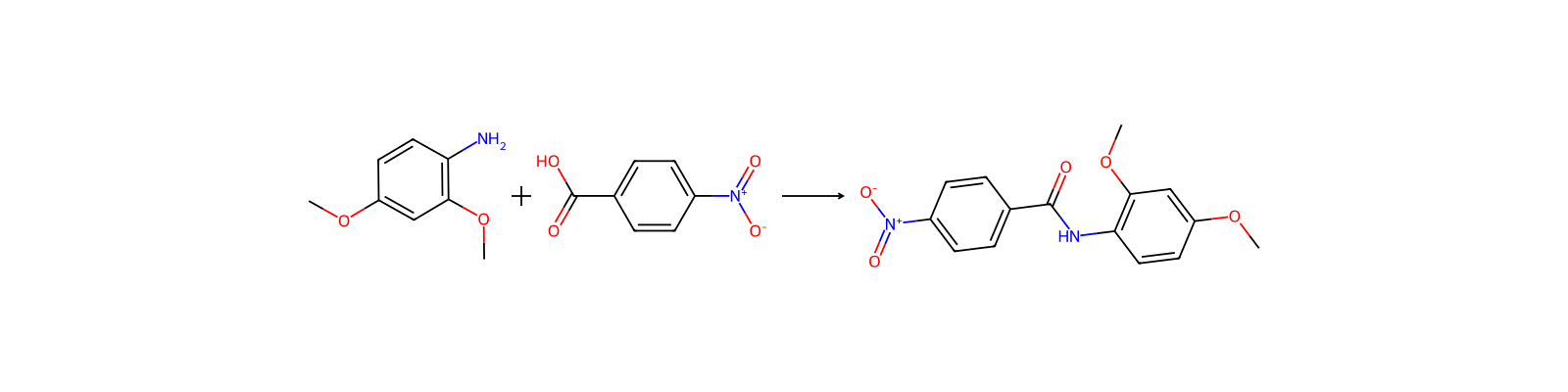
使用Various 2,4-dimethoxyphenylsemicarbazones were synthesized starting from 2,4-dimethoxyaniline via a phenylcarbamate intermediate. The hydrochloride of 2,4-dimethoxyaniline was prepared by intro- ducing hydrogen chloride gas into an etheral solution and washing the precipitate with absolute diethyl ether.
一般的な説明Black crystalline solid.
上流・下流製品情報
下流製品
サプライヤー50 社
梯希爱(上海)化成工业发展有限公司021-67121386 · [email protected]
杭州品高化工有限公司0571-87658025 · [email protected]
郑州汇聚化工有限公司13393710386 · [email protected]
普善实业(陕西)有限公司029-81310890 18165209495 · [email protected]
河北创海生物科技有限公司+86-86-13131129325 · [email protected]
环生美森医药技术(山东)有限公司0531-88762217 18301471076 · [email protected]
Dayang Chem (Hangzhou) Co.,Ltd.+86-0571-88938639 17705817739 · [email protected]
Hebei Yanxi Chemical Co., Ltd.+86-17531190177 · [email protected]
科瑞迪化学400-821-5857 021-64326257 · [email protected]
Syntechem Co.,Ltd[email protected]
上海迈瑞尔生化科技有限公司4006356688 18621169109 · [email protected]
北京华威锐科化工有限公司0757-86329057 18934348241 · [email protected]
上海颖心实验室设备有限公司021-59178156 17002132182 · [email protected]
阿法埃莎(中国)化学有限公司400-6106006 · [email protected]
太原市瑞和丰科贸有限公司+86 351 7031519 · [email protected]
安耐吉化学&3A(安徽泽升科技股份有限公司)400-0056266 · [email protected]
烟台凯博医药科技有限公司0535-6385396 · [email protected]
武汉凯威斯科技有限公司86-027-67849912 · [email protected]
上海瀚鸿科技股份有限公司021-54306202 13764082696 · [email protected]
Pure Chemistry Scientific Inc.001-857-928-2050 or 1-888-588-9418 · [email protected]
上海隆盛化工有限公司58099637 13585536065 · [email protected]
上海毕楷科技有限公司18516304666
山东西亚化学有限公司13355009207 13355009207 · [email protected]
玛雅试剂+86 (573) 82222445 (0)18006601000 452520369 · [email protected]
四川库利南科技有限公司400-1166-196 18981987031 · [email protected]
天津希恩思生化科技有限公司400 638 7771 · [email protected]
赛默飞世尔科技(中国)有限公司800-810-5118 · [email protected]
北京伊诺凯科技有限公司400-810-7969 010-59572699 · [email protected]
江苏艾康生物医药研发有限公司025-66113011 13913916777 · [email protected]
TCI AMERICA800-4238616 · [email protected]
TOKYO CHEMICAL INDUSTRY CO., LTD.03-36680489 · [email protected]
TCI Europe320-37350700 · [email protected]
成都麦卡希化工有限公司028-85632863 18108198598 · [email protected]
河南赢创生物科技有限公司15672878902 · [email protected]
北京环宇世纪化学科技有限公司hysj_bj.com
HBCChem, Inc.+1-510-219-6317 · [email protected]
美岚实业(上海)有限公司021-58958189 · [email protected]
上海爱蝶实业有限公司021-58957966 18930537195 · [email protected]
广拓化学(上海)有限公司021-60899189-8001 18918189673 · [email protected]
陕西缔都医药化工有限公司+86-029-81138252 +86-173 9270 1263 · [email protected]
湖南华腾制药有限公司400-8592883 · [email protected]
上海麦克林生化科技股份有限公司15221275939 15221275939 · [email protected]
上海有朋化工有限公司021-69005955 13701776567 · [email protected]
北京海力扬化学科技有限公司13718199399 · [email protected]
北京欣赛维化学科技有限公司010-56218822 13717722232 · [email protected]
四川海诺威科技有限公司13708085536 13708085536 · [email protected]
上海凯赛化工有限公司021-33516722 13701817765 · [email protected]
上海彤源化工有限公司021-021-69182866 13701855675 · [email protected]
陕西缔都医药化工有限公司029-81024372 17792795018 · [email protected]
北京华扬致成科技有限公司13716033033 · [email protected]
関連反応
125 件


関連ノート
読み込み中…