ホームMCPワークベンチSkills
ホームワークベンチ通知マイページ
llms.txt · MCPガイドプライバシーポリシー · 利用規約 · サポートv1.8.0
  1. ホーム
  2. /化合物

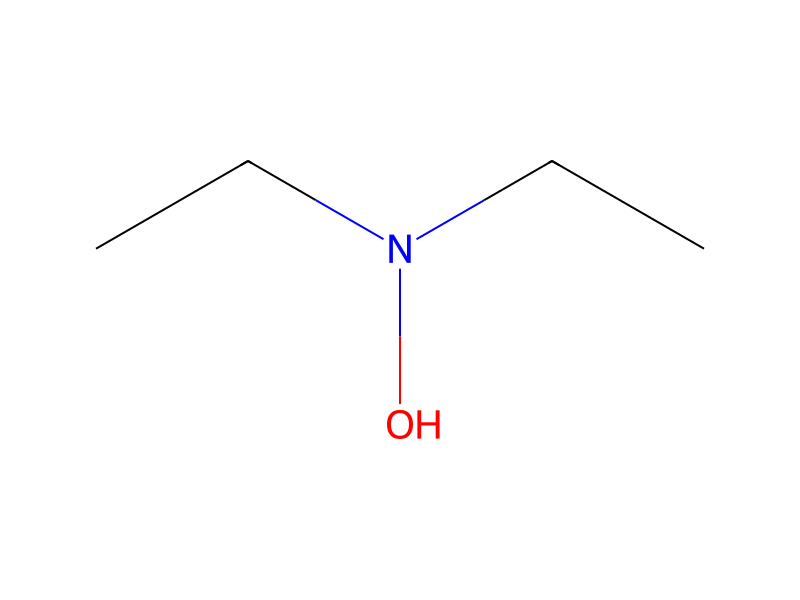
N,N-ジエチルヒドロキシルアミン

Diethylhydroxylamine

HCID 19463
ノートを作成反応を作成見積依頼を出す
印刷プレビュー

データを補完しています。しばらくしてからページを更新すると最新の内容を表示できます
基本情報概要名称と識別子物性安全と法規制化学と産業関連反応化合物ノート
部分構造検索類似構造を探す

基本情報

CAS
3710-84-7
標準SMILES
CCN(O)CC
InChIKey
FVCOIAYSJZGECG-UHFFFAOYSA-N
分子式
C4H11NO
平均分子量
89.14 g/mol
単同位体質量
89.08406397

概要

RN given refers to parent cpd

名称と識別子

優先名称
Diethylhydroxylamine
IUPAC
N,N-diethylhydroxylamine
現地名
N,N-ジエチルヒドロキシルアミン
英語名
N,N-Diethylhydroxylamine
分子式
C4H11NO
分子量
89.14

名称と別名

N,N-Diethylhydroxylamine3710-84-7DIETHYLHYDROXYLAMINEEthanamine, N-ethyl-N-hydroxy-DTXSID2027543314I05EDVHDTXCID107543RefChem:161197223-055-4N-HydroxydiethylamineN,N-DiethylhydroxyamineHydroxylamine, N,N-diethyl-
名称をさらに表示
N,N-ジエチルヒドロキシルアミン (約85%水溶液, 約8.6mol/L)ジエチルヒドロキシアミンN,N-ジエチルヒドロキシアミンN-エチル-N-ヒドロキシエタンアミンN,N-ジエチルヒトロキシアミンジエチルヒドロキシルアミンN,NジエチルヒドロキシルアミンN,N-ジエチルヒドロキシルアミン (別名: ジエチルヒドロキシルアミン)N,N‐ジエチルヒドロキシルアミンN,N-ジエチルヒドロキシルアミン 溶液N,N-ジエチルヒドロキシルアミン, 97%N,N-ジエチルヒドロキシルアミンヒドロキシジエチルアミンDEHADIETHYL HYDROXYLAMINEN-DiethylhydroxylaMineDiethylhydroxyaminepennstoplpha-Cypermethrin(C2H5)2NOH
hydroxydiethylamineN-ethyl-N-hydroxyethanaminePennstop 1866MFCD00002126FVCOIAYSJZGECG-UHFFFAOYSA-4-04-00-03304 (Beilstein Handbook Reference)CCRIS 964EINECS 223-055-4

データベース識別子

CAS
3710-84-7
PubChem CID
19463
DTXSID
DTXSID2027543
ChEMBL
CHEMBL3184786
UNII
314I05EDVH
EC Number
223-055-4
Nikkaji
J35.165B

物性

構造計算による物性補完中

XLogP
0.5
極性表面積
23.5 Ų
水素結合供与体数
1
水素結合受容体数
2
回転可能結合数
2
重原子数
6
形式電荷
0
複雑度
26.7

実験および物理化学的性質

Chemical ClassesNitrogen Compounds -> Hydroxylamines
SpringerMaterials PropertiesChemical shift
LogPlog Kow = -0.17
Density0.8669 at 20 °C
Color/FormLiquid
Flash Point113 °F
Boiling Point130 °C
DecompositionWhen heated to decomposition it emits toxic fumes of /nitrogen oxides/.
Melting Point10 °C
Vapor Pressure · 2 件

0.02 [mmHg]

3.36 mm Hg at 25 °C

Food Contact Substances · 2 件

FCS -> FDA Cumulative Estimated Daily Intake (CEDI)

FCS -> FDA Inventory of Effective Food Contact Substance (FCS) Notifications

Refractive Index

安全と法規制

安全情報は参考情報です。供給元の安全データシート(SDS)、適用法令、専門家による評価に代わるものではありません。

GHS分類

GHS Classification · 6 件

This chemical does not meet GHS hazard criteria for 8.6% (50 of 582) of reports.

Warning

H226 (91.2%): Flammable liquid and vapor [Warning Flammable liquids]

P210, P233, P240, P241, P242, P243, P261, P264, P264+P265, P270, P271, P273, P280, P301+P317, P302+P352, P303+P361+P353, P304+P340, P305+P351+P338, P317, P319, P321, P330, P332+P317, P337+P317, P362+P364, P370+P378, P391, P403+P233, P403+P235, P405, and P501 (click each P-code to see the statement)

Aggregated GHS information provided per 582 reports by companies from 29 notifications to the ECHA C&L Inventory. Each notification may be associated with multiple companies.

Warning

危険有害性情報

Regulatory Information · 4 件

Chemical: Ethanamine, N-ethyl-N-hydroxy-

Ethanamine, N-ethyl-N-hydroxy- is listed on the EPA's Chemical Data Reporting (CDR) system. Manufacturers and importers of Ethanamine, N-ethyl-N-hydroxy- are required to report information about their production and use of this chemical to the EPA under the Toxic Substances Control Act (TSCA). (40 eCFR Part 711)

REACH registered substance: N,N-diethylhydroxylamine (EC: 223-055-4)

Ethanamine, N-ethyl-N-hydroxy-: Does not have an individual approval but may be used under an appropriate group standard

Fire PotentialCombustible
Hazards Summary · 1 件

TLV basis is upper respiratory tract irritant; No adverse effects in rats at 15 ppm, 6 hours/day, 5 days/week for 4 weeks; Fetus not more sensitive than maternal animal; [ACGIH] A mild eye and mild to moderate skin irritant in rabbits; Not a skin sensitizer in guinea pigs; Decreased body weights/food consumption, hypoactivity, changes in white blood cell counts, reduced thymus weight, increased liver weight, and transient microscopic changes of the nasal mucosa observed in 28-day inhalation study of rats (NOAEL of 150 ppm/6 hrs/day); No histopathological changes observed in male or female reproductive organs; No reproductive toxicity observed in rats at doses maternally toxic (reduced weight gain/food consumption); [EPA ChAMP: Submission] Reacts exothermically with water; An eye and respiratory tract irritant; Vapor may reduce available oxygen for respiration; [Arkema MSDS] See Hydroxylamine.

化学と産業

薬理情報

Mechanism of Action · 1 件

The effects of diethylhydroxylamine (DEHA), a potent free-radical scavenger, on lipid peroxidation of rat liver microsomes were investigated in vitro. DEHA strongly inhibited ascorbate-dependent nonenzymatic microsomal lipid peroxidation. DEHA also completely inhibited nonenzymatic lipid peroxidation of heat-denatured microsomes, indicating that inhibition is protein-independent. DEHA only moderately inhibited NADPH-dependent enzymatic microsomal lipid peroxidation. DEHA has been shown to exhibit antitumorigenic properties. However, it had no significant effect on hepatic glutathione S-transferase, selenium-independent glutathione peroxidase, or selenium-dependent glutathione peroxidase activity in the DEHA-treated CD-1 (lCR) Br male mouse. This suggests that the mode of action of DEHA as an antitumorigenic agent may be different from that of butylated hydroxyanisole, whose antitumor function is attributed to induction of glutathione S-transferase activity.

用途と製造

Uses · 5 件

Used as a photographic developer, antioxidant, corrosion inhibitor, in synthetic rubber production, and emulsion polymerization; [HSDB] Used as a free radical scavenger (short-stopping agent) and oxygen scavenger for boiler water; [EPA ChAMP: Submission] Permitted for use as an inert ingredient in non-food pesticide products; [EPA]

Photographic Processing [Category: Other]

Photographic developer, antioxidant, corrosion inhibitor

Shortstopping agent in synthetic rubber production

Used as a stopper in the process of emulsin polymerization.

U.S. Production · 3 件

2023: 1,000,000 - <5,000,000 lb

Production volumes for non-confidential chemicals reported under the Inventory Update Rule. [Table#6312]

Ethanamine, N-ethyl-N-hydroxy- is listed as a High Production Volume (HPV) chemical (65FR81686). Chemicals listed as HPV were produced in or imported into the U.S. in >1 million pounds in 1990 and/or 1994. The HPV list is based on the 1990 Inventory Update Rule. (IUR) (40 CFR part 710 subpart B; 51FR21438).

Consumer UsesEtching agent

関連反応

46 件
反応記録を作成
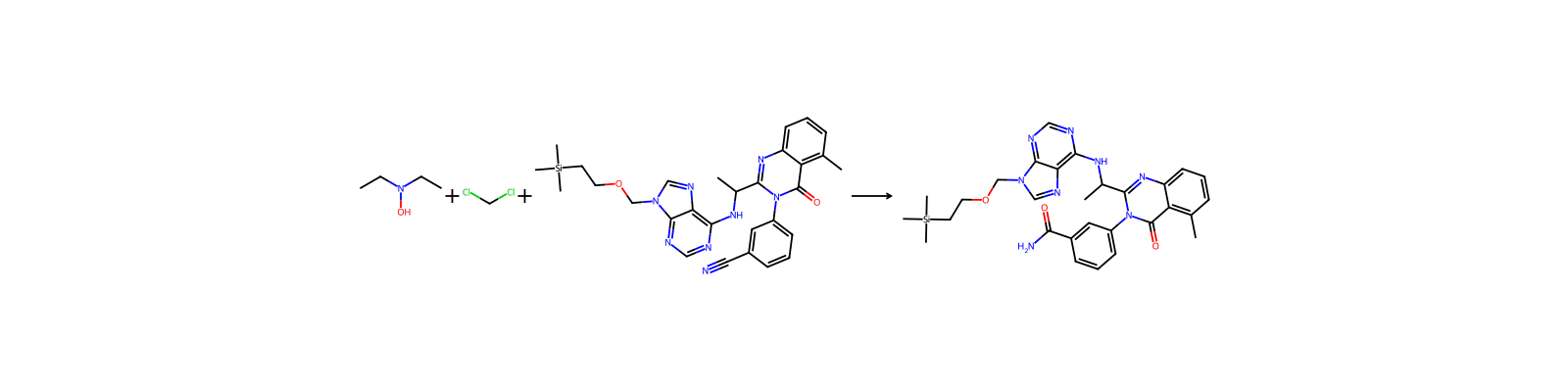
HRID 87044 の反応式
HRID 87044反応物としてTraining data from https://doi.org/10.1039/C8SC04228D (2/10)
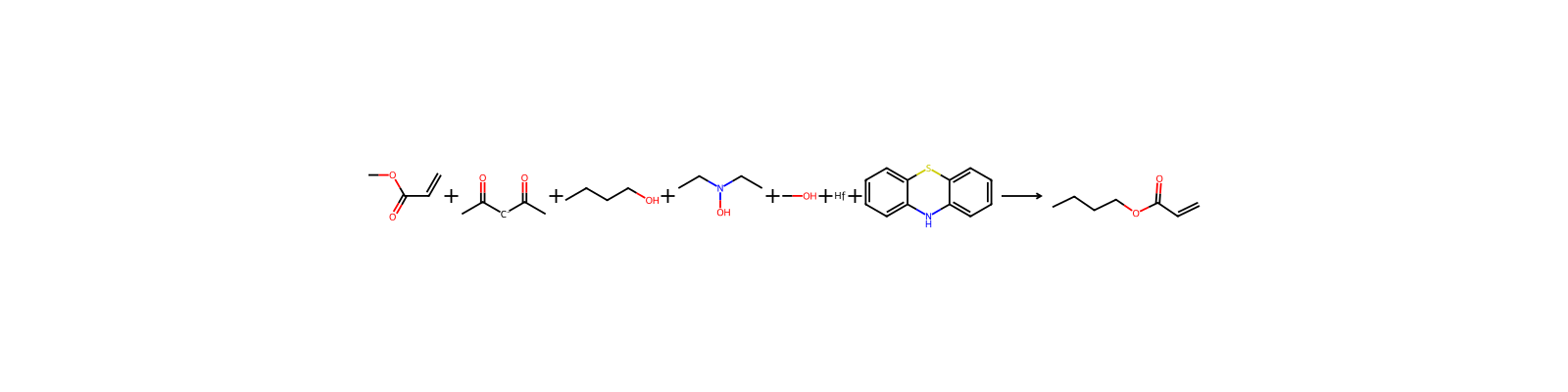
HRID 117823 の反応式
HRID 117823反応物としてTraining data from https://doi.org/10.1039/C8SC04228D (2/10)
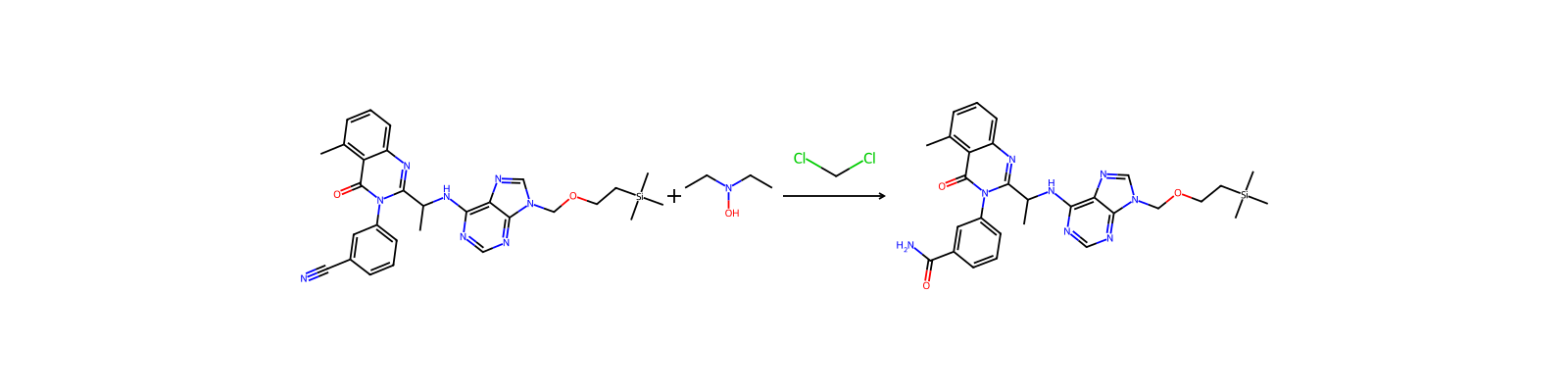
HRID 128901 の反応式
HRID 128901反応物としてuspto-grants-1995_11
HRID 165754 の反応式
HRID 165754反応物としてTraining data from https://doi.org/10.1039/C8SC04228D (9/10)
HRID 174792 の反応式
HRID 174792反応物としてTraining data from https://doi.org/10.1039/C8SC04228D (6/10)
HRID 180431 の反応式
HRID 180431反応物としてTraining data from https://doi.org/10.1039/C8SC04228D (6/10)
HRID 203234 の反応式
HRID 203234反応物としてTraining data from https://doi.org/10.1039/C8SC04228D (6/10)
HRID 221323 の反応式
HRID 221323反応物としてuspto-grants-2012_06
1 / 6 ページ

化合物ノート

読み込み中…

このページの内容基本情報概要名称と識別子物性安全と法規制化学と産業関連反応化合物ノート
その他の操作
ノートを作成反応を作成見積依頼を出す
Index of refraction = 1.4195 at 20 °C

物理化学的性質

融点
26 · −26-−25 °C(lit.)
沸点
125 · 125-130 °C
比重(密度)
0.902 g/mL · 0.902 g/mL at 25 °C
蒸気密度
3.07 · 3.07 (vs air)
蒸気圧
4 mm · 4 mm Hg ( 0 °C)
屈折率
20 · n20/D 1.420(lit.)
闪点
115 °F · 115 °F
貯蔵温度
30 °C · Store below +30°C.
外見
液体
酸解離定数(Pka)
14.19 · 14.19±0.69(Predicted)
色
クリア
比重
0.867 · 0.867
爆発限界(explosive limit)
1.9 · 1.9-10%(V)
水溶解度
溶ける
BRN
1731349 · 1731349
安定性
安定。吸湿性。可燃性。強酸化剤、強酸とは相容れない。
InChI
1S/C4H11NO/c1-3-5(6)4-2/h6H,3-4H2,1-2H3
InChIKey
FVCOIAYSJZGECG-UHFFFAOYSA-N
SMILES
CCN(O)CC
LogP
0.5 at · 0.5 at 23℃
CAS データベース
3710 · 3710-84-7(CAS DataBase Reference)
NISTの化学物質情報
Ethanamine, N-ethyl-N-hydroxy-(3710-84-7)
EPAの化学物質情報
Diethylhydroxylamine (3710-84-7)

化学的性質

化学的特性liquid

Special Reports · 1 件

EPA/Office of Pollution Prevention and Toxics; High Production Volume (HPV) Challenge Program's Robust Summaries and Test Plans. Available from the Database Query page at: http://www.epa.gov/hpv/pubs/hpvrstp.htm on Diethylhydroxylamine as of March 11, 2008.

Hazard Classes and Categories · 3 件

Flam. Liq. 3 (91.2%)

Flammable liquids - Category 3

Flammable liquids - Category 3

Critical Temperature and PressureCritical temperature = 567 Kelvin; Critical pressure = 4.13X10+6 Pa

安全と保護具

Fire Fighting Procedures · 1 件

If material on fire or involved in fire: Do not extinguish fire unless flow can be controlled. Use water in flooding quantities as fog. Solid streams of water may be ineffective. Cool all affected containers with flooding quantities of water. Apply water from as far a distance as possible. Use "alcohol" foam, dry chemical or carbon dioxide.

Disposal Methods · 1 件

SRP: The most favorable course of action is to use an alternative chemical product with less inherent propensity for occupational exposure or environmental contamination. Recycle any unused portion of the material for its approved use or return it to the manufacturer or supplier. Ultimate disposal of the chemical must consider: the material's impact on air quality; potential migration in soil or water; effects on animal, aquatic, and plant life; and conformance with environmental and public health regulations.

Preventive Measures · 3 件

If material not on fire and not involved in fire: Keep sparks, flames, and other sources of ignition away. Keep material out of water sources and sewers. Build dikes to contain flow as necessary. Use water spray to knock-down vapors.

Personnel protection: Avoid breathing vapors. Keep upwind. Avoid bodily contact with the material. ... Do not handle broken packages unless wearing appropriate personal protective equipment. Wash away any material which may have contacted the body with copious amounts of water or soap and water. ... If contact with material anticipated, wear appropriate chemical protective clothing.

SRP: Contaminated protective clothing should be segregated in such a manner so that there is no direct personal contact by personnel who handle, dispose, or clean the clothing. Quality assurance to ascertain the completeness of the cleaning procedures should be implemented before the decontaminated protective clothing is returned for reuse by the workers. Contaminated clothing should not be taken home at end of shift, but should remain at employee's place of work for cleaning.

Threshold Limit Values (TLV)2.0 [ppm]
Personal Protective Equipment (PPE)Personnel protection: ... Wear appropriate chemical protective gloves, boots and goggles. ... Wear positive pressure self-contained breathing apparatus when fighting fires involving this material.

毒性情報

Ecotoxicity ValuesEC50 Daphnia Magna (water flea) 110.56 mg/L/48 hr; Conditions: static bioassay; Effect: inhibition of mobility
Environmental Fate · 3 件

TERRESTRIAL FATE: Based on a classification scheme(1), an estimated Koc value of 74(SRC), determined from a structure estimation method(2), indicates that diethylhydroxylamine is expected to have high mobility in soil(SRC). The estimated pKa of diethylhydroxylamine is 5.7(3), indicating it will partially exist in the protonated form in moist soils. The mobility of diethylhydroxylamine may be overestimated since cations generally adsorb more strongly to soils containing organic carbon and clay than neutral species(4). Volatilization from moist soil surfaces is not expected to be an important fate process(SRC) based upon an estimated Henry's Law constant of 5.9X10⁻⁸ atm cu m/mol atm-cu m/mole(SRC), developed using a fragment constant estimation method(5), and the fact that cations do not volatilize. The potential for volatilization of diethylhydroxylamine from dry soil surfaces may exist(SRC) based upon an extrapolated vapor pressure of 3.36 mm Hg at 25 °C(6). Diethylhydroxylamine was biodegraded between 1-9% in the Japanese MITI test(7), suggesting it may be slow to biodegrade in soil.

AQUATIC FATE: Based on a classification scheme(1), an estimated Koc value of 74(SRC), determined from a structure estimation method(2), indicates that diethylhydroxylamine is not expected to adsorb to suspended solids and sediment(SRC). The estimated pKa of diethylhydroxylamine is 5.7(3), indicating it will partially exist in the protonated form in water. As a result, diethylhydroxylamine may have greater adsorption to suspended solids and sediment than its estimated Koc value indicates(SRC). Volatilization from water surfaces is not expected(4) based upon an estimated Henry's Law constant of 5.9X10⁻⁸ atm cu m/mol atm-cu m/mole(SRC), developed using a fragment constant estimation method(5), and the fact that cations do not volatilize. According to a classification scheme(6), an estimated BCF of 3(SRC), from a log Kow of -0.17(7) and a regression-derived equation(8), suggests the potential for bioconcentration in aquatic organisms is low(SRC). Diethylhydroxylamine was biodegraded between 1-9% in the Japanese MITI test(7), suggesting it may be slow to biodegrade in water.

ATMOSPHERIC FATE: According to a model of gas/particle partitioning of semivolatile organic compounds in the atmosphere(1), diethylhydroxylamine, which has a vapor pressure of 3.36 mm Hg at 25 °C(2), is expected to exist solely in the vapor phase in the ambient atmosphere. Vapor-phase diethylhydroxylamine is degraded in the atmosphere by reaction with photochemically-produced hydroxyl radicals(SRC); the half-life for this reaction in air is estimated to be 4 hours(SRC), calculated from its rate constant of 1.01X10⁻¹⁰ cu cm/molecule-sec at 25 deg(3). Diethylhydroxylamine does not contain chromophores that absorb at wavelengths >290 nm and therefore is not expected to undergo direct photolysis by sunlight(4).

Soil Adsorption/Mobility · 1 件

Using an estimation method based on molecular connectivity indices(1), the Koc for diethylhydroxylamine is estimated to be 74(SRC). According to a suggested classification scheme(2), this Koc value suggests that diethylhydroxylamine will have high mobility in soil(SRC). The estimated pKa of diethylhydroxylamine is 5.7(3), indicating it will partially exist in the protonated form in moist soils. As a result, the mobility of diethylhydroxylamine may be overestimated since cations generally adsorb more strongly to soils containing organic carbon and clay than neutral species(4).

Human Toxicity Excerpts · 1 件

/CASE REPORTS/ A 39-year-old man committed suicide by ingesting a large quantity of SH792. SH792 is a silicone resin precursor used as a hardener for waterproof paints. It is polymerized in water; this process is then followed by the formation of silicone resin and the release of N,N-diethylhydroxylamine. In this decedent, analysis by infrared spectroscopy showed that polymerized silicone resin was present in the stomach contents. The amount of silica in his tissues was within levels seen in control subjects. N,N-diethylhydroxylamine was detected in the urine (0.7 microliters/mL) but not in the stomach contents ...

Artificial Pollution Sources · 1 件

Diethylhydroxylamine's production and use as photographic developer, antioxidant, corrosion inhibitor(1) and as a shortstopping agent in synthetic rubber production(2), may result in its release to the environment through various waste streams(SRC).

Environmental Biodegradation · 1 件

AEROBIC: Microorganisms isolated from soils were capable of growing in media containing diethylhydroxylamine as a sole nitrogen source(1). Diethylhydroxylamine at 100 mg/L achieved 1-9% of its theoretical BOD over a 4 week incubation period using an activated sludge inoculum at 30 mg/L and the Japanese MITI test(2).

Environmental Bioconcentration · 1 件

An estimated BCF of 3 was calculated in fish for diethylhydroxylamine(SRC), using a log Kow of -0.17(1) and a regression-derived equation(2). According to a classification scheme(3), this BCF suggests the potential for bioconcentration in aquatic organisms is low(SRC).

Volatilization from Water/Soil · 1 件

Diethylhydroxylamine is a weak base with an estimated pKa of 5.7(1). This estimated pKa indicates diethylhydroxylamine will partially exist in the protonated form in the environment. Volatilization from moist soil and water is not expected since cations do not volatilize and the estimated Henry's Law constant for the neutral species (free base) of diethylhydroxylamine is 5.9X10⁻⁸ atm cu m/mol(SRC), using a fragment constant estimation method(2). The potential for volatilization of diethylhydroxylamine from dry soil surfaces may exist(SRC) based upon an extrapolated vapor pressure of 3.36 mm Hg at 25 °C(3).

Non-Human Toxicity Excerpts · 5 件

/LABORATORY ANIMALS: Subchronic or Prechronic Exposure/ Potential subchronic toxic effects of the test article, Diethylhydroxylamine (DEHA), were evaluated in a 28-day study in rats. The test article was administered via nose-only inhalation to three groups, each comprised of 15 male and 15 female Crl:CDBR rats, for a period of six hours per day, five days per week, for four consecutive weeks (minimum of 20 total exposures). The targeted exposure concentrations were 15, 150 and 1500 ppm. The test atmosphere concentrations were monitored by infrared absorbance and were found to be 15, 150 and 1506 ppm. ... 1-2 animals in the control, 15, 150 and 1500 ppm groups were found dead during the study. The deaths did not occur in an exposure-related manner and were not related to exposure to the test article. All other animals survived to the scheduled necropsies. The predominant treatment-related clinical signs were dried yellow dorsal posterior and urogenital matting, lack of grooming, eye closure and hypoactivity in males and females in the 1500 ppm group, and ataxia, paleness in color, walking on tiptoes and hunched posture in the females in this group. ... toxicity was exhibited in the 1500 ppm group by clinical signs, inhibition of body weight gain and food consumption, changes in white blood cell differential counts, various serum chemistry changes, reduced thymus gland weights-and increased liver weights. Medullary plasmacytosis was noted in the iliac and popliteal lymph nodes in males in the 1500 ppm group. Systemic effects in the 150 ppm group were limited to slight decreases in albumin and A/G ratio (females only). Based on data collected following a two-week nonexposure (recovery) period, all of these effects were considered to be reversible. Microscopic changes were noted in the nasal passages of male and female rats in the 150 and 1500 ppm groups; these effects were considered to be due to local irritation, not systemic toxicity, and reversible. The hematological, serum chemistry and organ weight (thymus and liver) effects in the 1500 ppm group indicate that the liver and thymus were the target organs, however, no test article related histomorphological changes were seen in these tissues.

/LABORATORY ANIMALS: Subchronic or Prechronic Exposure/ Not sensitizing in guinea pigs. After establishing the highest non-irritating dose concentration, a 3 week induction period was initiated during which 10 young adult, male, guinea pigs were treated with the test material applied as a 30% w/w solution in deionized water and 10 were treated with 0.08% Dinitrochlorobenzene (DNCB) in 95% ethyl alcohol (positive controls). During the induction period the animals were dosed on alternate days until a total of nine dose applications was achieved. Seventeen days after the ninth application a challenge dose (30%) was applied to a naive site on each guinea pig and approximately 24 and 48 hours later the animals were scored for a sensitization response (erythema and edema). INDUCTION PHASE: Test Animals: By the 4th induction many animals exhibited very mild erythema at both 24 and 48 hours post-dose. A slight increase in the severity of irritation was noted at several sites after inductions 8 and 9. . Positive Control Animals (0.08% DNCB): Varying degrees of erythema were observed throughout induction, increasing in severity toward the end of this period. CHALLENGE PHASE: Test Animals: No irritation was noted after challenge. . Naive Control Animals: No irritation was noted after challenge. Positive Control Animals (0.08% DNCB): Twenty-four and 48 hours after challenge all sites were erythemic, showing a faint to moderate response.

Environmental Abiotic Degradation · 1 件

The rate constant for the vapor-phase reaction of diethylhydroxylamine with photochemically-produced hydroxyl radicals has been measured as 1.01X10⁻¹⁰ cu cm/molecule-sec at 25 °C(1). This corresponds to an atmospheric half-life of about 4 hours(SRC) at an atmospheric concentration of 5X10+5 hydroxyl radicals per cu cm(1). Diethylhydroxylamine is not expected to undergo hydrolysis in the environment due to the lack of hydrolyzable functional groups(2). Diethylhydroxylamine does not contain chromophores that absorb at wavelengths >290 nm and therefore is not expected to undergo direct photolysis by sunlight(2).

Probable Routes of Human Exposure · 1 件

NIOSH (NOES Survey 1981-1983) has statistically estimated that 950 workers (14 of these were female) were potentially exposed to diethylhydroxylamine in the US(1). Occupational exposure to diethylhydroxylamine may occur through inhalation and dermal contact with this compound at workplaces where diethylhydroxylamine is produced or used(SRC).

Environmental Fate/Exposure Summary · 1 件

Diethylhydroxylamine's production and use as photographic developer, antioxidant, corrosion inhibitor and as a shortstopping agent in synthetic rubber production, may result in its release to the environment through various waste streams. If released to air, an extrapolated vapor pressure of 3.36 mm Hg at 25 °C, indicates that diethylhydroxylamine is expected to exist solely in the vapor phase in the ambient atmosphere. Vapor-phase diethylhydroxylamine is degraded in the atmosphere by reaction with photochemically-produced hydroxyl radicals; the half-life for this reaction in air is estimated to be 4 hours. Diethylhydroxylamine does not contain chromophores that absorb at wavelengths >290 nm and therefore is not expected to undergo direct photolysis by sunlight. If released to soil, diethylhydroxylamine is expected to have high mobility based upon an estimated Koc of 74. The estimated pKa of diethylhydroxylamine is 5.7, indicating it will partially exist in the protonated form in moist soils. The mobility of diethylhydroxylamine may be overestimated since cations generally adsorb more strongly to soils containing organic carbon and clay than neutral species. Volatilization from moist soil surfaces is not expected to be an important fate process based upon an estimated Henry's Law constant of 5.9X10⁻⁸ atm cu m/mol atm-cu m/mole for the free base, and the fact that cations do not volatilize. The potential for volatilization of diethylhydroxylamine from dry soil surfaces may exist based upon the extrapolated vapor pressure. Diethylhydroxylamine was biodegraded between 1-9% in the Japanese MITI test, suggesting it may be slow to biodegrade in the environment. If released to water, diethylhydroxylamine (free base) is not expected to adsorb to suspended solids and sediment based upon the estimated Koc; however, the protonated form (conjugate acid) may be more likely to adsorb to sediment. Volatilization from water surfaces is not expected to be an important environmental fate process based on the Henry's Law constant for the neutral species and the fact that cations do not volatilize. Hydrolysis is not expected to be an important environmental fate process since this compound lacks functional groups that hydrolyze under environmental conditions. An estimated BCF value of 3, suggests the potential for bioconcentration in aquatic organisms is low. Occupational exposure may occur through inhalation and dermal contact with this compound at workplaces where diethylhydroxylamine is produced or used. (SRC)

安全データ

F
3
wgk
1
tsca
TSCA listed
rtecs
NC3500000
ridadr
UN 1993 3/PG 3
毒性
LD50 orally in Rabbit: 2190 mg/kg LD50 dermal Rabbit 1300 mg/kg
hs_code
29280090
risk_code
10-21-38-40-36/37/38-20/21-53-36/38
化審法
(2)-190
安衛法
57,57-2
消防法
危-4-2-III
hazard_code
Xn
safety_code
36/37-45-36/37/39-26-16
hazard_class
3
packing_group
III
Hazard Classifications
Acute Tox. 4 DermalAcute Tox. 4 InhalationEye Irrit. 2Flam. Liq. 3Skin Irrit. 2
ストレージクラス
3 - Flammable liquids
有毒物質データの
3710-84-7(Hazardous Substances Data)
Industry UsesTerminator/Blocker
Formulations/PreparationsGrade: 85%
General Manufacturing Information · 2 件

Synthetic Rubber Manufacturing

Ethanamine, N-ethyl-N-hydroxy-: ACTIVE

応用分野 · 3 件

用途重合停止剤(スチレン-ブタジエンゴム等)、安定剤(スチレンモノマー)、 空気酸化防止剤(ラッカー、ニス等)、写真現像薬。

使用N,N-Diethylhydroxylamine has the following various uses:1.As a vinyl monomer, used in efficient inhibitor agent of conjugate olefins. 2.In liquid or gas phase, if end gather seed is existed,it can be used as inhibitors of end gather. 3.It's a excellent end agent in process of Emulsion-polymerized styrene butadiene rubber. 4.It's a antioxidants of the unsaturated oil and resin. 5.In the environmental protection,it&rsquo;s good photochemical smoke inhibitors. 6.It's used as corrosion inhibitors in the equipment of the boiler feed water and steam heat exchange. 7.It's used as antioxidant in photography screens potions.

一般的な説明The product is 85wt.% solution of N,N-diethylhydroxylamine. The reaction of N,N-diethylhydroxylamine with tert-butylhydroperoxide has been studied. It participates in the preparation of symmetrical and an isomeric mixture of unsymmetrical phthalocyanines. It undergoes degradation on exposure to radiation and affords light hydrocarbons. Qualitative and quantitative analyses of the produced hydrocarbons have been reported. It also participates in the conversion of quinones and quinonemonosulfonimide to the corresponding hydroquinones and sulfonylaminophenols, respectively.

上流・下流製品情報

上流原料

オキシドールトリエチルアミン二りん酸ナトリウム十水和物

/LABORATORY ANIMALS: Chronic Exposure or Carcinogenicity/ Groups of 20 male and 20 female CD-1(ICR)Br mice were treated either with 0, 3, 30, or 300 mg diethylhydroxylamine (DEHA)/kg-day (administered via the drinking water) from 57-112 days of age. For the four week period between 70 to 98 days of age, all animals received (via gavage) eight 1 mg doses of benzo(a)pyrene at 4 day intervals. One hundred thirty-seven animals survived the dosing period. Of these, 132 survived to 211 days of age at which time they were euthanized and necropsied. Gross lesions were observed only in the lungs and squamous portion of the stomach. Treatment with DEHA produced no significant effect on the lung tumor incidence of either sex. However, a significant increase in stomach tumors was observed in the females.

/LABORATORY ANIMALS: Developmental or Reproductive Toxicity/ Female CD (SD) female rats were dosed once daily from GD6-GD15 with 87.4, 393 or 568 mg/kg diethylhydroxylamine by gavage. Animals were sacrificed on GD20. During gestation days 6 -9, a reduced mean body weight gain occurred in the 393 mg/kg/day group and a mean body weight loss occurred in the 568 mg/kg/day group; the differences from the control group were statistically significant. Food consumption, evaluated as g/animal/day and g/kg/day, was reduced in the 393 and 568 mg/kg/day groups throughout the entire treatment period (gestation days 6-9, 9-12 and 12-16); the differences from the control group were statistically significant. All maternal animals survived to the scheduled necropsy on gestation day 20. Intrauterine growth and survival were unaffected by test article administration at any dose level. Parameters evaluated included postimplantation loss, live litter size, mean fetal body weights, fetal sex ratios and the mean numbers of corpora lutea and implantation sites. Fetuses (litters) available for morphological evaluation numbered 354(24), 326(22), 353(23) and 356(24) in the control, 87.4, 393 and 568 mg/kg/day groups, respectively. In conclusion, maternal toxicity was expressed by inhibition of body weight gain and food consumption at dose levels of 393 and 568 mg/kg/day. No maternal toxicity was evident at a dose level of 87.4 mg/kg/day. No developmental toxicity was apparent at any dose level. Based on the results of this study, the NOAEL (no observable adverse effect level) for maternal toxicity was considered to be 87.4 mg/kg/day, and the NOAEL for developmental toxicity was considered to be 568 mg/kg/day.

For more Non-Human Toxicity Excerpts (Complete) data for DIETHYLHYDROXYLAMINE (11 total), please visit the HSDB record page.