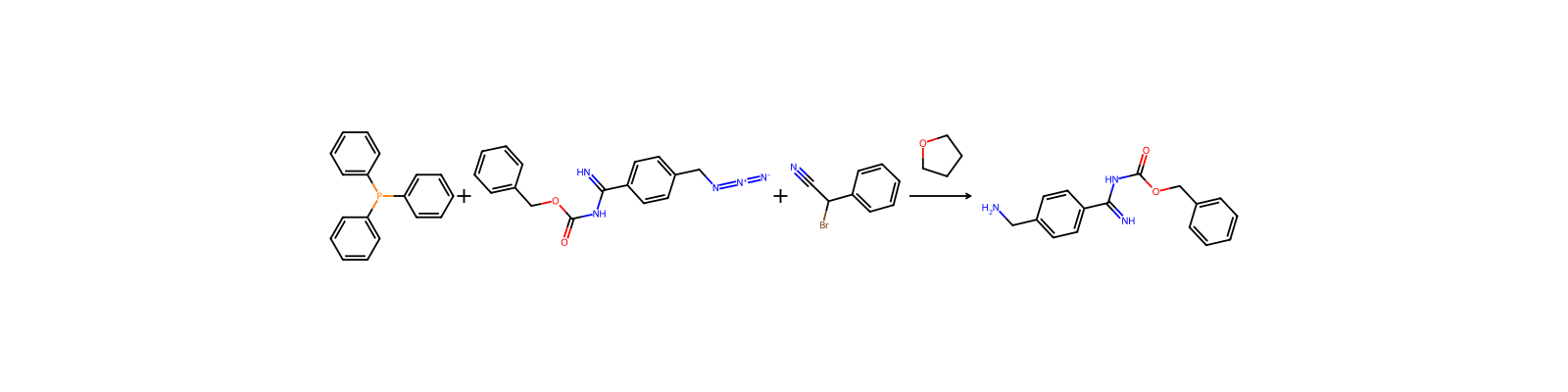
4-ブロモベンジルシアニド
Bromobenzyl Cyanide
データを補完しています。しばらくしてからページを更新すると最新の内容を表示できます

基本情報
- CAS
16532-79-9- 標準SMILES
N#CC(Br)c1ccccc1- InChIKey
XUHFBOUSHUEAQZ-UHFFFAOYSA-N- 分子式
- C8H6BrN
- 平均分子量
- 196.04 g/mol
- 単同位体質量
- 194.96836
名称と識別子
- 優先名称
- Bromobenzyl Cyanide
- IUPAC
- 2-bromo-2-phenylacetonitrile
- 現地名
- 4-ブロモベンジルシアニド
- 英語名
- 4-Bromophenylacetonitrile
- 分子式
- C8H6BrN
- 分子量
- 196.04
名称と別名
Bromobenzyl cyanideBromo(phenyl)acetonitrileALPHA-BROMOBENZYL CYANIDEalpha-Bromobenzeneacetonitrilebromo benzyl cyanidealpha-Brombenzylkyanidalpha-Brombenzylkyanid [Czech]HSDB 1982EINECS 227-348-8UNII-7JP1R2F6C6BRN 1862309ALPHA-BROMOBENZYL CYANID
名称をさらに表示
4-ブロモベンジルシアニド(4-ブロモフェニル)アセトニトリルp-ブロモフェニルアセトニトリルp-ブロモベンジルシアニド(p-ブロモフェニル)アセトニトリル4-ブロモフェニルアセトニトリル2-(4-ブロモフェニル)アセトニトリル4-ブロモベンゼンアセトニトリルpブロモベンジルシアニド4‐ブロモフェニルアセトニトリル2-(4-BROMOPHENYL)ACETONITRILE4-BROMOBENZYL CYANIDEPARA BROMO PHENYL ACETONITRILEPBPANNSC 84174p-Bromobenzyl4-bromocyanideThebenzylbroMideP-bromoacetonitrile4-BroMobenzylnitrile
DTXSID508711463-09-00-02278 (Beilstein Handbook Reference).ALPHA.-BROMOBENZENEACETONITRILE.ALPHA.-BROMOBENZYL CYANIDE [MI]bromophenylacetonitrileBromobenzyl cyanidesalphaBrombenzylkyanidUN1694
データベース識別子
- CAS
16532-79-9、19472-74-3、31938-07-5、5798-79-8- PubChem CID
- 22044
- DTXSID
DTXSID50871146- ChEMBL
CHEMBL1085832- UNII
- 7JP1R2F6C6
- EC Number
- 227-348-8
- Nikkaji
- J31.185E
物性
構造計算による物性補完中
- XLogP
- 2.5
- 極性表面積
- 23.8 Ų
- 水素結合供与体数
- 0
- 水素結合受容体数
- 1
- 回転可能結合数
- 1
- 重原子数
- 10
- 形式電荷
- 0
- 複雑度
- 141
実験および物理化学的性質
OdorODOR OF SOURED FRUIT
Density1.539 @ 29 °C/4 °C
Color/FormYELLOWISH CRYSTALS FROM DILUTE ALCOHOL
SolubilitySLIGHTLY SOL IN WATER; FREELY SOL IN ALCOHOL, ETHER, ACETONE, CHLOROFORM, COMMON ORGANIC SOLVENTS; SOL IN PHOSGENE, CHLOROPICRIN, BENZYL CYANIDE
Boiling Point242 °C @ 760 MM HG
Melting Point
77 °F
29 °C
Vapor Density6.8 (AIR= 1)
Odor ThresholdLOWEST DETECTABLE LEVEL: 0.09 MG/CU M
Vapor Pressure
0.00465 [mmHg]
0.012 MM HG @ 20 °C
Physical Description
Bromobenzyl cyanides appears as a chemical warfare tear gas agent. A mixture of isomers: 2-bromobenzyl cyanide is a liquid (melting point 34 °F); 3-bromobenzyl cyanide is a pale yellow crystalline solid melting at 77 °F to give a colorless liquid; 4-bromobenzyl cyanide is a solid melting at 118 °F. All are denser than water and insoluble in water. Hence sink in water. Lachrymator: the vapors are irritating to the eyes and mucous membranes. Exposure to high concentrations may be fatal. Produces toxic oxides of nitrogen during combustion.
Pale yellow crystals; [CAMEO] Yellowish solid with an odor of soured fruit; mp = 29 deg C; [HSDB] Pure: Yellow to white solid; Impure: Oily brown liquid; [EPA OHM/TADS]
Other Experimental Properties
MELTS TO AN OILY LIQ JUST ABOVE ROOM TEMP
BROWN, OILY LIQUID /TECHNICAL PRODUCT/
物理化学的性質
- 融点
- 47 · 47-49 °C (lit.)
- 沸点
- 116 · 116-118°C 3mm
- 比重(密度)
- 1.49 · 1.49
- 屈折率
- 1.655 · 1.6550 (estimate)
- 闪点
- 230 °F · >230 °F
- 貯蔵温度
- Sealed in dry,Room Temperature
- 溶解性
- Chloroform (Sparingly), Ethyl Acetate (Sparingly)
- 外見
- 結晶質量
- 色
- 無色~淡褐色
- 水溶解度
- わずかに溶ける
- BRN
- 1861069 · 1861069
- InChI
- 1S/C8H6BrN/c9-8-3-1-7(2-4-8)5-6-10/h1-4H,5H2
- InChIKey
- MFHFWRBXPQDZSA-UHFFFAOYSA-N
- SMILES
- Brc1ccc(CC#N)cc1
- CAS データベース
- 16532 · 16532-79-9(CAS DataBase Reference)
- NISTの化学物質情報
- 4 · Benzeneacetonitrile, 4-bromo-(16532-79-9)
- EPAの化学物質情報
- 4 · 4-Bromobenzyl cyanide (16532-79-9)
化学的性質
化学的特性colorless to pale brown crystalline mass
安全と法規制
安全情報は参考情報です。供給元の安全データシート(SDS)、適用法令、専門家による評価に代わるものではありません。
GHS分類
GHS Classification
Warning
H302 (100%): Harmful if swallowed [Warning Acute toxicity, oral];H315 (100%): Causes skin irritation [Warning Skin corrosion/irritation];H319 (97.4%): Causes serious eye irritation [Warning Serious eye damage/eye irritation];H335 (100%): May cause respiratory irritation [Warning Specific target organ toxicity, single exposure; Respiratory tract irritation]
P261, P264, P264+P265, P270, P271, P280, P301+P317, P302+P352, P304+P340, P305+P351+P338, P319, P321, P330, P332+P317, P337+P317, P362+P364, P403+P233, P405, and P501 (click each P-code to see the statement)
Aggregated GHS information provided per 39 reports by companies from 2 notifications to the ECHA C&L Inventory. Each notification may be associated with multiple companies.;Information may vary between notifications depending on impurities, additives, and other factors. The percentage value in parenthesis indicates the notified classification ratio from companies that provide hazard codes. Only hazard codes with percentage values above 10% are shown. For more detailed information, please visit ECHA C&L website.
危険有害性情報
Regulatory InformationThe New Jersey Worker and Community Right to Know Act requires public and private employers to provide information about hazardous substances at their workplaces. (N.J.S.A. 34:5A-1 et. seq.)
DOT LabelPoison
Fire Hazards
For information on chemical warfare tear gas agents see the ERG Criminal or Terrorist Use of CBR Agents. (ERG, 2024);Excerpt from ERG Guide 159 [Substances (Irritating)]:;Some of these materials may burn, but none ignite readily. Containers may explode when heated. (ERG, 2024)
· Some of these materials may burn, but none ignite readily.;· Containers may explode when heated.
· Some of these materials may burn, but none ignite readily.;· Containers may explode when heated.
Fire PotentialDISASTER HAZARD: SEE CYANIDES. DANGEROUS; ON CONTACT WITH ACID, ACID FUMES, WATER OR STEAM, THEY WILL PRODUCE...FLAMMABLE VAPORS. /CYANIDES/
Health Hazards
For information on chemical warfare tear gas agents see the ERG Criminal or Terrorist Use of CBR Agents. (ERG, 2024);Excerpt from ERG Guide 159 [Substances (Irritating)]:;Inhalation of vapors or dust is extremely irritating. May cause burning of eyes and lachrymation (flow of tears). May cause coughing, difficult breathing and nausea. Brief exposure effects last only a few minutes. Exposure in an enclosed area may be very harmful. Fire will produce irritating, corrosive and/or toxic gases. Runoff from fire control or dilution water may cause environmental contamination. (ERG, 2024)
· Inhalation of vapors or dust is extremely irritating.;· May cause burning of eyes and lachrymation (flow of tears).;· May cause coughing, difficult breathing and nausea.;· Brief exposure effects last only a few minutes.;· Exposure in an enclosed area may be very harmful.;· Fire will produce irritating, corrosive and/or toxic gases.;· Runoff from fire control or dilution water may cause environmental contamination.
· Inhalation of vapors or dust is extremely irritating.;· May cause burning of eyes and lachrymation (flow of tears).;· May cause coughing, difficult breathing and nausea.;· Brief exposure effects last only a few minutes.;· Exposure in an enclosed area may be very harmful.;· Fire will produce irritating, corrosive and/or toxic gases.;· Runoff from fire control or dilution water may cause environmental contamination.
Hazards SummaryA lachrymator; [HSDB] Exposure to high concentrations may be fatal; [CAMEO] Extremely toxic; 109 ppm is lethal to humans in 5 hours; [EPA OHM/TADS]
DOT ID and Guide
3449 159
1694 159
Reactive GroupNitriles;Aryl Halides
Reactivity Profile
BROMOBENZYL CYANIDES may polymerize in the presence of metals and some metal compounds. Incompatible with acids. Mixing with strong oxidizing acids can lead to extremely violent reactions. Generally incompatible with other oxidizing agents such as peroxides and epoxides (peroxides convert nitriles to amides). Combination with bases can produce hydrogen cyanide. Hydrolyzed in both aqueous acid and base to give carboxylic acids (or salts of carboxylic acids). These reactions generate heat. Can react vigorously with reducing agents.
DOT Emergency Guidelines
/GUIDE 159: SUBSTANCES (IRRITATING)/ Health: Inhalation of vapors or dust is extremely irritating. May cause burning of eyes and flow of tears. May cause coughing, difficult breathing and nausea. Brief exposure effects last only a few minutes. Exposure in an enclosed area may be very harmful. Fire will produce irritating, corrosive and/or toxic gases. Runoff from fire control or dilution water may cause pollution. /Bromobenzyl cyanides; Bromobenzyl cyanides, liquid; Bromobenzyl cyanides, solid/
/GUIDE 159: SUBSTANCES (IRRITATING)/ Fire or Explosion: Some of these materials may burn, but none ignite readily. Containers may explode when heated. /Bromobenzyl cyanides; Bromobenzyl cyanides, liquid; Bromobenzyl cyanides, solid/
/GUIDE 159: SUBSTANCES (IRRITATING)/ Public Safety: CALL Emergency Response Telephone Number ... . As an immediate precautionary measure, isolate spill or leak area in all directions for at least 50 meters (150 feet) for liquids and at least 25 meters (75 feet) for solids. Keep unauthorized personnel away. Stay upwind. Keep out of low areas. Ventilate closed spaces before entering. /Bromobenzyl cyanides; Bromobenzyl cyanides, liquid; Bromobenzyl cyanides, solid/
/GUIDE 159: SUBSTANCES (IRRITATING)/ Protective Clothing: Wear positive pressure self-contained breathing apparatus (SCBA). Wear chemical protective clothing that is specifically recommended by the manufacturer. It may provide little or no thermal protection. Structural firefighters' protective clothing provides limited protection in fire situations ONLY; it is not effective in spill situations where direct contact with the substance is possible. /Bromobenzyl cyanides; Bromobenzyl cyanides, liquid; Bromobenzyl cyanides, solid/
For more DOT Emergency Guidelines (Complete) data for ALPHA-BROMOBENZYL CYANIDE (8 total), please visit the HSDB record page.
DOT Hazard Classification
Bromobenzyl cyanides, liquid
UN1694
Div 6.1 Poisonous materials (49 eCFR § 173.132)
PG I: the degree of danger presented by the material is great;For more information about the packing group assignment, please visit 49 eCFR § 173
Bromobenzyl cyanides, solid
Air and Water ReactionsInsoluble in water.
安全と保護具
Fire Fighting
For information on chemical warfare tear gas agents see the ERG Criminal or Terrorist Use of CBR Agents. (ERG, 2024);Excerpt from ERG Guide 159 [Substances (Irritating)]:;SMALL FIRE: Dry chemical, CO2, water spray or regular foam.;LARGE FIRE: Water spray, fog or regular foam. If it can be done safely, move undamaged containers away from the area around the fire. Dike runoff from fire control for later disposal.;FIRE INVOLVING TANKS, RAIL TANK CARS OR HIGHWAY TANKS: Fight fire from maximum distance or use unmanned master stream devices or monitor nozzles. Do not get water inside containers. Cool containers with flooding quantities of water until well after fire is out. Withdraw immediately in case of rising sound from venting safety devices or discoloration of tank. ALWAYS stay away from tanks in direct contact with flames. For massive fire, use unmanned master stream devices or monitor nozzles; if this is impossible, withdraw from area and let fire burn. (ERG, 2024)
Accidental Release Measures
· CALL 911. Then call emergency response telephone number on shipping paper. If shipping paper not available or no answer, refer to appropriate telephone number listed on the inside back cover.;· Keep unauthorized personnel away.;· Stay upwind, uphill and/or upstream.;· Ventilate closed spaces before entering, but only if properly trained and equipped.
· Do not touch or walk through spilled material.;· Stop leak if you can do it without risk.;Small Spill;· Pick up with sand or other non-combustible absorbent material and place into containers for later disposal.;Large Spill;· Dike far ahead of liquid spill for later disposal.;· Prevent entry into waterways, sewers, basements or confined areas.
First Aid
For information on chemical warfare tear gas agents see the ERG Criminal or Terrorist Use of CBR Agents. (ERG, 2024);Excerpt from ERG Guide 159 [Substances (Irritating)]:;Refer to the "General First Aid" section. (ERG, 2024)
General First Aid:;· Call 911 or emergency medical service.;· Ensure that medical personnel are aware of the material(s) involved, take precautions to protect themselves and avoid contamination.;· Move victim to fresh air if it can be done safely.;· Administer oxygen if breathing is difficult.;· If victim is not breathing:;-- DO NOT perform mouth-to-mouth resuscitation; the victim may have ingested or inhaled the substance.;-- If equipped and pulse detected, wash face and mouth, then give artificial respiration using a proper respiratory medical device (bag-valve mask, pocket mask equipped with a one-way valve or other device).;-- If no pulse detected or no respiratory medical device available, provide continuous compressions. Conduct a pulse check every two minutes or monitor for any signs of spontaneous respirations.;· Remove and isolate contaminated clothing and shoes.;· For minor skin contact, avoid spreading material on unaffected skin.;· In case of contact with substance, remove immediately by flushing skin or eyes with running water for at least 20 minutes.;· For severe burns, immediate medical attention is required.;· Effects of exposure (inhalation, ingestion, or skin contact) to substance may be delayed.;· Keep victim calm and warm.;· Keep victim under observation.;· For further assistance, contact your local Poison Control Center.;· Note: Basic Life Support (BLS) and Advanced Life Support (ALS) should be done by trained professionals.;In Canada, an Emergency Response Assistance Plan (ERAP) may be required for this product. Please consult the shipping paper and/or the "ERAP" section.
General First Aid:;· Call 911 or emergency medical service.;· Ensure that medical personnel are aware of the material(s) involved, take precautions to protect themselves and avoid contamination.;· Move victim to fresh air if it can be done safely.;· Administer oxygen if breathing is difficult.;· If victim is not breathing:;-- DO NOT perform mouth-to-mouth resuscitation; the victim may have ingested or inhaled the substance.;-- If equipped and pulse detected, wash face and mouth, then give artificial respiration using a proper respiratory medical device (bag-valve mask, pocket mask equipped with a one-way valve or other device).;-- If no pulse detected or no respiratory medical device available, provide continuous compressions. Conduct a pulse check every two minutes or monitor for any signs of spontaneous respirations.;· Remove and isolate contaminated clothing and shoes.;· For minor skin contact, avoid spreading material on unaffected skin.;· In case of contact with substance, remove immediately by flushing skin or eyes with running water for at least 20 minutes.;· For severe burns, immediate medical attention is required.;· Effects of exposure (inhalation, ingestion, or skin contact) to substance may be delayed.;· Keep victim calm and warm.;· Keep victim under observation.;· For further assistance, contact your local Poison Control Center.;· Note: Basic Life Support (BLS) and Advanced Life Support (ALS) should be done by trained professionals.;In Canada, an Emergency Response Assistance Plan (ERAP) may be required for this product. Please consult the shipping paper and/or the "ERAP" section.
Exposure Control and Personal Protection
· Wear positive pressure self-contained breathing apparatus (SCBA).;· Wear chemical protective clothing that is specifically recommended by the manufacturer when there is NO RISK OF FIRE.;· Structural firefighters' protective clothing provides thermal protection but only limited chemical protection.
· Wear positive pressure self-contained breathing apparatus (SCBA).;· Wear chemical protective clothing that is specifically recommended by the manufacturer when there is NO RISK OF FIRE.;· Structural firefighters' protective clothing provides thermal protection but only limited chemical protection.
2.0 [mg/m3], inhalable fraction, as CN[German Research Foundation (DFG)]
Nonfire Spill Response
For information on chemical warfare tear gas agents see the ERG Criminal or Terrorist Use of CBR Agents. (ERG, 2024);Excerpt from ERG Guide 159 [Substances (Irritating)]:;Do not touch or walk through spilled material. Stop leak if you can do it without risk.;SMALL SPILL: Pick up with sand or other non-combustible absorbent material and place into containers for later disposal.;LARGE SPILL: Dike far ahead of liquid spill for later disposal. Prevent entry into waterways, sewers, basements or confined areas. (ERG, 2024)
Isolation and Evacuation
For initial isolation and protective action distances for chemical warfare tear gas agents see the Chemical Warfare Agents table in the ERG Criminal or Terrorist Use of CBR Agents. (ERG, 2024);Excerpt from ERG Guide 159 [Substances (Irritating)]:;IMMEDIATE PRECAUTIONARY MEASURE: Isolate spill or leak area in all directions for at least 50 meters (150 feet) for liquids and at least 25 meters (75 feet) for solids.;LARGE SPILL: Consider initial downwind evacuation for at least 100 meters (330 feet).;FIRE: If tank, rail tank car or highway tank is involved in a fire, ISOLATE for 800 meters (1/2 mile) in all directions; also, consider initial evacuation for 800 meters (1/2 mile) in all directions. (ERG, 2024)
Immediate precautionary measure;· Isolate spill or leak area in all directions for at least 50 meters (150 feet) for liquids and at least 25 meters (75 feet) for solids.;Large Spill;· Consider initial downwind evacuation for at least 100 meters (330 feet).;Fire;· If tank, rail tank car or highway tank is involved in a fire, ISOLATE for 800 meters (1/2 mile) in all directions; also, consider initial evacuation for 800 meters (1/2 mile) in all directions.
Immediate precautionary measure;· Isolate spill or leak area in all directions for at least 50 meters (150 feet) for liquids and at least 25 meters (75 feet) for solids.;Large Spill;· Consider initial downwind evacuation for at least 100 meters (330 feet).;Fire;· If tank, rail tank car or highway tank is involved in a fire, ISOLATE for 800 meters (1/2 mile) in all directions; also, consider initial evacuation for 800 meters (1/2 mile) in all directions.
Minimum Risk LevelMinimal Effective Concentration: 0.2 mg/m3
Permissible Exposure Limit (PEL)5.0 [mg/m3], as CN
Personal Protective Equipment (PPE)
For information on chemical warfare tear gas agents see the ERG Criminal or Terrorist Use of CBR Agents. (ERG, 2024);Excerpt from ERG Guide 159 [Substances (Irritating)]:;Wear positive pressure self-contained breathing apparatus (SCBA). Wear chemical protective clothing that is specifically recommended by the manufacturer when there is NO RISK OF FIRE. Structural firefighters' protective clothing provides thermal protection but only limited chemical protection. (ERG, 2024)
Emergency Response Planning Guidelines
Small Fire;· Dry chemical, CO2, water spray or regular foam.;Large Fire;· Water spray, fog or regular foam.;· If it can be done safely, move undamaged containers away from the area around the fire.;· Dike runoff from fire control for later disposal.;Fire Involving Tanks, Rail Tank Cars or Highway Tanks;· Fight fire from maximum distance or use unmanned master stream devices or monitor nozzles.;· Do not get water inside containers.;· Cool containers with flooding quantities of water until well after fire is out.;· Withdraw immediately in case of rising sound from venting safety devices or discoloration of tank.;· ALWAYS stay away from tanks in direct contact with flames.;· For massive fire, use unmanned master stream devices or monitor nozzles; if this is impossible, withdraw from area and let fire burn.
Small Fire;· Dry chemical, CO2, water spray or regular foam.;Large Fire;· Water spray, fog or regular foam.;· If it can be done safely, move undamaged containers away from the area around the fire.;· Dike runoff from fire control for later disposal.;Fire Involving Tanks, Rail Tank Cars or Highway Tanks;· Fight fire from maximum distance or use unmanned master stream devices or monitor nozzles.;· Do not get water inside containers.;· Cool containers with flooding quantities of water until well after fire is out.;· Withdraw immediately in case of rising sound from venting safety devices or discoloration of tank.;· ALWAYS stay away from tanks in direct contact with flames.;· For massive fire, use unmanned master stream devices or monitor nozzles; if this is impossible, withdraw from area and let fire burn.
Immediately Dangerous to Life or Health (IDLH)25.0 [mg/m3], as CN
毒性情報
Treatment
EYES: irrigate opened eyes for several minutes under running water. INGESTION: do not induce vomiting. Rinse mouth with water (never give anything by mouth to an unconscious person). Seek immediate medical advice. SKIN: should be treated immediately by rinsing the affected parts in cold running water for at least 15 minutes, followed by thorough washing with soap and water. If necessary, the person should shower and change contaminated clothing and shoes, and then must seek medical attention. INHALATION: supply fresh air. If required provide artificial respiration.
Health Effects
Strong lachrymator. On exposure to eyes, corneal corpuscles become swollen and brownish during first 24 hr. This is followed by infiltration of cornea by macrophages, loss of normal endothelial reflex and appearance of fine irregularity in endothelium. Harmful if inhaled, swallowed or absorbed through skin. Target organs: central nervous system, blood, lungs, cardiovascular system, thyroid.
Adverse EffectsLacrimator (Lachrymator) - A substance that irritates the eyes and induces the flow of tears.
Exposure RoutesOral (L626) ; inhalation (L626) ; dermal (L626)
Toxicity Summary
Organic nitriles decompose into cyanide ions both in vivo and in vitro. Consequently the primary mechanism of toxicity for organic nitriles is their production of toxic cyanide ions or hydrogen cyanide. Cyanide is an inhibitor of cytochrome c oxidase in the fourth complex of the electron transport chain (found in the membrane of the mitochondria of eukaryotic cells). It complexes with the ferric iron atom in this enzyme. The binding of cyanide to this cytochrome prevents transport of electrons from cytochrome c oxidase to oxygen. As a result, the electron transport chain is disrupted and the cell can no longer aerobically produce ATP for energy. Tissues that mainly depend on aerobic respiration, such as the central nervous system and the heart, are particularly affected. Cyanide is also known produce some of its toxic effects by binding to catalase, glutathione peroxidase, methemoglobin, hydroxocobalamin, phosphatase, tyrosinase, ascorbic acid oxidase, xanthine oxidase, succinic dehydrogenase, and Cu/Zn superoxide dismutase. Cyanide binds to the ferric ion of methemoglobin to form inactive cyanmethemoglobin. (L97)
Signs and Symptoms
Causes severe eye and skin burns. Irritating to eyes, skin, and respiratory system. Acute exposure (ingestion or inhalation) can lead to coma, seizures, palpitations, dilated pupils, hypoventilation, shock, cyanosis, initial tachycardia and hypertension, and hypotension may be seen. Nausea, vomiting, and metabolic acidosis may occur.
Human Toxicity Excerpts
STRONG LACRIMATOR.
CHANGES INDUCED IN ONE HUMAN EYE... CORNEAL CORPUSCLES BECOME SWOLLEN & BROWNISH DURING FIRST 24 HR. THIS IS FOLLOWED BY INFILTRATION OF CORNEA BY MACROPHAGES, LOSS OF NORMAL ENDOTHELIAL REFLEX, & APPEARANCE OF FINE IRREGULARITY IN ENDOTHELIUM.
UNLIKELY TO LIBERATE MUCH CYANIDE, BUT IF CYANIDE TOXICITY IS PRESENT THEN TREAT FOR CYANIDE POISONING.
LETHAL CONCN: 0.90 MG/LITER (30 MIN)...
Carcinogen ClassificationNo indication of carcinogenicity (not listed by IARC). (L135)
Non-Human Toxicity Excerpts
CHANGES INDUCED IN RABBIT EYES EXPERIMENTALLY... CORNEAL CORPUSCLES BECOME SWOLLEN & BROWNISH DURING FIRST 24 HR. ...FOLLOWED BY INFILTRATION OF CORNEA BY MACROPHAGES, LOSS OF NORMAL ENDOTHELIAL REFLEX, & APPEARANCE OF FINE IRREGULARITY IN ENDOTHELIUM.
Probable Routes of Human Exposure
SEE CYANIDES. WORKERS...WHO ARE DAILY EXPOSED TO CYANIDE SOLN MAY DEVELOP 'CYANIDE' RASH, CHARACTERIZED BY ITCHING, AND BY MACULAR, PAPULAR, AND VESICULAR ERUPTIONS. FREQUENTLY THERE IS SECONDARY INFECTION. /CYANIDES/
...EFFECTS OF VARIOUS LEVELS IN AIR... LOWEST DETECTABLE LEVEL: 0.09 MG/CU M; LOWEST IRRITANT CONCN: 0.15 MG/CU M; INTOLERABLE CONCN: 0.8 MG/CU M (10 MIN).
Toxicity Data
LC (mouse) > 1,160 mg/m3
Insupportable at 5 mg/m3.
法規制情報
Regulatory InformationThe New Jersey Worker and Community Right to Know Act requires public and private employers to provide information about hazardous substances at their workplaces. (N.J.S.A. 34:5A-1 et. seq.)
安全データ
- wgk
- 3
- tsca
- TSCA listed
- rtecs
- AL8090000
- ridadr
- 3276
- hs_code
- 29269090
- risk_code
- 20/21/22-36/37/38-20/21/22/36/37/39
- hazard_code
- Xn,Xi
- hazard_note
- Irritant
- safety_code
- 26-36/37/39-38-26/36/37/39
- hazard_class
- 6.1
- packing_group
- III
- 毒劇物取締法
- 劇物
- Hazard Classifications
- Acute Tox. 4 DermalAcute Tox. 4 InhalationAcute Tox. 4 OralAquatic Chronic 3Eye Irrit. 2Skin Irrit. 2STOT SE 3
- ストレージクラス
- 11 - Combustible Solids
化学と産業
薬理情報
Metabolism/Metabolites
Bromobenzyl cyanide is metabolized into bromobenzoic acid and thiocyanate, probably via hydroxylation to mandelonitrile. Hydrolysis of the cyanide group to give phenylacetic acid or bromophenylacetic occurs as minor pathway. Any liberated cyanide is mainly metabolized into thiocyanate by either rhodanese or 3-mercaptopyruvate sulfur transferase. Cyanide metabolites are excreted in the urine. Organic nitriles are converted into cyanide ions through the action of cytochrome P450 enzymes in the liver. Cyanide is rapidly absorbed and distributed throughout the body. Cyanide is mainly metabolized into thiocyanate by either rhodanese or 3-mercaptopyruvate sulfur transferase. Cyanide metabolites are excreted in the urine. (L96)
用途と製造
Uses
Used as a war gas and irritant gas for law enforcement; [HSDB]
WAR GAS
IRRITANT GAS USED BY LAW ENFORCEMENT AGENCIES.
Bromobenzyl cyanide is an industrial and laboratory chemical. Occupational exposure to Bromobenzyl cyanide may occur through inhalation and dermal contact with this compound at workplaces where Bromobenzyl cyanide is produced or used.
Methods of Manufacturing
PRACTICAL INDUSTRIAL PREPARATION CONSISTS OF 3 STEPS: (1) CHLORINATION OF TOLUENE TO FORM BENZYL CHLORIDE, (2) CONVERSION OF BENZYL CHLORIDE TO BENZYL CYANIDE BY ACTION OF SODIUM CYANIDE IN ALCOHOLIC SOLN... (3) BROMINATION OF BENZYL CYANIDE WITH BROMIDE VAPOR IN PRESENCE OF SUNLIGHT. STEINKOPF ET AL, BER 53, 1146 (1920); NEKRASSOV, J PRAKT CHEM 119, 108 (1928).
応用分野
使用4-Bromophenylacetonitrile is a chemical model used for the study and analysis of human buccal absorption of pharmaceuticals.
一般的な説明4-Bromophenylacetonitrile undergoes reduction using 1,1,3,3-tetramethyldisiloxane activated by a non-toxic titanium(IV) isopropoxide to yield 4-bromophenylethylamine.
上流・下流製品情報
下流製品
関連反応
25 件




化合物ノート
読み込み中…