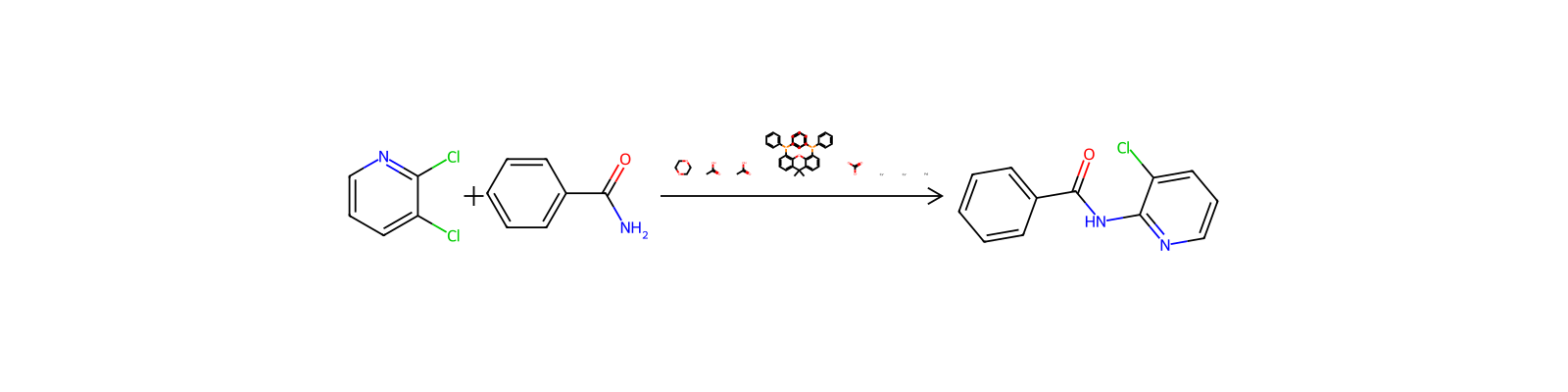
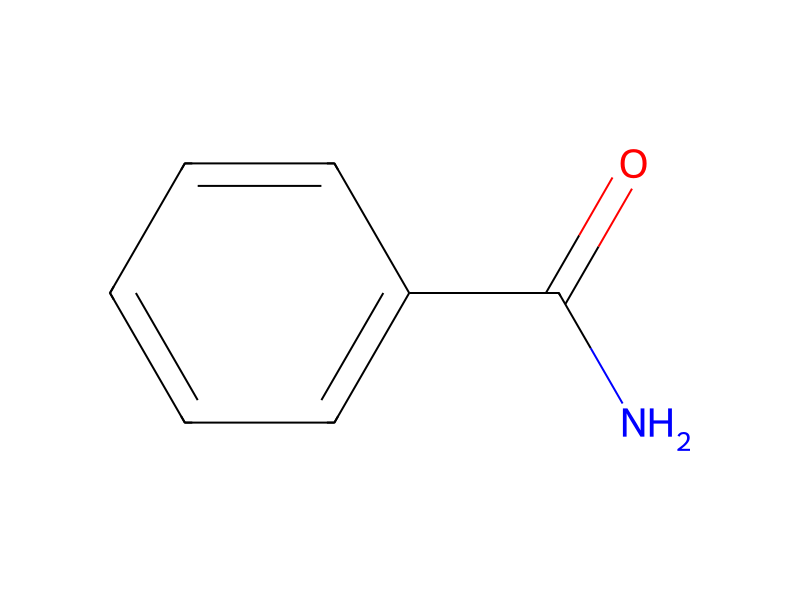
基本情報
- 標準SMILES
NC(=O)c1ccccc1- InChIKey
KXDAEFPNCMNJSK-UHFFFAOYSA-N- 分子式
- C7H7NO
- 平均分子量
- 121.14 g/mol
- 単同位体質量
- 121.05276384
概要
Benzamide is a white powder. (NTP, 1992)
名称と識別子
- 優先名称
- Benzamide
- IUPAC
- benzamide
- 英語名
- Benzoylamide
- 分子式
- C7H7NO
- 分子量
- 121.13658
名称と別名
Benzamide55-21-0BenzoylamideBenzoic acid amideBenzenecarboxamidePhenylcarboxamidePhenylcarboxyamideAmid kyseliny benzooveDTXSID0021709AI3-01031NSC-3114DTXCID101709
名称をさらに表示
CHEBI:281796X80438640RefChem:5585200-227-7Amid kyseliny benzoove [Czech]NSC 3114MFCD00007968Phenyl Carboxyamide
データベース識別子
- CAS
1613-76-9、55-21-0- PubChem CID
- 2331
- DTXSID
DTXSID0021709- ChEMBL
CHEMBL267373- ChEBI
CHEBI:28179- UNII
- 6X80438640
- EC Number
- 200-227-7
- Nikkaji
- J1.374I
物性
構造計算による物性
- XLogP
- 0.6
- 極性表面積
- 43.1 Ų
- 水素結合供与体数
- 1
- 水素結合受容体数
- 1
- 回転可能結合数
- 1
- 重原子数
- 9
- 形式電荷
- 0
- 複雑度
- 105
実験および物理化学的性質
Chemical Classes
Nitrogen Compounds -> Other Aromatics (Nitrogen)
Industrial compound
SpringerMaterials PropertiesSchoenflies notation
LogP
log Kow= 0.64
0.818
0.67
Density
1.0792 at 266 °F (NTP, 1992) - Denser than water; will sink
1.341
1.341 @25 °C
Color/Form
Colorless crystals
Monoclinic prisms or plates from water
Solubility
less than 1 mg/mL at 72.5 °F (NTP, 1992)
> 10% in benzene
1 g in 6 ml ethanol; 1 g in 3.3 ml pyridine
Soluble in ammonia
Slightyl soluble in ethyl ether, benzene; very soluble in ethyl alcohol, carbon tetrachloride, carbon disulfide.
In water, 1.35X10+4 mg/l @ 25 °C
Boiling Point
554 °F at 760 mmHg (NTP, 1992)
288 °C
290.00 °C. @ 760.00 mm Hg
288 °C @760 [mm Hg]
DecompositionWhen heated to decomp it emits toxic fumes of /nitrogen oxides/.
Melting Point
270 to 271 °F (NTP, 1992)
130 °C
129.1 °C
130 °C
Vapor Pressure
0.000939 [mmHg]
0.000165 [mm Hg]
Surface Tension47.26 dyn/cm
Heat of Combustion847.6 kcal/g mol wt @ 20 °C
物理化学的性質
- 融点
- 130 °C · 130 °C
- 沸点
- 288 °C · 288°C
- 比重(密度)
- 1.341 g/cm3 · 1.341 g/cm3
- 酸解離定数(Pka)
- 16 · 16.00±0.50(Predicted)
- 色
- 2 O · H2O からのプレート
安全と法規制
GHS分類
GHS Classification
Warning
H302 (100%): Harmful if swallowed [Warning Acute toxicity, oral]
P203, P264, P270, P280, P301+P317, P318, P330, P405, and P501 (click each P-code to see the statement)
Aggregated GHS information provided per 173 reports by companies from 5 notifications to the ECHA C&L Inventory. Each notification may be associated with multiple companies.
危険有害性情報
Regulatory Information
Chemical: Benzamide
Benzamide: Does not have an individual approval but may be used under an appropriate group standard
Other Safety InformationEvaluation - Chemicals that are unlikely to require further regulation to manage risks to environment
Fire HazardsFlash point data for this chemical are not available, however it is probably combustible. (NTP, 1992)
Fire PotentialCombustible
Health HazardsSYMPTOMS: This compound may produce gastric pain, nausea, and vomiting.
Hazards SummaryA mutagen; [RTECS] An irritant; Harmful if swallowed; Oral LD50 (mouse) = 1160 mg/kg; [MSDSonline]
Reactive GroupAmides and Imides
Reactivity Profile
BENZAMIDE reacts with azo and diazo compounds to generate toxic gases. Forms flammable gases with strong reducing agents. Mixing with dehydrating agents such as P2O5 or SOCl2 generates the corresponding nitrile. Combustion generates toxic mixed oxides of nitrogen (NOx).
Atmospheric Standards
This action promulgates standards of performance for equipment leaks of Volatile Organic Compounds (VOC) in the Synthetic Organic Chemical Manufacturing Industry (SOCMI). The intended effect of these standards is to require all newly constructed, modified, and reconstructed SOCMI process units to use the best demonstrated system of continuous emission reduction for equipment leaks of VOC, considering costs, non air quality health and environmental impact and energy requirements. Benzamide is produced, as an intermediate or a final product, by process units covered under this subpart.
Air and Water ReactionsInsoluble in water.
Toxic Combustion ProductsWhen heated to decomp it emits toxic fumes of /nitrogen oxides/.
Hazard Classes and CategoriesAcute Tox. 4 (100%)
安全と保護具
Fire FightingFires involving this compound can be extinguished using a dry chemical, carbon dioxide or Halon extinguisher. (NTP, 1992)
First Aid
EYES: First check the victim for contact lenses and remove if present. Flush victim's eyes with water or normal saline solution for 20 to 30 minutes while simultaneously calling a hospital or poison control center. Do not put any ointments, oils, or medication in the victim's eyes without specific instructions from a physician. IMMEDIATELY transport the victim after flushing eyes to a hospital even if no symptoms (such as redness or irritation) develop.
Nonfire Spill Response
SMALL SPILLS AND LEAKAGE: Should a spill occur while you are handling this chemical, FIRST REMOVE ALL SOURCES OF IGNITION, then you should dampen the solid spill material with 60-70% ethanol and transfer the dampened material to a suitable container. Use absorbent paper dampened with 60-70% ethanol to pick up any remaining material. Seal the absorbent paper, and any of your clothes, which may be contaminated, in a vapor-tight plastic bag for eventual disposal. Solvent wash all contaminated surfaces with 60-70% ethanol followed by washing with a soap and water solution. Do not reenter the contaminated area until the Safety Officer (or other responsible person) has verified that the area has been properly cleaned.
Disposal Methods
SRP: At the time of review, criteria for land treatment or burial (sanitary landfill) disposal practices are subject to significant revision. Prior to implementing land disposal of waste residue (including waste sludge), consult with environmental regulatory agencies for guidance on acceptable disposal practices.
The following wastewater treatment technology has been investigated for benzamide: Concentration process: Biological treatment.
Protective Action Criteria (PAC)
1.9 [mg/m3]
21 [mg/m3]
130 [mg/m3]
Personal Protective Equipment (PPE)
RECOMMENDED RESPIRATOR: Where the neat test chemical is weighed and diluted, wear a NIOSH-approved half face respirator equipped with an organic vapor/acid gas cartridge (specific for organic vapors, HCl, acid gas and SO2) with a dust/mist filter. (NTP, 1992)
毒性情報
Interactions
Phorbol ester-induced promotion of initiated NMRI mouse skin keratinocytes to papillomas could be largely prevented when nicotinamide like inhibitors of poly(ADP-ribose)polymerase (nicotinamide, benzamide, 3-aminobenzamide) were applied simultaneously with 12-O-tetradecanoylphorbol-13-acetate. A similar suppression of tumor promotion by nicotinamide analogues was demonstrated in clone 41 JB6 epidermal cells which are promotable by 12-O-tetradecanoylphorbol- 13-acetate to anchorage-independent growth.
Differences in the mode of action of caffeine and benzamide on DNA repair processes were studied in Chinese hamster lung fibroblast line V79 cells treated or not treated with N-methyl-N'-nitro-N-nitrosoguanidine. Post treatment with 2 mM caffeine or benzamide for 24 hr, following N-methyl-N'-nitro-N-nitrosoguanidine treatment, greatly increased cell lethality. In the presence of 50 uM deoxycytidine, caffeine had almost no effect on cell lethality. Benzamide induced cell lethality was not affected by the presence of deoxycytidine. Treatment with 2 mM caffeine or benzamide alone for 24 hours had no effect on cell lethality. When caffeine and benzamide were present simultaneously for 96 hr, cell lethality was greatly increased. This effect was eliminated in the presence of 50 uM deoxycytidine. Poly(ADP-ribose)polymerase activity of the cells was substantially inhibited by 2 mM benzamide; 2 to 5 mM caffeine had no detectable effect on the polymerase activity.
Ecotoxicity Values
LC50 Pimephales promelas (fathead minnow) 661 mg/l/96 hr (confidence limit 590 - 740 mg/l), flow-through bioassay with measured concentrations, 25.1 °C, dissolved oxygen 7.2 mg/l, hardness 47.0 mg/l calcium carbonate, alkalinity 41.3 mg/l calcium carbonate, and pH 7.5.
Environmental Fate
TERRESTRIAL FATE: Based on a classification scheme(1), a range of Koc values from 9 to 57(2-5), indicates that benzamide is expected to have high to very high mobility in soil(SRC). Volatilization of benzamide from moist soil surfaces is not expected to be an important fate process(SRC) given a Henry's Law constant of 2.45X10⁻¹⁰ atm-cu m/mole(6). Benzamide is not expected to volatilize from dry soil surfaces(SRC) based upon an estimated vapor pressure of 9.4X10⁻⁴ mm Hg(SRC), determined from a fragment constant method(7). Benzamide is oxidized by soil bacteria adapted to phenol(8-10). In experiments in which 400 mg/l of benzamide was applied to soil columns, 96% degradation occurred within 3 days in a clay soil and 98% degradation occurred within 13 days in an organic soil(11).
AQUATIC FATE: Based on a classification scheme(1), a range of Koc values from 9 to 57(2-5), indicates that benzamide is not expected to adsorb to suspended solids and sediment(SRC). Volatilization from water surfaces is not expected(6) based upon a Henry's Law constant of 2.5X10⁻¹⁰ atm-cu m/mole(7). According to a classification scheme(8), an estimated BCF of 3(SRC), from its log Kow(9) and a regression-derived equation(10), suggests the potential for bioconcentration in aquatic organisms is low(SRC). Benzamide is readily oxidized by activated sludge from a municipal waste water plant(11). However, no information is available concerning biodegradation in aerobic natural waters(SRC). Benzamide undergoes anaerobic biodegradation under both sulfate-reducing and methanogenic conditions(12). When incubated in aquifer slurries from a sulfate-reducing and methanogenic site, respectively, 45% and 40% of the benzamide was biodegraded after one month(12). All the benzamide disappeared within 8 months(12).
ATMOSPHERIC FATE: According to a model of gas/particle partitioning of semivolatile organic compounds in the atmosphere(1), benzamide, which has an estimated vapor pressure of 9.4X10⁻⁴ mm Hg at 25 °C(SRC), determined from a fragment constant method(2), is expected to exist solely as a vapor in the ambient atmosphere(SRC). Vapor-phase benzamide is degraded in the atmosphere by reaction with photochemically-produced hydroxyl radicals(SRC); the half-life for this reaction in air is estimated to be 4.2 days(SRC), calculated from its rate constant of 3.8X10⁻¹² cu cm/molecule-sec at 25 °C(SRC) determined using a structure estimation method(3).
Soil Adsorption/Mobility
The Koc of benzamide ranges from 9 to 57(1-4). According to a classification scheme(5), these Koc values suggest that benzamide is expected to have high to very high mobility in soil(SRC). Batch equilibrium studies were conducted on benzamide in two representative soils and a sediment(1). The Koc in an acidic forest soil (4.85% organic carbon, pH 2.8), an agricultural soil (1.25% organic carbon, pH 6.7), and a sediment (1.58% organic carbon, pH 7.1) was 57, 20 and 9, respectively. Koc values for sewage sludges and soils were 40 and 18, respectively(3).
Human Toxicity Excerpts
Treatment of benzamide to HeLa cells resulted in striking alterations of the process of cell division. Studies employing continuous treatment showed that the mitotic index remained almost similar in control and treated cells for up to 48 hr; at 72 hr the mitotic index was lowered considerably. The ratio of metaphase/anaphase plus telophase showed a constant incr, keeping a positive correlation with the dose and duration of benzamide treatment. Abnormal division figures were also /observed/ at high frequency. In recovery experiments, the percentage of abnormally dividing cells became comparable to that of control group by 48 hr of recovery.
Artificial Pollution SourcesBenzamide's production and use in organic synthesis(1) may result in its release to the environment through various waste streams(SRC). Benzamide is formed when mepronil, a fungicide, and other benzanilides are exposed to sunlight(2).
Environmental Biodegradation
AEROBIC: Benzamide is readily oxidized by activated sludge from a municipal waste water plant(1). However, no information is available concerning biodegradation in aerobic natural waters(SRC). Benzamide is oxidized by soil bacteria adapted to phenol(2-4). In experiments in which 400 mg/l of benzamide was applied to soil columns, 96% degradation occurred within 3 days in a clay soil and 98% degradation occurred within 13 days in an organic soil(5).
ANAEROBIC: Benzamide undergoes anaerobic biodegradation under both sulfate-reducing and methanogenic conditions(1). When incubated in aquifer slurries from a sulfate-reducing and methanogenic site, respectively, 45% and 40% of the benzamide was biodegraded after one month(1). All the benzamide disappeared within 8 months(1).
Environmental Bioconcentration
An estimated BCF of 3 was calculated for benzamide(SRC), using a log Kow of 0.64(1) and a regression-derived equation(2). According to a classification scheme(3), this BCF suggests the potential for bioconcentration in aquatic organisms is low(SRC).
Volatilization from Water/Soil
The Henry's Law constant for benzamide is 2.45X10⁻¹⁰ atm-cu m/mole(1). This Henry's Law constant indicates that benzamide is expected to be essentially nonvolatile from water surfaces(2). Benzamide is not expected to volatilize from dry soil surfaces(SRC) based upon an estimated vapor pressure of 9.4X10⁻⁴ mm Hg(SRC), determined from a fragment constant method(3).
Non-Human Toxicity Excerpts
3-Aminobenzamide and benzamide, two potent inhibitors of poly-(ADP-ribose)-polymerase, incr the frequencies of sister chromatid exchange in Chinese hamster ovary cells in a dose dependent manner. Sister chromatid exchange were studied in cells in which the inhibitors were present either during the first cell cycle or the second cell cycle or both. Most of the induced sister chromatid exchange were formed during the second cell cycle in which BU-containing DNA was used as template for DNA synthesis. ...
The induction of micronucleated erythrocytes in bone marrow by primary thioamides and their metabolites was studied in mice. Female C57B1/6 mice were administered 0 to 3.39 mmol/kg thioacetamide, thiobenzamide, thioacetamide-S-oxide, thiobenzamide-S-oxide, acetamide, or benzamide by oral gavage. Mice were killed 6 or 30 hours later, the femurs were removed, and the bone marrow was flushed out. Polychromatic erythrocytes were isolated and assayed for micronuclei. Thioacetamide, thiobenzamide, thioacetamide-S-oxide, and thiobenzamide-S-oxide induced dose dependent increases in the incidence of micronucleated polychromatic erythrocytes. When compared on an equimolar basis, thioacetamide-S-oxide and thiobenzamide-S-oxide were more effective than the parent compounds. Acetamide and benzamide also induced significant increases in polychromatic erythrocytes containing micronuclei. Thioacetamide and benzamide and their major metabolites cause a significant induction of micronucleated bone marrow cells. The mechanism for these effects is unknown
Benzamides induce sister chromatid exchanges in L1210 cells. This induction is strongly potentiated when the cells are grown in nicotinamide free medium.
Environmental Abiotic Degradation
The rate constant for the vapor-phase reaction of benzamide with photochemically-produced hydroxyl radicals has been estimated as 3.8X10⁻¹² cu cm/molecule-sec at 25 °C(SRC) using a structure estimation method(1). This corresponds to an atmospheric half-life of about 4.2 days at an atmospheric concentration of 5X10+5 hydroxyl radicals per cu cm(1). Benzamide is not expected to undergo hydrolysis in the environment since amides hydrolyze very slowly under environmental conditions(2) and will not directly photolyze due to the lack of absorption in the environmental UV spectrum (>290 nm)(SRC).
Probable Routes of Human ExposureOccupational exposure to benzamide may occur through inhalation and dermal contact with this compound at workplaces where benzamide is produced or used. (SRC)
法規制情報
Atmospheric Standards
This action promulgates standards of performance for equipment leaks of Volatile Organic Compounds (VOC) in the Synthetic Organic Chemical Manufacturing Industry (SOCMI). The intended effect of these standards is to require all newly constructed, modified, and reconstructed SOCMI process units to use the best demonstrated system of continuous emission reduction for equipment leaks of VOC, considering costs, non air quality health and environmental impact and energy requirements. Benzamide is produced, as an intermediate or a final product, by process units covered under this subpart.
安全データ
- 毒性
- sce-hmn:lym 1 mmol/L MUREAV 122,223,83
化学と産業
薬理情報
Metabolism/MetabolitesBenzamide yields benzoic acid in rabbit, guinea pig, dog, pig, & cat. /From table/
Absorption, Distribution and Excretion
The percutaneous absorption of the fragrances benzyl acetate and five other benzyl derivatives (benzyl alcohol, benzyl benzoate, benzamide, benzoin and benzophenone) was determined in vivo in monkeys. Absorption through occluded skin was high for all compounds (approximately 70% of the applied dose in 24 hr) and no significant differences between values for the different compounds were observed. No correlations were seen between skin penetration of these compounds and their octanol-water partition coefficients. Under unoccluded conditions skin penetration of the fragrances was reduced and there was great variability between compounds, presumably because of variations in the rates of evaporation from the site of application. The data suggest that humans may have significant systemic exposure to these fragrance.
用途と製造
Uses
Used in organic synthesis; [HSDB]
Organic synthesis
To manufacture benzonitrile
Methods of ManufacturingFrom benzoyl chloride and ammonia or ammonium carbonate.
Formulations/PreparationsGrade: Technical
General Manufacturing InformationBenzamide: ACTIVE
サプライヤー50 社
国药集团化学试剂有限公司86-21-63210123 · [email protected]
梯希爱(上海)化成工业发展有限公司021-67121386 · [email protected]
上海阿拉丁生化科技股份有限公司400-6206333 13167063860 · [email protected]
爱斯特(成都)生物制药股份有限公司+86-28-85122536 85324413 · [email protected]
上海如吉生物科技发展有限公司+86-21-65211385-8001 36031160 · [email protected]
济南万多鑫化工有限公司0531-88770993 13905318421 · [email protected]
Syntechem Co.,Ltd[email protected]
上海迈瑞尔生化科技有限公司4006356688 18621169109 · [email protected]
阿法埃莎(中国)化学有限公司400-6106006 · [email protected]
上海德默医药科技有限公司400-021-7337 2355568890 · [email protected]
安耐吉化学&3A(安徽泽升科技股份有限公司)400-0056266 · [email protected]
北京绿百草科技发展有限公司010-61136123 · [email protected]
上海瀚鸿科技股份有限公司021-54306202 13764082696 · [email protected]
上海钰康生物科技有限公司+86-18930848214 +86-021-56762820 · [email protected]
上海景颜化工科技有限公司13817811078 · [email protected]
云南西力生物技术股份有限公司0871-65217109 · [email protected]
玛雅试剂+86 (573) 82222445 (0)18006601000 452520369 · [email protected]
四川库利南科技有限公司400-1166-196 18981987031 · [email protected]
天津希恩思生化科技有限公司400 638 7771 · [email protected]
湖南汇百侍生物科技有限公司0731-85526065 13308475853 · [email protected]
南京维奥化工有限公司Please Send Email 18652950785 · [email protected]
上海源叶生物科技有限公司13636370518 · [email protected]
艾科试剂4008-755-333 18080918076 · [email protected]
上海思域化工科技有限公司86-21-34053660 · [email protected]
赛默飞世尔科技(中国)有限公司800-810-5118 · [email protected]
北京伊诺凯科技有限公司400-810-7969 010-59572699 · [email protected]
南京诺利斯医药科技有限公司13901585132 · [email protected]
TCI AMERICA800-4238616 · [email protected]
TOKYO CHEMICAL INDUSTRY CO., LTD.03-36680489 · [email protected]
TCI Europe320-37350700 · [email protected]
上海贤鼎生物科技有限公司4009209199 · [email protected]
深圳振强药物研发有限公司0755-66853366 13670046396 · [email protected]
广州爱纯医药科技有限公司020-39119399 18927568969 · [email protected]
无锡中坤生化科技有限公司+86 0510-85629785
上海将来实业股份有限公司021-61552785 · [email protected]
安徽科迪达化工有限公司0554-2106669 · [email protected]
上海笛柏生物科技有限公司400-008-9730,021-54359730 400-008-9730 · [email protected]
日照力德士化工有限公司010-51268198 · [email protected]
美岚实业(上海)有限公司021-58958189 · [email protected]
上海爱蝶实业有限公司021-58957966 18930537195 · [email protected]
成都零六生物科技有限公司400-1166-196 13458535857 · [email protected]
广拓化学(上海)有限公司021-60899189-8001 18918189673 · [email protected]
雷丁试剂0510-85629785 18013409632 · [email protected]
上海创赛科技有限公司400-6087598 15021221957 · [email protected]
上海馨远医药科技有限公司021-24206007 13764915196 · [email protected]
上海麦克林生化科技股份有限公司15221275939 15221275939 · [email protected]
上海永叶生物科技有限公司86-021-61559134 15921386130 · [email protected]
江苏艾康生物医药研发有限公司025-66028182 17714375163 · [email protected]
成都润泽本土化工有限公司13096311329 028-88469284 616445927 · [email protected]
凯试(上海)科技有限公司021-50135380 · [email protected]
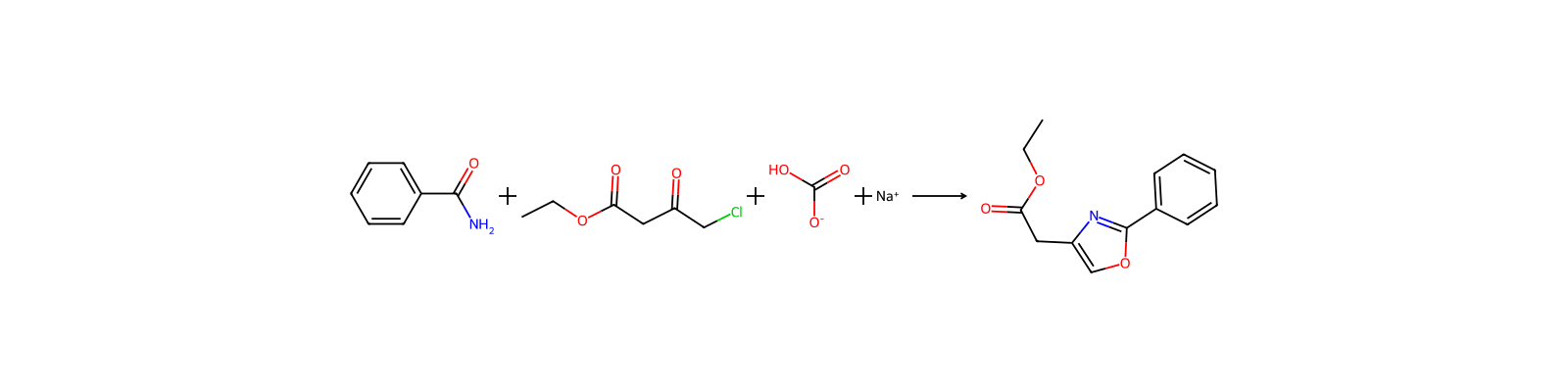
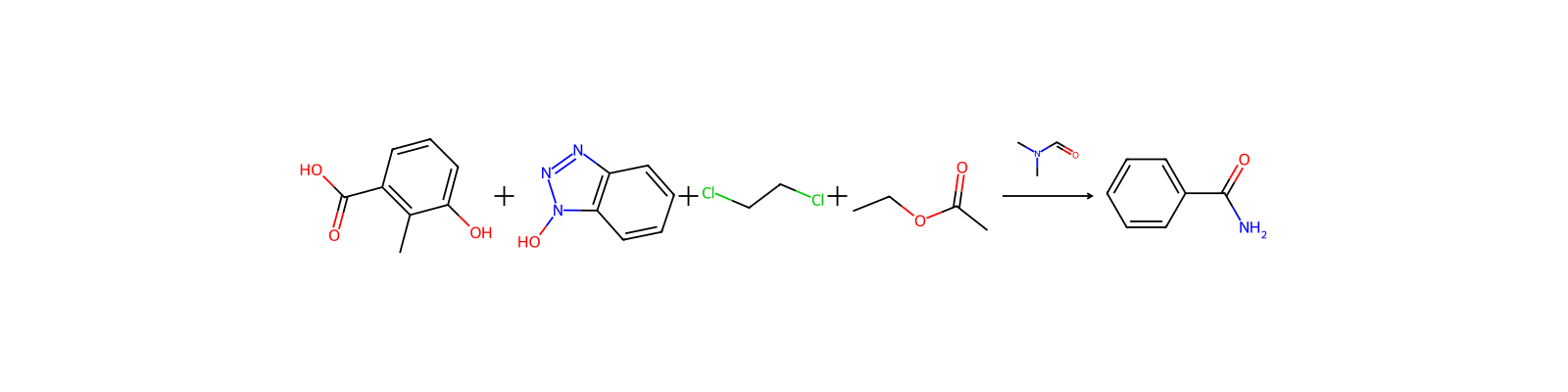
関連反応
669 件





関連ノート
読み込み中…