

基本情報
- CAS
897016-82-9- 標準SMILES
O=C(Cc1ccc(-c2ccc(OCCN3CCOCC3)cc2)cn1)NCc1ccccc1- InChIKey
HUNGUWOZPQBXGX-UHFFFAOYSA-N- 分子式
- C26H29N3O3
- 平均分子量
- 431.5 g/mol
- 単同位体質量
- 431.22089179
概要
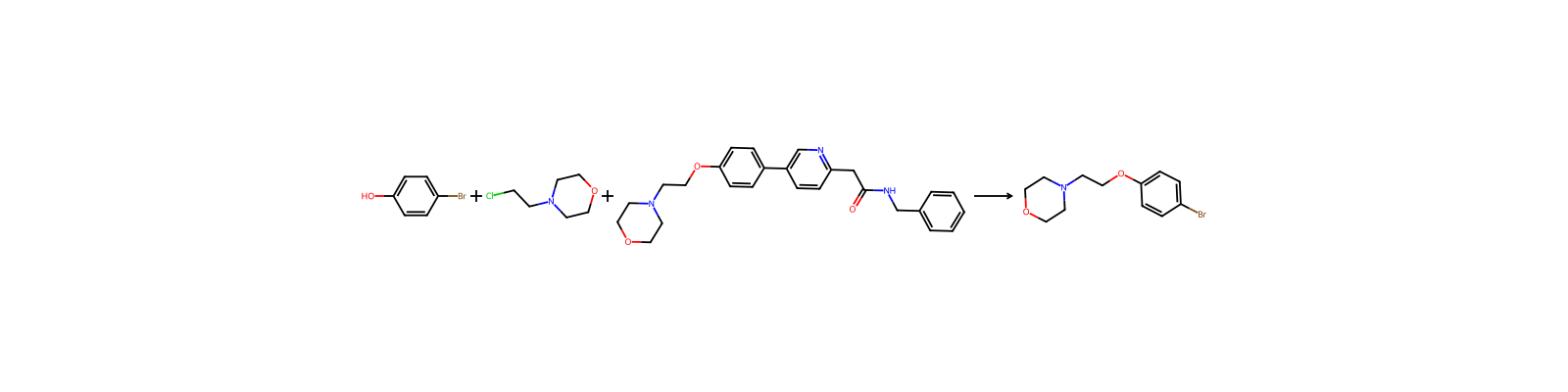
Tirbanibulin is a member of the class of pyridines that is pyridine substituted by 2-(benzylamino)-2-oxoethyl and 4-[2-(morpholin-4-yl)ethoxy]phenyl groups at positions 2 and 5, respectively. It is a dual inhibitor of Src kinase and tubulin and approved by the FDA for the topical treatment of actinic keratosis on the face or scalp. It has a role as an antineoplastic agent, a microtubule-destabilising agent, an apoptosis inducer and an EC 2.7.10.2 (non-specific protein-tyrosine kinase) inhibitor. It is a secondary carboxamide, a member of pyridines, an aromatic ether and a member of morpholines.
名称と識別子
- 優先名称
- Tirbanibulin
- IUPAC
- N-benzyl-2-[5-[4-(2-morpholin-4-ylethoxy)phenyl]-2-pyridinyl]acetamide
- 英語名
- Tirbanibulin
- 分子式
- C26H29N3O3
- 分子量
- 431.53
名称と別名
Tirbanibulin897016-82-9KX2-391KX-01KlisyriN-benzyl-2-(5-(4-(2-morpholinoethoxy)phenyl)pyridin-2-yl)acetamideKX01KX-2-391tirbanibulinatirbanibulineKX-23914V9848RS5G
名称をさらに表示
チルバニブリンKX 01CS-234KX-O1)KX2-391 (KX01)KX2-391 USP/EP/BPTirbanibulin, KX2-391KX2-391(Tirbanibulin)KX2 391Tirbanibulin, 10 mM in DMSO
KX2391N-benzyl-2-(5-{4-[2-(morpholin-4-yl)ethoxy]phenyl}pyridin-2-yl)acetamideDTXSID302378622-Pyridineacetamide, 5-(4-(2-(4-morpholinyl)ethoxy)phenyl)-n-(phenylmethyl)-tirbanibulinumN-benzyl-2-(5-(4-(2-(morpholin-4-yl)ethoxy)phenyl)pyridin-2-yl)acetamide2-(5-(4-(2-morpholin-4-ylethoxy)phenyl)pyridin-2-yl)-N-(phenylmethyl)acetamide2-[5-[4-(2-morpholin-4-ylethoxy)phenyl]pyridin-2-yl]-N-(phenylmethyl)acetamide
データベース識別子
- CAS
897016-82-9- PubChem CID
- 23635314
- DTXSID
DTXSID30237862- ChEMBL
CHEMBL571546- ChEBI
CHEBI:231702- UNII
- 4V9848RS5G
- EC Number
- 854-810-1
物性
構造計算による物性
- XLogP
- 2.9
- 極性表面積
- 63.7 Ų
- 水素結合供与体数
- 1
- 水素結合受容体数
- 5
- 回転可能結合数
- 9
- 重原子数
- 32
- 形式電荷
- 0
- 複雑度
- 540
実験および物理化学的性質
DrugsPharmaceuticals -> Listed in ZINC15
Human Drugs
Breast Feeding; Lactation; Milk, Human; Antineoplastic Agents; Dermatologic Agents
FDA approved drugs -> Active ingredient
EMA approved medicines: Human medicine
FDA approved drugs -> Active ingredient
物理化学的性質
- 沸点
- 680.9 · 680.9±55.0 °C(Predicted)
- 比重(密度)
- 1.169 · 1.169
- 貯蔵温度
- -20 °C · Store at -20°C
- 溶解性
- 2 O; · insoluble in H2O; ≥121 mg/mL in DMSO; ≥2.44 mg/mL in EtOH with gentle warming and ultrasonic
- 外見
- Powder
- 酸解離定数(Pka)
- 14.73 · 14.73±0.46(Predicted)
- 色
- White to off-white
- InChI
- InChI=1S/C26H29N3O3/c30-26(28-19-21-4-2-1-3-5-21)18-24-9-6-23(20-27-24)22-7-10-25(11-8-22)32-17-14-29-12-15-31-16-13-29/h1-11,20H,12-19H2,(H,28,30)
- InChIKey
- HUNGUWOZPQBXGX-UHFFFAOYSA-N
- SMILES
- C1(CC(NCC2=CC=CC=C2)=O)=NC=C(C2=CC=C(OCCN3CCOCC3)C=C2)C=C1
安全と法規制
GHS分類
GHS ClassificationNot Classified
危険有害性情報
Hazard Classes and CategoriesNot Classified
毒性情報
Effects During Pregnancy and Lactation◉ Summary of Use during Lactation
安全データ
- 注意喚起語
- 警告
- 危険有害性情報
- コード 危険有害性情報 危険有害性クラス 区分 注意喚起語 シンボル P コード H315
化学と産業
薬理情報
ATC Code
D - Dermatologicals
QD - Dermatologicals
Protein BindingTirbanibulin is 88% bound to plasma proteins and the extent of plasma protein binding is independent of drug concentrations in the range of 0.01 to 10 µg/mL.
Pharmacodynamics
In clinical trials composed comprising patients with actinic keratosis of the face or scalp, tirbanibulin promoted complete clearance of actinic keratosis lesions at day 57 in treated areas in 44-54% of patients compared to 5-13% of patients who received the placebo. Actinic keratosis is a chronic, pre-malignant condition characterized by lesions and proliferation of neoplastic keratinocytes. Tirbanibulin mediates an anti-proliferative effect by inhibiting tubulin polymerization and Src kinase signalling. Tirbanibulin inhibited primary tumour growth and metastasis in many preclinical animal models of cancer. In human triple-negative breast cancer, or estrogen receptor (ER)/progesterone receptor (PR)/human epidermal growth factor receptor 2 (HER2)-negative tumour, xenografts, tirbanibulin suppressed tumour growth and metastasis. Tirbanibulin was also shown to restore functional ERα expression in ERα-negative breast tumours. Tirbanibulin promoted synergistic tumour growth inhibition of breast cancer cell lines when used in combination with tamoxifen and paclitaxel. In a clinical trial comprising patients with advanced solid tumours, dose-limiting toxicities of tirbanibulin included elevated liver transaminases, neutropenia and fatigue.
Mechanism of Action
Src tyrosine kinases regulate normal cell growth: the expression of Src kinase is upregulated during the normal hair cycle during the proliferative anagen phase. Additionally, Src tyrosine kinases act as key modulators of cancer cell proliferation, survival, angiogenesis, migration, invasion and metastasis. Src is frequently upregulated in various epithelial tumours including colon, breast and pancreas compared with the adjacent normal tissues. The expression and activity of Src are also enhanced in human actinic keratosis, which is characterized by hyperproliferative premalignant skin lesions. The pathogenesis of actinic keratosis commonly involves skin inflammation, oxidative stress, immunosuppression, impaired apoptosis, mutagenesis, dysregulation of keratinocyte growth and proliferation, and tissue remodelling. _In vitro_ studies suggest that Src plays a predominant role in the early stages of human skin tumour development, rather than at later stages of tumour progression. The exact mechanism of tirbanibulin as a topical treatment of actinic keratosis has not been fully elucidated; however, it mainly works by inhibiting fast proliferating cells. Tirbanibulin is a non-ATP competitive Src kinase inhibitor and tubulin polymerization inhibitor. It binds to the peptide substrate binding site of Src, a primary target of tirbanibulin, and blocking its downstream signalling pathways that promote cancer cell migration, proliferation, and survival. Tublin is responsible for cell migration, protein transport, and mitosis: tibranibulin directly binds to the colchicine-binding site of beta-tubulin and causes induces tubulin depolymerization. It is also hypothesized that inhibition of Src can also contribute to the inhibitory effects on microtubule polymerization. At low nanomolar concentrations, tirbanibulin induces G2/M phase cell cycle arrest in a reversible and dose-dependent manner. By inhibiting microtubule polymerization, tirbanibulin also induces mitotic catastrophe.
Biological Half-LifeThe half-life is about 4 hours.
Metabolism/Metabolites
_In vitro_, tirbanibulin is mainly metabolized by CYP3A4, and to a lesser extent, CYP2C8. In adult subjects with actinic keratosis, detected metabolites were KX2-5036 and KX2-5163, which were pharmacologically inactive metabolites with the highest plasma concentrations of 0.09 ng/mL and 0.12 ng/mL, respectively.
FDA Pharmacological Classification
4V9848RS5G
TIRBANIBULIN
Physiologic Effects [PE] - Microtubule Inhibition
Established Pharmacologic Class [EPC] - Microtubule Inhibitor
Tirbanibulin is a Microtubule Inhibitor. The physiologic effect of tirbanibulin is by means of Microtubule Inhibition.
TIRBANIBULIN
MeSH Pharmacological ClassificationCompounds or agents that combine with an enzyme in such a manner as to prevent the normal substrate-enzyme combination and the catalytic reaction.
Absorption, Distribution and Excretion
Tirbanibulin demonstrates good oral bioavailability. Following topical administration of doses ranging from 54 to 295 mg on the face or scalp, the steady-state concentration of tirbanibulin was achieved by 72 hours. At five days following initial administration, the mean Cmax was 0.34±0.30 ng/mL in subjects who received topical treatment on the face and 0.18±0.10 ng/mL in subjects who received topical treatment on the scalp. The mean AUC24 was 5.0±3.9 h x ng/mL in subjects who received topical treatment on the face and 3.2±1.9 h x ng/mL in subjects who received topical treatment on the scalp. The median Tmax was about seven hours.
There is limited information on the route of elimination of tirbanibulin.
There is limited information on the volume of distribution of tirbanibulin. In mouse HT29 xenograft studies, the tissue to plasma ration of tirbanibulin was 1.52.
There is limited information on the clearance rate of tirbanibulin.
応用分野
使用KX2-391 is a Src Inhibitor with efficacy against certain hepatic and leukemia cell lines.
上流・下流製品情報
上流原料
サプライヤー100 社
阿诺西(上海)生物技术有限公司400-1107768 15058188853 · [email protected]
上海阿拉丁生化科技股份有限公司400-6206333 13167063860 · [email protected]
天津欣康佑生物科技有限公司19922659386 · [email protected]
湖北威德利化学试剂有限公司181-6332-1995 18062128043 · [email protected]
武汉英诺医药科技有限公司+86-027-59232304 15387063101 · [email protected]
成都彼样生物科技有限公司18108052721 · [email protected]
杭州品高化工有限公司0571-87658025 · [email protected]
上海毕得医药科技股份有限公司400-1647117 13681763483 · [email protected]
杭州摩库生物医药科技有限公司+86-057181025280; +8617767106207 · [email protected]
武汉众志诚生物技术有限公司13628624121 13628604890 · [email protected]
湖北科乐精细化工有限公司027-59101668 19945030958 · [email protected]
浙江珲达生物科技有限公司0571-89903022 18679456698 · [email protected]
上海海皋科技有限公司021-57646680 18306277365 · [email protected]
上海波以尔化工有限公司[email protected]
欧利希(湖北)医药科技有限公司17316404525 17316404525 · [email protected]
United Life Science020-82099279 18988941402 · [email protected]
河南阿尔法化工有限公司0371-55013243 15324716602 · [email protected]
InvivoChem中国13549236410 · [email protected]
MedBio脉铂医药021-69568360 18916172912 · [email protected]
重庆兴泰濠制药有限公司15823826554 · [email protected]
Zhejiang J&C Biological Technology Co.,Limited+1-2135480471 · [email protected]
湖北魏氏化学试剂股份有限公司17771898297 13125137661 · [email protected]
济南精合医药科技有限公司0531-88811783 · [email protected]
ChemeGen 中国18818260767 · [email protected]
AdooQ BioScience, LLC+1 (866) 930-6790 · [email protected]
Wuhan NCE Biomedical Co.,Ltd.4000-027-021 |24 +86-13986109188 | +86-15623472865 | +81-08033611988
南京生利德生物科技有限公司025-57798810 18652991625 · [email protected]
北京依诺泰药物化学技术有限公司15011485209
上海喀露蓝科技有限公司18149758185 18149758185 · [email protected]
上海毕得医药科技股份有限公司400-164-7117 18317119277 · [email protected]
天津普西唐生物医药科技有限公司010-60605840 · [email protected]
常州翔龙医药科技有限公司18915873328 18915873328 · [email protected]
南京百鑫德诺生物科技有限公司025-58849295 · [email protected]
Chongqing jooe co., ltd+86-15223382610 · [email protected]
湖北巨胜科技有限公司027-59599241 18871490274 · [email protected]
上海楼岚生物科技有限公司021-52996696,15000506266 15000506266
铜陵恒优生物科技有限公司021-50426030 13856289449;13124863828 · [email protected]
武汉天植生物技术有限公司18607101326 15172504745 · [email protected]
上海陶术生物科技股份有限公司+1-781-999-5354; +1-00000000000 · [email protected]
斯派螺(武汉)药物研发有限公司[email protected]
BOC Sciences16314854226; +8616314854226 · [email protected]
开封明仁药业有限公司0371-65741762 · [email protected]
武汉多普乐生物医药有限公司+86-02787215551 19945035818 · [email protected]
淄博百极荣创医药科技有限公司0533-6092686 13371592196 · [email protected]
风咏生物(AbMole)021-10000000 13000000000 · [email protected]
上海珞珐生化科技有限公司021-51111890 15317326293 · [email protected]
兰州安杰利生物化学科技有限公司0931-8235634 13321316780
上海源叶生物科技有限公司13636370518 · [email protected]
上海麦克林生化科技股份有限公司50706066 15221275939 · [email protected]
Target molecule Corp.857-239-0968 · [email protected]
関連反応
131 件




化合物ノート
読み込み中…