
HRID 6539反応物として
Lithium perchlorate

7791-03-9[Li+].[O-][Cl+3]([O-])([O-])[O-]MHCFAGZWMAWTNR-UHFFFAOYSA-MLithium perchlorate is the chemical compound with the formula LiClO4. This white crystalline salt is noteworthy for its high solubility in many solvents. It exists both in anhydrous form and as a trihydrate. Lithium perchlorate is used as a source of oxygen in some chemical oxygen generators. It decomposes at about 400
7791-03-9安全情報は参考情報です。供給元の安全データシート(SDS)、適用法令、専門家による評価に代わるものではありません。
This chemical does not meet GHS hazard criteria for 0.5% (1 of 192) of reports.
Danger
H271 (69.8%): May cause fire or explosion; strong Oxidizer [Danger Oxidizing liquids; Oxidizing solids]
P210, P220, P260, P261, P264, P264+P265, P270, P271, P280, P283, P301+P317, P301+P330+P331, P302+P352, P302+P361+P354, P304+P340, P305+P351+P338, P305+P354+P338, P306+P360, P316, P317, P319, P321, P330, P332+P317, P337+P317, P362+P364, P363, P370+P378, P371+P380+P375, P403+P233, P405, P420, and P501 (click each P-code to see the statement)
Aggregated GHS information provided per 192 reports by companies from 15 notifications to the ECHA C&L Inventory. Each notification may be associated with multiple companies.
Chemical: Perchloric acid, lithium salt
REACH registered substance: Lithium perchlorate (EC: 232-237-2)
Perchloric acid, lithium salt: Does not have an individual approval but may be used under an appropriate group standard
Risk of fire and explosion if contact with organic substances; A skin and mucous membrane irritant; [Hawley] An oxidizing agent that may cause fire on contact with combustible materials; An irritant; [MSDSonline] See Lithium. See PERCHLORATES.
CSL00084
DIETHYL ETHER + LITHIUM PERCHLORATE
refluxing led to an explosion
Explosive
User-Reported
7/8/18
Used for solid rocket propellants; [Hawley] Used as oxidizing agent; [Merck Index] Used in lithium-nickel sulfide dry batteries; [CHEMINFO]
Battery Manufacturing [Category: Industry]
Breathing in contaminated air; drinking contaminated water; eating contaminated food; dermal and eye exposure (L894).
解説過塩素酸リチウムとは、化学式LiClO4で表される無機化合物で、過塩素酸のリチウム塩です。 過塩素酸リチウムは、リチウムクロリドととの反応により、生成されます。水や有機溶剤に良く溶けることが特徴の1つです。 また、過塩素酸塩に共通する酸化剤としての性質と、水溶液にしたときにイオン半径が大きい陰イオンとなり、水分子のネットワークを乱すカオトロピックイオンとしてふるまう性質を有しています。 なお、CAS登録番号は無水物が7791-03-9、三水和物が13453-78-6です。
説明Lithium perchlorate,is an oxysalt that is a colorless, deliquescent crystal. Oxysalt “per-ate” compounds are loaded with excess oxygen and will readily give it up in a reaction. Lithium perchlorate is a powerful oxidizing agent. It has more available oxygen than does liquid oxygen on a volume basis. Lithium perchlorate has a specific gravity of 2.429, which is heavier than water, and is water soluble. It is a dangerous fire and explosion risk in contact with organic materials and is an irritant to skin and mucous membranes. The primary use of lithium perchlorate is as a solid rocket propellant. Chlorates are strong oxidizing agents. When heated, they give up oxygen readily. Contact with organic or other combustible materials may cause spontaneous combustion or explosion. They are incompatible with ammonium salts, acids, metal powders, sulfur, and finely divided organic or combustible substances.
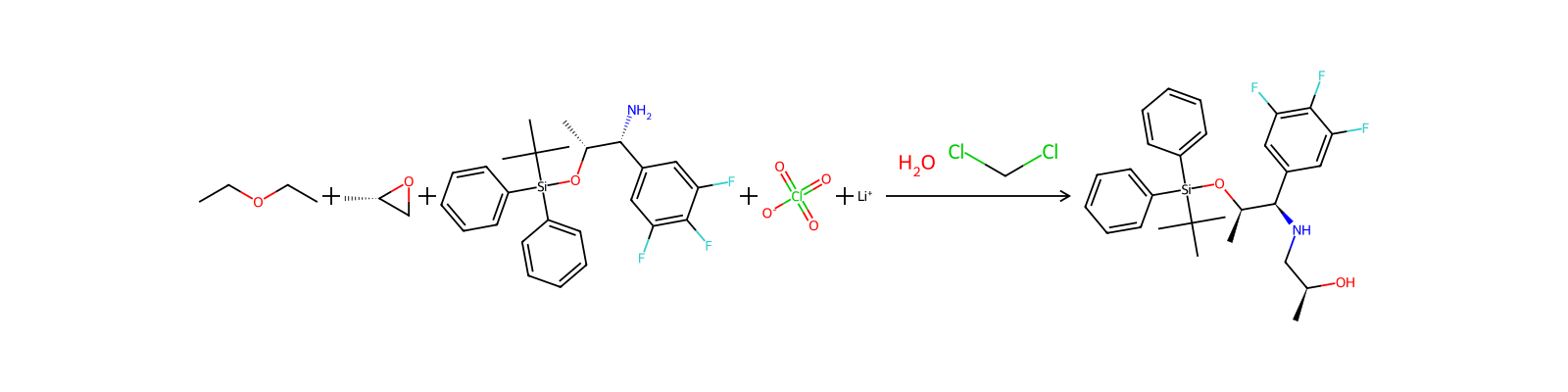
使用The big advantage of lithium perchlorate is its high density and oxygen availability for combustion. A quite interesting methodology involves the use of lithium perchlorate anhydrides complexes in the acylation of activated aromatic compounds.Lithium perchlorate is frequently utilized as promoter to accelerate the acylation process and to increase the yield in the reaction catalyzed by metal triflates.However, lithium perchlorate itself can act as a very efficient catalyst in the acylation of variously substituted methoxy and methylbenzenes with AAN affording the aryl ketones in 65%–99% yield. The exceptional activation is ascribed to the formation of a complex with a strong electrophilic character between lithium perchlorate and AAN in neat AAN. The observed pararegioselectivity can be interpreted in terms of the high steric requirement of the lithium perchlorate– AAN complex. A further important feature of this process is the possibility of quantitatively recovering and reusing the catalyst after activation. It must be underlined, however, that lithium perchlorate is an oxidizing compound and can undergo devastating explosions; consequently, it must be handled with maximum care.



DTXSID40872829CHEMBL3613684化学的特性White crystalline powder
1.2 [mg/m3]
13 [mg/m3]
79 [mg/m3]
In case of oral exposure, immediately dilute with 4 to 8 ounces (120 to 240 mol) of water or milk. Consider after ingestion of a potentially life-threatening amount of poison if it can be performed soon after ingestion (generally within 1 hour). Protect airway by placement in Trendelenburg and left lateral decubitus position or by endotracheal intubation. Control any seizures first. Maintain ventilation and oxygenation and evaluate with frequent arterial blood gas or pulse oximetry monitoring. Early use of PEEP and mechanical ventilation may be needed. Following inhalation, Move patient to fresh air. Monitor for respiratory distress. If cough or difficulty breathing develops, evaluate for respiratory tract irritation, bronchitis, or pneumonitis. Administer oxygen and assist ventilation as required. Treat bronchospasm with inhaled beta2 agonist and oral or parenteral corticosteroids. In case of acute lung injury, maintain ventilation and oxygenation and evaluate with frequent arterial blood gas or pulse oximetry monitoring. Following eye exposure, irrigate exposed eyes with copious amounts of room temperature water for at least 15 minutes. Following dermal exposure, remove contaminated clothing and wash exposed area thoroughly with soap and water. A physician may need to examine the area if irritation or pain persists. Treat dermal irritation or burns with standard topical therapy. Patients developing dermal hypersensitivity reactions may require treatment with systemic or topical corticosteroids or antihistamines. (T36)
Adverse effects on a wide variety of organ systems can result from disruption in the availability of T3 to target tissues. Organ systems affected by disturbances in T3 levels include the skin, cardiovascular system, pulmonary system, kidneys, gastrointestinal tract, liver, blood, neuromuscular system, central nervous system, skeleton, male and female reproductive systems, and numerous endocrine organs, including the pituitary and adrenal glands. Such an array of secondary potential targets underscores the need to maintain an adequate level of circulating thyroid hormones. Perchlorate, an environmental contaminant, is known to disturb the hypothalamus-pituitary-thyroid (HPT) axis by blocking iodide accumulation in the thyroid. Iodide deficiency can lead to hypothyroidism and goiter (L894, A267).
The primary and most sensitive target of the perchlorate anion (perchlorate) is the thyroid gland. Perchlorate inhibits the transport of iodide (I-) from the blood into the thyroid follicle cells. The inhibition is thought to be accomplished by perchlorate competitively blocking iodide binding to a carrier, or sodium/iodide symporter (NIS), which catalyzes the simultaneous transfer of Na+ and I-across the basolateral membrane of thyroid follicle cells. Perchlorate inhibition of the NIS can limit the availability of iodide needed for the production of the thyroid hormones thyroxine (T4) and triiodothyronine (T3), which in turn, may affect the circulating levels of T4 and T3. All known effects of perchlorate on the thyroid hormone system derive directly or secondarily from the inhibition of the NIS. T3 is essential for normal development of the nervous system and for the regulation of metabolism of cells in nearly all tissues of the body. Disruption in the availability of T3 in target tissues can result in adverse effects on a wide variety of organs and systems (L894).
0.0007
IRIS Current
5.50e+01
8.20e+02
1.40e+01
4.00e-03
7.00e-04
Volatile
1.60e+02
2.50e+03
4.20e+01
4.00e-03
7.00e-04
Volatile
一般的な説明Lithium perchlorate (LiClO4) is a colorless lithium salt. Upon crystallization from its aqueous solution, it affords lithium perchlorate trihydrate (LiClO4.3H2O). It can be synthesized by reacting lithium chloride with perchloric acid.
使用用途1. リチウムイオン電池 過塩素酸リチウムの最も重要な用途は、の製造に使用される電解質です。この用途は、高い溶解度を有することと、電池に応用できるリチウムイオンを含む塩であることに基づいています。また、リチウム硫黄電池の電解質としても同様に使用されます。 2. 導電性付与剤 その他の用途で有力なものは、ポリマーに導電性を付与する添加剤 (導電性付与剤) です。この用途に寄与する特徴は強酸と強塩基から成る塩であることと、溶解度が高いことです。 3. 触媒 主にリチウムイオンがルイス酸として働く触媒として有機化学反応に用いられます。ここでも有機溶媒への溶解度が高い点は使いやすさにつながっています。アルデヒドとα、β不飽和カルボニルの結合反応、エポキシドの無溶媒チオール開裂、アルコールおよびフェノール類のアシル化などにおける触媒が使用例です。 4. 酸素供給源 分解して酸素を発生する性質を利用して、化学的酸素発生器の酸素の供給源としても使用されています。過塩素酸リチウムは無水物の質量の約60%が酸素であり、効率的に酸素が得られるため、酸素供給源としては魅力的です。 5. カオトロピック剤 高濃度の過塩素酸リチウムの溶液は、タンパク質を変性させるカオトロピック剤としても使われています。
純化方法Crystallise it from water or 50% aqueous MeOH. It is rendered anhydrous by heating the trihydrate at 170-180o in an air oven. It can then be recrystallised twice from acetonitrile and again dried under vacuum [Mohammad & Kosower J Am Chem Soc 93 2713 1971]. SKIN IRRITANT.