
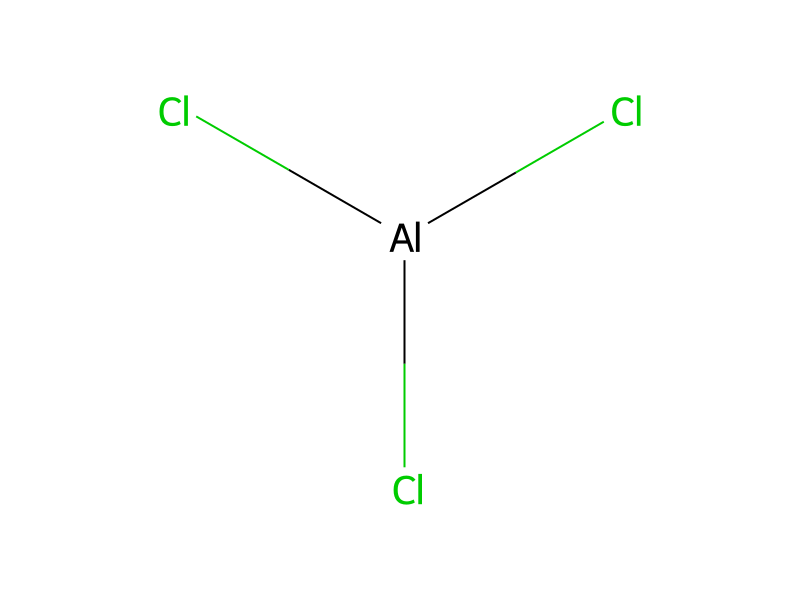
基本情報
- 標準SMILES
[Cl][Al]([Cl])[Cl]- InChIKey
VSCWAEJMTAWNJL-UHFFFAOYSA-K- 分子式
- AlCl3
- 平均分子量
- 133.34 g/mol
- 単同位体質量
- 131.88809667
概要
Aluminum chloride, anhydrous appears as a white to gray powder with a pungent odor. Corrosive to tissue and toxic by ingestion.
名称と識別子
- 優先名称
- Aluminum Chloride
- IUPAC
- trichloroalumane
- 現地名
- 塩化アルミニウム(III)
- 英語名
- Aluminum chloride
- 分子式
- AlCl3
- 分子量
- 133.34
名称と別名
ALUMINUM CHLORIDEAluminium chlorideAluminum trichlorideAluminium trichloridetrichloroalumaneTrichloroaluminumAluminum chloride anhydrousPearsallAluminiumchloridTK FlockChlorure d'aluminiumAluminum chloride (1:3)
名称をさらに表示
塩化アルミニウム(III)アルミニウムトリクロリドトリクロロアルミニウム塩化アルミニウム三塩化アルミニウム化アルミニウム無水塩化アルミニウムポリ塩化アルミニウム溶液塩化アルミニウム(Ⅲ)塩化アルミニウム(無水)塩化アルミニウム ANHYDROUS,SUBLIMED,≥98%塩化アルミニウム PURISS. P.A.,ANHYDROUS,CRYSTALLIZED,≥99.0% (AT)塩化アルミニウム(Ⅲ)〔無水〕塩化アルミニウム(III)(無水)塩化アルミニウム, 無水, POWDER塩化アルミニウム, 99.9%塩化アルミニウム, 無水, GRANULAR塩化アルミニウム, 無水/ 98+%アルミニウム標準液、AAS用塩化アルミニウム 溶液AlCl3ALUMINIUM CLORIDEALUMINUM(III) CHLORIDE
Alluminio(cloruro di)Caswell No. 029Aluminium, (chlorure d')Aluminum chloride, anhydrousAluminum chloride (anhydrous)aluminium(III) chlorideAluminum, (chlorure d')trichloridoaluminium
データベース識別子
- CAS
7446-70-0- PubChem CID
- 24012
- DTXSID
DTXSID6029674- ChEMBL
CHEMBL3833314、CHEMBL3833401- ChEBI
CHEBI:30114- EC Number
- 231-208-1、944-402-2
物性
構造計算による物性
- 極性表面積
- 0 Ų
- 水素結合供与体数
- 0
- 水素結合受容体数
- 0
- 回転可能結合数
- 0
- 重原子数
- 4
- 形式電荷
- 0
- 複雑度
- 8
実験および物理化学的性質
Chemical Classes
Metals -> Metals, Inorganic Compounds
Corrosives
CosmeticsDeodorant; Antiperspirant; Astringent
SpringerMaterials Propertiespseudobinary system
OdorSTRONG ODOR OF HYDROGEN CHLORIDE
Density
2.44 at 77 °F (USCG, 1999) - Denser than water; will sink
1.28 (USCG, 1999) - Denser than water; will sink
2.48
2.44 g/cm³
2.44 @25 °C
Color/Form
White when pure; ordinarily gray or yellow to greenish
White, hexagonal crystals or powder
White or colorless hexagonal deliquescent or moisture sensitive plates
Solubility
Water reactive
Soluble in benzene, carbon tetrachloride, chloroform.
Freely soluble in many organic solvents, such as benzophenone, nitrobenzene.
Solubility in water: reaction
Boiling Point
230 °F at 760 mmHg (USCG, 1999)
182.7 °C at 752 mm Hg /Sublimation temperature/
180 °C @760 [mm Hg]
Melting Point
381 °F (USCG, 1999)
-30 °F (USCG, 1999)
192.6 °C
MP: 190 °C at 2.5 atmospheres, sublimes readily at 178 °C /Aluminum chloride anhydrous/
MP: decomposes /Aluminum chloride hydrate/
192.6 °C
Odor ThresholdGives water a bitter astringent taste, with perception threshold at a concentration of 0.1 mg/L; odor perception threshold is 0.5 mg/L (calculating on the aluminum ion).
Vapor Pressure
1 mm Hg at 100.0 °C
1 [mm Hg] @100 °C
Physical Description
Aluminum chloride, anhydrous appears as a white to gray powder with a pungent odor. Corrosive to tissue and toxic by ingestion.
Aluminum chloride, solution appears as a straw-colored liquid. Denser than water. Contact may cause severe irritation to skin, eyes, and mucous membranes. May be toxic by ingestion.
Liquid; CBI; Large Crystals; Other Solid; Dry Powder
White crystals or powder with strong odor of hydrogen chloride; [HSDB] Pure material is deliquescent solid. Commercially available as anhydrous, the hexahydrate and as 16.5%, 28%, and 80% solutions; [CHEMINFO]
COLOURLESS-TO-WHITE POWDER. TURNS GREY-TO-YELLOW ON EXPOSURE TO MOISTURE.
物理化学的性質
- 融点
- 194 °C · 194 °C
- 沸点
- 180 °C · 180°C
- 比重(密度)
- 2.44 · 2.44
- 蒸気圧
- 1 mm · 1 mm Hg ( 100 °C)
- 闪点
- 88 °C · 88 °C
- 貯蔵温度
- 30 °C · Store below +30°C.
- 溶解性
- 2 O: · H2O: 可溶
- 外見
- 粉
- 色
- 黄色から灰色
- 比重
- 2.44 · 2.44
- PH
- 2.4 · 2.4 (100g/l, H2O, 20℃)
- 臭い (Odor)
- 湿った空気にさらされると検出可能な塩化水素臭
- 水溶解度
- 反応する
- 比熱容量
- 0.68 J/ · Cp(crystal): 0.68 J/(g·K), at 25℃
- Merck
- 14 · 14,337
- 晶系
- 単斜
- 空间群
- 2 · C2/m
- 晶格常数
- 30.6151 · a/nmb/nmc/nmα/oβ/oγ/oV/nm30.6151.0230.59190108.25900.3534
- 安定性
- 安定ですが、水と激しく反応します。長期間保管すると圧力が上昇する可能性があるため、定期的に容器を空にしてください。アルコールやその他のさまざまな物質との互換性はありません (完全なリストについては、完全な MSDS シートを参照してください)。
- 化粧品成分の機能
- 制汗剤デオドラント収斂性
- InChI
- 1S/Al.3ClH/h;3*1H/q+3;;;/p-3
- InChIKey
- VSCWAEJMTAWNJL-UHFFFAOYSA-K
- SMILES
- Cl[Al](Cl)Cl
- CAS データベース
- 7446 · 7446-70-0(CAS DataBase Reference)
- NISTの化学物質情報
- Aluminum trichloride(7446-70-0)
- EPAの化学物質情報
- Aluminum chloride (7446-70-0)
化学的性質
化学的特性アルミニウム塩化物は化学式AlCl3で表される無機化合物ですこの物質は産業や科学研究において幅広く利用されており特に触媒としての用途が知られていますアルミニウム塩化物は固体状態では白い粉末または黄色がかった色をしており水やアルコールなどの溶媒に対する溶解性を持ちます
化学的特性Aluminum chloride is a noncombustible but highly reactive whitish-gray, yellow, or green powder or liquid. Strong, acidic, irritating odor like hydrochloric acid.The vapor consists of double molecules Al2Cl6 . Soluble in water.
化学性质180℃付近から昇華,潮解性
安全と法規制
GHS分類
GHS Classification
Danger
H314: Causes severe skin burns and eye damage [Danger Skin corrosion/irritation]
P260, P264, P280, P301+P330+P331, P302+P361+P354, P304+P340, P305+P354+P338, P316, P321, P363, P405, and P501 (click each P-code to see the statement)
Danger
H290 (28.1%): May be corrosive to metals [Warning Corrosive to Metals]
P234, P260, P264, P264+P265, P280, P301+P330+P331, P302+P361+P354, P304+P340, P305+P354+P338, P316, P317, P321, P363, P390, P405, P406, and P501 (click each P-code to see the statement)
危険有害性情報
Hazards IdentificationWater-reactive material (WR)
Regulatory Information
Chemical: Aluminium chloride (AlCl3)
Commission Regulation (EC) No 2229/2004
Aluminum chloride (AlCl3) is listed on the EPA's Chemical Data Reporting (CDR) system. Manufacturers and importers of Aluminum chloride (AlCl3) are required to report information about their production and use of this chemical to the EPA under the Toxic Substances Control Act (TSCA). (40 eCFR Part 711)
Status: Active Update: 29-11-2022 https://echa.europa.eu/registration-dossier/-/registered-dossier/15901
Aluminium chloride anhydrous: Does not have an individual approval but may be used under an appropriate group standard
The New Jersey Worker and Community Right to Know Act requires public and private employers to provide information about hazardous substances at their workplaces. (N.J.S.A. 34:5A-1 et. seq.)
Other Safety InformationEvaluation - Use of aluminium in antiperspirants
DOT Label
Corrosive
Corrosive
Fire Hazards
Behavior in Fire: Reacts violently with water used in extinguishing adjacent fires (USCG, 1999)
Special Hazards of Combustion Products: At elevated temperatures, the material will decompose, producing hydrogen chloride. (USCG, 1999)
· Non-combustible, substance itself does not burn but may decompose upon heating to produce corrosive and/or toxic fumes.
· EXCEPT FOR ACETIC ANHYDRIDE (UN1715), THAT IS FLAMMABLE, some of these materials may burn, but none ignite readily.
Not combustible. Gives off irritating or toxic fumes (or gases) in a fire.
Fire Potential
Certain polymerization catalysts, such as aluminum alkyls, react & burn violently on contact with water. /Aluminum alkyls/
Aluminum alkyls are organic aluminum compounds that are highly reactive and dangerous because of spontaneous burning in air. /Aluminum alkyls/
Prophoric material in flammable solvent. Vapors are heavier than air & may travel to a source of ignition & flash back. /Aluminum alkyls/
Health Hazards
Contact with the skin or eyes in the presence of moisture causes thermal and acid burns. (USCG, 1999)
The material is corrosive and contact with the skin, eyes or respiratory tract may cause sever skin irritation and burns. (USCG, 1999)
· TOXIC and/or CORROSIVE; inhalation, ingestion or skin contact with material may cause severe injury or death.
· CORROSIVE and/or TOXIC; inhalation, ingestion or contact (skin, eyes) with vapors, dusts or substance may cause severe injury, burns or death.
Hazards Summary
Hydrogen chloride gas and hydrochloric acid released upon contact of Al-Cl3 with moisture; Corrosive to the eyes, skin, and respiratory tract; Inhalation of dust or released HCl can cause acute pulmonary edema; [CHEMINFO] Occupational asthma confirmed by specific challenge testing in a foundry worker; [Malo] Fumes in moist air (forms a large amount of hydrogen chloride gas). Reacts with active metals in the presence of moisture to produce hydrogen and HCl gases. Contact with the anhydrous substance causes thermal and acid burns. [CAMEO] See Aluminum.
DOT ID and Guide
2581 154
1726 137
FDA Requirements
Drug products containing certain active ingredients offered over-the-counter (OTC) for certain uses. A number of active ingredients have been present in OTC drug products for various uses, as described below. However, based on evidence currently available, there are inadequate data to establish general recognition of the safety and effectiveness of these ingredients for the specified uses: Aluminum chloride is included in antiperspirant drug products.
Reactive Group
Acids, Strong Non-oxidizing
Acids, Strong Non-oxidizing
EC ClassificationSymbol: C; R: 34; S: (1/2)-7/8-28-45
安全と保護具
Fire Fighting
Excerpt from ERG Guide 137 [Substances - Water-Reactive - Corrosive]:
Excerpt from ERG Guide 154 [Substances - Toxic and/or Corrosive (Non-Combustible)]:
NO water, foam, hydrous agents. In case of fire in the surroundings, use appropriate extinguishing media.
First Aid Measures
Fresh air, rest. Half-upright position. Refer for medical attention.
Remove contaminated clothes. Rinse skin with plenty of water or shower. Refer for medical attention .
First rinse with plenty of water for several minutes (remove contact lenses if easily possible), then refer for medical attention.
Rinse mouth. Do NOT induce vomiting. Refer for medical attention .
Accidental Release Measures
· CALL 911. Then call emergency response telephone number on shipping paper. If shipping paper not available or no answer, refer to appropriate telephone number listed on the inside back cover.
· ELIMINATE all ignition sources (no smoking, flares, sparks or flames) from immediate area.
· CALL 911. Then call emergency response telephone number on shipping paper. If shipping paper not available or no answer, refer to appropriate telephone number listed on the inside back cover.
· Do not touch damaged containers or spilled material unless wearing appropriate protective clothing.
First Aid
INGESTION: if victim is conscious have him drink water or milk. Do NOT induce vomiting.
Call for medical aid.
General First Aid:
General First Aid:
Safe StorageSeparated from food and feedstuffs. Dry. Well closed. Store in an area without drain or sewer access.
Exposure Control and Personal Protection
· Wear positive pressure self-contained breathing apparatus (SCBA).
· Wear positive pressure self-contained breathing apparatus (SCBA).
TIH (Toxic Inhalation Hazard) - Term used to describe gases and volatile liquids that are toxic when inhaled. Some are TIH materials themselves, e.g., chlorine, and some release TIH gases when spilled in water, e.g., chlorosilanes. [ERG 2016].
Fire Fighting Procedures
If material on fire or involved in fire: Extinguish fire using agent suitable for type of surrounding fire. (Material itself does not burn or burns with difficulty.) Use "alcohol" foam, dry chemical or carbon dioxide. Keep run-off water out of sewers and water sources.
DO NOT use water. Violent reaction may result. Extinguish fire using agent suitable, for surrounding fire. Extinguish adjacent fires with dry chemical carbon dioxide, or foam. Use water spray to keep fire-exposed containers cool.
Stop flow of liquid before extinguishing fire. Use dry chemical or carbon dioxide. DO NOT use water as straight stream directly on spilled material. Water fog can be used to control fire. DO NOT use halogenated extinguishing agents on spilled material. Violent reaction may result. Use water spray to keep fire-exposed containers cool. Fight fire from protected location or maximum possible distance. /Aluminum Alkyls/
Storage Conditions
Always keep container closed, dry. Store in a noncombustible, nonsprinklered building away from all combustible material. Isolate from strong acids.
Keep tightly closed and protected from moisture.
Extremely reactive with air, moisture and compounds containing active hydrogen and therefore must be kept under a blanket of inert gas. /Aluminum alkyls/
In general, materials ... toxic as stored or which can decompose into toxic components ... Should be stored in cool ... ventilated place, out of ... sun, away from ... fire hazard ... be periodically inspected and monitored. Incompatible materials should be isolated ...
For more Storage Conditions (Complete) data for ALUMINUM CHLORIDE (7 total), please visit the HSDB record page.
Cleanup Methods
Environmental considerations: Land spill: Cover solids with a plastic sheet to prevent dissolving in rain or fire fighting water. Neutralize with agricultural lime (CaO), crushed limestone (CaCO3) or sodium bicarbonate (NaHCO3).
Environmental considerations: Water spill: Remove trapped material with suction hoses.
Nonfire Spill Response
Excerpt from ERG Guide 137 [Substances - Water-Reactive - Corrosive]:
Excerpt from ERG Guide 154 [Substances - Toxic and/or Corrosive (Non-Combustible)]:
Disposal Methods
Aluminum compounds are treated under anhydrous conditions to prevent violent reactions, recover solvent, and form Al compounds suitable for landfill by reaction with anhydrous hydrolysis agent, eg calcium hydroxide. /Aluminum compounds/
SRP: The most favorable course of action is to use an alternative chemical product with less inherent propensity for occupational exposure or environmental contamination. Recycle any unused portion of the material for its approved use or return it to the manufacturer or supplier. Ultimate disposal of the chemical must consider: the material's impact on air quality; potential migration in soil or water; effects on animal, aquatic, and plant life; and conformance with environmental and public health regulations.
Cover any spills with sufficient amounts of sodium bicarbonate. Remove the mixture into a container such as a fiber drum, plastic bag or carton box for easy disposal in an incinerator, and dispose by burning in a furnace.
Spillage Disposal
Personal protection: particulate filter respirator adapted to the airborne concentration of the substance. Do NOT let this chemical enter the environment. Sweep spilled substance into sealable containers. Carefully collect remainder. Then store and dispose of according to local regulations.
毒性情報
Treatment
EYES: irrigate opened eyes for several minutes under running water. INGESTION: do not induce vomiting. Rinse mouth with water (never give anything by mouth to an unconscious person). Seek immediate medical advice. SKIN: should be treated immediately by rinsing the affected parts in cold running water for at least 15 minutes, followed by thorough washing with soap and water. If necessary, the person should shower and change contaminated clothing and shoes, and then must seek medical attention. INHALATION: supply fresh air. If required provide artificial respiration.
Interactions
The effect of di- and trivalent iron on the intestinal absorption of aluminum was studied in an in situ perfusion system of rat small intestine in combination with systemic and portal blood sampling. The small intestine of female Wistar rats (6 animals/group) was perfused with media containing 10.0, 15.0, 20.0, and 25.0 mmol/l aluminum as aluminum chloride hexahydrate, with or without 5 mmol/l ferrous chloride tetrahydrate (FeCl2.4H2O) or ferric chloride hexahydrate for 60 min. The disappearance of aluminum or iron from the perfusion medium, which is a measure for uptake from the intestinal lumen, was calculated. After perfusion, samples of small intestine were collected. Control tissue samples were taken from a rat perfused with saline for 60 min and from a nonperfused rat. In the rats perfused with aluminum and/or iron there was no morphological damage to the intestinal wall compared with the saline and nonperfused controls. It was shown that iron(II) enhanced the uptake of aluminum from about 30 min of perfusion onward, with all concentrations of aluminum perfusion media tested. Significant increases were reached after 60 min of perfusion with 10, 15, and 25 mmol aluminum/l, except for the 20 mmol Aluminum/l. Iron(III) did not affect aluminum disappearance at any point during perfusion. Aluminum appeared after the 60 min perfusion period in both systemic and portal blood. Both iron(II) and iron(III) were absorbed after 60 min perfusion, with the divalent iron being more extensively absorbed. The rise of the aluminum level in portal blood was slightly higher than that in systemic blood suggesting a possible liver trapping of aluminum before entering the peripheral circulation. Iron(II) reduced the appearance of Aluminum in both systemic and portal blood after 60 min perfusion, at all aluminum perfusion concentrations used. Iron(III) did not affect aluminum absorption during 60 min perfusion for all concentrations of aluminum perfusion media. /Aluminum chloride hexahydrate/
Four factorially arranged expt of 7 wk duration were performed with weanling Sprague-Dawley male rats. The variables in each expt were, in ug/g fresh diet, boron supplements of 0 and 3 ug/g; aluminum (as aluminum chloride) supplements of 0 and 1000 ug/g, and magnesium supplements of 100 and 400 ug/g (expt 1 and 4), or 100, 200, and 400 ug/g (expt 2 and 3). All supplements were added as dry mixes to the diet. In expt 1 and 2, 20 ug manganese/g was supplemented; in expt 3 and 4 the supplement was 50 ug/g. High dietary aluminum seemed most toxic when dietary magnesium was low enough to cause a marked growth depression 100 ug/g. High dietary aluminum elevated the spleen wt/body wt and liver wt/body wt ratios in magnesium deficient, but not in magnesium adequate rats. High dietary aluminum depressed the concn of magnesium in bone more markedly in magnesium deficient than adequate rats. On the other hand, aluminum seemed most toxic when dietary boron was not low. Aluminum more markedly depressed growth in boron supplemented than boron deprived rats. In the boron deprived rats fed 400 ug magnesium/g of diet, high dietary aluminum (1000 ug/g) apparently was beneficial; in expt 2 and 3, hematocrit, and hemoglobin were actually normalized by high dietary aluminum. Plasma magnesium was significantly depressed by high dietary aluminum when the magnesium supplement was 50 ug/g diet but not when it was 20 ug/g diet. However, growth was more markedly depressed by high dietary aluminum in boron supplemented rats when the magnesium supplement was 20 rather than 50 ug/g diet.
Male Sprague Dawley rat cerebral cortical slices were exposed to 0 (control), 10, 20, 50, 100 or 250 uM aluminum trichloride (aluminum chloride before addition of 20 ul 2-chloroadenosine (0-200 uM), isoproterenol (0 to 10 uM), or forskolin (0 to 10 uM). Aluminum chloride had no effect on the cyclic adenosine monophosphate concn in the absence of drugs that stimulate the synthesis of cyclic adenosin monophosphate. 2-Chloroadenosine (25 to 200 uM) significantly stimulated the synthesis of cyclic adenosine monophosphate in a concn dependent manner, and Aluminum chloride significantly potentiated this response at 50 and 100 uM 2-chloroadenosine. This effect of aluminum chloride was dependent on preexposure (for 30 min) of the slices to aluminum chloride before addition of the agonist. The potentiation by aluminum chloride of the 2-chloroadenosine induced incr in cyclic adenosine monophosphate level was concn dependent, with significant enhancement by 100 uM (142% of control) and 250 uM (150% of control) aluminum chloride. Lower concn of aluminum chloride had no significant effect on the production of cyclic adenosine monophosphate stimulated by 2-chloroadenosine. Aluminum chloride also potentiated the isoproterenol induced incr in cyclic adenosine monophosphate production. Forskolin induced production of cyclic adenosine monophosphate was unaltered by the presence of aluminum chloride.
Plants of beech (Fagus sylvatica) were grown on nutrient solutions with various concn of phosphate (0, 0.01, 0.1, and 1.0 mM) and aluminum (0, 0.1, and 1.0 mM) and at low pH (usually 4.2). About half of the supplied aluminum occurred as Al(+3) under these conditions. The vacuolar inorganic phosphate concn of excised fine roots were determined by (31)phosphorus NMR. In roots of plants treated with 0.1 mM aluminum trichloride, the vacuolar inorganic phosphate concn did not change over a period of 21 days. In contrast, plants treated with 1.0 mM aluminum chloride for about 1 day (18 to 29 hr) generally contained somewhat higher vacuolar inorganic phosphate concn in the roots than did control plants. Longer treatment (3 to 21 days) at the high aluminum level caused a continuously decr vacuolar inorganic phosphate concn in the root (22% of control after 21 days). In the presence of 1.0 mM aluminum chloride, plants with different phosphorus status showed about the same relative decr of vacuolar inorganic phosphate concn. After transfer of control plants to a phosphorus and aluminum free nutrient solution, vacuolar inorganic phosphate concn of roots decr in a manner similar to that for the 1.0 mM aluminum treatment.
For more Interactions (Complete) data for ALUMINUM CHLORIDE (7 total), please visit the HSDB record page.
Health Effects
Aluminum targets the nervous system and causes decreased nervous system performance and is associated with altered function of the blood-brain barrier. The accumulation of aluminum in the body may cause bone or brain diseases. High levels of aluminum have been linked to Alzheimer's disease. A small percentage of people are allergic to aluminium and experience contact dermatitis, digestive disorders, vomiting or other symptoms upon contact or ingestion of products containing aluminium. (L739, L740)
Ecotoxicity Values
LC50 Polychaete Neanthes arenaceodentata >2.0 mg/L/96 hr; static, 20-25 °C, pH 7.6-8.0
LC50 Polychaete Ctenodrilus serratus 0.48 mg/L/96 hr; static, pH 7.6-8.0
LC50 Daphnia magna (Water flea, age: <24 hr) 3.9 mg/L/48 hr; static, 17-19 °C, hardness: 44-53 mg CaCO3/L, pH 7.4-8.2
LC50 Copepod Netocra spinipes (adult) >10 mg/L/96 hr (95% confidence interval: 7.5-13.4 mg/L); static, 20 °C, 7% salinity, pH 8.0
For more Ecotoxicity Values (Complete) data for ALUMINUM CHLORIDE (15 total), please visit the HSDB record page.
Adverse EffectsDermatotoxin - Skin burns.
Exposure RoutesOral (L739) ; inhalation (L739)
Toxicity Summary
The main target organs of aluminum are the central nervous system and bone. Aluminum binds with dietary phosphorus and impairs gastrointestinal absorption of phosphorus. The decreased phosphate body burden results in osteomalacia (softening of the bones due to defective bone mineralization) and rickets. Aluminum's neurotoxicity is believed to involve several mechanisms. Changes in cytoskeletal protein functions as a results of altered phosphorylation, proteolysis, transport, and synthesis are believed to be one cause. Aluminum may induce neurobehavioral effects by affecting permeability of the blood-brain barrier, cholinergic activity, signal transduction pathways, lipid peroxidation, and impair neuronal glutamate nitric oxide-cyclic GMP pathway, as well as interfere with metabolism of essential trace elements because of similar coordination chemistries and consequent competitive interactions. It has been suggested that aluminum's interaction with estrogen receptors increases the expression of estrogen-related genes and thereby contributes to the progression of breast cancer (A235), but studies have not been able to establish a clear link between aluminum and increased risk of breast cancer (A15468). Certain aluminum salts induce immune responses by activating inflammasomes. (L739, A235, A236)
Ecotoxicity Excerpts
/AQUATIC SPECIES/ The effects of aluminum trichloride contamination of the rearing water on catfish composition were investigated. Young catfish were exposed to the test substance at concentrations of 10, 50, and 100 ppm (10, 50, 100 mg/L, respectively) for 6 weeks. The rearing water was replaced weekly; control fish were kept in water free of supplements. Mortality and stress signs were recorded. At the end of the study, surviving fish were sacrificed, autopsied and analyzed chemically for moisture, ash content, total protein content, ether extract, and mineral content; gross energy was determined by bomb calorimetry. Contamination with aluminum trichloride caused increased mortality (the corrected mortality was 0.12, 0.33, and 0.70 in the low, mid, and high dose group, respectively). Pathology revealed hemorrhages and congestions of the gastrointestinal tract and of the kidneys. Protein content was decreased showing a trend to dose-response, however, this decrease was not statistically significant. Ether extract was increased in treated fish; according to the authors, this change was considered to be related to the pollutant level. Generally, gross energy was slightly increased in treated fish. Muscular contents of ash, calcium, magnesium, and lead were significantly increased; contents of sodium, potassium, and phosphorus was decreased.
/AQUATIC SPECIES/ Rainbow trout (Salmo gairdneri) fitted with dorsal aortic cannulae were exposed in a flow-through soft water system to three acidities (pH 5.2, 4.8, or 4.4) and two concentrations of calcium (45 or 410 uequiv/L), in the presence (105 ug/L) or absence of aluminum in the form of aluminum chloride. Mortalities were recorded and blood was sampled for respiratory gases, ions, metabolites, and hematology before and at 4, 18, 28, 42, and 66 hr. Aluminum was most toxic to cannulated rainbow trout at pH 5.2 and least toxic at pH 4.4. Higher water calcium concentrations reduced mortality owing to aluminum at pH 5.2 and 4.8, but had no significant effect at pH 4.4, where mortality was 0-35% in the presence or absence of aluminum. Most fish deaths occurred between 42 and 66 hr, with the exception of the aluminum exposure at pH 5.2, low calcium treatment, where 4 of 10 fish died at about 30 hr. Two toxic mechanisms of aluminum and acidity were seen: ionoregulatory toxicity, which was caused by aluminum at pH 5.2 and 4.8 and by acidity at pH 4.4, and respiratory toxicity, which was caused solely by aluminum, and was greatest at higher pH. Ionoregulatory toxicity involved decreases in plasma sodium + and chlorine -, red cell swelling, and hemoconcentration. Respiratory toxicity involved reduced blood oxygen tension, elevated blood carbon dioxide tension, and increases in blood lactate.
/AQUATIC SPECIES/ 2, 4, and 8 ppm /aluminum chloride hexahydrate/ was lethal for 0, 20, and 20% /respectively/, of carps /(Cyprinus carpio)/ after 48 hr. After 24 hr: 4 ppm lethal for 10%; 8 ppm lethal for 30%.
/AQUATIC SPECIES/ Fathead minnow (Pimephales promelas) 1 day post hatch larvae, 12 day post hatch larvae, and 4 wk post hatch juveniles were exposed to combinations of acid and inorganic aluminum (aluminum, as aluminum trichloride) for 96 hr in the laboratory. Life stages were exposed, under flow through conditions, to 4 nominal pH levels: 4.5, 5.5, 6.5 and 7.5 (control), and 5 nominal aluminum concentrations: 0 (control) 50, 100, 200, and 400 ug/L in fresh water with a total hardness of 20 to 24 mg/L as calcium chloride Theoretical speciation of the measured total dissolved monomeric aluminum was performed in order to estimate the toxic forms of aluminum. The ranking of life stage sensitivities to acid alone was 1 day larvae, most sensitive, followed by 12 day larvae and juveniles. At pH 4.5, all three stages exhibited 100% mortality in all aluminum treatments and controls. At pH 4.5 and 400 ug/L nominal aluminum (total dissolved monomeric aluminum= 384 ug/L), 12 day larvae experienced 95.5% mortality after only 6 hr exposure. At pH 5.5, 90 to 100% mortality occurred in all but the 50 ug/L aluminum treatment and the no aluminum control. At pH 5.5, hydroxoid species of aluminum were the predominate forms of the total dissolved monomeric aluminum. At pH 6.5 and 7.5, aluminum was not toxic to the 1 day larvae and juveniles, but the mortality of 12 day larvae exposed to aluminum (predominately hydroxy species) ranged from 18 to 68% with no clear dose response. Addition of inorganic aluminum to the 4 pH conditions significantly increased mortality of all 3 life stages (P<0.001).
For more Ecotoxicity Excerpts (Complete) data for ALUMINUM CHLORIDE (10 total), please visit the HSDB record page.
Signs and Symptoms
Burning sensation. Cough. Laboured breathing. Shortness of breath. Sore throat.
Skin burns.
Severe deep burns.
Abdominal pain. Burning sensation. Shock or collapse.
Inhalating aluminum dust causes coughing and abnormal chest X-rays. A small percentage of people are allergic to aluminium and experience contact dermatitis, digestive disorders, vomiting or other symptoms upon contact or ingestion of products containing aluminium. (L739, L740)
ICSC Environmental DataThe substance is harmful to aquatic organisms.
Medical SurveillanceEmployment and periodic physical examinations should give special consideration to the skin, eyes and lungs. Lung function should be followed.
Human Toxicity Excerpts
/HUMAN EXPOSURE STUDIES/ ... Patch tests with standard antigens and aluminum compounds and histopathologic and ultrastructural studies were performed on 10 patients with persistent subcutaneous nodules on the upper part of their arms after injection of aluminum-adsorbed dust and/or pollen extracts. The nodules appeared 1 month to 6.5 yr after injections. The results of patch tests with 2% aluminum chloride were positive in 5 patients. Histopathologic examination revealed two different patterns: some biopsy specimens (from lesions of <9 months' duration) showed a pure foreign body histiocytic reaction characterized by extracellular amorphous dermal basophilic deposits with a histiocytic-macrophagic reaction; others showed a delayed hypersensitivity granulomatous reaction in association with an histiocytic foreign body response. The lesions were characterized by a unifocal or multifocal unencapsulated granulomatous reaction in the deep dermis and/or subcutaneous tissue. Eosinophilic necrotic areas surrounded by dense fibrous bands and a massive inflammatory infiltrate (lymphoid follicles, large histiocytic cells, abundant eosinophils, and some plasma cells) were observed. A granular basophilic material in extracellular spaces and within the cytoplasm of some histiocytes was also noted. Electron microscopic studies revealed intracytoplasmic and extracellular deposits of a fibrillar electron-dense material.
/SIGNS AND SYMPTOMS/ .../It/ is caustic and irritating to eyes... but in only 1 out of 5 instances of industrial corneal burns has healing been delayed beyond two days...
/SIGNS AND SYMPTOMS/ /Anhydrous aluminum chloride is a/ powerful irritant to tissue; moderately toxic by ingestion.
/SIGNS AND SYMPTOMS/ /Aluminum chloride (anhydrous)/ causes severe eye and skin burns. Irritating to skin, eye, and respiratory system.
For more Human Toxicity Excerpts (Complete) data for ALUMINUM CHLORIDE (13 total), please visit the HSDB record page.
法規制情報
FDA Requirements
Drug products containing certain active ingredients offered over-the-counter (OTC) for certain uses. A number of active ingredients have been present in OTC drug products for various uses, as described below. However, based on evidence currently available, there are inadequate data to establish general recognition of the safety and effectiveness of these ingredients for the specified uses: Aluminum chloride is included in antiperspirant drug products.
RCRA RequirementsD003; A solid waste containing Aluminum chloride may become characterized as a hazardous waste when subjected to testing for reactivity as stipulated in 40 CFR 261.23, and if so characterized, must be managed as a hazardous waste.
FIFRA Requirements
As the federal pesticide law FIFRA directs, EPA is conducting a comprehensive review of older pesticides to consider their health and environmental effects and make decisions about their future use. Under this pesticide reregistration program, EPA examines health and safety data for pesticide active ingredients initially registered before November 1, 1984, and determines whether they are eligible for reregistration. In addition, all pesticides must meet the new safety standard of the Food Quality Protection Act of 1996. Pesticides for which EPA had not issued Registration Standards prior to the effective date of FIFRA '88 were divided into three lists based upon their potential for human exposure and other factors, with List B containing pesticides of greater concern and List D pesticides of less concern. Aluminum chloride is found on List D. Case No: 4007; Pesticide type: herbicide, antimicrobial; Case Status: No products containing the pesticide are actively registered. Therefore ... "cancelled." Under FIFRA, pesticide producers may voluntarily cancel their registered products. EPA also may cancel pesticide registrations if registrants fail to pay required fees or make/meet certain reregistration commitments, or if EPA reaches findings of unreasonable adverse effects.; Active ingredient (AI): aluminum chloride; AI Status: The active ingredient is no longer contained in any registered products ... "cancelled."
State Drinking Water Standards(CA) CALIFORNIA 1000 ug/l /Aluminum/
DHS Chemicals of Interest (COI)
Aluminum chloride, anhydrous
A Commercial Grade
A Placarded Amount
Chemical or material that can be mixed with readily available materials.
State Drinking Water Guidelines
(AZ) ARIZONA 73 ug/l /Aluminum/
(CA) CALIFORNIA 200 ug/l /Aluminum/
(ME) MAINE 1430 ug/l /Aluminum/
Federal Drinking Water GuidelinesEPA 50-200 ug/l /Aluminum/
安全データ
- wgk
- 1
- tsca
- TSCA listed
- rtecs
- BD0525000
- ridadr
- UN 2581 8/PG III (ALUMINIUM CHLORIDE SOLUTION)
- 毒性
- LD50 oral (rat) 3730 mg/kg LD50 skin (rabbit) >2 g/kg TLV-TWA (ACGIH) 2 mg(Al)/m3
- hs_code
- 28273200
- risk_code
- 36/38-34-62-51/53-48/23/24-40-23/24/25-14-48/25-48/20-52-36/37/38-52/53-48/23/24/25-60
- 化審法
- (1)-12
- 安衛法
- 57,57-2
- hazard_code
- C,Xi,T
- safety_code
- 26-45-28-7/8-36/37/39-61-23-28A-53
- hazard_class
- 8
- packing_group
- II
- Hazard Classifications
- Eye Dam. 1Skin Corr. 1B
- ストレージクラス
- 8A - Combustible corrosive hazardous materials
- 有毒物質データの
- 7446-70-0(Hazardous Substances Data)
化学と産業
薬理情報
ATC Code
D - Dermatologicals
QD - Dermatologicals
Protein BindingFollowing oral administration of 8.1 mg/kg of aluminum chloride, the fraction of plasma protein binding of aluminum was approximately 98 %.
PharmacodynamicsAluminum chloride is a hemostatic and antiperspirant agent.
Mechanism of Action
Aluminum chloride is commonly used topical antiperspirant. It is proposed that aluminum chloride works by causing an obstruction of the distal sweat gland ducts, where the metal ions precipitate with mucopolysaccharides, damaging epithelial cells along the lumen of the duct and forming a plug that blocks sweat output. Aluminum chloride is also an astringent that promotes hemostasis; it precipitates proteins on the superficial layer of mucosa and make it mechanically stronger. It creates superficial and local coagulation in minor hemorrhages.
Aluminum (10, 12.5, 17.5, 25 and 50 uM, as aluminum trichloride) inhibited yeast glucose-6-phosphate dehydrogenase (EC 1.1.1.49) by a pseudo-first-order reaction. The inhibition was proportional to the incubation time (10 to 60 sec) and the concn of aluminum. Aluminum was a better inhibitor when added to the buffered enzyme prior to the addition of glucose-6-phosphate or NADP+. When aluminum trichloride was added to the buffered mixture of enzyme and glucose-6-phosphate , more than 10 times aluminum trichloride was needed to observe a comparable inhibition. The inhibitory effect of aluminum chloride on glucose-6-phosphate dehydrogenase was negligible when aluminum chloride was premixed with NADP+. Double reciprocal plots gave a straight line with a k(inact) of 8.3/min and indicated the presence of a binding step prior to inhibition. The kinetic study showed that 1 mol of aluminum was bound per mol of enzyme subunit. A marked incr in sensitivity to aluminum was observed as the pH decr. An inhibitory effect of aluminum was predominant below pH 7.0, but above pH 8.0, aluminum did not significantly affect the reaction rate of glucose-6-phosphate dehydrogenase.
The effect of aluminum on intestinal calcium absorption was determined in male Sprague-Dawley rats using an everted intestinal sac technique. Bidirectional calcium flux in the duodena and ilea of normal rats was assessed by means of dual calcium isotopes. Addition of 2 uM aluminum (as aluminum chloride) to the buffer solution significantly inhibited net calcium absorption in the duodenum through suppression of mucosa-to-serosa flux. Serosa-to-mucosa calcium flux was not similarly influenced by aluminum. In the ileum, aluminum had no effect on any component of calcium flux. Aluminum did not induce any suppression of glucose transport in either the duodenum or ileum, suggesting that the effect on calcium transport is relatively specific.
ATP pools extracted from the cyanobacterium Anabaena cylindrica, grown in the absence or presence of aluminum chloride were measured using the luciferin-luciferase assay. Addition of low concn of aluminum chloride (3.6-36 uM) incr the ATP pool 20-40% within 24 hr, the effect being more marked with time. When using the Tris-EDTA boiling technique for extraction of cellular ATP, the ATP from aluminum-exposed cells appeared more stable during the extraction than the ATP from untreated cells. The higher ATP pools in aluminum-exposed cells were also evident after dark treatment and addition of the phosphorylating inhibitors carbonylcyanide m-chlorophenylhydrazone and N,N'-dicyclohexylcarbodiimide. The formation of elevated ATP pools in cells exposed to aluminum was curtailed by high concn of cellular phosphate and postincubation at high pH (> 8).
Very few investigations have been made on the metabolism and mode of action of aluminum compounds for the reason that it is very poorly absorbed and of low toxicity. The existing evidence indicates that the small portion of aluminum ion that hydrolyzes combines with available phosphate, becomes insoluble and unabsorbed, and so is excreted along with the un-ionized portion. In high doses aluminum compounds have been shown to affect phosphorus metabolism of rats and mice. At lower levels (170 and 355 ppm aluminum as aluminum chloride) aluminum balance studies showed intake and fecal excretion of aluminum were higher at the higher dose, but urinary excretion and retention were not. In phosphorus balance studies made at 160 to 180 and 355 ppm in the diet, the higher dose lowered phosphorus retention, although phosphorus content of the liver and femur were not affected. Chronic and acute poisoning by aluminum chloride caused, on intraperitoneal administration of (32)H-labelled disodium hydrogen phosphate, decreased incorporation of (32)phosphorus in the phospholipids and nucleic acids of various rat tissues. Decreased adenosine triphosphate levels and a rise in the adenosine diphosphate level in plasma also occurred, indicating interference with tissue phosphorylation process.
For more Mechanism of Action (Complete) data for ALUMINUM CHLORIDE (10 total), please visit the HSDB record page.
Biological Half-LifeFollowing oral administration of 8.1 mg/kg of aluminum chloride, the half-life of aluminum was 5.29 ± 0.47 h.
Metabolism/Metabolites
In the small intestine, aluminum chloride is rapidly converted to insoluble poorly absorbed basic aluminum salts, consisting of a mixture of hydrated aluminum oxide, oxyaluminum hydroxide, various basic aluminum carbonates, and aluminum soaps.
Aluminum is poorly absorbed following either oral or inhalation exposure and is essentially not absorbed dermally. The bioavailability of aluminum is strongly influenced by the aluminum compound and the presence of dietary constituents which can complex with aluminum and enhance or inhibit its absorption. Aluminum binds to various ligands in the blood and distributes to every organ, with highest concentrations found in bone and lung tissues. In living organisms, aluminum is believed to exist in four different forms: as free ions, as low-molecular-weight complexes, as physically bound macromolecular complexes, and as covalently bound macromolecular complexes. Absorbed aluminum is excreted principally in the urine and, to a lesser extent, in the bile, while unabsorbed aluminum is excreted in the faeces. (L739)
MeSH Pharmacological ClassificationAgents that are put on the SKIN to reduce SWEATING or prevent excess sweating (HYPERHIDROSIS).
Absorption, Distribution and Excretion
It is reported that about 17-30 % of aluminum chloride formed from the reaction between orally ingested aluminum hydroxide and hydrochloric acid of the stomach is absorbed. In rabbits, administration of a single maximum safe oral dose aluminum chloride (333 mg Al/kg) resulted in aluminum absorption of 0.57 %. Aluminum chloride may be absorbed via dermal route, with the uptake increasing in the microgram range but with an upper limit.
Absorbed aluminum chloride is rapidly excreted by the kidneys in individuals with normal renal function. Aluminum chloride may be absorbed dermally.
Following oral administration of 8.1 mg/kg of aluminum chloride, the steady‐state volume of distribution of aluminum was 38.4 ± 6.4 mL/kg.
Following oral administration of 8.1 mg/kg of aluminum chloride, the clearance of aluminum was 8.87 ± 1.76 mL/(h*kg).
Rainbow trout (9 to 220 g) were individually placed in 1 liter chambers having aerated, fresh flowing water for 1 hr (control conditions, aluminum concentration= 0.033 mg/L, pH 4.61). They were then exposed to an aerated artificial medium (flow rate= 297 + or - 11 mL/min, pH= 5.4) containing 0.954 + or - 0.133 mg/L aluminum (as aluminum chloride) for up to 1 hr. There was no significant difference (p= 0.05) between episodic aluminum levels and episodic blank (no fish) aluminum levels, indicating that the flow rate through the chambers was sufficient to maintain aluminum levels such that absorption of aluminum from the apparatus was negligible. Fish were removed for tissue sampling after 5, 10, 20, 30, and 60 min exposure. Skin and blood showed no significant increase in aluminum content (p=0.05). Gill tissue episodic aluminum values were significantly higher (p=0.05)) than control levels at 30 and 60 min, having increased from 8 ug/g to 50 ug/g wet weight in 1 hr. Mucous aluminum content was significantly higher (p=0.05) than control values after 5 min of exposure increased to 4.5 mg/L from 0.2 mg/L. Mucous cells on the secondary lamellae showed discharged mucous globules on the gill surface after 1 hr of episodic exposure, a feature not shown by unexposed gill lamellae.
Aluminum hydroxide or oxide is slowly solubilized in the stomach and reacts with hydrochloric acid to form aluminum chloride and water. In addition to forming aluminum chloride, dihydroxyaluminum sodium carbonate and aluminum carbonate form carbon dioxide, and aluminum phosphate forms phosphoric acid. About 17-30% of the aluminum chloride formed is absorbed and is rapidly excreted by the kidneys in patients with normal renal functions. In the small intestine, aluminum chloride is rapidly converted to insoluble poorly absorbed basic aluminum salts which probably /include/ a mixture of hydrated aluminum oxide, oxyaluminum hydroxide, various basic aluminum carbonates, and aluminum soaps. Aluminum-containing antacids (except aluminum phosphate) also combine with dietary phosphate in the intestine forming insoluble, nonabsorbable aluminum phosphate which is excreted in the feces. If phosphate intake is limited in patients with normal renal function, aluminum antacids (except aluminum phosphate) decrease phosphate absorption and hypophosphatemia and hypophosphaturia occur; calcium absorption is increased. In vitro studies indicate that aluminum hydroxide binds bile salts with an affinity & capacity similar to that of cholestyramine; aluminum phosphate binds bile salts, but to a much lesser degree than does aluminum hydroxide. /Aluminum antacids/
用途と製造
Uses
Used as a catalyst and chemical intermediate; Aluminum chloride hexahydrate is used to preserve wood, to disinfect stables and slaughterhouses, to dye fabrics, to develop photos, to refine crude oil, and to manufacture parchment paper; It is used in deodorants and antiperspirants; [HSDB]
Use as a registered pesticide was cancelled; [HSDB]
Petroleum Production and Refining [Category: Industry]
The active ingredient is no longer contained in any registered products ... "cancelled."
For aluminum chloride (USEPA/OPP Pesticide Code: 013901) there are 0 labels match. /SRP: Not registered for current use in the U.S., but approved pesticide uses may change periodically and so federal, state and local authorities must be consulted for currently approved uses./
Suitable as an acid catalyst, especially in Friedel-Crafts type reactions; in cracking of petroleum; in manufacture of rubbers, lubricants. /Anhydrous/
Impurities
The main impurity is iron (0.05 wt % max or 0.01 wt % for resublimed product)
Impurities: ferric chloride; free aluminum; insolubles
IMPURITIES: FERRIC CHLORIDE, 0.08%; SILICON CHLORIDE, 0.02%; SODIUM CHLORIDE, 0.02%
U.S. Production
2023: 100,000,000 - <250,000,000 lb
(1972) 2.99X10+10 GRAMS
(1975) 2.45X10+10 GRAMS
(1984) 2.51X10+10 g /LIQUID, CRYSTAL & ANHYDROUS/
Consumption Patterns
35% as a catalyst for ethyl benzene; 16% as a catalyst for dyestuff intermediates; 9% as a catalyst for detergent alkylate; 8% as a catalyst for hydrocarbon resins; 5% as a catalyst for ethyl chloride; 27% in numerous other applications as a catalyst and chemical intermediate (1974)
Cosmetics and pharmaceuticals, 60%; misc, including pigments, roofings, specialty papers and photography, 40% (1980) /Hydrous Aluminum Chloride/
Detergent alkylate, 18%; ethylbenzene catalyst, 15%; hydrocarbon resins, 12%; titanium dioxide processing, 10%; dyestuff intermediate, 10%; misc (including cosmetic and pharmaceutical application, butyl rubber and polybutenes, ethyl chloride), 35% (1980) /Anhydrous Aluminum Chloride/
(1993) Alkylate detergents 2,200 ton, ethylbenzene 4,000 ton, hydrocarbon resins 3,900 ton, pharmaceuticals 4,000 ton, titanium dioxide 2,200 ton, miscellaneous 4,900 ton. /From table/
Consumer UsesSemiconductor and photovoltaic agent
Industry UsesProcessing aids not otherwise specified
Methods of Manufacturing
...From aluminum metal in heated stream of hydrochloric acid gas.
By reaction of bauxite with coke and chlorine at about 875 °C
... Anhydrous aluminum chloride is manufactured by the exothermic reaction of chlorine, Cl2, vapor with molten aluminum. The aluminum may be scarp, secondary ingot of varying purity, or prime ingot. Melting of additional metal feed, external cooling of the reactor, and regulation of the chlorine feed rate, control the reactor temperature between 600-750 °C. Chlorine is fed into the molten aluminum pool below the pool's surface. Aluminum chloride sublimes out of the pool and into a condensing vessel where the product solidifies on the condenser walls. ... The aluminum chloride grows into teardrop-shaped crystals which are periodically removed, crushed, screened, and packaged under a dry air or nitrogen atmosphere.
By reaction of purified gaseous chlorine with molten aluminum; by reaction of bauxite with coke and chlorine at approximately 875 °C.
In 1948 BASF commercialized the process of catalytic chlorination of gamma-alumina in a fluidized bed.
Formulations/Preparations
Aluminum chloride-99.8% /grade available/
Liquid aluminum chloride, 32 deg baume, 28% grade
Grade: Technical, CP; NF /National Formulary grade of chemical/. /hexahydrate/
Grade: Technical; reagent /anhydrous/
Household ProductsInformation on 1 consumer products that contain Aluminum chloride in the following categories is provided:
Use ClassificationCosmetics -> Deodorant; Antiperspirant; Astringent
General Manufacturing Information
Utilities
Aluminum chloride (AlCl3): ACTIVE
応用分野
解説塩化アルミニウム エンカアルミニウム.アルミニウムを塩素または塩化水素中で加熱すると得られる.無色の板状晶(通常は白色の固体).融点190 ℃(封管中2.5 atm).177.8 ℃ で昇華する.潮解性,揮発性があり,空気中では加水分解して塩化水素の白煙を生じる.水に易溶.水とはげしく反応して発熱する.水溶液は強酸性を示す.ほとんどすべての有機溶媒に可溶.昇華した気体は400 ℃ 以下では二量体で,800 ℃ 以上では単量体となる.多くの無機化合物や有機化合物とともに付加物を生成する.二量体および付加物をつくるのは,ほかから電子対を受け入れやすいためである.摂取,吸収すると毒性が強い.フリーデル-クラフツ反応や石油クラッキングの酸触媒,重合触媒,異性化触媒に用いられる.
用途高純度金属化合物。
用途有機合成原料(フリーデルクラフツ反応触媒)。
用途酸触媒、脱水素
用途有機合成原料。
使用A yellowish-white crystalline or granular powder made by passing chlorine gas over alumina in a heated state and collecting the product by sublimation. Aluminum chloride was occasionally used in gold and platinum toning baths.
一般的な説明Aluminum chloride may be manufactured by chlorination of liquid aluminum in ceramic lined reaction vessels at 600-700oC.
調製方法
合成方法アルミニウムを塩素または塩化水素気流中で加熱し,生成物を昇華させる
純化方法Sublime it several times in an all-glass system under nitrogen at 30-50mm pressure. It has also been sublimed in a stream of dry HCl and has been subjected to a preliminary sublimation through a section of granular aluminium metal [for manipulative details see Jensen J Am Chem Soc 79 1226 1957]. It fumes in moist air.
上流・下流製品情報
上流原料
下流製品
サプライヤー50 社
国药集团化学试剂有限公司86-21-63210123 · [email protected]
北京华美互利生物化工010-56205725 · [email protected]
梯希爱(上海)化成工业发展有限公司021-67121386 · [email protected]
上海阿拉丁生化科技股份有限公司400-6206333 13167063860 · [email protected]
T&W GROUP021-61551611 13296011611 · [email protected]
爱斯特(成都)生物制药股份有限公司+86-28-85122536 85324413 · [email protected]
南京兰亚化工贸易有限公司+86-25-8331-5620 · [email protected]
上海迈瑞尔生化科技有限公司4006356688 18621169109 · [email protected]
阿法埃莎(中国)化学有限公司400-6106006 · [email protected]
安耐吉化学&3A(安徽泽升科技股份有限公司)400-0056266 · [email protected]
石家庄斯迪亚诺精细化工有限公司0311-89250318 13582355795 · [email protected]
嘉兴市艾森化工有限公司0573-85285100 18627885956 · [email protected]
池州捷峰生物科技有限公司0566-8928158 · [email protected]
上海泰坦科技股份有限公司400-6009262 15618770481 · [email protected]
上海隆盛化工有限公司58099637 13585536065 · [email protected]
合肥天健化工有限公司551-65418679 15856988503;15837135945 · [email protected]
山东艺鸿化工有限公司15253143303 15269100373
山东西亚化学有限公司13355009207 13355009207 · [email protected]
玛雅试剂+86 (573) 82222445 (0)18006601000 452520369 · [email protected]
四川库利南科技有限公司400-1166-196 18981987031 · [email protected]
天津希恩思生化科技有限公司400 638 7771 · [email protected]
Connect Chemicals GmbH+49 2102 2077 19 · [email protected]
斯百全化学(上海)有限公司021-021-021-67601398-809-809-809 15221380277 · [email protected]
艾科试剂4008-755-333 18080918076 · [email protected]
上海思域化工科技有限公司86-21-34053660 · [email protected]
苏州思变化学技术有限公司0512-65617459 18915409046 · [email protected]
赛默飞世尔科技(中国)有限公司800-810-5118 · [email protected]
北京伊诺凯科技有限公司400-810-7969 010-59572699 · [email protected]
TCI AMERICA800-4238616 · [email protected]
TOKYO CHEMICAL INDUSTRY CO., LTD.03-36680489 · [email protected]
TCI Europe320-37350700 · [email protected]
北京环宇世纪化学科技有限公司hysj_bj.com
上海将来实业股份有限公司400-0066400 13621662912 · [email protected]
上海将来实业股份有限公司021-61552785 · [email protected]
HBCChem, Inc.+1-510-219-6317 · [email protected]
日照力德士化工有限公司010-51268198 · [email protected]
美岚实业(上海)有限公司021-58958189 · [email protected]
上海爱蝶实业有限公司021-58957966 18930537195 · [email protected]
成都零六生物科技有限公司400-1166-196 13458535857 · [email protected]
雷丁试剂0510-85629785 18013409632 · [email protected]
上海御略医药科技有限公司021-60345187 13671753212 · [email protected]
上海麦克林生化科技股份有限公司15221275939 15221275939 · [email protected]
杭州杰恒化工有限公司0571-87396432 · [email protected]
上海嵩爰化工科技有限公司010-1234567 18521000990 · [email protected]
上海凯赛化工有限公司021-33516722 13701817765 · [email protected]
成都润泽本土化工有限公司13096311329 028-88469284 616445927 · [email protected]
池州凯隆进出口贸易有限公司[email protected]
Sigma-Aldrich西格玛奥德里奇(上海)贸易有限公司021-61415566 800-8193336 · [email protected]
ALB Technology Limited702-983-3769 · [email protected]
郑州科豫隆化工产品有限公司17319789407 17319789407 · [email protected]
補足説明
定義本品は、アルミニウムの塩化物であり、次の化学式で表される。
定義aluminium chloride: A whitishsolid, AlCl3, which fumes in moist airand reacts violently with water (togive hydrogen chloride). It is knownas the anhydrous salt (hexagonal; r.d.2.44 (fused solid); m.p. 190°C (2.5atm.); sublimes at 178°C) or the hexahydrateAlCl3.6H2O (rhombic; r.d.2.398; loses water at 100°C), both ofwhich are deliquescent. Aluminiumchloride may be prepared by passinghydrogen chloride or chlorine overhot aluminium or (industrially) bypassing chlorine over heated aluminiumoxide and carbon. The chlorideion is polarized by the smallpositive aluminium ion and thebonding in the solid is intermediatebetween covalent and ionic. In theliquid and vapour phases dimer moleculesexist, Al2Cl6, in which thereare chlorine bridges making coordinatebonds to aluminium atoms (seeformula). The AlCl3 molecule can alsoform compounds with other moleculesthat donate pairs of electrons(e.g. amines or hydrogen sulphide);i.e. it acts as a Lewis acid. At hightemperatures the Al2Cl6 molecules inthe vapour dissociate to (planar)AlCl3 molecules. Aluminium chlorideis used commercially as a catalyst inthe cracking of oils. It is also a catalystin certain other organic reactions,especially the Friedel–Craftsreaction.
関連反応
96 件


関連ノート
読み込み中…