
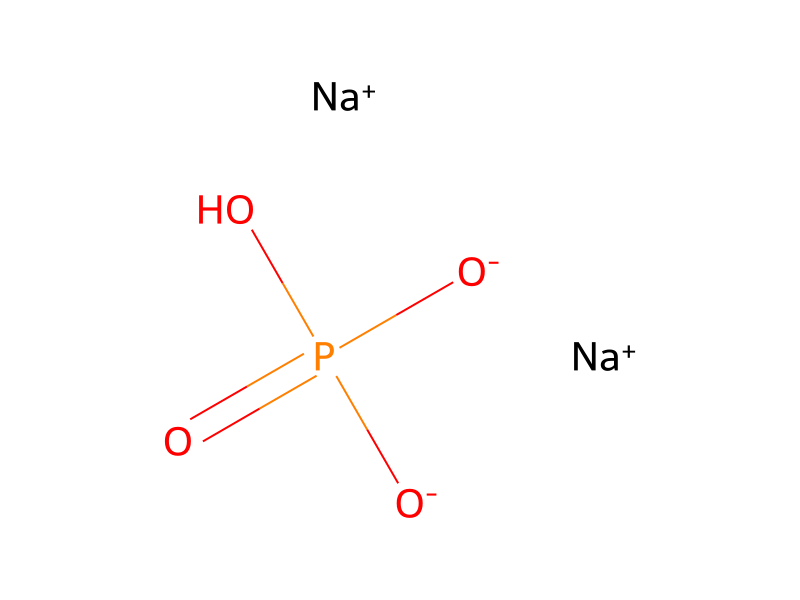
基本情報
- 標準SMILES
O=P([O-])([O-])O.[Na+].[Na+]- InChIKey
BNIILDVGGAEEIG-UHFFFAOYSA-L- 分子式
- Na2HPO4
- 平均分子量
- 141.959 g/mol
- 単同位体質量
- 141.9407837
概要
Sodium phosphate, dibasic appears as a colorless to white crystalline solid. Soluble in water. The primary hazard is the threat to the environment. Immediate steps should be taken to limit spread to the environment. Used as a fertilizer, in pharmaceuticals, in food processing, and for many other uses.
名称と識別子
- 優先名称
- Sodium Phosphate, Dibasic
- IUPAC
- disodium;hydrogen phosphate
- 現地名
- 第二リン酸ナトリウム·12水和物
- 英語名
- Sodium phosphate dibasic dodecahydrate
- 分子式
- H25Na2O16P
- 分子量
- 358.14
名称と別名
7558-79-4Sodium phosphate dibasicDISODIUM PHOSPHATEDisodium hydrogen phosphateDisodium hydrogenorthophosphateAcetestSodium phosphate, dibasicDibasic sodium phosphateDisodium acid phosphateSoda phosphateExsiccated sodium phosphatedisodium hydrogenphosphate
名称をさらに表示
りん酸水素ナトリウム12水和物リン酸水素二ナトリウム(晶)第二燐酸ソ-ダ 12水塩りん酸二ナトリウム?12水りん酸水素二ナトリウム?12水第二リン酸ナトリウム·12水和物二基性ナトリウムホスフェト 十二水和物りん酸水素二ナトリウム・12水リン酸水素ナトリウム水和物(UE‐E)りん酸水素二ナトリウム,12水和物 りん酸二ナトリウム?12水和物リン酸水素二ナトリウム十二水和物 99-101% (CALC. TO THE DRIED SUBSTANCE)リン酸水素二ナトリウム十二水和物 PURISS. P.A.,CRYSTALLIZED,≥99.0% (T)りん酸水素二ナトリウム(12水)リン酸水素ナトリウム水和物リン酸水素二ナトリウム(結晶)りん酸水素二ナトリウム12水リン酸水素ナトリウム水和物 「製造専用」 [CERTIPRO:JP、USP、PH.EUR.規格適合、エンドトキシン保証]りん酸水素二ナトリウム・12 水(オキシダント測定用)リン酸水素ナトリウム水和物「製造専用」リン酸ナトリウム 二塩基性 十二水和物DISODIUM PHOSPHATE DODECAHYDRATEdodecahydrateDI-SODIUM HYDROGEN PHOSPHATE DODECAHYDRATEDibasic Sodium Phosphate DodecahydrateDibasic Sodium Phosphate HydrateKH2PO8lisnuanerqingnaDISODIUM PHOSPHATE (DSP)
Disodium orthophosphatePhosphoric acid, disodium saltSodium hydrogen phosphateSodium monohydrogen phosphatesecondary Sodium phosphatePhosphate of sodaNatriumphosphatDisodium phosphate, anhydrous
データベース識別子
- CAS
10039-32-4、10140-65-5、7558-79-4- PubChem CID
- 24203
- DTXSID
DTXSID1026039- ChEMBL
CHEMBL1060、CHEMBL2107560- ChEBI
CHEBI:34683- UNII
- 22ADO53M6F
- EC Number
- 231-448-7、692-045-3
- Nikkaji
- J44.051E
物性
構造計算による物性
- 極性表面積
- 83.4 Ų
- 水素結合供与体数
- 1
- 水素結合受容体数
- 4
- 回転可能結合数
- 0
- 重原子数
- 7
- 形式電荷
- 0
- 複雑度
- 46.5
実験および物理化学的性質
Chemical ClassesMetals -> Phosphates, Metallic Salts
Cosmetics
Cosmetic ingredients (Disodium Phosphate) -> CIR (Cosmetic Ingredient Review)
Buffering
pH
Between 8,4 and 9,6 (1 % solution)
pH = 9.1 for 1% aq soln at 25 °C
LogP-5.8 (calculated)
OdorNONE
TasteSaline taste
Food Additives
ANTICAKING AGENT OR FREE-FLOW AGENT, ANTIMICROBIAL AGENT, DRYING AGENT, EMULSIFIER OR EMULSIFIER SALT, FLAVOR ENHANCER, FLAVORING AGENT OR ADJUVANT, MALTING OR FERMENTING AID, PH CONTROL AGENT, STABILIZER OR THICKENER, TEXTURIZER -> FDA Substance added to food
Density
1.8 to 2.5 at 77 °F (USCG, 1999)
approx 1.7 g/cu cm
Density 1.679, loses 5H2O at 48 °C /Disodium phosphate heptahydrate/
MP 35 °C, density 1.5235, readily loses 12H2O at 100 °C /Disodium phosphate dodecahydrate/
0.5-1.2 g/cm³
Color/Form
Colorless, translucent crystals or white powder.
White, hygroscopic powder
Solubility
greater than or equal to 100 mg/mL at 68 °F (NTP, 1992)
Freely soluble in water. Insoluble in ethanol
Colorless crystals; 11.8 G sol in 100 cc water at 25 °C /Disodium phosphate heptahydrate/
100 g sol in 100 ml water at 50 °C; 117 g sol in 100 ml water at 80 °C. /Disodium phosphate dihydrate/
11.8 g sol in 100 ml water at 25 °C /Disodium phosphate dodecahydrate/
11.8 g/100 g water at 25 °C
Human Drugs
FDA approved drugs -> Active ingredient
FDA approved drugs -> Active ingredient
FDA approved drugs -> Active ingredient
Animal DrugsPharmaceuticals -> UK Veterinary Medicines Directorate List
物理化学的性質
- 融点
- 35 °C · 35 °C
- 比重(密度)
- 1 · 1,52 g/cm3
- 貯蔵温度
- 15 °C · Store at +15°C to +25°C.
- 溶解性
- 2 O: · H2O: 0.1M at20℃、透明、無色
- 外見
- クリスタル
- 色
- 白い
- 臭い (Odor)
- 無臭
- PH
- 9 · 9.0-9.3 (25℃, 50mg/mL in H2O)
- 水溶解度
- 218 g/L · 218g/L(20℃)
- InChI
- InChI=1S/2Na.H3O4P.12H2O/c;;1-5(2,3)4;;;;;;;;;;;;/h;;(H3,1,2,3,4);12*1H2/q2*+1;;;;;;;;;;;;;/p-2
- InChIKey
- DGLRDKLJZLEJCY-UHFFFAOYSA-L
- SMILES
- P([O-])([O-])(=O)O.O.O.O.O.O.O.O.O.O.O.O.O.[Na+].[Na+]
- CAS データベース
- 10039 · 10039-32-4(CAS DataBase Reference)
- EPAの化学物質情報
- Disodium phosphate dodecahydrate (10039-32-4)
化学的性質
化学的特性white crystals
安全と法規制
GHS分類
GHS Classification
This chemical does not meet GHS hazard criteria for 70.3% (744 of 1059) of all reports.
Warning
H319 (29.7%): Causes serious eye irritation [Warning Serious eye damage/eye irritation]
P264+P265, P280, P305+P351+P338, and P337+P317 (click each P-code to see the statement)
Aggregated GHS information provided per 1059 reports by companies from 12 notifications to the ECHA C&L Inventory.
This chemical does not meet GHS hazard criteria for 100% (11 of 11) of all reports.
危険有害性情報
Regulatory Information
Chemical: Phosphoric acid, disodium salt
Phosphoric acid, sodium salt (1:2) is listed on the EPA's Chemical Data Reporting (CDR) system. Manufacturers and importers of Phosphoric acid, sodium salt (1:2) are required to report information about their production and use of this chemical to the EPA under the Toxic Substances Control Act (TSCA). (40 eCFR Part 711)
Status: Active Update: 26-08-2022 https://echa.europa.eu/registration-dossier/-/registered-dossier/14974
Sodium phosphate, dibasic: Does not have an individual approval but may be used under an appropriate group standard
The New Jersey Worker and Community Right to Know Act requires public and private employers to provide information about hazardous substances at their workplaces. (N.J.S.A. 34:5A-1 et. seq.)
Other Safety InformationIMAP assessments - Phosphoric acid, disodium salt: Human health tier I assessment
Fire Hazards
Behavior in Fire: May melt with loss of steam (USCG, 1999)
Not combustible. Gives off irritating or toxic fumes (or gases) in a fire.
Fire PotentialNonflammable
Health Hazards
Inhalation of heavy dust may irritate nose and throat. Ingestion may injure mouth, throat, and gastrointestinal tract, resulting in nausea, vomiting, cramps and diarrhea; pain and burning in mouth may occur. Contact with eyes produces local irritation; can lead to chronic damage. Contact with skin produces local irritation; repeated or prolonged contact can lead to dermatitis. (USCG, 1999)
Hazards Summary
A mild skin, eye, and respiratory tract irritant; [ICSC] Emergency treatment: Inorganic phosphates; Inorganic phosphates can cause diarrhea, hyperphosphatemia, and hypocalcemia after ingestion; An adult died after receiving four sodium phosphate enemas within 24 hours; he had electrolyte abnormalities and died from cardiac arrest; [HSDB] A mild eye irritant in rabbits; [RTECS]
FDA Requirements
Disodium phosphate used as a sequestrant in food for human consumption is generally recognized as safe when used in accordance with good manufacturing practice.
Disodium phosphate used as a sequestrant in animal drugs, feeds, and related products is generally recognized as safe when used in accordance with good manufacturing or feeding practice.
Sodium phosphate (mono-, di-, & tribasic) used as a multiple purpose food substance in food for human consumption is generally recognized as safe when used in accordance with good manufacturing practice. /Sodium phosphate (mono-, di-, & tribasic)/
Sodium phosphate (mono-, di-, & tribasic) used as a sequesterant in food for human consumption is generally recognized as safe when used in accordance with good manufacturing practice. /Sodium phosphate (mono-, di-, & tribasic)/
For more FDA Requirements (Complete) data for DISODIUM HYDROGEN PHOSPHATE (9 total), please visit the HSDB record page.
Reactive GroupSalts, Basic
Special ReportsWHO; Diseases Caused by Phosphorus and Its Toxic Compounds; Early Detection of Occupational Diseases pg 53-62 (1986). Review of diseases and health related effects resulting from exposure to phosphorus or phosphorus cmpd.
FIFRA Requirements
Residues of disodium phosphate are exempted from the requirement of a tolerance when used as a anticaking agent, conditioning agent in accordance with good agricultural practice as inert (or occasionally active) ingredients in pesticide formulations applied to growing crops or to raw agricultural commodities after harvest.
As the federal pesticide law FIFRA directs, EPA is conducting a comprehensive review of older pesticides to consider their health and environmental effects and make decisions about their continued use. Under this pesticide reregistration program, EPA examines newer health and safety data for pesticide active ingredients initially registered before November 1, 1984, and determines whether the use of the pesticide does not pose unreasonable risk in accordance to newer saftey standards, such as those described in the Food Quality Protection Act of 1996. Pesticides for which EPA had not issued Registration Standards prior to the effective date of FIFRA '88 were divided into three lists based upon their potential for human exposure and other factors, with List B containing pesticides of greater concern than those on List C, and with List C containing pesticides of greater concern than those on List D. Sodium phosphate /disodium monohydrogen phosphate/ is found on List D. Case No: 4053; Pesticide type: fungicide, herbicide, antimicrobial; Case Status: None of the active ingredients in the case are being supported for reregistration by their registrants. All are unsupported, or some are unsupported and some are cancelled. Cases described as "unsupported" generally are being processed for cancellation.; Active ingredient (AI): sodium phosphate; AI Status: The active ingredient is no longer contained in any registered products. Thus, we characterize it as "cancelled.".
Reactivity ProfileStrong base; corrosive towards metals e.g. aluminum and zinc. [Handling Chemicals Safely 1980 p. 947].
Chemical DangersDecomposes on heating. This produces toxic fumes. Reacts violently with strong acids.
安全と保護具
Fire FightingIn case of fire in the surroundings, use appropriate extinguishing media.
First Aid Measures
Fresh air, rest.
Rinse skin with plenty of water or shower.
First rinse with plenty of water for several minutes (remove contact lenses if easily possible), then refer for medical attention.
Rinse mouth. Give one or two glasses of water to drink.
First Aid
EYES: First check the victim for contact lenses and remove if present. Flush victim's eyes with water or normal saline solution for 20 to 30 minutes while simultaneously calling a hospital or poison control center. Do not put any ointments, oils, or medication in the victim's eyes without specific instructions from a physician. IMMEDIATELY transport the victim after flushing eyes to a hospital even if no symptoms (such as redness or irritation) develop.
Safe StorageSeparated from strong acids.
Firefighting HazardsBehavior in fire: May melt with loss of steam. /Sodium Phosphates/
Fire Fighting ProceduresIf material is on fire or involved in fire: Extinguish fire using agent suitable for type of surrounding fire. (Material itself does not burn or burns with difficulty.)
Storage ConditionsKeep well closed and in a cool place.
Cleanup Methods
/SRP: If time permits, pits, ponds, lagoons, soak holes, or holding areas should be sealed with an impermeable flexible membrane liner./Environmental Consideration: Land spill Dig a pit, pond, lagoon, holding area to contain liquid or solid material. Cover solids with a plastic sheet to prevent dissolving in rain or fire fighting water.
Environmental Consideration: Neutralize with agricultural lime (CaO), crushed limestone (CaCO3), or sodium bicarbonate (NaHCO3). Adjust pH to neutral (pH=7). Use mechanical dredges or lifts to remove immobilized masses of pollutants and precipitates.
Disposal Methods
SRP: The most favorable course of action is to use an alternative chemical product with less inherent propensity for occupational exposure or environmental contamination. Recycle any unused portion of the material for its approved use or return it to the manufacturer or supplier. Ultimate disposal of the chemical must consider: the material's impact on air quality; potential migration in soil or water; effects on animal, aquatic, and plant life; and conformance with environmental and public health regulations.
Spillage DisposalPersonal protection: particulate filter respirator adapted to the airborne concentration of the substance. Sweep spilled substance into covered containers. If appropriate, moisten first to prevent dusting.
Preventive Measures
SRP: The scientific literature for the use of contact lenses in industry is conflicting. The benefit or detrimental effects of wearing contact lenses depend not only upon the substance, but also on factors including the form of the substance, characteristics and duration of the exposure, the uses of other eye protection equipment, and the hygiene of the lenses. However, there may be individual substances whose irritating or corrosive properties are such that the wearing of contact lenses would be harmful to the eye. In those specific cases, contact lenses should not be worn. In any event, the usual eye protection equipment should be worn even when contact lenses are in place.
If material is not on fire and not involved in fire: Keep material out of water sources and sewers. Build dikes to contain flow as necessary.
Personnel Protection: Keep upwind. Wear appropriate chemical protective gloves, boots and goggles. Avoid breathing vapors or dusts. Wash away any material which may have contacted the body with copious amounts of water or soap and water.
Eye PreventionWear safety goggles.
毒性情報
Interactions
Except for D-thyroxine, the hypocholesterolemic agents tested did not prevent the formation of cardiac lesions in rats on a thrombogenic diet, being treated with large doses of disodium phosphate.
Disodium phosphate increased the antirachitic activity of vitamin D3 in 3 week old rats.
Concurrent use with potassium and sodium phosphates combination or monobasic potassium phosphate may increase plasma concentrations of salicylates since salicylate excretion is decreased in acidified urine; addition of these phosphates to patients stabilized on a salicylate may lead to toxic salicylate concentrations.
Concurrent use with foods or medicines containing phosphates will decrease iron absorption because of the formation of less soluble or insoluble complexes; iron supplements should not be taken within 1 hour before or 2 hours after ingestion of phosphates. /Phosphates/
For more Interactions (Complete) data for DISODIUM HYDROGEN PHOSPHATE (8 total), please visit the HSDB record page.
Ecotoxicity Values
LC50; Species: Daphnia magna (Water flea); Condtions: freshwater, static, 21-25 °C; Concentration: 1154 mg/L for 25 hr
LC50; Species: Daphnia magna (Water flea); Condtions: freshwater, static, 21-25 °C; Concentration: 1089 mg/L for 50 hr
Toxicity Summary
The CIR Expert Panel concluded that the following 31 ingredients are safe in the present practices of use and concentration in cosmetics as described in this safety assessment, when formulated to be non-irritating...Disodium Phosphate...
Safe for use in cosmetics, with qualifications
Signs and Symptoms
Cough. Sore throat.
Redness. Pain.
Redness. Pain.
Abdominal pain. Diarrhoea.
Human Toxicity Excerpts
/SIGNS AND SYMPTOMS/ /Saline laxatives/ are tolerated reasonably well by most patients. However, they need to be used with caution or avoided in patients with renal insufficiency, cardiac disease, or preexisting electrolyte abnormalities and in patients on diuretic therapy. Under these circumstances, there should be monitoring for hypermagnesemia, hyperphosphatemia, hyperkalemia, hypernatremia, and hypocalcemia. /Saline laxatives/
/SIGNS AND SYMPTOMS/ The estimated fatal dose of sodium phosphates is 50 g. The corrosive effect is strong irritation and erythema, blistering. /Alkalies and phosphates; from table/
/SIGNS AND SYMPTOMS/ Inorganic phosphate poisoning following ingestion of laxatives that contain phosphate salts has been reported in adults and children. Ingestion of large amounts of sodium dihydrogen phosphate lowers urinary pH. If excessive phosphate salts are introduced intravenously or orally, they may prove toxic by reducing the concentration of Ca 2+ in the circulation and from the precipitation of calcium phosphate in soft tissues. /Phosphate ion/ /Phospahte salt laxatives/
/SIGNS AND SYMPTOMS/ Anhydrous form may cause mild irritation to skin, mucous membranes; internally causes purging.
For more Human Toxicity Excerpts (Complete) data for DISODIUM HYDROGEN PHOSPHATE (27 total), please visit the HSDB record page.
Non-Human Toxicity Excerpts
/LABORATORY ANIMALS: Subchronic or Prechronic Exposure/ To elucidate the nephrotoxicity of phosphate, dibasic sodium phosphate solution was given to Sprague-Dawley rats by daily bolus intravenous administration at concentrations of 0, 1, 25, 250, or 360 mM (0, 1, 28, 284, or 408 mg/kg Na2HPO4) for 14 days, and the kidneys were ... examined. There were no remarkable changes in blood chemistry values; however, urinalysis revealed mild to moderate proteinuria in the 250 and 360 mM groups. The kidneys from the 360 mM group were macroscopically pale. Histopathology revealed panglomerular deposition of basophilic dense granules, which were positive for von Kossa's staining, accompanied by dose-dependent degeneration of the glomerular epithelium and parietal epithelium in the 250 and 360 mM groups. Electron microscopic examination showed fusion of podocytes and increased microvilli, with large amounts of debris in the Bowman's space. Low-density lamellar structures were present not only in the glomerular epithelium, basement membrane, mesangial matrix and parietal epithelium but also within the Bowman's space depending on the severity of the glomerular lesion. Phosphorus and calcium were detected by X-ray microanalysis as fine particles admixed with lamellar structures. These results suggest that high-dose phosphate used in this study transiently overloads the glomerular epithelium during filtration through glomerular capillaries and produces insoluble calcium salt and glomerular lesions, resulting in proteinuria.
/LABORATORY ANIMALS: Neurotoxicity/ Disodium phosphate given intracerebroventricularly (ICV) in rats elicited a syndrome characterized by behavioral and EEG activation, stereotypes, hyperresponsiveness, and analgesia.
/VETERINARY ANIMALS/ Phosphate enema toxicity was diagnosed in a 7-month-old, castrated male, pygmy goat. On presentation, clinical findings included mild depression, tachycardia, tachypnea, rumen stasis, muscle tremors, hypocalcemia, hypokalemia, hypochloremia, hyperphosphatemia, azotemia, and metabolic acidosis. Fluid diuresis and parenteral antimicrobial therapy resulted in recovery after 3 d of treatment.
/VETERINARY ANIMALS/ Application of a sodium phosphate containing enema caused life-threatening metabolic disorders in a Dachshund and two cats. Clinical signs were characterised by dehydration and various neurological deficits including seizures. Most striking laboratory abnormalities were hypernatremia, hypocalcemia, hyperphosphatemia, and polycythemia. Despite intensive treatment the dog died, whereas the cats recovered completely. In face of possible severe and potentially fatal metabolic abnormalities sodium phosphate enemas, such as Practo-Clyss, should be used with caution or not at all in cats and small dogs.
Populations at Special Risk
/Saline laxatives/ are tolerated reasonably well by most patients. However, they need to be used with caution or avoided in patients with renal insufficiency, cardiac disease, or preexisting electrolyte abnormalities and in patients on diuretic therapy. /Saline laxatives/
Phosphate should not be given to patients with impaired renal function or hyperphosphatemia. They should not be given to patients with alkaline urine due to urinary tract infections because increased calcium and phosphate concentrations in the alkaline urine increase the risk of calcium phosphate stones. /Monobasic or dibasic sodium or potassium phosphate/
Probable Routes of Human Exposure
NIOSH (NOES Survey 1981-1983) has statistically estimated that 1,230,592 workers (912,048 of these were female) were potentially exposed to disodium hydrogen phosphate in the US(1). The NOES Survey does not include farm workers. Occupational exposure to disodium hydrogen phosphate may occur through inhalation and dermal contact with this compound at workplaces where disodium hydrogen phosphate is produced or used(SRC).
Other Environmental ConcentrationsIn August of 1987, 30,000 gallons of sodium phosphate was spilled into the Arthur Krill waterway, NY(1).
Antidote and Emergency Treatment
Immediate first aid: Ensure that adequate decontamination has been carried out. If patient is not breathing, start artificial respiration, preferably with a demand-valve resuscitator, bag-valve-mask device, or pocket mask, as trained. Perform CPR as necessary. Immediately flush contaminated eyes with gently flowing water. Do not induce vomiting. If vomiting occurs, lean patient forward or place on left side (head-down position, if possible) to maintain an open airway and prevent aspiration. Keep patient quiet and maintain normal body temperature. Obtain medical attention. /Inorganic acids and related compounds/
Basic treatment: Establish a patent airway (oropharyngeal or nasopharyngeal airway, if needed). Suction if necessary. Watch for signs of respiratory insufficiency and assist respirations if needed. Administer oxygen by nonrebreather mask at 10 to 15 L/min. Monitor for pulmonary edema and treat if necessary ... . Monitor for shock and treat if necessary ... . For eye contamination, flush eyes immediately with water. Irrigate each eye continuously with 0.9% saline (NS) during transport ... . Do not use emetics. Activated charcoal is not effective. For ingestion, rinse mouth and administer 5 ml/kg up to 200 ml of water for dilution if the patient can swallow, has a strong gag reflex, and does not drool ... . Do not attempt to neutralize because of exothermic reaction. Cover skin burns with dry, sterile dressings after decontamination ... . /Inorganic acids and related compounds/
Advanced treatment: Consider orotracheal or nasotracheal intubation for airway control in the patient who is unconscious, has severe pulmonary edema, or is in severe respiratory distress. Early intubation, at the first sign of upper airway obstruction, may be necessary. Positive-pressure ventilation techniques with a bag valve mask device may be beneficial. Consider drug therapy for pulmonary edema ... . Consider administering a beta agonist such as albuterol for severe bronchospasm ... . Monitor cardiac rhythm and treat arrhythmias as necessary ... . Start IV administration of D5W /SRP: "To keep open", minimal flow rate/. Use 0.9% saline (NS) or lactated Ringer's(LR) if signs of hypovolemia are present. For hypotension with signs of hypovolemia, administer fluid cautiously. Consider vasopressors if patient is hypotensive with a normal fluid volume. Watch for signs of fluid overload ... . Use proparacaine hydrochloride to assist eye irrigation ... . /Inorganic acids and related compounds/
RAIS Toxicity Values
1
PPRTV Current
4
PPRTV Current
Human Toxicity ValuesThe estimated fatal dose of sodium phosphates is 50 g. The corrosive effect is strong irritation and erythema, blistering. /Alkalies and phosphates; from table/
法規制情報
FDA Requirements
Disodium phosphate used as a sequestrant in food for human consumption is generally recognized as safe when used in accordance with good manufacturing practice.
Disodium phosphate used as a sequestrant in animal drugs, feeds, and related products is generally recognized as safe when used in accordance with good manufacturing or feeding practice.
Sodium phosphate (mono-, di-, & tribasic) used as a multiple purpose food substance in food for human consumption is generally recognized as safe when used in accordance with good manufacturing practice. /Sodium phosphate (mono-, di-, & tribasic)/
Sodium phosphate (mono-, di-, & tribasic) used as a sequesterant in food for human consumption is generally recognized as safe when used in accordance with good manufacturing practice. /Sodium phosphate (mono-, di-, & tribasic)/
For more FDA Requirements (Complete) data for DISODIUM HYDROGEN PHOSPHATE (9 total), please visit the HSDB record page.
FIFRA Requirements
Residues of disodium phosphate are exempted from the requirement of a tolerance when used as a anticaking agent, conditioning agent in accordance with good agricultural practice as inert (or occasionally active) ingredients in pesticide formulations applied to growing crops or to raw agricultural commodities after harvest.
As the federal pesticide law FIFRA directs, EPA is conducting a comprehensive review of older pesticides to consider their health and environmental effects and make decisions about their continued use. Under this pesticide reregistration program, EPA examines newer health and safety data for pesticide active ingredients initially registered before November 1, 1984, and determines whether the use of the pesticide does not pose unreasonable risk in accordance to newer saftey standards, such as those described in the Food Quality Protection Act of 1996. Pesticides for which EPA had not issued Registration Standards prior to the effective date of FIFRA '88 were divided into three lists based upon their potential for human exposure and other factors, with List B containing pesticides of greater concern than those on List C, and with List C containing pesticides of greater concern than those on List D. Sodium phosphate /disodium monohydrogen phosphate/ is found on List D. Case No: 4053; Pesticide type: fungicide, herbicide, antimicrobial; Case Status: None of the active ingredients in the case are being supported for reregistration by their registrants. All are unsupported, or some are unsupported and some are cancelled. Cases described as "unsupported" generally are being processed for cancellation.; Active ingredient (AI): sodium phosphate; AI Status: The active ingredient is no longer contained in any registered products. Thus, we characterize it as "cancelled.".
CERCLA Reportable Quantities
Persons in charge of vessels or facilities are required to notify the National Response Center (NRC) immediately, when there is a release of this designated hazardous substance, in an amount equal to or greater than its reportable quantity of 5000 lb or 2270 kg. The toll free number of the NRC is (800) 424-8802. The rule for determining when notification is required is stated in 40 CFR 302.4 (section IV. D.3.b).
Clean Water Act Requirements
Sodium phosphate, dibasic is designated as a hazardous substance under section 311(b)(2)(A) of the Federal Water Pollution Control Act and further regulated by the Clean Water Act Amendments of 1977 and 1978. These regulations apply to discharges of this substance. This designation includes any isomers and hydrates, as well as any solutions and mixtures containing this substance.
安全データ
- wgk
- 1
- rtecs
- TC5725000
- ridadr
- UN 3077 9 / PGIII
- 毒性
- LD50 orally in Rabbit: > 2000 mg/kg
- hs_code
- 28352200
- safety_code
- 24/25
- ストレージクラス
- 13 - Non Combustible Solids
化学と産業
薬理情報
Bionecessity
Phosphate is a major intracellular anion which participates in providing energy for metabolism of substances and contributes to important metabolic and enzymatic reactions in almost all organs and tissues. Phosphate exerts a modifying influence on calcium concentrations, a buffering effect on acid-base equilibrium, and has a major role in the renal excretion of hydrogen ions. /Phosphate/
For /adults/ approximately 200 to 400 mg (6.5 to 13 mM) of phosphorus is required daily for maintenance, but larger amounts are often needed when initiating total parenteral nutrition to maintain the serum phosphate level above 2.5 mg/dL.
A prominent component of all body tissues, phosphorus participates in bone deposition, regulation of calcium metabolism, buffering effects on acid-base equilibrium and various enzyme systems. /Phosphate/
In extracellular fluid, the bulk of phosphate exists in inorganic form as the 2 constituents, NaH2PO4 and Na2HPO4; the ratio of disodium to monosodium phosphate is 4:1 at pH 7.4. This ratio varies with pH; however, due to its relatively low concn, phosphate contributes little to the buffering capacity of extracellular fluid ... A reduction of plasma phosphate concn permits the presence of more Ca+2 in the blood without mineral pptn.
For more Bionecessity (Complete) data for DISODIUM HYDROGEN PHOSPHATE (8 total), please visit the HSDB record page.
PharmacodynamicsSodium phosphate inceases fecal water content to increase mobility through the large intestine.
Mechanism of Action
Sodium phosphate is thought to work by increasing the amount of solute present in the intestinal lumen thereby creating an osmotic gradient which draws water into the lumen.
At the renal distal tubule, the secretion of hydrogen by the tubular cell in exchange for sodium in the tubular urine converts dibasic phosphate salts to monobasic phosphate salts. Therefore, large amounts of acid can be excreted without lowering the pH of the urine to a degree that would block hydrogen transport by a high concentration gradient between the tubular cell and luminal fluid. /Phosphates/
Absorption, Distribution and Excretion
Tmax for phosphate absorption with orally administered liquid sodium phosphate is 1-3h.
... Phosphates (dibasic and monobasic sodium phosphate) are slowly and incompletely absorbed. /Dibasic and Monobasic Sodium phosphate/
Net phosphorus absorption may occur in the small intestine in some species but is primarily a function of the colon in horses. /Phosphorus/
Elimination: Renal (90%) and fecal (10%). /Phosphates/
Ingested phosphates are absorbed from the gastrointestinal tract. However, the presence of large amounts of calcium or aluminum may lead to formation of insoluble phosphate and reduce the net absorption. Vitamin D stimulates phosphate absorption. /Phosphates/
For more Absorption, Distribution and Excretion (Complete) data for DISODIUM HYDROGEN PHOSPHATE (9 total), please visit the HSDB record page.
用途と製造
Uses
CIR ingredient: Disodium Phosphate
Used as emulsifier and buffer in foods and pharmaceuticals, metal phosphatising/electroplating reagent, scale inhibitor (boiling water treatment), textile/leather auxiliary, sequestrant, mordant in dyeing, fireproofing agent, reagent and buffer in analytical chemistry, cathartic, and veterinary laxative; Also used for weighting silk and in pottery glazes/porcelain/enamels, tanning, and soldering/brazing (instead of borax); [HSDB] Used in fertilizers, galvanoplastics, and as a dietary supplement; [Hawley]
Brazing [Category: Heat or Machine]
Ceramics making [Category: Hobbies]
For Disodium phosphate (USEPA/OPP Pesticide Code: 076403) there are 0 labels match. /SRP: Not registered for current use in the U.S., but approved pesticide uses may change periodically and so federal, state and local authorities must be consulted for currently approved uses./
The active ingredient is no longer contained in any registered pesticide products ... "cancelled."
U.S. Exports(1984) 1.74X10+10 G /SODIUM PHOSPHATES, NSPF/
U.S. Production
2023: 10,000,000 - <25,000,000 lb
(1972) 1.89X10+10 GRAMS
(1975) 2.18X10+10 GRAMS
(1984) 2.87X10+10 G
(1990) >10 thousand-500 thousand pounds
For more U.S. Production (Complete) data for DISODIUM HYDROGEN PHOSPHATE (7 total), please visit the HSDB record page.
Consumption Patterns
57-67% as a food additive, mainly as an emulsifier in processed cheese; 24-29% as an industrial and institutional detergent builder and in water treatment; 10-14% in misc applications (pharmaceuticals, cattle feed supplement, in various textile processes and for export) (1973)
Consumer UsesNot Known or Reasonably Ascertainable
Industry UsesOther
Methods of Manufacturing
By precipitating calcium carbonate from a solution of dicalcium phosphate with soda ash.
By treating phosphoric acid with a slight excess of soda ash, boiling the solution to drive off carbon dioxide and cooling to permit the dodecahydrate to crystallize.
... The disodium /phosphate/ is produced from phosphoric acid and sodium carbonate.
Sodium monophosphates are usually produced by neutralization of phosphoric acid with soda ash or caustic soda. The latter is predominantly used in Germany, while in the United States, the less expensive soda ash prevails. The basicity of sodium carbonate is insufficient for the formation of trisodium phosphate, so that caustic soda must be used in this step. The phosphates crystallize from the solutions as hydrates and are separated by centrifugation. Anhydrous salts are obtained by dehydration in rotary dryers or directly from the solutions by spray drying or in rotary kilns. Both thermal phosphoric acid and the cheaper wet phosphoric acid are used as starting materials. The very pure thermal phosphoric acid is generally used in the production of food-grade phosphates. /Sodium monophosphates/
Both thermal and purified wet phosphoric acid are used in production. In a process developed in the 1980s, acidic phosphate solution (CaHPO4 in the presence of H3PO4) is treated with NaHSO4, whereby purification occurs through precipitation of gypsum. Neutralization with NaOH is carried out in a second stage. Salts are obtained from the neutralized solutions by evaporation, crystallization, and centrifugation. The desired hydrate is obtained by appropriate temperature control. The anhydrous product is also produced by dehydration of the solution in a spray drying tower. Careful temperature control is required to avoid formation of tetrasodium diphosphate.
Formulations/Preparations
Sodium Phosphates Injection, USP, 3 mM P/mL (millimoles/mL)... Each mL contains 276 mg of monobasic sodium phosphate, monohydrate and 142 mg of dibasic sodium phosphate, anhydrous (equivalent to 268 mg of dibasic sodium phosphate, heptahydrate). ... It contains no bacteriostat, antimicrobial agent or added buffer.
Sodium Phosphate preparations: (AHFS, 2009)
Visicol (sodium phosphate monobasic monohydrate, USP, and sodium phosphate dibasic anhydrous, USP)... Each tablet contains 1.102 grams of sodium phosphate monobasic monohydrate, USP and 0.398 grams of sodium phosphate dibasic anhydrous, USP for a total of 1.5 grams of sodium phosphate per tablet. Inert ingredients include microcrystalline cellulose (MCC), NF; magnesium stearate, NF; and colloidal silicon dioxide, NF. Visicol is gluten-free.
Sodium phosphate and sodium biphosphate enema USP ... dosage forms-- enema USP: 6% sodium phosphate and 16% sodium biphosphate; sodium phosphate and sodium biphosphate oral solution USP ... dosage forms-- solution USP: 18% sodium phosphate and 48% sodium biphosphate.
For more Formulations/Preparations (Complete) data for DISODIUM HYDROGEN PHOSPHATE (9 total), please visit the HSDB record page.
Household ProductsInformation on 238 consumer products that contain Disodium phosphate in the following categories is provided:
Use Classification
Food additives
Food Additives -> ACIDITY_REGULATOR; EMULSIFIER; TEXTURIZER; THICKENER -> JECFA Functional Classes
Food Additives -> ACIDITY_REGULATOR; EMULSIFIER; TEXTURIZER; THICKENER -> JECFA Functional Classes
Food Additives -> ACIDITY_REGULATOR; EMULSIFIER; TEXTURIZER; THICKENER -> JECFA Functional Classes
Food Additives -> ACIDITY_REGULATOR; EMULSIFIER; TEXTURIZER; THICKENER -> JECFA Functional Classes
Food Additives -> ACIDITY_REGULATOR; EMULSIFIER; TEXTURIZER; THICKENER -> JECFA Functional Classes
General Manufacturing Information
Pharmaceutical and Medicine Manufacturing
Phosphoric acid, sodium salt (1:2): ACTIVE
Incompatibilities: alkaloids, antipyrine, chloral hydrate, lead acetate, pyrogallol, resorcinol.
Addition of disodium phosphate to pickle /solution for cured meat/ ... had no effect on ... Staphylococci.
... Gelling strength of agar gel was significantly increased by addition of 0.12-0.3% disodium phosphate.
... Increases binding properties of fish proteins ... .
応用分野
解説Na2HPO4.第二リン酸ナトリウム(sodium secondary phosphate)ともいう.無色の潮解性の粉末.水溶液は微アルカリ性を示す.水に対する溶解度は12.14 g/100 g(25 ℃)である.リン酸に水酸化ナトリウムを1:2のモル比で加え,pH8.9~9.0にした溶液を95 ℃以上で濃縮すると得られる.無水和物のほかに,十二,七,二水和物もある.十二水和物は風解性がある.十二水和物と無水和物が市販されている.媒染剤,清缶剤,工業用水処理,pH緩衝液,食品加工に使用される.
用途大気中のオキシダント測定用吸収液調製用。
用途汎用試薬、調製液原料。
用途食品添加物。
用途医薬品、製剤原料。
用途汎用試薬、調製液原料、りん酸塩pH緩衝液原料。
使用Sodium Phosphate Dibasic Dodecahydrate is used in method for preparing self-supporting membrane.
一般的な説明Sodium phosphate is a colorless crystalline sodium salt. It is widely used as a buffer in molecular biology, biochemistry, and chromatographic studies. It exists in three forms: monobasic (NaH2PO4), dibasic (Na2HPO4), and tribasic (Na3PO4). Monobasic and dibasic forms in varying ratios are commonly used to compose the neutral sodium phosphate buffer solution.
調製方法
Either bone phosphate (bone ash), obtained by heating bones to whiteness, or the mineral phosphorite is used as a source of tribasic calcium phosphate, which is the starting material in the industrial production of dibasic sodium phosphate. Tribasic calcium phosphate is finely ground and digested with sulfuric acid. This mixture is then leached with hot water and neutralized with sodium carbonate, and dibasic sodium phosphate is crystallized from the filtrate.
上流・下流製品情報
上流原料
下流製品
サプライヤー50 社
国药集团化学试剂有限公司86-21-63210123 · [email protected]
上海阿拉丁生化科技股份有限公司400-6206333 13167063860 · [email protected]
上海麦克林生化科技股份有限公司021-50706066 15221275939 · [email protected]
合肥翰刚医药科技有限公司+8618062405514 · [email protected]
天津市恒兴化学试剂制造有限公司022-26772349 15822233318 · [email protected]
Baoji Guokang Healthchem co.,ltd+8615604608665 15604608665 · [email protected]
Dayang Chem (Hangzhou) Co.,Ltd.+86-0571-88938639 17705817739 · [email protected]
Hebei Yanxi Chemical Co., Ltd.+86-17531190177 · [email protected]
北京康普汇维科技有限公司010-67777729 18810111057 · [email protected]
上海迈瑞尔生化科技有限公司4006356688 18621169109 · [email protected]
大连美仑生物技术有限公司0411-62910999 13889544652 · [email protected]
北京绿百草科技发展有限公司010-61136123 · [email protected]
上海瀚鸿科技股份有限公司021-54306202 13764082696 · [email protected]
天津万象恒远科技有限公司15722085254 · [email protected]
上海景颜化工科技有限公司13817811078 · [email protected]
上海泰坦科技股份有限公司400-6009262 15618770481 · [email protected]
天津金汇太亚化学试剂有限公司022-59582624 18622766592 · [email protected]
南京美博生物科技有限公司025-58619198 · [email protected]
孝感深远化工有限公司15527621225; 15527621225 · [email protected]
山东西亚化学有限公司13355009207 13355009207 · [email protected]
玛雅试剂+86 (573) 82222445 (0)18006601000 452520369 · [email protected]
HONG KONG IPURE BIOLOGY CO.,LIMITED86 18062405514 18062405514 · [email protected]
天津希恩思生化科技有限公司400 638 7771 · [email protected]
南京化学试剂股份有限公司025-58369808 17895012682 · [email protected]
斯百全化学(上海)有限公司021-021-021-67601398-809-809-809 15221380277 · [email protected]
上海源叶生物科技有限公司13636370518 · [email protected]
艾科试剂4008-755-333 18080918076 · [email protected]
西安康培基生物科技有限公司86-029-85456576 · [email protected]
赛默飞世尔科技(中国)有限公司800-810-5118 · [email protected]
南京杜莱生物技术有限公司025-84699383-8003;025-846993838003-8003 18013301590 · [email protected]
上海乐晨国际贸易有限公司021-67256163 · [email protected]
北京环宇世纪化学科技有限公司hysj_bj.com
上海将来实业股份有限公司400-0066400 13621662912 · [email protected]
安徽科迪达化工有限公司0554-2106669 · [email protected]
成都零六生物科技有限公司400-1166-196 13458535857 · [email protected]
杭州杰恒化工有限公司0571-87396432 · [email protected]
天津锦耀翔承科技有限公司18822227517 18822227517 · [email protected]
成都润泽本土化工有限公司13096311329 028-88469284 616445927 · [email protected]
池州凯隆进出口贸易有限公司[email protected]
Sigma-Aldrich西格玛奥德里奇(上海)贸易有限公司021-61415566 800-8193336 · [email protected]
桦特昇生物科技(武汉)有限公司027-59207879 1972026995 18140587686 · [email protected]
石家庄通洋进出口有限公司[email protected]
潍坊市前进精细化工有限公司18753684562 · [email protected]
上海昕凯医药科技有限公司21-619849051-1 18521059765 · [email protected]
九鼎化学(上海)科技有限公司4009209199 · [email protected]
厦门志信化学有限公司+86-5922680277 +86-13806087780 · [email protected]
Alfa Chemistry+1-5166625404 · [email protected]
Hopechem Co., Ltd.+86 20 3801 1066
上海岚克医药科技发展有限公司0086-21-58956006
北京华威锐科化工科技有限公司89508211 18501085097 · [email protected]
補足説明
定義本品は、リン酸(*)の二ナトリウム塩であり、次の化学式で表される。参照表示名称:リン酸
定義ChEBI: A hydrate that is the dodecahydrate form of disodium hydrogenphosphate
関連反応
316 件


関連ノート
読み込み中…