
基本情報
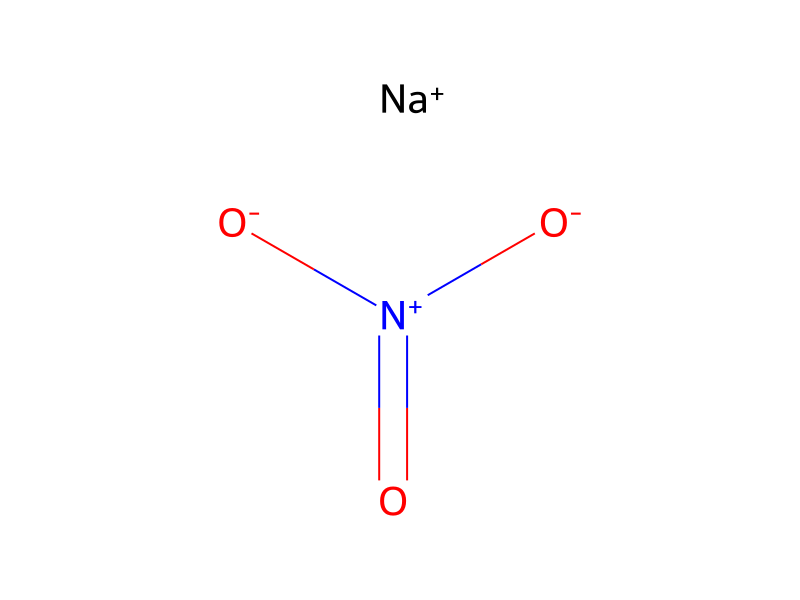
- 標準SMILES
O=[N+]([O-])[O-].[Na+]- InChIKey
VWDWKYIASSYTQR-UHFFFAOYSA-N- 分子式
- NaNO3
- 平均分子量
- 84.995 g/mol
- 単同位体質量
- 84.97758714
概要
Sodium nitrate appears as a white crystalline solid. Noncombustible but accelerates the burning of combustible materials. If large quantities are involved in fire or the combustible material is finely divided an explosion may result. May explode under prolonged exposure to heat or fire. Toxic oxides of nitrogen are produced in fires. Used in solid propellants, explosives, fertilizers, and for many other uses.
名称と識別子
- 優先名称
- Sodium Nitrate
- IUPAC
- sodium nitrate
- 現地名
- 硝酸ナトリウム
- 英語名
- Sodium nitrate
- 分子式
- NNaO3
- 分子量
- 84.99
名称と別名
SODIUM NITRATE7631-99-4Chile saltpeterCubic niterSoda niterNitrate of sodaetabisulfiteNitratineSodium saltpeterNitrate de sodiumNitric acid, sodium saltSaltpeter (Chile)
名称をさらに表示
硝酸ナトリウムチリ硝石硝酸Na0.1MOL/L 硝酸ナトリウム溶液1MOL/L 硝酸ナトリウム溶液硝酸ナトリウム ACS REAGENT,≥99.0%硝酸ナトリウム PURISS. P.A.,ACS REAGENT,REAG. ISO,≥99.5%硝酸ナトリウム, 99.9%硝酸ナトリウム, 99+% (ACS)ナトリウム ニトラート硝酸ナトリウム, 99.995%NANO3macklinniterNatriumnitratsodium standard for icsodium standard for aasnitrate standard for icE251Caliche
Nitric acid monosodium saltNitric acid sodium salt (1:1)Natrum nitricumSodium nitrate(DOT)Sodium(I) nitrate (1:1)Nitric acid sodium saltDTXSID60209378M4L3H2ZVZ
データベース識別子
- CAS
7631-99-4- PubChem CID
- 24268
- DTXSID
DTXSID6020937- ChEMBL
CHEMBL1644698- ChEBI
CHEBI:63005- UNII
- 8M4L3H2ZVZ
- EC Number
- 231-554-3、682-622-8
物性
構造計算による物性
- 極性表面積
- 62.9 Ų
- 水素結合供与体数
- 0
- 水素結合受容体数
- 3
- 回転可能結合数
- 0
- 重原子数
- 5
- 形式電荷
- 0
- 複雑度
- 18.8
実験および物理化学的性質
Chemical ClassesNitrogen Compounds -> Nitrates and Nitrites
pHAq soln is neutral
SpringerMaterials Propertiesthermal expansion coefficient
OdorOdorless
TasteSaline, slightly bitter taste
Food AdditivesANTIMICROBIAL AGENT, COLOR OR COLORING ADJUNCT, FLAVOR ENHANCER, FLAVORING AGENT OR ADJUVANT, PROPELLANT -> FDA Substance added to food
Density
2.26 at 68 °F (USCG, 1999) - Denser than water; will sink
2.26
2.3 g/cm³
2.261 @25 °C
Viscosity2.85 cP at 590 K; 1.53 cP at 730 K
Color/Form
Colorless, trigonal or rhombohedron crystals
White granules or powder
Solubility
...is soluble in liquid ammonia and forms Na NO3.4NH3 below -42 °C. The solubility in anhydrous methanol is 2.8 wt% at 25 °C.
Slightly soluble in ethanol and methanol
91.2 g/100g water at 25 °C
1 g dissolves in 125 ml alcohol, 52 ml boiling alcohol, 3470 ml absolute alcohol, 300 ml methanol, 1.1 ml water
In water, 730,000 mg/L at 0 °C
Solubility in water, g/100ml at 25 °C: 92.1
Boiling Point
Decomposes 716 °F (USCG, 1999)
380 °C with decomp
Decomposition
... /Sodium nitrate/ decomposes on heating producing nitrogen oxides and oxygen, which increases fire hazard.
When heated to decomposition it emits toxic fumes of /nitrogen oxide and sodium oxide/.
380 °C
物理化学的性質
- 融点
- 306 °C · 306 °C (dec.) (lit.)
- 沸点
- 380 °C · 380 °C
- 比重(密度)
- 1.1 g/mL · 1.1 g/mL at 25 °C
- 屈折率
- 1.526 · 1.526
- 貯蔵温度
- Store at RT.
- 溶解性
- 2 O: · H2O: 1M at20℃、透明、無色
- 外見
- 個体
- 比重
- 2.261 · 2.261
- 色
- 白または無色
- Flame Color
- Orange
- 臭い (Odor)
- 無臭
- PH
- 5.5 · 5.5-8.0 (50g/l, H2O, 20℃)
- 水溶解度
- 900 g/L · 900g/L(20℃)
- 比熱容量
- 1.09 J/ · Cp(crystal): 1.09 J/(g·K), at 25℃
- Merck
- 14 · 14,8647
- 晶系
- 三方
- 空间群
- 3 c · R3c
- 晶格常数
- 30.50708 · a/nmb/nmc/nmα/oβ/oγ/oV/nm30.507080.507081.68189090120
- Dielectric constant
- 5.2 · 5.2(0.0℃)
- 安定性
- 安定。強力な酸化剤 - 可燃性物質を発火させる可能性があります。シアン化物、可燃性物質、強力な還元剤、アルミニウムと混和しない。
- 化粧品成分の機能
- 口腔ケア鎮静作用
- InChI
- 1S/NO3.Na/c2-1(3)4;/q-1;+1
- InChIKey
- VWDWKYIASSYTQR-UHFFFAOYSA-N
- SMILES
- [Na+].[O-][N+]([O-])=O
- LogP
- -0.129 · -0.129 (est)
- CAS データベース
- 7631 · 7631-99-4(CAS DataBase Reference)
- EPAの化学物質情報
- Sodium nitrate (7631-99-4)
- Absorption
- 328 nm · cut-off at 328nm in H2O at 1M
化学的性質
化学的特性硝酸ナトリウムは化学式NaNO3で表される無機化合物です自然界ではチリ硝石としても知られ特に南アメリカのチリに豊富に見られます硝酸ナトリウムはその優れた酸化性と溶解性のために多くの工業的応用を持つ重要な化学物質です
化学的特性Sodium nitrate, NaNO3, also known as soda niter and Chile saltpeter, is a fire-hazardous, transparent, colorless and odorless crystalline solid. It is soluble in glycerol and water,decomposes when heated,and melts at 308°C (585 °F). Sodium nitrate is used in making nitric and sulfuric acids, in the manufacture of glass and pottery enamel, as a fertilizer, as a food preservative, in explosives, and as a welding flux.
化学性质白色固体、潮解性、水に易溶。水溶液は中性、エタノールに難溶、強力な酸化剤
安全と法規制
GHS分類
GHS Classification
This chemical does not meet GHS hazard criteria for 2.7% (46 of 1683) of reports.
Danger
H272 (56.9%): May intensify fire; oxidizer [Danger Oxidizing liquids; Oxidizing solids]
P210, P220, P264, P264+P265, P270, P280, P301+P317, P305+P351+P338, P330, P337+P317, P370+P378, and P501 (click each P-code to see the statement)
Aggregated GHS information provided per 1683 reports by companies from 31 notifications to the ECHA C&L Inventory. Each notification may be associated with multiple companies.
Danger
危険有害性情報
Regulatory Information
Chemical: Nitric acid, sodium salt
Regulation (EC) No 1333/2008 (amended)
Nitric acid sodium salt (1:1) is listed on the EPA's Chemical Data Reporting (CDR) system. Manufacturers and importers of Nitric acid sodium salt (1:1) are required to report information about their production and use of this chemical to the EPA under the Toxic Substances Control Act (TSCA). (40 eCFR Part 711)
Status: Active Update: 10-01-2023 https://echa.europa.eu/registration-dossier/-/registered-dossier/15423
Nitric acid, sodium salt: HSNO Approval: HSR001350 Approved with controls
Other Safety InformationIMAP assessments - Nitric acid, sodium salt: Environment tier I assessment
DOT LabelOxidizer
Fire Hazards
Special Hazards of Combustion Products: Yields toxic gaseous oxides of nitrogen when involved in fire.
CAUTION: Ammonium nitrate products may explode if involved in fire or contaminated with hydrocarbons (fuels), organic matter, other contaminants or when hot molten and contained. Treat as an explosive (GUIDE 112).
Not combustible but enhances combustion of other substances. Gives off irritating or toxic fumes (or gases) in a fire. Risk of fire and explosion on contact with reducing agents.
Fire Potential
Not combustible but enhances combustion of other substances ... /Sodium nitrate/ is a strong oxidant and reacts with combustible and reducing materials, causing fire and explosion hazard.
Flames up when heated to 540 °C. ...
Health Hazards
INGESTION: Dizziness, abdominal cramps, vomiting, bloody diarrhea, weakness, convulsions, and collapse. Small repeated doses may cause headache and mental impairment. (USCG, 1999)
· Inhalation, ingestion or contact (skin, eyes) with vapors or substance may cause severe injury, burns or death.
Hazards SummaryToxic by ingestion; [CAMEO] Negligible vapor at room temperature; A skin, eye, and respiratory tract irritant; A potential inducer of methemoglobinemia; [ICSC] See NITRATES and NITRITES.
DOT ID and Guide1498 140
FDA Requirements
Sodium nitrate is a food additive permitted for direct addition to food for human consumption, as long as 1) the quantity of the substance added to food does not exceed the amount reasonably required to accomplish its intended physical, nutritive, or other technical effect in food, and 2) any substance intended for use in or on food is of appropriate food grade and is prepared and handled as a food ingredient.
Sodium nitrate is an indirect food additive for use as a component of adhesives.
Drug products containing certain active ingredients offered over-the-counter (OTC) for certain uses. A number of active ingredients have been present in OTC drug products for various uses, as described below. However, based on evidence currently available, there are inadequate data to establish general recognition of the safety and effectiveness of these ingredients for the specified uses: sodium nitrate is included in orally administered menstrual drug products.
Reactive GroupNitrate and Nitrite Compounds, Inorganic
UN ClassificationUN Hazard Class: 5.1; UN Pack Group: III
Special Reports
IARC. Monographs on the Evaluation of the Carcinogenic Risk of Chemicals to Man. Geneva: World Health Organization, International Agency for Research on Cancer, Vol 94: Ingested Nitrate and Nitrite and Cyanobacterial Peptide Toxins (2010)[IARC. Monographs on the Evaluation of the Carcinogenic Risk of Chemicals to Humans. Geneva: World Health Organization, International Agency for Research on Cancer, 1972-PRESENT. (Multivolume work). Available at: http://monographs.iarc.fr/ENG/Classification/index.php, p. V94 (2010)]
Walker R; Food Addit Contam 7 (6): 717-68 (1990). Data on occurrence of nitrate, nitrite and N-nitroso compounds in food and drinking water, and on total dietary intakes are reviewed. Metabolic, toxicological and epidemiological studies are surveyed and the implications with respect to safety evaluation are addressed.
European Chemicals Bureau; IUCLID Dataset, Sodium nitrate, containing in the dry state more than 16.3 per cent by weight of nitrogen (7631-99-4) (2000 CD-ROM edition). Information on usage pattern, toxicology, and environmental effects submitted by industry to the European Union.[Available from, as of October 26, 2006: http://esis.jrc.ec.europa.eu/]
PARKE DV, LEWIS D FV; SAFETY ASPECTS OF FOOD PRESERVATIVES INTERNATIONAL SYMPOSIUM ON CURRENT ISSUES WITH FWD PRESERVATIVES: CHEMICO-TECHNICAL, NUTRITIONAL AND SAFETY IN USE ASPECTS, ROME, ITALY, JULY 3-5, 1991. FOOD ADDIT CONTAM 9 (5): 561-77 (1992). RRM HUMAN FOOD PRODUCTS FOOD ADDITIVES ANTIOXIDANTS FOOD SAFETY METHODS.
USEPA/Office of Pesticide Programs; Reregistration Eligibility Decision Document - Inorganic Nitrate/Nitrite (Sodium and Potassium Nitrates), September 1991. The RED summarizes the risk assessment conclusions and outlines any risk reduction measures necessary for the pesticide to continue to be registered in the U.S.[Available from, as of October 11, 2006: http://www.epa.gov/pesticides/reregistration/status.htm]
安全と保護具
Fire Fighting
Excerpt from ERG Guide 140 [Oxidizers]:
In case of fire in the surroundings, use appropriate extinguishing media.
First Aid Measures
Fresh air, rest. Refer for medical attention.
First rinse with plenty of water for at least 15 minutes, then remove contaminated clothes and rinse again.
First rinse with plenty of water for several minutes (remove contact lenses if easily possible), then refer for medical attention.
Rinse mouth. Refer for medical attention .
Accidental Release Measures
· CALL 911. Then call emergency response telephone number on shipping paper. If shipping paper not available or no answer, refer to appropriate telephone number listed on the inside back cover.
· Keep combustibles (wood, paper, oil, etc.) away from spilled material.
First Aid
See a physician.
General First Aid:
Safe StorageSeparated from combustible substances and reducing agents. Dry.
Firefighting HazardsIncreases the flammability of any combustible substance.
Exposure Control and Personal Protection· Wear positive pressure self-contained breathing apparatus (SCBA).
Fire Fighting Procedures
Use abundant amount of water in early stages of fire. When large quantities are involved in fire, nitrate may fuse or melt, in such conditions, application of water may result in extensive scattering of molten material.
If material on fire or involved in fire: Flood with water. Cool all affected containers with flooding quantities of water. Apply water from as far a distance as possible.
Storage ConditionsPrevent against physical damage; store in dry and cool place away from inflammable organics or easily oxidizable substances; wooden floor is not acceptable; wear rubber gloves, safety glasses, protecting work clothing.
Cleanup Methods
Sweep spilled substance into plastic or glass containers. Wash away remainder with plenty of water.
SRP: /Laboratory quantities/ For solid: Sweep into a beaker. Dilute with sufficient water. Ad soda ash. Mix and neutralize with 6M-HCl. Drain into the sewer with abundant water. For solution: Cover with soda ash. After mixing, transfer into a beaker containing water. Neutralize with 6M-HCl. Drain into the sewer with abundant water.
Nonfire Spill ResponseExcerpt from ERG Guide 140 [Oxidizers]:
Disposal Methods
SRP: The most favorable course of action is to use an alternative chemical product with less inherent propensity for occupational exposure or environmental contamination. Recycle any unused portion of the material for its approved use or return it to the manufacturer or supplier. Ultimate disposal of the chemical must consider: the material's impact on air quality; potential migration in soil or water; effects on animal, aquatic, and plant life; and conformance with environmental and public health regulations.
毒性情報
Treatment
Methemoglobinemia can be treated with supplemental oxygen and methylene blue 1% solution administered intravenously slowly over five minutes followed by IV flush with normal saline. Methylene blue restores the iron in hemoglobin to its normal (reduced) oxygen-carrying state. (L1613)
Interactions
Nitric oxide (NO) is rapidly oxidized to nitrite (NO-2) and then to nitrate (NO-3) in biological tissues. Although urinary excretion rates of NO-3 are often used as an index of NO production in the body, very little is known regarding the kidney's ability to excrete circulating NO-3. /The authors/ have evaluated the renal responses to systemic administration of sodium nitrate (NaNO3) in eight anesthetized dogs treated with the NO synthase inhibitor, nitro-L-arginine (NLA; 50 ug/kg/min), intrarenally to minimize renal production of NO. Urinary and plasma concentrations of NO-3/NO-2 (NOX) were determined by the Greiss reaction after enzymatic reduction of NO-3 to NO-2. NLA treatment alone resulted in reductions in urinary NOX excretion rates (UNOXV, 1.13+/-0.2 to 0.53+/-0.1 nmol/min/g) and an increase in fractional reabsorption of NOX (FRNOX, 93.8+/-0.6 to 97+/-0.6%) without changes in arterial plasma concentrations (ANOX, 18.7+/-1.4 to 21.2+/-3.7 uM). Administration of NaNO3 (10, 20, 30, and 40 ug/kg/min) resulted in dose-dependent increases in ANOX (34.5+/-8.0, 46.4+/-7.3, 60.7+/-6.3, and 78.1+/-6.3 uM), UNOXV (1.8+/-0.7, 4.2+/-1.8, 7.0+/-2.0, and 11.4+/-3.3 nmol/min/g), and decreases in FRNOX (93.8+/-2.3, 90.3+/-3.5, 88.6+/-3.2, and 84.6+/-3.5%). Absolute net tubular reabsorption of NO-3 showed a linear relationship with filtered loads, with no evidence of a transport maximum. These data show that, in the absence of additions from intrarenal sources, urinary excretion rates of nitrate increases progressively in response to increases in its circulating levels without exhibiting a transport maximum but with progressive decreases in fractional reabsorption.
The individual and combined effects of trichlorphon, lead-nitrate, cadmium-nitrate, sodium-nitrate, and lindane were determined in Wistar-rats. The median lethal dose (LD50) and average time of death were determined individually for each of the substances in acute gavage experiments. A mixture was made up of 0.44 LD50 of each of the five substances. The mixture LD50 was 4,833mg/kg. For subacute experiments, rats were administered the compounds or the mixture daily for 30 days at one twentieth to one thousandth the LD50, or were administered one tenth or one hundredth the LD50 of each substance separately and in combination for 5 or 20 days. Urinary delta-aminolevulinic-acid (ALA) concentrations significantly increased at daily doses of 5%, 1%, and 0.1% of the LD50 of lead and mixture at days ten, 20 and 30, with mixture ALA levels higher than lead alone. Significant increases were also seen in ALA after sublethal daily dosing with cadmium and lindane, with similar results obtained for urinary coproporphyrin. A decrease in liver sulfhydryl groups, similar to the effects of lead and cadmium, was observed upon administration of the mixture as was an increase in methemoglobin to 20% to 30% compared with nitrate induction to 16% to 26%, and control levels of 9%. The electron paramagnetic resonance (EPR) of a number of complexes were studied after 5 and 20 days of daily dosing with the substances singly or mixed. EPR signals of cytochrome-P450 were multiplied by lindane and mixture treatment, and were attenuated and multiplied by cadmium. The nitrosilic complexes EPR signals were multiplied by the effect of nitrates and lead, while the effect of the mixture was antagonistic to nitrates. Multiplication of the EPR signals of free radicals and iron and sulfur containing proteins was observed after 20 days dosing with 1% LD50 of lindane, cadmium, and the mixture. The authors conclude that the individual intake limits of trichlorphon, lindane and nitrates are valid for the mixture, while a dose summation formula should be used for lead and cadmium.
No increase in lung adenomas was produced in mice administered 0.69 to 18.75 mg of piperazine/kg in drinking water for 20 to 25 weeks and sacrificed 10 to 13 weeks later. An increase in lung adenomas was produced in this bioassay by administration of piperazine together with sodium nitrate, suggesting the formation of the active nitroso derivative ... Co-administration of 250 ppm piperazine and 500 ppm sodium nitrate in drinking water did not produce tumors in rats ... Piperazine dihydrochloride was not mutagenic in the mouse host-mediated assay. However, when tested in combination with sodium nitrate (to produce the N-nitroso derivative), a mutagenic response was seen ... Urinary metabolites isolated from mice given oral doses of both piperazine and sodium nitrate were also mutagenic.
Formation of (the carcinogen) nitrosodimethylamine (NDMA) from dimethylamine (DMA) & sodium nitrate in stomach of monkeys was investigated. After admin of DMA & sodium nitrate, the peak concn of NO2- & NDMA in stomach contents of the 3 starved monkeys were 2.7, 89, & 16.2 ppm, & 41.1, 144.4 & 5.4 ppb, respectively, while peaks of the 2 compounds in the unstarved monkeys (5 per group) were 75.6, 69.9, 5.7, 1.0 & 201.5 ppm of no2- & 833.6, 63.9, 6.1, not detected & 4.7 ppb of NDMA. NDMA was not detected (detection limit 0.2 ng) in blood of any monkey investigated.
For more Interactions (Complete) data for SODIUM NITRATE (7 total), please visit the HSDB record page.
Health EffectsNitrate and nitrite poisoning causes methemoglobinemia. Nitrites may cause pregnancy complications and developmental effects. They may also be carcinogenic. (L1137)
Ecotoxicity Values
LC50; Species: Daphnia magna (Water flea); Conditions: freshwater; static; Concentration: 4206000 ug/L for 96 hr /total/
LC50; Species: Daphnia magna (Water flea); Conditions: freshwater; static; Concentration: 2125000 ug/L for 72 hr /total/
LC50; Species: Daphnia magna (Water flea); Conditions: freshwater; static; Concentration: 3581000 ug/L for 48 hr /total/
LC50; Species: Daphnia magna (Water flea, 4th instar or adult); Conditions: freshwater; static; Concentration: 5980000 ug/L for 24 hr /total/
For more Ecotoxicity Values (Complete) data for SODIUM NITRATE (25 total), please visit the HSDB record page.
Adverse EffectsMethemoglobinemia - The presence of increased methemoglobin in the blood; the compound is classified as secondary toxic effect
Exposure Routes
The substance can be absorbed into the body by inhalation of its aerosol and by ingestion.
Oral (L1137) ; inhalation (L1137)
Toxicity Summary
Nitrate's toxicity is a result of it's conversion to nitrite once in the body. Nitrite causes the autocatalytic oxidation of oxyhemoglobin to hydrogen peroxide and methemoglobin. This elevation of methemoglobin levels is a condition known as methemoglobinemia, and is characterized by tissue hypoxia, as methemoglobin cannot bind oxygen. (A2450, L1613)
Ecotoxicity Excerpts
/BIRDS and MAMMALS/ The intended purpose of /pesticide/ products containing these active ingredients is to kill certain vertebrates and wasp pest species inhabiting burrows. Pest species are not exposed to sodium and potassium nitrates, but rather to the products of their pyrolysis. Application is subsurface and precludes exposure to avian populations and aquatic organisms. The Agency realizes, however, that any organism in a properly treated burrow will likely be killed and is concerned about potential impact to populations of non-target and endangered species. The open literature indicates that several types of non-target organisms, including burrowing owls, may inhabit the burrows of target pests. ... Due to the potential risk to non-target organisms, the Agency is currently developing more extensive labeling regarding timing of application and observation of signs indicating the presence or absence of target and nontarget organisms. These instructions will be explicit concerning actions users must take before applying the product. The use of these products may also result in a potential impact on endangered species which utilize burrows...
/AQUATIC SPECIES/ The effects of ammonium nitrate, ammonium chloride, ammonium sulfate, and sodium nitrate on survival and growth of Pacific treefrog (Pseudacris regilla) and African clawed frog (Xenopus laevis) embryos were determined in static-renewal tests. The 10-day LC50s for the three ammonium compounds for P. regilla ranged from 25.0-32. 4 mg/L NH4 -N. The 10-day sodium nitrate LC50 for P. regilla was 578. 0 mg/L NO3-N. LC50s for X. laevis exposed for 4 or 5 days to the three ammonium compounds ranged from 27.5-60.2 mg/L NH4-N. The sodium nitrate LC50 for X. laevis ranged from 438.4-871.6 mg/L NO3-N. The lowest LOAEL based on length or weight was 6.1 mg/L NH4-N for the two species. The lowest LOAELs for NO3-N were 111.1 mg/L for P. regilla and 56.7 mg/L for X. laevis. Calculated unionized NH3 comprised 0.5-1.8% of measured NH4-N concentrations. Potential harm to amphibian populations could occur if NH4-N and NO3-N in agricultural runoff or drainage impacts sensitive life stages for a sufficiently long period.
/AQUATIC SPECIES/ Safe concentrations (SCs) of nitrate (NO3-N) for early and last instar larvae of two species of Nearctic net-spinning caddisflies, Cheumatopsyche pettiti and Hydropsyche occidentalis, are estimated from short-term toxicity bioassays using an innovative methodology, the multifactor probit analysis (MPA) software. Toxicity bioassays were conducted in soft water (average hardness value of 42.7 ppm CaCO3). Larvae were exposed to five different concentrations of sodium nitrate (NaNO3) for 120 hours. SCs were estimated on the basis of mortality data. SCs (or 8760 hour LC0.01 values expressed in ppm NO3-N) and their 95% confidence limits were 1.4 (0.4-3.0) for the early instar of H. occidentalis, 2.4 (0.7-5.4) for the early instar of C. pettiti, 2.2 (0.8-4.7) for the last instar of H. occidentalis, and 3.5 (1.0-8.1) for the last instar of C. pettiti. These results suggest that larvae of C. pettiti and H. occidentalis may be much more sensitive to nitrate pollution than fishes
/AQUATIC SPECIES/ Freshwater Life The recommended interim freshwater guideline for the nitrate ion is 13 mg NO3 x L-1. This value was derived by multiplying the 10-d LOEC of 133 mg NO3 x L-1 for P. regilla (Schuytema and Nebeker 1999c) by a safety factor of 0.1 (CCME 1991). Marine Life The recommended interim marine guideline for the nitrate ion is 16 mg NO3 x L-1. This value was derived by multiplying the LC50 for N. grubei by a safety factor of 0.05 (CCME 1991). A more conservative safety factor was used for the marine guideline because: the polychaete in the critical study was not tested at its most sensitive life stage; the critical endpoint, although chronic, was based on a median lethal effect rather than a low sublethal effect; and adverse effects have been observed in non-indigenous tropical species exposed to much lower nitrate concentrations. Water Quality Guideline Application These guidelines are only intended to protect against direct toxic effects of nitrate; indirect toxic effects resulting from eutrophication may still occur at nitrate concentrations below these guideline values, depending on the total amount of bioavailable nitrogen and other site-specific factors (e.g., phosphorous, light availability). /Nitrate/
For more Ecotoxicity Excerpts (Complete) data for SODIUM NITRATE (7 total), please visit the HSDB record page.
Signs and Symptoms
Cough. Sore throat.
Redness.
Redness. Pain.
Abdominal pain. Blue lips, fingernails and skin. Convulsions. Diarrhoea. Dizziness. Headache. Laboured breathing. Confusion. Nausea. Unconsciousness.
Nitrate and nitrite poisoning causes methemoglobinemia. Symptoms include cyanosis, cardiac dysrhythmias and circulatory failure, and progressive central nervous system (CNS) effects. CNS effects can range from mild dizziness and lethargy to coma and convulsions. (L1137)
Medical Surveillance
Clinical Evaluation: History. Evaluation of a patient with suspected nitrate/nitrite exposure includes a complete medical history and physical examination. Clues to potential exposure are often obtained by reviewing the following items with the patient or family: location of home (urban, suburban, or rural); drinking water source and supply (if well water: depth, location, type of well construction, and frequency of microbiologic and nitrate testing); surrounding activities (agricultural or industrial) and proximity to drinking-water source; type of sewer system (municipal or septic) and proximity to drinking water source; recent flooding; occupations, avocations, and hobbies of family members; nutritional status (for infants: type of formula, feeding regimen, and source of dilution water); family history, including recent use of medications by infant and mother; and history of recent gastroenteritis with vomiting or diarrhea. /Nitrates and Nitrites/
Physical examination should include special attention to the color of the skin and mucous membranes. If there is a history of gastroenteritis (especially in infants), evaluate the patient for the possible presence of dehydration (poor skin turgor, sunken fontanelle, dry mucous membranes). All cyanotic patients should be assessed for possible cardiac and lung disease (cardiac murmurs, gallops, arrhythmias; rales, rhonchi, wheezes, dullness or hyperresonance in the chest). A central chocolate-brown or slate-gray cyanosis that does not respond to administration of 100% oxygen is indicative of methemoglobinemia. Cyanosis due to cardiorespiratory compromise most often improves with administration of 100% oxygen. In young infants, look for labored breathing, respiratory exhaustion, hypotension, below-average weight gain, and failure to meet developmental markers. Gastroenteritis can increase the rates of production and absorption of nitrites in young infants and aggravate methemoglobinemia. /Nitrates and Nitrites/
Signs and Symptoms Signs and symptoms of methemoglobinemia can be directly correlated with the percentage of total hemoglobin in the oxidized form... The lips and mucous membranes of patients with nitrate/nitrite toxicity usually have more of a brownish than a bluish cast. Dyspnea, especially on exertion, is common. Varying degrees of central nervous system depression might be present. The cardiac and pulmonary examinations are usually normal, but systolic flow murmurs might be detected. Cardiac arrhythmias and hypotension can occur in patients with severe poisoning, although death from methemoglobinemia alone is uncommon, except in infants. /Nitrates and Nitrites/
Laboratory Evaluation Most commonly, a drop of the patient's blood is placed on a piece of filter paper next to a drop of blood from person who does not have methemoglobinemia; when dry, the blood with methemoglobin will turn a deep chocolate-brown or slate-gray color. A tube of methemoglobin containing blood will not turn red when shaken in air or when oxygen is bubbled through it, whereas blood that is dark because of normal deoxyhemoglobin will turn red. Screening Tests: Examination of blood color. Determination of the calculated versus measured arterial saturation gap. Hemoglobin and hematocrit. Serum-free hemoglobin (for hemolysis detection). Serum haptoglobin (for hemolysis detection). Heinz bodies on peripheral blood smear. Urinalysis. Specialized Tests: Determination of methemoglobin level. Tests for causes of congenital methemoglobinemia. Hemoglobin electrophoresis. Activity of NADH-dependent methemoglobin reductase. Tests for Causes of Failure of Methylene Blue Therapy (see Treatment and Management section): Activity of glucose-6-phosphate dehydrogenase (G-6-PD). Activity of NADPH-dependent methemoglobin reductase. Sulfhemoglobin blood level (not readily available for clinical use). /Nitrates and Nitrites/
For more Medical Surveillance (Complete) data for SODIUM NITRATE (7 total), please visit the HSDB record page.
Natural Pollution Sources
Occurs as a mineral in Chile.
Chile saltpeter (caliche) is impure natural sodium nitrate.
Found in deposits associated with sodium and potassium chloride, potassium nitrate, sodium sulfate, magnesium chloride and other salts.
Human Toxicity Excerpts
/HUMAN EXPOSURE STUDIES/ Ten volunteers on 10 separate days within 10 weeks received 16 or 64 mg NaNO3 in 250 mL of water (about equal or 4 times the recommended WHO guideline value of 50 mg NO3-/L). Nitroso compounds (amines and amides) were determined in saliva before and 1 hr after ingestion of nitrate. Nitrate ingestion did not affect the level of nitroso compounds in the saliva.
/HUMAN EXPOSURE STUDIES/ Both normal and asthmatic adults who breathed submicronic aerosol of sodium nitrate (up to 1 mg/cu m) for 10 min showed no significant changes in lung vol, distribution of ventilation, ear oximetry, dynamic mechanics of breathing and oscillation mechanics of the chest-lung system.
/HUMAN EXPOSURE STUDIES/ The use of N-methylnicotinamide (NMN) as a biomarker for nitrate/nitrite exposure was investigated in a human study with volunteers. 8 volunteers received a single does of sodium nitrate, corresponding with 10 mg NaNO3/kg/day (2 times the acceptable daily intake for nitrate). A rapid incr of urinary NMN (up tp 6-fold) was observed.
/SIGNS AND SYMPTOMS/ ACUTE ... SYMPTOMS: Inhalation--Cough. Sore throat; Skin--Redness; Eyes--Redness. Pain; Ingestion--Abdominal pain. Blue lips or fingernails. Blue skin. Convulsions. Diarrhoea. Dizziness. Headache. Labored breathing. Confusion. Nausea. Unconsciousness.
For more Human Toxicity Excerpts (Complete) data for SODIUM NITRATE (29 total), please visit the HSDB record page.
法規制情報
FDA Requirements
Sodium nitrate is a food additive permitted for direct addition to food for human consumption, as long as 1) the quantity of the substance added to food does not exceed the amount reasonably required to accomplish its intended physical, nutritive, or other technical effect in food, and 2) any substance intended for use in or on food is of appropriate food grade and is prepared and handled as a food ingredient.
Sodium nitrate is an indirect food additive for use as a component of adhesives.
Drug products containing certain active ingredients offered over-the-counter (OTC) for certain uses. A number of active ingredients have been present in OTC drug products for various uses, as described below. However, based on evidence currently available, there are inadequate data to establish general recognition of the safety and effectiveness of these ingredients for the specified uses: sodium nitrate is included in orally administered menstrual drug products.
FIFRA Requirements
Section 4(g)(2)(A) of FIFRA calls for the Agency to determine, after submission of relevant data concerning an active ingredient, whether products containing the active ingredient are eligible for reregistration. The Agency has previously identified and required or waived the submission of the generic (i.e., active ingredient specific) data required to support reregistration of products containing sodium or potassium nitrate as an active ingredient. The Agency has completed its review of these generic data and information from published literature, and has determined that the data are sufficient to support reregistration of products containing sodium or potassium nitrate.
As the federal pesticide law FIFRA directs, EPA is conducting a comprehensive review of older pesticides to consider their health and environmental effects and make decisions about their future use. Under this pesticide reregistration program, EPA examines health and safety data for pesticide active ingredients initially registered before November 1, 1984, and determines whether they are eligible for reregistration. In addition, all pesticides must meet the new safety standard of the Food Quality Protection Act of 1996. Pesticides for which EPA had not issued Registration Standards prior to the effective date of FIFRA, as amended in 1988, were divided into three lists based upon their potential for human exposure and other factors, with List B containing pesticides of greater concern and List D pesticides of less concern. Sodium nitrate is found on List D. Case No: 4052; Pesticide type: Rodenticide, Antimicrobial; Case Status: RED Approved 09/91; OPP has made a decision that some/all uses of the pesticide are eligible for reregistration, as reflected in a Reregistration Eligibility Decision (RED) document .; Active ingredient (AI): Sodium nitrate; AI Status: OPP has completed a Reregistration Eligibility Decision (RED) document for the case/AI..
Residues of sodium nitrate are exempted from the requirement of a tolerance when used as a solid diluent in accordance with good agricultural practice as inert (or occasionally active) ingredients in pesticide formulations applied to growing crops only.
DHS Chemicals of Interest (COI)
Sodium nitrate
A Commercial Grade
400
Explosive/Improvised Explosive Device Precursor material that, if stolen or diverted, can be converted into weapons using simple chemistry, equipment, or techniques.
State Drinking Water Guidelines
(ME) MAINE 10,000 ug/L /Nitrate ion/
(MN) MINNESOTA 10,000 ug/L /Nitrate ion/
Federal Drinking Water StandardsEPA 10,000 ug/L /Nitrate ion/
Federal Drinking Water GuidelinesEPA 10000 ug/L /Nitrate ion/
安全データ
- F
- 3
- wgk
- 1
- tsca
- TSCA listed
- rtecs
- WC5600000
- ridadr
- UN 1498
- 毒性
- LD50 orally in rabbits: 1.955 g anion/kg (Dollahite, Rowe)
- hs_code
- 31025090
- risk_code
- 8-22-36/37/38-36/38-34-36
- 化審法
- 一般化学物質
- 消防法
- 危-1-N-3-III
- hazard_code
- O,Xn,Xi,C
- safety_code
- 17-26-27-36/37/39-37/39-36-45
- hazard_class
- 5.1
- packing_group
- III
- Hazard Classifications
- Eye Irrit. 2Ox. Sol. 3
- ストレージクラス
- 5.1B - Oxidizing hazardous materials
- 有毒物質データの
- 7631-99-4(Hazardous Substances Data)
化学と産業
薬理情報
Mechanism of Action
There is an active endogenous nitrogen cycle in humans that involves nitrate and nitrite, which are interconvertible in vivo. Nitrosating agents that arise from nitrite under acidic gastric conditions react readily with nitrosatable compounds, especially secondary amines and amides, to generate N-nitroso compounds. These nitrosating conditions are enhanced following ingestion of additional nitrate, nitrite or nitrosatable compounds. Some of the N-nitroso compounds that could be formed in humans under these conditions are known carcinogens.
The principal mechanism of nitrite toxicity is the oxidation of the ferrous iron (Fe2+) in deoxyhemoglobin to the ferric (Fe3+) valence state, producing methemoglobin. /Nitrates and nitrites/
... The major concern of possible long-term effects of exposure to nitrate and nitrite is associated with formation of nitroso compounds, many of which are carcinogenic. This formation may take place wherever nitrite and nitrosable compounds are present, but it is favored by acidic conditions or the presence of some bacteria. The gastrointestinal tract and especially the stomach is regarded as the main formation site, but nitrosation reactions can also take place in an infected urinary bladder ... /Nitrate and nitrite poisoning/
Nitrates can be reduced to nitrites which can react with amines or amides and form N-nitroso cmpd (containing the group =N-N=O). N-nitroso cmpd are carcinogenic in a wide range of animal species, most are mutagenic in test systems and some have been teratogenic in animals. It is highly probable that N-nitroso cmpd also may be carcinogenic in man. Therefore exposure to N-nitroso cmpd and their precursors (nitrite, amines and amides) should be kept as low as practically achievable. Relationships have been sought between occurrence of stomach cancer and nitrate content of soil and water in Chile, Colombia and the United Kingdom, but none was established. /Nitrate/
Metabolism/Metabolites
Transformation of nitrate to nitrite usually occurs within alimentary tract. Nitrite is intermediary product in redn of nitrate to ammonia within rumen of sheep & cow: it appears that above certain concn of nitrate, rate of redn of nitrite to ammonia becomes limiting & ... nitrite accumulates. Danger of nitrate poisoning is considered slight if nitrate is reduced in rumen or if complete redn to ammonia occurs rapidly ... /Inorganic nitrate salts/
... Bacterial redn of nitrate to nitrite in human stomach was reported ... & n-nitrosodiphenylamine was identified in stomach contents of 31 human subjects who had received sodium nitrate & diphenylamine intragastrically.
Where bacteria are present and the environment can be anaerobic, nitrate can be reduced to nitrite. The main site for this reaction is mouth and stomach, but nitrite formation in the lower intestine and in the bladder (urinary infection) may also be of some toxicological importance. Nitrite may be further reduced to nitrogen by bacteria under some conditions. In blood, nitrite transforms hemoglobin to methemoglobin and is simultaneously oxidized to nitrate. Normally methemoglobin gradually reverts to hemoglobin through enzymatic reactions. Nitrite has vasodilating properties, probably through transformation into nitric oxide (NO) or a NO-containing molecule acting as a signal factor for smooth muscle relaxation. Nitrite easily transforms into a nitrosating agent in an acidic environment and can react with a variety of compounds, eg ascorbic acid, amines, amides. Nitrosation can also be mediated by bacteria, eg in the stomach. Some reaction products are carcinogenic (eg most nitrosoamines and amides). /Nitrate and nitrite/
Nitrate salts as such are no more toxic than other neutral salts, but if not promptly absorbed, they may be reduced to nitrites by bacteria in the bowel ... /Nitrate salts/
For more Metabolism/Metabolites (Complete) data for SODIUM NITRATE (8 total), please visit the HSDB record page.
Intake of some amount of nitrates and nitrites is a normal part of the nitrogen cycle in humans. In vivo conversion of nitrates to nitrites can occur in the gastrointestional tract under the right conditions, significantly enhancing nitrates' toxic potency. The major metabolic pathway for nitrate is conversion to nitrite, and then to ammonia. Nitrites, nitrates, and their metabolites are excreted in the urine. (L1137)
MeSH Pharmacological ClassificationSubstances that increase the risk of NEOPLASMS in humans or animals. Both genotoxic chemicals, which affect DNA directly, and nongenotoxic chemicals, which induce neoplasms by other mechanism, are included.
Absorption, Distribution and Excretion
In humans, ingested nitrate is rapidly absorbed from the proximal small bowel and distributed throughout the body. Nitrate then enters the large bowel from the blood, where it is rapidly converted to highly reactive nitrite, in part by fecal microorganisms. The formed nitrite is reabsorbed into the blood, where it reacts with the ferrous (Fe2+) iron of deoxyhemoglobin, forming methemoglobin with iron in the ferric (Fe3+) valence state. Ferric iron is unable to transport oxygen. Nitrates are rapidly converted in the liver to denitrated metabolites and inorganic nitrites, which are then excreted in urine. Approximately 60% to 70% of an ingested nitrate dose is excreted in urine within the first 24 hours. About 25% is excreted in saliva through an active blood nitrate transport system and potentially is reabsorbed. Half-lives of parent nitrate compounds are usually <1 hour; half-lives of metabolites range from 1 to 8 hours. /Nitrates/
... Nitrate is concentrated in saliva, where a part of it is reduced to nitrite by bacterial nitrate reductases. /The authors/ tested if ingestion of inorganic nitrate would affect the salivary and systemic levels of nitrite and S-nitrosothiols, both considered to be circulating storage pools for NO. Levels of nitrate, nitrite, and S-nitrosothiols were measured in plasma, saliva, and urine before and after ingestion of sodium nitrate (10 mg/kg). Nitrate levels increased greatly in saliva, plasma, and urine after the nitrate load. Salivary S-nitrosothiols also increased, but plasma levels remained unchanged. A 4-fold increase in plasma nitrite was observed after nitrate ingestion. If, however, the test persons avoided swallowing after the nitrate load, the increase in plasma nitrite was prevented, thereby illustrating its salivary origin. We show that nitrate is a substrate for systemic generation of nitrite. There are several pathways to further reduce this nitrite to NO. These results challenge the dogma that nitrate is biologically inert and instead suggest that a complete reverse pathway for generation of NO from nitrate exists.
Nitrite was quickly eliminated from blood plasma of sheep (T1/2 = 0.49 hr). Three hours after its administration, nitrite ion disappeared from blood plasma. Simultaneously the appearance of nitrate was observed. After sodium nitrite or nitrate intravenous administration, the kinetic parameters for nitrate were similar (Kel = 0.150/ h and 0.154/ hr, respectively). Urine excretion of nitrite amounted to only 0.29%+/- 0.22 of the administered dose. Urine excretion of nitrate was 13.80%+/-5.78 of the administered dose of nitrite and was slightly lower than that observed after the administration of nitrate (16.12%+/- 6.95). The quick elimination of nitrite appears to be mainly from its conversion into nitrate, because the nitrate elimination in urine. as well as the values of its kinetic parameters, were similar after the administration of nitrite or nitrate. Elimination of nitrate from blood plasma of sheep over 80% was different than its excretion in urine in the unchanged.
... Sodium ... nitrate /is/ for the most part rapidly absorbed & excreted unchanged ... /following oral ingestion/.
For more Absorption, Distribution and Excretion (Complete) data for SODIUM NITRATE (10 total), please visit the HSDB record page.
用途と製造
Uses
Used in explosives, fertilizers, and many other products; [CAMEO] Used in photography (color bleach bath); [www.ci.tucson.az.us/arthazards/medium.html]
Photographic Processing [Category: Other]
For sodium nitrate (USEPA/OPP Pesticide Code: 76104) ACTIVE products with label matches. /SRP: Registered for use in the U.S. but approved pesticide uses may change periodically and so federal, state and local authorities must be consulted for currently approved uses./
The first registered pesticide product containing sodium or potassium nitrate dates from 1948. Currently /as of 1991/, there are a total of six registered products for these two active ingredients. All currently registered products are pyrotechnic fumigants designed to be ignited and placed in burrows thereby delivering lethal doses of toxic gases for the control of various rodents, coyotes and ground wasps, as well as skunks.
Manufacture of nitric acid and as catalyst in the manufacture of sulfuric acid. Manufacture sodium nitrite, glass, enamels for pottery; in matches; for improving burning properties of tobacco; pickling meats; as color fixative in meats. Clinical reagent (parasites). Technical grade is used as fertilizer.
Fertilizer for cotton, tobacco & vegetable crops; oxidizing component of explosives & blasting agents; oxidizer & fluxing agent in the mfr of glass & enamels; component of charcoal briquettes, heat-transfer salt; curing agent & preservative in meats; chem for recovery of tin from scrap; oxidizing agent (eg, in metal coloring solns); chem int (eg, for potassium nitrate)
ImpuritiesGranulated sodium nitrate from Chile saltpeter contains 98.32 wt% NaNO3, 0.67 wt% NaCl, 0.24 wt% Na2B4O7, 0.03 wt% NaIO3, 0.17 wt% moisture, and 0.57 wt% undetermined. /From table/
U.S. Exports
(1978) 1.38X10+10 G
(1982) 5.58X10+10 G
(1985) 4.81X10+6 g
U.S. Imports
(1979) 1.27X10+11 G
(1982) 1.18X10+11 G
(1985) 6.44X10+7 g
The U.S. imports 100,000 t/a
U.S. Production
2023: 100,000,000 - <250,000,000 lb
(1977) At least 5.0X10+10 G
Production volumes for non-confidential chemicals reported under the Inventory Update Rule. [Table#2041]
Consumer UsesOther
Industry UsesOxidizing agent
Methods of Manufacturing
.../It is/ produced synthetically by reacting nitric acid with sodium carbonate.
Neutralization of nitric acid with sodium carbonate or sodium hydroxide, extraction from the ore with a brine followed by fractional crystallization (non-U.S. method).
... Production of Chile saltpeter from caliche ... Warm (40 - 45 °C) mother liquor recycled to leaching contains ca. 330 g/L of sodium nitrate. The leaching process is performed in a series of vats, each having a capacity of ca. 1,000 tons of crushed ore. The underflow of each vat is heated before passing to the next one since the dissolution of sodium nitrate is endothermic. Sodium nitrate therefore dissolves preferentially. The product solution obtained after leaching contains 450 g/L of sodium nitrate and is cooled to 5 - 10 °C in heat exchangers and with ammonia refrigerating equipment. The mother liquor obtained after centrifugation of crystallized sodium nitrate is heated to 40 - 45 °C with heat from the condensers in the ammonia chilling loop and then with cooling water from the diesel engines used to generate electric power. Crystalline sodium nitrate obtained after centrifugation contains 3.0 - 3.5 % moisture; it is generally melted at ca. 340 °C and prilled. The granulated product contains only about 1 % sodium chloride. ... Large modern plants also produce coarse crystals of Chile saltpeter, which do not require further processing by melting.
The most important method for producing synthetic sodium nitrate is the reaction of tail gases from nitric acid plants with sodium hydroxide or sodium carbonate solution. This method is, however, intended for tail-gas clean-up (removal of nitrogen oxides) rather than for nitrate and nitrite production.
Formulations/Preparations
Association of American Plant Food Control Officials defines /sodium nitrate/...as follows: Nitrate of soda (sodium nitrate) is chiefly the sodium salt of nitric acid. It shall contain not less than 16% nitrate nitrogen & 26% sodium.
Purified grade contains at least 99% sodium nitrate.
Grade: Granular, sticks, powder; crude; 99.5%; double refined; recrystallized; CP; technical; reagent; diuretic; FCC.
Chile saltpeter is marketed as both a "granular" product (mainly used as a fertilizer) and a coarse crystalline product. Technical-grade synthetic sodium nitrate is a fine, crystalline white powder with a bulk density of about 1.36 kg/L. It is sold as an untreated product and also as a free-flowing product containing up to 0.1% alkyl aryl sulfonate as an anticaking agent.
/As of 1991/ sodium nitrate /was/ used with other components as an active ingredient to control mammals such as woodchucks, ground squirrels, and coyotes in open fields, non-crop areas, rangelands, lawns and golf courses. The three end-use products, two containing 65% a.i. sodium nitrate and one with 46.2% sodium nitrate, are all used as fumigant gas cartridges designed to be placed in burrows. The sodium nitrate supports the combustion of charcoal in the formulation of each product.
Household ProductsInformation on 34 consumer products that contain Sodium nitrate in the following categories is provided:
Use Classification
EPA Safer Chemical Functional Use Classes -> Oxidants and Oxidant Stabilizers;Preservatives and Antioxidants
Safer Chemical Classes -> Yellow triangle - The chemical has met Safer Choice Criteria for its functional ingredient-class, but has some hazard profile issues
Food Additives -> COLOUR_RETENTION_AGENT; PRESERVATIVE -> JECFA Functional Classes
Food Additives -> COLOUR_RETENTION_AGENT; PRESERVATIVE -> JECFA Functional Classes
Food Additives -> COLOUR_RETENTION_AGENT; PRESERVATIVE -> JECFA Functional Classes
General Manufacturing Information
Construction
Nitric acid sodium salt (1:1): ACTIVE
The winning of sodium nitrate from caliche is very complicated. The raw material contains only 7 to 40 wt % sodium nitrate (corresponding to 2 to 7 % N) and requires multistage processing to achieve an acceptable yield.
...irregular inhibition of seven clostridium botulinum cultures /was obtained/ with sodium nitrate in concn from 2.213 to 4.427%, but...inhibition of clostridium botulinum, clostridium putrificum or clostridium sporogenes with sodium nitrite in concn from 0.0588 to 0.392% /was not obtained/. ...in pork infusion agar more than 70% reduction in spore counts /of clostridium botulinum/ was obtained from 0.1% sodium nitrate... /it has been reported/ that "nitrate played no role in retarding putrid spoilage, but actually stimulated aerobic spoilage." ... nitrates were.../once/ believed to have significant preservative effects, but...this seems to be in doubt in view of more recent studies...
In England these salts can be used as preservatives in cheese... use in cheese is permissible also in Netherlands, Norway, South Africa, & Sweden. Nitrates...are permitted in fish products in Norway & Sweden & in poultry meat in Canada. /Nitrates/
Since nitrates...are components of curing salts, customary procedures in use of these salts prevail & no special recommendations can be made with reference to their applications as antimicrobials. /Nitrates/
応用分野
解説チリ硝石,天然産硝酸ナトリウムNaNO3のこと.慣用的にはチリのAtacama砂漠地帯に多量に産出する天然硝酸ナトリウム鉱を精製したものをさす.純度は94~97%.N 15.5~16%.六方晶系a:c = 1:0.8276.密度2.24~2.29 g cm-3.融点306.8 ℃.硝酸およびヨウ素の重要な原料資源である.水溶性で硫安より吸湿性が大きい.窒素肥料として1870年ころから用いられ,また硝酸火薬製造原料として重要であったが,アンモニア合成,硝酸合成工業の発達によりその需要は低下した.もっとも代表的な硝酸塩鉱物の一つ。乾燥気候地域の土壌表面に皮膜状をなして産し、肥料として用いられる。その名にあるように南米チリには大きな鉱床があり、鉱床中には、副成分として、銅、クロム、ヨウ素などの鉱物が存在することがある。自形の報告はないが、その原子配列は方解石と同構造である。日本では、栃木県宇都宮市大谷(おおや)の凝灰岩(大谷石)の表面に、雨水のかからない箇所で少量着生することが知られている。
用途酸化剤、試料前処理剤、融剤。
用途酸化剤、融剤、合成原料。
用途主たる用途は化学プラントなどの加熱?冷却システム用熱媒体,ガラス消泡剤,肥料?染料原料,硝酸カリ原料,ほうろう原料,熱処理剤,食品添加物 である。
説明Sodium nitrate, also known as Chile saltpeter and soda niter, has a molecular formula of NaNO3. Sodium nitrate is a colorless, odorless, transparent crystal. It oxidizes when exposed to air and is soluble in water. This material explodes at 1000°F (537°C), much lower than temperatures encountered in many fires. Sodium nitrate is toxic by ingestion and has caused cancer in test animals. When used in the curing of fish and meat products, it is restricted to 100 ppm. Sodium nitrate is incompatible with ammonium nitrate and other ammonium salts. The four-digit UN identification number is 1498. Sodium nitrate is used as an antidote for cyanide poisoning and in the curing of fish and meat.
天然物の起源There are several natural deposits of sodium nitrate in various parts of the world, including Chile, Mexico, Egypt, and the United States. The most important application of sodium nitrate is its use as a fertilizer in agriculture. It is an effective fertilizer for cotton, tobacco, and vegetable crops. Its agricultural applications, however, have dwindled considerably in recent years because of the growth of ammonium nitrate and other fertilizers.Another major use of sodium nitrate is in manufacturing explosives. It is a component of many types of dynamites and water-based slurry type blasting explosives. Sodium nitrate also is used in making charcoal briquettes. Sodium nitrate is used as an oxidizing and fluxing agent in manufacturing vitreous glass, fiberglass, porcelain, and enamels. Other uses are in the heat-treatment baths for alloys and metals, as a food preservative, in curing meats, and in preparing various salts.
使用Sodium Nitrate is the salt of nitric acid that functions as an antimi- crobial agent and preservative. it is a naturally occurring substance in spinach, beets, broccoli, and other vegetables. it consists of color- less, odorless crystals or crystalline granules. it is moderately deli- quescent in moist air and is readily soluble in water. it is used in meat curing to develop and stabilize the pink color. see nitrate.
一般的な説明A white crystalline solid. Noncombustible but accelerates the burning of combustible materials. If large quantities are involved in fire or the combustible material is finely divided an explosion may result. May explode under prolonged exposure to heat or fire. Toxic oxides of nitrogen are produced in fires. Used in solid propellants, explosives, fertilizers, and for many other uses.
使用用途硝酸ナトリウムは、食品添加物としてチーズや清酒の発酵調整剤や食肉の発色剤に使われています。しかし、発がん性の可能性があると指摘されており、使用量の最大限度が定められています。 硝酸ナトリウムは水溶性であり、即効性のある窒素肥料として野菜類に使用可能です。 そのほか、の消泡剤、火薬、染料、マッチやタバコの助燃剤、酸化剤、硝酸カリ等の塩類の製造、太陽熱発電等の蓄熱媒体として用いられてます。
調製方法
Sodium nitrate is recovered from natural deposits. One such process, known as the Guggenheim nitrate process, is briefly outlined below: The ore is crushed. Sodium nitrate is leached from the ore by extraction with a brine solution at 40°C. The brine for leaching is made up of an aqueous solution of magnesium sulfate, MgSO3, and calcium sulfate, CaSO3. The caliche variety of Chilean ore contains mostly sodium nitrate and sodium chloride as the main saline components, along with limestone, clays, sand, lime, and inert volcanic rocks. Sodium nitrate usually occurs in this ore as a double salt with sodium sulfate NaNO3Na2SO3H3O. This double salt, which is sparingly soluble in water, is broken down by magnesium in leaching brine solution, thus releasing more sodium nitrate into the extract. Sodium nitrate finally is recovered from the leachate brine by fractional crystallization.Brines of other compositions have been used to extract sodium nitrate from its ores. Many such processes, including the Shanks process practiced in the past to produce sodium nitrate, are now obsolete.
合成方法鉱石(カリッシュ)を水で抽出し、冷却して結晶化させる
純化方法Crystallise NaNO3 from hot water (0.6mL/g) by cooling to 0o, or from a concentrated aqueous solution by adding MeOH. Dry it under a vacuum at 140o. After two recrystallisations, technical grade sodium nitrate had K, Mg, B, Fe Al, and Li at 100, 29, 0.6, 0.4, 0.2 and 0.2 ppm respectively. (See KNO3.)
上流・下流製品情報
上流原料
下流製品
補足説明
定義本品は、硝酸のナトリウム塩であり、次の化学式で表される。
定義ChEBI: The inorganic nitrate salt of sodium.
関連反応
402 件


関連ノート
読み込み中…