ホームMCPワークベンチSkills
ホームワークベンチ通知マイページ
llms.txt · MCPガイドプライバシーポリシー · 利用規約 · サポートv1.8.0
  1. ホーム
  2. /化合物

トリクロロ鉄(III)

Iron chloride (FeCl3)
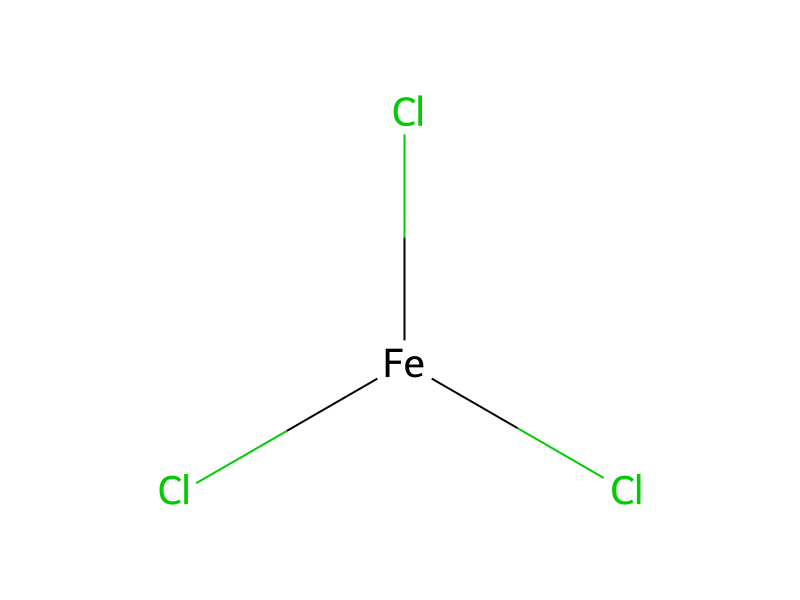
HCID 24380
ノートを作成反応を作成見積依頼を出す
印刷プレビュー
基本情報概要名称と識別子物性安全と法規制化学と産業関連反応化合物ノート
部分構造検索類似構造を探す

基本情報

CAS
7705-08-0
標準SMILES
[Cl][Fe]([Cl])[Cl]
InChIKey
RBTARNINKXHZNM-UHFFFAOYSA-K
分子式
Cl3Fe
平均分子量
162.2 g/mol

概要

Ferric chloride is an orange to brown-black solid. It is slightly soluble in water. It is noncombustible. When wet it is corrosive to aluminum and most metals. Pick up and remove spilled solid before adding water. It is used to treat sewage, industrial waste, to purify water, as an etching agent for engraving circuit boards, and in the manufacture of other chemicals.

名称と識別子

優先名称
Iron chloride (FeCl3)
IUPAC
trichloroiron
現地名
トリクロロ鉄(III)
英語名
Ferric chloride
分子式
Cl3Fe
分子量
162.2

名称と別名

FERRIC CHLORIDE7705-08-0Iron trichlorideIron chlorideFlores martisIron perchlorideChlorure perriquePerchlorure de ferIron chloride (FeCl3)Natural molysiteFERRIC CHLORIDE, ANHYDROUSChlorure ferrique
名称をさらに表示
塩化第二鉄トリクロロ鉄(III)鉄(III)トリクロリド塩化鉄(III)三塩化鉄塩化鉄(III)無水塩化鉄塩化第二鉄・塩化鉄(Ⅲ)塩化鉄(Ⅲ)無水〔第二〕三塩化鉄(III)塩化鉄(III)溶液塩化鉄(III)無水(塩化第二鉄)0.02MOL/L(N/50) 塩化鉄(Ⅲ)溶液塩化鉄(Ⅲ),無水 塩化第二鉄,無水塩化鉄(Ⅲ)溶液(D) 【BOD用】塩化鉄(Ⅲ)液,約38%塩化鉄(III) REAGENT GRADE,97%塩化鉄(III) SOLUTION PURUM,45% FECL3 BASISBOD試験用D液塩化第二鉄(無水)IRON(III) CHLORIDEFerric chloride anhydrousFERRIC CHLORIDE SOLUTIONIron(Ⅲ) chlorideDB03Molysite
Iron sesquichloride (DOT)FeCl3U38V3ZVV3VIron sesquichlorideCHEBI:30808NSC-51150NSC-135798Ferric trichloride

データベース識別子

CAS
7705-08-0
PubChem CID
24380
ChEBI
CHEBI:30808
EC Number
231-729-4

物性

構造計算による物性

極性表面積
0 Ų
水素結合供与体数
0
水素結合受容体数
0
回転可能結合数
0
重原子数
4
形式電荷
0
複雑度
8

実験および物理化学的性質

Chemical Classes · 2 件

Metals -> Metals, Inorganic Compounds

Corrosives

CosmeticsAstringent
SpringerMaterials Propertiescrystal structure
Food AdditivesENZYME, FLAVORING AGENT OR ADJUVANT, PROCESSING AID -> FDA Substance added to food
Density · 5 件

2.8 at 68 °F (anhydrous solid) (USCG, 1999) - Denser than water; will sink

2.90 at 25 °C

Density of 1.82; very hygroscopic; readily soluble in water, alcohol, acetone, ether /Hexahydrate/

2.9 g/cm³

2.9 @25 °C

Color/FormHexagonal red by transmitted light, green by reflected light; sometimes appears brownish-black; dark leaflets or plates.
Solubility · 6 件

5 to 10 mg/mL at 68 °F (NTP, 1992)

In cold water: 74.4 g/100 cc at 0 °C; in hot water: 535.7 g/100 cc at 100 °C; in acetone: 63 g/100 cc at 18 °C; very sol in alc, ether, methanol.

Slightly sol in carbon disulfide, practically insol in ethyl acetate.

Sol in glycerol

430 g/kg solution at 0 °C; 480 g/kg solution at 20 °C; 743 g/kg solution at 40 °C

Readily soluble in liquids having donor properties, such as alcohols, ketones, ethers, nitriles, amines, and liquid sulfur dioxide, but only sparingly soluble in nonpolar solvents such as benzene and hexane.

安全と法規制

安全情報は参考情報です。供給元の安全データシート(SDS)、適用法令、専門家による評価に代わるものではありません。

GHS分類

GHS Classification · 6 件

This chemical does not meet GHS hazard criteria for 0.2% (7 of 2856) of reports.

Danger

H302 (96.6%): Harmful if swallowed [Warning Acute toxicity, oral]

P260, P264, P264+P265, P270, P273, P280, P301+P317, P301+P330+P331, P302+P352, P302+P361+P354, P304+P340, P305+P354+P338, P316, P317, P321, P330, P332+P317, P362+P364, P363, P405, and P501 (click each P-code to see the statement)

Aggregated GHS information provided per 2856 reports by companies from 27 notifications to the ECHA C&L Inventory. Each notification may be associated with multiple companies.

Danger

危険有害性情報

Regulatory Information · 5 件

Chemical: Iron chloride (FeCl3)

Iron chloride (FeCl3) is listed on the EPA's Chemical Data Reporting (CDR) system. Manufacturers and importers of Iron chloride (FeCl3) are required to report information about their production and use of this chemical to the EPA under the Toxic Substances Control Act (TSCA). (40 eCFR Part 711)

Status: Active Update: 12-05-2023 https://echa.europa.eu/registration-dossier/-/registered-dossier/16109

Iron (III) chloride: Does not have an individual approval but may be used under an appropriate group standard

The New Jersey Worker and Community Right to Know Act requires public and private employers to provide information about hazardous substances at their workplaces. (N.J.S.A. 34:5A-1 et. seq.)

Other Safety InformationIMAP assessments - Iron chloride (FeCl3) and its hydrates: Human health tier II assessment
DOT Label · 2 件

Corrosive

Corrosive

Fire Hazards · 5 件

Special Hazards of Combustion Products: Irritating hydrogen chloride fumes may form in fire. (USCG, 1999)

Excerpt from ERG Guide 154 [Substances - Toxic and/or Corrosive (Non-Combustible)]:

· Non-combustible, substance itself does not burn but may decompose upon heating to produce corrosive and/or toxic fumes.

化学と産業

薬理情報

MeSH Pharmacological ClassificationAgents capable of exerting a harmful effect on the body.
Absorption, Distribution and Excretion · 1 件

An ovine model of maternal iron poisoning in pregnancy was used to examine the placental transport of deferoxamine and ferrioxasmine and to follow maternal and fetal serum iron concentrations when maternal serum iron levels exceeded total iron-binding capacity. Ewes in the third stage of gestation underwent hysterectomy and delivery of the fetal head through an abdominal incision while under ketamine and halothane anesthesia. The fetal external jugular vein was catheterized for sampling of venous blood while the fetus remained in utero. Administration of deferoxamine mesylate or ferrioxamine mesylate IV to ewes was not accompanied by measurable deferoxamine or ferrioxamine in fetal blood. In a final experiment, four gravid ewes in a control group received 2 mg/kg maternal body wt iron IV over 60 minutes. An experimental group comprision another four ewes received similar doses of iron but then received 50 mg/kg deferoxamine mesylate IV over 15 minutes. Control and deferoxamine ewes reached similar peak maternal serum iron concentration (2,479 + or - 266 and 2,121 + or - 343 ug/dL, respectively). The markedly elevated maternal serum iron concentrations were not accompanied by meaningful elevations in fetal serum iron level over baseline values. Maternal deferoxamine infusion resulted in a more rapid fall in maternal serum iron concentrations but had no effect on fetal serum iron levels. The ovine fetus appears to be protected from elevated maternal serum iron concentrations in the last trimester of prenancy. It could not be demonstrated that meaningful quantities of deferoxamine or ferrioxamine cross the placenta in the last trimester.

用途と製造

Uses · 6 件

Used as a medication, an analytical reagent, an etching agent (engraving, photography, and printed circuits), a catalyst, a mordant, a disinfectant, a pigment, and a feed additive; also used in sewage treatment and water purification; [HSDB] Found in nature as the mineral molysite; Used in photography, to make other iron salts, pigments, and inks, and for chlorinating silver and copper ores; [Merck Index]

関連反応

263 件
反応記録を作成
HRID 16133 の反応式
HRID 16133触媒としてuspto-grants-2010_06
HRID 16725 の反応式
HRID 16725触媒としてuspto-grants-2010_06
HRID 25488 の反応式
HRID 25488触媒としてuspto-grants-2005_02
HRID 35303 の反応式
HRID 35303触媒としてuspto-grants-1988_08
HRID 37569 の反応式
HRID 37569触媒としてuspto-grants-1995_05
HRID 38198 の反応式
HRID 38198触媒としてuspto-grants-2013_09
HRID 41288 の反応式
HRID 41288触媒としてuspto-grants-2013_09
HRID 43229 の反応式
HRID 43229触媒としてuspto-grants-2013_09
1 / 33 ページ

化合物ノート

読み込み中…

このページの内容基本情報概要名称と識別子物性安全と法規制化学と産業関連反応化合物ノート
その他の操作
ノートを作成反応を作成見積依頼を出す
CorrosivityWater solutions are acidic and corrosive to most metals.
Boiling Point · 2 件

599 °F at 760 mmHg (Decomposes) (NTP, 1992)

About 316 °C

DecompositionWhen heated to decomposition it emits highly toxic fumes of /hydrogen chloride/.
Melting Point · 6 件

583 °F (NTP, 1992)

[ACGIH] approximately 300 °C

304 °C

Brownish-yellow or orange monoclinic crystals; usually slight odor of HCl; pH of 0.1 molar aqueous solution: 2.0; mp: about 37 °C. /Hexahydrate/

37 °C

307.6 °C

Vapor Pressure · 5 件

1 mmHg at 381 °F (NTP, 1992)

VP: 1 mm Hg at 194.0 °C

VP: 1 Pa at 118 °C; 100 Pa at 190 °C; 100 kPa at 319 °C

Vapor pressure at 20 °C: negligible

1 [mm Hg] @194 °C

物理化学的性質

融点
304 °C · 304 °C(lit.)
沸点
316 °C · 316 °C
比重(密度)
2 · 2,804 g/cm3
蒸気密度
5.61 · 5.61 (vs air)
蒸気圧
1 mm · 1 mm Hg ( 194 °C)
屈折率
20 · n20/D1.414
闪点
316 °C · 316°C
貯蔵温度
30 °C · Store below +30°C.
溶解性
2 O: · H2O: 可溶
外見
粉
色
黄色
比重
2.804 · 2.804
PH
1 · 1 (200g/l, H2O, 20℃)
水溶解度
920 g/L · 920g/L(20℃)
比熱容量
0.6 J/ · Cp(crystal): 0.6 J/(g·K), at 25℃
Merck
14 · 14,4019
晶系
三方
空间群
3 · R3
晶格常数
30.606 · a/nmb/nmc/nmα/oβ/oγ/oV/nm30.6060.6061.74190901200.5529
安定性
安定。水分に非常に敏感です。強力な酸化剤と相溶せず、ナトリウムおよびカリウムと爆発性の混合物を形成する。吸湿性。
化粧品成分の機能
収斂性
InChI
1S/3ClH.Fe/h3*1H;/q;;;+3/p-3
InChIKey
RBTARNINKXHZNM-UHFFFAOYSA-K
SMILES
Cl[Fe](Cl)Cl
CAS データベース
7705 · 7705-08-0(CAS DataBase Reference)
NISTの化学物質情報
Ferric chloride(7705-08-0)
EPAの化学物質情報
Ferric chloride (7705-08-0)
化学的性質 · 3 件

化学的特性鉄III塩化物は化学式FeCl3で表される無機化合物ですこの化合物はその強力なルイス酸性と優れた触媒性能により工業的にも実験室レベルでも広く利用されています特に水処理有機合成錆の除去など多岐にわたる分野でその用途を見出すことができます

化学的特性Ferric chloride,FeCl3, is a brown crystalline solid and is soluble in water,alcohol,and glycerol. It is also known as anhydrous ferric chloride,ferric trichloride, Flores martis,and iron chloride. Ferric chloride is used as a coagulant for sewage and industrial wastes, as an oxidizing and chlorinating agent,as a disinfectant, in copper etching, and as amordant. In addition, this compound is employed in the ferric chloride test,which is used to assess the relative corrosion resistance of stainless and nickel-base alloys. The ferric chloride test has been shown to be an appropriate measure of the suitability of such alloys for service in paper mill bleach plants and seawater.

化学性质黒褐色,融点306℃,300℃以上で昇華性

· Non-combustible, substance itself does not burn but may decompose upon heating to produce corrosive and/or toxic fumes.

Not combustible. Gives off irritating or toxic fumes (or gases) in a fire.

Fire PotentialNot flammable
Health Hazards · 4 件

Inhalation of dust may irritate nose and throat. Ingestion causes irritation of mouth and stomach. Dust irritates eyes. Prolonged contact with skin causes irritation and burns. (USCG, 1999)

Excerpt from ERG Guide 154 [Substances - Toxic and/or Corrosive (Non-Combustible)]:

· TOXIC and/or CORROSIVE; inhalation, ingestion or contact (skin, eyes) with vapors, dusts or substance may cause severe injury, burns or death.

· TOXIC and/or CORROSIVE; inhalation, ingestion or skin contact with material may cause severe injury or death.

Hazards Summary · 1 件

Toxic by ingestion: 10 tablets (0.3 g Fe/tablet) causes mild illness in children; 20 tablets cause severe intoxication; Mortality rate was 1% in 474 acute iron poisoning cases; [ACGIH] Corrosive to skin; [Quick CPC] An irritant that may cause liver injury; [Merck Index] Decomposed by water forming hydrogen chloride; A skin, eye, and respiratory tract irritant; Corrosive on ingestion; [ICSC] A skin, eye, nose, and throat irritant; Prolonged skin contact can case burns; [CHRIS] A skin and strong eye irritant; Toxic by ingestion; [Aldrich MSDS] See Iron salts, soluble. See Ferric chloride hexahydrate.

DOT ID and Guide · 2 件

1773 157

2582 154

FDA Requirements · 2 件

Substance added directly to human food affirmed as generally recognized as safe (GRAS).

Ferric chloride is an indirect food additive for use only as a component of adhesives.

Reactive Group · 2 件

Acids, Strong Non-oxidizing

Acids, Strong Non-oxidizing

UN ClassificationUN Hazard Class: 8; UN Pack Group: III
FIFRA Requirements · 1 件

Ferric chloride (not > 2% of suspending, dispersing agent, pesticide formulation) is exempted from the requirement of a tolerance when used in accordance with good agricultural practice as inert (or occasionally active) ingredients in pesticide formulations applied to growing crops only.

安全と保護具

Fire Fighting · 3 件

Excerpt from ERG Guide 157 [Substances - Toxic and/or Corrosive (Non-Combustible / Water-Sensitive)]:

Excerpt from ERG Guide 154 [Substances - Toxic and/or Corrosive (Non-Combustible)]:

In case of fire in the surroundings, use appropriate extinguishing media.

First Aid Measures · 4 件

Fresh air, rest. Refer for medical attention.

Remove contaminated clothes. Rinse skin with plenty of water or shower.

First rinse with plenty of water for several minutes (remove contact lenses if easily possible), then refer for medical attention.

Rinse mouth. Give one or two glasses of water to drink. Do NOT induce vomiting. Refer for medical attention .

Accidental Release Measures · 4 件

· CALL 911. Then call emergency response telephone number on shipping paper. If shipping paper not available or no answer, refer to appropriate telephone number listed on the inside back cover.

· ELIMINATE all ignition sources (no smoking, flares, sparks or flames) from immediate area.

· CALL 911. Then call emergency response telephone number on shipping paper. If shipping paper not available or no answer, refer to appropriate telephone number listed on the inside back cover.

· ELIMINATE all ignition sources (no smoking, flares, sparks or flames) from immediate area.

First Aid · 4 件

EYES: First check the victim for contact lenses and remove if present. Flush victim's eyes with water or normal saline solution for 20 to 30 minutes while simultaneously calling a hospital or poison control center. Do not put any ointments, oils, or medication in the victim's eyes without specific instructions from a physician. IMMEDIATELY transport the victim after flushing eyes to a hospital even if no symptoms (such as redness or irritation) develop.

Excerpt from ERG Guide 154 [Substances - Toxic and/or Corrosive (Non-Combustible)]:

General First Aid:

General First Aid:

Safe StorageSeparated from strong bases and incompatible materials. See Chemical Dangers. Dry. Well closed.
Exposure Control and Personal Protection · 2 件

· Wear positive pressure self-contained breathing apparatus (SCBA).

· Wear positive pressure self-contained breathing apparatus (SCBA).

Fire Fighting Procedures · 2 件

If material involved in fire: Extinguish fire using agent suitable for type of surrounding fire. (Material itself does not burn or burns with difficulty.) /Ferric chloride, anhydrous/

If material on fire or involved in fire: Extinguish fire using agent suitable for type of surrounding fire. (Material itself does not burn or burns with difficulty.) Use water in flooding quantities as fog. Cool all affected containers with flooding quantities of water. Apply water from as far a distance as possible. /Ferric chloride, solution/

Storage Conditions · 2 件

Solution of ferric chloride should be stored in polyethylene bottles and should be protected from exposure to light and heat. ...If solutions ...become cloudy, they should be discarded. Solution stored in glass bottles must be refrigerated. Solution stored in glass bottles may reach alkali from glass and the rubber stoppers, forming yellow precipitate of ferric oxide.

Keep well closed.

Cleanup Methods · 5 件

Environmental consideration: Land spill: Dig a pit, pond, lagoon, holding area to contain liquid or solid material. /SRP: If time permits, pits, ponds, lagoons, soak holes, or holding areas should be sealed with an impermeable flexible membrane liner./ Cover solids with a plastic sheet to prevent dissolving in rain or fire fighting water. /Ferric chloride, anhydrous/

Environmental considerations: Land spill: Dig a pit, pond, lagoon, holding area to contain liquid or solid material. /SRP: If time permits, pits, ponds, lagoons, soak holes, or holding areas should be sealed with an impermeable flexible membrane liner./ Dike surface flow using soil, sand bags, foamed polyurethane, or foamed concrete. Absorb bulk liquid with fly ash, cement powder, or commercial sorbents. Neutralize with agricultural lime (CaO), crushed limestone (CaCO3) or sodium bicarbonate (NaHCO3). /Ferric chloride, solution/

Environmental consideration: Water spill: Neutralize with agricultural lime (CaO), crushed limestone (CaCO3) or sodium bicarbonate (NaHCO3). Use mechanical dredges or lifts to remove immobilized masses of pollutants and precipitates. Adjust pH to neutral (pH= 7). /Ferric chloride, solution/

Environmental considerations: Water spill: Neutralize with agricultural lime (CaO), crushed limestone (CaCO3) or sodium bicarbonate (NaHCO3). Adjust pH to neutral (pH= 7). Use mechanical dredges or lifts to remove immobilized masses of pollutants and precipitates. /Ferric chloride, anhydrous/

Environmental considerations: Air spill: Apply water spray or mist to knock down vapors. /Ferric chloride, solution/

Nonfire Spill Response · 2 件

Excerpt from ERG Guide 157 [Substances - Toxic and/or Corrosive (Non-Combustible / Water-Sensitive)]:

Excerpt from ERG Guide 154 [Substances - Toxic and/or Corrosive (Non-Combustible)]:

Disposal Methods · 3 件

SRP: The most favorable course of action is to use an alternative chemical product with less inherent propensity for occupational exposure or environmental contamination. Recycle any unused portion of the material for its approved use or return it to the manufacturer or supplier. Ultimate disposal of the chemical must consider: the material's impact on air quality; potential migration in soil or water; effects on animal, aquatic, and plant life; and conformance with environmental and public health regulations.

Neutralization & landfill: Bury neutralized (with lime or soda ash) waste material in an approved landfill or dispose of through a licensed waste disposal firm.

The following wastewater treatment technologies have been investigated for iron (Fe+2): Concentration process: Biological treatment. /Iron (Fe+2)/

Spillage Disposal · 1 件

Personal protection: particulate filter respirator adapted to the airborne concentration of the substance. Do NOT let this chemical enter the environment. Sweep spilled substance into covered plastic containers. If appropriate, moisten first to prevent dusting.

毒性情報

Interactions · 2 件

The effect of di- and trivalent iron on the intestinal absorption of aluminum (Al) was studied in an in situ perfusion system of rat small intestine in combination with systemic and portal blood sampling. The small intestine of female Wistar rats (6 animals/group) was perfused with media containing 10.0, 15.0, 20.0, and 25.0 mmol/L Al as aluminum chloride hexahydrate (AlCl3.6H2O), with or without 5 mmol/L ferrous chloride tetrahydrate (FeCl2.4H2O) or ferric chloride hexahydrate (FeCl3.6H2O) for 60 min. The disappearance of Al or Fe from the perfusion medium, which is a measure for uptake from the intestinal lumen, was calculated. After perfusion, samples of small intestine were collected. Control tissue samples were taken from a rat perfused with saline for 60 min and from a nonperfused rat. In the rats perfused with Al and/or Fe there was no morphological damage to the intestinal wall compared with the saline and nonperfused controls. Fe(III) did not affect Al disappearance at any point during perfusion (p>0.05 for all concentrations of Al perfusion media). Al appeared after the 60 min perfusion period in both systemic and portal blood. Both Fe(II) and Fe(III) were absorbed after 60 min perfusion, with the divalent iron being more extensively absorbed. The rise of the Al level in portal blood was slightly higher than that in systemic blood suggesting a possible liver trapping of Al before entering the peripheral circulation. Fe(III) did not affect Al absorption during 60 min perfusion for all concentrations of Al perfusion media (0.10< p<0.25). /Ferric chloride hexahydrate/

Benzo(a)pyrene (0.5 mg), in itself weakly carcinogenic, when given in combination with ferric chloride (0.16 mg) or iodine (0.2 mg), alone noncarcinogen, induced a number of tumors of different parts of the respiratory tract of Syrian golden hamsters.

Ecotoxicity Values · 5 件

TLm Daphnia 15 ppm/96 hr fresh water /Conditions of bioassay not specified/

LC50 Ceriodaphnia dubia (Water flea) 30.06 mg/L/48 hr (95% confidence interval: 28.20-31.72 mg/L); static

LC50 Gambusia affinis (Western mosquitofish) >26 mg/L/24, 48, 96 hr; static

LC50 Nitocra spinipes (Harpacticoid copepod) 21 mg/L/96 hr (95% confidence interval: 16-28 mg/L); static

For more Ecotoxicity Values (Complete) data for FERRIC CHLORIDE (7 total), please visit the HSDB record page.

Adverse EffectsOccupational hepatotoxin - Secondary hepatotoxins: the potential for toxic effect in the occupational setting is based on cases of poisoning by human ingestion or animal experimentation.
Exposure RoutesThe substance can be absorbed into the body by ingestion.
Ecotoxicity Excerpts · 2 件

/AQUATIC SPECIES/ Harmful to aquatic life in very low concentrations.

/AQUATIC SPECIES/ Among populations of Paracentrotus lividus living near the sewage outlet of Marseilles' conurbation, ...individuals with brown to black gonads /have been observed/. An ultrastructural study demonstrated the presence of extracellular and intracellular crystals. In the latter they are in nucleus, vacuoles and cytoplasm of phagocytic coelomocytes. An X-ray microanalysis indicates the presence of iron, chlorine and sulfur in these crystals. ...A relationship between this bioaccumulation and the release into coastal water of iron chloride from the sewage treatment plant of Marseilles /is proposed/. This element may be found in both the coelomic fluid and food of sea-urchin. It is collected and transformed by phagocytic coelomocytes. When this bioaccumulation becomes excessive coelomocytes are injured and free crystals may be found within the gonads and hemal system.

Signs and Symptoms · 4 件

Cough. Sore throat.

Redness. Pain.

Redness. Pain. Blurred vision.

Abdominal pain. Vomiting. Diarrhoea. Shock or collapse.

ICSC Environmental DataThe substance is harmful to aquatic organisms.
Natural Pollution SourcesOccurs in nature as the mineral molysite.
Human Toxicity Excerpts · 3 件

/CASE REPORTS/ Contact sensitization to iron and positive patch test to a 2% ferric chloride solution were reported in a 66 yr old white male tool maker. The patient's 5 yr history of allergic contact dermatitis was not associated with any other exposure to metals. This is the second documented case of allergic contact sensitization to iron.

/CASE REPORTS/ ...A 25-y-old woman presented with vomiting after ingestion of 200 mL ferric chloride solution (pH 1.0). She had hypoxemia and severe metabolic acidosis with respiratory alkalosis initially. Three hours after her ingestion she presented with drowsy consciousness, tachycardia, tachypnea and protracted vomiting. Laboratory studies showed leukocytosis, elevated glucose, aspartate aminotransferase, amylase, lactate dehydrogenase, and total bilirubin, coagulation defect and hemolysis. Aspiration pneumonia and vision loss were also noted. Four hours after ingestion cardiopulmonary arrest suddenly occurred after severe vomiting and she expired. Toxicological studies showed marked elevation of serum iron (2440 ug/dL); the estimated oral dose of ferric chloride was equivalent to 11.52 g (230 mg/kg) of elemental iron. This patient did not receive deferoxamine due to rapid deterioration and a late diagnosis.

/OTHER TOXICITY INFORMATION/ Diagnosis of iron intraocular foreign body has usually been based on x-ray demonstration of an opaque foreign body by establishing that the foreign body can be made to move with a magnet, but in some instances either one or both of these diagnostic measures are inconclusive, yet clinical findings suggestive of siderosis indicate that there may be an intraocular iron foreign body. To help establish the diagnosis, analysis of the aqueous humor for iron, to detect an abnormally high content, has proven useful in a few cases. Also as a help in diagnosis, particularly in eyes where surgery for cataract is required, histologic staining of an excised piece of iris or analysis of the lens for iron has been helpful diagnostically. However, to make a definite diagnosis on the basis of histologic examination it is essential to rule out hemosiderosis, which can be produced by persistent intraocular hemorrhage, because the histologic findings and iron staining are indistinguishable in these two conditions. ... /Iron Compounds/

Non-Human Toxicity Excerpts · 5 件

/LABORATORY ANIMALS: Acute Exposure/ ...Injection of 0.05 - 0.1 cc of 10% solution of ferric chloride into vitreous humor of rabbits caused in 1-4 wk a loss of pupillary response to light, marked drop in resting potential of eye measured at cornea and subnormal intraocular pressure.

/LABORATORY ANIMALS: Acute Exposure/ A single injection of 5 or 10 uL of ferrous or ferric chloride into rat or cat sensorimotor cortex resulted in chronic recurrent focal paroxysmal electroencaphalographic discharges as well as behavioral convulsions and electrical seizures. Recurrent focal epileptiform discharge caused by cortical injection of iron salts suggests that the development of human posttraumatic epilepsy may depend, in part, on the neurochemical alterations induced by the principal metallic ions found in whole blood.

/LABORATORY ANIMALS: Acute Exposure/ ...A thermocouple was inserted under a carotid artery of the anesthetized rat and vessel temperature was recorded continuously. Arterial injury was induced by FeCl3 solution applied topically to the artery above the thermocouple. To validate the relationship between thrombotic occlusion and vessel temperature, blood flow velocity, proximal to the injury, and temperature were recorded simultaneously. Temperature decreased rapidly when velocity averaged 24 +/- 12% of control and velocity did not differ from zero within 20 sec. In normal vessels, average flow velocity did not decrease significantly from control until a fixed stenosis decreased diameter by 78%. Average time to occlusion (TTO), signaled by the abrupt temperature inflection, ranged from 56 +/- 4 min to 14 +/- 1 min after 10 and 65% FeCl3 application respectively. Vessel segments were fixed at various times after FeCl3 exposure and examined by scanning electron microscopy. Endothelial damage was observed and was associated with thrombus composed of activated platelets, fibrin strands and entrapped erythrocytes. The results demonstrate that FeCl3 dose-dependently induced formation of an occlusive mixed thrombus that was indexed by monitoring the time between FeCl3 application and a rapid temperature decrease in the carotid artery of the rat.

/LABORATORY ANIMALS: Subchronic or Prechronic Exposure/ The effects of inhaled iron-chloride on rabbit lung alveolar macrophages, alveolar epithelial cells, and surfactant were studied. Animals were exposed for 2 months to either 3.1 mg/cu cm or 1.4 mg/cu m nebulized iron-chloride. Lung and alveolar macrophage morphology were examined under light and electron microscopy. Macrophage oxidative metabolism and lung phospholipids were also analyzed. Iron-chloride inhalation increased macrophage number and caused them to aggregate into large granulomas in the alveoli. Macrophage ultrastructure revealed marked alterations with enlarged lysosomal complexes that often contained iron rich inclusions. Oxidative metabolism was not affected. Rabbits exposed to high iron-chloride concentrations showed a small increase in the volume density of type-II cells and a significant increase in total phospholipid concentration of the lung.

Populations at Special Risk · 1 件

...There is concern that the individual with metabolic defects that impair the ability to regulate iron absorption will be at risk from excessive exposure to iron, primarily as a result of acceleration of accumulation of iron in the body and an earlier onset of clinical symptoms of the disease. /Iron salts/

Probable Routes of Human ExposureNIOSH (NOES Survey 1981-1983) has statistically estimated that 108,492 workers (52,117 of these are female) are potentially exposed to ferric chloride in the US(1).

法規制情報

FDA Requirements · 2 件

Substance added directly to human food affirmed as generally recognized as safe (GRAS).

Ferric chloride is an indirect food additive for use only as a component of adhesives.

FIFRA Requirements · 1 件

Ferric chloride (not > 2% of suspending, dispersing agent, pesticide formulation) is exempted from the requirement of a tolerance when used in accordance with good agricultural practice as inert (or occasionally active) ingredients in pesticide formulations applied to growing crops only.

CERCLA Reportable Quantities · 1 件

Persons in charge of vessels or facilities are required to notify the National Response Center (NRC) immediately, when there is a release of this designated hazardous substance, in an amount equal to or greater than its reportable quantity of 1000 lb or 454 kg. The toll free number of the NRC is (800) 424-8802; In the Washington D.C. metropolitan area (202) 426-2675. The rule for determining when notification is required is stated in 40 CFR 302.4 (section IV. D.3.b).

Clean Water Act Requirements · 1 件

Ferric chloride is designated as a hazardous substance under section 311(b)(2)(A) of the Federal Water Pollution Control Act and further regulated by the Clean Water Act Amendments of 1977 and 1978. These regulations apply to discharges of this substance. This designation includes any isomers and hydrates, as well as any solutions and mixtures containing this substance.

Federal Drinking Water GuidelinesEPA 300 ug/L /Iron/

安全データ

wgk
1
tsca
TSCA listed
rtecs
LJ9100000
ridadr
UN 2582 8/PG III (FERRIC CHLORIDE SOLUTION)
毒性
LD50 orally in Rabbit: 316 mg/kg
PRTR法
第1種指定化学物質
hs_code
2827 39 20
risk_code
41-38-22-34-37/38-10-36
化審法
一般化学物質
安衛法
57,57-2
hazard_code
C,Xn,Xi
safety_code
26-39-45-36/37/39
hazard_class
8
packing_group
III
Hazard Classifications
Acute Tox. 4 OralEye Dam. 1Met. Corr. 1Skin Irrit. 2
ストレージクラス
8B - Non-combustible corrosive hazardous materials
有毒物質データの
7705-08-0(Hazardous Substances Data)
危険度評価(NFPA 704基準/消防庁データ)
人的[青]=1

Using Disinfectants or Biocides [Category: Clean]

Intalagio printing [Category: Hobbies]

For ferric chloride (USEPA/OPP Pesticide Code: 034901) there are 0 labels match. /SRP: Not registered for current use in the U.S., but approved pesticide uses may change periodically and so federal, state and local authorities must be consulted for currently approved uses./

Treatment of sewage and industrial wastes; etching agent for engraving, photography, and printed circuitry; condensation catalyst in Friedel-crafts reactions; mordant; oxidizing, chlorinating, and condensing agent; disinfectant; pigment; feed additive; water purification.

Reagent useful in gross screening for phenylketonuria and as guide to adequacy of dietary management of phenylketonuria.

U.S. Production · 3 件

2023: 550,000,000 - <700,000,000 lb

(1984) 1.16X10+11 g

(1994) 200,000 tons (as 100% FeCl3)

Consumption Patterns · 3 件

Sewage and waste water treatment, 80% ; industrial and potable water treatment, 15%; misc, 5% (1984)

CHEMICAL PROFILE: Ferric chloride. Sewage and waste water treatment, 70%; (waste water sludge conditioning, 50%; phosphates removal, 20%); industrial and potable water treatment, 15%; other, including electronic and photographic etchant, catalyst and asphalt walling, 15%.

CHEMICAL PROFILE: Ferric chloride. Demand: 1987: 185,000 tons; 1988: 185,000 tons; 1992 /projected/: 194,000 tons (Imports and exports are negligible).

Consumer UsesNot Known or Reasonably Ascertainable
Industry UsesOther
Methods of Manufacturing · 5 件

... Produced industrially by reaction of dry chlorine with scrap iron at 500-700 °C. The process is known as direct chlorination.

... Carried out in a reactor with an acid-resistant liner, iron scrap and dry chlorine gas react in a eutectic melt of iron(III) chloride and potassium or sodium chloride ... First, iron scrap is dissolved in the melt at 600 °C and oxidized to iron(II) chloride by iron(III) chloride. Iron(II) chloride then reacts with chlorine to yield iron(III) chloride, which sublimes and is collected in cooled condensation chambers.

Action of chlorine on ferrous sulfate or chloride.

Commercial process generally involves the reaction of chlorine gas on red hot iron.

For more Methods of Manufacturing (Complete) data for FERRIC CHLORIDE (6 total), please visit the HSDB record page.

Formulations/Preparations · 3 件

Ferric chloride solution, reagent, 5% and 10%.

Grades: Anhydrous 96%; 42 deg Be solution, photographic and sewage grades.

Anhydrous; Hydrate; Reagent; 46% solution in water.

Household Products · 2 件

Information on 1 consumer products that contain Ferric chloride-Iron (III) chloride in the following categories is provided:

Information on 1 consumer products that contain Iron chloride in the following categories is provided:

Use ClassificationCosmetics -> Astringent
General Manufacturing Information · 3 件

Not Known or Reasonably Ascertainable

Iron chloride (FeCl3): ACTIVE

/Has been patented for use/ in the manufacture of catalytic asphalt.

応用分野 · 5 件

解説塩化鉄(Ⅲ):FeCl3(162.20).三塩化鉄ともいう.暗赤色の結晶塊.潮解性.硫酸鉄(Ⅱ)に塩素を作用させると得られる.密度2.90 g cm-3.融点300 ℃,沸点317 ℃.蒸気密度はFe2Cl6に相当する.空気中で加熱すると酸化鉄(Ⅲ)になる.水に易溶.エタノール,エーテルとは付加物を生成する.六水和物は黄褐色の柱状または板状晶.黄色塩化鉄として市販されている.いちじるしく潮解性.比較的軟らかい.融点36.5 ℃,沸点280 ℃.水溶液は加水分解して強酸性を呈する.湿気,光により分解して塩化水素を放つ.タンパク質を凝固させる.媒染剤,止血剤,酸化剤,塩素化剤,汚水処理剤,プリント基板のエッチング剤などに用いられる.

用途半導体、液晶、触媒、凝集剤、医薬原料、電子材料原料、プリント配線?ネームプレート?シャドーマスク?写真製版原料、下水処理剤、食品添加物(鉄強化剤)

説明Ferric chloride (iron(IH)chloride, FeCl3, CAS No. 7705-08-0) may be prepared from iron and chlorine or from ferric oxide and hydrogen chloride. The pure material occurs as hydroscopic, hexagonal, dark crystals. Ferric chloride hexahydrate (iron(III)chloride hexahydrate, FeCl3*6H2O, CAS No. 10025-77-1) is readily formed when ferric chloride is exposed to moisture.

使用Ferric Chloride is a nutrient and dietary supplement that serves as a source of iron.

一般的な説明Ferric chloride is an orange to brown-black solid. Ferric chloride is slightly soluble in water. Ferric chloride is noncombustible. When wet Ferric chloride is corrosive to aluminum and most metals. Pick up and remove spilled solid before adding water. Ferric chloride is used to treat sewage, industrial waste, to purify water, as an etching agent for engraving circuit boards, and in the manufacture of other chemicals.

調製方法 · 2 件

合成方法鉄粉を塩素気流中で熱す

純化方法Sublime it at 200o in an atmosphere of chlorine. It is an “iron-black” coloured powder with green irridescence. Store it in a weighing bottle inside a desiccator as it absorbs moisture from air to form the yellow hexahydrate (see next entry). [Tarr Inorg Synth III 191 1950, Pray Inorg Synth V 153 1957, Epperson Inorg Synth VII 163 1963.]

上流・下流製品情報

上流原料

ビフェントリンIron filingsFree and total Chlorine, ion specific meter塩素酸素鉄(II)ジクロリド塩化鉄(III)六水和物鉄粉

下流製品

二りん酸/鉄(III),(3:4)N-(3,4-ジクロロフェニル)プロパンアミドpolythinirenビス(2-ヒドロキシプロパン酸)鉄(II)1-(トリクロロメチル)-3-(トリフルオロメチル)ベンゼン2,5-ジクロロベンゾイルクロリド5-アミノ-1,3,4-チアジアゾール-2-カルボン酸エチルN-sec-ブチル-4-tert-ブチル-2,6-ジニトロアニリン2-クロロ-6-ニトロトルエン塩化ビニル(1S,6α)-3,7,7-トリメチルビシクロ[4.1.0]ヘプタ-3-エン2,5-ジクロロ-p-キシレン3,4-ヘキサンジオン2,3-ジクロロ-1,4-ナフトキノン2-クロロ-4-ニトロ安息香酸メチルアルソン酸/鉄(III)/アンモニウム,(1:x:x)4-クロロフェニル4-クロロベンゼンスルホナート2,3,4-トリメトキシフェニルボロン酸4'-(トリフルオロメトキシ)アセトフェノンクロプロキシフェン2-メトキシフェニルアセトン2,2'-ビピリジルりん酸鉄(Ⅱ)八水和物3',5'-ジニトロ-2',6'-ジメチル-4'-tert-ブチルアセトフェノンフェレデタートナトリウム4-アミノ-2-クロロトルエン3-クロロベンゾトリフルオリドソルベントブラック5ステビオシド6-メチルピリジン-2-カルボニトリルpoly (3-alkyl thiophene) fiberチオフェン-3,4-ジボロン酸7,14-ジヒドロキノキサリノ[2,3-b]フェナジンセラトロダストナフテン酸の鉄塩6-メトキシ-4-メチルキノリン3-アミノフェナジン-2-オール2,3-フェナジンジアミン5-amino-1,3,4-thiadiazole-2-carboxylic acidtrans-1,4-ジクロロ-2-ブテン

補足説明

定義本品は、鉄の塩化物であり、次の化学式で表される。

For more Non-Human Toxicity Excerpts (Complete) data for FERRIC CHLORIDE (11 total), please visit the HSDB record page.