ホームMCPワークベンチSkills
ホームワークベンチ通知マイページ
llms.txt · MCPガイドプライバシーポリシー · 利用規約 · サポートv1.8.1
  1. ホーム
  2. /化合物

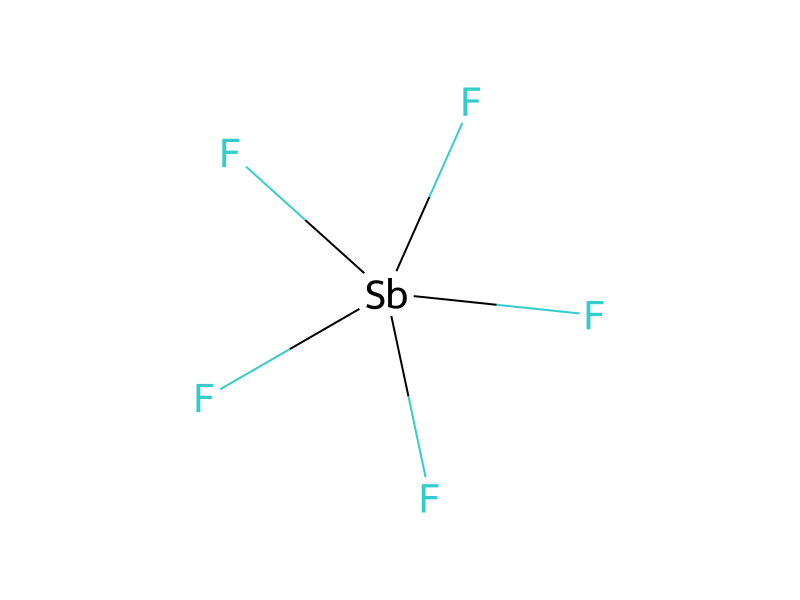
アンチモン(V)ペンタフルオリド

Antimony pentafluoride

HCID 24557
反応を作成
印刷

データを補完しています。しばらくしてからページを更新すると最新の内容を表示できます
基本情報概要名称と識別子物性安全と法規制化学と産業関連反応化合物ノート
部分構造検索類似構造を探す

基本情報

CAS
7783-70-2
標準SMILES
[F][Sb]([F])([F])([F])[F]
InChIKey
VBVBHWZYQGJZLR-UHFFFAOYSA-I
分子式
F5Sb
平均分子量
216.752 g/mol
単同位体質量
215.8958318

概要

Antimony pentafluoride appears as a colorless, oily liquid. Fumes irritate the eyes and mucous membranes. Toxic. Corrosive to metals and tissue. Extremely dangerous to tissue; its burns may be followed by gangrene. Only shipped in cylinders. Under prolonged exposure to heat cylinders may violently rupture and rocket. Used to make other chemicals as well as a catalyst in the manufacture of other chemicals.

名称と識別子

優先名称
Antimony pentafluoride
IUPAC
pentafluoro-λ5-stibane
現地名
アンチモン(V)ペンタフルオリド
英語名
ANTIMONY PENTAFLUORIDE
分子式
F5Sb
分子量
216.75

名称と別名

ANTIMONY PENTAFLUORIDEAntimony(V) fluoride7783-70-2PentafluoroantimonyAntimony (V) fluorideAntimony(V) pentafluorideAntimony fluoride (SbF5)UN17326C93R71VRFDTXSID00893075SbF5 cpdRefChem:113169
名称をさらに表示
ペンタフルオロアンチモン(V)アンチモン(V)フルオリドアンチモン(V)ペンタフルオリドフッ化アンチモン(V)五フッ化アンチモンペンタフルオロスチバンSbF5ANTIMONY FLUORIDEAntimonyfluoride2Anmony(Ⅴ) FluorideAntimonyPentaflurideantimonyfluoride(sbf5)Antimony(V)fluoride,98%
DTXCID001323029232-021-8UN-1732pentafluoro-lambda5-stibaneAntimony(V) fluoride compound with graphiteAntimonypentafluorideHSDB 442EINECS 232-021-8

データベース識別子

CAS
7783-70-2

物性

構造計算による物性補完中

極性表面積
0 Ų
水素結合供与体数
0
水素結合受容体数
5
回転可能結合数
0
重原子数
6
形式電荷
0
複雑度
37.1

実験および物理化学的性質

Chemical Classes · 2 件

Toxic Gases & Vapors -> Other Toxic Gases & Vapors

Corrosives

OdorSharp odor
Density · 5 件

3.097 at 78.44 °F (EPA, 1998) - Denser than water; will sink

3.10 g/cu cm

Has SbF5 units with cis-fluorides bridging to form polymeric units. The vapor density at 150 °C corresponds to a trimer. The solid is a cis-fluorine-bridged tetramer.

Relative density (water = 1): 3.00

2.99 @ 23°C

Color/Form · 3 件

Hygroscopic, moderately viscous liquid

Hygroscopic, viscous liquid

Oily, colorless liquid

Solubility · 4 件

Reacts violently with water

Soluble in water and potassium fluoride

Soluble in potassium fluoride (KF), liquid sulfur dioxide

Solubility in water: reaction

Corrosivity · 2 件

Slowly corrodes glass, copper, lead

When moisture is present, causes severe corrosion of metals (except steel) and glass.

Boiling Point · 4 件

286 °F at 760 mmHg (EPA, 1998)

141 °C

141 °C

149.5 °C @760 [mm Hg]

Decomposition

安全と法規制

安全情報は参考情報です。供給元の安全データシート(SDS)、適用法令、専門家による評価に代わるものではありません。

GHS分類

GHS Classification · 6 件

Danger

H302 (44.4%): Harmful if swallowed [Warning Acute toxicity, oral]

P260, P261, P264, P270, P271, P273, P280, P301+P317, P301+P330+P331, P302+P361+P354, P304+P340, P305+P354+P338, P316, P317, P321, P330, P363, P391, P405, and P501 (click each P-code to see the statement)

Aggregated GHS information provided per 108 reports by companies from 11 notifications to the ECHA C&L Inventory. Each notification may be associated with multiple companies.

Danger

H315: Causes skin irritation [Warning Skin corrosion/irritation]

危険有害性情報

Hazards IdentificationWater-reactive material (WR)
Regulatory Information · 3 件

Chemical: Antimony fluoride (SbF5)

Antimony (V) fluoride: Does not have an individual approval but may be used under an appropriate group standard

The New Jersey Worker and Community Right to Know Act requires public and private employers to provide information about hazardous substances at their workplaces. (N.J.S.A. 34:5A-1 et. seq.)

DOT LabelCorrosive Poison
Fire Hazards · 3 件

Reacts violently with water, to form poisonous hydrogen fluoride fumes. If confined and wet can cause explosion. May cause fire in contact with combustible material. Hazardous polymerization may not occur. (EPA, 1998)

· Non-combustible, substance itself does not burn but may decompose upon heating to produce corrosive and/or toxic fumes.

Not combustible but enhances combustion of other substances. Gives off irritating or toxic fumes (or gases) in a fire.

Fire PotentialNot combustible, but if involved in a fire decomposes to produce fumes of antimony and hydrogen fluoride. Contact with combustible materials may increase the fire hazard.

化学と産業

薬理情報

Absorption, Distribution and Excretion · 1 件

Distribution in rats after chronic poisoning by inhalation of antimony pentafluoride showed high antimony concentration in blood. Levels in liver, kidneys, spleen and pancreas were similar. The antimony was retained for a long time and could be detected in organs under examination one month after experiment discontinued.

用途と製造

Uses · 4 件

Used as a catalyst and fluorinating agent; [HSDB]

Toxic Gas from Spilling Chemical in Water [Category: Other]

Catalyst and/or source of fluorine in fluorination reactions.

Antimony pentafluoride is a strong Lewis acid and a good oxidizing and fluorinating agent.

Methods of Manufacturing · 2 件

May be prepared by fluorination of antimony trifluoride (SbF3) or by treatment of antimony pentachloride (SbCl5) with hydrogen fluoride (HF). In the latter method the fifth chlorine is removed with difficulty; failure to completely remove the chlorine results in contamination of the distilled SbF5 with Sb(III).

Antimony pentafluoride is prepared by treating antimony pentachloride with excess anhydrous hydrogen fluoride. The antimony pentafluoride is separated from the volatile byproducts by fractional distillation. It can also be prepared by allowing fluorine to react with antimony powder or molten antimony trifluoride.

General Manufacturing Information · 2 件

Antimony fluoride (SbF5): ACTIVE

Antimony can be trivalent or pentavalent in compounds. Both exist in antimony(IV) oxide, Sb2O4, and presumably in the deep violet haloantimonates (IV), such as Cs2(SbCl6). The pentavalent compounds, as well as most of the trivalent ones, are hydrolyzed by water to form antimony salts, e.g., SbOCl, and hydrated oxides. The only halides of antimony that have any industrial significance are the chlorides and fluorides. /Antimony compounds/

応用分野 · 2 件

関連反応

13 件
反応記録を作成
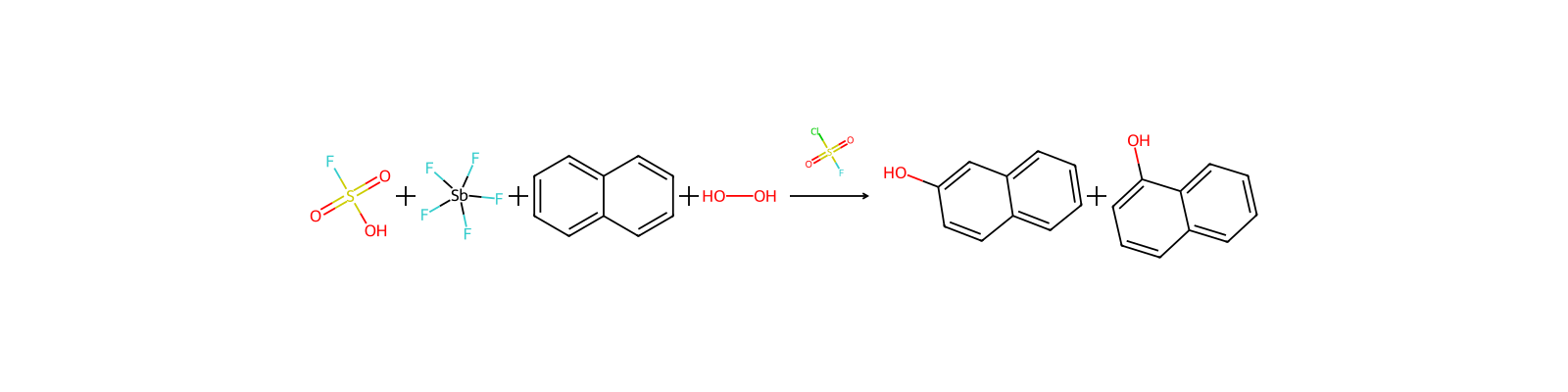
HRID 49656 の反応式
HRID 49656反応物としてuspto-grants-2004_03
HRID 202222 の反応式
HRID 202222反応物としてTraining data from https://doi.org/10.1039/C8SC04228D (6/10)
HRID 542921 の反応式
HRID 542921反応物としてuspto-grants-1987_04
HRID 542922 の反応式
HRID 542922反応物としてuspto-grants-1987_04
HRID 542931 の反応式
HRID 542931反応物としてuspto-grants-1987_04
HRID 823655 の反応式
HRID 823655反応物としてTest data from https://doi.org/10.1039/C8SC04228D
HRID 904753 の反応式
HRID 904753反応物としてuspto-grants-1983_12
HRID 1086656 の反応式
HRID 1086656溶媒としてuspto-grants-1991_07
前へ1 / 2 ページ

化合物ノート

このページの内容基本情報概要名称と識別子物性安全と法規制化学と産業関連反応化合物ノート
PubChem CID
24557
DTXSID
DTXSID00893075
ChEBI
CHEBI:193146
EC Number
232-021-8
· 2 件

Hazardous decomposition products formed under fire conditions - Hydrogen fluoride, antimony oxide.

When heated to decomposition it emits very toxic fumes of /fluoride and antimony/.

Melting Point · 4 件

47 °F (EPA, 1998)

8.3 °C

8.3 °C

7 °C

Vapor PressureVapor pressure, kPa at 25 °C: 1.33
Surface Tension20 dynes/cm = 0.20 N/m at 20 °C
Physical Description · 3 件

Antimony pentafluoride appears as a colorless, oily liquid. Fumes irritate the eyes and mucous membranes. Toxic. Corrosive to metals and tissue. Extremely dangerous to tissue; its burns may be followed by gangrene. Only shipped in cylinders. Under prolonged exposure to heat cylinders may violently rupture and rocket. Used to make other chemicals as well as a catalyst in the manufacture of other chemicals.

Viscous liquid with a sharp odor; [HSDB]

OILY COLOURLESS HYGROSCOPIC LIQUID WITH PUNGENT ODOUR.

物理化学的性質

融点
7 °C · 7 °C(lit.)
沸点
149.4 °C · 149.4 °C
比重(密度)
2.993 g/mL · 2.993 g/mL at 25 °C(lit.)
蒸気密度
2.2 · 2.2 (vs air)
蒸気圧
10 mm · 10 mm Hg ( 25 °C)
闪点
149.5 °C · 149.5°C
貯蔵温度
30 °C · Store below +30°C.
溶解性
液体二酸化硫黄: わずかに溶ける(lit.)
外見
光沢のあるフレークまたはパウダー
色
ホワイトからオフホワイト
水溶解度
2 O · H2O と激しく反応し、加水分解される [HAW93] [KIR78]
Merck
13 · 13,702
InChI
1S/5FH.Sb/h5*1H;/q;;;;;+5/p-5
InChIKey
VBVBHWZYQGJZLR-UHFFFAOYSA-I
SMILES
F[Sb](F)(F)(F)F
CAS データベース
7783 · 7783-70-2(CAS DataBase Reference)
EPAの化学物質情報
Antimony pentafluoride (7783-70-2)

化学的性質

化学的特性Antimony pentafluoride is a noncombustible, oily, colorless liquid with a pungent odor.

Health Hazards · 2 件

The compound is irritating to eyes, skin, and lungs. Contact with eyes or skin causes severe burns. The compound is extremely toxic with a probable oral lethal dose of 5-50 mg/kg or between 7 drops and one teaspoonful for a 150 pound person (antimony salts). (EPA, 1998)

· TOXIC and/or CORROSIVE; inhalation, ingestion or contact (skin, eyes) with vapors, dusts or substance may cause severe injury, burns or death.

Hazards Summary · 1 件

Hydrofluoric acid formed when F5-Sb reacts with water; Corrosive to eyes, skin, and respiratory tract; Can cause acute pulmonary edema after heavy inhalation exposure; In chronic inhalation studies of animals, pneumonitis as well as liver and cardiac damage are observed. Repeated exposures to fluoride compounds can result in fluorosis. [HSDB] Recent experiments show that there is essentially very little HF formation; the substance was quite unreactive in water. [CAMEO] See FLUORIDES. See Antimony and linked occupational diseases.

DOT ID and Guide1732 157
Reactive GroupAcids, Strong Non-oxidizing
EC ClassificationSymbol: Xn, N; R: 20/22-51/53; S: (2)-61; Note: A, 1
UN ClassificationUN Hazard Class: 8; UN Subsidiary Risks: 6.1; UN Pack Group: II
RCRA RequirementsD003; A solid waste containing antimony pentafluoride may become characterized as a hazardous waste when subjected to testing for reactivity as stipulated in 40 CFR 261.23, and if so characterized, must be managed as a hazardous waste.

安全と保護具

Fire Fighting · 2 件

Wear full protective clothing and acid-gas-type canister mask. Move container from fire area. Spray cooling water on containers that are exposed to flames until well after fire is out. Reacts violently with water.

Use powder, carbon dioxide. NO water. NO hydrous agents. In case of fire: keep drums, etc., cool by spraying with water. NO direct contact with water.

First Aid Measures · 4 件

Fresh air, rest. Half-upright position. Refer immediately for medical attention.

Remove contaminated clothes. Rinse skin with plenty of water or shower. Refer immediately for medical attention. Apply calcium gluconate to the burn areas.

Rinse with plenty of water for several minutes (remove contact lenses if easily possible). Refer immediately for medical attention.

Rinse mouth. Do NOT induce vomiting. Refer immediately for medical attention.

Accidental Release Measures · 2 件

· CALL 911. Then call emergency response telephone number on shipping paper. If shipping paper not available or no answer, refer to appropriate telephone number listed on the inside back cover.

· ELIMINATE all ignition sources (no smoking, flares, sparks or flames) from immediate area.

First Aid · 2 件

Warning: Antimony Pentafluoride is highly corrosive to the eyes, skin, and lungs, and is extremely toxic if swallowed. The estimated lethal dose after ingestion is between 7 drops and one teaspoonful for a 150 pound person.

General First Aid:

Safe Storage · 1 件

Separated from combustible substances, reducing agents and food and feedstuffs. Dry. Well closed. Keep in a well-ventilated room. Do NOT store or transport in containers made from metal or glass. Provision to contain effluent from fire extinguishing. Store in an area without drain or sewer access.

Firefighting HazardsClosed containers may rupture violently when heated.
Exposure Control and Personal Protection · 3 件

· Wear positive pressure self-contained breathing apparatus (SCBA).

Biological Exposure Indices (BEI) [ACGIH] - Fluorides in urine = 2 mg/L prior to shift or 3 mg/L at end of shift; (Repeated measurements recommended.)

1.0 [mg/m3], as F, inhalable fraction[German Research Foundation (DFG)]

Fire Fighting Procedures · 5 件

Suitable extinguishing media: Use water spray, alcohol-resistant foam, dry chemical or carbon dioxide.

Advice for firefighters: Wear self-contained breathing apparatus for firefighting if necessary.

Approach fire from upwind to avoid hazardous vapors and toxic decomposition products. Use dry chemical, carbon dioxide, or flooding quantities of water as spray on fire involved material.

Approach fire from upwind; avoid hazardous vapors and toxic decomposition products. Do not use water or foam on fire or on adjacent fires; extinguish with dry chemicals or carbon dioxide. Water spray may be used to reduce vapors. ... If material or contaminated runoff enters waterways, notify downstream users of potentially contaminated waters. Notify local health or fire officials and pollution control agencies. From a secure, explosion-proof location, use water spray to cool exposed containers. If cooling streams are ineffective (venting sound increases in volume and pitch, tank discolors, or shows any signs of deforming), withdraw immediately to a secure position. ... The only respirators recommended for firefighting are self-contained breathing apparatuses that have full face-pieces and are operated in a pressure-demand or other positive-pressure mode.

If material involved in fire: Use dry chemical, dry sand, or carbon dioxide. Do not use water on material itself. If large quantities of combustibles are involved, use water in flooding quantities as spray and fog. Use water spray to knock-down vapors. Cool all affected containers with flooding quantities of water. Apply water from as far a distance as possible.

Storage Conditions · 4 件

Keep container tightly closed in a dry and well-ventilated place. Containers which are opened must be carefully resealed and kept upright to prevent leakage. Reacts violently with water. Do not store in glass. Storage class (TRGS 510): Non Combustible Liquids.

Store in a cool, dry, well-ventilated location. Outside or detached storage is preferred. Separate from organic or siliceous materials.

May be stored in aluminum vessels.

Store in a secure poison location. ... Antimony pentafluoride must be stored to avoid contact with phosphorous, phosphates, siliceous, and combustible or organic materials since violent reactions occur. Store in tightly closed containers in a cool, well-ventilated area away from water or moisture and heat. Outside of detached storage if preferred.

Cleanup Methods · 4 件

ACCIDENTAL RELEASE MEASURES: Personal precautions, protective equipment and emergency procedures: Use personal protective equipment. Avoid breathing vapors, mist or gas. Ensure adequate ventilation. Environmental precautions: Prevent further leakage or spillage if safe to do so. Do not let product enter drains. Discharge into the environment must be avoided. Methods and materials for containment and cleaning up: Soak up with inert absorbent material and dispose of as hazardous waste. Keep in suitable, closed containers for disposal.

Wear special protective clothing and positive pressure self-contained breathing apparatus.

Keep water away from release. Approach release from upwind. Stop or control the leak, if this can be done without undue risk. Control runoff and isolate discharged material for proper disposal.

Evacuate persons not wearing protective equipment from area of spill or leak until cleanup is complete. Remove all ignition sources. Do not touch spilled material; stop leak if you can do so without undue risk. Use water spray to reduce vapors. For large spills, dike far ahead. Absorb spills with noncombustible absorbent material, such as vermiculite, dry sand, earth, etc., and deposit in sealed containers. Ventilate area after cleanup is complete. It may be necessary to contain and dispose of this chemical as a hazardous waste. If material or contaminated runoff enters waterways, notify downstream users of potentially contaminated waters.

Nonfire Spill ResponseExcerpt from ERG Guide 157 [Substances - Toxic and/or Corrosive (Non-Combustible / Water-Sensitive)]:
Disposal Methods · 3 件

SRP: Recycle any unused portion of the material for its approved use or return it to the manufacturer or supplier. Ultimate disposal of the chemical must consider: the material's impact on air quality; potential migration in air, soil or water; effects on animal, aquatic and plant life; and conformance with environmental and public health regulations. If it is possible or reasonable use an alternative chemical product with less inherent propensity for occupational harm/injury/toxicity or environmental contamination.

SRP: Wastewater from contaminant suppression, cleaning of protective clothing/equipment, or contaminated sites should be contained and evaluated for subject chemical or decomposition product concentrations. Concentrations shall be lower than applicable environmental discharge or disposal criteria. Alternatively, pretreatment and/or discharge to a permitted wastewater treatment facility is acceptable only after review by the governing authority and assurance that "pass through" violations will not occur. Due consideration shall be given to remediation worker exposure (inhalation, dermal and ingestion) as well as fate during treatment, transfer and disposal. If it is not practicable to manage the chemical in this fashion, it must be evaluated in accordance with EPA 40 CFR Part 261, specifically Subpart B, in order to determine the appropriate local, state and federal requirements for disposal.

Product: Offer surplus and non-recyclable solutions to a licensed disposal company. Contact a licensed professional waste disposal service to dispose of this material; Contaminated packaging: Dispose of as unused product.

毒性情報

Adverse EffectsDermatotoxin - Skin burns.
Exposure RoutesSerious local effects and systemic effects by all routes of exposure.
Toxicity Summary · 1 件

IDENTIFICATION AND USE: Antimony pentafluoride is a hygroscopic, viscous liquid. It is used in the fluorination of organic compounds. HUMAN STUDIES: It is a corrosive liquid to skin, eyes, mucous membranes. ANIMAL STUDIES: Distribution in rats after chronic poisoning by inhalation of antimony pentafluoride showed high antimony concentration in blood. Levels in liver, kidneys, spleen and pancreas were similar. The antimony was retained for a long time and could be detected in organs under examination one month after experiment discontinued.

Signs and Symptoms · 4 件

Burning sensation. Cough. Laboured breathing. Nausea. Shortness of breath. Sore throat.

Redness. Serious skin burns. Pain.

Redness. Pain. Severe deep burns.

Burns in mouth and throat. Sore throat. Burning sensation. Abdominal pain. Diarrhoea. Vomiting. Shock or collapse.

ICSC Environmental DataThe substance is toxic to aquatic organisms.
Human Toxicity Excerpts/SIGNS AND SYMPTOMS/ A very reactive, corrosive liquid to skin, eyes, mucous membranes.
Artificial Pollution SourcesAntimony pentafluoride's production and use in the fluorination of organic compounds(1) may result in its release to the environment through various waste streams(SRC).
Evidence for CarcinogenicityA4; Not classifiable as a human carcinogen. /Fluorides, as F/
Antidote and Emergency Treatment · 4 件

Immediate first aid: Ensure that adequate decontamination has been carried out. If patient is not breathing, start artificial respiration, preferably with a demand-valve resuscitator, bag-valve-mask device, or pocket mask, as trained. Perform CPR if necessary. Immediately flush contaminated eyes with gently flowing water. Do not induce vomiting. If vomiting occurs, lean patient forward or place on left side (head-down position, if possible) to maintain an open airway and prevent aspiration. Keep patient quiet and maintain normal body temperature. Obtain medical attention. /Fluorine and related compounds/

Basic treatment: Establish a patent airway (oropharyngeal or nasopharyngeal airway, if needed). Suction if necessary. Watch for signs of respiratory insufficiency and assist ventilations if necessary. Administer oxygen by nonrebreather mask at 10 to 15 L/min. Monitor for pulmonary edema and treat if necessary ... . Monitor for shock and treat if necessary ... . Anticipate seizures and treat if necessary ... For eye contamination, flush eyes immediately with water. Irrigate each eye continuously with 0.9% saline (NS) during transport ... . Do not use emetics. For ingestion, rinse mouth and administer 5 mL/kg up to 200 mL of water for dilution if the patent can swallow, has a strong gag reflex, and does not drool. ... . Cover skin burns with dry sterile dressings after decontamination ... . /Fluorine and related compounds/

Advanced treatment: Consider orotracheal or nasotracheal intubation for airway control in the patient who is unconscious, has severe pulmonary edema, or is in severe respiratory distress. Positive pressure ventilation techniques with a bag-valve-mask device may be beneficial. Consider drug therapy for pulmonary edema ... . Monitor cardiac rhythm and treat arrhythmias if necessary ... . Start IV administration of D5W. Use 0.9% saline (NS) or lactated Ringer's (LR) if signs of hypovolemia are present. For hypotension with signs of hypovolemia, administer fluids cautiously. Consider vasopressors if patient is hypotensive with a normal fluid volume. Watch for signs of fluid overload ... . Treat seizures with diazepam (Valium) or lorazepam (Ativan) ... . Use proparacaine hydrochloride to assist eye irrigation ... . /Fluorine and related compounds/

If this chemical gets into the eyes, remove any contact lenses at once and irrigate immediately for at least 15 min, occasionally lifting upper and lower lids. Seek medical attention immediately. If this chemical contacts the skin, remove contaminated clothing and wash immediately with soap and water. Seek medical attention immediately. If this chemical has been inhaled, remove from exposure, begin rescue breathing (using universal precautions, including resuscitation mask) if breathing has stopped and CPR if heart action has stopped. Transfer promptly to a medical facility. When this chemical has been swallowed, get medical attention. If victim is conscious, administer water or milk. Do not induce vomiting. Medical observation is recommended for 24-48 hr after breathing overexposure, as pulmonary edema may be delayed. As first aid for pulmonary edema, a doctor or authorized paramedic may consider administering a corticosteroid spray.

Toxicity DataLC50 (mice) = 270 mg/m3

法規制情報

RCRA RequirementsD003; A solid waste containing antimony pentafluoride may become characterized as a hazardous waste when subjected to testing for reactivity as stipulated in 40 CFR 261.23, and if so characterized, must be managed as a hazardous waste.
Atmospheric Standards · 1 件

Listed as a hazardous air pollutant (HAP) generally known or suspected to cause serious health problems. The Clean Air Act, as amended in 1990, directs EPA to set standards requiring major sources to sharply reduce routine emissions of toxic pollutants. EPA is required to establish and phase in specific performance based standards for all air emission sources that emit one or more of the listed pollutants. Antimony compounds are included on this list. /Antimony Componds/

CERCLA Reportable Quantities · 1 件

Releases of CERCLA hazardous substances are subject to the release reporting requirement of CERCLA section 103, codified at 40 CFR part 302, in addition to the requirements of 40 CFR part 355. Antimony pentafluoride is an extremely hazardous substance (EHS) subject to reporting requirements when stored in amounts in excess of its threshold planning quantity (TPQ) of 500 lbs.

Clean Water Act RequirementsToxic pollutant designated pursuant to section 307(a)(1) of the Federal Water Pollution Control Act and is subject to effluent limitations. /Antimony and compounds/
DHS Chemicals of Interest (COI) · 4 件

Antimony pentafluoride

A Commercial Grade

A Placarded Amount

Chemical or material that can be mixed with readily available materials.

安全データ

F
10
wgk
3
tsca
TSCA listed
rtecs
CC5800000
ridadr
UN 1732
毒性
LC50 ihl-mus: 270 mg/m3 GISAAA 35(7),25,70
PRTR法
第1種指定化学物質
hs_code
28261990
risk_code
23/24/25-34-51/53-20/22
化審法
一般化学物質
安衛法
57,57-2
hazard_code
T,O,C,N,Xn
hazard_note
Corrosive/Oxidising agent
safety_code
61-45-36/37/39-28-27-26-22
hazard_class
8
packing_group
II
毒劇物取締法
III
Hazard Classifications
Acute Tox. 4 InhalationAcute Tox. 4 OralAquatic Chronic 2Eye Dam. 1Skin Corr. 1B
ストレージクラス
6.1A - Combustible acute toxic Cat. 1 and 2very toxic hazardous materials
有毒物質データの
7783-70-2(Hazardous Substances Data)

使用HF/SbF5 is an excellent medium for the preparation of alkylidene oxonium salts.1

一般的な説明A colorless, oily liquid. Fumes irritate the eyes and mucous membranes. Toxic. Corrosive to metals and tissue. Extremely dangerous to tissue; its burns may be followed by gangrene. Only shipped in cylinders. Under prolonged exposure to heat cylinders may violently rupture and rocket. Used to make other chemicals as well as a catalyst in the manufacture of other chemicals.

調製方法 · 3 件

製造方法Antimony pentafluoride is prepared by the reaction of antimony pentachloride with anhydrous hydrogen fluoride:SbCl5 +5 HF → SbF5 +5 HClIt may also be prepared from antimony trifluoride and fluorine, or by treating antimony pentaoxide with aqueous hydrofluoric acid and evaporing water.

Antimony pentafluoride is prepared by treating antimony pentachloride with excess anhydrous hydrogen fluoride. The antimony pentafluoride is separated from the volatile byproducts by fractional distillation. It can also be prepared by allowing fluorine to react with antimony powder or molten antimony trifluoride. The main use of antimony pentafluoride is as a fluorinating agent.

純化方法Purify it by vacuum distillation, preferably in a quartz apparatus, and store it in quartz or aluminum bottles. It is a hygroscopic viscous liquid which reacts violently with H2O and is hydrolysed by alkalis. It is POISONOUS and attacks the skin. [Woolf & Greenwood J Chem Soc 2200 1950, Kwasnik in Handbook of Preparative Inorganic Chemistry (Ed. Brauer) Academic Press Vol I p 200 1965.]

上流・下流製品情報

上流原料

アンチモンペンタクロリドフッ化水素酸アンチモン(V)ペンタフルオリド

下流製品

Nitrogen(1+), tetrafluoro-, (T-4)-, (OC-6-11)-hexafluoroantimonate(1-)ヘキサフルオロアンチモン酸ニトロソニウム