ホームMCPワークベンチSkills
ホームワークベンチ通知マイページ
llms.txt · MCPガイドプライバシーポリシー · 利用規約 · サポートv1.8.0
  1. ホーム
  2. /化合物

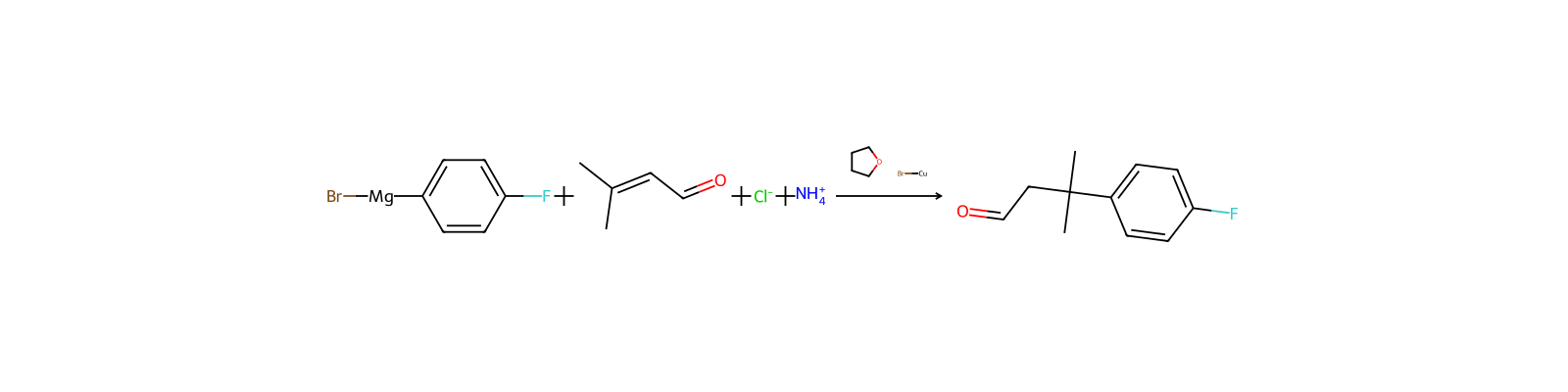
臭化銅(I)

copper(I) bromide

HCID 24593
ノートを作成反応を作成見積依頼を出す
印刷プレビュー

データを補完しています。しばらくしてからページを更新すると最新の内容を表示できます

基本情報概要名称と識別子物性安全と法規制化学と産業関連反応化合物ノート
部分構造検索類似構造を探す

基本情報

CAS
7787-70-4
標準SMILES
[Cu][Br]
InChIKey
NKNDPYCGAZPOFS-UHFFFAOYSA-M
分子式
BrCu
平均分子量
143.45 g/mol
単同位体質量
141.8479346

概要

Copper (i) bromide appears as white powder or crystal. Turns green to dark blue on exposure to sunlight. Sinks and mixes slowly with water. (USCG, 1999)

名称と識別子

優先名称
copper(I) bromide
IUPAC
bromocopper
現地名
臭化銅(I)
英語名
Cuprous bromide
分子式
BrCu
分子量
143.45

名称と別名

Copper(I) bromide7787-70-4CUPROUS BROMIDEBromocopperCopper(1+) bromideCopper monobromideCopper bromide (CuBr)UNII-R8V209A5G0HSDB 270EINECS 232-131-6DTXSID6052530RefChem:127896
名称をさらに表示
一臭化銅ブロモ銅(I)銅(I)ブロミド臭化第一銅臭化銅(Ⅰ)臭化(I)臭化銅(Ⅰ)〔第一〕臭化銅(I)(臭化第一銅)臭化銅(I) PURUM P.A.,≥98.0% (RT)COPPER(I) BROMIDE, PURATRONIC®, 99.998% (METALS BASIS)臭化銅(I), 99.9%臭化銅(I), Puratronic®, 99.998% (metals basis)臭化銅(I), min. 98%臭化銅(I)CUBRCOPPER BROMIDEcooper bromideCopper(l) bromideKupferbromidBromocopper(I)Cupper(Ⅰ)bromideCOPPER(+1)BROMIDE
DTXCID3031103232-131-6COPPER(I) BROMIDE [HSDB]CUPROUS BROMIDE [MI]BrCuR8V209A5G0copper(1)bromideCopper I Bromide

データベース識別子

CAS
7787-70-4
PubChem CID
24593
DTXSID
DTXSID6052530
EC Number
232-131-6

物性

構造計算による物性補完中

極性表面積
0 Ų
水素結合供与体数
0
水素結合受容体数
0
回転可能結合数
0
重原子数
2
形式電荷
0
複雑度
2

実験および物理化学的性質

Chemical ClassesMetals -> Metals, Inorganic Compounds
SpringerMaterials Propertiesvalence band parameter
Density · 2 件

4.72 at 77 °F (USCG, 1999) - Denser than water; will sink

4.72 @ 25 °C/4 °C

Color/Form · 3 件

White powder or cubic crystals (zinc blende structure)

White tetrahedral crystals

White crystalline solid becoming green in light

Solubility · 3 件

Slightly sol in cold water; sol in hydrochloric acid, hydrobromic acid, ammonium hydroxide with the formation of complexes; practically insoluble in acetone, concentrated sulfuric acid

Soluble in hydrochloric acid and ammonium hydroxide; insoluble in acetone and sulfuric acid

Slightly soluble in water

Boiling Point · 2 件

2453 °F at 760 mmHg (USCG, 1999)

1345 °C

DecompositionWHEN STRONGLY HEATED, THEY EMIT HIGHLY TOXIC FUMES OF /HYDROGEN BROMIDE/. /BROMIDES/
Melting Point · 2 件

939.2 °F (USCG, 1999)

504 °C

Vapor Pressure

安全と法規制

安全情報は参考情報です。供給元の安全データシート(SDS)、適用法令、専門家による評価に代わるものではありません。

GHS分類

GHS Classification · 4 件

Danger

H302+H312 (12.3%): Harmful if swallowed or in contact with skin [Warning Acute toxicity, oral; acute toxicity, dermal]

P261, P264, P264+P265, P270, P271, P273, P280, P301+P317, P302+P352, P304+P340, P305+P351+P338, P305+P354+P338, P317, P319, P321, P330, P332+P317, P337+P317, P362+P364, P391, P403+P233, P405, and P501 (click each P-code to see the statement)

Aggregated GHS information provided per 243 reports by companies from 14 notifications to the ECHA C&L Inventory. Each notification may be associated with multiple companies.

危険有害性情報

Regulatory Information · 3 件

Chemical: Copper bromide (CuBr)

Status: Active Update: 28-05-2019 https://echa.europa.eu/registration-dossier/-/registered-dossier/29323

Copper bromide (CuBr): Does not have an individual approval but may be used as a component in a product covered by a group standard. It is not approved for use as a chemical in its own right.

Other Safety InformationIMAP assessments - Copper bromide (CuBr): Human health tier I assessment
Health Hazards · 1 件

INHALATION: Irritation of upper respiratory tract. EYES: Irritation of conjunctivae. SKIN: Irritation, acne-like rash (usually from prolonged exposure). INGESTION: Vomiting caused by local irritant and astringent action of ionic Cu on stomach and intestines. Pain in mouth, esophagus, and stomach. Inorganic bromides produce depression, psychoses, and mental deterioration. (USCG, 1999)

Hazards Summary · 1 件

A skin, eye, and upper respiratory tract irritant; [HSDB] Acute copper poisoning after ingestion can cause liver injury, methemoglobinemia, and hemolytic anemia. Acute renal failure may result, secondary to massive hemoglobinuria. [Goldfrank, p. 1259] A skin and strong eye irritant; Targets the lungs and liver; [Sigma-Aldrich MSDS] See Bromine. See Copper.

化学と産業

薬理情報

Metabolism/Metabolites · 1 件

Copper is mainly absorbed through the gastrointestinal tract, but it can also be inhalated and absorbed dermally. It passes through the basolateral membrane, possibly via regulatory copper transporters, and is transported to the liver and kidney bound to serum albumin. The liver is the critical organ for copper homoeostasis. In the liver and other tissues, copper is stored bound to metallothionein, amino acids, and in association with copper-dependent enzymes, then partitioned for excretion through the bile or incorporation into intra- and extracellular proteins. The transport of copper to the peripheral tissues is accomplished through the plasma attached to serum albumin, ceruloplasmin or low-molecular-weight complexes. Copper may induce the production of metallothionein and ceruloplasmin. The membrane-bound copper transporting adenosine triphosphatase (Cu-ATPase) transports copper ions into and out of cells. Physiologically normal levels of copper in the body are held constant by alterations in the rate and amount of copper absorption, compartmental distribution, and excretion. Bromine is mainly absorbed via inhalation, but may also enter the body through dermal contact. Bromine salts can be ingested. Due to its reactivity, bromine quickly forms bromide and may be deposited in the tissues, displacing other halogens. (L626, L277, L279)

用途と製造

Uses · 3 件

Used as a polymerization catalyst; [HSDB]

As a catalyst for organic reactions

As a polymerization catalyst for organic reactions.

Methods of Manufacturing · 3 件

Prepn: Briggs, J Chem Soc 127: 496 (1925); Keller, Wycoff, Inorg Syn 2: 3 (1946); Wagner, Wagner, J Chem Phys 26: 1597 (1957).

... By reducing copper(II) sulfate soln containing potassium bromide with sulfur dioxide or other standard reducing agents, or with metallic copper.

Prepared pyrometallurgically or by reducing a copper(II) sulfate solution in the presence of sodium bromide, usually with sulfur dioxide or metallic copper.

General Manufacturing InformationCopper bromide (CuBr): ACTIVE

関連反応

3,640 件
反応記録を作成
HRID 18710 の反応式
HRID 18710触媒としてuspto-grants-2010_06
HRID 23268 の反応式
HRID 23268触媒としてuspto-grants-2005_02
HRID 41853 の反応式
HRID 41853触媒としてuspto-grants-2013_09
HRID 47550 の反応式
HRID 47550触媒としてuspto-grants-2004_03
HRID 48110 の反応式
HRID 48110触媒としてuspto-grants-2004_03
HRID 49849 の反応式
HRID 49849触媒としてuspto-grants-2004_03
HRID 53274 の反応式
HRID 53274触媒としてuspto-grants-1997_04
HRID 54256 の反応式
HRID 54256触媒としてuspto-grants-1997_04
1 / 455 ページ

化合物ノート

読み込み中…

このページの内容基本情報概要名称と識別子物性安全と法規制化学と産業関連反応化合物ノート
その他の操作
ノートを作成反応を作成見積依頼を出す
1 MM HG @ 572 °C
Food Contact Substances · 2 件

FCS -> FDA Cumulative Estimated Daily Intake (CEDI)

FCS -> FDA Inventory of Food Contact Substances Listed in 21 CFR

Refractive IndexINDEX OF REFRACTION: 2.116
Physical Description · 2 件

Copper (i) bromide appears as white powder or crystal. Turns green to dark blue on exposure to sunlight. Sinks and mixes slowly with water. (USCG, 1999)

White solid; Becomes green to dark-blue on sunlight exposure; Slightly soluble in cold water; Decomposed by hot water; [Merck Index] Powder; Isoluble in water; [Sigma-Aldrich MSDS]

物理化学的性質

融点
504 °C · 504 °C(lit.)
沸点
1345 °C · 1345 °C
比重(密度)
4.71 g/mL · 4.71 g/mL at 25 °C(lit.)
闪点
1345 °C · 1345°C
貯蔵温度
Keep in dark place,Inert atmosphere,Room temperature
溶解性
insoluble in acetone
外見
粉
色
薄緑から緑
比重
4.98 · 4.98
水溶解度
臭化水素、塩酸、水酸化アンモニウムに可溶。水にわずかに溶ける。アセトンに不溶。
比熱容量
0.38 J/ · Cp(crystal): 0.38 J/(g·K), at 25℃
Merck
14 · 14,2659
安定性
安定していますが、空気や光に敏感な場合があります。アルカリ金属、強力な酸化剤とは相容れない。
InChI
1S/BrH.Cu/h1H;/q;+1/p-1
InChIKey
NKNDPYCGAZPOFS-UHFFFAOYSA-M
SMILES
[Cu]Br
Hardness, Mohs
2.5 · 2.5
CAS データベース
7787 · 7787-70-4(CAS DataBase Reference)
NISTの化学物質情報
Copper(I) bromide(7787-70-4)
EPAの化学物質情報
Copper bromide (CuBr) (7787-70-4)

化学的性質

化学的特性Copper(I) bromide is a Pale green to green poeder that decomposes on exposure to light or moisture in air. It forms complexes with hydrochloric and hydrobromic acids and aqueous ammonia.

Reactive GroupNon-Redox-Active Inorganic Compounds
Reactivity Profile · 1 件

COPPER (I) BROMIDE has weak oxidizing or reducing powers. Redox reactions can however still occur. The majority of compounds in this class are slightly soluble or insoluble in water. If soluble in water, then the solutions are usually neither strongly acidic nor strongly basic. These compounds are not water-reactive.

Air and Water ReactionsMixes slowly with water.
Toxic Combustion ProductsWHEN STRONGLY HEATED, THEY EMIT HIGHLY TOXIC FUMES OF /HYDROGEN BROMIDE/. /BROMIDES/
NIOSH RecommendationsRecommended Exposure Limit: 10 Hr Time-Weighted Avg: 1 mg/cu m. /Copper (dusts and mists)/
Clean Water Act RequirementsToxic pollutant designated pursuant to section 307(a)(1) of the Federal Water Pollution Control Act and is subject to effluent limitations. /Copper and cmpd/
Hazard Classes and CategoriesAcute Tox. 4 (75.3%)
State Drinking Water Guidelines(AZ) ARIZONA 1300 ug/l /Copper/

安全と保護具

First AidCall a physician.
Exposure Control and Personal Protection0.01 [mg/m3], respirable fraction (Cu, inorganic cmpnds)[German Research Foundation (DFG)]
Disposal Methods · 1 件

SRP: At the time of review, criteria for land treatment or burial (sanitary landfill) disposal practices are subject to significant revision. Prior to implementing land disposal of waste residue (including waste sludge), consult with environmental regulatory agencies for guidance on acceptable disposal practices.

Preventive Measures · 1 件

SRP: The scientific literature for the use of contact lenses in industry is conflicting. The benefit or detrimental effects of wearing contact lenses depend not only upon the substance, but also on factors including the form of the substance, characteristics and duration of the exposure, the uses of other eye protection equipment, and the hygiene of the lenses. However, there may be individual substances whose irritating or corrosive properties are such that the wearing of contact lenses would be harmful to the eye. In those specific cases, contact lenses should not be worn. In any event, the usual eye protection equipment should be worn even when contact lenses are in place.

Minimum Risk LevelAcute Oral: 0.01 mg/kg/day (Copper) (L134) Intermediate Oral: 0.01 mg/kg/day (Copper) (L134)
Threshold Limit Values (TLV) · 3 件

1.0 [mg/m3], as Cu

8 hr Time Weighted Avg (TWA): 1 mg/cu m /Copper dusts and mists, as Cu/

Excursion Limit Recommendation: Excursions in worker exposure levels may exceed 3 times the TLV-TWA for no more than a total of 30 minutes during a work day, and under no circumstances should they exceed 5 times the TLV-TWA, provided that the TLV-TWA is not exceeded. /Copper dusts and mists, as Cu/

Permissible Exposure Limit (PEL)1.0 [mg/m3], as Cu
Personal Protective Equipment (PPE) · 2 件

Rubber gloves, safety glasses, and laboratory coat. (USCG, 1999)

Rubber gloves, safety glasses, & lab coat.

Immediately Dangerous to Life or Health (IDLH)100.0 [mg/m3], as Cu

毒性情報

Treatment · 1 件

EYES: irrigate opened eyes for several minutes under running water. INGESTION: do not induce vomiting. Rinse mouth with water (never give anything by mouth to an unconscious person). Seek immediate medical advice. SKIN: should be treated immediately by rinsing the affected parts in cold running water for at least 15 minutes, followed by thorough washing with soap and water. If necessary, the person should shower and change contaminated clothing and shoes, and then must seek medical attention. INHALATION: supply fresh air. If required provide artificial respiration.

Health Effects · 1 件

People must absorb small amounts of copper every day because copper is essential for good health, however, high levels of copper can be harmful. Very-high doses of copper can cause damage to your liver and kidneys, and can even cause death. Copper may induce allergic responses in sensitive individuals. Bromine vapour causes irritation and direct damage to the mucous membranes. Elemental bromine also burns the skin. The bromide ion is a central nervous system depressant and chronic exposure produces neuronal effects. This is called bromism and can result in central reactions reaching from somnolence to coma, cachexia, exicosis, loss of reflexes or pathologic reflexes, clonic seizures, tremor, ataxia, loss of neural sensitivity, paresis, papillar edema of the eyes, abnormal speech, cerebral edema, delirium, aggressiveness, and psychoses. (L625, L626, L627, L278, L279)

Adverse EffectsOccupational hepatotoxin - Secondary hepatotoxins: the potential for toxic effect in the occupational setting is based on cases of poisoning by human ingestion or animal experimentation.
Exposure RoutesOral (L277) ; inhalation (L277) ; dermal (L277)
Toxicity Summary · 1 件

Excess copper is sequestered within hepatocyte lysosomes, where it is complexed with metallothionein. Copper hepatotoxicity is believed to occur when the lysosomes become saturated and copper accumulates in the nucleus, causing nuclear damage. This damage is possibly a result of oxidative damage, including lipid peroxidation. Copper inhibits the sulfhydryl group enzymes such as glucose-6-phosphate 1-dehydrogenase, glutathione reductase, and paraoxonases, which protect the cell from free oxygen radicals. It also influences gene expression and is a co-factor for oxidative enzymes such as cytochrome C oxidase and lysyl oxidase. In addition, the oxidative stress induced by copper is thought to activate acid sphingomyelinase, which lead to the production of ceramide, an apoptotic signal, as well as cause hemolytic anemia. Copper-induced emesis results from stimulation of the vagus nerve. Bromine is a powerful oxidizing agent and is able to release oxygen free radicals from the water in mucous membranes. These free radicals are also potent oxidizers and produce tissue damage. In additon, the formation of hydrobromic and bromic acids will result in secondary irritation. The bromide ion is also known to affect the central nervous system, causing bromism. This is believed to be a result of bromide ions substituting for chloride ions in the in actions of neurotransmitters and transport systems, thus affecting numerous synaptic processes. (L626, L627, A543, L277, T49, A174, L280)

Signs and Symptoms · 1 件

Breathing high levels of copper can cause irritation of the nose and throat. Ingesting high levels of copper can cause nausea, vomiting, diarrhea, headache, dizziness, and respiratory difficulty. Bromine vapour causes irritation and direct damage to the mucous membranes. Symptoms include lacrimation, rhinorrhoea, eye irritation with mucous secretions from the oropharyngeal and upper airways, coughing, dyspnoea, choking, wheezing, epistaxis, and headache. The bromide ion is a central nervous system depressant producing ataxia, slurred speech, tremor, nausea, vomiting, lethargy, dizziness, visual disturbances, unsteadiness, headaches, impaired memory and concentration, disorientation and hallucinations. This is called bromism. (L626, L627, L278, L279)

Human Toxicity ExcerptsIrritating to skin & eyes. ... Irritation to upper respiratory tract.
Carcinogen ClassificationNo indication of carcinogenicity to humans (not listed by IARC).
Antidote and Emergency Treatment · 2 件

Basic treatment: Establish a patent airway. Suction if necessary. Watch for signs of respiratory insufficiency and assist ventilations if necessary. Administer oxygen by nonrebreather mask at 10 to 15 L/min. Monitor for shock and treat if necessary ... . For eye contamination, flush eyes immediately with water. Irrigate each eye continuously with normal saline during transport ... . Do not use emetics. For ingestion, rinse mouth and administer 5 ml/kg up to 200 ml of water for dilution if the patient can swallow, has a strong gag reflex, and does not drool. Administer activated charcoal ... . /Copper and related compounds/

Advanced treatment: Consider orotracheal or nasotracheal intubation for airway control in the patient who is unconscious. Start an IV with lactated Ringer's /SRP: "To keep open", minimal flow rate/. Watch for signs of fluid overload. For hypotension with signs of hypovolemia, administer fluid cautiously. Consider vasopressors if hypotensive with a normal fluid volume. Watch for signs of fluid overload ... . Use proparacaine, hydrochloride to assist eye irrigation ... . /Copper and related compounds/

法規制情報

Clean Water Act RequirementsToxic pollutant designated pursuant to section 307(a)(1) of the Federal Water Pollution Control Act and is subject to effluent limitations. /Copper and cmpd/
State Drinking Water Guidelines(AZ) ARIZONA 1300 ug/l /Copper/
Federal Drinking Water StandardsEPA 1300 ug/l (Action Level) /Copper/
Federal Drinking Water GuidelinesEPA 1000 ug/l /Copper/

安全データ

F
8-10-23
wgk
3
tsca
TSCA listed
ridadr
3260
hs_code
28275900
risk_code
36/37/38-22
安衛法
57,57-2
hazard_code
Xi
safety_code
22-24/25-26-37/39
hazard_class
8
packing_group
III
毒劇物取締法
III
Hazard Classifications
Acute Tox. 4 DermalAcute Tox. 4 OralAquatic Acute 1Aquatic Chronic 1Eye Dam. 1Skin Irrit. 2
ストレージクラス
11 - Combustible Solids
有毒物質データの
7787-70-4(Hazardous Substances Data)
応用分野 · 4 件

解説臭化銅(Ⅰ):CuBr(143.45).硫酸銅と臭化ナトリウムの混合水溶液に二酸化硫黄を通すか,臭化銅(Ⅱ)と銅の水溶液を加熱すると得られる.白色の結晶.融点492 ℃,沸点1345 ℃.密度4.72 g cm-3.水に難溶.アンモニア水に可溶.

用途臭化銅(I)製品は重要な化学原料であり、カラー写真、レーザーの調製、化学化学試薬、有機合成の触媒、顔料、染料産業の還元剤、電池、電気めっき、製薬産業で使用できます。 臭化第一銅は、乾燥窒素またはアルゴン下で涼しい場所に保管する必要があります。

使用As catalyst for organic reactions.

一般的な説明White powder or crystal. Turns green to dark blue on exposure to sunlight. Sinks and mixes slowly with water.

調製方法 · 3 件

合成方法硫酸銅と臭化カリウムの溶液を混合した後、二酸化硫黄を加えて反応させ、反応物を洗浄、ろ過、乾燥して、完成した臭化銅(I)を得る。

製造方法It is prepared pyrometallurgically with copper metal and elemental bromine in a process similar to that for copper(I) chloride. It can also be produced by the reduction of copper(II) sulfate solutions in the presence of sodium bromide using metallic copper or sulfite as the reducing agent. Copper(I) bromide is used as a polymerization catalyst in organic reactions.

純化方法Purify it as for cuprous iodide but using aqueous NaBr. [Keller & Wycoff Inorg Synth II 3 1946, Glemser & Sauer in Handbook of Preparative Inorganic Chemistry (Ed. Brauer) Academic Press Vol II p 1006 1965.]

上流・下流製品情報

上流原料

臭化カリウム硫酸銅(II)

下流製品

4-クロロ-2-フルオロフェニルボロン酸4-ブロモ-2-メチルベンゾニトリル2-メトキシ-6-メチル安息香酸3-ブロモベンゾトリフルオリド2,5-ジブロモニコチンアルデヒド2,3-ジブロモピリジン6-ブロモインドール-3-カルボキシアルデヒド2-ブロモクロロベンゼン2-ブロモベンゾチアゾール1-(2,4-Dichloro-5-fluoro-3-methoxyphenyl)ethanone3-フランカルボン酸 エチルメチルネオペンチルケトン2-メトキシフラン7-Chloro-1-cyclopropyl-6-fluoro-1,4-dihydro-8-methoxy-4-oxoquinoline-3-carboxylic acidプルンバギン(2,6-ジメチルフェニル)メタノール2-ブロモニトロベンゼンN,N,N',N'-テトラメチルベンジジン2,4-Dichloro-5-fluoro-3-methoxybenzoic acid酢酸テトラヒドロフラン-2-イルN-(2-Thiophenecarbomyl)pyridinium bromide2-ブロモ-5-メチル安息香酸1,2,3-トリメトキシ-5-ブロモベンゼン2,4-Dichloro-5-fluoro-3-methoxybenzoyl chloride4-ブロモトルエン1,2-ジブロモベンゼン2-ブロモ-5-チアゾールカルボキシアルデヒド 臭化物2,3,5,6-テトラフルオロ-4-ブロモピリジン5-ブロモ-1,3-ジメチルピラゾール 臭化物4-[3-(4,4,5,5-テトラメチル-1,3,2-ジオキサボロラン-2-イル)フェニル]モルホリン3-フランメタノール3-カルボキシ-4-クロロフェニルボロン酸7-bromoindoline4-ヘキス-1-イニルベンズアルデヒド1-[2-Hydroxy-2(2-thienyl)ethyl]pyridinium bromide3-メチルシクロヘキサノン1-ブロモ-3,4-ジフルオロベンゼン3-Bromo-1,5-dimethyl-1H-pyrazole3-Bromo-2,6-dichloro-5-fluoro-1-methoxybenzene3-ブロモフェノール