
すず(IV)テトラブロミド
Stannane, tetrabromo-
データを補完しています。しばらくしてからページを更新すると最新の内容を表示できます
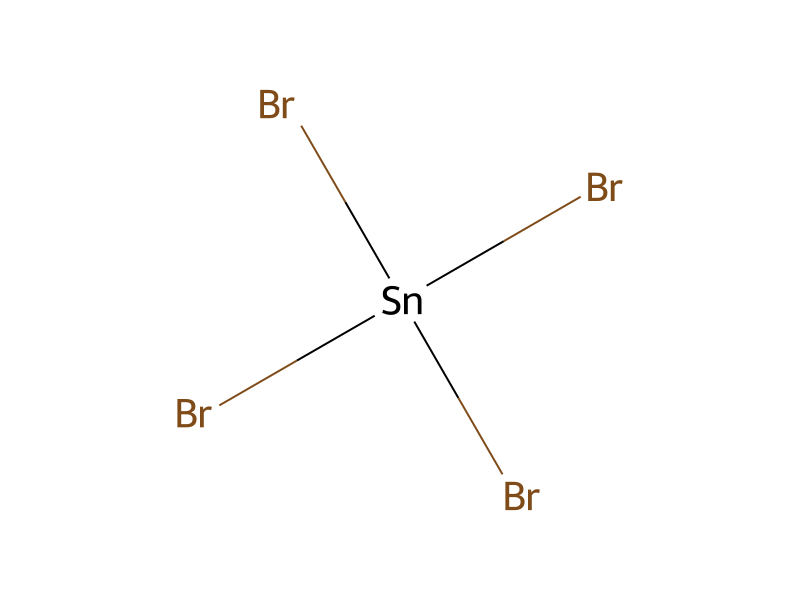
基本情報
- CAS
7789-67-5- 標準SMILES
[Br][Sn]([Br])([Br])[Br]- InChIKey
LTSUHJWLSNQKIP-UHFFFAOYSA-J- 分子式
- Br4Sn
- 平均分子量
- 438.33 g/mol
- 単同位体質量
- 435.5755431
概要
Tin(IV) bromide is a bromide of tin. Tin is a chemical element with the symbol Sn and atomic number 50. It is a natural component of the earth's crust and is obtained chiefly from the mineral cassiterite, where it occurs as tin dioxide. Bromine is a halogen element with the symbol Br and atomic number 35. Diatomic bromine does not occur naturally, but bromine salts can be found in crustal rock. (L625, L307, L309)
名称と識別子
- 優先名称
- Stannane, tetrabromo-
- IUPAC
- tetrabromostannane
- 現地名
- すず(IV)テトラブロミド
- 英語名
- TIN(IV) BROMIDE
- 分子式
- Br4Sn
- 分子量
- 438.32
名称と別名
Tin(IV) bromideTetrabromostannaneTin tetrabromideStannane, tetrabromo-7789-67-5Stannic bromideTin perbromideSnBr4TIN(IV) BROMIDE (1:4)EINECS 232-184-5Tin (IV) bromideUNII-23C21BW281
名称をさらに表示
臭化第二すずすず(IV)テトラブロミド四臭化すずテトラブロモスタンナン臭化すず(IV)臭化スズ(Ⅳ)臭化すず(IV)(臭化第二すず)臭化すず(IV), 99%TIN BROMIDEtinperbromidetetrabromo-stannan
23C21BW281TetrabromotinTin bromide (SnBr4)Stannic tetrabromidetin-(IV)-bromideTin(IV) bromide, 99%SCHEMBL52454STANNIC BROMIDE [MI]
データベース識別子
- CAS
7789-67-5- PubChem CID
- 24616
- DTXSID
DTXSID1064873- UNII
- 23C21BW281
- EC Number
- 232-184-5
物性
構造計算による物性補完中
- 極性表面積
- 0 Ų
- 水素結合供与体数
- 0
- 水素結合受容体数
- 0
- 回転可能結合数
- 0
- 重原子数
- 5
- 形式電荷
- 0
- 複雑度
- 19.1
実験および物理化学的性質
Chemical ClassesMetals -> Metals, Inorganic Compounds
Physical DescriptionWhite solid; Fumes in air; mp = 31 deg C; [Merck Index] Colorless crystals; [Aldrich MSDS]
物理化学的性質
- 融点
- 31 °C · 31 °C(lit.)
- 沸点
- 202 °C · 202 °C(lit.)
- 比重(密度)
- 3.34 g/mL · 3.34 g/mL at 25 °C(lit.)
- 闪点
- 202 °C/734mm · 202°C/734mm
- 溶解性
- 2 O; · very soluble in H2O; soluble in ethanol
- 外見
- しこり
- 比重
- 3.34 · 3.34
- 色
- 無色~白色
- 水溶解度
- 水に非常に溶けやすい。エチルアルコールに可溶。
- 比熱容量
- 0.24 J/ · Cp(gas): 0.24 J/(g·K), at 25℃
- Merck
- 14 · 14,8773
- InChI
- 1S/4BrH.Sn/h4*1H;/q;;;;+4/p-4
- InChIKey
- LTSUHJWLSNQKIP-UHFFFAOYSA-J
- SMILES
- Br[Sn](Br)(Br)Br
- CAS データベース
- 7789 · 7789-67-5(CAS DataBase Reference)
安全と法規制
安全情報は参考情報です。供給元の安全データシート(SDS)、適用法令、専門家による評価に代わるものではありません。
GHS分類
GHS Classification
Danger
H314 (100%): Causes severe skin burns and eye damage [Danger Skin corrosion/irritation]
P260, P261, P264, P271, P280, P301+P330+P331, P302+P361+P354, P304+P340, P305+P354+P338, P316, P319, P321, P363, P403+P233, P405, and P501 (click each P-code to see the statement)
Aggregated GHS information provided per 43 reports by companies from 3 notifications to the ECHA C&L Inventory. Each notification may be associated with multiple companies.
危険有害性情報
Regulatory Information
Chemical: Stannane, tetrabromo-
Stannane, tetrabromo-: Does not have an individual approval but may be used under an appropriate group standard
Hazards SummaryA skin and eye irritant; [Hawley] See Bromine.
Hazard Classes and CategoriesSkin Corr. 1B (100%)
安全と保護具
Threshold Limit Values (TLV)2.0 [mg/m3], as Sn
Permissible Exposure Limit (PEL)2.0 [mg/m3], as Sn
毒性情報
Treatment
EYES: irrigate opened eyes for several minutes under running water. INGESTION: do not induce vomiting. Rinse mouth with water (never give anything by mouth to an unconscious person). Seek immediate medical advice. SKIN: should be treated immediately by rinsing the affected parts in cold running water for at least 15 minutes, followed by thorough washing with soap and water. If necessary, the person should shower and change contaminated clothing and shoes, and then must seek medical attention. INHALATION: supply fresh air. If required provide artificial respiration.
化学と産業
薬理情報
Metabolism/Metabolites
Though tin metal is very poorly absorbed, tin compounds may be absorbed via oral, inhalation, or dermal routes, with organotin compounds being much more readily absorbed than inorganic tin compounds. Tin may enter the bloodstream and bind to hemoglobin, where it is distributed and accumulates mainly in the kidney, liver, lung, and bone. Tin and its metabolites are excreted mainly in the urine and feces. Bromine is mainly absorbed via inhalation, but may also enter the body through dermal contact. Bromine salts can be ingested. Due to its reactivity, bromine quickly forms bromide and may be deposited in the tissues, displacing other halogens. (L626, L308)
用途と製造
Uses
Used in metallurgy (separation of minerals); [Merck Index]
Metal Extraction and Refining [Category: Industry]
General Manufacturing InformationStannane, tetrabromo-: ACTIVE
応用分野
使用In metallurgical separation of minerals.
上流・下流製品情報
下流製品
関連反応
5 件


化合物ノート
読み込み中…