
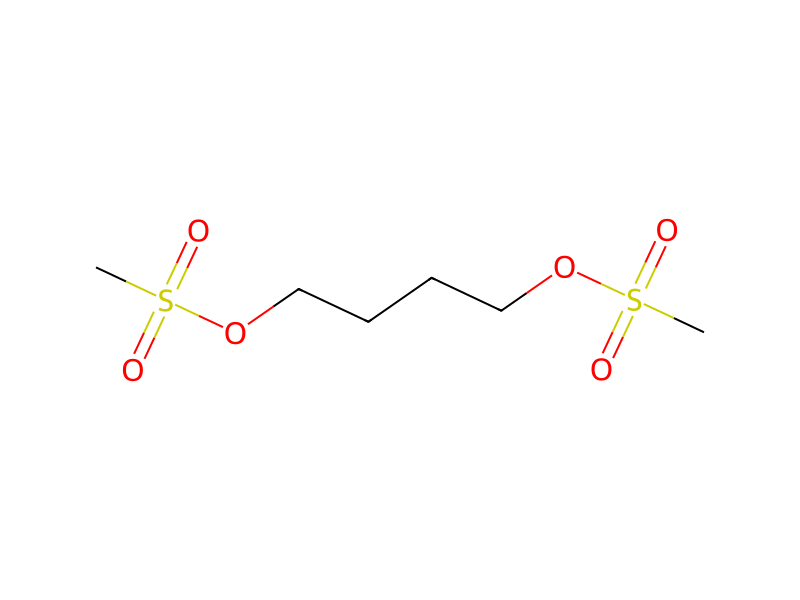
基本情報
- 標準SMILES
CS(=O)(=O)OCCCCOS(C)(=O)=O- InChIKey
COVZYZSDYWQREU-UHFFFAOYSA-N- 分子式
- C6H14O6S2
- 平均分子量
- 246.3 g/mol
- 単同位体質量
- 246.02318017
概要
1,4-Butanediol dimethanesulfonate (Busulfan) can cause cancer according to California Labor Code. It can cause developmental toxicity according to an independent committee of scientific and health experts.
名称と識別子
- 優先名称
- Busulfan
- IUPAC
- 4-methylsulfonyloxybutyl methanesulfonate
- 現地名
- ブスルファン
- 英語名
- Busulfan
- 分子式
- C6H14O6S2
- 分子量
- 246.3
名称と別名
busulfan55-98-1MyleranBusulphanSulphabutinLeucosulfanMyelosanBusulfexMyeloleukonSulfabutinMablinMielucin
名称をさらに表示
1,4-ブタンジオール ジメタンスルホナートビス(メタンスルホン酸)1,4-ブタンジイル1,4-ジ(メタンスルホニルオキシ)ブタンミエロロイコン1,4-ブタンジオールビスメタンスルホナートミトスタンスルファブチンミエルシン1,4-ブタンジオールジメタンスルホナートマブリンミエロサンブスルフェクスミトサンブスルファンビス(メタンスルホン酸)テトラメチレンミレランミスルバンミエレランブスルファムミエロイコン1,4-BUTANEDIOL DIMETHANESULFONATEButane-1,4-diyl dimethanesulfonategt41x149Myleraan33501
MisulbanMitostanMylecytanMielevcinMielosanMilecitanMileranMyeleukon
データベース識別子
- CAS
55-98-1- PubChem CID
- 2478
- DTXSID
DTXSID3020910- ChEMBL
CHEMBL820- ChEBI
CHEBI:28901- UNII
- G1LN9045DK
- EC Number
- 200-250-2
- Nikkaji
- J2.316G
物性
構造計算による物性
- XLogP
- -0.5
- 極性表面積
- 104 Ų
- 水素結合供与体数
- 0
- 水素結合受容体数
- 6
- 回転可能結合数
- 7
- 重原子数
- 14
- 形式電荷
- 0
- 複雑度
- 293
実験および物理化学的性質
DrugsPharmaceuticals -> Listed in ZINC15
SpringerMaterials PropertiesDiamagnetic susceptibility
LogP
log Kow = -0.52
-0.3
-0.52
Color/Form
White needles
Crystals
Solubility
Decomposes (NTP, 1992)
Solubility in acetone at 25 °C: 2.4 g/100mL; in alcohol: 0.1g/100 mL. Practically insoluble in water but will dissolve slowly as hydrolysis takes place.
5.16e+00 g/L
Human Drugs
Breast Feeding; Lactation; Antineoplastic Agents; Alkylating Agents
FDA approved drugs -> Active ingredient
EMA approved medicines: Human medicine
FDA approved drugs -> Active ingredient
Endocrine DisruptorsPotential endocrine disrupting compound
Melting Point
237 to 244 °F (NTP, 1992)
106-107
114-118 °C
287 °C
Physical Description
Myleran appears as white crystals or powder. (NTP, 1992)
Solid
Stability/Shelf Life... Solutions of busulfan diluted in 0.9% sodium chloride injection also have been shown to be stable when refrigerated at 2-8 °C for up to 12 hours, during which time the infusion must be completed.
Collision Cross Section149.55 Ų [M+K]+ [CCS Type: TW; Method: calibrated with polyalanine and drug standards]
物理化学的性質
- 融点
- 114 · 114-117 °C(lit.)
- 沸点
- 359.3 °C · 359.3°C (rough estimate)
- 比重(密度)
- 1.305 · 1.305 (estimate)
- 屈折率
- 1.563 · 1.5630 (estimate)
- 闪点
- 9 ℃ · 9℃
- 貯蔵温度
- Inert atmosphere,Room Temperature
- 溶解性
- 水に非常に溶けにくく、アセトンとアセトニトリルに溶けやすく、エタノール (96%) に非常に溶けにくい。
- 外見
- 結晶性粉末
- 色
- ペールブラウン
- 水溶解度
- 分解する
- Merck
- 14 · 14,1505
- BRN
- 1791786 · 1791786
- 安定性
- 湿気に敏感
- 主な用途
- 法医学と毒物学獣医
- InChI
- 1S/C6H14O6S2/c1-13(7,8)11-5-3-4-6-12-14(2,9)10/h3-6H2,1-2H3
- InChIKey
- COVZYZSDYWQREU-UHFFFAOYSA-N
- SMILES
- CS(=O)(=O)OCCCCOS(C)(=O)=O
- CAS データベース
- 55 · 55-98-1(CAS DataBase Reference)
- EPAの化学物質情報
- Busulfan (55-98-1)
化学的性質
化学的特性White Crystalline Solid
安全と法規制
GHS分類
GHS Classification
Danger
H300 (17.6%): Fatal if swallowed [Danger Acute toxicity, oral]
P203, P260, P261, P262, P264, P264+P265, P270, P271, P280, P284, P301+P316, P302+P352, P304+P340, P305+P351+P338, P316, P318, P319, P320, P321, P330, P332+P317, P337+P317, P361+P364, P362+P364, P403+P233, P405, and P501 (click each P-code to see the statement)
Aggregated GHS information provided per 51 reports by companies from 10 notifications to the ECHA C&L Inventory. Each notification may be associated with multiple companies.
Danger
H301: Toxic if swallowed [Danger Acute toxicity, oral]
危険有害性情報
Regulatory InformationHazard Traits - Carcinogenicity; Developmental Toxicity
Other Safety InformationIMAP assessments - 1,4-Butanediol, dimethanesulfonate: Environment tier I assessment
DOT LabelPoison
Fire HazardsFlash point data for this chemical are not available. It is probably combustible. (NTP, 1992)
Health Hazards
SYMPTOMS: Symptoms of exposure to this compound may include nausea, vomiting, diarrhea, impotence, sterility, amenorrhea, fetal malformation, depression of erythropoiesis leading to aplastic anemia, diffuse pulmonary fibrosis, precipitation of uric acid in kidney tubules and hemorrhages.
FDA Requirements
The Approved Drug Products with Therapeutic Equivalence Evaluations List identifies currently marketed prescription drug products, incl busulfan, approved on the basis of safety and effectiveness by FDA under sections 505 of the Federal Food, Drug, and Cosmetic Act.
Reactive GroupEsters, Sulfate Esters, Phosphate Esters, Thiophosphate Esters, and Borate Esters
Special Reports
National Toxicology Program. Eleventh Report on Carcinogens (2005). The Report on Carcinogens is an informational scientific and public health document that identifies and discusses substances (including agents, mixtures, or exposure circumstances) that may pose a carcinogenic hazard to human health. 1,4-Butanediol Dimethanesulfonate (Myleran) (55-98-1) is listed as known to be a human carcinogen.[Available from, as of July 31, 2009: http://ntp.niehs.nih.gov/ntp/roc/eleventh/profiles/s026buta.pdf]
Reactivity ProfileMYLERAN is an alkylating agent which hydrolyzes in water. (NTP, 1992). Strong reducers may yield hydrogen sulfide.
Air and Water ReactionsThis compound is an alkylating agent which hydrolyzes in water. (NTP, 1992).
Hazard Classes and Categories
Acute Tox. 2 (17.6%)
Acute toxicity (Oral) - Category 3
Shipment Methods and Regulations
/PRECAUTIONS FOR ANTINEOPLASTIC AGENTS:/ Methods for transporting hazardous drugs to the health-care setting should be consistent with environmental protection and national or local regulations for transporting hazardous substances. When hazardous drugs are being transported to the home-care setting, appropriate containers (eg, lined cardboard boxes) and procedures should be used to prevent breakage and contain leakage. ... The drugs must be securely capped or sealed and properly packaged and protected during transport to reduce further the chance of breakage and spillage in a public area such as a corridor or elevator. /Antineoplastic agents/
安全と保護具
Fire FightingFires involving this material should be controlled using a dry chemical, carbon dioxide or Halon extinguisher. (NTP, 1992)
First Aid
EYES: First check the victim for contact lenses and remove if present. Flush victim's eyes with water or normal saline solution for 20 to 30 minutes while simultaneously calling a hospital or poison control center. Do not put any ointments, oils, or medication in the victim's eyes without specific instructions from a physician. IMMEDIATELY transport the victim after flushing eyes to a hospital even if no symptoms (such as redness or irritation) develop.
Storage Conditions
Commercially available busulfan for injection concentrate should be stored in unopened ampules at 2-8 °C. The manufacturer states that, when diluted as directed in 0.9% sodium chloride injection or 5% dextrose injection, busulfan solutions are stable for up to 8 hours when stored at room temperature (approximately 25 °C), and the busulfan infusion must be completed during the 8-hour time period. Solutions of busulfan diluted in 0.9% sodium chloride injection also have been shown to be stable when refrigerated at 2-8 °C for up to 12 hours, during which time the infusion must be completed.
Commercially available busulfan tablets should be stored in well-closed containers at 25 °C but may be exposed to temperatures ranging from 15-30 °C.
Nonfire Spill Response
SMALL SPILLS AND LEAKAGE: If a spill of this chemical occurs, FIRST REMOVE ALL SOURCES OF IGNITION, then you should dampen the solid spill material with acetone and transfer the dampened material to a suitable container. Use absorbent paper dampened with acetone to pick up any remaining material. Seal your contaminated clothing and the absorbent paper in a vapor-tight plastic bag for eventual disposal. Solvent wash all contaminated surfaces with acetone followed by washing with a soap and water solution. Do not reenter the contaminated area until the Safety Officer (or other responsible person) has verified that the area has been properly cleaned.
Disposal Methods
SRP: At the time of review, criteria for land treatment or burial (sanitary landfill) disposal practices are subject to significant revision. Prior to implementing land disposal of waste residue (including waste sludge), consult with environmental regulatory agencies for guidance on acceptable disposal practices.
/PRECAUTIONS FOR ANTINEOPLASTIC AGENTS:/ All contaminated disposables should be contained in sealable bags for transfer to larger waste containers. /Antineoplastic agents/
/PRECAUTIONS FOR ANTINEOPLASTIC AGENTS:/ All bottles must be discarded as contaminated waste after decontamination of the biohazard cabinet. All protective apparel (gown, gloves, goggles, and respirator) should be discarded as contaminated waste. /Antineoplastic agents/
/PRECAUTIONS FOR ANTINEOPLASTIC AGENTS:/ The contaminated filters must be removed, bagged in thick plastic and prepared for disposal in a hazardous waste dump site or incinerator licensed by the Environmental Protection Agency (EPA). /Antineoplastic agents/
For more Disposal Methods (Complete) data for BUSULFAN (8 total), please visit the HSDB record page.
Preventive Measures
/PRECAUTIONS FOR ANTINEOPLASTIC AGENTS:/ Accidental contamination of the health-care environment, resulting in exposure of personnel, patients, visitors, and family members to hazardous substances, is prevented by maintaining the physical integrity and security of packages of hazardous drugs. 1. Access to all areas where hazardous drugs are stored is limited to specified authorized staff. 2. A method should be present for identifying to personnel those drugs that require special precautions (eg, cytotoxics). One way to accomplish this is to apply appropriate warning labels to all hazardous drug containers, shelves, and bins where the drug products are stored. ... 3. A method of identifying, for patients and family members, those drugs that require special precautions in the home should be in place. This may be accomplished in the health-care setting, by providing specific labeling for discharge medications, along with written instructions. 4. Methods for identifying shipping cartons of hazardous drugs should be required from manufacturers and distributors of these drugs. 5. Written procedures for handling damaged packages of hazardous drugs should be maintained. Personnel involved in shipping and receiving hazardous drugs should be trained in these procedures, including the proper use of protective garments and equipment. Damaged shipping cartons of hazardous drugs should be received and opened in an isolated area (eg, in a laboratory fume hood, if available, not in a vertical laminar airflow biological safety cabinet used for preparing sterile products). /Antineoplastic agents/
/PRECAUTIONS FOR ANTINEOPLASTIC AGENTS:/ Facilities (eg, shelves, carts, counters, and trays) for storing hazardous drugs are designed to prevent breakage and to limit contamination in the event of leakage. Bins, shelves with barriers at the front, or other design features that reduce the chance of drug containers falling to the floor should be used. Hazardous drugs requiring refrigeration should be stored separately from nonhazardous drugs in individual bins designed to prevent breakage and to contain leakage. /Antineoplastic agents/
/PRECAUTIONS FOR ANTINEOPLASTIC AGENTS:/ Until the reproductive risks (or lack thereof) associated with handling hazardous drugs within a safety program have been substantiated, staff who are pregnant or breast-feeding should be allowed to avoid contact with these drugs. Policies should be in effect that provide these individuals with alternative tasks or responsibilities if they so desire. /Antineoplastic agents/
/PRECAUTIONS FOR ANTINEOPLASTIC AGENTS:/ The pharmacy should provide access to information on toxicity, treatment of acute exposure (if available), chemical inactivators, solubility and stability of hazardous drugs (including investigational agents) used in the workplace. /Antineoplastic agents/
For more Preventive Measures (Complete) data for BUSULFAN (20 total), please visit the HSDB record page.
Isolation and EvacuationExcerpt from ERG Guide 154 [Substances - Toxic and/or Corrosive (Non-Combustible)]:
Personal Protective Equipment (PPE)
RECOMMENDED RESPIRATOR: Where the neat test chemical is weighed and diluted, wear a NIOSH-approved half face respirator equipped with a combination filter cartridge, i.e. organic vapor/acid gas/HEPA (specific for organic vapors, HCl, acid gas, SO2 and a high efficiency particulate filter). (NTP, 1992)
/PRECAUTIONS FOR ANTINEOPLASTIC AGENTS:/ Protective apparel: Disposable closed-front gown or coveralls, disposable utility gloves over disposable latex gloves, NIOSH-approved air-purifying half-mask respirator equipped with a high efficiency filter, and eye protection should be worn. /Antineoplastic agents/
/PRECAUTIONS FOR ANTINEOPLASTIC AGENTS:/ Class 100 clean-air work stations, both horizontal and vertical airflow (with no containment characteristics), are inappropriate engineering controls for handling hazardous drugs because they provide no personnel protection and permit environmental contamination. Although there are no engineering controls designed specifically for the safe handling of hazardous chemicals as sterile products, Class II contained vertical-flow biological safety cabinets (biohazard cabinets) have been adopted for this use. Biohazard cabinetry is, however, designed for the handling of infectious agents, not hazardous chemicals. ... Based on design, ease of use, and cost considerations, Class II contained-vertical-flow biohazard cabinetry is currently recommended for use in preparing sterile doses of hazardous drugs. Class II cabinetry design and performance specifications are defined in NSF Standard 49. Biological safety cabinets selected for use with hazardous drugs should meet NSF Standard 49 specifications to ensure the maximum protection from these engineering controls. /Antineoplastic agents/
/PRECAUTIONS FOR ANTINEOPLASTIC AGENTS:/ Workers should wear powder free, disposable surgical latex gloves of good quality when preparing hazardous drugs. Selection criteria for gloves should include thickness (especially at the fingertips where stress is the greatest), fit, length, and tactile sensation. ... The practice of double gloving is supported by research that indicates that many glove materials vary in drug permeability even within lots; therefore, double gloving is recommended. ... In general, surgical latex gloves fit better, have appropriate elasticity for double gloving and maintaining the integrity of the glove-gown interface, and have sufficient tactile sensation (even during double gloving) for stringent aseptic procedures. ... Powdered gloves should be avoided. /Antineoplastic agents/
/PRECAUTIONS FOR ANTINEOPLASTIC AGENTS:/ Workers who are not protected by the containment environment of a biohazard cabinet should use respiratory protection when handling hazardous drugs. Respiratory protection should be an adjunct to and not a substitute for engineering controls. Surgical masks of all types provide no respiratory protection against powdered or liquid aerosols of hazardous drugs. In situations where workers may be exposed to potential eye contact with hazardous drugs, an appropriate plastic face shield or splash goggles should be worn. /Antineoplastic agents/
/PRECAUTIONS FOR ANTINEOPLASTIC AGENTS:/ During compounding of hazardous drugs (eg, crushing, dissolving, and preparing an ointment), workers should wear low permeability gowns and double gloves. Compounding should take place in a protective area such as a disposable glove box. If compounding must be done in the open, an area away from drafts and traffic must be selected, and the worker should use appropriate respiratory protection. /Antineoplastic agents/
毒性情報
Interactions
Itraconazole reduced busulfan clearance by up to 25% in patients receiving itraconazole compared to patients who did not receive itraconazole. Higher busulfan exposure due to concomitant itraconazole could lead to toxic plasma levels in some patients. Fluconazole had no effect on the clearance of busulfan. Patients treated with concomitant cyclophosphamide and busulfan with phenytoin pretreatment have increased cyclophosphamide and busulfan clearance, which may lead to decreased concentrations of both cyclophosphamide and busulfan. However, busulfan clearance may be reduced in the presence of cyclophosphamide alone, presumably due to competition for glutathione.
Busulfan-induced pulmonary toxicity may be additive to the effects produced by other cytotoxic agents.
In one study, 12 of approximately 330 patients receiving continuous busulfan and thioguanine therapy for treatment of chronic myelogenous leukemia were found to have portal hypertension and esophageal varices associated with abnormal liver function tests. Subsequent liver biopsies were performed in 4 of these patients, all of which showed evidence of nodular regenerative hyperplasia. Duration of combination therapy prior to the appearance of esophageal varices ranged from 6 to 45 months. With the present analysis of the data, no cases of hepatotoxicity have appeared in the busulfan-alone arm of the study. Long-term continuous therapy with thioguanine and busulfan should be used with caution.
Busulfan may cause additive myelosuppression when used with other myelosuppressive drugs.
For more Interactions (Complete) data for BUSULFAN (8 total), please visit the HSDB record page.
Hepatotoxicity
Oral busulfan therapy is associated with a low rate of serum enzyme elevations that are typically transient, mild and usually do not require dose adjustment. Rare instances of clinically apparent acute liver disease have been described in patients taking oral busulfan long term. The onset of injury is usually after years of therapy, and the pattern of serum enzyme elevations is usually cholestatic (Case 1). At least one case of cholestatic injury was reported to lead to hepatic failure.
Adverse Effects
There are adverse effects that commonly correlate with busulfan use and that are common among all alkylating agents. Common adverse drug reactions associated with all alkylating agents include intestinal mucosal damage, alopecia, pancytopenia, anemia, amenorrhea, impaired spermatogenesis, and increased risk of malignancy.
Exposure Routes
Completely absorbed from the gastrointestinal tract. Busulfan is a small, highly lipophilic molecule that crosses the blood-brain-barrier. The absolute bioavailability, if a single 2 mg IV bolus injection is given to adult patients, is 80% Њ± 20%. In children (1.5 - 6 years old), the absolute bioavailability was 68% Њ± 31%. When a single oral dose is given to patients, the area under the curve (AUC) was 130 ngдуўhr/mL. The peak plasma concentration when given orally is 30 ng/mL (after dose normalization to 2 mg). It takes 0.9 hours to reach peak plasma concentration after dose normalization to 4 mg.
Toxicity Summary
Signs and Symptoms of Toxicity
Busulfan is an alkylating agent that contains 2 labile methanesulfonate groups attached to opposite ends of a 4-carbon alkyl chain. Once busulfan is hydrolyzed, the methanesulfonate groups are released and carbonium ions are produced. These carbonium ions alkylate DNA, which results in the interference of DNA replication and RNA transcription, ultimately leading to the disruption of nucleic acid function. Specifically, its mechanism of action through alkylation produces guanine-adenine intrastrand crosslinks. This occurs through an SN2 reaction in which the relatively nucleophilic guanine N7 attacks the carbon adjacent to the mesylate leaving group. This kind of damage cannot be repaired by cellular machinery and thus the cell undergoes apoptosis.
Ecotoxicity Excerpts
/AQUATIC SPECIES/ Tilapia mossambica (Peters) Teleostei, Cichlidae, is of commercial importance being farmed for human consumption. An effective means of sterilization would be of value since prolific breeding under farming conditions reduces growth rate. The possibility of using the antileukemic drug myleran as a chemosterilant has been investigated previously, however the present study indicated that it can induce dominant lethal mutations in this species.
Signs and Symptoms
Signs of overdose include allergic reaction, unusual bleeding or bruising, sudden weakness or unusual fatigue, persistent cough, congestion, or shortness of breath; flank, stomach or joint pain; pronounced nausea, vomiting, diarrhea, dizziness, confusion, or darkening of the skin, chills, fever, collapse, and loss of consciousness.
Ongoing Test Status
The following link will take the user to the National Toxicology Program (NTP) Test Agent Search Results page, which tabulates all of the "Standard Toxicology & Carcinogenesis Studies", "Developmental Studies", and "Genetic Toxicity Studies" performed with this chemical. Clicking on the "Testing Status" link will take the user to the status (i.e., in review, in progress, in preparation, on test, completed, etc.) and results of all the studies that the NTP has done on this chemical. [http://ntp-apps.niehs.nih.gov/ntp_tox/index.cfm?fuseaction=ntpsearch.searchresults&searchterm=55-98-1][Available from: http://ntp-apps.niehs.nih.gov/ntp_tox/index.cfm?fuseaction=ntpsearch.searchresults&searchterm=55-98-1]
Medical Surveillance
/PRECAUTIONS FOR ANTINEOPLASTIC AGENTS:/ There is no method available for routine monitoring of personnel for evidence of hazardous drug exposure. Tests for the presence of mutagens or chromosomal damage are not drug specific and are of value only in controlled studies. Chemical analysis of urine for the presence of hazardous drugs at the sensitivity level needed to detect occupational exposure is limited to a few drugs and is not yet commercially available. /Antineoplastic agents/
Human Toxicity Excerpts
/SIGNS AND SYMPTOMS/ Hepatic veno-occlusive disease is a major complication that can occur during treatment with Busilvex. Patients who have received prior radiation therapy, greater than or equal to three cycles of chemotherapy, or prior progenitor cell transplant may be at an increased risk.
/CASE REPORTS/ ... Busulfan treatment in a pre-adolescent girl prevented the onset of puberty due to ovarian failure. ...
/CASE REPORTS/ A case of severe hemorrhagic cystitis induced by prolonged busulfan therapy /is reported/. The clinical course and pathological results were similar to irradiation and cyclophosphamide cystitis. ... Although hemorrhagic cystitis induced by busulfan is a rare complication it should be considered in the differential diagnosis and busulfan should be discontinued immediately.
/CASE REPORTS/ A 42-year-old Japanese woman given high doses of busulfan for a short time was referred to us because of decreased visual acuity and blurred vision in both eyes. She received 212 mg/day of busulfan for only 4 days. Ophthalmoscopic examination demonstrated a posterior polar subcapsular opacity of the lens in both eyes. Although the occurrence of cataract due to busulfan has been reported after long-term administration of busulfan, this is the first clinical case of cataract caused by high doses of busulfan for a short period. It is necessary to pay more attention to busulfan cataract.
For more Human Toxicity Excerpts (Complete) data for BUSULFAN (16 total), please visit the HSDB record page.
Carcinogen Classification
Busulfan
Group 1: Carcinogenic to humans
Volume 4: (1974) Some Aromatic Amines, Hydrazine and Related Substances, N-Nitroso Compounds and Miscellaneous Alkylating Agents
2012
2008
1, carcinogenic to humans. (L135)
Drug Induced Liver Injury
Drug Induced Liver Injury Rank (DILIrank 2.0)
Busulfan
vMost-DILI-concern
8
Warnings & precautions
DOI:10.1016/j.drudis.2016.02.015
法規制情報
FDA Requirements
The Approved Drug Products with Therapeutic Equivalence Evaluations List identifies currently marketed prescription drug products, incl busulfan, approved on the basis of safety and effectiveness by FDA under sections 505 of the Federal Food, Drug, and Cosmetic Act.
安全データ
- wgk
- 3
- rtecs
- EK1750000
- ridadr
- UN 2811 6.1/PG 1
- 毒性
- LD50 i.v. in rats: 1.8 mg/kg (Scherf)
- hs_code
- 29053990
- risk_code
- 45-26/27/28-63-46-36/37/38-23/24/25-39/23/24/25-11
- 化審法
- (2)-1585
- hazard_code
- T+,T,F
- safety_code
- 53-36/37/39-45-28A-36/37-16-7
- hazard_class
- 6.1(b)
- packing_group
- III
- Hazard Classifications
- Acute Tox. 3 OralCarc. 1AMuta. 1BRepr. 1B
- ストレージクラス
- 6.1C - Combustible acute toxic Cat.3toxic compounds or compounds which causing chronic effects
- 有毒物質データの
- 55-98-1(Hazardous Substances Data)
化学と産業
薬理情報
ATC Code
L01AB01
L - Antineoplastic and immunomodulating agents
QL - Antineoplastic and immunomodulating agents
Protein Binding32% bound to plasma proteins and 47% bound to red blood cells.
Pharmacodynamics
Busulfan is an antineoplastic in the class of alkylating agents and is used to treat various forms of cancer. Alkylating agents are so named because of their ability to add alkyl groups to many electronegative groups under conditions present in cells. They stop tumor growth by cross-linking guanine bases in DNA double-helix strands - directly attacking DNA. This makes the strands unable to uncoil and separate. As this is necessary in DNA replication, the cells can no longer divide. In addition, these drugs add methyl or other alkyl groups onto molecules where they do not belong which in turn leads to a miscoding of DNA. Alkylating agents are cell cycle-nonspecific and work by three different mechanisms, all of which achieve the same end result - disruption of DNA function and cell death. Overexpression of MGST2, a glutathione s-transferase, is thought to confer resistance to busulfan. The role of MGST2 in the metabolism of busulfan is unknown however.
Mechanism of Action
Busulfan is an alkylating agent that contains 2 labile methanesulfonate groups attached to opposite ends of a 4-carbon alkyl chain. Once busulfan is hydrolyzed, the methanesulfonate groups are released and carbonium ions are produced. These carbonium ions alkylate DNA, which results in the interference of DNA replication and RNA transcription, ultimately leading to the disruption of nucleic acid function. Specifically, its mechanism of action through alkylation produces guanine-adenine intrastrand crosslinks. These crosslinks occur through a SN2 reaction guanine N7 nucleophilically attacks the carbon adjacent to the mesylate leaving group. This kind of damage cannot be repaired by cellular machinery and thus the cell undergoes apoptosis.
The primary molecular action of busulfan is alkylation of intracellular nucleophiles. Both proteins and nucleic acids are affected. With regard to DNA, busulfan reacts with guanine residues to form a fourcarbon di-guanine DNA cross-linkage with release of methylsulfonate. The DNA cross-linkage causes misreading of the DNA code and single-strand breakage. The degree of DNA cross-linkage has been shown to be proportional to the dose and cytotoxicity of the compound. Busulfan-induced crosslinkages of DNA to nuclear proteins may also occur and is considered a cytotoxic mechanism. Busulfan has also been reported to esterify phosphate groups of chromosomal DNA, accounting for the fragmentation of chromosomes seen in various cell types after treatment. Chromosomal damage further contributes to the overall cytotoxic effect.
Studies of cloned tumour and normal cells indicate that busulfan interrupts certain parts of the cell mitotic cycle. While busulfan can act on cells at any stage of mitosis, similar to other alkylating agents, in vitro studies with tumour cell lines indicate that replicating cells are most sensitive to busulfan in the late G1 phase and that progression through the cell cycle is blocked in the G2 phase. Cultured cells in the S-phase, which involves DNA synthesis, are not as affected because the DNA repair systems are active at this stage. Clinically, busulfan is cytotoxic to proliferating tissues, especially granulopoietic cells in the bone marrow.
Biological Half-Life
2.6 hours
The terminal half life /in children from < 6 months up to 17 years old/ ranged from 2.26 to 2.52 hr.
The elimination half-life is about 2.6 hours in adults receiving oral busulfan.
Following intravenous administration, the mean half life of busulfan ranged from 2.83 hours to 3.90 hours ... . Oral busulfan had a mean half life of 3.87 hours.
Metabolism/Metabolites
Busulfan is extensively metabolizes in the hepatic. Busulfan is predominantly metabolized by conjugation with glutathione, both spontaneously and by glutathione S-transferase (GST) catalysis. GSTA1 is the primary GST isoform that facilitates the the metabolism of busulfan. Other GST isoforms that are also involved are GSTM1 and GSTP1. At least 12 metabolites have been identified among which tetrahydrothiophene, tetrahydrothiophene 12-oxide, sulfolane, and 3-hydroxysulfolane were identified. These metabolites do not have cytotoxic activity.
After IP injections of 2:3-(14)C-Myleran in the rat, rabbit and mouse, 60% of the urinary radioactivity was found to be in the form of the 3-hydroxy tetrahydrothiophene-1,1-dioxide, a sulphone. It is suggested that in vivo Myleran undergoes a reaction with cysteine or a cysteinyl moiety to form a cyclic sulphonium ion, which in turn undergoes cleavage to the tetrahydrothiophene, oxidation to the 1,1-dioxide and biological hydroxylation to the 3-hydroxy compound.
In the rat and mouse 50-60% of a single dose of Myleran-(35)S (10 mg/kg bw) injected intraperitoneally in arachis oil was excreted within 24 to 48 hours, mainly as methane sulphonic acid; a small amount of unchanged Myleran and two unidentified components were present. In the rabbit, methane sulphonic acid was the only metabolite found in the urine.
The metabolic fate of busulfan has been studied in rats and humans using (14)C- and (35)S-labeled materials. In humans, as in the rat, almost all of the radioactivity in (35)S-labeled busulfan is excreted in the urine in the form of (35)S-methanesulfonic acid. /It was/ demonstrated that the formation of methanesulfonic acid in vivo in the rat is not due to a simple hydrolysis of busulfan to 1,4-butanediol, since only about 4% of 2,3-(14)C-busulfan was excreted as carbon dioxide, whereas 2,3-(14)C-1,4-butanediol was converted almost exclusively to carbon dioxide. The predominant reaction of busulfan in the rat is the alkylation of sulfhydryl groups (particularly cysteine and cysteine-containing compounds) to produce a cyclic sulfonium compound which is the precursor of the major urinary metabolite of the 4-carbon portion of the molecule, 3-hydroxytetrahydrothiophene-1,1-dioxide. This has been termed a "sulfur-stripping" action of busulfan and it may modify the function of certain sulfur-containing amino acids, polypeptides, and proteins; whether this action makes an important contribution to the cytotoxicity of busulfan is unknown.
(14)C busulfan was administered ip (15 mg/kg) to 5 male Sprague-Dawley rats. For 72 hours, the urinary recovery of (14)C was approximately 70% of the total dose, while the fecal excretion was within the range 1.5-2%. The pattern of the urinary metabolites of busulfan was studied by HPLC in combination with radioactivity detection of the pooled urine. At least eight radioactive fractions could be separated. Three major metabolite peaks were identified by GC/MS and NMR spectroscopy: 3-hydroxysulfolane (39% of total urine radioactivity), tetrahydrothiophene 1- oxide (20%), and sulfolane (13%). Busulfan (6%) and tetrahydrofuran (2%) were also identified. A sulfonium ion glutathione conjugate was hypothesised as another metabolite, but was not isolated because it was very unstable. However, another compound was observed. This metabolite co-eluted with the sulfonium ion obtained of the reaction of busulfan with N-acetyl-L-cysteine and produced tetrahydrothiophene when hydrolyzed. Finally, busulfan and the three main metabolites were tested for cytotoxicity on Chinese V79 hamster cells in vitro. Cell toxicity was induced only by busulfan, which indicates that the cytotoxicity in vivo is mediated by the parent compound, as expected.
Busulfan is extensively metabolizes in the hepatic. Busulfan is predominantly metabolized by conjugation with glutathione, both spontaneously and by glutathione S-transferase (GST) catalysis. GSTA1 is the primary GST isoform that facilitates the the metabolism of busulfan. Other GST isoforms that are also involved are GSTM1 and GSTP1. At least 12 metabolites have been identified among which tetrahydrothiophene, tetrahydrothiophene 12-oxide, sulfolane, and 3-hydroxysulfolane were identified. These metabolites do not have cytotoxic activity. Route of Elimination: Following administration of 14C- labeled busulfan to humans, approximately 30% of the radioactivity was excreted into the urine over 48 hours; negligible amounts were recovered in feces. Less than 2% of the administered dose is excreted in the urine unchanged within 24 hours. Elimination of busulfan is independent of renal function. Half Life: 2.6 hours
FDA Pharmacological Classification
G1LN9045DK
BUSULFAN
Mechanisms of Action [MoA] - Alkylating Activity
Established Pharmacologic Class [EPC] - Alkylating Drug
Busulfan is an Alkylating Drug. The mechanism of action of busulfan is as an Alkylating Activity.
BUSULFAN
MeSH Pharmacological Classification
Highly reactive chemicals that introduce alkyl radicals into biologically active molecules and thereby prevent their proper functioning. Many are used as antineoplastic agents, but most are very toxic, with carcinogenic, mutagenic, teratogenic, and immunosuppressant actions. They have also been used as components in poison gases.
Agents that suppress immune function by one of several mechanisms of action. Classical cytotoxic immunosuppressants act by inhibiting DNA synthesis. Others may act through activation of T-CELLS or by inhibiting the activation of HELPER CELLS. While immunosuppression has been brought about in the past primarily to prevent rejection of transplanted organs, new applications involving mediation of the effects of INTERLEUKINS and other CYTOKINES are emerging.
A class of drugs that differs from other alkylating agents used clinically in that they are monofunctional and thus unable to cross-link cellular macromolecules. Among their common properties are a requirement for metabolic activation to intermediates with antitumor efficacy and the presence in their chemical structures of N-methyl groups, that after metabolism, can covalently modify cellular DNA. The precise mechanisms by which each of these drugs acts to kill tumor cells are not completely understood. (From AMA, Drug Evaluations Annual, 1994, p2026)
Agents that destroy bone marrow activity. They are used to prepare patients for BONE MARROW TRANSPLANTATION or STEM CELL TRANSPLANTATION.
Absorption, Distribution and Excretion
Completely absorbed from the gastrointestinal tract. Busulfan is a small, highly lipophilic molecule that crosses the blood-brain-barrier. The absolute bioavailability, if a single 2 mg IV bolus injection is given to adult patients, is 80% ± 20%. In children (1.5 - 6 years old), the absolute bioavailability was 68% ± 31%. When a single oral dose is given to patients, the area under the curve (AUC) was 130 ng•hr/mL. The peak plasma concentration when given orally is 30 ng/mL (after dose normalization to 2 mg). It takes 0.9 hours to reach peak plasma concentration after dose normalization to 4 mg.
Following administration of 14C- labeled busulfan to humans, approximately 30% of the radioactivity was excreted into the urine over 48 hours; negligible amounts were recovered in feces. Less than 2% of the administered dose is excreted in the urine unchanged within 24 hours. Elimination of busulfan is independent of renal function.
2.52 ml/min/kg [Following an infusion of dose of 0.8 mg/kg every six hours, for a total of 16 doses over four days]
The pharmacokinetic disposition of busulfan differs in children versus adults. The mean bioavailability of busulfan is lower in children than in adults; the interindividual variation in bioavailability for oral busulfan is large, particularly in children. In a pharmacokinetic study in children receiving IV busulfan (0.8 or 1 mg/kg based on actual body weight), an estimated volume of distribution of 0.64 L/kg (with an interpatient variability of 11%) was reported.
Busulfan, a small and highly lipophilic molecule, easily crosses the blood-brain barrier. Busulfan concentrations in the cerebrospinal fluid (CSF) are approximately equal to concurrent busulfan plasma concentrations. It is not known whether the drug is distributed into milk.
For adults receiving busulfan 2, 4, or 6 mg orally as a single dose on consecutive days, the drug exhibits linear kinetics for both the maximum plasma concentration and the area under the concentration-time curve (AUC); a mean peak plasma concentration (normalized to a dose of 2 mg) of about 30 ng/mL was observed. In a study of 12 patients receiving single oral busulfan doses of 4-8 mg, a mean peak plasma concentration (normalized to a dose of 4 mg) of about 68 ng/mL was reported; the time to peak plasma concentration was about 0.9 hours.
Cellular LocationsCytoplasm
用途と製造
Uses
... palliative treatment of chronic myelogenous leukemia
Insect sterilant
THERAP CAT: Antineoplastic
... used specifically in the treatment of chronic myelocytic leukemia and polycythemia vera
For use in combination with cyclophosphamide as a conditioning regimen prior to allogeneic hematopoietic progenitor cell transplantation for chronic myelogenous (myeloid, myelocytic, granulocytic) leukemia (FDA has designated busulfan as an orphan drug for this use). It is also used as a component of pretransplant conditioning regimens in patients undergoing bone marrow transplantation for acute myeloid leukemia and nonmalignant diseases.
Methods of Manufacturing... Produced by the reaction of 1,4-butanediol with methanesulphonyl chloride.
Formulations/Preparations
Parenteral: For injection concentrate, for IV infusion only: 6 mg/mL (60 mg) Busulfex (with dimethylacetamide 33% v/v and polyethylene glycol 67% v/v) ESP Pharma
Oral: Tablets, film-coated: 2 mg Myleran (GlaxoSmithKline)
General Manufacturing Information... listed as known human carcinogen: Report on Carcingens, Eleventh Edition (PB2005-104914, 2004) p III-39.
応用分野
用途白血病の対症療法において使われる抗悪性腫瘍薬
用途アルキル化剤です。DNAの合成、 複製を阻害し、細胞分裂抑制作用を示します。
説明Chemically, busulfan is classified as an alkyl sulfonate. One or both of the methylsulfonate ester moieties can be displaced by the nucleophilic N7 of guanine, leading to monoalkylated and cross-linked DNA. The extent of alkyl sulfonate–mediated DNA interstrand cross-linking has been shown to vary with the length of the alkyl chain between sulfonate esters, with the tetramethylene-containing busulfan showing less interstrand cross-linking capability than hexamethylene, methylene, or octamethylene analogues. Intrastrand cross-linking also occurs, preferentially at 5′-GA-3′ but also at 5′-GG-3′ sequences. Alkylation of Cys sulfhydryl groups is yet another mechanism of cytotoxicity.
使用Busulfan USP (Myleran) is used to treat Chronic granulocytic leukemia; other myeloproliferative disorders.
一般的な説明As an alternative to utilizing aziridines as electrophilic species,it was found that simply utilizing a carbon chain terminated atboth ends by leaving groups gave compounds capable of actingas cross-linking agents.Busulfan utilizestwo sulfonate functionalities as leaving groups separated by afour-carbon chain that reacts with DNA to primarily form intrastrandcross-link at 5'-GA-3' sequences.The sulfonatesare also subject to displacement by the sulfhydryl functionsfound in cysteine and glutathione, and metabolic products areformed as a result of nucleophilic attack by these groups togenerate sulfonium species along with methane sulfonicacid.This is followed by conversion to tetrahydrothiophene,and further oxidation products are subsequently produced togive the sulfoxide and sulfone. The cyclic sulfone known assulfolane may be further oxidized to give 3-hydroxysulfolane.
上流・下流製品情報
上流原料
サプライヤー50 社
北京华美互利生物化工010-56205725 · [email protected]
梯希爱(上海)化成工业发展有限公司021-67121386 · [email protected]
上海阿拉丁生化科技股份有限公司400-6206333 13167063860 · [email protected]
合肥翰刚医药科技有限公司+8618062405514 · [email protected]
湖北金梭生物科技有限公司00123456789 · [email protected]
INTATRADE GmbH+49 3493/605464 · [email protected]
爱斯特(成都)生物制药股份有限公司+86-28-85122536 85324413 · [email protected]
Baoji Guokang Healthchem co.,ltd+8615604608665 15604608665 · [email protected]
LGM Pharma1-(800)-881-8210 · [email protected]
上海迈瑞尔生化科技有限公司4006356688 18621169109 · [email protected]
武汉易泰科技有限公司上海分公司18930552037 · [email protected]
大连美仑生物技术有限公司0411-62910999 13889544652 · [email protected]
太原市瑞和丰科贸有限公司+86 351 7031519 · [email protected]
安耐吉化学&3A(安徽泽升科技股份有限公司)400-0056266 · [email protected]
Ascent Scientific4401179829988 · [email protected]
MedChemexpress LLC021-58955995 · [email protected]
孝感深远化工有限公司15527621225; 15527621225 · [email protected]
玛雅试剂+86 (573) 82222445 (0)18006601000 452520369 · [email protected]
四川库利南科技有限公司400-1166-196 18981987031 · [email protected]
天津希恩思生化科技有限公司400 638 7771 · [email protected]
Xiamen AmoyChem Co., Ltd+86-86-5926051114 · [email protected]
湖南汇百侍生物科技有限公司0731-85526065 13308475853 · [email protected]
深圳菲斯生物科技有限公司0755-83725681-603
上海思域化工科技有限公司86-21-34053660 · [email protected]
AdooQ BioScience, LLC+1 (866) 930-6790 · [email protected]
江苏艾康生物医药研发有限公司025-66113011 13913916777 · [email protected]
TCI AMERICA800-4238616 · [email protected]
TOKYO CHEMICAL INDUSTRY CO., LTD.03-36680489 · [email protected]
TCI Europe320-37350700 · [email protected]
深圳振强药物研发有限公司0755-66853366 13670046396 · [email protected]
广州爱纯医药科技有限公司020-39119399 18927568969 · [email protected]
南京生利德生物科技有限公司025-57798810 18652991625 · [email protected]
湖北威德利化学试剂有限公司186-02735115 18602735115 · [email protected]
上海湄水化工科技有限公司021-60549325 18616193163
上海将来实业股份有限公司021-61552785 · [email protected]
成都零六生物科技有限公司400-1166-196 13458535857 · [email protected]
北京福源坊科技有限公司010-57903446 15869909019 · [email protected]
上海御略医药科技有限公司021-60345187 13671753212 · [email protected]
上海鑫圭生物科技有限公司15121041756 · [email protected]
上海麦克林生化科技股份有限公司15221275939 15221275939 · [email protected]
杭州杰恒化工有限公司0571-87396432 · [email protected]
上海嵩爰化工科技有限公司010-1234567 18521000990 · [email protected]
南京百鑫德诺生物科技有限公司025-58849295 · [email protected]
上海孚一生物科技有限公司+86 (21) 61124340
凯试(上海)科技有限公司021-50135380 · [email protected]
天津阿尔塔科技有限公司022-6537-8550 15522853686 · [email protected]
TargetMol中国(陶术生物)021-021-33632979 15002134094 · [email protected]
上海陶术生物科技股份有限公司+1-781-999-5354; +1-00000000000 · [email protected]
九鼎化学(上海)科技有限公司4009209199 · [email protected]
BOC Sciences16314854226; +8616314854226 · [email protected]
補足説明
定義ChEBI: A methanesulfonate ester that is butane-1,4-diol in which the hydrogens of the hydroxy groups are replaced by methanesulfonyl groups. An alkylating antineoplastic agent, it is used for the treatment of chronic myeloid leukemia (although it has been largely replaced by newer drugs). It is also used as an insect sterilant.
関連反応
13 件


関連ノート
読み込み中…