塩化ホスホリル
オキシ塩化りん · 三塩化ホスホリル · ホスホリルクロリド · トリクロロホスフィンオキシド · りん酸トリクロリド · りんトリクロリドオキシド · ホスホリルトリクロリド · オキシ化リン
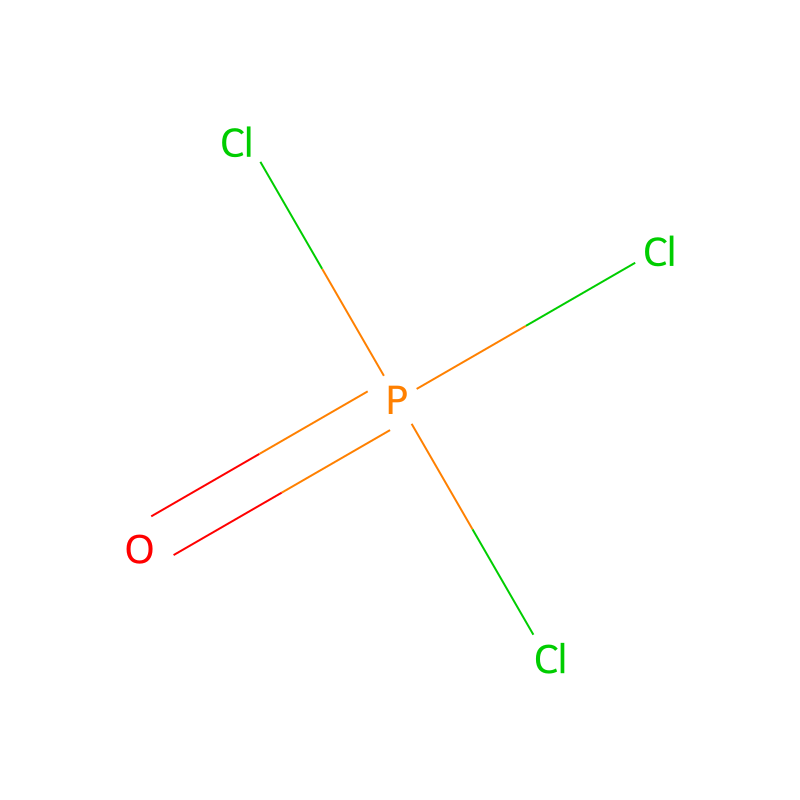
識別子と物理属性
| CAS No. | 10025-87-3 |
|---|---|
| 分子式 | Cl3OP |
| 平均分子量 | 153.33 g/mol |
| 単同位体質量 | 151.875235 g/mol |
| SMILES | O=P(Cl)(Cl)Cl |
| InChIKey | XHXFXVLFKHQFAL-UHFFFAOYSA-N |
| PubChem CID | 24813 |
| ChEMBL | CHEMBL3183103 |
| ChEBI | CHEBI:30336 |
| EC No. | 233-046-7 |
| DTXSID | DTXSID5029710 |
| 現地名 | 塩化ホスホリル |
化学・物理的性質
| XLogP | 1.7 |
|---|---|
| 極性表面積 | 17.1 |
| 水素結合供与体数 | 0 |
| 水素結合受容体数 | 1 |
| 回転可能結合数 | 0 |
| 重原子数 | 5 |
| 形式電荷 | 0 |
| 複雑度 | 53 |
| 臭い | Pungent & musty odor刺激臭 |
| 密度 | 1.645 at 77 °F (EPA, 1998) - Denser than waterwill sinkSpecific gravity: 1.645 at 25 °C/4 °CRelative density (water = 1): 1.6451.685 @ 15.5°C(77 °F): 1.651.645 g/mL at 25 °C(lit.) |
| Color/Form | Clear, colorless to yellow, oily liquid [Note: A solid below 34 degrees F].Mobile, fuming liquid |
| 溶解度 | Decomposes (NIOSH, 2024)Reacts with waterSolubility in water: reactionオキシ塩化リン(V)は多くの有機溶媒に可溶です。発熱反応する |
| Corrosivity | PRODUCTS OF ITS REACTION WITH WATER RAPIDLY CORRODE STEEL & MOST METALS |
| 引火点 | Not Flammable (EPA, 1998)105.8°C |
| 沸点 | 223 °F at 760 mmHg (EPA, 1998)105.8 °C105.1 °C @760 [mm Hg]222 °F107 °C |
| Decomposition | WHEN HEATED TO DECOMPOSITION, IT EMITS HIGHLY TOXIC FUMES OF CHLORIDES AND PO(X).PRODUCES PHOSPHORUS TRICHLORIDE & CHLORINE WHEN HEATEDPRODUCES PHOSPHORUS OXYCHLORIDE, PHOSPHORIC ACID, & HYDROCHLORIC ACID WHEN DECOMPOSED IN WATER |
| 融点 | 34.2 °F (EPA, 1998)1.25 °C1 - 1.5 °C1.2 °C1.25 °C(lit.) |
| 蒸気密度 | 5.3 (EPA, 1998) - Heavier than airwill sink (Relative to Air)5.3 (Air = 1)Relative vapor density (air = 1): 5.35.3 (vs air) |
| 蒸気圧 | 40 mmHg at 81.14 °F (EPA, 1998)40 mm Hg at 27.3 °CVapor pressure, kPa at 27.3 °C: 5.340 mmHg at 81.14 °F40 [mm Hg] @27.3 °C(81 °F): 40 mmHg104 mm Hg ( 50 °C) |
| 屈折率 | Index of refraction: 1.460 at 25 °C/Dn20/D 1.461 |
| 貯蔵条件 | Store below +30°C. |
| 外観・状態 | 液体 |
| 比重 | 1.692 (15/15℃) |
| 色 | 無色 |
| pH | 1.0 (5g/l, H2O, 25℃) |
| 比熱容量 | Cp(liquid): 0.91 J/(g·K)Cp(gas): 0.55 J/(g·K), at 25℃ |
| Merck | 14,7349 |
| 誘電率 | 14.0(22℃) |
| 安定性 | 安定。水と激しく反応する。多くの金属、アルコール、アミン、フェノール、DMSO、強塩基とは相溶しません。 |
| InChI | 1S/Cl3OP/c1-5(2,3)4 |
| InChIKey | XHXFXVLFKHQFAL-UHFFFAOYSA-N |
| LogP(分配係数) | 0.357 (est) |
| CAS データベース | 10025-87-3(CAS DataBase Reference) |
| NISTの化学物質情報 | Phosphoryl chloride(10025-87-3) |
| EPAの化学物質情報 | Phosphorus oxychloride (10025-87-3) |
化学的特性
Phosphorus oxychloride is a clear, colorless to yellow, fuming, oily liquid with a pungent and musty odor.
安全性と法規制
| GHS 分類 | DangerH302: Harmful if swallowed [Warning Acute toxicity, oral]H314: Causes severe skin burns and eye damage [Danger Skin corrosion/irritation]H330: Fatal if inhaled [Danger Acute toxicity, inhalation]H372 **: Causes damage to organs through prolonged or repeated exposure [Danger Specific target organ toxicity, repeated exposure]P260, P264, P270, P271, P280, P284, P301+P317, P301+P330+P331, P302+P361+P354, P304+P340, P305+P354+P338, P316, P319, P320, P321, P330, P363, P403+P233, P405, and P501 (click each P-code to see the statement)This chemical does not meet GHS hazard criteria for 3.3% (12 of 359) of reports. |
|---|---|
| Hazards Identification | Toxic/poison by inhalation (TIH/PIH)Water-reactive material (WR) |
| 規制情報 | Chemical: Phosphoryl chloridePhosphoric trichloride is listed on the EPA's Chemical Data Reporting (CDR) system. Manufacturers and importers of Phosphoric trichloride are required to report information about their production and use of this chemical to the EPA under the Toxic Substances Control Act (TSCA). (40 eCFR Part 711)Status: Active Update: 11-10-2017 https://echa.europa.eu/registration-dossier/-/registered-dossier/20800Status: Active Update: 30-07-2021 https://echa.europa.eu/registration-dossier/-/registered-dossier/14557Status: No longer Valid Update: 28-11-2013 https://echa.europa.eu/registration-dossier/-/registered-dossier/7928Status: Active Update: 31-10-2012 https://echa.europa.eu/registration-dossier/-/registered-dossier/8155Phosphoryl chloride: Does not have an individual approval but may be used under an appropriate group standardThe New Jersey Worker and Community Right to Know Act requires public and private employers to provide information about hazardous substances at their workplaces. (N.J.S.A. 34:5A-1 et. seq.) |
| その他の安全情報 | IMAP assessments - Phosphoryl chloride: Human health tier I assessmentIMAP assessments - Phosphoryl chloride: Environment tier I assessment |
| 輸送ラベル(DOT) | Poison Inhalation Hazard Corrosive |
| 火災危険 | Poisonous, corrosive, and irritating gases are generated when this material is heated or is in contact with water. It may ignite other combustible materials (wood, paper, oil, etc.). It reacts violently with water. When heated to decomposition, it emits toxic fumes of chlorides and oxides of phosphorusit will react with water or steam to produce heat and toxic and corrosive fumes. Incompatible with carbon disulfideN,N-dimethylformamide2,5-dimethylpyrrole2,6-dimethyl- pyridine N-oxidedimethylsulfoxideFerrocene-1,1-dicarboxylic acidand zinc. Do not store with combustible materials, particularly fibrous organic materials, or with electrical or other equipment that can be corroded. Reacts violently with moisture. (EPA, 1998)· EXCEPT FOR ACETIC ANHYDRIDE (UN1715), THAT IS FLAMMABLE, some of these materials may burn, but none ignite readily.· May ignite combustibles (wood, paper, oil, clothing, etc.).· Substance will react with water (some violently), releasing corrosive and/or toxic gases and runoff.· Flammable/toxic gases may accumulate in confined areas (basement, tanks, hopper/tank cars, etc.).· Contact with metals may evolve flammable hydrogen gas.· Containers may explode when heated or if contaminated with water.· Substance may be transported in a molten form.Not combustible. Gives off irritating or toxic fumes (or gases) in a fire. |
| 火災の可能性 | PRODUCTS OF ITS REACTION WITH WATER RAPIDLY CORRODE STEEL & MOST METALS WITH FORMATION OF FLAMMABLE HYDROGEN GAS. |
| 健康有害性 | Health Hazards : This poison is toxic by inhalation and ingestion and is strongly irritating to skin and tissues. It causes burns of the mucous membranes of the mouth and digestive tractand may be fatal. (EPA, 1998)· CORROSIVE and/or TOXICinhalation, ingestion or contact (skin, eyes) with vapors, dusts or substance may cause severe injury, burns or death.· Fire will produce irritating, corrosive and/or toxic gases.· Reaction with water may generate much heat that will increase the concentration of fumes in the air.· Contact with molten substance may cause severe burns to skin and eyes.· Runoff from fire control or dilution water may cause environmental contamination. |
| 有害性の概要 | Liquid causes second or third degree burns after short contact[CHRIS] Highly corrosive to skin[Quick CPC] Mucous membrane irritation, bronchitis, pulmonary edema, and nephritis have been reported after occupational exposure. [ACGIH] Liver injury in animals in a chronic study[Desai, H. Phosphorus and Phosphorus Compounds. In: Sullivan J, Krieger G (eds). Hazardous Materials Toxicology. Baltimore:Williams & Wilkins,1992939] A corrosive substance that can cause pulmonary edema[ICSC] A lachrymator[CHEMINFO] |
| 輸送番号・ガイド(DOT) | 1810 137 |
| 反応性グループ | Acyl Halides, Sulfonyl Halides, and Chloroformates |
| EC 分類 | Symbol: T+, CR: 14-22-26-29-35-48/23S: (1/2)-7/8-26-36/37/39-45 |
| UN 分類 | UN Hazard Class: 8UN Pack Group: II |
| 消火 | Avoid breathing vaporskeep upwind. Wear self-contained breathing apparatus. Avoid bodily contact with the material. Wear boots, protective gloves, and goggles. Do not handle broken packages without protective equipment. Wash away any material which may have contacted the body with copious amounts of water or soap and water. If contact with the material is anticipated, wear full protective clothing. Keep unnecessary people awayisolate hazard area and deny entry.Extinguish by smothering with suitable dry chemical. Use water on combustibles burning in vicinity of this material. Use dry chemical, carbon dioxide, or dry sanddo not use water on material itselfif large quantities of combustibles are involved, use water in flooding quantities as spray and foguse water spray to absorb vaporscool all affected containers with flooding quantities of waterapply water from as far a distance as possible. (EPA, 1998)In case of fire in the surroundings, use appropriate extinguishing media. NO hydrous agents. NO water. In case of fire: keep drums, etc., cool by spraying with water. NO direct contact with water. |
| 応急処置措置 | Fresh air, rest. Half-upright position. Artificial respiration may be needed. Refer for medical attention.Remove contaminated clothes. Rinse skin with plenty of water or shower. Refer for medical attention .First rinse with plenty of water for several minutes (remove contact lenses if easily possible), then refer for medical attention.Rinse mouth. Do NOT induce vomiting. Refer for medical attention . |
| 漏出応急措置 | · CALL 911. Then call emergency response telephone number on shipping paper. If shipping paper not available or no answer, refer to appropriate telephone number listed on the inside back cover.· Keep unauthorized personnel away.· Stay upwind, uphill and/or upstream.· Ventilate closed spaces before entering, but only if properly trained and equipped.· Do not touch damaged containers or spilled material unless wearing appropriate protective clothing.· Stop leak if you can do it without risk.· Use water spray to reduce vaporsdo not put water directly on leak, spill area or inside container.· Keep combustibles (wood, paper, oil, etc.) away from spilled material.Small Spill· Cover with DRY earth, DRY sand or other non-combustible material followed with plastic sheet to minimize spreading or contact with rain.· Use clean, non-sparking tools to collect material and place it into loosely covered plastic containers for later disposal.· Prevent entry into waterways, sewers, basements or confined areas. |
| 応急処置 | Warning: Phosphorus oxychloride is a corrosive agent. Contact with eyes may result in severe damage to the cornea, conjunctiva, and blood vessels. Caution is advised.Signs and Symptoms of Phosphorus Oxychloride Exposure: Acute exposure to phosphorus oxychloride may result in irritation and burning of the skin, eyes, and mucous membranes. Light- headedness, drowsiness, slurred speech, pupillary dilation, increased salivation, dysphagia (difficulty swallowing), abdominal pain, and spontaneous vomiting may occur. Stridor (high-pitched, noisy respirations), dyspnea (shortness of breath), and pulmonary edema are also common. Apathy and mental confusion may develop, with progression to coma and death.Emergency Life-Support Procedures: Acute exposure to phosphorus oxychloride may require decontamination and life support for the victims. Emergency personnel should wear protective clothing appropriate to the type and degree of contamination. Air-purifying or supplied-air respiratory equipment should also be worn, as necessary. Rescue vehicles should carry supplies such as plastic sheeting and disposable plastic bags to assist in preventing spread of contamination.Inhalation Exposure:1. Move victims to fresh air. Emergency personnel should avoid self-exposure to phosphorus oxychloride.2. Evaluate vital signs including pulse and respiratory rate, and note any trauma. If no pulse is detected, provide CPR. If not breathing, provide artificial respiration. If breathing is labored, administer oxygen or other respiratory support.3. Obtain authorization and/or further instructions from the local hospital for administration of an antidote or performance of other invasive procedures.4. Transport to a health care facility.Dermal/Eye Exposure:1. Remove victims from exposure. Emergency personnel should avoid self-exposure to phosphorus oxychloride.3. Remove and isolate contaminated clothing as soon as possible.4. If eye exposure has occurred, eyes must be flushed with lukewarm water for at least 30 minutes.5. Wash exposed skin areas thoroughly with water.6. Obtain authorization and/or further instructions from the local hospital for administration of an antidote or performance of other invasive procedures.7. Transport to a health care facility.Ingestion Exposure:1. Evaluate vital signs including pulse and respiratory rate, and note any trauma. If no pulse is detected, provide CPR. If not breathing, provide artificial respiration. If breathing is labored, administer oxygen or other respiratory support.2. DO NOT induce vomiting or attempt to neutralize!General First Aid:· Call 911 or emergency medical service.· Ensure that medical personnel are aware of the material(s) involved, take precautions to protect themselves and avoid contamination.· Move victim to fresh air if it can be done safely.· Administer oxygen if breathing is difficult.· If victim is not breathing:-- DO NOT perform mouth-to-mouth resuscitationthe victim may have ingested or inhaled the substance.-- If equipped and pulse detected, wash face and mouth, then give artificial respiration using a proper respiratory medical device (bag-valve mask, pocket mask equipped with a one-way valve or other device).-- If no pulse detected or no respiratory medical device available, provide continuous compressions. Conduct a pulse check every two minutes or monitor for any signs of spontaneous respirations.· Remove and isolate contaminated clothing and shoes.· For minor skin contact, avoid spreading material on unaffected skin.· In case of contact with substance, remove immediately by flushing skin or eyes with running water for at least 20 minutes.· For severe burns, immediate medical attention is required.· Effects of exposure (inhalation, ingestion, or skin contact) to substance may be delayed.· Keep victim calm and warm.· Keep victim under observation.· For further assistance, contact your local Poison Control Center.· Note: Basic Life Support (BLS) and Advanced Life Support (ALS) should be done by trained professionals.Specific First Aid:· For corrosives, in case of contact, immediately flush skin or eyes with running water for at least 30 minutes. Additional flushing may be required.(General first aid procedures)Eye: Irrigate immediately - If this chemical contacts the eyes, immediately wash (irrigate) the eyes with large amounts of water, occasionally lifting the lower and upper lids. Get medical attention immediately.Skin: Water flush immediately - If this chemical contacts the skin, immediately flush the contaminated skin with water. If this chemical penetrates the clothing, immediately remove the clothing and flush the skin with water. Get medical attention promptly.Breathing: Respiratory supportSwallow: Medical attention immediately - If this chemical has been swallowed, get medical attention immediately. |
| 安全保管 | See Chemical Dangers. Cool. Dry. Well closed. Keep in a well-ventilated room. |
| Firefighting Hazards | Not combustible, but if involved in a fire may react to produce hydrogen chloride & phosphoric acid.Fumes from fires are irritating to respiratory passages, eyes, skin, & may contain phosphine, phosphoric acid, hydrogen chloride. |
| 暴露管理・個人防護 | · Wear positive pressure self-contained breathing apparatus (SCBA).· Wear chemical protective clothing that is specifically recommended by the manufacturer when there is NO RISK OF FIRE.· Structural firefighters' protective clothing provides thermal protection but only limited chemical protection.TIH (Toxic Inhalation Hazard) - Term used to describe gases and volatile liquids that are toxic when inhaled. Some are TIH materials themselves, e.g., chlorine, and some release TIH gases when spilled in water, e.g., chlorosilanes. [ERG 2016].0.02 [ppm] |
| 消火手順 | Use appropriate extinguishing agents on nearby combustible fires. Use water spray to knock down acid vapors.This chemical reacts violently with moisture producing hydrochloric and phosphoric acids. Poisonous gases including chlorides and phosphorus oxides are produced in fire. Do not use water unless used in flooding quantities to control a large fire by wetting down combustibles burning in vicinity of this material. Use dry chemical, carbon dioxide, or dry sanddo not use water on material itself. Use water spray to absorb vapors and cool all affected containers with flooding quantities of water. Apply water from a s far a distance as possible. Avoid breathing vaporskeep upwind. Wear self-contained breathing apparatus. Avoid bodily contact wit the material. Wear boots, protective gloves, and goggles. Do not handle broken packages without protective equipment. Wash away any material which may have contacted the body with copious amounts of water or soap and water. If contact with the material is anticipated, wear full protective clothing. Keep unnecessary people awayisolate hazard area and deny entry. Vapors are heavier than air and will collect in low areas. Containers may explode in fire. Storage containers and parts of containers may rocket great distances, in many directions. ...From a secure, explosion-proof location, use water spray to cool exposed containers. If cooling streams are ineffective (venting sound increases in volume and pitch, tank discolors, or shows any signs of deforming), withdraw immediately to a secure position. |
| 保管条件 | Keep in tightly closed containers.Store in a cool, dry, well-ventilated location. Separate from acids, alkalies, alkali metals, alcohols.Phosphorus oxychloride is stored and shipped in 3.8-L (1-gal) or smaller glass containers and DOT-specification wooden overpacking. Bulk POCl3 shipments are in nickel-clad tank cars of 15,000-30,000 L (4000-8000 gal) each. Glass and glass-lined steel equipment frequently is used for storage, as well as for reaction vessels.Where possible, automatically pump liquid from drums or other storage containers to process containers. Sources of ignition such as smoking and open flames are prohibited where this chemical is handled, used, or stored. Metal containers involving the transfer of 5 gallons or more of this chemical should be grounded and bonded. Drums must be equipped with self-closing valves, pressure vacuum bungs, and flame arresters. Use only non-sparking tools and equipment, especially when opening and closing containers of this chemical. Wherever this chemical is used, handled , manufactured, or stored, use explosion-proof electrical equipment and fittings. |
| 清掃方法 | Releases may require isolation or evacuation. Use water spray to cool & disperse vapors & protect personnel.Keep material out of water sources and sewersbuild dikes to contain flow as necessaryuse water spray to knock down vaporsdo not use water on material itselfand neutralize spilled material with crushed limestone, soda ash, or lime. For a land spell, dig a pit, pond, lagoon, or holding area to contain liquid or solid materialdike surface flow using soil. sand bags, foamed polyurethane, or foamed concreteabsorb bulk liquid with fly ash or cement powderneutralize with agricultural lime (slaked lime), crushed limestone, or sodium bicarbonate. For a water spill, neutralize with agricultural lime (slaked lime), crushed limestone, or sodium bicarbonateuse mechanical dredges or lifts to remove immobilized masses of pollutants and precipitatesadjust pH to neutral (pH 7). For air spills apply water spray or mist to knock down vaporsvapor knock down water is corrosive or toxic and should be diked for containment. Stop leak if you can do so without risk. Do not touch spilled material. Keep combustibles (wood, paper, oil, etc.) away from spilled material. Clean up only under supervision of an expert. Keep this chemical out of a confined space, such as a sewer, because of the possibility of an explosion, unless the sewer is designed to prevent the build-up of explosive concentrations. It may be necessary to contain and dispose of this chemical as a hazardous waste. If material or contaminated runoff enters water ways, notify downstream users of potentially contaminated waters. |
| 非火災時の漏出対応 | Excerpt from ERG Guide 137 [Substances - Water-Reactive - Corrosive]:Do not touch damaged containers or spilled material unless wearing appropriate protective clothing. Stop leak if you can do it without risk. Use water spray to reduce vaporsdo not put water directly on leak, spill area or inside container. Keep combustibles (wood, paper, oil, etc.) away from spilled material.SMALL SPILL: Cover with DRY earth, DRY sand or other non-combustible material followed with plastic sheet to minimize spreading or contact with rain. Use clean, non-sparking tools to collect material and place it into loosely covered plastic containers for later disposal. Prevent entry into waterways, sewers, basements or confined areas. (ERG, 2024) |
| 処分方法 | Principles and methods for destruction of chemical weapons: ... "Destruction of chemical weapons" means a process by which chemicals are converted in an essentially irreversible way to a form unsuitable for production of chemical weapons, and which in an irreversible manner renders munitions and other devices unusable as such. ... Each ... /nation/ shall determine how it shall destroy chemical weapons, except that the following processes may not be used: dumping in any body of water, land burial or open-pit burning. It shall destroy chemical weapons only at specifically designated and appropriately designed and equipped facilities. ... Each ... /nation/ shall ensure that its chemical weapons destruction facilities are constructed and operated in a manner to ensure the destruction of the chemical weaponsand that the destruction process can be verified under the provisions of this Convention. |
| 標的器官 | Eyes, skin, respiratory system, central nervous system, kidneys |
| 環境中動態 | TERRESTRIAL FATE: Hydrolysis is expected to be the most important fate process for phosphorus oxychloride in the environment(1). Phosphorus oxychloride is expected to volatilize from dry soil surfaces(SRC) based upon a vapor pressure of 40 mm Hg(1).AQUATIC FATE: Phosphorus oxychloride hydrolyzes rapidly in water at room temperature(1).ATMOSPHERIC FATE: According to a model of gas/particle partitioning of semivolatile organic compounds in the atmosphere(1), phosphorus oxychloride, which has a vapor pressure of 40 mm Hg at 27.3 °C(2), is expected to exist solely as a vapor in the ambient atmosphere. Vapor-phase phosphorus oxychloride is degraded in the atmosphere by reaction with photochemically-produced hydroxyl radicals(SRC)the half-life for this reaction in air is reported to be >290 days, calculated from its rate constant of <4X10-14 cu cm/molecule-sec at 25 deg(3). Phosphorus oxychloride does not contain chromophores that absorb at wavelengths >290 nm(4) and therefore is not expected to be susceptible to direct photolysis by sunlight(SRC). |
| 有害作用 | Occupational hepatotoxin - Secondary hepatotoxins: the potential for toxic effect in the occupational setting is based on cases of poisoning by human ingestion or animal experimentation.Nephrotoxin - The chemical is potentially toxic to the kidneys in the occupational setting.Dermatotoxin - Skin burns.Lacrimator (Lachrymator) - A substance that irritates the eyes and induces the flow of tears.Toxic Pneumonitis - Inflammation of the lungs induced by inhalation of metal fumes or toxic gases and vapors. |
| 暴露経路 | The substance can be absorbed into the body by inhalation of its vapour and by ingestion.inhalation, ingestion, skin and/or eye contact |
| 毒性の概要 | Phosphorus oxychloride. No toxicokinetic studies were located. Phosphorus oxychloride is acutely very toxic when inhaled by rats and guinea pigs, causing extensive irritation of the respiratory tract. It is also acutely toxic to rats via the oral route. The substance is corrosive to rabbit skin and causes severe eye damage. Little reliable information is available on the effects of repeated inhalation in animals. Irritation of the respiratory tract would be expected and has been claimed in one poorly reported rat study, although no reliance can be placed on these data, particularly as it is not clear if continuous or repeated exposure was used. No reliable genotoxicity or animal reproductive toxicity data are available. No animal carcinogenicity study was located. Single exposure of humans to airborne material has been reported to cause conjunctivitis, pharyngitis and respiratory tract irritation, including pulmonary edema. No reliable threshold concentration for these effects is available. Similar effects were seen following repeated exposure including asthmatic bronchitis and, in severe cases, emphysema. Exposure levels were 10-20 mg/cu m, rising to 70 mg/cu m, and sometimes to higher levels. Workers who suffered respiratory effects were reported to show increased respiratory tract sensitivity to phosphorus oxychloride and to other irritant substances, particularly phosphorus bichloride and pentachloride. No human data are available on the genotoxic or carcinogenic potential of phosphorus oxychloride or on its potential to cause reproductive toxicity. |
| Signs and Symptoms | Sore throat. Cough. Burning sensation. Dizziness. Laboured breathing. Nausea. Headache. Unconsciousness. Vomiting. Weakness. Shortness of breath. Symptoms may be delayed.Pain. Redness. Blisters. Skin burns.Pain. Redness. Severe deep burns. Loss of vision.Burning sensation. Abdominal pain. Shock or collapse. Further see Inhalation.irritation eyes, skin, respiratory systemeye, skin burnsdyspnea (breathing difficulty), cough, pulmonary edemadizziness, headache, lassitude (weakness, exhaustion)abdominal pain, nausea, vomitingnephritis |
| Soil Adsorption/Mobility | Phosphorus oxychloride hydrolyzes rapidly in water at room temperature(1), and therefore will not adsorb to soils and sediments(SRC). |
| Human Toxicity Excerpts | /SIGNS AND SYMPTOMS/ Potential symptoms of overexposure are irritation of eyes, skin, respiratory systemeye, skin burnsdyspnea, cough, lung edemadizziness, headache, weaknessabdominal pain, nausea, vomitingnephritis./SIGNS AND SYMPTOMS/ Acute poisoning is characterized by burns and extensive reddening of eyes, pains in throat and bronchi, and cough. Those constantly or frequently exposed to very small doses ... suffer from chronic poisoning which manifests itself in form of pulmonary irritation, cough, and when ingested, asthmatical respiration. /it/ ... causes actual burns of mucous membranes of mouth and the digestive tract./SIGNS AND SYMPTOMS/ Burns of ... cornea ... have been noted in 2 cases to be slow in healing ... ./SIGNS AND SYMPTOMS/ Exposure to the vapor of phosphorus oxychloride may cause irritation of the eyes, dizziness, headache, weakness, anorexia, nausea, vomiting, chest pain, cough, dyspnea, bronchitis, bronchopneumonia, pulmonary edema and nephritis. Both chronic and acute cases of occupational intoxication have been recorded.For more Human Toxicity Excerpts (Complete) data for PHOSPHORUS OXYCHLORIDE (14 total), please visit the HSDB record page. |
| Artificial Pollution Sources | Phosphorus oxychloride's production and use to manufacture alkyl and aryl orthophosphate triesters(1), manufacture of insecticides, dye intermediates, pharmaceuticals, synthesis of various nerve agents(2), solvent in cryoscopy(3), manufacture of gasoline additives and hydraulic fluid, chlorinating agent and catalyst, dopant for semiconductor grade silicon, tricresyl phosphate, and fire retarding agent(4) may result in its release to the environment through various waste streams(SRC). |
| Environmental Bioconcentration | Phosphorus oxychloride hydrolyzes rapidly in water at room temperature(1), and therefore is not expected to bioconcentrate in organisms(SRC). |
| Volatilization from Water/Soil | Phosphorus oxychloride hydrolyzes rapidly in water at room temperature(1), and therefore will not volatilize from water or moist soil surfaces(SRC). Phosphorus oxychloride is expected to volatilize from dry soil surfaces(SRC) based upon a vapor pressure of 40 mm Hg(1). |
| Non-Human Toxicity Excerpts | /LABORATORY ANIMALS: Acute Exposure/ 6 male Sprague-Dawley rats were exposed for 18 minutes to a concentration of 159.7 g/cu m. This exposure caused laboured breathing within less than 2 minutes, weakness, convulsions, collapse and death in 10 minutes. All animal died within 18 minutes./LABORATORY ANIMALS: Acute Exposure/ In a Russian study ..., acute inhalation exposure of rats to lethal or near lethal concentrations of phosphorus oxychloride resulted in immediate signs of irritation (rubbing of faces and restlessness). At 5-15 minutes of exposure, the rats exhibited inactivity and decreased respiration, followed by convulsions. Rats that survived showed continued lacrimation and corneal opacities, and ulcers around the mouth several days after cessation of exposure. The report provided a "threshold concentration" of 0.006 mg/L (0.96 ppm) based upon "integrated characteristics". It is unclear as to what effect this threshold pertains or the precise nature of the "integrated characteristics". Although no further details were provided, information in this report affirms the irritation and lethal capacity of phosphorus oxychloride following acute inhalation exposure./LABORATORY ANIMALS: Acute Exposure/ The results of an inhalation study in rats were /reported/. Groups of male Sprague-Dawley rats (number not provided) were exposed for 18 minutes to 159.7 mg phosphorus oxychloride/L (25,462 ppm). Conditions in the 35-L chamber were: 25 °C, 85% humidity, and 4.0 L/minute airflow. The concentration of the test material was such that there was a fog in the chamber. Within two minutes the rats /were/ having difficulty breathing and their eye/s/ were closed. At 10 minutes, weakness, convulsions, and collapse were observed, and one rat died. At 18 minutes all rats were dead. Necropsy revealed lung congestion. No further details were provided./LABORATORY ANIMALS: Acute Exposure/ Experiments using groups of 10 male guinea pigs /were also conducted/. The experimental protocol was the same as that described for the experiments with rats. Like the rats, the response of the guinea pigs was consistent with exposure to an irritating chemical (restlessness, lacrimation, pawing at nose and head). The 4-hr LC50 was 52.5 umole/mole of air (numerically equivalent to 52.5 ppm). Deaths occurred within 48 hours after exposureno further details were provided. Neutralization of the phosphorus oxychloride with ammonia resulted in a lowering of the LC50 to 41.3 umole/mole of air (numerically equivalent to 41.3 ppm). Similar to the results observed for rats, the simultaneous exposure of the guinea pigs to ammonia was thought to decrease the irritation responses to the phosphorus oxychloride exposure but to increase the overall toxicity. The series of exposures and the respective responses used to obtain the median lethal concentration were not provided and, therefore, no other exposure-response data are available.For more Non-Human Toxicity Excerpts (Complete) data for PHOSPHORUS OXYCHLORIDE (11 total), please visit the HSDB record page. |
| CERCLA 報告数量 | Persons in charge of vessels or facilities are required to notify the National Response Center (NRC) immediately, when there is a release of this designated hazardous substance, in an amount equal to or greater than its reportable quantity of 1000 lb or 454 kg. The toll free number of the NRC is (800) 424-8802. The rule for determining when notification is required is stated in 40 CFR 302.4 (section IV. D.3.b).Releases of CERCLA hazardous substances are subject to the release reporting requirement of CERCLA section 103, codified at 40 CFR part 302, in addition to the requirements of 40 CFR part 355. Phosphorus oxychloride is an extremely hazardous substance (EHS) subject to reporting requirements when stored in amounts in excess of its threshold planning quantity (TPQ) of 500 lbs. |
| 清浄水法要件 | Phosphorus oxychloride is designated as a hazardous substance under section 311(b)(2)(A) of the Federal Water Pollution Control Act and further regulated by the Clean Water Act Amendments of 1977 and 1978. These regulations apply to discharges of this substance. This designation includes any isomers and hydrates, as well as any solutions and mixtures containing this substance. |
| DHS Chemicals of Interest (COI) | Phosphorus oxychloride1500080220A Commercial Grade |
| F | 19-21 |
| 職業暴露区分(OEB) | C |
| 職業暴露限界(OEL) | TWA: 0.1 ppm (0.6 mg/m3), STEL: 0.5 ppm (3 mg/m3) |
| 水環境危害等級(WGK) | 1 |
| TSCA 収載状態 | TSCA listed |
| RTECS 番号 | TH4897000 |
| 輸送番号(UN) | UN 1810 (PHOSPHORUS OXYCHLORIDE) |
| 税関コード | 28121020 |
| 危険文句(R) | 14-22-26-29-35-48/23-25 |
| 化審法 | (1)-244 |
| 安衛法 | 57,57-2 |
| 危険表示 | T+,C |
| 安全措置(S) | 26-45-7/8-36/37/39 |
| 危険等級 | 6.1Acute Tox. 2 InhalationAcute Tox. 4 OralEye Dam. 1Skin Corr. 1STOT RE 1 Inhalation |
| 包装等級 | I |
| 毒劇物取締法 | 毒物 |
| 貯蔵分類 | 6.1A - Combustible, acute toxic Cat. 1 and 2very toxic hazardous materials |
| 有害物質データ | 10025-87-3(Hazardous Substances Data) |
用途
解説
POCl3(153.33).りんトリクロリドオキシド, 三塩化ホスホリルともいう.俗称はオキシ塩化リン.無色の発煙性液体.分子はPを中心とする四面体型構造.P-O1.449 Å,P-Cl1.993 Å.∠Cl-P-Cl103.3°.融点2 ℃,沸点105.3 ℃.密度1.65 g cm-3(25 ℃).水により加水分解し,HClとリン酸を生成する.金属ハロゲン化物に配位して錯体をつくる.ZrCl4,HfCl4はともにPOCl3と錯体をつくり,分留して両元素を分離しうる.また,フリーデル-クラフツ反応後の余分のAlCl3触媒を,このPOCl3と錯体を形成させて分離除去することができる.塩化ホスホリルは,有機化合物の塩素化剤,触媒,冷媒などに用いられる.特有臭があり,皮膚,眼,粘膜などをおかす.有毒.[CAS 10025-87-3]森北出版「化学辞典(第2版)
用途
可塑剤(リン酸トリクレジル)の製造、医薬(サルファ剤、ビタミンB1など)の製造、香料、不燃性フィルム原料、ウラン鉱抽出剤、有機合成における塩素置換剤及び触媒、無水酢酸、リン系農薬製造用
使用
Phosphorus oxychloride is an important intermediate in the production of triarylphosphate esters (e.g., triphenyl phosphate and tricresyl phosphate), which have been used as flame retardants and plasticizers for PVC. It is acutely toxic to the eyes, throat, and respiratory tract. Phosphorus oxychloride is also used in nuclear reprocessing, as chlorinating agent, especially to replace oxygen in organic compounds, as solvent in cryoscopy and the semiconductor industry.
使用用途
オキシ塩化リンは、油圧用作動液、可塑剤 (リン酸トリクレジル) 、ガソリン添加剤、防火剤の製造に使用されます。また、医薬 (サルファ剤、ボタミンB1など) の「製造」「染料」「リン系農薬」「香料」「不燃性フィルムの原料」「ウラン鉱抽出剤」などにも利用可能です。その他、半導体製造工程では拡散剤としても使われています。 オキシ塩化リンは、劇物取締法により毒物に指定されており、眼、鼻、喉などの呼吸器および中枢神経系に対する刺激性があるので取扱いに注意が必要です。
製法・合成法
製造方法
Phosphorus oxychloride can be prepared from phosphorus trichloride or phosphorus pentachloride. It can be obtained from phosphorus trichloride by cautious addition of potassium chlorate:3PCl3 + KClO3 → 3POCl3 + KCl The oxychloride also is obtained by the action of boric acid or oxalic acid with phosphorus pentachloride: 3PCl5 + 2B(OH)3 → 3POCl3 + B2O3 + 6HCl PCl5 + (COOH)2 → POCl3 + CO + CO2 + 2HCl Phosphorus oxychloride also is made by heating calcium phosphate in a current of chlorine and carbon monoxide at 350°C: 2Ca3(PO4)2 + 9Cl2 + 6CO → 4POCl3 + 6CaCO3 Alternatively, heating a mixture of calcium phosphate and carbon in a current of chlorine at 750°C yields the oxychloride.
純化方法
Distil the liquid under reduced pressure to separate it from the bulk of the HCl and the phosphoric acid (from hydrolysis); the middle fraction is re-distilled into ampoules containing a little purified mercury. These ampoules are sealed and stored in the dark for 4-6weeks with occasional shaking to facilitate reaction of any free chloride with the mercury. The POCl3 is then again fractionally distilled and stored in sealed ampoules in the dark until required [Herber J Am Chem Soc 82 792 1960]. Lewis and Sowerby [J Chem Soc 336 1957] refluxed their distilled POCl3 with Na wire for 4hours, then removed the Na and again distilled. Use Na only with almost pure POCl3 to avoid explosions. HARMFUL VAPOURS; work in an efficient fume cupboard.