基本情報
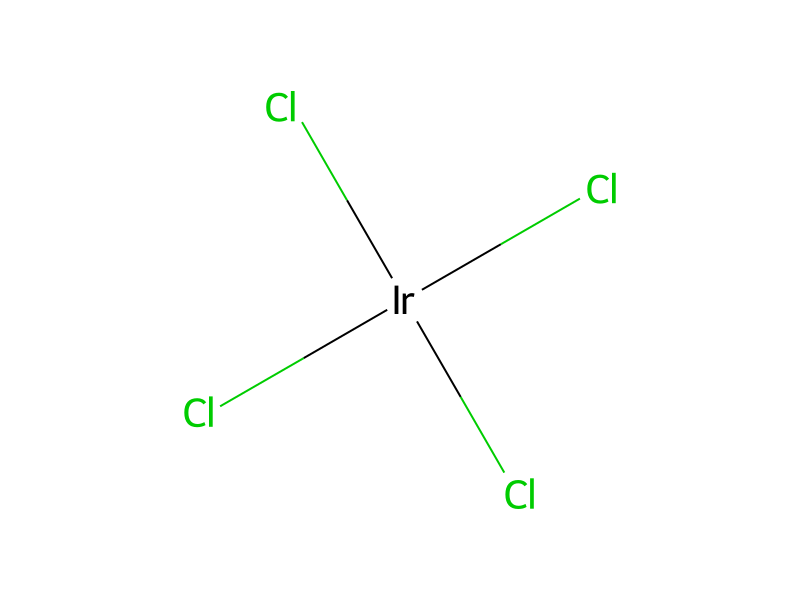
- 標準SMILES
[Cl][Ir]([Cl])([Cl])[Cl]- InChIKey
CALMYRPSSNRCFD-UHFFFAOYSA-J- 分子式
- Cl4Ir
- 平均分子量
- 334 g/mol
- 単同位体質量
- 332.83833712
名称と識別子
- 優先名称
- Iridium tetrachloride
- IUPAC
- tetrachloroiridium
- 現地名
- イリジウム(IV)テトラクロリド
- 英語名
- Iridium tetrachloride
- 分子式
- Cl4Ir
- 分子量
- 334.02
名称と別名
Iridium(IV) chlorideIRIDIUM TETRACHLORIDEIridium chloride (IrCl4)Iridic ChlorideHSDB 6342UNII-PCG7KVC21IPCG7KVC21IEINECS 233-048-8DTXSID10893602IRIDIUM(IV) CHLORIDE [HSDB]Iridium chloride [IrCl4]RefChem:148712
名称をさらに表示
塩化イリジウム(IrCl4)イリジウム(IV)テトラクロリド化イリジウム(Ⅳ)塩化イリジウム(Ⅳ)塩化イリジウム(III/IV)水和物IRIDIUM(IV) CHLORIDE, PREMION®, 99.95% (METALS BASIS), IR 56.5% MIN塩化イリジウム(IV)塩化イリジウム(IV), 99.5%塩化イリジウム(IV), hydrate塩化イリジウム(IV), Premion®, 99.95% (metals basis), Ir 56.5% minIRIDIUM CHLORIDEiridicchloride[qr]iridiumchloride(ircl4)iridium(iv)chloride[qr]Iridium(IV) tetrachlorideiridiumchloride[ircl4][qr]IridiuM(IV) chloride liquidIridiuM chloride(IV) hydrate
DTXCID001323629233-048-810025-97-5tetrachloroiridiumMFCD00016155Iridium(IV)chlorideIridium(IV) chloride, PremionIridium IV chloride
データベース識別子
- CAS
10025-97-5- PubChem CID
- 24815
- DTXSID
DTXSID10893602- UNII
- PCG7KVC21I
- EC Number
- 233-048-8
物性
構造計算による物性
- 極性表面積
- 0 Ų
- 水素結合供与体数
- 0
- 水素結合受容体数
- 0
- 回転可能結合数
- 0
- 重原子数
- 5
- 形式電荷
- 0
- 複雑度
- 19.1
実験および物理化学的性質
Chemical ClassesMetals -> Metals, Inorganic Compounds
Color/FormBrownish-black mass
Solubility
Soluble in water, alcohol, and dilute hydrochloric acid.
Insoluble in water, acids, alkalies. /Iridium trichloride alpha-form/
Decomposition
When heated to decomposition it emits toxic fumes of /hydrogen chloride/.
Decomposes at 763 °C. /Iridium Trichloride alpha-form/
Physical DescriptionBrownish-black solid; Soluble in water; [Hawley]
Other Experimental Properties
/The chloride of iridium(IV) ion most likely does not exist as IrCl4./ Iridium(IV) ion tends to be six-cooridinate with octahedral geometry.
Hygroscopic
物理化学的性質
- 貯蔵温度
- Inert atmosphere,Room Temperature
- 溶解性
- 2 O, · soluble in H2O, ethanol
- 外見
- ガラス状非結晶片/粉末
- 色
- ダークブラウンからブラック
- 水溶解度
- 水、アルコール、希塩酸に溶ける。
- InChI
- InChI=1S/4ClH.Ir/h4*1H;/q;;;;+4/p-4
- InChIKey
- CALMYRPSSNRCFD-UHFFFAOYSA-J
- SMILES
- [Ir](Cl)(Cl)(Cl)Cl
- CAS データベース
- 10025 · 10025-97-5(CAS DataBase Reference)
- EPAの化学物質情報
- Iridium tetrachloride (10025-97-5)
化学的性質
化学的特性Brownish-black mass, hygroscopic. Soluble in water, alcohol, and dilute hydrochloric acid.
安全と法規制
GHS分類
GHS Classification
Warning
H302 (100%): Harmful if swallowed [Warning Acute toxicity, oral]
P261, P264, P264+P265, P270, P271, P280, P301+P317, P302+P352, P304+P340, P305+P351+P338, P319, P321, P330, P332+P317, P337+P317, P362+P364, P403+P233, P405, and P501 (click each P-code to see the statement)
Aggregated GHS information provided per 6 reports by companies from 3 notifications to the ECHA C&L Inventory. Each notification may be associated with multiple companies.
危険有害性情報
Hazards SummaryA skin and eye irritant; Toxic by ingestion; Oral LD50 (rat) = 1560 mg/kg; [RTECS] An irritant; [MSDSonline] See Iridium.
Hazard Classes and CategoriesAcute Tox. 4 (100%)
安全と保護具
Disposal Methods
SRP: At the time of review, criteria for land treatment or burial (sanitary landfill) disposal practices are subject to significant revision. Prior to implementing land disposal of waste residue (including waste sludge), consult with environmental regulatory agencies for guidance on acceptable disposal practices.
毒性情報
Human Toxicity Excerpts
/HUMAN EXPOSURE STUDIES/ The chlorides are poison or moderately toxic by ingestion and are eye and skin irritants. /Iridium chlorides/
/CASE REPORTS/ This paper presents the case of a non-smoking and non-atopic male, exposed to iridium chloride at work, who developed respiratory tract symptoms and contact urticaria. Application of iridium salt to normal skin caused contact urticaria. An iridium chloride prick test showed a positive reaction and a scratch test produced anaphylactoid reactions. Platinum salt allergy was excluded through prick testing with hexachloroplatinate solution. There is no previous report describing a case where an individual has a positive prick test reaction to iridium salts and simultaneously a negative one to platinum salts. The results are interpreted as immediate-type hypersensitivity (Type I allergy?) to iridium salt. The route of sensitization was probably through the airways. Further testing showed that iridium salt allergy could persist for at least 18 months after exposure ceases. 14 employees at the same factory were prick tested with iridium and platinum salts with negative results. /Chloride/
Non-Human Toxicity Excerpts/LABORATORY ANIMALS: Acute Exposure/ Moderately toxic by ingestion
Environmental Abiotic Degradation
Iridium can form many compounds with oxidation states ranging from -1 to +6; however, the +3 and +4 are the usual states, both with octahedral coordination(1). The +3 and +4 oxidation states are likely to predominate for iridium under most normal environmental conditions(SRC). Ir(III) complexes are kinetically inert to ligand exchange, but rates can be accelerated in the presence of reducing agents that can convert Ir(III) to the less inert Ir(II) ion(1). Halide complexes of Ir(IV) such as [IrCl6]2- are readily reduced to the Ir(III) species in neutral or basic solution or in the presence of reducing agents (e.g., potassium iodide and sodium oxalate)(2). The reactions of iridium compounds in the environment are expected to be complicated and will depend on factors such as pH, redox potential and available coordinating ligands(SRC). /Iridium (III)/
Antidote and Emergency Treatment
Basic treatment: Establish a patent airway. Suction if necessary. Watch for signs of respiratory insufficiency and assist ventilations if needed. Administer oxygen by nonrebreather mask at 10 to 15 L/min. Monitor for pulmonary edema and treat if necessary ... . Monitor for shock and treat if necessary ... . Anticipate seizures and treat if necessary ... . For eye contamination, flush eyes immediately with water. Irrigate each eye continuously with normal saline during transport ... . Do not use emetics. For ingestion, rinse mouth and administer 5 ml/kg up to 200 ml of water for dilution if the patient can swallow, has a strong gag reflex, and does not drool ... . Cover skin burns with dry sterile dressings after decontamination... . /Poison A and B/
Advanced treatment: Consider orotracheal or nasotracheal intubation for airway control in the patient who is unconscious, has severe pulmonary edema, or is in respiratory arrest. Positive pressure ventilation techniques with a bag valve mask device may be beneficial. Monitor cardiac rhythm and treat arrhythmias as necessary ... . Start an IV with D5W /SRP: "To keep open", minimal flow rate/. Use lactated Ringer's if signs of hypovolemia are present. Watch for signs of fluid overload. Consider drug therapy for pulmonary edema ... . For hypotension with signs of hypovolemia, administer fluid cautiously. Watch for signs of fluid overload ... . Treat seizures with diazepam (Valium) ... . Use proparacaine hydrochloride to assist eye irrigation ... . /Poison A and B/
Non-Human Toxicity Values
LD50 Rat oral 1560 mg/kg
LD50 Rat oral 4.67 mg/kg
安全データ
- tsca
- TSCA listed
- ridadr
- 3260
- 毒性
- rat,LD50,oral,1560mg/kg (1560mg/kg),Gigiena Truda i Professional'nye Zabolevaniya. Labor Hygiene and Occupational Diseases. Vol. 21(7), Pg. 55, 1977.
- hs_code
- 2827398590
- risk_code
- 34
- safety_code
- 26-36/37/39
- 有毒物質データの
- 10025-97-5(Hazardous Substances Data)
化学と産業
用途と製造
Uses
Used in chemical analysis (testing for nitric acid in the presence of nitrous acid), microscopy, and plating solutions; [HSDB]
Electroplating [Category: Plate]
Analysis (testing for nitric acid in the presence of nitrous acid), microscopy, plating solution.
Catalyst for chlorination and polymerization reactions. /Iridium trichloride/
Methods of ManufacturingDerivation: Action of chlorine or aqua regia on the ammonium salt, (NH4)2IrCl6.
General Manufacturing Information
Iridium chloride (IrCl4): ACTIVE
Hexachloroiridic(IV) acid (H2[IrCl6]) (CAS No. 16941-92-7) and ammonium hexachloroiridate(IV) ((NH4)2[IrCl6]) (CAS No. 16940-92-4) are two industrial important iridium(IV) chloride salts. Hexachloroiridic(IV) acid is by far the most important iridium compound. Ammonium hexachloroiridate(IV) is important in the separtation process of platinum group metals (ruthenium, osmium, rhodium, iridium, palladium and platinum). The best method for producing powder metal iridium is to reduce ammonium hexachloroiridate(IV) in an hydrogen atmosphere at 800 °C and strong heating in air gives an oxide material.
応用分野
用途高純度金属化合物。
使用Analysis (testing for nitric acid in the presence of nitrous acid), microscopy, plating solution.
サプライヤー50 社
北京华美互利生物化工010-56205725 · [email protected]
上海阿拉丁生化科技股份有限公司400-6206333 13167063860 · [email protected]
毕佳索(上海毕得医药科技股份有限公司)400-6005915 · [email protected]
上海腾准生物科技有限公司19821570922 · [email protected]
清宁生物(江苏博泉生物科技有限公司)19352250998 · [email protected]
陕西缔都新材料有限公司029-63373950 17392216152 · [email protected]
T&W GROUP021-61551611 13296011611 · [email protected]
Dayang Chem (Hangzhou) Co.,Ltd.+86-0571-88938639 17705817739 · [email protected]
郑州德元凯化工有限公司17837139533 · [email protected]
北京华威锐科化工有限公司0757-86329057 18934348241 · [email protected]
北京索莱宝科技有限公司010-50973130 17801761073 · [email protected]
武汉易泰科技有限公司上海分公司18930552037 · [email protected]
阿法埃莎(中国)化学有限公司400-6106006 · [email protected]
安耐吉化学&3A(安徽泽升科技股份有限公司)400-0056266 · [email protected]
上海瀚鸿科技股份有限公司021-54306202 13764082696 · [email protected]
湖北魏氏化学试剂股份有限公司027-59102966 18717199209 · [email protected]
怀化市冰峰化工有限公司0745-2866851 17711757908 · [email protected]
上海钰康生物科技有限公司+86-18930848214 +86-021-56762820 · [email protected]
Zhejiang J&C Biological Technology Co.,Limited+1-2135480471 · [email protected]
武汉贝乐叶生物医药科技有限公司15871353653 18086118076 · [email protected]
山东西亚化学有限公司13355009207 13355009207 · [email protected]
四川库利南科技有限公司400-1166-196 18981987031 · [email protected]
苏州爱玛特生物科技有限公司0512-56316828 4008675858 · [email protected]
上海将来实业股份有限公司021-61552785 · [email protected]
HBCChem, Inc.+1-510-219-6317 · [email protected]
上海毕得医药科技股份有限公司400-164-7117 18317119277 · [email protected]
上海石洋化工有限公司021-56795766 · [email protected]
成都零六生物科技有限公司400-1166-196 13458535857 · [email protected]
上海麦克林生化科技股份有限公司15221275939 15221275939 · [email protected]
上海有朋化工有限公司021-69005955 13701776567 · [email protected]
北京海力扬化学科技有限公司13718199399 · [email protected]
四川海诺威科技有限公司13708085536 13708085536 · [email protected]
上海凯赛化工有限公司021-33516722 13701817765 · [email protected]
上海彤源化工有限公司021-021-69182866 13701855675 · [email protected]
青岛海智微元生物科技有限公司18317699790 18317699790 · [email protected]
上海兴鲁化工科技有限公司02120970332 · [email protected]
上海蓝润化学有限公司021-69515658 ; 69515628 13701998368 · [email protected]
上海容立化学科技有限公司021-69992220 13701886816 · [email protected]
上海康拓化工有限公司021-69185552 13701777608 · [email protected]
池州凯隆进出口贸易有限公司[email protected]
Alfa Chemistry1-516-6625404 · [email protected]
九鼎化学(上海)科技有限公司4009209199 · [email protected]
上海谱振生物科技有限公司4001650900 13817534909 · [email protected]
上海卜微应用材料技术有限公司021-64112762 18930491979
上海玻尔化学试剂有限公司19102157732 · [email protected]
Alfa Chemistry+1-5166625404 · [email protected]
上海凯米莱铂生物科技有限公司18116465878 · [email protected]
上海石洋化工有限公司+86-021-56795779 +86-13651600618 · [email protected]
滇研催化18168774353 15096626657 · [email protected]
成都润泽本土化工有限公司028-88469284 18000562381 · [email protected]
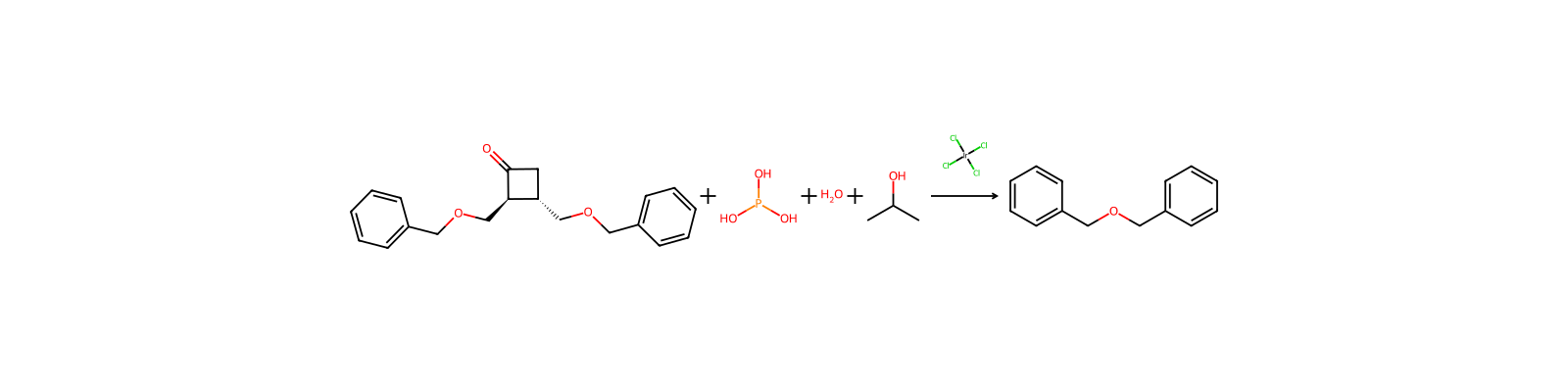
関連反応
2 件

関連ノート
読み込み中…