

基本情報
- 標準SMILES
CCCCOC(=O)c1ccc(N)cc1- InChIKey
IUWVALYLNVXWKX-UHFFFAOYSA-N- 分子式
- C11H15NO2
- 平均分子量
- 193.24 g/mol
- 単同位体質量
- 193.11027872
概要
N-butyl-p-aminobenzoate is a yellow powder. Insoluble in water. (NTP, 1992)
名称と識別子
- 優先名称
- Butyl 4-aminobenzoate
- IUPAC
- butyl 4-aminobenzoate
- 現地名
- 4-アミノ安息香酸ブチル
- 英語名
- Butyl 4-aminobenzoate
- 分子式
- C11H15NO2
- 分子量
- 193.24
名称と別名
Butyl 4-aminobenzoatebutamben94-25-7ButesineButoformButyl aminobenzoateButylcainePlanoformScuroformScuroforme4-(Butoxycarbonyl)anilineButyl keloform
名称をさらに表示
4-アミノ安息香酸ブチルブタンベンブトホルム4-アミノベンゼンカルボン酸ブチルブチルp-アミノベンゾアートブテシンブタムベンp-アミノ安息香酸ブチル4アミノ安息香酸ブチル4-アミノ安息香酸ブチル ≥98.0% (NT)4-アミノ安息香酸N-ブチル4-アミノ安息香酸n-ブチル, 99%butylaminobenzoateButesinButseinBUTOFORMEBUTAMBERO
Benzoic acid, 4-amino-, butyl esterN-Butyl p-aminobenzoatep-Aminobenzoic acid butyl ester4-Aminobenzoic acid butyl esterButyl PABADTXSID7022417NSC-128464EFW857872Q
データベース識別子
- CAS
94-25-7- PubChem CID
- 2482
- DTXSID
DTXSID7022417- ChEMBL
CHEMBL127516- ChEBI
CHEBI:3231- UNII
- EFW857872Q
- EC Number
- 202-317-1
- Nikkaji
- J4.698A
物性
構造計算による物性
- XLogP
- 2.9
- 極性表面積
- 52.3 Ų
- 水素結合供与体数
- 1
- 水素結合受容体数
- 3
- 回転可能結合数
- 5
- 重原子数
- 14
- 形式電荷
- 0
- 複雑度
- 174
実験および物理化学的性質
Chemical ClassesOther Uses -> Sunscreens
DrugsPharmaceuticals -> Listed in ZINC15
SpringerMaterials PropertiesFusion temperature
LogP
log Kow= 2.87
3.05
OdorOdorless
TasteTasteless
Color/Form
Crystals from alc
White powder
White, amorphous powder
Solubility
Insoluble (NTP, 1992)
1 g dissolves in about 7 liters water
Sol in dil acids, alc, chloroform, ether, and fatty oils.
Soluble in dilute acids, alcohol, chloroform, ether, and fatty oils.
Soluble in thanol, ethyl ether, and benzene.
Endocrine DisruptorsPotential endocrine disrupting compound
Boiling Point
343 to 345 °F at 8 mmHg (NTP, 1992)
173-174 °C @ 8 mm Hg
DecompositionWhen heated to decomposition it emits toxic fumes such as niroxides.
Melting Point
136 °F (NTP, 1992)
58 °C
物理化学的性質
- 融点
- 57 · 57-58 °C(lit.)
- 沸点
- 174 °C8 · 174 °C8 mm Hg(lit.)
- 比重(密度)
- 1.0945 · 1.0945 (rough estimate)
- 屈折率
- 1.548 · 1.5480 (estimate)
- 貯蔵温度
- Keep in dark place,Inert atmosphere,Room temperature
- 溶解性
- クロロホルム(微量)、メタノール(微量)
- 外見
- 個体
- 酸解離定数(Pka)
- 5.38 · pKa 5.38 (Uncertain)
- 色
- 白い
- 水溶解度
- 水に非常に溶けにくい。
- Merck
- 14 · 14,1512
- BRN
- 1211465 · 1211465
- 主な用途
- 医薬品(低分子化合物)
- 化粧品成分の機能
- 紫外線吸収剤
- InChI
- 1S/C11H15NO2/c1-2-3-8-14-11(13)9-4-6-10(12)7-5-9/h4-7H,2-3,8,12H2,1H3
- InChIKey
- IUWVALYLNVXWKX-UHFFFAOYSA-N
- SMILES
- CCCCOC(=O)c1ccc(N)cc1
- LogP
- 2.87 · 2.870
- CAS データベース
- 94 · 94-25-7(CAS DataBase Reference)
- NISTの化学物質情報
- Butamben(94-25-7)
- EPAの化学物質情報
- Butyl p-aminobenzoate (94-25-7)
化学的性質
化学的特性It is a solid at room temperature, with a melting point of 58°C and a boiling point of 173.4°C (at 8mmHg). Butyl p-aminobenzoate is insoluble in water.
安全と法規制
GHS分類
GHS Classification
Warning
H315 (100%): Causes skin irritation [Warning Skin corrosion/irritation]
P261, P264, P264+P265, P271, P272, P280, P302+P352, P304+P340, P305+P351+P338, P319, P321, P332+P317, P333+P317, P337+P317, P362+P364, P403+P233, P405, and P501 (click each P-code to see the statement)
Aggregated GHS information provided per 43 reports by companies from 6 notifications to the ECHA C&L Inventory. Each notification may be associated with multiple companies.
危険有害性情報
Regulatory InformationBenzoic acid, 4-amino-, butyl ester: Does not have an individual approval but may be used as a component in a product covered by a group standard. It is not approved for use as a chemical in its own right.
Other Safety InformationIMAP assessments - Benzoic acid, 4-amino-, butyl ester: Human health tier I assessment
Fire HazardsFlash point data for this chemical are not available. It is probably combustible. (NTP, 1992)
Fire PotentialCombustible when exposed to heat or flame.
Health HazardsSYMPTOMS: Symptoms of exposure to this compound may include sensitivity dermatitis, nausea, vomiting and methemoglobinemia.
Hazards SummaryMay cause tissue necrosis after injection, possible due to precipitation of crystals; [HSDB] May cause methemoglobinemia and skin sensitization; [CAMEO] An irritant; May cause skin sensitization; [MSDSonline]
FDA Requirements
Manufacturers, packers, and distributors of drug and drug products for human use are responsible for complying with the labeling, certification, and usage requirements as prescribed by the Federal Food, Drug, and Cosmetic Act, as amended (secs 201-902, 52 Stat. 1040 et seq., as amended; 21 U.S.C. 321-392).
Reactive GroupEsters, Sulfate Esters, Phosphate Esters, Thiophosphate Esters, and Borate Esters
Reactivity Profile
N-BUTYL-P-AMINOBENZOATE is an aminophenyl ester derivative. Amines are chemical bases. They neutralize acids to form salts plus water. These acid-base reactions are exothermic. The amount of heat that is evolved per mole of amine in a neutralization is largely independent of the strength of the amine as a base. Amines may be incompatible with isocyanates, halogenated organics, peroxides, phenols (acidic), epoxides, anhydrides, and acid halides. Flammable gaseous hydrogen is generated by amines in combination with strong reducing agents, such as hydrides. Esters react with acids to liberate heat along with alcohols and acids. Strong oxidizing acids may cause a vigorous reaction that is sufficiently exothermic to ignite the reaction products. Heat is also generated by the interaction of esters with caustic solutions. Flammable hydrogen is generated by mixing esters with alkali metals and hydrides.
Air and Water ReactionsMay be sensitive to light and air. Insoluble in water. Slowly hydrolyzed when boiled in water. Also will hydrolyze under high and low pH conditions (NTP, 1992).
Hazard Classes and CategoriesSkin Irrit. 2 (100%)
安全と保護具
Fire FightingA fire in your laboratory involving this chemical should be extinguished with a dry chemical, carbon dioxide or halon extinguisher. (NTP, 1992)
First Aid
EYES: First check the victim for contact lenses and remove if present. Flush victim's eyes with water or normal saline solution for 20 to 30 minutes while simultaneously calling a hospital or poison control center. Do not put any ointments, oils, or medication in the victim's eyes without specific instructions from a physician. IMMEDIATELY transport the victim after flushing eyes to a hospital even if no symptoms (such as redness or irritation) develop.
Nonfire Spill Response
SMALL SPILLS AND LEAKAGE: Should a spill occur while you are handling this chemical, you should dampen the solid spill material with alcohol, then transfer the dampened material to a suitable container. Use absorbent paper dampened with alcohol to pick up any remaining material. Seal the absorbent paper, and any of your clothes, which may be contaminated, in a vapor-tight plastic bag for eventual disposal. Solvent wash all contaminated surfaces with alcohol followed by washing with a strong soap and water solution. Do not reenter the contaminate area until the Safety Officer (or other responsible person) has verified that the area has been properly cleaned.
Disposal Methods
SRP: At the time of review, criteria for land treatment or burial (sanitary landfill) disposal practices are subject to significant revision. Prior to implementing land disposal of waste residue (including waste sludge), consult with environmental regulatory agencies for guidance on acceptable disposal practices.
Personal Protective Equipment (PPE)
RECOMMENDED RESPIRATOR: Where the neat test chemical is weighed and diluted, wear a NIOSH-approved half face respirator equipped with an organic vapor/acid gas cartridge (specific for organic vapors, HCl, acid gas and SO2) with a dust/mist filter. (NTP, 1992)
毒性情報
Interactions
These agents /cholinesterase inhibitors such as antimyasthenics; cyclophosphamide; demecarium; echothiophate; neurotoxic insecticides, possibly including large quantities of topical malathion; isoflurophate; thiotepa/ may inhibit metabolism of ester derivatives; absorption of significant quantities of ester derivatives in patients receiving a cholinesterase inhibitor may lead to increased risk of toxicity. /Topical anesthetics/
Metabolites of PABA-derivative topical anesthetics may antagonize antibacterial activity of sulfonamides, especially if the anesthetics are absorbed in significant quantities over prolonged periods of time. /Topical anesthetics/
Adverse EffectsMethemoglobinemia - The presence of increased methemoglobin in the blood; the compound is classified as secondary toxic effect
Non-Human Toxicity Excerpts...IN EPIDURAL MIXT...BEEN INCRIMINATED AS POTENTIAL CAUSE OF TISSUE NECROSIS & NEURITIS, POSSIBLY DUE TO CRYSTAL PRECIPITATION (DEPOT EFFECT).
Non-Human Toxicity ValuesLD50 Mouse ip 67 mg/kg
法規制情報
FDA Requirements
Manufacturers, packers, and distributors of drug and drug products for human use are responsible for complying with the labeling, certification, and usage requirements as prescribed by the Federal Food, Drug, and Cosmetic Act, as amended (secs 201-902, 52 Stat. 1040 et seq., as amended; 21 U.S.C. 321-392).
安全データ
- wgk
- 3
- tsca
- TSCA listed
- rtecs
- DG1530000
- hs_code
- 29224995
- risk_code
- 36/37/38-43
- 化審法
- (3)-1443
- hazard_code
- Xi
- safety_code
- 26-36/37-36
- Hazard Classifications
- Eye Irrit. 2Skin Irrit. 2Skin Sens. 1STOT SE 3
- ストレージクラス
- 11 - Combustible Solids
- 有毒物質データの
- 94-25-7(Hazardous Substances Data)
化学と産業
薬理情報
Protein BindingAs all other local anesthetics, it is thought that butamben will be highly bound to plasma proteins, mainly to alpha-1-acid glycoprotein.
Pharmacodynamics
Butamben has been shown to selectively inhibit dorsal root pain signal transmission for periods of months when administered as epidural suspensions. The effect of butamben is not related to any significant loss of motor function which indicates that it targets specifically the pain-sensing C fibers of the dorsal root. When administered topically, butamben produced anesthesia by accumulating in the nerve cell membrane causing it to expand and lose its ability to depolarize and blocking the impulse transmission.
Mechanism of Action
Butamben acts by inhibiting the voltage-gated calcium channels in dorsal root ganglion neurons. The modification in this channels is thought to cause a disturbance of the channel kinetics acceleration. It is reported as well that butamben is an inhibitor of the sodium channels and a delayed rectifier of potassium currents. All the effects of butamben are performed in the root ganglion neurons which suggests that the related anesthetic effect may be caused by the reduced electrical excitability.
...ACTION IS TO INTERFERE WITH INITIATION & TRANSMISSION OF NERVE IMPULSE. PRESENT THEORY HOLDS THAT LOCAL ANESTHETICS PREVENT DEPOLARIZATION OF NERVE MEMBRANE &, HENCE, PROPAGATION OF IMPULSE. ...THOUGHT TO BE DUE TO INTERFERENCE WITH MUTUAL EXCHANGE OF SODIUM & POTASSIUM IONS ACROSS MEMBRANE. /LOCAL ANESTHETICS/
Biological Half-LifeThe effective half-life of unencapsulated butamben is registered to be of 90 minutes. Some efforts were made to prepare D, L-lactic acid capsules which increased the half-life of butamben to even 400 hours.
Metabolism/MetabolitesThe metabolic pathway of butamben follows the same pattern of other local anesthetics and it is driven mainly by the hydrolysis via cholinesterase for the formation of inert metabolites.
MeSH Pharmacological Classification
Drugs that block nerve conduction when applied locally to nerve tissue in appropriate concentrations. They act on any part of the nervous system and on every type of nerve fiber. In contact with a nerve trunk, these anesthetics can cause both sensory and motor paralysis in the innervated area. Their action is completely reversible. (From Gilman AG, et. al., Goodman and Gilman's The Pharmacological Basis of Therapeutics, 8th ed) Nearly all local anesthetics act by reducing the tendency of voltage-dependent sodium channels to activate.
Absorption, Distribution and Excretion
When butamben is administered epidurally in a suspension form, the physical characteristics of butamben allow a very slow release. When administered topically, butamben is also reported to have a very low systemic absorption which allows for a longer duration of action.
The metabolites found in plasma after cholinesterase processing are disposed of in the urine.
This pharmacokinetic property has not been determined.
Clearance is flow-limited and it highly depends on the state of protein-bound form.
用途と製造
Uses
Used as a local anesthetic and in burn treatment ointments and suntan preparations; [Hawley] Used essentially 100% as a local anesthetic; [HSDB]
MEDICATION
MEDICATION (VET)
U.S. Exports
(1977) No Data
(1979) No Data
U.S. Imports
(1977) No Data
(1979) No Data
U.S. Production
(1978) GREATER THAN 1.36X10+6 G (INCL PICRATE)
(1979) GREATER THAN 1.36X10+6 G (INCL PICRATE)
Consumption PatternsESSENTIALLY 100% AS AN ANESTHETIC
Methods of Manufacturing
ESTERIFICATION OF P-NITROBENZOIC ACID WITH N-BUTYL ALCOHOL FOLLOWED BY REDUCTION WITH IRON FILINGS AND HYDROCHLORIC ACID
PREPARED BY ESTERIFYING P-NITROBENZOIC ACID WITH N-BUTYL ALCOHOL & REDUCING NITRO GROUP TO AMINO GROUP WITH IRON FILINGS & HCL.
Prepn: Brill, J. Am. Chem. Soic. 43, 1322 (1921); Adams, Volwiler, U.S. pat 1,440,652 (1923 to Abbott); Brit. pat. 252,870; C.A. 17, 1243 (1923); C.A. 21, 2478 (1927).
Produced by the esterification of 4-nitrobenzoyl chloride with n-butanol and reduction of the resulting nitroester.
Formulations/Preparations
... MAY BE APPLIED AS DUSTING POWDERS, UNDIL OR DIL WITH STERILE TALC. THEY ARE SOL IN OIL & MAY BE INC IN OILY SOLN, OINTMENTS, & SUPPOSITORIES. /ANESTHETICS OF LOW SOLUBILITY/
Grade: NF
General Manufacturing Information
Benzoic acid, 4-amino-, butyl ester: ACTIVE
Available in the United States as a surface anesthetic in the form of a picrate.
応用分野
用途有機合成原料、医薬品原料。
使用n-Butyl 4-aminobenzoate is used as pharmaceutical intermediate.
一般的な説明Yellow powder. Insoluble in water.
調製方法
Butyl p-aminobenzoate is manufactured via esterification of p-nitrobenzoic acid with n-butyl alcohol, followed by the reduction of the nitro group to an amino group.
純化方法Crystallise Butamben from EtOH. [Beilstein 14 IV 1130.]
上流・下流製品情報
上流原料
サプライヤー50 社
国药集团化学试剂有限公司86-21-63210123 · [email protected]
梯希爱(上海)化成工业发展有限公司021-67121386 · [email protected]
上海阿拉丁生化科技股份有限公司400-6206333 13167063860 · [email protected]
Shandong chuangyingchemical Co., Ltd.18853181302 · [email protected]
南通润丰石油化工有限公司66017690 19952660367 · [email protected]
武汉欣扬瑞和化学科技有限公司153-07155313 15307155313 · [email protected]
爱斯特(成都)生物制药股份有限公司+86-28-85122536 85324413 · [email protected]
Dayang Chem (Hangzhou) Co.,Ltd.+86-0571-88938639 17705817739 · [email protected]
北京安司莫森技术有限公司010-82954736 13391601435 · [email protected]
LGM Pharma1-(800)-881-8210 · [email protected]
Syntechem Co.,Ltd[email protected]
上海迈瑞尔生化科技有限公司4006356688 18621169109 · [email protected]
阿法埃莎(中国)化学有限公司400-6106006 · [email protected]
安耐吉化学&3A(安徽泽升科技股份有限公司)400-0056266 · [email protected]
石家庄斯迪亚诺精细化工有限公司0311-89250318 13582355795 · [email protected]
上海瀚鸿科技股份有限公司021-54306202 13764082696 · [email protected]
Cangzhou Wanyou New Material Technology Co.,Ltd18631714998 · [email protected]
上海钰康生物科技有限公司+86-18930848214 +86-021-56762820 · [email protected]
上海泰坦科技股份有限公司400-6009262 15618770481 · [email protected]
MedChemexpress LLC021-58955995 · [email protected]
常州永和精细化学有限公司0519-88552298 13921086978 · [email protected]
山东西亚化学有限公司13355009207 13355009207 · [email protected]
玛雅试剂+86 (573) 82222445 (0)18006601000 452520369 · [email protected]
天津希恩思生化科技有限公司400 638 7771 · [email protected]
Xiamen AmoyChem Co., Ltd+86-86-5926051114 · [email protected]
南京化学试剂股份有限公司025-58369808 17895012682 · [email protected]
斯百全化学(上海)有限公司021-021-021-67601398-809-809-809 15221380277 · [email protected]
艾科试剂4008-755-333 18080918076 · [email protected]
上海思域化工科技有限公司86-21-34053660 · [email protected]
TCI AMERICA800-4238616 · [email protected]
TOKYO CHEMICAL INDUSTRY CO., LTD.03-36680489 · [email protected]
TCI Europe320-37350700 · [email protected]
日照力德士化工有限公司010-51268198 · [email protected]
常州市尚科医药化工材料有限公司0519-85269522 15906111708 · [email protected]
上海爱蝶实业有限公司021-58957966 18930537195 · [email protected]
成都零六生物科技有限公司400-1166-196 13458535857 · [email protected]
广拓化学(上海)有限公司021-60899189-8001 18918189673 · [email protected]
上海创赛科技有限公司400-6087598 15021221957 · [email protected]
上海乾劲化工科技有限公司021-20900665 17321230821 · [email protected]
杭州杰恒化工有限公司0571-87396432 · [email protected]
江苏艾康生物医药研发有限公司025-66028182 17714375163 · [email protected]
上海孚一生物科技有限公司+86 (21) 61124340
成都润泽本土化工有限公司13096311329 028-88469284 616445927 · [email protected]
常州市卓燊医药化工材料有限公司0519-85286950 15380036950 · [email protected]
湖北巨胜科技有限公司027-59599241 18871490274 · [email protected]
桦特昇生物科技(武汉)有限公司027-59207879 1972026995 18140587686 · [email protected]
TargetMol中国(陶术生物)021-021-33632979 15002134094 · [email protected]
上海陶术生物科技股份有限公司+1-781-999-5354; +1-00000000000 · [email protected]
九鼎化学(上海)科技有限公司4009209199 · [email protected]
BOC Sciences16314854226; +8616314854226 · [email protected]
補足説明
定義ChEBI: An amino acid ester resulting from the formal condensation of the carboxy group of 4-aminobenzoic acid with the hydroxy group of butan-1-ol. Its local anaesthetic properties have been used for surface anaesthesia of the skin and mucous membranes, and for r lief of pain and itching associated with some anorectal disorders.
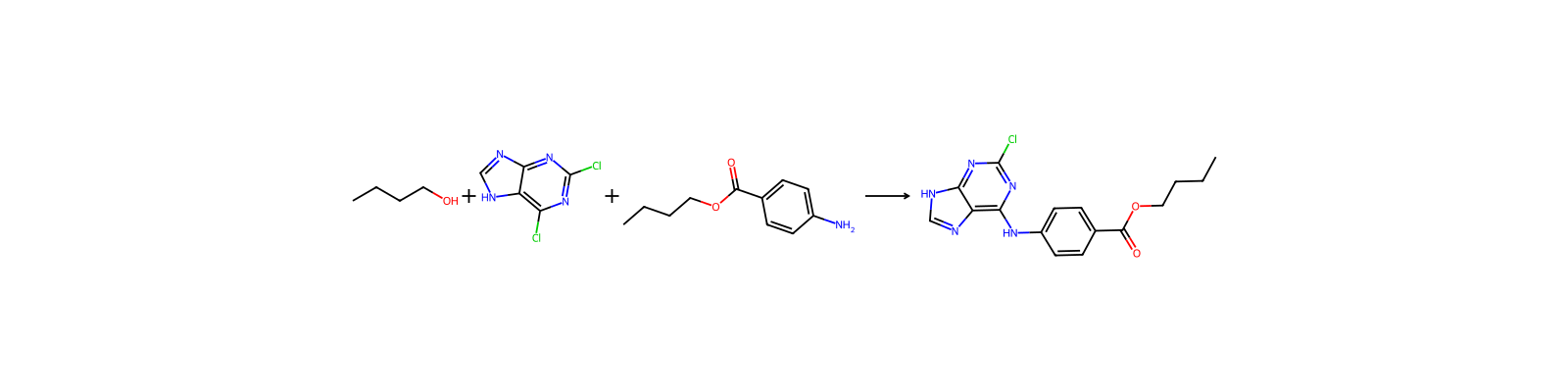
関連反応
11 件


関連ノート
読み込み中…