
硫酸ヒドロキシルアミン
Hydroxylamine sulfate
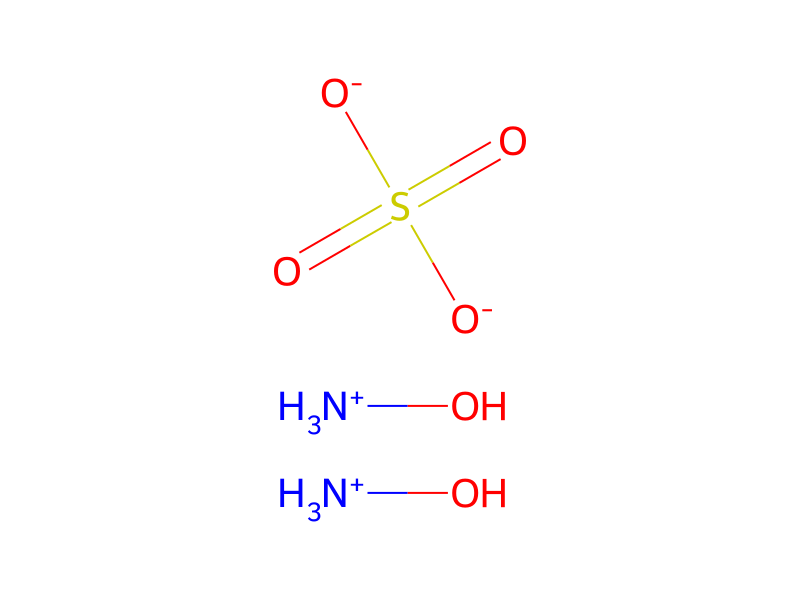
基本情報
- CAS
10039-54-0- 標準SMILES
O=S(=O)([O-])[O-].[NH3+]O.[NH3+]O- InChIKey
VGYYSIDKAKXZEE-UHFFFAOYSA-L- 分子式
- (NH2OH)2.H2SO4
- 平均分子量
- 164.14 g/mol
- 単同位体質量
- 164.01030715
概要
Hydroxylamine sulfate is a colorless crystalline solid. Contact may cause severe irritation to skin, eyes, and mucous membranes. May be toxic by ingestion.
名称と識別子
- 優先名称
- Hydroxylamine sulfate
- IUPAC
- hydroxyazanium;sulfate
- 現地名
- 硫酸ヒドロキシルアミン
- 英語名
- Hydroxylamine sulfate
- 分子式
- H2O4S.2H3NO
- 分子量
- 164.14
名称と別名
Hydroxylammonium sulfateOxammonium sulfateHydroxylamine sulfate (2:1)Bis(hydroxylamine) sulfateHydroxylamine sulphateHydroxylamine, sulfateHydroxylamine neutral sulfateBis(hydroxylammonium) sulphateHydroxylammoniumsulfatLANASANE LABDTXSID202542449KP498D4O
名称をさらに表示
硫酸ヒドロキシルアミンヒドロキシルアンモニウムスルファートヒドロキシルアミン·0.5硫酸2ヒドロキシルアミン·硫酸塩2ヒドロキシルアミン·硫酸ヒドロキシルアミン·0.5硫酸塩硫酸ビス(ヒドロキシアンモニウム)ヒドロキシルアミン硫酸塩硫酸ヒドロキシルアンモニウム硫酸ビス(ヒドロキシルアンモニウム)硫酸ヒドロキシアミン硫酸ヒドロキシルアミン, 99%HASHYDROXYLAMMONIUM SULPHATEHydroxyamine sulfateHydroxylammoniumHuHAS1amine suLHA synthase 1
hydroxyl ammonium sulfateBIS(HYDROXYLAMMONIUM) SULFATEEINECS 233-118-8UN2865UNII-49KP498D4ODTXCID505424HYDROXYLAMINE SULFATE [MI]EC 233-118-8
データベース識別子
- CAS
10039-54-0- PubChem CID
- 24846
- DTXSID
DTXSID2025424- UNII
- 49KP498D4O
- EC Number
- 233-118-8
物性
構造計算による物性
- 極性表面積
- 184 Ų
- 水素結合供与体数
- 4
- 水素結合受容体数
- 6
- 回転可能結合数
- 0
- 重原子数
- 9
- 形式電荷
- 0
- 複雑度
- 64.2
実験および物理化学的性質
Chemical Classes
Nitrogen Compounds -> Hydroxylamines
Corrosives
CosmeticsAntioxidant
LogP-3.6
Density
greater than 1 at 68 °F (USCG, 1999)
1.88 g/cm³
Solubility
greater than or equal to 100 mg/mL at 70 °F (NTP, 1992)
Solubility in water, g/100ml at 20 °C: 58.7
Decomposition120 °C
Melting Point
338 °F (decomposes) (NTP, 1992)
170 °C
Food Contact SubstancesFCS -> FDA Inventory of Food Contact Substances Listed in 21 CFR
Physical Description
Hydroxylamine sulfate is a colorless crystalline solid. Contact may cause severe irritation to skin, eyes, and mucous membranes. May be toxic by ingestion.
Liquid; Other Solid; Liquid; Dry Powder; Liquid; Large Crystals; Dry Powder
Solid; [Merck Index] White odorless solid; [CHRIS] Colorless crystals; [Sigma-Aldrich MSDS]
WHITE CRYSTALS OR POWDER.
物理化学的性質
- 融点
- 170 °C · 170 °C (dec.)(lit.)
- 沸点
- 56.5 ℃ · 56.5℃
- 比重(密度)
- 1.86 · 1.86
- 蒸気圧
- 0.001 Pa · 0.001Pa at 20℃
- 貯蔵温度
- -20 °C · -20°C
- 溶解性
- 水: 溶ける(lit.)
- 外見
- クリスタル
- 色
- 白い
- PH
- 3.6 · 3.6 (10g/l, H2O, 20℃)
- 由来生物
- mouse
- 水溶解度
- 329 g/L · 329g/L(20℃)
- Merck
- 14 · 14,4828
- 安定性
- 安定していますが、爆発する可能性があります - 加熱できません。塩基の存在下で爆発的な分解が起こることがある。空気に敏感。吸湿性。銅、銅合金、強酸化剤、強塩基、亜硝酸塩とは相容れない。
- 化粧品成分の機能
- 抗酸化物質
- InChI
- 1S/2H3NO.H2O4S/c2*1-2;1-5(2,3)4/h2*2H,1H2;(H2,1,2,3,4)
- InChIKey
- VRXOQUOGDYKXFA-UHFFFAOYSA-N
- SMILES
- NO.NO.OS(O)(=O)=O
- LogP
- -1.031 · -1.031 (est)
- CAS データベース
- 10039 · 10039-54-0(CAS DataBase Reference)
- EPAの化学物質情報
- Hydroxylamine sulfate (2:1) (10039-54-0)
化学的性質
化学的特性Also hydroxylammonium sulfate, or HS, (NH2OH)2·H2S04 is colorless crystals that are soluble in water and slightly soluble in alcohol. The solution has a corrosive action on the skin. Used as a reducing agent, photographic developer, purification agent for aldehydes and ketones, chemical synthesis, textile chemical, oxidation inhibitor for fatty acids, catalyst, in biological and biochemical research, for making oximes for paints and varnishes, and rustproofing.
安全と法規制
安全情報は参考情報です。供給元の安全データシート(SDS)、適用法令、専門家による評価に代わるものではありません。
GHS分類
GHS Classification
Warning
H290: May be corrosive to metals [Warning Corrosive to Metals]
P203, P234, P260, P261, P264, P264+P265, P270, P272, P273, P280, P301+P317, P302+P352, P305+P351+P338, P317, P318, P319, P321, P330, P332+P317, P333+P317, P337+P317, P362+P364, P390, P391, P405, P406, and P501 (click each P-code to see the statement)
Warning
H290 (97.9%): May be corrosive to metals [Warning Corrosive to Metals]
P203, P234, P260, P261, P264, P264+P265, P270, P272, P273, P280, P301+P317, P302+P352, P305+P351+P338, P317, P318, P319, P321, P330, P332+P317, P333+P317, P337+P317, P362+P364, P390, P391, P405, P406, and P501 (click each P-code to see the statement)
危険有害性情報
Regulatory Information
Chemical: Hydroxylamine, sulfate (2:1) (salt)
Hydroxylamine, sulfate (2:1) is listed on the EPA's Chemical Data Reporting (CDR) system. Manufacturers and importers of Hydroxylamine, sulfate (2:1) are required to report information about their production and use of this chemical to the EPA under the Toxic Substances Control Act (TSCA). (40 eCFR Part 711)
REACH registered substance: Bis(hydroxylammonium) sulphate (EC: 233-118-8)
Hydroxylamine sulphate: Does not have an individual approval but may be used under an appropriate group standard
The New Jersey Worker and Community Right to Know Act requires public and private employers to provide information about hazardous substances at their workplaces. (N.J.S.A. 34:5A-1 et. seq.)
Other Safety InformationIMAP assessments - Hydroxylamine and its salts: Human health tier II assessment
DOT LabelCorrosive
Fire Hazards
Special Hazards of Combustion Products: Sulfuric acid fumes may form in fires. (USCG, 1999)
· Non-combustible, substance itself does not burn but may decompose upon heating to produce corrosive and/or toxic fumes.
Combustible. Gives off irritating or toxic fumes (or gases) in a fire.
Health Hazards
Inhalation of dust or ingestion may cause systemic poisoning characterized by cyanosis, methemoglobinemia, convulsions, and coma. Contact with eyes or skin causes irritation. (USCG, 1999)
· TOXIC and/or CORROSIVE; inhalation, ingestion or skin contact with material may cause severe injury or death.
Hazards Summary
A skin irritant; May cause methemoglobinemia, cyanosis, convulsions, hypotension, and coma; [Merck Index] A strong reducing agent; A skin and eye irritant; May cause skin sensitization; May induce methemoglobinemia; Long term or repeated exposure may cause anemia; Can be absorbed through skin; [ICSC] May cause severe skin, eye, and mucous membrane irritation; [CAMEO] A skin and eye irritant; May cause cyanosis, methemoglobinemia, convulsions, and coma; [CHRIS] May explode by shock, friction, fire, or other source of ignition; Reports of occupational contact dermatitis; [ToxPlanet: EU Risk Assessment] Causes irritation or corrosive injuries to skin, eyes, and mucous membranes; [NTP] A skin and strong eye irritant; May cause skin sensitization; Harmful by ingestion; Targets the blood and CNS; [Sigma-Aldrich MSDS] See Hydroxylamine and Hydroxylamine hydrochloride.
DOT ID and Guide2865 154
Reactive GroupSalts, Acidic
EC ClassificationSymbol: Xn, N; R: 22-36/38-43-48/22-50; S: (2)-22-24-37-61
UN ClassificationUN Hazard Class: 8; UN Pack Group: III
Reactivity ProfileSulfuric acid fumes may form in fires (USCG, 1999). Solid hydroxylamine sulfate explodes when heated to 170 °C [Chem. Process 26:30(1963)]. Sodium ignites on contact with hydroxylamine. (Mellor, 1940, Vol. 8, 292.)
Chemical Dangers
Decomposes on contact with hot surfaces or flames. This produces corrosive fumes of sulfur oxides. The solution in water is a medium strong acid. The substance is a strong reducing agent. It reacts violently with oxidants, powdered metals, nitrates, nitrites and heavy metal salts.
安全と保護具
Fire Fighting
Excerpt from ERG Guide 154 [Substances - Toxic and/or Corrosive (Non-Combustible)]:
Use water in large amounts, powder, alcohol-resistant foam, carbon dioxide. In case of fire: keep drums, etc., cool by spraying with water.
First Aid Measures
Fresh air, rest. Refer for medical attention.
Remove contaminated clothes. Rinse skin with plenty of water or shower. Refer for medical attention .
First rinse with plenty of water for several minutes (remove contact lenses if easily possible), then refer for medical attention.
Rinse mouth. Give a slurry of activated charcoal in water to drink. Induce vomiting (ONLY IN CONSCIOUS PERSONS!). Refer for medical attention .
Accidental Release Measures
· CALL 911. Then call emergency response telephone number on shipping paper. If shipping paper not available or no answer, refer to appropriate telephone number listed on the inside back cover.
· ELIMINATE all ignition sources (no smoking, flares, sparks or flames) from immediate area.
First Aid
EYES: First check the victim for contact lenses and remove if present. Flush victim's eyes with water or normal saline solution for 20 to 30 minutes while simultaneously calling a hospital or poison control center. Do not put any ointments, oils, or medication in the victim's eyes without specific instructions from a physician. IMMEDIATELY transport the victim after flushing eyes to a hospital even if no symptoms (such as redness or irritation) develop.
General First Aid:
Safe StorageSeparated from oxidants, nitrates, nitrites and combustible substances.
Exposure Control and Personal Protection· Wear positive pressure self-contained breathing apparatus (SCBA).
Nonfire Spill ResponseExcerpt from ERG Guide 154 [Substances - Toxic and/or Corrosive (Non-Combustible)]:
Spillage Disposal
Personal protection: P2 filter respirator for harmful particles. Sweep spilled substance into covered containers. Carefully collect remainder. Then store and dispose of according to local regulations. Do NOT let this chemical enter the environment.
Isolation and Evacuation
Excerpt from ERG Guide 154 [Substances - Toxic and/or Corrosive (Non-Combustible)]:
Immediate precautionary measure
Eye PreventionWear safety spectacles or eye protection in combination with breathing protection.
Fire PreventionNO open flames.
Inhalation RiskA harmful concentration of airborne particles can be reached quickly when dispersed.
毒性情報
Adverse EffectsMethemoglobinemia - The presence of increased methemoglobin in the blood; the compound is classified as secondary toxic effect
Exposure RoutesThe substance can be absorbed into the body by inhalation of its aerosol, through the skin and by ingestion.
Signs and Symptoms
See Ingestion.
MAY BE ABSORBED! Redness.
Redness. Pain.
Blue lips, fingernails and skin. Confusion. Convulsions. Dizziness. Headache. Nausea. Unconsciousness.
ICSC Environmental DataThe substance is toxic to aquatic organisms.
安全データ
- F
- 21
- wgk
- 3
- tsca
- TSCA listed
- rtecs
- NC5425000
- ridadr
- UN 2865
- 毒性
- LD50 orally in Rabbit: 842 mg/kg LD50 dermal Rabbit 1500 - 2000 mg/kg
- hs_code
- 28251000
- risk_code
- 22-36/38-43-48/22-50-40-21/22-2
- 化審法
- 優先評価化学物質
- 消防法
- 危険物第5類
- hazard_code
- Xn,N,E
- safety_code
- 22-24-37-61-36/37
- hazard_class
- 8
- packing_group
- III
- 毒劇物取締法
- 劇物
- Hazard Classifications
- Acute Tox. 4 DermalAcute Tox. 4 OralAquatic Acute 1Carc. 2Eye Irrit. 2Met. Corr. 1Skin Irrit. 2Skin Sens. 1STOT RE 2 Oral
- ストレージクラス
- 4.1A - Other explosive hazardous materials
化学と産業
用途と製造
Uses
Used as a reducing agent in photography, an antioxidant for fatty acids and soaps, and a dehairing agent for hides; [Merck Index] Used mainly as an intermediate for cyclohexanone oxime or caprolactum; Also used as an intermediate (pharmaceuticals, insecticides, herbicides, and artificial sweeteners), photographic developer, vulcanizing accelerator, antioxidant for natural rubber, and inhibitor in plastic polymerizations; Other uses are surface treatment of steel, separation of uranium and plutonium, electroplating of metals and plastics, and fixing textile dyes; [EU Risk Assessment]
Steel Producing [Category: Industry]
U.S. Production2023: 500,000,000 - <1,000,000,000 lb
Consumer UsesNot Known or Reasonably Ascertainable
Industry UsesChelating agent
Use ClassificationCosmetics -> Antioxidant
General Manufacturing Information
All Other Chemical Product and Preparation Manufacturing
Hydroxylamine, sulfate (2:1): ACTIVE
応用分野
用途酸化防止剤および安定剤
用途合成原料、還元剤、酸化防止剤。
用途酸化防止剤及び安定剤、繊維の染色材料、油脂精製工程の着臭、酸化防止剤、バクテリア酵素の成長防止剤。写真(現像液の安定剤)、食品(甘味料合成中間体)、医薬(抗生物質の製造時)
使用Hydroxylamine sulfate may be used to prepare highly sensitive cellulose tape, used for the detection of formaldehyde gas. It may be used in the quantitative determination of perchlorate in biological fluids by spectrophotometric methods .
一般的な説明Colorless crystalline solid. Contact may cause severe irritation to skin, eyes, and mucous membranes. May be toxic by ingestion.
調製方法
製造方法Hydroxylamine sulfate may be prepared by mixing stoichiometric amountsof hydroxylamine and sulfuric acid. It also may be prepared by electrolytical-ly reducing an aqueous solution of ammonium sulfate.
純化方法Crystallise it from boiling water (1.6mL/g) by cooling to 0o.
上流・下流製品情報
上流原料
下流製品
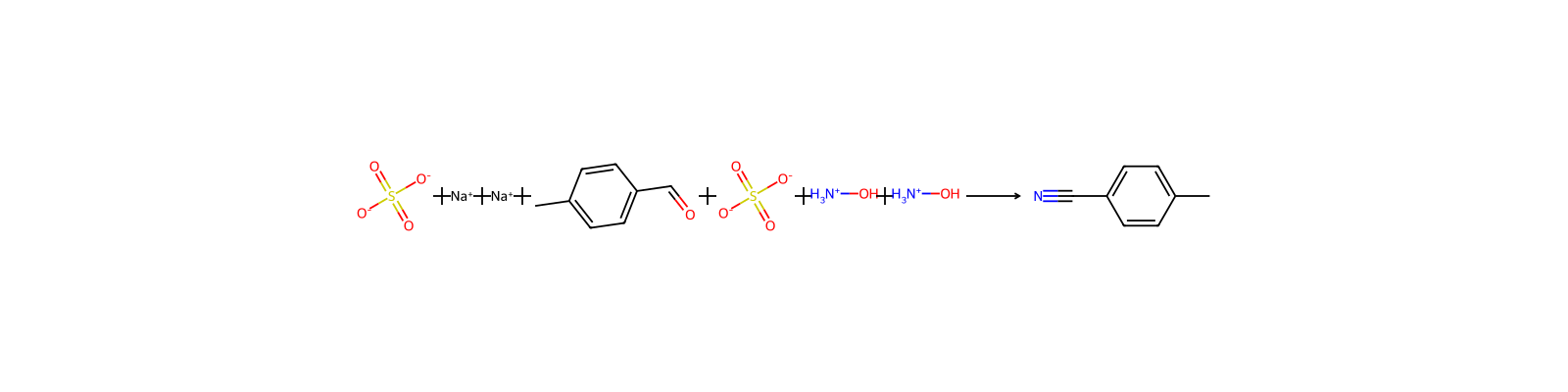
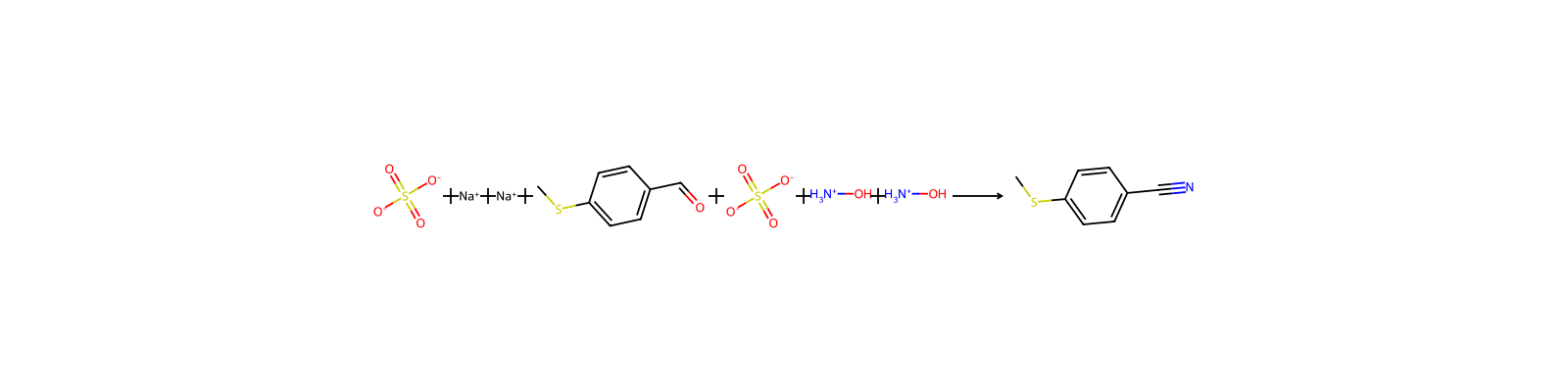
関連反応
24 件



化合物ノート
読み込み中…