
HRID 57969触媒として
Nickel(II) iodide

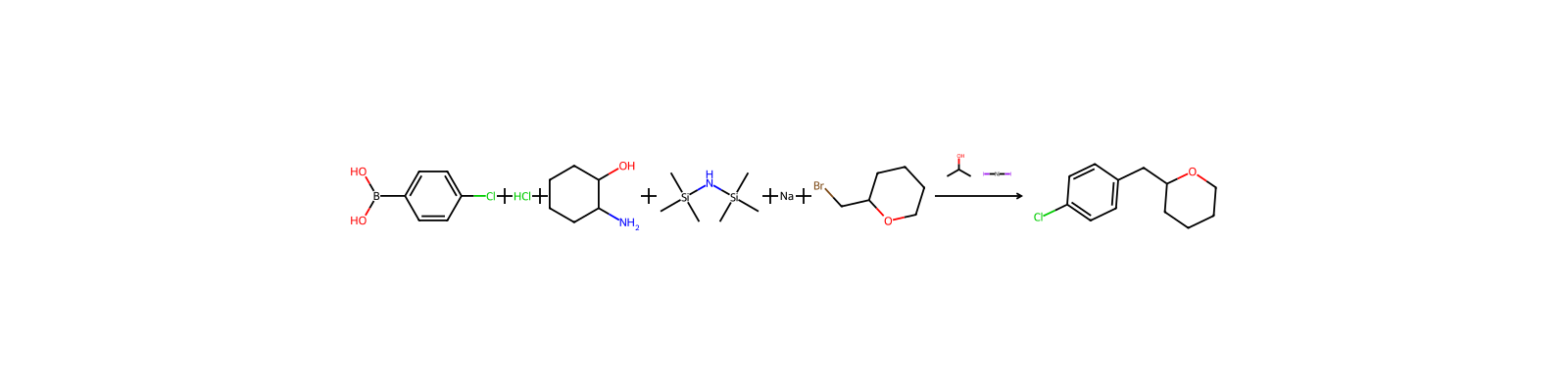
13462-90-3[I][Ni][I]BFSQJYRFLQUZKX-UHFFFAOYSA-LNickel iodide is an iodide of nickel. It is used as a catalyst and reagent in organic synthesis. Nickel is a chemical compound with the atomic number 28. It is found abundantly in nature in laterite ore minerals, such as limonite, garnierite, and pentlandite. Nickel has a biological role and is found in certain enzymes, including urease, hydrogenase, methylcoenzyme M reductase, and carbon monoxide dehydrogenase. (L40, L41, L45)
13462-90-3安全情報は参考情報です。供給元の安全データシート(SDS)、適用法令、専門家による評価に代わるものではありません。
Danger
H317: May cause an allergic skin reaction [Warning Sensitization, Skin]
P203, P233, P260, P261, P264, P270, P271, P272, P273, P280, P284, P302+P352, P304+P340, P318, P319, P321, P333+P317, P342+P316, P362+P364, P391, P403, P405, and P501 (click each P-code to see the statement)
Danger
H317 (100%): May cause an allergic skin reaction [Warning Sensitization, Skin]
P203, P233, P260, P261, P264, P270, P271, P272, P273, P280, P284, P302+P352, P304+P340, P318, P319, P321, P333+P317, P342+P316, P362+P364, P391, P403, P405, and P501 (click each P-code to see the statement)
Hazard Traits - Carcinogenicity; Reproductive Toxicity; Respiratory Toxicity
Restricted substance: Nickel diiodide
Skin Sens. 1 (100%)
Carc. 1A
Nickel is absorbed mainly through the lungs and gastrointestinal tract. Once in the body it enters the bloodstream, where it binds to albumin, L-histidine, and _2-macroglobulin. Nickel tends to accumulate in the lungs, thyroid, kidney, heart, and liver. Absorbed nickel is excreted in the urine, wherease unabsorbed nickel is excreted in the faeces. (L41)
Used as a catalyst in the addition of carbon monoxide to organic compounds; [HSDB]
Nickel iodide is used as a catalyst and reagent in organic synthesis. (L45)
解説NiI2(312.50).ニッケル粉末上にヨウ素蒸気を通じると得られる.光沢のある黒色の粉末.密度5.83 g cm-3.797 ℃ で融解せずに昇華する.潮解性が強く,水に易溶.希水溶液は緑色,濃水溶液は赤褐色である.エタノールに易溶.摂取すると有毒.六水和物は青緑色の潮解性結晶.固体潤滑剤,ニッケル触媒原料などに用いられる.[CAS 13462-90-3:NiI2][CAS 7790-34-3:NiI2・6H2O]森北出版「化学辞典(第2版)
使用Strongly accelerates Sml2 mediated homocoupling of imines into vicinal diamines and heterocoupling reactions between imines and ketones.1
製造方法Nickel iodide can be prepared by dehydration of the hexahydrate or by the metathetic reaction between sodium iodide and nickel(II) chloride or nitrate in ethanol. It has the CdCl2 type lattice and is paramagnetic down to 75°K. Only one hydrate is well characterized—the blue-green NiI26H20 ; unlike the other halide hexahydrates, this contains [Ni(H2O)6]2+ cations.




化学的特性Black, crystalline powder or blue-green crystals; hygroscopic.Soluble in alcohol and water.
The most common harmful health effect of nickel in humans is an allergic reaction. This usually manifests as a skin rash, although some people experience asthma attacks. Long term inhahation of nickel causes chronic bronchitis and reduced lung function, as well as damage to the naval cavity. Ingestion of excess nickel results in damage to the stomach, blood, liver, kidneys, and immune system, as well as having adverse effects on reproduction and development. (L41)
Nickel is known to substitute for other essential elements in certain enzmes, such as calcineurin. It is genotoxic, and some nickel compounds have been shown to promote cell proliferation. Nickel has a high affinity for chromatin proteins, particularly histones and protamines. The complexing of nickel ions with heterochromatin results in a number of alterations including condensation, DNA hypermethylation, gene silencing, and inhibition of histone acetylation, which have been shown to disturb gene expression. Nickel has also been shown to alter several transcription factors, including hypoxia-inducible transcription factor, activating transcription factor, and NF-KB transcription factor. There is also evidence that nickel ions inhibit DNA repair, either by directly inhibiting DNA repair enzymes or competing with zinc ions for binding to zinc-finger DNA binding proteins, resulting in structural changes in DNA that prevent repair enzymes from binding. Nickel ions can also complex with a number of cellular ligands including amino acids, peptides, and proteins resulting in the generation of oxygen radicals, which induce base damage, DNA strand breaks, and DNA protein crosslinks. (L41, A40)