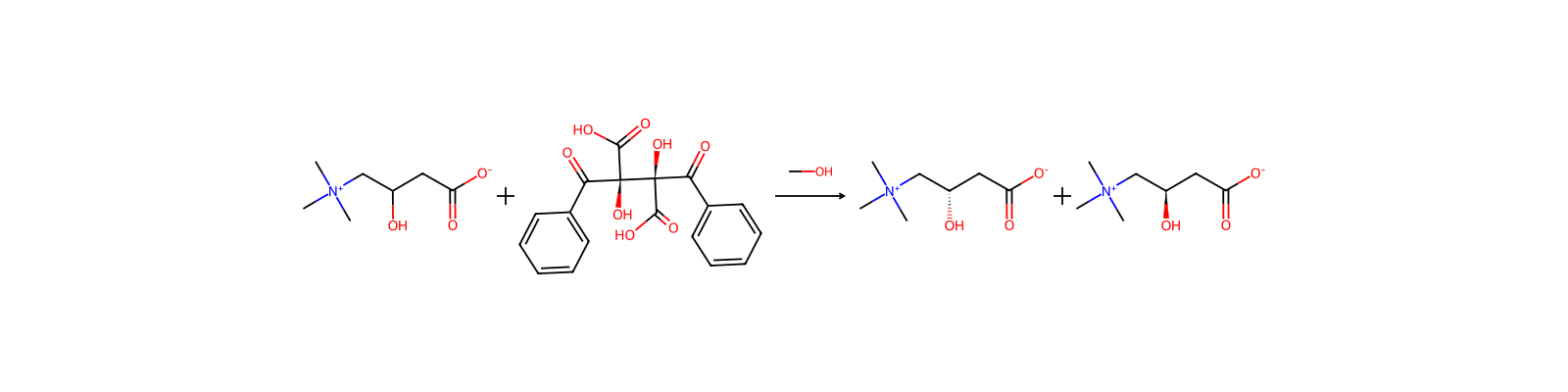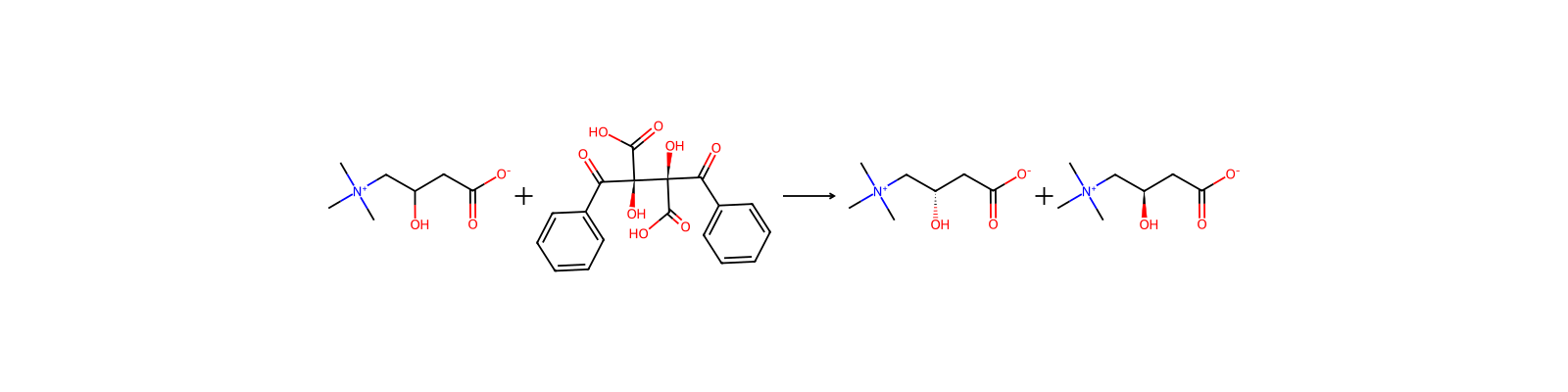
HRID 64789生成物として
D-Carnitine
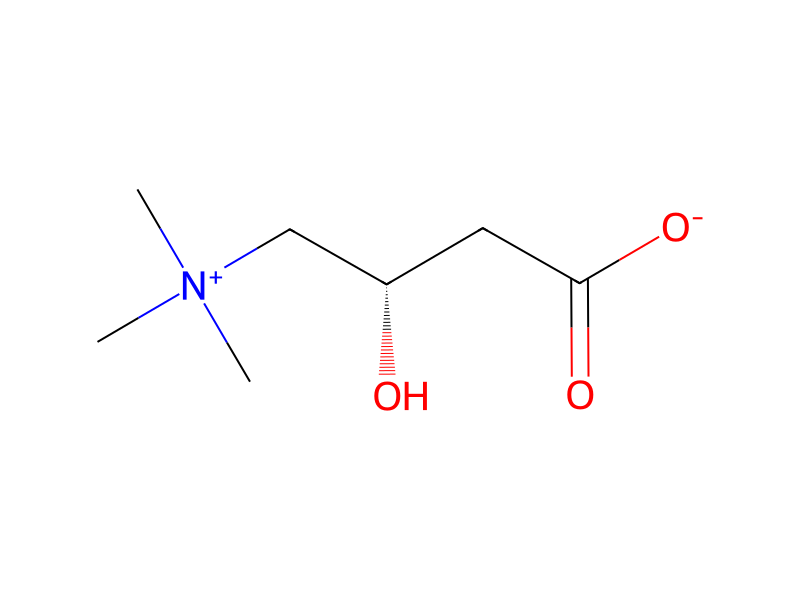
541-14-0C[N+](C)(C)C[C@@H](O)CC(=O)[O-]PHIQHXFUZVPYII-LURJTMIESA-N(S)-carnitine is the (S)-enantiomer of carnitine. It is a conjugate base of a (S)-carnitinium. It is an enantiomer of a (R)-carnitine.
化学的特性white to light yellow crystal powde
安全情報は参考情報です。供給元の安全データシート(SDS)、適用法令、専門家による評価に代わるものではありません。
Warning
H315 (100%): Causes skin irritation [Warning Skin corrosion/irritation]
P261, P264, P264+P265, P271, P280, P302+P352, P304+P340, P305+P351+P338, P319, P321, P332+P317, P337+P317, P362+P364, P403+P233, P405, and P501 (click each P-code to see the statement)
Aggregated GHS information provided per 39 reports by companies from 2 notifications to the ECHA C&L Inventory. Each notification may be associated with multiple companies.
Levocarnitine can be synthesised within the body from the amino acids lysine or methionine. Vitamin C (ascorbic acid) is essential to the synthesis of carnitine. Levocarnitine is a carrier molecule in the transport of long chain fatty acids across the inner mitochondrial membrane. It also exports acyl groups from subcellular organelles and from cells to urine before they accumulate to toxic concentrations. Only the L isomer of carnitine (sometimes called vitamin BT) affects lipid metabolism. Levocarnitine is handled by several proteins in different pathways including carnitine transporters, carnitine translocases, carnitine acetyltransferases and carnitine palmitoyltransferases.
After oral administration L-carnitine which is unabsorbed is metabolized in the gastrointestinal tract by bacterial microflora. Major metabolites include trimethylamine N-oxide and [3H]-gamma-butyrobetaine. Route of Elimination: Following a single intravenous dose, 73.1 +/- 16% of the dose was excreted in the urine during the 0-24 hour interval. Post administration of oral carnitine supplements, in addition to a high carnitine diet, 58-65% of the administered radioactive dose was recovered from urine and feces in 5-11 days. Half Life: 17.4 hours (elimination) following a single intravenous dose.
For treatment of primary systemic carnitine deficiency, a genetic impairment of normal biosynthesis or utilization of levocarnitine from dietary sources, or for the treatment of secondary carnitine deficiency resulting from an inborn error of metabolism such as glutaric aciduria II, methyl malonic aciduria, propionic acidemia, and medium chain fatty acylCoA dehydrogenase deficiency. Used therapeutically to stimulate gastric and pancreatic secretions and in the treatment of hyperlipoproteinemias. Parenteral levocarnitine is indicated for the prevention and treatment of carnitine deficiency in patients with end-stage renal disease.
使用Essential cofactor of fatty acid metabolism; required for the transport of fatty acids through the inner mitochondrial membrane. Synthetized primarily in the liver and kidney; highest concentrations found in heart and skeletal muscle. Dietary sources include red meat, dairy products, beans, avocado.
純化方法The S(L) isomer is levocarnitine, Vitamin B7. The R or S isomers crystallise from EtOH/Me2CO (hygroscopic). The R or S hydrochlorides crystallise from hot EtOH or EtOH/Et2O and have m 142o(dec). The RS-isomer crystallises from hot EtOH (hygroscopic). The RS hydrochloride crystallises in needles from hot EtOH and has m 196o(dec). [(±) Mazzetti & Lemmon J Org Chem 22 228 1957, Beilstein 4 H 513, 4 I 548, 4 II 937-8, 4 III 1632-5, 4 IV 3185.]
541-14-0CHEMBL503189CHEBI:11060定義ChEBI: The (S)-enantiomer of carnitine.