

基本情報
- CAS
5720-06-9- 標準SMILES
COc1ccccc1B(O)O- InChIKey
ROEQGIFOWRQYHD-UHFFFAOYSA-N- 分子式
- C7H9BO3
- 平均分子量
- 151.96 g/mol
- 単同位体質量
- 152.06447455
名称と識別子
- 優先名称
- 2-Methoxyphenylboronic acid
- IUPAC
- (2-methoxyphenyl)boronic acid
- 現地名
- 2-メトキシフェニルボロン酸
- 英語名
- 2-Methoxyphenylboronic acid
- 分子式
- C7H9BO3
- 分子量
- 151.96
名称と別名
2-Methoxyphenylboronic acid5720-06-9(2-methoxyphenyl)boranediolDTXSID40370057RefChem:474668DTXCID30321093611-481-7(2-methoxyphenyl)boronic Acid2-Methoxybenzeneboronic acidMFCD00236047o-Methoxyphenylboronic acido-methoxyphenyl boronic acid
名称をさらに表示
2-メトキシフェニルボロン酸(2-メトキシフェニル)ボランジオール2-メトキシフェニルジヒドロキシボラン2-メトキシフェニルボラン酸(2-メトキシフェニル)ボラン酸(2-メトキシフェニル)ボロン酸ジヒドロキシ(2-メトキシフェニル)ボランo-アニシルボロン酸2-メトキシベンゼンボロン酸2‐メトキシフェニルボロン酸2-メトキシフェニルボロン酸, min. 97%o-メトキシフェニルボロン酸1-メトキシ-2-(ジヒドロキシボリル)ベンゼン(o-メトキシフェニル)ボラン酸DK7660/9/20AKOS BRN-00142-BoronoanisoleRARECHEM AH PB 01812-Methoxyphenylborono-Anisylboronic acidElagolix Impurity 46
2-methoxyphenyl boronic acid2-methoxy-phenylboronic acid2-methoxyphenyl-boronic acid2-methoxy-phenyl-boronic acid[2-(methyloxy)phenyl]boronic acidNCGC00249463-012-Methoxylphenylboronic Acid (contains varying amounts of Anhydride)Boronic acid, (2-methoxyphenyl)-
データベース識別子
- CAS
5720-06-9- PubChem CID
- 2733958
- DTXSID
DTXSID40370057- ChEMBL
CHEMBL348732- EC Number
- 611-481-7
- Nikkaji
- J331.438C
物性
構造計算による物性
- 極性表面積
- 49.7 Ų
- 水素結合供与体数
- 2
- 水素結合受容体数
- 3
- 回転可能結合数
- 2
- 重原子数
- 11
- 形式電荷
- 0
- 複雑度
- 118
物理化学的性質
- 融点
- 105 · 105-110 °C (lit.)
- 沸点
- 319.3 · 319.3±44.0 °C(Predicted)
- 比重(密度)
- 1.17 · 1.17±0.1 g/cm3(Predicted)
- 貯蔵温度
- Keep in dark place,Sealed in dry,Room Temperature
- 溶解性
- クロロホルム(微量)、酢酸エチル(微量)
- 酸解離定数(Pka)
- 8.55 · 8.55±0.58(Predicted)
- 外見
- 結晶または結晶性粉末
- 色
- オフホワイト
- 水溶解度
- 水に不溶。
- BRN
- 3030981 · 3030981
- InChI
- InChI=1S/C7H9BO3/c1-11-7-5-3-2-4-6(7)8(9)10/h2-5,9-10H,1H3
- InChIKey
- ROEQGIFOWRQYHD-UHFFFAOYSA-N
- SMILES
- B(C1=CC=CC=C1OC)(O)O
- CAS データベース
- 5720 · 5720-06-9(CAS DataBase Reference)
化学的性質
化学的特性white to light yellow crystal powder
安全と法規制
GHS分類
GHS Classification
Warning
H302 (15.4%): Harmful if swallowed [Warning Acute toxicity, oral]
P261, P264, P264+P265, P270, P271, P280, P301+P317, P302+P352, P304+P340, P305+P351+P338, P317, P319, P321, P330, P332+P317, P337+P317, P362+P364, P403+P233, P405, and P501 (click each P-code to see the statement)
Aggregated GHS information provided per 13 reports by companies from 10 notifications to the ECHA C&L Inventory. Each notification may be associated with multiple companies.
危険有害性情報
Hazard Classes and CategoriesAcute Tox. 4 (15.4%)
安全データ
- wgk
- 3
- tsca
- No
- PRTR法
- 第一種指定化学物質
- hs_code
- 29163990
- risk_code
- 36/37/38
- hazard_code
- Xi
- safety_code
- 37/39-26-36
- hazard_class
- IRRITANT
- ストレージクラス
- 11 - Combustible Solids
化学と産業
応用分野
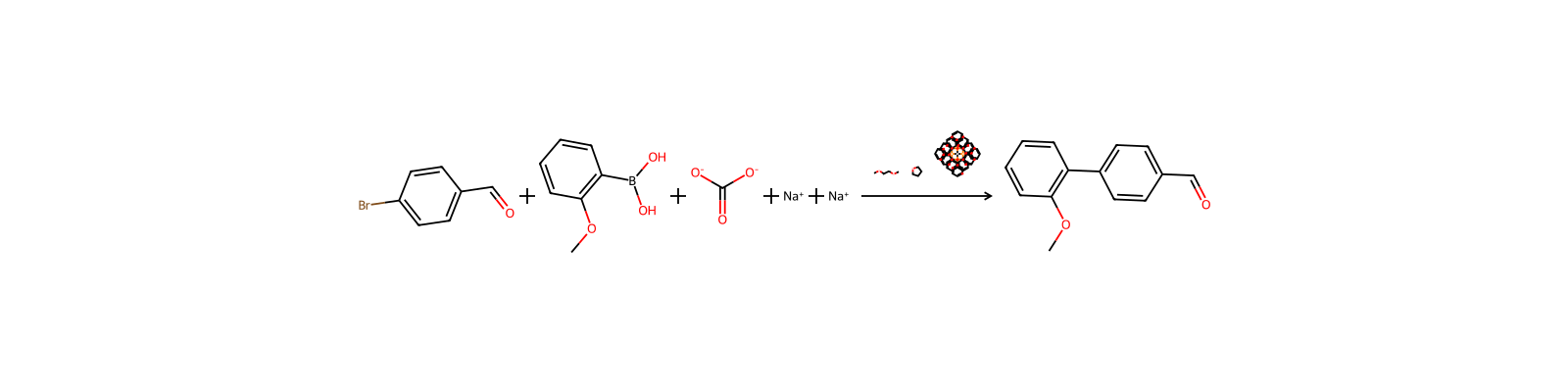
説明2-Methoxyphenylboronic acid is an arylboronic acid. Arylboronic acids can be widely used as safe and environmentally friendly new aromatization reagents for scientific research and production of various fine chemicals containing aryl structures, such as pharmaceuticals, pesticides, and advanced materials. The reactions of arylboronic acids with halogenates play a pivotal role in today's drug synthesis, and such reactions were pioneered by Japanese scientists Suzuki's team, which won the Nobel Prize in Chemistry in 2010.
上流・下流製品情報
上流原料
下流製品
サプライヤー100 社
国药集团化学试剂有限公司86-21-63210123 · [email protected]
北京华美互利生物化工010-56205725 · [email protected]
梯希爱(上海)化成工业发展有限公司021-67121386 · [email protected]
上海阿拉丁生化科技股份有限公司400-6206333 13167063860 · [email protected]
INTATRADE GmbH+49 3493/605464 · [email protected]
江苏敬平新材料科技有限公司18852320356
T&W GROUP021-61551611 13296011611 · [email protected]
爱斯特(成都)生物制药股份有限公司+86-28-85122536 85324413 · [email protected]
北京安司莫森技术有限公司010-82954736 13391601435 · [email protected]
科瑞迪化学400-821-5857 021-64326257 · [email protected]
上海迈瑞尔生化科技有限公司4006356688 18621169109 · [email protected]
北京华威锐科化工有限公司0757-86329057 18934348241 · [email protected]
阿法埃莎(中国)化学有限公司400-6106006 · [email protected]
安耐吉化学&3A(安徽泽升科技股份有限公司)400-0056266 · [email protected]
武汉凯威斯科技有限公司86-027-67849912 · [email protected]
上海柏卡化学技术有限公司400-026-1533/(021) 6478-0600 · [email protected]
重庆张邦医药科技有限责任公司028-84252981 18583719936 · [email protected]
上海恩诺生物科技有限公司+86 (21) 6435-5022
上海瀚鸿科技股份有限公司021-54306202 13764082696 · [email protected]
石家庄德科达化工有限公司0311-67790228 15531158659 · [email protected]
上海景颜化工科技有限公司13817811078 · [email protected]
嘉兴市艾森化工有限公司0573-85285100 18627885956 · [email protected]
郑州药领医药科技有限公司13526569071 · [email protected]
上海隆盛化工有限公司58099637 13585536065 · [email protected]
凯试(上海)科技有限公司021-50135380 · [email protected]
浙江六康生物科技有限公司13213637321
上海攀鸿化工科技有限公司021-56491756 13512199871 · [email protected]
成都福尔斯特医药技术有限公司028-87078428 028-87074958 · [email protected]
武汉丰泰威远科技有限公司027-87465837 19945049750 · [email protected]
杭州东帆化学有限公司86-0571-85151182
唐山默内德贸易有限公司0315-8309571 15633399667 · [email protected]
玛雅试剂+86 (573) 82222445 (0)18006601000 452520369 · [email protected]
瀚商化工科技有限公司021-50521775 15800962688
四川库利南科技有限公司400-1166-196 18981987031 · [email protected]
常州四渡化工有限公司0519-81291281 18015082300
天津希恩思生化科技有限公司400 638 7771 · [email protected]
南京维奥化工有限公司Please Send Email 18652950785 · [email protected]
上海乔木化学科技有限公司021-60451683 15021268886 · [email protected]
河南多贝化工有限公司0370-2785118 17550508557 · [email protected]
斯百全化学(上海)有限公司021-021-021-67601398-809-809-809 15221380277 · [email protected]
艾科试剂4008-755-333 18080918076 · [email protected]
上海思域化工科技有限公司86-21-34053660 · [email protected]
赛默飞世尔科技(中国)有限公司800-810-5118 · [email protected]
北京伊诺凯科技有限公司400-810-7969 010-59572699 · [email protected]
上海特伯化学科技有限公司+86-21-60341587 · [email protected]
南京诺利斯医药科技有限公司13901585132 · [email protected]
江苏艾康生物医药研发有限公司025-66113011 13913916777 · [email protected]
上海健超生物科技有限公司150-2103-5486 18017383231 · [email protected]
TCI AMERICA800-4238616 · [email protected]
TOKYO CHEMICAL INDUSTRY CO., LTD.03-36680489 · [email protected]
関連反応
543 件


化合物ノート
読み込み中…