

基本情報
- 標準SMILES
CCOC(=S)[S-].[K+]- InChIKey
JCBJVAJGLKENNC-UHFFFAOYSA-M- 分子式
- C3H5KOS2
- 平均分子量
- 160.3 g/mol
- 単同位体質量
- 159.94188846
名称と識別子
- 優先名称
- Potassium ethylxanthate
- IUPAC
- potassium ethoxymethanedithioate
- 現地名
- エチルキサントゲン酸カリウム
- 英語名
- Potassium ethylxanthate
- 分子式
- C3H5KOS2
- 分子量
- 160.3
名称と別名
140-89-6POTASSIUM ETHYLXANTHATEPotassium ethyl xanthateEthylxanthic acid potassium saltPotassium ethyl xanthogenatePotassium xanthogenatePotassium ethylxanthogenatePotassium O-ethyl dithiocarbonateEthyl potassium xanthateZ 3 (Pesticide)Ethyl potassium xanthogenateDTXSID6042315
名称をさらに表示
エチルキサントゲン酸カリウムエトキシジチオぎ酸カリウムジチオ炭酸S-カリウム-O-エチルジチオ炭酸S-カリウムO-エチルキサントゲン酸カリウムキサント酸カリウムエチルカリウムエチルキサンタートキサント酸エチルカリウムエチルキサント酸カリウムジチオ炭酸O-エチル=S-カリウムジチオ炭酸O-エチルS-カリウムジチオ炭酸エチル=カリウムジチオ炭酸O-エチルカリウムキサントゲン酸カリウム(ジチオ炭酸 o-エチルカリウム)ジチオ炭酸 o-エチルカリウムカリウム=O-エチル=カルボノジチオアートジチオ炭酸O‐エチルカリウム(エチルジチオ炭酸カリウム)O-エチルジチオ炭酸カリウムカルボノジチオ酸カリウムO-エチルキサントゲン酸エチルカリウム TECHNICAL GRADEKEXPotassium O-ethyl xanthatePotassium ethylxanthogenatpotassium (ethoxymethanethioyl)sulfanide
Potassium ethyl dithiocarbonate1A6K3Y576KDTXCID4022315NSC-4850RefChem:868188205-439-3potassium o-ethyl carbonodithioatePotassium xanthate
データベース識別子
- CAS
140-89-6- PubChem CID
- 2735045
- DTXSID
DTXSID6042315- ChEMBL
CHEMBL2380738- UNII
- 1A6K3Y576K
- EC Number
- 205-439-3
- Nikkaji
- J2.025G
物性
構造計算による物性
- 極性表面積
- 42.3 Ų
- 水素結合供与体数
- 0
- 水素結合受容体数
- 3
- 回転可能結合数
- 2
- 重原子数
- 7
- 形式電荷
- 0
- 複雑度
- 56.9
実験および物理化学的性質
Chemical ClassesMetals -> Organic Acids, Metal Salts
Physical DescriptionWhite to light yellow solid; [Merck Index] Light yellow powder with an unpleasant odor; [Alfa Aesar MSDS]
物理化学的性質
- 融点
- 209 · 209-214 °C
- 沸点
- 462.37 ℃[at · 462.37℃[at 101 325 Pa]
- 比重(密度)
- 1 · 1,558 g/cm3
- 蒸気圧
- 0 Pa · 0Pa at 25℃
- 闪点
- 96 °C · 96°C
- 貯蔵温度
- 30 °C · Store below +30°C.
- 溶解性
- アルコール: 可溶(lit.)
- 外見
- 結晶性粉末
- 色
- 黄色
- PH
- 9 · 9-10 (100g/l, H2O, 20℃)
- 水溶解度
- 水に溶ける。
- Merck
- 14 · 14,7696
- BRN
- 3596974 · 3596974
- 安定性
- 安定。強酸、強塩基、強酸化剤とは相容れない。
- InChI
- 1S/C3H6OS2.K/c1-2-4-3(5)6;/h2H2,1H3,(H,5,6);/q;+1/p-1
- InChIKey
- JCBJVAJGLKENNC-UHFFFAOYSA-M
- SMILES
- [K+].CCOC([S-])=S
- LogP
- -2.24 at · -2.24 at 25℃
- CAS データベース
- 140 · 140-89-6(CAS DataBase Reference)
- EPAの化学物質情報
- Potassium ethyl xanthate (140-89-6)
化学的性質
化学的特性Light Green Solid
安全と法規制
GHS分類
GHS Classification
This chemical does not meet GHS hazard criteria for 2.3% (2 of 88) of reports.
Danger
H228 (52.3%): Flammable solid [Danger Flammable solids]
P210, P240, P241, P261, P264, P264+P265, P270, P271, P280, P301+P317, P302+P352, P304+P340, P305+P351+P338, P317, P319, P321, P330, P332+P317, P337+P317, P362+P364, P370+P378, P403+P233, P405, and P501 (click each P-code to see the statement)
Aggregated GHS information provided per 88 reports by companies from 16 notifications to the ECHA C&L Inventory. Each notification may be associated with multiple companies.
Danger
危険有害性情報
Regulatory Information
Chemical: Carbonodithioic acid, O-ethyl ester, potassium salt
Carbonodithioic acid, O-ethyl ester, potassium salt (1:1) is listed on the EPA's Chemical Data Reporting (CDR) system. Manufacturers and importers of Carbonodithioic acid, O-ethyl ester, potassium salt (1:1) are required to report information about their production and use of this chemical to the EPA under the Toxic Substances Control Act (TSCA). (40 eCFR Part 711)
Status: Active Update: 21-08-2018 https://echa.europa.eu/registration-dossier/-/registered-dossier/11851
Other Safety InformationIMAP assessments - Sodium and Potassium xanthate salts: Human health tier II assessment
Hazards Summary
Causes somnolence and respiratory depression in oral lethal-dose studies of mice; Causes excitement and muscle contraction or spasticity in oral lethal-dose studies of rats; Causes changes in erythrocyte counts in 26-week oral studies of rats; [RTECS] A skin and strong eye irritant; Toxic by ingestion; [Alfa Aesar MSDS]
Hazard Classes and Categories
Flam. Sol. 1 (52.3%)
Skin irritation - category 2
CSL Reaction Information
CSL00205
3-[Ethoxylthiocarbonylthio]quinoline; Carbonodithioic acid, O-ethyl S-3-quinolinyl ester + Potassium ethylxanthate + 3-Aminoquinoline
I was attempting to prepare 3-[ethoxy(thiocarbonyl)thio]quinoline by reacting the diazonium salt of 3-aminoquinine with potassium ethyl xanthate when an explosion occurred. Thankfully, the injury I received was minor. I was following the procedure described in the Journal of the Chemical Society, Part III [3, 2384 (1959)] on twice their scale. Jerry March's book "Advanced Organic Chemistry: Reactions, Mechanisms, Structure" (New York: John Wiley & Sons, 1992, 4th edition, page 670) lists the procedure as a customary route for the desired aryl xanthate ester and a convenient method for producing thiophenols. The same procedure is also described in "Organic Syntheses, Collective Volume III" (New York: John Wiley & Sons, page 809. DOI: 10.15227/orgsyn.027.0081), which contains a cautionary note about a reported explosion, although the editors found no unusual reactivity. Since diazo esters were present, the explosion most likely resulted from the diazo ester's tendency to decompose explosively. It is unclear whether the diazo ester is a precursor of the desired product or whether the diazo ester forms through a competitive reaction. The reaction proceeded without event. But unlike the literature preparations, precipitation occurred during product extraction with diethyl ether and was isolated by filtration. A 1H NMR of the wet cake was consistent with the desired structure. The solid was air-dried overnight and weighed 17 g. The detonation occurred when a metal spatula was inserted into the solid. Related work in Tetrahedron Letters [26, 6365 (1985)] successfully demonstrated the safe preparation of diaryl sulfides. However, this was done at 25 ºC (mine at 45 ºC) with care taken to avoid heat, since a reference is cited of an explosion at 60 ºC. Also, the disappearance of the suspected diazo sulfide was monitored by thin layer chromatography, and sluggish reactions were not pushed to conversion. Instead, chromatography was used to remove any intermediates." (reprint of full text)
Explosive
Not Available
In the safety letter above, one substance name - - 3-aminoquinine- may be misspelled. The correct name is 3-Aminoquinoline. See Discussion section of: Cragoe, Edward J., Jr.; Robb, Charles M. 3-Hydroxyquinoline. Org. Synth. 1960, 40, 54. DOI: 10.15227/orgsyn.040.0054
安全データ
- wgk
- 3
- tsca
- TSCA listed
- rtecs
- FG1575000
- ridadr
- 3342
- 毒性
- LD50 orally in Rabbit: 1700 mg/kg
- hs_code
- 29309090
- risk_code
- 36/37/38-22-20/22-11
- 化審法
- (2)-1787
- hazard_code
- Xn,Xi,F
- safety_code
- 37/39-26-37-36-45-36/37-16
- hazard_class
- 4.2
- packing_group
- II
- Hazard Classifications
- Acute Tox. 4 InhalationAcute Tox. 4 OralEye Irrit. 2Flam. Sol. 1Skin Irrit. 2STOT SE 3
- ストレージクラス
- 4.2 - Pyrophoric and self-heating hazardous materials
化学と産業
薬理情報
MeSH Pharmacological ClassificationSubstances that prevent infectious agents or organisms from spreading or kill infectious agents in order to prevent the spread of infection.
用途と製造
UsesUsed as a reagent in analytical chemistry; [Merck Index]
U.S. Production2022: 197,000 lb
General Manufacturing InformationCarbonodithioic acid, O-ethyl ester, potassium salt (1:1): ACTIVE
応用分野
解説potassium O-ethyl dithiocarbonate.C2H5OCS2K(160.31).エチルキサントゲン酸カリウムは,単にキサントゲン酸カリウムとよぶこともある.濃厚なカリウムエチラートのエタノール水溶液と二硫化炭素とを反応させると得られる.無色または淡黄色の結晶.融点約212 ℃(分解).d211.558.水,エタノールに可溶.種々の金属と着色沈殿をつくるので,分析試薬として用いられる.森北出版「化学辞典(第2版)
使用As reagent in analytical chemistry.
調製方法
純化方法Crystallise it from absolute EtOH, ligroin/ethanol or acetone by adding Et2O. Wash it with ether, then dry it in a desiccator. Its solubility in Me2CO is 8% at 25o. [Beilstein 3 H 563, 3 I 196, 3 II 367, 3 III 1101, 3 IV 1274.]
上流・下流製品情報
上流原料
下流製品
サプライヤー50 社
国药集团化学试剂有限公司86-21-63210123 · [email protected]
梯希爱(上海)化成工业发展有限公司021-67121386 · [email protected]
上海阿拉丁生化科技股份有限公司400-6206333 13167063860 · [email protected]
Career Henan Chemica Co+86-0371-86658258 +86-13203830695 · [email protected]
合肥翰刚医药科技有限公司+8618062405514 · [email protected]
焦作沃恩生物科技有限责任公司0391-3702345 18739121806
山东前元高分子材料有限公司18678041314 18765609661 · [email protected]
Dayang Chem (Hangzhou) Co.,Ltd.+86-0571-88938639 17705817739 · [email protected]
Hebei Yanxi Chemical Co., Ltd.+86-17531190177 · [email protected]
科瑞迪化学400-821-5857 021-64326257 · [email protected]
Syntechem Co.,Ltd[email protected]
Shenyang Simchoice Chemical Co.,Ltd+86-024-23769576 +86-15040101888 · [email protected]
上海迈瑞尔生化科技有限公司4006356688 18621169109 · [email protected]
武汉易泰科技有限公司上海分公司18930552037 · [email protected]
上海晶抗生物工程有限公司021-54721350 13524668266 · [email protected]
阿法埃莎(中国)化学有限公司400-6106006 · [email protected]
安耐吉化学&3A(安徽泽升科技股份有限公司)400-0056266 · [email protected]
武汉凯威斯科技有限公司86-027-67849912 · [email protected]
上海瀚鸿科技股份有限公司021-54306202 13764082696 · [email protected]
上海柯维化学技术有限公司021-64609169 18901607656 · [email protected]
嘉兴市艾森化工有限公司0573-85285100 18627885956 · [email protected]
池州捷峰生物科技有限公司0566-8928158 · [email protected]
合肥天健化工有限公司551-65418679 15856988503;15837135945 · [email protected]
山东西亚化学有限公司13355009207 13355009207 · [email protected]
玛雅试剂+86 (573) 82222445 (0)18006601000 452520369 · [email protected]
HONG KONG IPURE BIOLOGY CO.,LIMITED86 18062405514 18062405514 · [email protected]
四川库利南科技有限公司400-1166-196 18981987031 · [email protected]
天津希恩思生化科技有限公司400 638 7771 · [email protected]
南京化学试剂股份有限公司025-58369808 17895012682 · [email protected]
斯百全化学(上海)有限公司021-021-021-67601398-809-809-809 15221380277 · [email protected]
上海思域化工科技有限公司86-21-34053660 · [email protected]
赛默飞世尔科技(中国)有限公司800-810-5118 · [email protected]
南京诺利斯医药科技有限公司13901585132 · [email protected]
江苏艾康生物医药研发有限公司025-66113011 13913916777 · [email protected]
TCI AMERICA800-4238616 · [email protected]
TOKYO CHEMICAL INDUSTRY CO., LTD.03-36680489 · [email protected]
TCI Europe320-37350700 · [email protected]
越林试剂021-62960152 · [email protected]
北京环宇世纪化学科技有限公司hysj_bj.com
上海湄水化工科技有限公司021-60549325 18616193163
上海将来实业股份有限公司021-61552785 · [email protected]
HBCChem, Inc.+1-510-219-6317 · [email protected]
日照力德士化工有限公司010-51268198 · [email protected]
上海爱蝶实业有限公司021-58957966 18930537195 · [email protected]
成都零六生物科技有限公司400-1166-196 13458535857 · [email protected]
上海鑫圭生物科技有限公司15121041756 · [email protected]
上海麦克林生化科技股份有限公司15221275939 15221275939 · [email protected]
上海嵩爰化工科技有限公司010-1234567 18521000990 · [email protected]
上海孚一生物科技有限公司+86 (21) 61124340
成都润泽本土化工有限公司13096311329 028-88469284 616445927 · [email protected]
補足説明
定義Colorless or light-yellow crystals. Soluble in water and alcohol; insol- uble in ether.
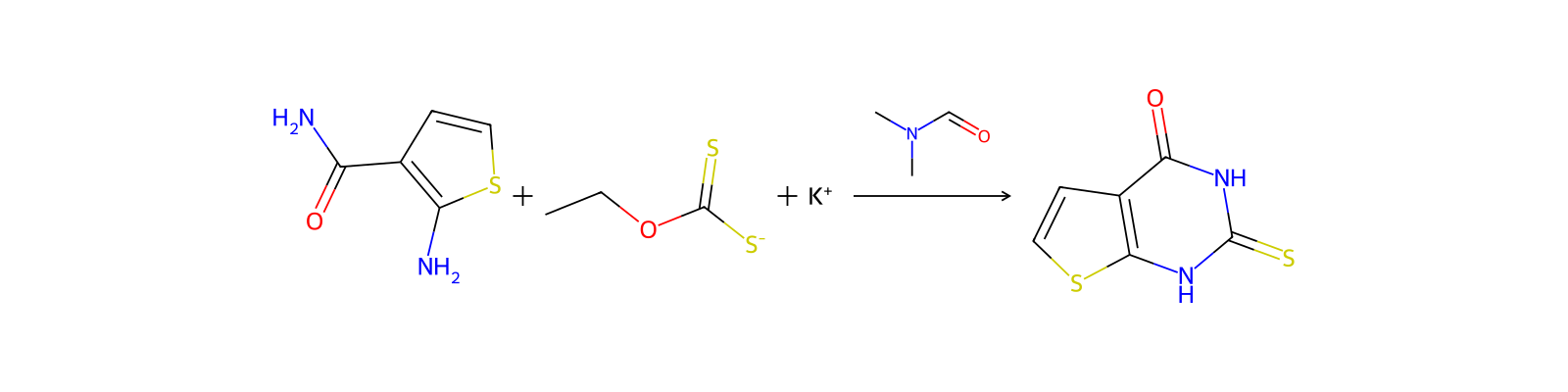
関連反応
261 件





関連ノート
読み込み中…