

基本情報
- CAS
28657-80-9- 標準SMILES
CCn1nc(C(=O)O)c(=O)c2cc3c(cc21)OCO3- InChIKey
VDUWPHTZYNWKRN-UHFFFAOYSA-N- 分子式
- C12H10N2O5
- 平均分子量
- 262.22 g/mol
- 単同位体質量
- 262.05897142
概要
Cinoxacin is a member of the class of cinnolines that is 6,7-methylenedioxycinnolin-4(1H)-one bearing an ethyl group at position 1 and a carboxylic acid group at position 3. An analogue of oxolinic acid, it has similar antibacterial actions. It was formerly used for the treatment of urinary tract infections. It has a role as an antiinfective agent and an antibacterial drug. It is an oxo carboxylic acid, an oxacycle and a member of cinnolines.
名称と識別子
- 優先名称
- Cinoxacin
- IUPAC
- 1-ethyl-4-oxo-[1,3]dioxolo[4,5-g]cinnoline-3-carboxylic acid
- 現地名
- シノキサシン
- 英語名
- CINOXACIN
- 分子式
- C12H10N2O5
- 分子量
- 262.22
名称と別名
cinoxacin28657-80-9CinobacCinoxacinoCinoxacineCinoxacinumLilly 64716DTXSID8022822[1,3]Dioxolo[4,5-g]cinnoline-3-carboxylic acid, 1-ethyl-1,4-dihydro-4-oxo-1-ethyl-4-oxo-[1,3]dioxolo[4,5-g]cinnoline-3-carboxylic acid1-Ethyl-6,7-methylenedioxy-4(1H)-oxocinnoline-3-carboxylic acid1-Ethyl-1,4-dihydro-4-oxo[1,3]dioxolo[4,5-g]cinnoline-3-carboxylic acid
名称をさらに表示
シノキサシンシノキサシン (JP17)Cinoxacin Solution in Methanol/DMSO, 1000μg/mL1-ethyl-4-oxo-1,4-dihydro-[1,3]dioxolo[4,5-g]cinnoline-3-carboxylic acidCompound 64716Cinoxacin (200 mg)Cinoxacin (CinobacTIMTEC-BB SBB003082
LMK22VUH23NSC-304467CHEBI:37161-Ethyl-1,4-dihydro-4-oxo(1,3)dioxolo(4,5-g)cinnoline-3-carboxylic acid1-ethyl-4-oxo-1H,4H,7H-[1,3]dioxolo[4,5-g]cinnoline-3-carboxylic acidDTXCID202822ClinoxacinAzolinic Acid
データベース識別子
物性
構造計算による物性
- XLogP
- 2.1
- 極性表面積
- 88.4 Ų
- 水素結合供与体数
- 1
- 水素結合受容体数
- 7
- 回転可能結合数
- 2
- 重原子数
- 19
- 形式電荷
- 0
- 複雑度
- 449
実験および物理化学的性質
Drugs
Pharmaceuticals -> Listed in ZINC15
Pharmaceuticals -> Antibiotics
LogP
1.5
0.84
Solubility
9.61e-01 g/L
36.7 [ug/mL] (The mean of the results at pH 7.4)
Human Drugs
FDA approved drugs -> Active ingredient
FDA approved drugs -> Active ingredient
Endocrine DisruptorsPotential endocrine disrupting compound
Melting Point
261-262
261 °C
Physical DescriptionSolid
Dissociation Constants4.7
Collision Cross Section
160.87 Ų [M+K]+ [CCS Type: TW; Method: calibrated with polyalanine and drug standards]
148.5 Ų [M+H]+ [CCS Type: TW; Method: calibrated with polyalanine and drug standards]
165.2 Ų [M+Na]+ [CCS Type: TW; Method: calibrated with Waters Major Mix]
安全と法規制
安全情報は参考情報です。供給元の安全データシート(SDS)、適用法令、専門家による評価に代わるものではありません。
GHS分類
GHS Classification
Warning
H315 (100%): Causes skin irritation [Warning Skin corrosion/irritation]
P261, P264, P264+P265, P271, P280, P302+P352, P304+P340, P305+P351+P338, P319, P321, P332+P317, P337+P317, P362+P364, P403+P233, P405, and P501 (click each P-code to see the statement)
The GHS information provided by 1 company from 1 notification to the ECHA C&L Inventory.
危険有害性情報
Other Safety InformationIMAP assessments - 1,3-Dioxolo[4,5-g]cinnoline-3-carboxylic acid, 1-ethyl-1,4-dihydro-4-oxo-: Environment tier I assessment
Hazard Classes and CategoriesSkin Irrit. 2 (100%)
毒性情報
EPA Human Health Benchmarks for Pharmaceuticals
Cinoxacin
5.8
24.7
For preventive therapy, a single dose of 250 mg at bedtime for up to 5 months has been shown to be effective in women with a history of recurrent urinary tract infections.
Data used to generate the benchmarks include the following: Lowest Daily Dose (LDD): 250 mg/day, Lowest Therapeutic Dose (LTD): 3.1 mg/kg-day, and Screening Dose: 0.001 mg/kg-day.
23-Jun-99
安全データ
- wgk
- 2
- rtecs
- JI4640000
- 毒性
- LD50 in rats (mg/kg): 4160 orally; 900 i.v. (Narama)
- ストレージクラス
- 11 - Combustible Solids
化学と産業
薬理情報
ATC Code
J - Antiinfectives for systemic use
QJ - Antiinfectives for systemic use
Protein Binding60 to 80%
Pharmacodynamics
Cinoxacin is a synthetic antibacterial agent with <i>in vitro</i> activity against many gram-negative aerobic bacteria, particularly strains of the Enterobacteriaceae family. Cinoxacin inhibits bacterial deoxyribonucleic acid (DNA) synthesis, is bactericidal, and is active over the entire urinary pH range. Cross resistance with nalidixic acid has been demonstrated.
Mechanism of Action
Evidence exists that cinoxacin binds strongly, but reversibly, to DNA, interfering with synthesis of RNA and, consequently, with protein synthesis. It appears to also inhibit DNA gyrase. This enzyme is necessary for proper replicated DNA separation. By inhibiting this enzyme, DNA replication and cell division is inhibited.
Biological Half-LifeWhile the mean serum half-life is 1.5 hours, the half-life may exceed 10 hours in case of renal impairment.
Metabolism/MetabolitesHepatic, with approximately 30-40% metabolized to inactive metabolites.
MeSH Pharmacological Classification
Substances that prevent infectious agents or organisms from spreading or kill infectious agents in order to prevent the spread of infection.
Compounds that inhibit the activity of DNA TOPOISOMERASE II. Included in this category are a variety of ANTINEOPLASTIC AGENTS which target the eukaryotic form of topoisomerase II and ANTIBACTERIAL AGENTS which target the prokaryotic form of topoisomerase II.
Absorption, Distribution and ExcretionRapidly absorbed after oral administration. While concurrent food intake may delay the drug absorption, the total drug absorption is not affected.
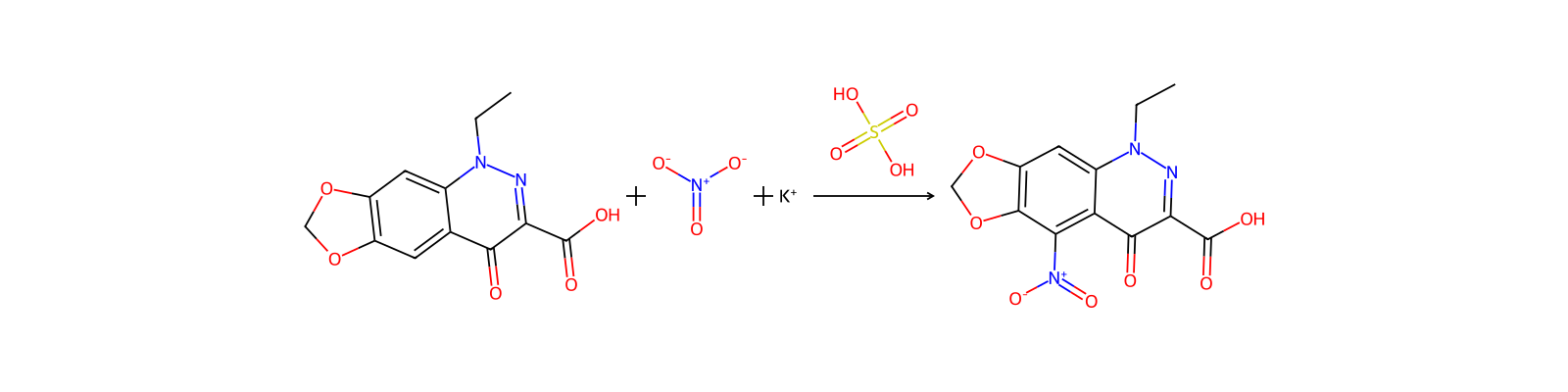
関連反応
2 件
化合物ノート
読み込み中…