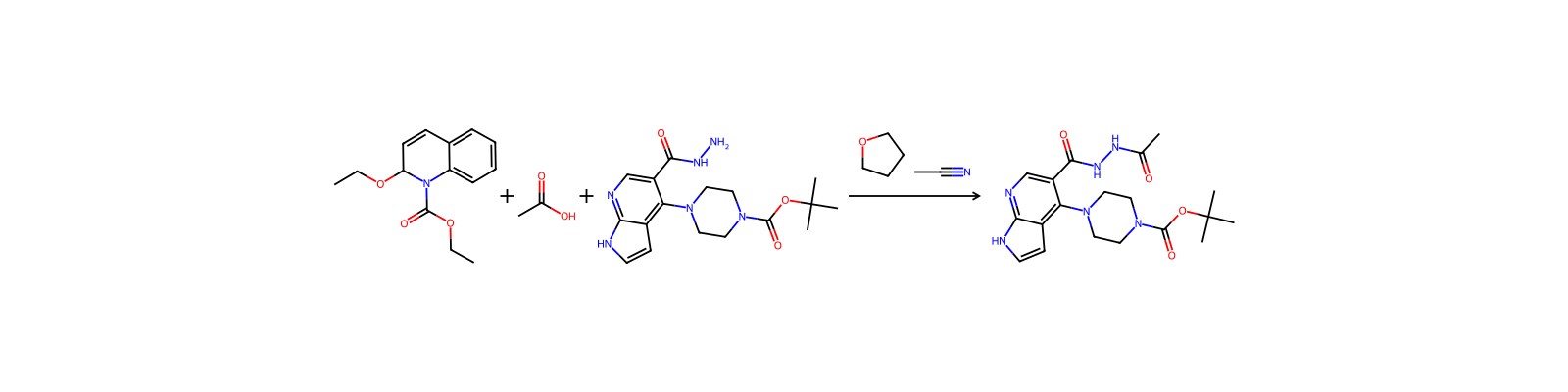
1-エトキシカルボニル-2-エトキシ-1,2-ジヒドロキノリン
2-Ethoxy-1-(ethoxycarbonyl)-1,2-dihydroquinoline

基本情報
- CAS
16357-59-8- 標準SMILES
CCOC(=O)N1c2ccccc2C=CC1OCC- InChIKey
GKQLYSROISKDLL-UHFFFAOYSA-N- 分子式
- C14H17NO3
- 平均分子量
- 247.29 g/mol
- 単同位体質量
- 247.1208434
概要
peptide coupling reagent
名称と識別子
- 優先名称
- 2-Ethoxy-1-(ethoxycarbonyl)-1,2-dihydroquinoline
- IUPAC
- ethyl 2-ethoxy-2H-quinoline-1-carboxylate
- 現地名
- 1-エトキシカルボニル-2-エトキシ-1,2-ジヒドロキノリン
- 英語名
- N-Ethoxycarbonyl-2-ethoxy-1,2-dihydroquinoline
- 分子式
- C14H17NO3
- 分子量
- 247.29
名称と別名
16357-59-8EEDQ1(2H)-QUINOLINECARBOXYLIC ACID, 2-ETHOXY-, ETHYL ESTER2-Ethoxy-1(2H)-quinolinecarboxylic acid, ethyl esterN-carbethoxy-2-ethoxy-1,2-dihydroquinolineDTXSID5087196960O971AN192-ethoxy-1-(ethoxycarbonyl)-1,2-dihydroquinolineRefChem:471395DTXCID408195772-Ethoxy-1-ethoxycarbonyl-1,2-dihydroquinolineN-Ethoxycarbonyl-2-ethoxy-1,2-dihydroquinoline
名称をさらに表示
1-エトキシカルボニル-2-エトキシ-1,2-ジヒドロキノリン2-エトキシ-1-エトキシカルボニル-1,2-ジヒドロキノリンN-エトキシカルボニル-2-エトキシ-1,2-ジヒドロキノリン2-エトキシ-1,2-ジヒドロ-1-キノリンカルボン酸エチル1,2-ジヒドロ-1-(エトキシカルボニル)-2-エトキシキノリン2-エトキシ-1,2-ジヒドロキノリン-1-カルボン酸エチル2-エトキシ-1(2H)-キノリンカルボン酸エチル1-(エトキシカルボニル)-2-エトキシ-1,2-ジヒドロキノリン1,2-ジヒドロ-2-エトキシ-1-キノリンカルボン酸エチル2-エトキシキノリン-1(2H)-カルボン酸エチルエチル 2-エトキシ-1,2-ジヒドロキノリン-1-カルボキシラート1,2-ジヒドロ-2-エトキシキノリン-1-カルボン酸エチルN-(エトキシカルボニル)-2-エトキシ-1,2-ジヒドロキノリンETHYL 1,2-DIHYDRO-2-ETHOXY-1-QUINOLINECARBOXYLATEETHYL 2-ETHOXY-1,2-DIHYDRO-1-QUINOLINECARBOXYLATE2-Ethoxy-2H-quinoline-1-carboxylic acid ethyl esterEEDQ extrapure
ethyl 2-ethoxyquinoline-1(2H)-carboxylateethyl 2-ethoxy-2H-quinoline-1-carboxylateethyl 2-ethoxy-1,2-dihydroquinoline-1-carboxylate1-Ethoxycarbonyl-2-ethoxy-1,2-dihydroquinolineMFCD00006703MLS000069601BC 681NSC 147831
データベース識別子
- CAS
16357-59-8- PubChem CID
- 27833
- DTXSID
DTXSID50871969- ChEMBL
CHEMBL1527785- UNII
- 60O971AN19
- EC Number
- 240-418-2
- Nikkaji
- J14.768K
物性
構造計算による物性
- XLogP
- 2.8
- 極性表面積
- 38.8 Ų
- 水素結合供与体数
- 0
- 水素結合受容体数
- 3
- 回転可能結合数
- 4
- 重原子数
- 18
- 形式電荷
- 0
- 複雑度
- 316
実験および物理化学的性質
Chemical ClassesOther Uses -> Biochemical Research
Solubility8 [ug/mL] (The mean of the results at pH 7.4)
Endocrine DisruptorsPotential endocrine disrupting compound
Physical DescriptionOff-white powder; [Alfa Aesar MSDS]
物理化学的性質
- 融点
- 62 · 62-67 °C(lit.)
- 沸点
- 125 · 125-128 °C (0.1 mmHg)
- 比重(密度)
- 1.1173 · 1.1173 (rough estimate)
- 屈折率
- 1.53 · 1.5300 (estimate)
- 闪点
- 125 · 125-128°C/0.1mm
- 貯蔵温度
- 2 · 2-8°C
- 溶解性
- クロロホルム(微量)、酢酸エチル(微量)、メタノール(微量)
- 酸解離定数(Pka)
- -1.27 · -1.27±0.40(Predicted)
- 外見
- 結晶性粉末
- 色
- 白からベージュ
- 水溶解度
- 不溶性
- Merck
- 14 · 14,3518
- BRN
- 533048 · 533048
- 主な用途
- ペプチド合成
- InChI
- 1S/C14H17NO3/c1-3-17-13-10-9-11-7-5-6-8-12(11)15(13)14(16)18-4-2/h5-10,13H,3-4H2,1-2H3
- InChIKey
- GKQLYSROISKDLL-UHFFFAOYSA-N
- SMILES
- CCOC1C=Cc2ccccc2N1C(=O)OCC
- CAS データベース
- 16357 · 16357-59-8(CAS DataBase Reference)
- EPAの化学物質情報
- 1 · 1(2H)-Quinolinecarboxylic acid, 2-ethoxy-, ethyl ester (16357-59-8)
化学的性質
化学的特性White to pale yellow solid
安全と法規制
安全情報は参考情報です。供給元の安全データシート(SDS)、適用法令、専門家による評価に代わるものではありません。
GHS分類
GHS Classification
This chemical does not meet GHS hazard criteria for 1.1% (1 of 87) of reports.
Warning
H302 (90.8%): Harmful if swallowed [Warning Acute toxicity, oral]
P261, P264, P264+P265, P270, P271, P280, P301+P317, P302+P352, P304+P340, P305+P351+P338, P319, P321, P330, P332+P317, P337+P317, P362+P364, P403+P233, P405, and P501 (click each P-code to see the statement)
Aggregated GHS information provided per 87 reports by companies from 10 notifications to the ECHA C&L Inventory. Each notification may be associated with multiple companies.
危険有害性情報
Regulatory Information1(2H)-Quinolinecarboxylic acid, 2-ethoxy-, ethyl ester: Does not have an individual approval but may be used under an appropriate group standard
Hazards SummaryCauses other degenerative changes to brain and effects on proteins in acute intraperitoneal studies of rats; Intraperitoneal LD50 (mouse) = 32 mg/kg; [RTECS] A skin and strong eye irritant; [Alfa Aesar MSDS]
Hazard Classes and CategoriesAcute Tox. 4 (90.8%)
安全データ
- F
- 9-21
- wgk
- 3
- tsca
- TSCA listed
- rtecs
- VB2010000
- 毒性
- mouse,LD50,intraperitoneal,32mg/kg (32mg/kg),Journal of Medicinal Chemistry. Vol. 14, Pg. 49, 1971.
- hs_code
- 29334990
- risk_code
- 38-36/37/38-20/21/22
- hazard_code
- Xi,Xn
- safety_code
- 22-24/25-36/37/39-26-36
- ストレージクラス
- 11 - Combustible Solids
化学と産業
薬理情報
MeSH Pharmacological Classification
Drugs that bind to but do not activate alpha-adrenergic receptors thereby blocking the actions of endogenous or exogenous adrenergic agonists. Adrenergic alpha-antagonists are used in the treatment of hypertension, vasospasm, peripheral vascular disease, shock, and pheochromocytoma.
Highly reactive chemicals that introduce alkyl radicals into biologically active molecules and thereby prevent their proper functioning. Many are used as antineoplastic agents, but most are very toxic, with carcinogenic, mutagenic, teratogenic, and immunosuppressant actions. They have also been used as components in poison gases.
Drugs that bind to but do not activate serotonin receptors, thereby blocking the actions of serotonin or SEROTONIN RECEPTOR AGONISTS.
Drugs that bind to but do not activate DOPAMINE RECEPTORS, thereby blocking the actions of dopamine or exogenous agonists. Many drugs used in the treatment of psychotic disorders (ANTIPSYCHOTIC AGENTS) are dopamine antagonists, although their therapeutic effects may be due to long-term adjustments of the brain rather than to the acute effects of blocking dopamine receptors. Dopamine antagonists have been used for several other clinical purposes including as ANTIEMETICS, in the treatment of Tourette syndrome, and for hiccup. Dopamine receptor blockade is associated with NEUROLEPTIC MALIGNANT SYNDROME.
用途と製造
UsesUsed as a coupling agent in peptide synthesis; [Merck Index]
General Manufacturing Information1(2H)-Quinolinecarboxylic acid, 2-ethoxy-, ethyl ester: ACTIVE
応用分野
使用Peptide condensing agent with little or no racemization. Amidation coupling reagent.
調製方法
純化方法Dissolve EEDQ ~180g in CHCl3, evaporate to dryness in a vacuum. Add dry Et2O (20mL) and a white solid separates on standing. Set aside for a few hours, collect the solid, wash it thoroughly with cold Et2O and dry it in a vacuum (~140g, m 63.5-65o). A further crop of solid (~25g) is obtained from the filtrate on standing overnight. [Fieser & Fieser Reagents for Organic Synthesis 2 191 1969, Belleau et al. J Am Chem Soc 90 823 1968 and 90 1651 1968, Beilstein 21/3 V 28.]
上流・下流製品情報
上流原料
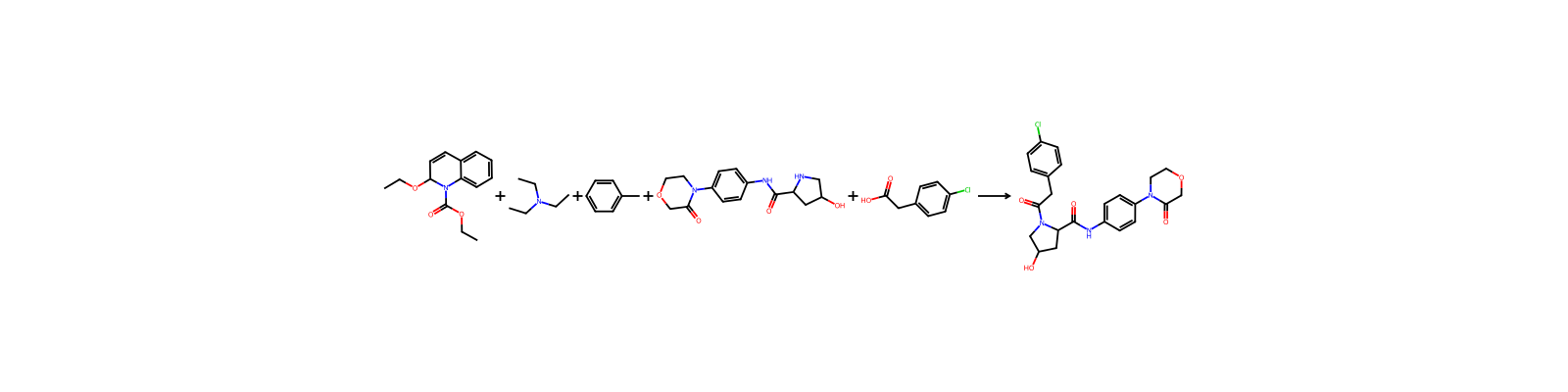
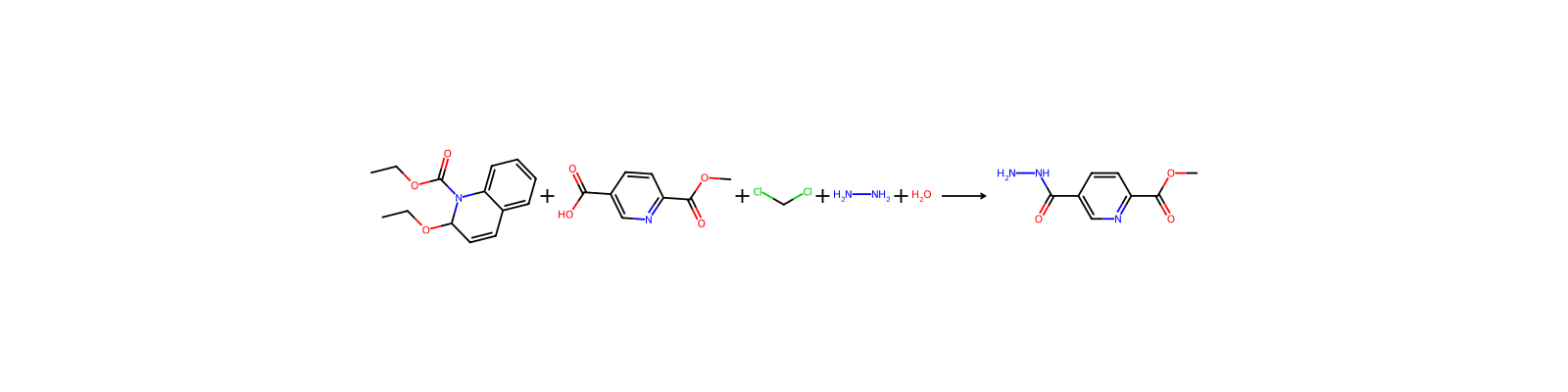
関連反応
776 件




化合物ノート
読み込み中…