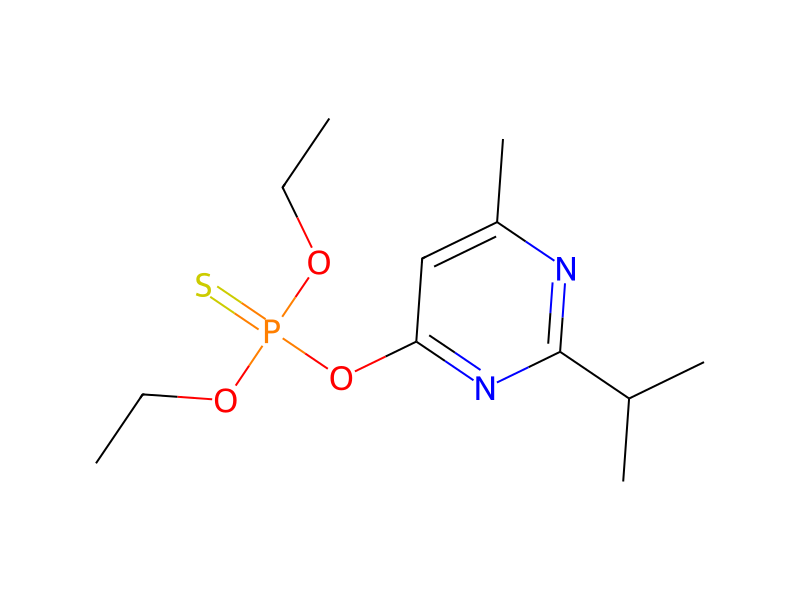
基本情報
- 標準SMILES
CCOP(=S)(OCC)Oc1cc(C)nc(C(C)C)n1- InChIKey
FHIVAFMUCKRCQO-UHFFFAOYSA-N- 分子式
- C12H21N2O3PS
- 平均分子量
- 304.35 g/mol
- 単同位体質量
- 304.10105016
概要
Diazinon is the common name of an organophosphorus pesticide used to control pest insects in soil, on ornamental plants, and on fruit and vegetable field crops. It was formerly used as the active ingredient in household and garden products used to control pests such as flies, fleas, and cockroaches. Diazinon is a synthetic chemical, it does not occur naturally in the environment. Pure diazinon is colorless and practically odorless oil. Preparations used in agriculture and by exterminators contain 85-90% diazinon and appear as a pale to dark-brown liquid. Diazinon preparations sold in the past for home and garden use contained 1-5% diazinon in a liquid or as solid granules. Most diazinon used is in liquid form, but it is possible to be exposed to the solid form. Diazinon does not dissolve easily in water and does not burn easily.
名称と識別子
- 優先名称
- Diazinon
- IUPAC
- diethoxy-(6-methyl-2-propan-2-ylpyrimidin-4-yl)oxy-sulfanylidene-λ5-phosphane
- 現地名
- ジムピラート
- 英語名
- Diazinon
- 分子式
- C12H21N2O3PS
- 分子量
- 304.35
名称と別名
名称をさらに表示
データベース識別子
- CAS
333-41-5- PubChem CID
- 3017
- DTXSID
DTXSID9020407- ChEMBL
CHEMBL388560- ChEBI
CHEBI:34682- UNII
- YUS1M1Q929
- EC Number
- 206-373-8
- Nikkaji
- J3.278F
物性
構造計算による物性
- XLogP
- 3.8
- 極性表面積
- 85.6 Ų
- 水素結合供与体数
- 0
- 水素結合受容体数
- 6
- 回転可能結合数
- 7
- 重原子数
- 19
- 形式電荷
- 0
- 複雑度
- 307
実験および物理化学的性質
Pesticides
Pesticides
Acaricides, Insecticides
Active substance -> EU Pesticides database: Not approved
Pesticides -> Organophosphate Insecticides
Pesticides -> Insecticides -> Organophosphorus insecticides -> Organothiophosphate insecticides -> Heterocyclic organothiophosphate insecticides
Repellents, Veterinary substances, Acaricides, Insecticides
LogP
log Kow = 3.81
3.81
3.11
3.81
Density
1.117 at 68 °F (USCG, 1999) - Denser than water; will sink
Specific gravity: 1.116-1.118 at 20 °C/4 °C
Relative density (water = 1): 1.1
1.12
1.12
Color/Form
Colorless oil
Clear, colorless liquid
Solubility
less than 1 mg/mL at 75 °F (NTP, 1992)
Completely miscible with common organic solvents, e.g. ethers, alcohols, benzene, toluene, hexane, cyclohexane, dichloromethane, acetone, petroleum oils.
Freely soluble in ketones
Solubility in water: 0.004% at 20 °C
Solubility in water: 60 mg/L at 20 °C
In water, 40 mg/L at 25 °C
Flash Point
82 to 105 °F (commercial solutions) (NTP, 1992)
104.4 °C c.c.
180 °F
180 °F
Boiling Point
Decomposes >248 °F (NTP, 1992)
BP: 125 °C at 1 mm Hg
decomposes
Decomposes
物理化学的性質
- 融点
- 120 °C · >120°C (dec.)
- 沸点
- 306 °C · 306°C
- 比重(密度)
- 1.117 · 1.117
- 蒸気圧
- 1.2 x · 1.2 x 10-2 Pa (25 °C)
- 屈折率
- 20 · nD20 1.4978-1.4981
- 闪点
- 104.4 °C · 104.4 °C
- 貯蔵温度
- 4 °C · APPROX 4°C
- 溶解性
- Chloroform: Slightly Soluble
- 酸解離定数(Pka)
- 1.21 · 1.21±0.30(Predicted)
- 外見
- Liquid
- 色
- Light brown to brown
- 由来生物
- rabbit
- 水溶解度
- 0.004 g/100mL · やや溶ける。 0.004g/100mL
- Merck
- 13 · 13,3019
- BRN
- 273790 · 273790
- Henry's Law Constant
- 4.6 · 4.6×101 mol/(m3Pa) at 25℃, Muir et al. (2004)
- 安定性
- Moisture Sensitive
- 主な用途
- 農業環境
- InChI
- 1S/C12H21N2O3PS/c1-6-15-18(19,16-7-2)17-11-8-10(5)13-12(14-11)9(3)4/h8-9H,6-7H2,1-5H3
- InChIKey
- FHIVAFMUCKRCQO-UHFFFAOYSA-N
- SMILES
- CCOP(=S)(OCC)Oc1cc(C)nc(n1)C(C)C
- CAS データベース
- 333 · 333-41-5(CAS DataBase Reference)
- NISTの化学物質情報
- Diazinone(333-41-5)
- EPAの化学物質情報
- Diazinon (333-41-5)
化学的性質
化学的特性Diazinon is available as a colorless or dark brown liquid. It is sparingly soluble in water but very soluble in petroleum ether, alcohol, and benzene. Diazinon is used for the control of a variety of agricultural and household pests. These include pests in soil, on ornamental plants, fruit, vegetable, crops pests, and household pests like fl ies, fl eas, and cockroaches. Diazinon undergoes decomposition on heating above 120°C and produces toxic fumes, such as nitrogen oxides, phosphorous oxides, and sulfur oxides. It reacts with strong acids and alkalis with the possible formation of highly toxic tetra ethyl thiopyrophosphates. Diazinon is classifi ed as an RUP. Depending on the type of formulation, diazinon is classifi ed as toxicity class II, meaning moderately toxic, or toxicity class III, meaning slightly toxic.
安全と法規制
GHS分類
GHS Classification
Warning
H302: Harmful if swallowed [Warning Acute toxicity, oral]
P264, P270, P273, P301+P317, P330, P391, and P501 (click each P-code to see the statement)
Danger
H302 (72.8%): Harmful if swallowed [Warning Acute toxicity, oral]
P203, P260, P264, P270, P273, P280, P301+P317, P302+P352, P308+P316, P317, P318, P319, P321, P330, P362+P364, P391, P405, and P501 (click each P-code to see the statement)
危険有害性情報
Regulatory Information
Hazard Traits - Carcinogenicity; Developmental Toxicity; Environmental tox; Neurotoxicity
Commission Regulation (EC) No 451/2000
2007/393
Diazinon: Does not have an individual approval but may be used under an appropriate group standard
The New Jersey Worker and Community Right to Know Act requires public and private employers to provide information about hazardous substances at their workplaces. (N.J.S.A. 34:5A-1 et. seq.)
Fire Hazards
Not flammable. POISONOUS GASES ARE PRODUCED WHEN HEATED. Oxides of sulfur and of phosphorus are generated in fires. (USCG, 1999)
Combustible. Gives off irritating or toxic fumes (or gases) in a fire. Risk of fire and explosion if formulations contain flammable/explosive solvents.
Hazards Summary
Diazinon is the common name of an organophosphorus pesticide used to control pest insects in soil, on ornamental plants, and on fruit and vegetable field crops. It was formerly used as the active ingredient in household and garden products used to control pests such as flies, fleas, and cockroaches. Diazinon is a synthetic chemical, it does not occur naturally in the environment. Pure diazinon is colorless and practically odorless oil. Preparations used in agriculture and by exterminators contain 85-90% diazinon and appear as a pale to dark-brown liquid. Diazinon preparations sold in the past for home and garden use contained 1-5% diazinon in a liquid or as solid granules. Most diazinon used is in liquid form, but it is possible to be exposed to the solid form. Diazinon does not dissolve easily in water and does not burn easily.
In animals, diazinon has a half-life of about 12 hours. Cows completely eliminate diazinon within two weeks of the last exposure. [http://ace.orst.edu/info/nptn] Classified as mildly or moderately toxic depending upon the formulation; [EXTOXNET] Diazinon causes hepatic steatosis in high-dose feeding studies of rats. [Zimmerman, p. 394] The average of two baseline respective cholinesterase activity determinations three days apart, with no exposures to enzyme inhibiting pesticides for at least 30 days, is recommended for each worker prior to exposure to cholinesterase inhibitors because of large inter-individual differences in published baseline values. To be established at least once a year. Removal from workplace exposures is recommended until the cholinesterase activity returns to within 20% of baseline. [TLVs and BEIs]
Special Reports
Eisler R; Diazinon Hazards to Fish, Wildlife, and Invertebrates: A Synoptic Review; Govt Reports Announcements & Index (GRA&I), Issue 24 (1986). Ecological and toxicological aspects were reviewed with special references to fishery and wildlife resources.
Tafuri J, Roberts J; Organophosphate Poisoning; Ann Emerg Med 16 (2): 193-202 (1987). Review of human insecticide diagnosis.
Mullins DE et al; Disposal of Concentrated Solution of Diazinon Using Organic Absorption and Chemical and Microbial Degradation; Pestic Sci 25 (3): 241-254 (1989).
DHEW/NCI; Bioassay of Diazinon for Possible Carcinogenicity (1979) Technical Rpt Series No. 137 DHEW Pub No. (NIH) 79-1392
USEPA/Office of Pesticide Programs; Reregistration Eligibility Decision Document - Diazinon (July 2006). The RED summarizes the risk assessment conclusions and outlines any risk reduction measures necessary for the pesticide to continue to be registered in the U.S.[Available from, as of November 20, 2011: http://www.epa.gov/pesticides/reregistration/status.htm]
FIFRA Requirements
Tolerances are established for residues of the insecticide diazinon O,O-diethyl O-(6-methyl-2-(1-methylethyl)-4-pyrimidinyl)phosphorothioate in or on the following food commodities:[Table#1000]
Tolerances with regional registrations, as defined in part 180.1(l), are established for residues of the insecticide diazinon O,O-diethyl O-(6-methyl-2-(1-methylethyl)-4-pyrimidinyl)phosphorothioate in or on the following food commodities: [Table#1001]
EPA has concluded, after completing its assessment of the cumulative risks associated with exposures to all of the OPs /organophosphates/, that: (1) the pesticides covered by the IREDs that were pending the results of the OP cumulative assessment ... are indeed eligible for reregistration; and (2) the pesticide tolerances covered by the IREDs and TREDs that were pending the results of the OP cumulative assessment ... meet the safety standard under Section 408(b)(2) of the FFDCA. Thus, with regard to the OPs, EPA has fulfilled its obligations as to FFDCA tolerance reassessment and FIFRA reregistration, other than product-specific reregistration.
The Agency has completed its assessment of the occupational and ecological risks associated with the use of pesticides containing the active ingredient diazinon, as well as a diazinon-specific dietary risk assessment that has not considered the cumulative effects of organophosphates as a class. Based on a review of these data and public comments on the Agency's assessments for the active ingredient diazinon, EPA has sufficient information on the human health and ecological effects of diazinon to make interim decisions as part of the tolerance reassessment process under FFDCA and reregistration under FIFRA, as amended by FQPA. The Agency has determined that agricultural use of diazinon, based on currently approved labeling, pose occupational and ecological risks. However, the Agency believes that these risks can likely be acceptably mitigated through changes to pesticide labeling and formulations. Accordingly, the Agency has determined that products containing diazinon are eligible for reregistration provided that: (i) additional data that the Agency intends to require confirm this interim decision (ii) the risk mitigation measures outlined in this document are adopted and label amendments are made to reflect these measures; and (iii) cumulative risks considered for the organophosphates support a final reregistration eligibility decision.
As the federal pesticide law FIFRA directs, EPA is conducting a comprehensive review of older pesticides to consider their health and environmental effects and make decisions about their future use. Under this pesticide reregistration program, EPA examines health and safety data for pesticide active ingredients initially registered before November 1, 1984, and determines whether they are eligible for reregistration. In addition, all pesticides must meet the new safety standard of the Food Quality Protection Act of 1996. Diazinon is found on List A, which contains most food use pesticides and consists of the 194 chemical cases (or 350 individual active ingredients) for which EPA issued registration standards prior to FIFRA, as amended in 1988. Case No: 0238; Pesticide type: Insecticide, fungicide (nematicide); Registration Standard Date: 12/25/88; Case Status: OPP is reviewing data from the pesticide's producers regarding its human health and/or environmental effects, or OPP is determining the pesticide's eligibility for reregistration and developing the Reregistration Eligibility Decision (RED) document.; Active ingredient (AI): diazinon; Data Call-in (DCI) Date(s): 10/19/92, 03/03/95, 10/13/95, 03/14/96; AI Status: The producers of the pesticide have made commitments to conduct the studies and pay the fees required for reregistration, and are meeting those commitments in a timely manner.
安全と保護具
Fire Fighting
Excerpt from ERG Guide 152 [Substances - Toxic (Combustible)]:
Use water spray, powder, foam, carbon dioxide.
First Aid Measures
Fresh air, rest. Artificial respiration may be needed. Refer immediately for medical attention.
Remove contaminated clothes. Rinse and then wash skin with water and soap. Refer immediately for medical attention .
First rinse with plenty of water for several minutes (remove contact lenses if easily possible), then refer for medical attention.
Rinse mouth. Refer immediately for medical attention.
First Aid
EYES: First check the victim for contact lenses and remove if present. Flush victim's eyes with water or normal saline solution for 20 to 30 minutes while simultaneously calling a hospital or poison control center. Do not put any ointments, oils, or medication in the victim's eyes without specific instructions from a physician. IMMEDIATELY transport the victim after flushing eyes to a hospital even if no symptoms (such as redness or irritation) develop.
(General first aid procedures)
Exposure Control and Personal Protection
Biological Exposure Indices (BEI) [ACGIH] - Acetylcholinesterase activity in red blood cells = 70% of individual's baseline; Butylcholinesterase activity in serum or plasma = 60% of individual's baseline; Sample at end of shift; [TLVs and BEIs]
0.1 [mg/m3], inhalable fraction[German Research Foundation (DFG)]
Fire Fighting Procedures
Fire Extinguishing Media: dry chemical, foam, carbon dioxide.
If material is on fire or involved in fire: Do not extinguish fire unless flow can be stopped. Use water in flooding quantities as fog. Solid streams of water maybe ineffective. Cool all affected containers with flooding quantities of water. Apply water from as far a distance as possible. Use "alcohol foam, dry chemical, or carbon dioxide. /Organophosphorous Pesticides, liquid, toxic/
In Case of Fire: Use dry chemical, foam, or CO2 extinguishing media. Wear full protective clothing and self-contained breathing apparatus. Evacuate nonessential personnel from the area to prevent human exposure to fire, smoke, fumes, or products of combustion. Prevent use of contaminated building, area, and equipment until decontaminated. /Diazinon 50W/
Cleanup Methods
In case of spill or leak: For small spills, sweep up keeping dust to a minimum, and place in a approved chemical container. Wash the spill area with water containing a strong detergent, absorb with pet litter or other absorbent material, sweep up, and place in a chemical container. Seal the container and handle in an approved manner. Flush the area with water to remove any residue. Do not allow wash water to contaminate water supplies. Wear appropriate PPE. /Diazinon 50W/
Personal Protective Equipment (PPE). ... Handlers performing tasks such as cleaning equipment or spill cleanup for which engineering controls are not feasible must wear: coveralls over long-sleeved shirt and long pants; chemical-resistant gloves; chemical-resistant footwear plus socks; chemical-resistant apron if exposed to the concentrate; a respirator with an organic vapor-removing cartridge with a prefilter approved for pesticides (MSHA/NIOSH approval number prefix TC-23C) or a canister approved for pesticides (MSHA/NIOSH approval number prefix TC-14G) or a NIOSH approved respirator with an organic vapor (OV) cartridge or canister with any R, P, or HE prefilter. /Diazinon 50W/
Environmental considerations: Land spill: Dig a pit, pond, lagoon, holding area to contain liquid or solid material. /SRP: If time permits, pits, ponds, lagoons, soak holes, or holding areas should be sealed with an impermeable flexible membrane liner./ Dike surface flow using soil, sand bags, foamed polyurethane, or foamed concrete. Absorb bulk liquid with fly ash, cement powder, or commerical sorbents. /Organophosphorous Pesticides, liquid, toxic/
Environmental considerations: Water spill: Use natural deep water barriers or oil spill control booms to limit spill travel. Remove trapped material with suction hoses. /Organophosphorous Pesticides, liquid, toxic/
Environmental considerations: Air spill: Apply water spray or mist to knock down vapors. /Organophosphorous Pesticides, liquid, toxic/
Disposal Methods
SRP: The most favorable course of action is to use an alternative chemical product with less inherent propensity for occupational harm/injury/toxicity or environmental contamination. Recycle any unused portion of the material for its approved use or return it to the manufacturer or supplier. Ultimate disposal of the chemical must consider: the material's impact on air quality; potential migration in soil or water; effects on animal and plant life; and conformance with environmental and public health regulations.
SRP: Wastewater from contaminant suppression, cleaning of protective clothing/equipment, or contaminated sites should be contained and evaluated for subject chemical or decomposition product concentrations. Concentrations shall be lower than applicable environmental discharge or disposal criteria. Alternatively, pretreatment and/or discharge to a permitted wastewater treatment facility is acceptable only after review by the governing authority and assurance that "pass through" violations will not occur. Due consideration shall be given to remediation worker exposure (inhalation, dermal and ingestion) as well as fate during treatment, transfer and disposal. If it is not practicable to manage the chemical in this fashion, it must be evaluated in accordance with EPA 40 CFR Part 261, specifically Subpart B, in order to determine the appropriate local, state and federal requirements for disposal.
Pesticide Disposal: Pesticide wastes are toxic. Improper disposal is a violation of Federal law. To avoid harming aquatic organisms in rivers and other surface waters, do not pour spray mixture or rinse water into sanitary drains (for example; toilets, floor drains, and sinks) or into storm water sewers (for example; street drains). If pesticide, spray mixture, or rinsate cannot be disposed of by use according to the label instructions, contact your State Pesticide or Environmental Control Agency or the Hazardous Waste representative of the nearest EPA Regional Office for guidance. /Diazinon 50W/
Container Handling: Nonrefillable Container (flexible-bag-all weights): Nonrefillable container. Do not reuse or refill this container. Offer for recycling, if available. Once all water-soluble packets are used according to label instructions, dispose of empty outer bag in a sanitary landfill or by incineration, or, if allowed by State and local authorities, by burning. If burned, stay out of smoke.. /Diazinon 50W/
For more Disposal Methods (Complete) data for DIAZINON (9 total), please visit the HSDB record page.
Spillage Disposal
Personal protection: chemical protection suit including self-contained breathing apparatus. Do NOT let this chemical enter the environment. Collect leaking and spilled liquid in sealable containers as far as possible. Absorb remaining liquid in dry sand or inert absorbent. Then store and dispose of according to local regulations.
毒性情報
Treatment
If the compound has been ingested, rapid gastric lavage should be performed using 5% sodium bicarbonate. For skin contact, the skin should be washed with soap and water. If the compound has entered the eyes, they should be washed with large quantities of isotonic saline or water. In serious cases, atropine and/or pralidoxime should be administered. Anti-cholinergic drugs work to counteract the effects of excess acetylcholine and reactivate AChE. Atropine can be used as an antidote in conjunction with pralidoxime or other pyridinium oximes (such as trimedoxime or obidoxime), though the use of '-oximes' has been found to be of no benefit, or possibly harmful, in at least two meta-analyses. Atropine is a muscarinic antagonist, and thus blocks the action of acetylcholine peripherally.
Interactions
To investigate possible joint toxic effects of diazinon, propoxur and bisphenol A (BPA) on proliferation of /mouse/ RAW264.7 cells in vitro. Cytotoxicity was assessed by MTT assay. The median inhibiting concentration values (IC50) and 95% confidence interval (CI) of diazinon, propoxur and BPA individually and in mixture (mixed according to ratio of IC50) were established by weighted probit method. The types of toxic interaction of diazinon and BPA and propoxur and BPA were assessed by three methods commonly used for binary mixtures, which were Additional Index Method, Equivalent Effect Curve Method and Logistic Regression Method. After 24-hr expoxure, the IC50 and 95% CI of diazinon, propoxur and BPA to RAW264.7 cells were 194.1 microg/mL (173.4 microg/mL-217.4 microg/mL), 448.4 mg/L (358.2 microg/mL-573.2 microg/mL), and 37.5 microg/mL (35.3 microg/mL-39.9 microg/mL), respectively. Those of mixtures of diazinon and BPA and propoxur and BPA were 168.8 microg/mL (160.1 microg/mL-178.2 microg/mL) and 253.4 microg/mL (236.0-273.0 microg/mL). In the interaction assessment, three methods all demonstrated an antagonistic action of diazinon and BPA and an addition action of propoxur and BPA. ...
Target Organs
Neurological (Nervous System)
Eyes, respiratory system, central nervous system, cardiovascular system, blood cholinesterase
Health Effects
Acute exposure to cholinesterase inhibitors can cause a cholinergic crisis characterized by severe nausea/vomiting, salivation, sweating, bradycardia, hypotension, collapse, and convulsions. Increasing muscle weakness is a possibility and may result in death if respiratory muscles are involved. Accumulation of ACh at motor nerves causes overstimulation of nicotinic expression at the neuromuscular junction. When this occurs symptoms such as muscle weakness, fatigue, muscle cramps, fasciculation, and paralysis can be seen. When there is an accumulation of ACh at autonomic ganglia this causes overstimulation of nicotinic expression in the sympathetic system. Symptoms associated with this are hypertension, and hypoglycemia. Overstimulation of nicotinic acetylcholine receptors in the central nervous system, due to accumulation of ACh, results in anxiety, headache, convulsions, ataxia, depression of respiration and circulation, tremor, general weakness, and potentially coma. When there is expression of muscarinic overstimulation due to excess acetylcholine at muscarinic acetylcholine receptors symptoms of visual disturbances, tightness in chest, wheezing due to bronchoconstriction, increased bronchial secretions, increased salivation, lacrimation, sweating, peristalsis, and urination can occur. Certain reproductive effects in fertility, growth, and development for males and females have been linked specifically to organophosphate pesticide exposure. Most of the research on reproductive effects has been conducted on farmers working with pesticides and insecticdes in rural areas. In females menstrual cycle disturbances, longer pregnancies, spontaneous abortions, stillbirths, and some developmental effects in offspring have been linked to organophosphate pesticide exposure. Prenatal exposure has been linked to impaired fetal growth and development. Neurotoxic effects have also been linked to poisoning with OP pesticides causing four neurotoxic effects in humans: cholinergic syndrome, intermediate syndrome, organophosphate-induced delayed polyneuropathy (OPIDP), and chronic organophosphate-induced neuropsychiatric disorder (COPIND). These syndromes result after acute and chronic exposure to OP pesticides.
Ecotoxicity Values
LD50; Species: Anas platyrhynchos (Mallard duck) male, age 3-4 months oral 3.54 mg/kg (95% confidence limits: 2.37-5.27 mg/kg)
LD50; Species: Anas platyrhynchos (Mallard ducklings) acute oral 3.5 mg/kg
LC50; Species: Coturnix (Quail) oral 167 ppm (99% active ingredient)
LC50; Species: Coturnix (Quail) oral 101 ppm (48% active ingredient)
For more Ecotoxicity Values (Complete) data for DIAZINON (100 total), please visit the HSDB record page.
Environmental Fate
TERRESTRIAL FATE: Based on a classification scheme(1), a range of experimental Koc values of 191-1,842(2,3), indicates that diazinon is expected to have moderate-to-low mobility in soil(SRC). Volatilization of diazinon from moist soil surfaces is not expected to be an important fate process(SRC) given a Henry's Law constant of 1.17X10⁻⁷ atm-cu m/mole(4). Diazinon is not expected to volatilize from dry soil surfaces(SRC) based upon a vapor pressure of 9.0X10⁻⁵ mm Hg(5). Biodegradation is expected to be a major fate process in soils(SRC). Half-lives of <1, 2, and 5 weeks have been reported in non-sterile soils as compared to half-lives of 6, 6.5, and 12.5 weeks in sterile soils(6,7); at 7.5 and 20 °C, dissipation was approximately 65-95% in non-sterile soil and only 20-25% in sterile soil over 120 days(8). Overall persistence in soils has been reported to be 3 to 14 weeks(9). Field dissipation half-lives are reported to range from 2.8 to 48 days with an average of 7 days(3). Laboratory studies in top soil and subsoil at 20 and 7.5 °C have reported soil half-lives of 7 to 25 days(10); disappearance of diazinon was a combined effect of biotic and abiotic hydrolysis with hydrolysis rates depending on pH (especially important in acidic organic soil)(11). Hydrolysis of diazinon was reported to be more rapid in soils than in water; 11% of diazinon applied to Poygan sand was degraded per day(11). Diazinon absorbs light at wavelengths >290 nm(12), and therefore is susceptible to direct photolysis(SRC). The percent photolysis (difference between samples exposed to light closely approximating that of sunlight and covered samples) in 24 hrs was reported to be 51% on moist soil surfaces and 44% on dry soil surfaces at 45 °C, and 36% in pH 7.0 buffer solutions at 25 °C(13). The photolysis rate constant of diazinon on soil at 25 °C is reported to be 0.151 per day(3) which corresponds to a half-life of 4.6 days(SRC). Soil degradation of diazinon involves oxidation to the phosphate (diazoxon)(5) and hydrolysis to 2-isopropyl-6-methyl-pyrimidinol(14).
TERRESTRIAL FATE: ... Diazinon is relatively nonpersistent in soil. Most diazinon applied is lost from soil through chemical and biologic degradation within about 2 months of application. ... about 46% of diazinon added to neutral aqueous solution remained after 2 wks.
TERRESTRIAL FATE: Degraded in soil to 10% in 3 weeks
AQUATIC FATE: Based on a classification scheme(1), a range of Koc values of 191-1,842(2,3), indicates that diazinon is expected to adsorb to suspended solids and sediment(SRC). Volatilization from water surfaces is not expected(4) based upon a Henry's Law constant of 1.17X10⁻⁷ atm-cu m/mole(5). According to a classification scheme(6), a range of BCFs from 3-200(7-11), suggests the potential for bioconcentration in aquatic organisms is low-to-moderate(SRC). Hydrolysis may be a significant fate process(SRC) with reported half-lives of 31 days (pH 5), 185 days (pH 7.4), and 136 days (pH 9) at 20 °C(12), 2-3 weeks in distilled water at pH 6 at room temperature(13), and 12 days (pH 5), 139 days (pH 7) and 77 days (pH 9) at 25 °C(3). Major products of hydrolysis were 2-isopropyl-4-methyl-6-hydroxypyrimidine and diethyl thiophosphoric acid or diethyl phosphoric acid(12). Photolysis is an important degradation process(SRC); 36% of diazinon photolyzed in a pH 7 buffer solution exposed to light with wavelengths >290 nm in a period of 24 hrs(14). The photolysis rate constant in water at 25 °C is reported to be 0.136 per day(3) which corresponds to a half-life of 5.1 days(SRC). Diazinon disappeared more quickly from unsterilized natural water (12 weeks) than from unsterilized distilled or sterilized natural water (>16 weeks), suggesting that degradation is both biological and chemical in nature in natural waters(15). Using water samples from two nursery recycling ponds as inoculum at 22 °C, half-lives ranged from 34.4 to 76.6 days in non-sterile water and 69.5 to 134.4 days sterile water(16).
ATMOSPHERIC FATE: According to a model of gas/particle partitioning of semivolatile organic compounds in the atmosphere(1), diazinon, which has a vapor pressure of 9.0X10⁻⁵ mm Hg at 25 °C(2), will exist in both the vapor and particulate phases in the ambient atmosphere(SRC). Vapor-phase diazinon is degraded in the atmosphere by reaction with photochemically-produced hydroxyl radicals(SRC); the half-life for this reaction in air is estimated to be 1.8 hrs(SRC), calculated from its experimental rate constant of 2X10⁻¹⁰ cu cm/molecule-sec(3). Particulate-phase diazinon may be removed from the air by wet and dry deposition(SRC). Diazinon absorbs light in the environmental spectrum(4) and has the potential for direct photolysis in the atmosphere(SRC). The detection of diazinon in lake waters in Canada (arctic, sub-arctic and remote locations) at long distances (hundreds of kilometers) from known source areas indicates diazinon can undergo long range atmospheric transport(5).
Food Survey Values
As part of US Market basket surveys for Fiscal Year 1999(1), the mean level of diazinon residues found in food (in ppm) was reported as follows: beef steak, pan-cooked (0.0009); pork chop, pan-cooked (0.0008); lamb chop, pan-cooked (0.0055); hamburger, fast-food (0.0005); lasagna with meat (0.003); chicken potpie, frozen (0.0005); chicken nuggets, fast-food (0.001); chicken, fried fast-food (0.002); beef stroganoff (0.0018); tuna noodle casserole (0.0026); turkey, frozen meal (0.0007); cheeseburger, fast-food (0.0009); fish sandwich, fast-food (0.0013); frankfurter, fast-food (0.0007); egg/cheese/ham, fast-food (0.0005); taco or tostada, carry-out (0.0008); pepperoni pizza, carry-out (0.0023); beef chow mein, carry-out (0.0023); brown gravy, homemade (0.002); split peas with veg, ham (0.0002)(1).
As part of US Market basket surveys for Fiscal Year 1999(1), the mean level of diazinon residues found in food (in ppm) was reported as follows: green peas, boiled (0.002); corn, boiled (0.0007); apple, red, raw (0.0012); peach, raw (0.003); pear, raw (0.001); strawberries, raw (0.0035); plums, raw (0.002); grapefruit (0.006); sweet cherries, raw (0.003); raisins, dried (0.0004); spinach, boiled (0.0013); collards, boiled (0.001); coleslaw with dressing (0.001); broccoli, boiled (0.0015); celery, raw (0.0339); cauliflower, boiled (0.01); green beans, boiled (0.001); green pepper, raw (0.026); winter squash, baked (0.0007); applesauce, strained/junior (0.003); pumpkin pie (0.001); peas, mature, dry, boiled (0.014); mixed nuts without peanuts (0.001); apricot, raw (0.0017); French fries, fast-food (0.0017); carrot, fresh, boiled (0.01); Brussel sprouts, boiled (0.0044); mushrooms, raw (0.0056); green peppers, stuffed (0.002); mushroom soup, canned (0.002)(1).
As part of US Market basket surveys for Fiscal Year 1999(1), the mean level of diazinon residues found in food (in ppm) was reported as follows: popcorn, popped in oil (0.008); white bread (0.0025); white roll (0.002); cornbread, homemade(0.0007); biscuit, baked (0.0016); whole wheat bread (0.003); rye bread (0.003); blueberry muffin (0.004); saltine crackers (0.005); pancake from mix (0.003); egg noodles, boiled (0.001); fruit-flavored cereal (0.001); shredded wheat cereal(0.001); granola cereal (0.0011); sweet roll or Danish (0.003); chocolate chip cookies (0.004); cracked wheat bread (0.0025); bagel, plain (0.001); English muffin, toasted (0.009); graham crackers (0.001); butter-type crackers (0.006); cheese pizza, carry-out (0.0017); chocolate snack cake (0.0025); cake doughnuts with icing (0.003); brownies, commercial (0.0022); sugar cookies, commercial (0.004); teething biscuits (0.001)(1)..
As part of the USFDA Total Diet Study in 1991, the maximum concentration of diazinon residues in domestic and imported apples was 0.02 and 0.8 ppm, respectively(1). Diazinon was detected in 6 of 153 produce samples (fruits and vegetables) collected in Santa Monica CA between Sept 2002 and Oct 2004 (quantification values or detection limits not reported). Diazinon concentrations of 2.1 to 5.5 ug/kg were detected in commercial fruit juices (apple, grape, orange and pineapple) collected from supermarkets in Madrid Spain(3).
Exposure Routes
The substance can be absorbed into the body by inhalation of its aerosol, through the skin and by ingestion.
inhalation, skin absorption, ingestion, skin and/or eye contact
Oral (L162) ; inhalation (L162) ; dermal (L162)
Milk Concentrations
As part of the US Market basket surveys for 1969-76, the mean level of diazinon found in milk was measured as follows(1): fluid milk, domestic (0.2% of 4638 samples, <0.0001 ppm). As part of the USFDA Total Diet Study during fiscal years 1985-91, the maximum concentration of diazinon residue in milk was 0.17 ppm(1).
Two lactating goats were orally treated with (pyrimidine-14C)-diazinon (specific activity 9.7 uCi/mg) in gelatin capsules for four consecutive days at a dose level of 4.5 mg/kg per day, corresponding to a dietary exposure of 100 mg/kg of feed. During the observation period, an average 64.1% of the administered radioactivity was excreted with urine, 10.4% with the feces and 0.31% with the milk. A plateau of radioactivity in the milk was reached after 3 days of dosing at a mean level of 0.46 mg/kg diazinon equivalent.
Toxicity Summary
IDENTIFICATION: Diazinon is a clear colorless liquid with a faint ester-like odor. Diazinon is soluble in most organic solvents. It is stable in neutral media, but is slowly hydrolyzed in alkaline media and more rapidly in acid media. Diazinon is a contact organophosphorus insecticide with a wide range of insecticidal activity. It is also available in mixed formulations with other insecticides. Another major use is as a drug in veterinary medicine. HUMAN EXPOSURE: Environmental levels of diazinon are generally low. The routes of exposure for the general population are inhalational and dietary. Exposure through water is negligible. Occupational exposure is primarily dermal. Several cases of accidental or suicidal poisoning by diazinon hae been reported, some of which were fatal. In some of these the cholinergic syndrome may have been more severe than expected because of the presence of highly toxic impurities such as TEPP. In certain cases, acute reversible pancreatitis was associated with a severe cholinergic syndrome. Reported cases of poisoning after occupational exposure have always been associated with the presence of impurities. ANIMAL STUDIES: The acute oral, dermal and inhalational toxicity is low. Short-term and long-term studies in mice, rats, rabbits, dogs and monkeys have shown that the only effect of concern is dose-related inhibition of acetyl cholinesterase activity. Diazinon is slightly irritant to rabbit skin but not to the eye. Diazinon is not a dermal sensitizer. Reproductive and developmental studies have revealed no evidence of embryotoxic or teratogenic potential. There was no effect on reproductive performance at dose levels that were not toxic to the parent animals. Mutagenicity studies with various end-points in vivo and in vitro gave no evidence of a mutagenic potential. There is no evidence of carinogenicity in rats or mice. In the dog and guinea-pig, diazinon has been reported to cause acute pancreatitis; this is considered to be a species-specific effect. Diazinon may be absorbed from the gastrointestinal tract, through the intact skin and following inhalation. Diazinon is oxidized by microsomal enzymes to cholinesterase inhibiting metabolites such as diazoxon, hydroxydiazoxon and hydroxydiazinon.
Diazinon is a cholinesterase or acetylcholinesterase (AChE) inhibitor. A cholinesterase inhibitor (or 'anticholinesterase') suppresses the action of acetylcholinesterase. Because of its essential function, chemicals that interfere with the action of acetylcholinesterase are potent neurotoxins, causing excessive salivation and eye-watering in low doses, followed by muscle spasms and ultimately death. Nerve gases and many substances used in insecticides have been shown to act by binding a serine in the active site of acetylcholine esterase, inhibiting the enzyme completely. Acetylcholine esterase breaks down the neurotransmitter acetylcholine, which is released at nerve and muscle junctions, in order to allow the muscle or organ to relax. The result of acetylcholine esterase inhibition is that acetylcholine builds up and continues to act so that any nerve impulses are continually transmitted and muscle contractions do not stop. Among the most common acetylcholinesterase inhibitors are phosphorus-based compounds, which are designed to bind to the active site of the enzyme. The structural requirements are a phosphorus atom bearing two lipophilic groups, a leaving group (such as a halide or thiocyanate), and a terminal oxygen.
法規制情報
FIFRA Requirements
Tolerances are established for residues of the insecticide diazinon O,O-diethyl O-(6-methyl-2-(1-methylethyl)-4-pyrimidinyl)phosphorothioate in or on the following food commodities:[Table#1000]
Tolerances with regional registrations, as defined in part 180.1(l), are established for residues of the insecticide diazinon O,O-diethyl O-(6-methyl-2-(1-methylethyl)-4-pyrimidinyl)phosphorothioate in or on the following food commodities: [Table#1001]
EPA has concluded, after completing its assessment of the cumulative risks associated with exposures to all of the OPs /organophosphates/, that: (1) the pesticides covered by the IREDs that were pending the results of the OP cumulative assessment ... are indeed eligible for reregistration; and (2) the pesticide tolerances covered by the IREDs and TREDs that were pending the results of the OP cumulative assessment ... meet the safety standard under Section 408(b)(2) of the FFDCA. Thus, with regard to the OPs, EPA has fulfilled its obligations as to FFDCA tolerance reassessment and FIFRA reregistration, other than product-specific reregistration.
The Agency has completed its assessment of the occupational and ecological risks associated with the use of pesticides containing the active ingredient diazinon, as well as a diazinon-specific dietary risk assessment that has not considered the cumulative effects of organophosphates as a class. Based on a review of these data and public comments on the Agency's assessments for the active ingredient diazinon, EPA has sufficient information on the human health and ecological effects of diazinon to make interim decisions as part of the tolerance reassessment process under FFDCA and reregistration under FIFRA, as amended by FQPA. The Agency has determined that agricultural use of diazinon, based on currently approved labeling, pose occupational and ecological risks. However, the Agency believes that these risks can likely be acceptably mitigated through changes to pesticide labeling and formulations. Accordingly, the Agency has determined that products containing diazinon are eligible for reregistration provided that: (i) additional data that the Agency intends to require confirm this interim decision (ii) the risk mitigation measures outlined in this document are adopted and label amendments are made to reflect these measures; and (iii) cumulative risks considered for the organophosphates support a final reregistration eligibility decision.
As the federal pesticide law FIFRA directs, EPA is conducting a comprehensive review of older pesticides to consider their health and environmental effects and make decisions about their future use. Under this pesticide reregistration program, EPA examines health and safety data for pesticide active ingredients initially registered before November 1, 1984, and determines whether they are eligible for reregistration. In addition, all pesticides must meet the new safety standard of the Food Quality Protection Act of 1996. Diazinon is found on List A, which contains most food use pesticides and consists of the 194 chemical cases (or 350 individual active ingredients) for which EPA issued registration standards prior to FIFRA, as amended in 1988. Case No: 0238; Pesticide type: Insecticide, fungicide (nematicide); Registration Standard Date: 12/25/88; Case Status: OPP is reviewing data from the pesticide's producers regarding its human health and/or environmental effects, or OPP is determining the pesticide's eligibility for reregistration and developing the Reregistration Eligibility Decision (RED) document.; Active ingredient (AI): diazinon; Data Call-in (DCI) Date(s): 10/19/92, 03/03/95, 10/13/95, 03/14/96; AI Status: The producers of the pesticide have made commitments to conduct the studies and pay the fees required for reregistration, and are meeting those commitments in a timely manner.
CERCLA Reportable Quantities
Persons in charge of vessels or facilities are required to notify the National Response Center (NRC) immediately, when there is a release of this designated hazardous substance, in an amount equal to or greater than its reportable quantity of 1 lb or 0.454 kg. The toll free number of the NRC is (800) 424-8802. The rule for determining when notification is required is stated in 40 CFR 302.4 (section IV. D.3.b).
Clean Water Act Requirements
Diazinon is designated as a hazardous substance under section 311(b)(2)(A) of the Federal Water Pollution Control Act and further regulated by the Clean Water Act Amendments of 1977 and 1978. These regulations apply to discharges of this substance. This designation includes any isomers and hydrates, as well as any solutions and mixtures containing this substance.
State Drinking Water Guidelines
(AZ) ARIZONA 0.63 ug/l
(CA) CALIFORNIA 6 ug/l
(FL) FLORIDA 6.3 ug/l
安全データ
- OEB
- D
- OEL
- TWA: 0.1 mg/m3 [skin]
- wgk
- 3
- tsca
- TSCA listed
- rtecs
- TF3325000
- ridadr
- UN 2783/2810
- 毒性
- LD50 in male, female rats (mg/kg): 250, 285 orally (Gaines)
- PRTR法
- 第1種指定化学物質
- hs_code
- 29335990
- risk_code
- 22-50/53-36-20/21/22-11-51/53
- 化審法
- 一般化学物質
- 安衛法
- 57,57-2
- 消防法
- 危-4-3-III
- hazard_code
- Xn;N,N,Xn,F
- safety_code
- 24/25-60-61-36-26-16-36/37
- hazard_class
- 6.1(b)
- packing_group
- III
- 毒劇物取締法
- III
- 環境リスク評価
- ダイアジノン(333-41-5)
- Hazard Classifications
- Acute Tox. 4 DermalAcute Tox. 4 InhalationAcute Tox. 4 OralAquatic Chronic 3Eye Irrit. 2Flam. Liq. 2
- ストレージクラス
- 3 - Flammable liquids
- 有毒物質データの
- 333-41-5(Hazardous Substances Data)
化学と産業
薬理情報
Mechanism of Action
PURE DIAZINON IS POOR ANTICHOLINESTERASE, BUT IS READILY CONVERTED TO STRONG INHIBITOR UPON STORAGE OR HEATING, PARTICULARLY IN PRESENCE OF TRACE OF MOISTURE. THERMAL DECOMPOSITION OF PURE DIAZINON ... PRODUCTS OBTAINED ARE PYROPHOSPHATES THAT PROBABLY ARE RESPONSIBLE FOR INCR IN ANTICHOLINESTERASE ACTIVITY.
The organothiophosphate diazinon inhibits the target site acetylcholinesterase only after activation to its metabolite diazoxon. Commonly, the toxicity of xenobiotics toward aquatic organisms is expressed as a function of the external concentration and the resulting effect on the individual level after fixed exposure times. This approach does not account for the time dependency of internal processes such as uptake, metabolism, and interaction of the toxicant with the target site. Here, ...a mechanistic toxicodynamic model for Daphnia magna and diazoxon /is developed/, which accounts for the inhibition of the internal target site acetylcholinesterase and its link to the observable effect, immobilization, and mortality. The model was parametrized by experiments performed in vitro with the active metabolite diazoxon on enzyme extracts and in vivo with the parent compound diazinon. The mechanism of acetylcholinesterase inhibition was shown to occur irreversibly in two steps via formation of a reversible enzyme-inhibitor complex. The corresponding kinetic parameters revealed a very high sensitivity of acetylcholinesterase from D. magna toward diazoxon, which corresponds well with the high toxicity of diazinon toward this species. Recovery of enzyme activity but no recovery from immobilization was observed after in vivo exposure to diazinon. The toxicodynamic model combining all in vitro and in vivo parameters was successfully applied to describe the time course of immobilization in dependence of acetylcholinesterase activity during exposure to diazinon. The threshold value for enzyme activity below which immobilization set in amounted to 40% of the control activity. Furthermore, the model enabled the prediction of the time-dependent diazoxon concentration directly present at the target site.
Biological Half-Life
ORAL DOSE OF ECTOPARASITICIDE, (14)C DIAZINON, WAS RAPIDLY ELIMINATED FROM RAT (BIOLOGICAL HALF-LIFE WAS 12 HR). 80% OF (14)C WAS EXCRETED IN URINE & 18% IN FECES. COMPARABLE EXCRETION PATTERN & LOWER BIOLOGICAL HALF-LIFE OF 9 HR WAS OBTAINED AFTER IV ADMIN OF 3 (14)C METABOLITES OF DIAZINON.
AFTER ORAL ADMIN TO RATS, EXCRETION OF RING & SIDE CHAIN LABELED DIAZINON EXCEEDED 90% AFTER 168 HR. BIOLOGICAL HALF-LIFE VARIED FROM 7 HR IN MALE RATS FOR ETHYL-(14)C-DIAZINON TO 12 HR FOR 2-(14)C-DIAZINON IN MALE & FEMALE RATS.
Two female Beagle dogs were intravenously dosed with 0.2 mg/kg (ethoxy-14C)-diazinon (specific activity 3.4 uCi/mg) in 0.7 mL ethanol. ... The half-life of elimination from blood for this second phase was calculated to be 363 min. ...
Metabolism/Metabolites
The main metabolic pathways of degradation of diazinon are: cleavage of the ester bond leading to the hydroxypyrimidine derivatives; transformation of P-S moiety to the P-O derivative; oxidation of isopropyl substituent leading to the corresponding tertiary and primary alcohol derivatives; oxidation of the methyl substituent leading to the corresponding alcohol; glutathione-mediated cleavage of the ester bond leading to a glutathione conjugate.
/STUDY OF METABOLISM IN RATS OF DIAZINON FOUND THAT/ THE METABOLITES 2-ISOPROPYL-4-METHYL-6-HYDROXYPYRIMIDINE ... /& TWO UNIDENTIFIED METABOLITES/ WHICH WERE EXCRETED IN THE URINE AND FECES, ACCOUNT FOR 70% OF THE DOSE. ... METB IN RATS OF DIAZINON ... LABELLED WITH (14)C, ... 3 METABOLITES WERE LOCATED ON GENERAL METABOLIC PATHWAY BY FOLLOWING THEIR METABOLIC FATE AFTER IV INJECTION. SINCE ACUTE ORAL TOXICITIES OF ALL 3 CMPD ARE LESS THAN 1/10 OF THAT OF DIAZINON, BIOTRANSFORMATION IS ASSOC WITH DETOXICATION.
DIAZINON ... APPEARS TO BE METABOLIZED INTO CORRESPONDING PHOSPHATE IN LACTATING COWS, AND INTO THE HYDROLYTIC PRODUCTS DIETHYL PHOSPHOROTHIOATE AND DIETHYL PHOSPHATE WITH LIBERATION OF 2-HYDROXY-6-ISOPROPYL-4-METHYLPYRIMIDINE /PLUS METABOLITE DIAZOXON/.
AFTER ADMIN OF DIAZINON BY STOMACH TUBE TO SHEEP, HYDROXYDIAZINON WAS FOUND IN TISSUES. DIAZINON, WHEN FED TO SHEEP, WAS METABOLIZED ALSO BY HYDROXYLATION OF C-4 METHYL GROUP. RESIDUES OF THIS & C-1' ISOPROPANOL ANALOG WERE FOUND ... .
For more Metabolism/Metabolites (Complete) data for DIAZINON (10 total), please visit the HSDB record page.
Diazinon has known human metabolites that include Diethyl thiophosphate, Pyrimidinol, and Diazoxon.
MeSH Pharmacological Classification
Drugs that inhibit cholinesterases. The neurotransmitter ACETYLCHOLINE is rapidly hydrolyzed, and thereby inactivated, by cholinesterases. When cholinesterases are inhibited, the action of endogenously released acetylcholine at cholinergic synapses is potentiated. Cholinesterase inhibitors are widely used clinically for their potentiation of cholinergic inputs to the gastrointestinal tract and urinary bladder, the eye, and skeletal muscles; they are also used for their effects on the heart and the central nervous system.
Pesticides designed to control insects that are harmful to man. The insects may be directly harmful, as those acting as disease vectors, or indirectly harmful, as destroyers of crops, food products, or textile fabrics.
Absorption, Distribution and Excretion
Four laying Leghorn hens were treated with 2-14C-diazinon (specific activity 30.3 uCi/mg) in gelatin capsules for seven consecutive days at daily doses of 1.7 mg/kg body weight, corresponding to a dietary exposure of 25 mg/kg in feed. ... Elimination of most of the administered radioactivity occurred via the excreta, with 78.6% of the total dose being excreted during the study period. Approximately 0.1% of the radioactivity was found in tissues and blood, less than 0.01% appeared in the egg yolks and 0.07% was detected in the egg whites. The residual radioactivity in the tissues amounted to 0.148 mg/kg diazinon equivalents in the kidney, 0.137 mg/kg in blood, 0.11 mg/kg in the liver and 0.01-0.025 mg/kg in the other tissues examined. The residues in the egg yolks ranged from 0.006 mg/kg diazinon equivalents to 0.065 mg/kg while those in the egg whites ranged from 0.038 mg/kg to 0.066 mg/kg. On a whole egg basis, a plateau concentration of 0.047 mg/kg was reached on day 4 of treatment.
A lactating Hereford cow (body weight 268 kg) was orally treated with a gelatin capsule containing 20 mg/kg 32P-diazinon (specific activity 518 cpm/ug). ... Within 36 hr, approximately 74% of the administered radioactivity was excreted with the urine, 6.5% appeared in the feces and 0.08% was found in the milk. A peak concentration of 2.27 mg/kg diazinon equivalents was reached 18 hr after the administration.
Two lactating goats were orally treated with (pyrimidine-14C)-diazinon (specific activity 9.7 uCi/mg) in gelatin capsules for four consecutive days at a dose level of 4.5 mg/kg per day, corresponding to a dietary exposure of 100 mg/kg of feed. During the observation period, an average 64.1% of the administered radioactivity was excreted with urine, 10.4% with the feces and 0.31% with the milk. A plateau of radioactivity in the milk was reached after 3 days of dosing at a mean level of 0.46 mg/kg diazinon equivalent. At sacrifice, radioactivity in the blood accounted for 0.2% and the tissues examined accumulated 0.92% of the administered dose. The highest residual radioactivity was detected in the kidney (2.0 mg/kg) and the liver (1.2 mg/kg). The other tissues examined contained 0.23-0.3 mg/kg diazinon equivalents.
Two female Beagle dogs were intravenously dosed with 0.2 mg/kg (ethoxy-14C)-diazinon (specific activity 3.4 uCi/mg) in 0.7 mL ethanol. ... The half-life of elimination from blood for this second phase was calculated to be 363 min. Approximately 58% of the administered radioactivity was recovered in the urine within 24 hr after the administration. Another two female beagle dogs were orally dosed by capsule with 4.0 mg/kg (ethoxy-14C) diazinon in ethanol. Approximately 85% of the administered radioactivity was recovered within 24 hr after oral administration, with 53% of it occurring in urine.
For more Absorption, Distribution and Excretion (Complete) data for DIAZINON (8 total), please visit the HSDB record page.
用途と製造
Uses
Exterminators use a 85-90% concentration, while the liquid or granules used for house and garden contains 1-5% diazinon. [ATSDR ToxFAQs]
Use on sod farms and golf courses cancelled by EPA in 1988; [EXTOXNET]
Farming (Pesticides) [Category: Industry]
For diazinon (USEPA/OPP Pesticide Code: 075801) ACTIVE products with label matches. /SRP: Registered for use in the U.S. but approved pesticide uses may change periodically and so federal, state and local authorities must be consulted for currently approved uses./
Commercial agriculture products (excluding cattle ear tags) are restricted use due to avian and aquatic toxicity.
Diazinon is registered to control foliage and soil insects and pests of many fruit, nut, vegetable, and ornamental crops. Diazinon also is used in cattle eartags. All residential uses have been cancelled.
U.S. Imports
(1978) 1.60X10+7 G
(1982) 6.41X10+7 G
U.S. Production
(1982) 2.63X10+9 G (CONSUMPTION)
Production volumes for non-confidential chemicals reported under the Inventory Update Rule. [Table#1007]
Consumption Patterns
Agricultural use of diazinon in the United States: almonds (19.9%), plums (9.5%), peaches (8.4%), walnuts (4.6%), lettuce (4.5%), nectarines (4.2%), sweet corn (4.2%), tobacco (3.4%), apples (3.2%), and all citrus (2.9%).
Total agricultural use of diazinon was 1.05X10+6 lbs in 1992.
Approximately 13 million lbs active ingredient of diazinon are used annually.
Methods of Manufacturing
Diazinon is produced by condensation of isobutyramidine with acetoacetate to yield the intermediate 2-isopropyl-4-methylpyrimidine, which is transformed into the final product by treatment with diethylthiophosphoric acid.
REACTION OF 2-ISOPROPYL-4-HYDROXY-6-METHYL-PYRIMIDINE & O,O-DIETHYL PHOSPHOROCHLORIDOTHIOATE.
Formulations/Preparations
Dust; emulsifiable and oil solutions, granule, seed dressing; ULV, wettable powder.
Premix Partners: Carboxin; lambda-cyhalothrin; fenobucarb; lindane.
Formulation types: capsule suspension; dustable powder; powder for dry seed treatment; emulsifiable concentrate; emulsion, oil in water; smoke tablet; granule; cold fogging concentrate; suspension concentrate for direct application; wettable powder; aerosol; coating agent.
Diazinon AG500 Insecticide (Helena Chemical Company): Diazinon 48%.
For more Formulations/Preparations (Complete) data for DIAZINON (20 total), please visit the HSDB record page.
Use Classification
Chemical Classes -> Organophosphates and carbamates
Pesticides -> Insecticides -> Organophosphorus insecticides -> Organothiophosphate insecticides -> Heterocyclic organothiophosphate insecticides
Environmental transformation -> Pesticides (parent, predecessor)
Repellents, Veterinary substances, Acaricides, Insecticides
INSECTICIDES
General Manufacturing Information
Phosphorothioic acid, O,O-diethyl O-[6-methyl-2-(1-methylethyl)-4-pyrimidinyl] ester: ACTIVE
The WHO Recommended Classification of Pesticides by Hazard identifies diazinon (technical grade) as Class II: moderately hazardous; Main Use: insecticide.
Known as Spectracide and other trade names, diazinon was one of the most widely used insecticides in the U.S. for household lawn and garden pest control (up to 70% of the 13 million pounds used each year), indoor residential crack and crevice treatments and pet collars (up to 5% of all use), and agricultural pest control (about 30% of all use). ... All indoor residential use product registrations were cancelled and retail sale of these products ended as of December 31, 2002. All outdoor residential use product registrations must be cancelled and retail sale must end by December 31, 2004. After that time, a buy-back program will help remove remaining outdoor diazinon residential use products from the market and prevent further sale.
応用分野
解説ダイアジノン,有機リン殺虫剤の一種。スイスのガイギー社が1952年に開発した有機リン酸エステル系殺虫剤の一種。各種の衛生・農業害虫に対し使用。一般名,商品名ともダイアジノンである。ニカメイチュウ,ウンカ,ヨコバイなどのイネ害虫をはじめ広範囲の害虫に対して殺虫力を示し,哺乳類に対する急性毒性は,50%致死量LD50=250mg/kg(ラット(雄),経口)とかなり低い。沸点 83~84℃の無色液体。水に難溶,有機溶媒によく溶ける。果樹,蔬菜の各種害虫,はえ,蚊,ごきぶりなどの衛生害虫の防除に用いられる。接触毒,食毒のほかガス毒として作用。茎葉散布,土壌施用剤,水面施用剤,燻煙剤など用途が広い。
用途農薬(殺虫剤) (NITE CHRIP)
説明Diazinon is a non-systemic organophosphate insecticide formerly used to control cockroaches, silverfish, ants, and fleas in residential, non-food buildings. Diazinon functions as the inhibitor of acetylcholinesterase (AChE), which breaks down the neurotransmitter acetylcholine (ACh) into [choline] and an acetate group. The inhibition of the AChE causes an abnormal accumulation of ACh in the synaptic cleft. However, recent studies have shown that diazinon and other kinds of organophosphate can cause neural toxicity through causing oxidative stress in the neural cells.
使用Diazinon is used to control a wide range of sucking and chewing insects and mites in a very wide range of crops and is also used as a veterinary ectoparasiticide.
一般的な説明Diazinon is available in the form of a colourless or dark brown liquid. It is sparingly soluble in water but very soluble in petroleum ether, alcohol, and benzene. Diazinon is used for the control of a variety of agriculture and household pests. These include pests in soil, on ornamental plants, fruit, vegetable, and crops and household pests like flies, fleas, and cockroaches. Diazinon undergoes decomposition on heating above 120°C and produces toxic fumes such as nitrogen oxides, phosphorus oxides, and sulphur oxides. It reacts with strong acids and alkalis with possible formation of highly toxic tetra ethyl thiopyrophosphates. Diazinon is classified as a RUP. Depending on the type of formulation, diazinon is classified as toxicity class II, meaning moderately toxic, or toxicity class III, meaning slightly toxic.
使用用途ダイアジノンは、害虫の防除を目的に使用されています。使用方法や使用時期のバリエーションが多く、栽培体系や害虫の特徴に合わせて使用できることが特徴です。 特に効果を感じられる害虫は、ケラやネキリムシ類、コガネムシ類の幼虫など土の中に潜んでいる害虫です。 ダイアジノンを土壌に散布し、鍬やトラクターなどで耕うんし土と混ぜます。土壌でガス化するため、直接害虫と接触した部分だけではなく、広範囲に害虫に対しての殺虫力を示します。 また、他の有機リン酸エステル系殺虫剤などによって薬害を生じやすい農作物においても、薬害が発生しにくいです。そのため、イチゴやニンジン、ダイコン、トウモロコシ、トマト、ウリ類など多くの農作物において防虫、殺虫剤として使用されます。
上流・下流製品情報
上流原料
下流製品
サプライヤー50 社
補足説明
定義ChEBI: A member of the class of pyrimidines that is pyrimidine carrying an isopropyl group at position 2, a methyl group at position 6 and a (diethoxyphosphorothioyl)oxy group at position 4.
関連反応
現在のフィルター条件では反応記録がありません。
関連ノート
読み込み中…