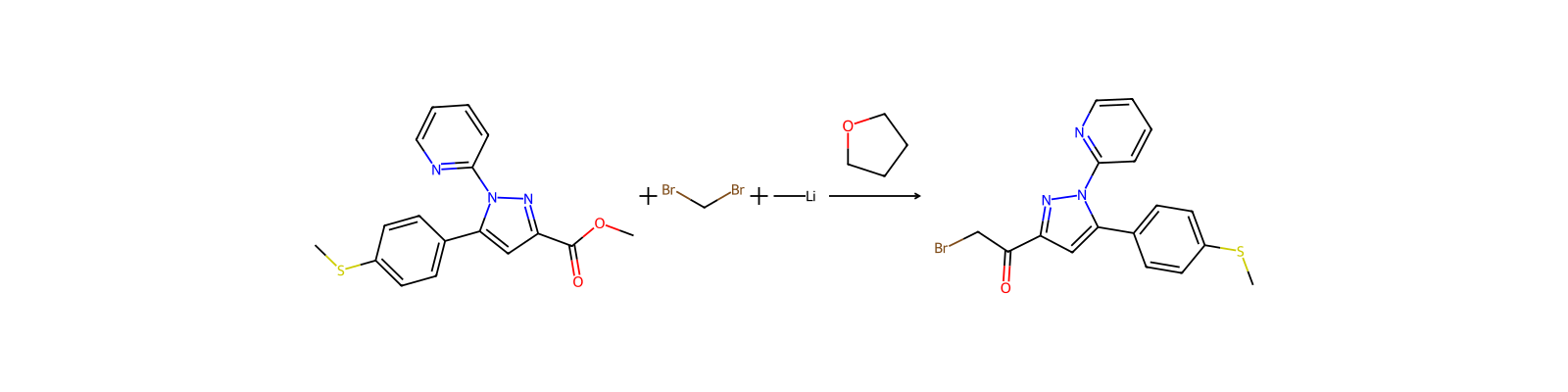

基本情報
- 標準SMILES
BrCBr- InChIKey
FJBFPHVGVWTDIP-UHFFFAOYSA-N- 分子式
- CH2Br2
- 平均分子量
- 173.83 g/mol
- 単同位体質量
- 171.85232426
概要
Dibromomethane appears as a colorless liquid with a pleasant odor. Insoluble in water and denser than water. May be toxic by ingestion. Used as a solvent and as a motor fuel.
名称と識別子
- 優先名称
- Dibromomethane
- IUPAC
- dibromomethane
- 英語名
- Dibromo methane
- 分子式
- CH2Br2
- 分子量
- 0
名称と別名
dibromomethane74-95-3Methylene bromideMethylene dibromideMethane, dibromo-CH2Br2DibrommethanMethylenbromidDTXSID4021557NSC-7293V69B659W01DTXCID401557
名称をさらに表示
CHEBI:47077RefChem:586495200-824-2DibromomethyleneRCRA waste number U068dibromo-methaneMFCD000001681,1-dibromomethane
データベース識別子
- CAS
4371-77-1、74-95-3- PubChem CID
- 3024
- DTXSID
DTXSID4021557- ChEMBL
CHEMBL1229889- ChEBI
CHEBI:47077- UNII
- V69B659W01
- EC Number
- 200-824-2
- Nikkaji
- J1.433H
物性
構造計算による物性
- XLogP
- 1.8
- 極性表面積
- 0 Ų
- 水素結合供与体数
- 0
- 水素結合受容体数
- 0
- 回転可能結合数
- 0
- 重原子数
- 3
- 形式電荷
- 0
- 複雑度
- 2.8
実験および物理化学的性質
SolventsSolvents -> Brominated Solvents
SpringerMaterials PropertiesCoriolis coupling
PesticidesVolatile Organic Compound (VOC) (Pesticide/Volatile Organic Compound (VOC))
LogP
log Kow = 1.70
1.88 (estimated)
Density
2.497 at 68 °F (USCG, 1999) - Denser than water; will sink
2.4969 g/cc @ 20 °C
Relative density (water = 1): 2.5
2.497 @ 20°C
Viscosity
1.320 mPa @ 0 °C; 0.980 mPa @ 25 °C
0.39 mm²/s at 25 °C
Color/FormClear, colorless liquid
Solubility
11.70 g/1000 g water @ 15 °C; 11.93 g/1000 g water @ 30 °C
Miscible with chloroform, alcohol, ether, acetone
> 10% in acetone
> 10% in ether
For more Solubility (Complete) data for DIBROMOMETHANE (6 total), please visit the HSDB record page.
Solubility in water, g/100ml at 15 °C: 1.2 (moderate)
Boiling Point
206.6 °F at 760 mmHg (USCG, 1999)
97 °C
97 °C
97 °C @760 [mm Hg]
DecompositionWhen heated to decomp it emits toxic fumes of /hydrogen bromide/.
Melting Point
-62.5 °F (USCG, 1999)
-52.5 °C
-52.7 °C
-52.7 °C
Vapor Density
6.05 (Air= 1)
Relative vapor density (air = 1): 6.0
物理化学的性質
- 融点
- -52.5 °C · -52.5 °C
- 沸点
- 97 °C · 97 °C
- 比重(密度)
- 2.4969 g/cm3 · 2.4969 g/cm3
安全と法規制
GHS分類
GHS Classification
Warning
H332: Harmful if inhaled [Warning Acute toxicity, inhalation]
P261, P271, P273, P304+P340, P317, and P501 (click each P-code to see the statement)
Danger
H301 (22.4%): Toxic if swallowed [Danger Acute toxicity, oral]
P261, P264, P270, P271, P273, P301+P316, P304+P340, P317, P321, P330, P405, and P501 (click each P-code to see the statement)
危険有害性情報
Regulatory Information
Chemical: Methane, dibromo-
Methane, dibromo- is listed on the EPA's Chemical Data Reporting (CDR) system. Manufacturers and importers of Methane, dibromo- are required to report information about their production and use of this chemical to the EPA under the Toxic Substances Control Act (TSCA). (40 eCFR Part 711)
Status: Active Update: 23-03-2023 https://echa.europa.eu/registration-dossier/-/registered-dossier/24154
Dibromomethane: Does not have an individual approval but may be used under an appropriate group standard
The New Jersey Worker and Community Right to Know Act requires public and private employers to provide information about hazardous substances at their workplaces. (N.J.S.A. 34:5A-1 et. seq.)
DOT LabelPoison
Fire Hazards
Special Hazards of Combustion Products: Dissociation products generated in a fire may be irritating or toxic. (USCG, 1999)
· Some of these materials may burn, but none ignite readily.
Not combustible. Gives off irritating or toxic fumes (or gases) in a fire. Heating will cause rise in pressure with risk of bursting. Risk of fire and explosion. See Chemical Dangers.
Fire PotentialNOT FLAMMABLE BY STANDARD TEST IN AIR
Health Hazards
INHALATION: Anesthetic effects, nausea and drunkenness. CONTACT WITH SKIN AND EYES: Skin irritation of eyes and nose. (USCG, 1999)
· Toxic by ingestion.
Hazards Summary
In laboratory studies, animals experienced CNS depression at 2400-2800 ppm and liver and kidney damage after repeated exposures to 1000 ppm. [CHEMINFO] Dichloromethane seldom causes hepatotoxicity unless exposure is very heavy or agent ingested. [Zimmerman, p. 333] If left on clothes, may cause reddening of skin; [CHRIS] May have effects on nervous system and blood, causing impaired functions, carboxyhemoglobinemia, and lowering of consciousness; Chronic exposure may cause liver and kidney effects; [ICSC] An irritant; Harmful by inhalation; A simple asphyxiant; May cause blood disorders, cardiac irregularities, and CNS depression; [Sigma-Aldrich MSDS]
DOT ID and Guide2664 160
Reactive GroupHalogenated Organic Compounds
EC ClassificationSymbol: Xn; R: 20-52/53; S: (2)-24-61
UN ClassificationUN Hazard Class: 6.1; UN Pack Group: III
Special Reports
Osterman-Golkar S et al; Chem-Biol Interact 46 (1): 121-30 (1983). Dibromomethanes reactivity towards nucleophilic compounds of different strengths in water solution and with respect to its toxicity and mutagenic effectiveness in bacterial test systems.
RCRA Requirements
U068; As stipulated in 40 CFR 261.33, when methylene bromide, as a commercial chemical product or manufacturing chemical intermediate or an off-specification commercial chemical product or a manufacturing chemical intermediate, becomes a waste, it must be managed according to Federal and/or State hazardous waste regulations. Also defined as a hazardous waste is any residue, contaminated soil, water, or other debris resulting from the cleanup of a spill, into water or on dry land, of this waste. Generators of small quantities of this waste may qualify for partial exclusion from hazardous waste regulations (40 CFR 261.5).
安全と保護具
Fire Fighting
Excerpt from ERG Guide 160 [Halogenated Solvents]:
In case of fire in the surroundings, use appropriate extinguishing media. In case of fire: keep drums, etc., cool by spraying with water.
First Aid Measures
Fresh air, rest. Administration of oxygen may be needed. Artificial respiration may be needed. Refer for medical attention.
Remove contaminated clothes. Rinse and then wash skin with water and soap.
First rinse with plenty of water for several minutes (remove contact lenses if easily possible), then refer for medical attention.
Rinse mouth. Do NOT induce vomiting. Refer for medical attention .
Accidental Release Measures
· CALL 911. Then call emergency response telephone number on shipping paper. If shipping paper not available or no answer, refer to appropriate telephone number listed on the inside back cover.
· ELIMINATE all ignition sources (no smoking, flares, sparks or flames) from immediate area.
First Aid
INHALATION: Remove from exposure. Give oxygen if needed.
General First Aid:
Safe StorageSeparated from food and feedstuffs, strong oxidants, strong bases and metals. Do NOT store or transport in containers made from aluminium or plastic. Ventilation along the floor.
Exposure Control and Personal Protection· Wear positive pressure self-contained breathing apparatus (SCBA).
Fire Fighting ProceduresIf material involved in fire: Extinguish fire using agent suitable for type of surrounding fire. (Material itself does not burn or burns with difficulty.) Use foam, dry chemical, or carbon dioxide.
Storage Conditions
... MATERIALS WHICH ARE TOXIC AS STORED OR WHICH CAN DECOMP INTO TOXIC COMPONENTS DUE TO CONTACT WITH HEAT, MOISTURE, ACID, OR ACID FUMES, SHOULD BE STORED IN COOL, WELL VENTILATED PLACE, OUT OF DIRECT RAYS OF SUN, AWAY FROM AREAS OF HIGH FIRE HAZARD & SHOULD BE PERIODICALLY INSPECTED & MONITORED.
Nonfire Spill ResponseExcerpt from ERG Guide 160 [Halogenated Solvents]:
Disposal Methods
Generators of waste (equal to or greater than 100 kg/mo) containing this contaminant, EPA hazardous waste number U068, must conform with USEPA regulations in storage, transportation, treatment and disposal of waste.
A potential candidate for rotary kiln incineration at a temperature range of 820 to 1,600 °C and residence times of seconds for liquids and gases, and hours for solids. A potential candidate for fluidized bed incineration at a temperature range of 450 to 980 °C and residence times of seconds for liquids and gases, and longer for solids.
Spillage Disposal
Personal protection: filter respirator for organic gases and vapours adapted to the airborne concentration of the substance. Ventilation. Collect leaking and spilled liquid in sealable containers as far as possible. Absorb remaining liquid in sand or inert absorbent. Then store and dispose of according to local regulations.
Preventive Measures
If material not on fire and not involved in fire: Build dikes to contain flow as necessary.
Personnel protection: Avoid breathing vapors. ... Avoid bodily contact with the material.
毒性情報
Treatment
EYES: irrigate opened eyes for several minutes under running water. INGESTION: do not induce vomiting. Rinse mouth with water (never give anything by mouth to an unconscious person). Seek immediate medical advice. SKIN: should be treated immediately by rinsing the affected parts in cold running water for at least 15 minutes, followed by thorough washing with soap and water. If necessary, the person should shower and change contaminated clothing and shoes, and then must seek medical attention. INHALATION: supply fresh air. If required provide artificial respiration.
InteractionsTreatment of Sprague-Dawley rats with SKF 525-A (39 mg/kg) or diethyl maleate (0.6 ml/kg) 30 min prior to ip admin of 3 mmol/kg dibromomethane resulted in decreased blood carbon monoxide levels.
Health Effects
Bromine vapour causes irritation and direct damage to the mucous membranes. Elemental bromine also burns the skin. The bromide ion is a central nervous system depressant and chronic exposure produces neuronal effects. This is called bromism and can result in central reactions reaching from somnolence to coma, cachexia, exicosis, loss of reflexes or pathologic reflexes, clonic seizures, tremor, ataxia, loss of neural sensitivity, paresis, papillar edema of the eyes, abnormal speech, cerebral edema, delirium, aggressiveness, and psychoses. (L625, L626, L627)
Environmental Fate
TERRESTRIAL FATE: Based on a classification scheme(1), an estimated Koc value of 24(SRC), determined from a structure estimation method(2), indicates that dibromomethane is expected to have very high mobility in soil(SRC). Volatilization of dibromomethane from moist soil surfaces is expected to be an important fate process(SRC) given a Henry's Law constant of 8.22X10⁻⁴ atm-cu m/mole(3). The potential for volatilization of dibromomethane from dry soil surfaces may exist based upon a vapor pressure of 44.4 mm Hg (4). Biodegradation potential in soil is unknown(SRC).
AQUATIC FATE: Based on a classification scheme(1), an estimated Koc value of 24(SRC), determined from an estimation method(2), indicates that dibromomethane is not expected to adsorb to suspended solids and sediment in water(SRC). Volatilization from water surfaces is expected(3) based upon a Henry's Law constant of 8.22X10⁻⁴ atm-cu m/mole(4). Using this Henry's Law constant and an estimation method(3), volatilization half-lives for a model river and model lake are 2 hours and 6 days, respectively(SRC). Biodegradation potential in water is unknown(SRC). According to a classification scheme(5), an estimated BCF of 4(SRC), from its log Kow of 1.70(6) and a regression-derived equation(7), suggests the potential for bioconcentration in aquatic organisms is low. The rate constant for the aqueous-phase reaction of dibromomethane with hydroxyl radicals is 9.9X10+7(8). This corresponds to a half-life of about 22 years at an aqueous concn of 1X10-17 mole/L hydroxyl radicals cm.
ATMOSPHERIC FATE: According to a model of gas partitioning of semivolatile organic compounds in the atmosphere(1), dibromomethane, which has a vapor pressure of 44.4 mm Hg at 25 °C(2), is expected to exist solely as a vapor in the ambient atmosphere. Vapor-phase dibromomethane is degraded in the atmosphere by reaction with photochemically-produced hydroxyl radicals(SRC); the half-life for this reaction in air is estimated to be 142 days(SRC), calculated from its rate constant of 1.13X10⁻¹³ cu cm/molecule-sec at 25 °C(3). The ozone depleting potential and atmospheric lifetime for dibromomethane have been calculated as 0.17 and 0.41 years, respectively(3). Dibromomethane is very soluble in water (11,900 g/l at 30 °C(4)) and therefore it should be readily scavenged by rain and snow(SRC).
Adverse EffectsNeurotoxin - Acute solvent syndrome
Exposure Routes
The substance can be absorbed into the body by inhalation, by ingestion and through the skin.
Oral (L626) ; inhalation (L626) ; dermal (L626)
Toxicity Summary
Bromine is a powerful oxidizing agent and is able to release oxygen free radicals from the water in mucous membranes. These free radicals are also potent oxidizers and produce tissue damage. In additon, the formation of hydrobromic and bromic acids will result in secondary irritation. The bromide ion is also known to affect the central nervous system, causing bromism. This is believed to be a result of bromide ions substituting for chloride ions in the in actions of neurotransmitters and transport systems, thus affecting numerous synaptic processes. (L626, L627, A543)
Average Daily Intake
AIR INTAKE: Remote areas (assume air concn of 2.4-15 parts per trillion (1,2) and inhalation rate of 20 cu meters/day (4)) - 0.3-2.2 ug, Source areas (assume air concn of 900 parts per trillion(3) and inhalation rate of 20 cu meters/day (4)) - 130 ug; WATER INTAKE: insufficient data; FOOD INTAKE: insufficient data(SRC).
Signs and Symptoms
Cough. Dizziness. Drowsiness. Headache. Nausea. Weakness. Unconsciousness.
Dry skin. Redness.
Redness.
See Inhalation.
Bromine vapour causes irritation and direct damage to the mucous membranes. Symptoms include lacrimation, rhinorrhoea, eye irritation with mucous secretions from the oropharyngeal and upper airways, coughing, dyspnoea, choking, wheezing, epistaxis, and headache. The bromide ion is a central nervous system depressant producing ataxia, slurred speech, tremor, nausea, vomiting, lethargy, dizziness, visual disturbances, unsteadiness, headaches, impaired memory and concentration, disorientation and hallucinations. This is called bromism. (L626, L627)
Effluent Concentrations
In a comprehensive survey of wastewater from 4000 industrial and publicly owned treatment works (POTWs) sponsored by the Effluent Guidelines Division of the U.S. EPA, dibromomethane was identified in discharges of the following industrial categories (positive occurrences, median concn in ppb): nonferrous metals (8; 2.2), organics and plastics (2; 32.9), inorganic chemicals (2; 1.9), pesticides manufacture (2; 104.6), publicly owned treatment works (9; 0.3)(1). Maximum effluent concn >100 ppb were found in the nonferrous metals industry (286 ppb) and in pesticide manufacturing (151 ppb)(1). In a previous survey of 63 wastewaters from a wide range of chemical manufacturers across the U.S., 1 effluent contained dibromomethane(2). The level of dibromomethane in that sample was >100 ppb.
ICSC Environmental DataThe substance is harmful to aquatic organisms. The substance may cause long-term effects in the aquatic environment.
Soil Adsorption/Mobility
Using a structure estimation method based on molecular connectivity indices(1), the Koc for dibromomethane can be estimated to be 24(SRC). According to a classification scheme(2), this estimated Koc value suggests that dibromomethane is expected to have very high mobility in soil.
法規制情報
RCRA Requirements
U068; As stipulated in 40 CFR 261.33, when methylene bromide, as a commercial chemical product or manufacturing chemical intermediate or an off-specification commercial chemical product or a manufacturing chemical intermediate, becomes a waste, it must be managed according to Federal and/or State hazardous waste regulations. Also defined as a hazardous waste is any residue, contaminated soil, water, or other debris resulting from the cleanup of a spill, into water or on dry land, of this waste. Generators of small quantities of this waste may qualify for partial exclusion from hazardous waste regulations (40 CFR 261.5).
TSCA Requirements
Pursuant to section 8(d) of TSCA, EPA promulgated a model Health and Safety Data Reporting Rule. The section 8(d) model rule requires manufacturers, importers, and processors of listed chemical substances and mixtures to submit to EPA copies and lists of unpublished health and safety studies. Dibromomethane is included on this list.
CERCLA Reportable Quantities
Persons in charge of vessels or facilities are required to notify the National Response Center (NRC) immediately, when there is a release of this designated hazardous substance, in an amount equal to or greater than its reportable quantity of 1000 lb or 454 kg. The toll free number of the NRC is (800) 424-8802; In the Washington D.C. metropolitan area (202) 426-2675. The rule for determining when notification is required is stated in 40 CFR 302.4 (section IV. D.3.b).
Clean Water Act RequirementsToxic pollutant designated pursuant to section 307(a)(1) of the Federal Water Pollution Control Act and is subject to effluent limitations. /Halomethanes/
State Drinking Water Guidelines(FL) FLORIDA 70 ug/l
安全データ
- ridadr
- UN 2664
- hazard_class
- 6.1
- packing_group
- III
化学と産業
薬理情報
Biological Half-Life... REPEATED 6 HR EXPOSURES /OF DOGS/ TO EITHER 25, 75, OR 150 PPM /METHYLENE BROMIDE/ FOR 90 DAYS. PLASMA CLEARANCE WAS AT LEAST BIPHASIC WITH ILL DEFINED ALPHA PHASE & A TERMINAL PHASE (HALF LIFE 103 + OR - 14 MIN) @ ALL 3 CONCN.
Metabolism/Metabolites
IT IS METABOLIZED TO CARBON MONOXIDE AND BROMIDE.
MASS SPECTRAL STUDIES USING (18)O2 SHOWED THAT (18)O-CO WAS PRODUCED INDICATING THAT OXYGEN WAS INCORPORATED DURING THE REACTION. A PRIMARY DEUTERIUM ISOTOPE EFFECT WAS OBSERVED FOR CONVERSION OF DICHLOROMETHANE TO CARBON MONOXIDE BOTH BY LONG-EVANS RAT HEPATIC MICROSOMAL FRACTIONS & BY STANNOUS PHOSPHATE MODEL SYSTEM. INCUBATION OF DIBROMOMETHANE IN THE MODEL SYSTEM IN THE PRESENCE OF 3,4-DIMETHYLANILINE RESULTED IN FORMATION OF 3,4-FORMOXYLIDIDE, SUPPORTING THE INTERMEDIACY OF A FORMYL HALIDE. A MECHANISM FOR THE METABOLISM OF DIHALOMETHANES TO CARBON MONOXIDE IS PROPOSED.
Halogenated methanes, in particular the brominated homologs, including dibromomethane and tribromomethane were subjected to biochemical decomposition in vitro by the cytochrome p450 rich fraction of the monooxygenase liver system. No significant contribution of GSH addition to the overall rate of metabolism of the halogenated methanes could be observed.
Treatment of Sprague-Dawley rats with sodium phenobarbital (50 mg/kg in 0.9% saline for 4 days) or 3-methylcholanthrene (20 mg/kg in corn oil for 2 days) resulted in increased metabolism of dibromomethane (3 m mol/kg) to carbon monoxide.
Biotransformation of dihalomethanes leads to dehalogenation & end product is carbon monoxide. In the case of dichloromethane the carbon monoxide appears to arise from formyl halide. This intermediate, as an alternative to losing carbon monoxide, can covalently bind to cellular protein or lipid. The involvement of nonmicrosomal enzymes in dihalomethane biotransformation leads to prodn of formaldehyde & halide. A necessary step is the reaction of dihalomethane with glutathione, which results in loss of one halide. The resulting halomethylglutathione is postulated to undergo nonenzymatic hydrolytic dehalogenation leaving hydroxymethylglutathione. The next step would result in the release of the hydroxymethyl group as formaldehyde. Alternatively it has been shown that in the presence of formaldehyde dehydrogenase & NAD /nicotinamide-adenine dinucleotide/ formic acid can be formed. /Dichloromethane/
Bromine is mainly absorbed via inhalation, but may also enter the body through dermal contact. Bromine salts can be ingested. Due to its reactivity, bromine quickly forms bromide and may be deposited in the tissues, displacing other halogens. (L626)
MeSH Pharmacological ClassificationChemical agents that increase the rate of genetic mutation by interfering with the function of nucleic acids. A clastogen is a specific mutagen that causes breaks in chromosomes.
Absorption, Distribution and ExcretionIT ... DOES NOT APPEAR TO BE ABSORBED SIGNIFICANTLY EVEN WHEN APPLIED REPEATEDLY /TO EYES AND SKIN OF RABBITS/.
用途と製造
Uses
Used as a chemical intermediate and a solvent for fats, waxes, and resins; [HSDB] Produced in nature by microalgae commonly found along beaches and coastlines; Used as an intermediate, solvent for chemical manufacture, gauge fluid, and in fire extinguishing fluids; [Reference #1]
Organic synthesis, solvent
SOLVENT FOR FATS, WAXES, & RESINS; HEAVY LIQUID IN SOLID SEPARATIONS; INGREDIENT OF FIRE EXTINGUISHING FLUIDS; GAGE FLUID
Solvent, as a gauge fluid, and in producing pesticides...can be used as dense, readily volatile media for mineral and salt separations.
It may be produced synthetically or naturally by marine algae. Dibromomethane is used as a solvent, gage fluid and in organic synthesis. Diatomic bromine does not occur naturally, but bromine salts can be found in crustal rock.
U.S. Production
2023: 1,000,000 - <5,000,000 lb
(1972) PROBABLY GREATER THAN 4.54X10+5 G
(1975) PROBABLY GREATER THAN 4.54X10+5 G
Consumer UsesNot Known or Reasonably Ascertainable
Industry UsesNot Known or Reasonably Ascertainable
Methods of Manufacturing
Manufactured along with bromochloromethane, from dichloromethane: Lake, Asadorian, US patent 2,553,518 (1951 to Dow).
Prepn: Hartman, Dreger Org Synth Coll Vol 1, 357 (1941)
Reaction of dichloromethane with anhydrous aluminum bromide, treatment with bromine and aluminum, or by reaction with hydrogen bromide in the presence of an aluminum halide catalyst...allowing the reaction to proceed to completion.
General Manufacturing Information
Pharmaceutical and Medicine Manufacturing
Methane, dibromo-: ACTIVE
A laboratory preparation involves removing a bromine from bromoform using sodium arsenite.
サプライヤー50 社
国药集团化学试剂有限公司86-21-63210123 · [email protected]
梯希爱(上海)化成工业发展有限公司021-67121386 · [email protected]
上海阿拉丁生化科技股份有限公司400-6206333 13167063860 · [email protected]
Shandong chuangyingchemical Co., Ltd.18853181302 · [email protected]
Career Henan Chemica Co+86-0371-86658258 +86-13203830695 · [email protected]
河北创海生物科技有限公司+86-86-13131129325 · [email protected]
Baoji Guokang Healthchem co.,ltd+8615604608665 15604608665 · [email protected]
Dayang Chem (Hangzhou) Co.,Ltd.+86-0571-88938639 17705817739 · [email protected]
Hebei Yanxi Chemical Co., Ltd.+86-17531190177 · [email protected]
北京安司莫森技术有限公司010-82954736 13391601435 · [email protected]
科瑞迪化学400-821-5857 021-64326257 · [email protected]
Henan Xiangtong Chemical Co., Ltd.86-371-61312303 · [email protected]
上海迈瑞尔生化科技有限公司4006356688 18621169109 · [email protected]
宁波亿诺化学品有限公司86-574-27787657 · [email protected]
阿法埃莎(中国)化学有限公司400-6106006 · [email protected]
安耐吉化学&3A(安徽泽升科技股份有限公司)400-0056266 · [email protected]
铜陵立事达化学科技有限公司19064063435 18606623089 · [email protected]
上海瀚鸿科技股份有限公司021-54306202 13764082696 · [email protected]
上海景颜化工科技有限公司13817811078 · [email protected]
嘉兴市艾森化工有限公司0573-85285100 18627885956 · [email protected]
合肥天健化工有限公司551-65418679 15856988503;15837135945 · [email protected]
山东西亚化学有限公司13355009207 13355009207 · [email protected]
玛雅试剂+86 (573) 82222445 (0)18006601000 452520369 · [email protected]
四川库利南科技有限公司400-1166-196 18981987031 · [email protected]
天津希恩思生化科技有限公司400 638 7771 · [email protected]
Xiamen AmoyChem Co., Ltd+86-86-5926051114 · [email protected]
南京维奥化工有限公司Please Send Email 18652950785 · [email protected]
Hebei Qige Biological Technology Co. Ltd+86 +8618733132031
斯百全化学(上海)有限公司021-021-021-67601398-809-809-809 15221380277 · [email protected]
艾科试剂4008-755-333 18080918076 · [email protected]
上海思域化工科技有限公司86-21-34053660 · [email protected]
赛默飞世尔科技(中国)有限公司800-810-5118 · [email protected]
北京伊诺凯科技有限公司400-810-7969 010-59572699 · [email protected]
TCI AMERICA800-4238616 · [email protected]
TOKYO CHEMICAL INDUSTRY CO., LTD.03-36680489 · [email protected]
TCI Europe320-37350700 · [email protected]
上海泽信化工科技有限公司021-60136491 15901897992
北京环宇世纪化学科技有限公司hysj_bj.com
上海将来实业股份有限公司021-61552785 · [email protected]
成都迈斯克医药科技有限公司028-84552636 18084815636 · [email protected]
郑州阿尔法化工有限公司0371-53732842 15981811963 · [email protected]
成都零六生物科技有限公司400-1166-196 13458535857 · [email protected]
湖北瑞今化学有限公司027 83642615 13995607107 · [email protected]
雷丁试剂0510-85629785 18013409632 · [email protected]
上海麦克林生化科技股份有限公司15221275939 15221275939 · [email protected]
杭州杰恒化工有限公司0571-87396432 · [email protected]
上海嵩爰化工科技有限公司010-1234567 18521000990 · [email protected]
成都润泽本土化工有限公司13096311329 028-88469284 616445927 · [email protected]
凯试(上海)科技有限公司021-50135380 · [email protected]
上海容立化学科技有限公司021-69992220 13701886816 · [email protected]
関連反応
397 件


関連ノート
読み込み中…