ホームMCPワークベンチSkills
ホームワークベンチ通知マイページ
llms.txt · MCPガイドプライバシーポリシー · 利用規約 · サポートv1.8.0
  1. ホーム
  2. /化合物

メタアクリロニトリル

Methacrylonitrile

HCID 31368
ノートを作成反応を作成見積依頼を出す
印刷プレビュー

データを補完しています。しばらくしてからページを更新すると最新の内容を表示できます

基本情報概要名称と識別子物性安全と法規制化学と産業関連反応化合物ノート
部分構造検索類似構造を探す

基本情報

CAS
126-98-7
標準SMILES
C=C(C)C#N
InChIKey
GYCMBHHDWRMZGG-UHFFFAOYSA-N
分子式
C4H5N
平均分子量
67.09 g/mol
単同位体質量
67.04219916

概要

Methacrylonitrile, stabilized appears as a clear colorless liquid. Less dense than water. Flash point 55 °F. Boiling point 195 °F. Very be toxic by ingestion, inhalation and skin absorption. Used to make plastics and coatings.

名称と識別子

優先名称
Methacrylonitrile
IUPAC
2-methylprop-2-enenitrile
現地名
メタアクリロニトリル
英語名
Methacrylonitrile
分子式
C4H5N
分子量
67.09

名称と別名

Methacrylonitrile126-98-7Isopropene cyanideIsopropenylnitrile2-MethylacrylonitrileMETHYLACRYLONITRILE2-Methyl-2-propenenitrile2-Methylpropenenitrile2-Propenenitrile, 2-methyl-2-Cyanopropene-12-Cyano-1-propene2-Cyanopropene
名称をさらに表示
メタアクリロニトリルイソプロペンシアニドイソプロペニルシアニド2-メチル-2-プロペンニトリルイソプロペニルニトリル2-メチルプロペンニトリル2-メチレンプロピオノニトリルメタクリロニトリル2-メチルアクリロニトリルメチルアクリロニトリルΑ-メチルアクリロニトリルメタクリロニトリル STANDARDメタクリロニトリル Standard, 100 µg/mL in MeOHメタクリロニトリル Standard, 1000 µg/mL in MeOH1-Methylethenyl CyanideNSC 24145usafst-40CH2C(CH3)CNIsobutenenitrileMethacrylnitrile
USAF ST-40RCRA waste number U152DTXSID1024176NSC-24145DTXCID10417604S4K38612alpha-Methylacrylonitrilealpha-Methacrylonitrile

データベース識別子

CAS
126-98-7、25067-61-2
PubChem CID
31368
DTXSID
DTXSID1024176
ChEMBL
CHEMBL1529759
ChEBI
CHEBI:229308
UNII
04S4K38612
EC Number
204-817-5
Nikkaji
J2.514C

物性

構造計算による物性補完中

XLogP
0.7
極性表面積
23.8 Ų
水素結合供与体数
0
水素結合受容体数
1
回転可能結合数
0
重原子数
5
形式電荷
0
複雑度
83.1

実験および物理化学的性質

Chemical Classes · 3 件

Nitrogen Compounds -> Nitriles

Flammable agents - 3rd degree

Volatile Organic Compound (VOC)

SpringerMaterials PropertiesSchoenflies notation
PesticidesPesticide -> EPA IRIS
LogP · 3 件

log Kow = 0.68

0.68

0.68

OdorOdor-like bitter almonds.
Density · 6 件

0.8001 at 68 °F (EPA, 1998) - Less dense than water; will float

0.8001 @ 20 °C/4 °C

DENSITY OF SATURATED AIR: 1.17 (AIR= 1)

Relative density (water = 1): 0.8

0.8001

0.805 @ 20°C

Viscosity0.392 cP @ 20 °C
Color/FormColorless liquid.
Solubility · 6 件

10 to 50 mg/mL at 72 °F (NTP, 1992)

Miscible with acetone, octane, toluene @ 20-25 °C

Sol in alcohol, ether

In water, 2.54X10+4 mg/l @ 25 °C

Solubility in water at 20 °C: moderate

安全と法規制

安全情報は参考情報です。供給元の安全データシート(SDS)、適用法令、専門家による評価に代わるものではありません。

GHS分類

GHS Classification · 6 件

Danger

H225: Highly Flammable liquid and vapor [Danger Flammable liquids]

P210, P233, P240, P241, P242, P243, P261, P262, P264, P270, P271, P272, P280, P301+P316, P302+P352, P303+P361+P353, P304+P340, P316, P321, P330, P333+P317, P361+P364, P362+P364, P370+P378, P403+P233, P403+P235, P405, and P501 (click each P-code to see the statement)

Danger

H225 (100%): Highly Flammable liquid and vapor [Danger Flammable liquids]

P210, P233, P240, P241, P242, P243, P260, P261, P262, P264, P270, P271, P272, P280, P284, P301+P316, P302+P352, P303+P361+P353, P304+P340, P308+P316, P316, P320, P321, P330, P333+P317, P361+P364, P362+P364, P370+P378, P403+P233, P403+P235, P405, and P501 (click each P-code to see the statement)

危険有害性情報

Hazards IdentificationToxic/poison by inhalation (TIH/PIH)
Regulatory Information · 5 件

Chemical: 2-Propenenitrile, 2-methyl-

2-Propenenitrile, 2-methyl- is listed on the EPA's Chemical Data Reporting (CDR) system. Manufacturers and importers of 2-Propenenitrile, 2-methyl- are required to report information about their production and use of this chemical to the EPA under the Toxic Substances Control Act (TSCA). (40 eCFR Part 711)

Status: Active Update: 26-02-2015 https://echa.europa.eu/registration-dossier/-/registered-dossier/11253

Methacrylonitrile: HSNO Approval: HSR003019 Approved with controls

The New Jersey Worker and Community Right to Know Act requires public and private employers to provide information about hazardous substances at their workplaces. (N.J.S.A. 34:5A-1 et. seq.)

DOT LabelPoison Inhalation Hazard Flammable Liquid
Fire Hazards · 3 件

Methacrylonitrile evolves flammable concentrations of vapor at temperatures down to 55.04F. Thus, at room temperatures, flammable concentrations are liable to be present. Toxic fumes of nitrogen oxides are released when the material burns. Also, the chemical will explode due to its tendency to polymerize violently. Avoid heat. Hazardous polymerization may occur. (EPA, 1998)

化学と産業

薬理情報

Metabolism/Metabolites · 1 件

FOLLOWING ADMINISTRATION OF A SINGLE DOSE OF 50 MG/KG IP TO RATS, METHACRYLONITRILE WAS SLOWLY ELIMINATED IN THE URINE AND WAS NO LONGER DETECTABLE AFTER 4-5 DAYS. FREE HYDROGEN CYANIDE WAS DETECTABLE ONLY ON THE FIRST DAY IN THE URINE & BOUND HYDROGEN CYANIDE ONLY THE FIRST 2 DAYS AFTER TREATMENT. DISTRIBUTION IN THE ORGANS OF UNCHANGED METHACRYLONITRILE & HYDROGEN CYANIDE WAS STUDIED.

Absorption, Distribution and Excretion · 2 件

... READILY ABSORBED THROUGH SKIN.

FOLLOWING ADMINISTRATION OF A SINGLE DOSE OF 50 MG/KG IP TO RATS, METHACRYLONITRILE WAS SLOWLY ELIMINATED IN THE URINE AND WAS NO LONGER DETECTABLE AFTER 4-5 DAYS. FREE HYDROGEN CYANIDE WAS DETECTABLE ONLY ON THE FIRST DAY IN THE URINE & BOUND HYDROGEN CYANIDE ONLY THE FIRST 2 DAYS AFTER TREATMENT. DISTRIBUTION IN THE ORGANS OF UNCHANGED METHACRYLONITRILE & HYDROGEN CYANIDE WAS STUDIED.

用途と製造

Uses · 4 件

Used in synthesis of plastic elastomers, coatings, and other organic chemicals; [ACGIH]

In prepn of homopolymers and copolymers; as an intermediate in prepn of acids, amides, amines, esters, nitriles

Vinyl nitrile monomer, copolymer with styrene, butadiene, etc, elastomers, coatings, plastics

MONOMER FOR POLYMETHACRYLONITRILE

ImpuritiesProduct may be stabilized with 50 ppm the monoethyl ether of hydroquinone.
U.S. Production · 3 件

2023: 1,000,000 - <5,000,000 lb

(1979) PROBABLY GREATER THAN 4.54X10+6 G

(1981) PROBABLY GREATER THAN 2.27X10+6 G

Industry UsesCBI
Methods of ManufacturingVapor-phase catalytic oxidation of methallylamine; dehydration of methacrylamide; from isopropylene oxide and ammonia.

関連反応

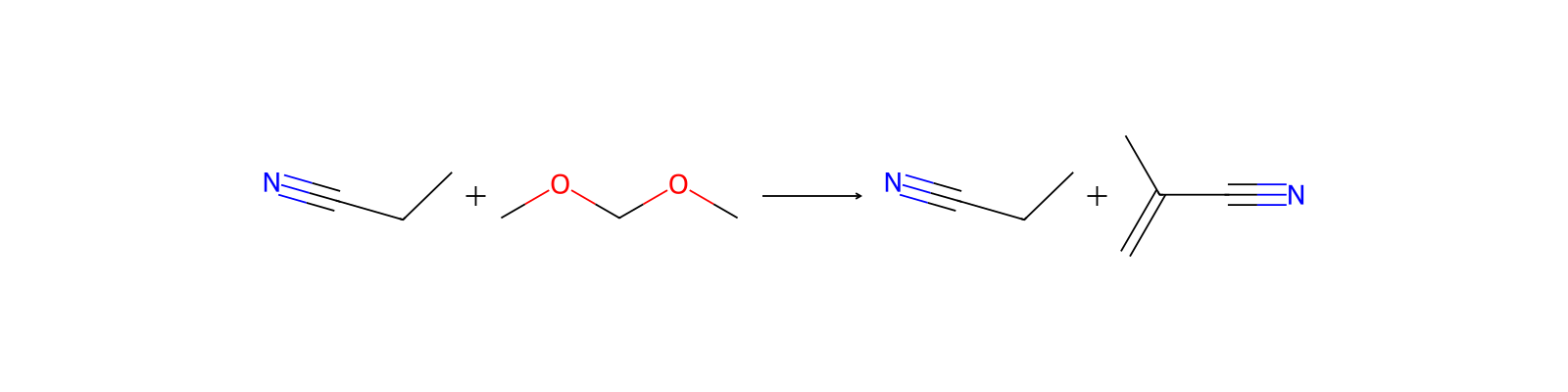
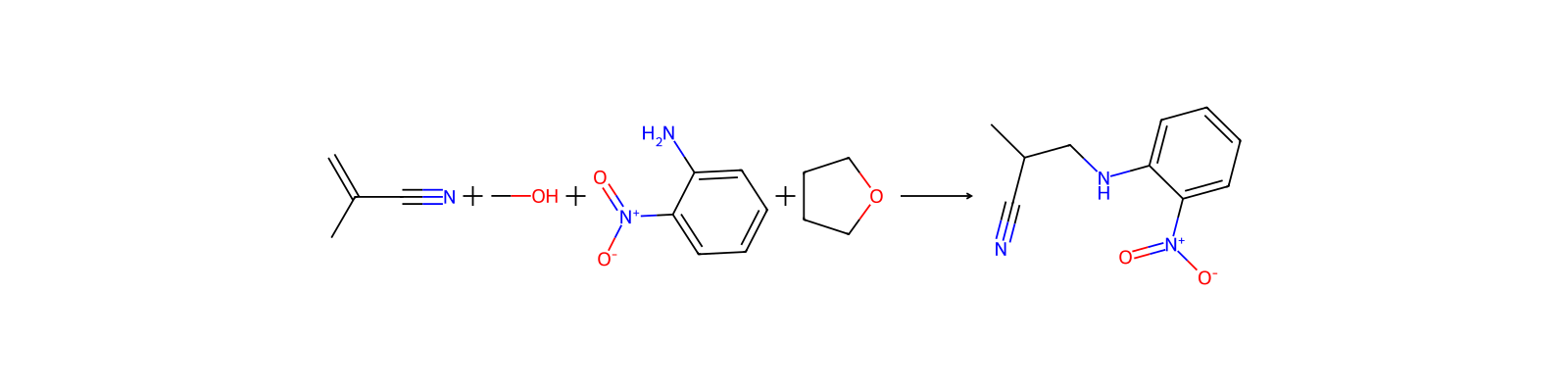
74 件
反応記録を作成
HRID 5168 の反応式
HRID 5168反応物としてuspto-grants-1993_09
HRID 8561 の反応式
HRID 8561反応物としてuspto-grants-2006_08
HRID 25918 の反応式
HRID 25918生成物としてuspto-grants-1979_04
HRID 128721 の反応式
HRID 128721反応物としてuspto-grants-1995_11
HRID 166324 の反応式
HRID 166324反応物としてTraining data from https://doi.org/10.1039/C8SC04228D (9/10)
HRID 207868 の反応式
HRID 207868反応物としてTraining data from https://doi.org/10.1039/C8SC04228D (6/10)
HRID 234775 の反応式
HRID 234775反応物としてuspto-grants-1997_01
HRID 259184 の反応式
HRID 259184反応物としてuspto-grants-1977_07
1 / 10 ページ

化合物ノート

読み込み中…

このページの内容基本情報概要名称と識別子物性安全と法規制化学と産業関連反応化合物ノート
その他の操作
ノートを作成反応を作成見積依頼を出す

3%

Flash Point · 6 件

55 °F (EPA, 1998)

13 °C

13 °C (55 °F) open cup

1.1 °C c.c.

55 °F

34 °F

Boiling Point · 6 件

194 °F at 760 mmHg (EPA, 1998)

90.3 °C @ 760 mm Hg

90.3 °C

195 °F

90.3 °C @760 [mm Hg]

195 °F

DecompositionWhen heated to decomposition it emits toxic fumes of /nitrogen oxides and cyanides/.

物理化学的性質

融点
35.8 °C · −35.8 °C(lit.)
沸点
90 · 90-92 °C(lit.)
比重(密度)
0.8 g/mL · 0.8 g/mL at 25 °C(lit.)
蒸気圧
64 mm · 64 mm Hg ( 20 °C)
屈折率
20 · n20/D 1.400(lit.)
闪点
54 °F · 54 °F
貯蔵温度
2 · 2-8°C
溶解性
クロロホルム、酢酸エチル(微量)、メタノール(微量)
外見
無色の液体
色
無色
臭気閾値(Odor Threshold)
3 ppm · 3ppm
水溶解度
2.57 g/100mL · 2.57g/100mL(20℃)
比熱容量
1.88 J/ · Cp(liquid): 1.88 J/(g·K), at 25℃
Merck
13 · 13,5968
Henry's Law Constant
3.6 · 3.6×10-2 mol/(m3Pa) at 25℃, Brockbank (2013)
LogP
0.76 · 0.76
CAS データベース
126 · 126-98-7(CAS DataBase Reference)
NISTの化学物質情報
2 · 2-Propenenitrile, 2-methyl-(126-98-7)
EPAの化学物質情報
Methacrylonitrile (126-98-7)
化学的性質 · 1 件

化学的特性Methylacrylonitrile is a colorless liquid with an odor like bitter almonds. It is reported that methacrylonitrile cannot be detected by its smell even at concentrations which are already dangerous for humans. Hence, special attention must be given to ventilation and estimations of the amount of poison present must be carried out frequently.

· HIGHLY FLAMMABLE: Will be easily ignited by heat, sparks or flames.

Highly flammable. Gives off irritating or toxic fumes (or gases) in a fire. Vapour/air mixtures are explosive.

Fire Potential · 2 件

METHACRYLONITRILE EVOLVES FLAMMABLE CONCENTRATIONS OF VAPOR AT TEMPERATURES DOWN TO 12.8 °C. THUS, AT ROOM TEMPERATURES, FLAMMABLE ... CONCENTRATIONS ARE LIABLE TO BE PRESENT IN ABSENCE OF PRECAUTIONS. THE NORMAL DANGERS ASSOCIATED WITH FIRE ... ARE INTENSIFIED BY THE LETHAL NATURE OF THE FUMES & VAPORS EVOLVED.

A dangerous fire hazard when exposed to heat, flame, or sparks.

Health Hazards · 2 件

A lacrimator (causes tearing); an insidious poison which causes delayed skin reactions. Very readily absorbed through skin. Highly toxic. (EPA, 1998)

· TOXIC; may be fatal if inhaled, ingested or absorbed through skin.

Hazards Summary · 2 件

Inhalation toxicity is comparable to that of acrylonitrile; Causes paralysis of hind limbs and seizures in dogs exposed to 13.5 ppm for 90 days; [ACGIH] An eye and respiratory tract irritant; Can cause cyanide poisoning; [ICSC] A skin sensitizer; [Quick CPC] A lachrymator; [HSDB] Methacrylonitrile, stabilized (UN3079) has warning of explosive polymerization; [ERG 2016] See NITRILES.

The major hazards encountered in the use and handling of methylacrylonitrile stem from its toxicologic properties and flammability. Toxic by all routes (ie, inhalation, ingestion, and dermal absorption), exposure to this bitter-almond-smelling, colorless liquid may occur from its use as a copolymer with styrene and butadiene; as an intermediate in the preparation of acids, amides, amines, esters, and nitriles; and in elastomers, coatings, and plastics. Effects from exposure may include contact burns to the skin and eyes, nausea, headache, tachycardia, CNS depression, convulsions, asphyxiation, coma, and death. OSHA has established a time-weighted average (TWA) limit of 1 ppm, with an indication that skin contact is to be avoided. In activities and situations where over-exposure may occur, wear a positive pressure self-contained breathing apparatus, and chemical protective clothing which is specifically recommended by the shipper or manufacturer. If contact should occur, immediately flush exposed eyes and skin with running water for at least 15 minutes. Contaminated clothing and shoes should be removed and left at the site. Methylacrylonitrile is extremely flammable (flash point: 13 °C, open cup), capable of ignition by heat, sparks, or flames. Its heavier-than-air vapor may travel to a source of ignition and flash back, or accumulate to explosive concentrations in confined spaces such as sewers. Because of its tendency to polymerize violently, containers of methylacrylonitrile may explode in the heat of a fire. For fires involving this substance, extinguish with dry chemical, CO2, water spray, fog, or alcohol-resistant foam. If a tank, rail car, or tank truck is involved in the fire, isolate for 1/2 mile in all directions. Dike fire control waterfor later disposal and do not scatter the material. Take up small spills of methylacrylonitrile with sand or other noncombustible absorbent and place into containers for later disposal. Dike far ahead of large spills for later disposal. Methylacrylonitrile is a potential candidate for liquid injection, rotary kiln, or fluidized bed forms of incineration.

DOT ID and Guide · 2 件

3079 131P

3079 131P(inhibited)

Reactive GroupNitriles
EC ClassificationSymbol: F, T; R: 11-23/24/25-43; S: (1/2)-9-16-18-29-45; Note: D
UN ClassificationUN Hazard Class: 3; UN Subsidiary Risks: 6.1; UN Pack Group: I
Special ReportsKaplita PV and Smith RP; Toxicol Appl Pharmacol 84 (3): 533-540 (1986). Pathways for the bioactivation of aliphatic nitriles to free cyanide in mice.

安全と保護具

Fire Fighting · 2 件

Usual precautions for flammable liquid should be applied. (EPA, 1998)

Use alcohol-resistant foam. Use dry powder. Use carbon dioxide. In case of fire: keep drums, etc., cool by spraying with water.

First Aid Measures · 4 件

Fresh air, rest. Artificial respiration may be needed. Refer for medical attention.

Remove contaminated clothes. Rinse and then wash skin with water and soap. Refer for medical attention .

First rinse with plenty of water for several minutes (remove contact lenses if easily possible), then refer for medical attention.

Give a slurry of activated charcoal in water to drink. Induce vomiting (ONLY IN CONSCIOUS PERSONS!). Wear protective gloves when inducing vomiting. NO mouth-to-mouth artificial respiration. Administration of oxygen may be needed. Refer for medical attention .

Accidental Release Measures · 2 件

· CALL 911. Then call emergency response telephone number on shipping paper. If shipping paper not available or no answer, refer to appropriate telephone number listed on the inside back cover.

· ELIMINATE all ignition sources (no smoking, flares, sparks or flames) from immediate area.

First Aid · 3 件

Warning: Effects, including skin reactions, may be delayed. Caution is advised. Vital signs should be monitored closely. Heart palpitation may begin within minutes after exposure.

General First Aid:

(General first aid procedures)

Safe StorageStore only if stabilized. Fireproof. Cool. Keep in the dark. Separated from food and feedstuffs.
Exposure Control and Personal Protection · 2 件

· Wear positive pressure self-contained breathing apparatus (SCBA).

TIH (Toxic Inhalation Hazard) - Term used to describe gases and volatile liquids that are toxic when inhaled. Some are TIH materials themselves, e.g., chlorine, and some release TIH gases when spilled in water, e.g., chlorosilanes. [ERG 2016].

Nonfire Spill ResponseExcerpt from ERG Guide 131 [Flammable Liquids - Toxic; polymerization hazard]:
Disposal Methods · 2 件

Generators of waste (equal to or greater than 100 kg/mo) containing this contaminant, EPA hazardous waste numbers D003, P030, and U152 must conform with USEPA regulations in storage, transportation, treatment and disposal of waste.

A potential candidate for liquid injection incineration at a temperature range of 650 to 1,600 °C and a residence time of 0.1 to 2 seconds. A potential candidate for rotary kiln incineration at a temperature range of 820 to 1,600 °C and residence times of seconds for liquids and gases, and hours for solids. A potential candidate for fluidized bed incineration at a temperature range of 450 to 980 °C and residence times of seconds for liquids and gases, and longer for solids.

Spillage Disposal · 1 件

Remove all ignition sources. Evacuate danger area! Personal protection: chemical protection suit including self-contained breathing apparatus. Collect leaking liquid in sealable containers. Absorb remaining liquid in sand or inert absorbent. Then store and dispose of according to local regulations.

Preventive Measures · 5 件

The worker should immediately wash the skin when it becomes contaminated.

Work clothing that becomes wet should be immediately removed due to its flammability hazard.

... IT SHOULD BE NOTED THAT METHACRYLONITRILE CANNOT BE DETECTED BY ITS SMELL EVEN AT CONCENTRATIONS WHICH ARE ALREADY DANGEROUS FOR HUMANS. HENCE SPECIAL ATTENTION MUST BE GIVEN TO VENTILATION & ESTIMATIONS OF THE AMT OF POISON PRESENT MUST BE CARRIED OUT FREQUENTLY.

SRP: Contaminated protective clothing should be segregated in such a manner so that there is no direct personal contact by personnel who handle, dispose, or clean the clothing. Quality assurance to ascertain the completeness of the cleaning procedures should be implemented before the decontaminated protective clothing is returned for reuse by the workers. Contaminated clothing should not be taken home at end of shift, but should remain at employee's place of work for cleaning.

For more Preventive Measures (Complete) data for METHYLACRYLONITRILE (6 total), please visit the HSDB record page.

Isolation and Evacuation · 4 件

Excerpt from ERG Guide 131 [Flammable Liquids - Toxic; polymerization hazard]:

Immediate precautionary measure

Small spill:

Small spill:

Eye PreventionWear face shield or eye protection in combination with breathing protection.

毒性情報

Interactions · 3 件

Antidotes for acute toxicity of methacrylonitrile were studied in rats. Male Wistar rats were exposed for 30 minutes to methacrylonitrile at lethal concentrations from 3180 to 5700 ppm. Animals were removed to plain air. Some exposed to 3180 or 3210 ppm were injected with unusual cyanide antidotes 4-dimethylaminophenol at 10 mg/kg plus 500 mg/kg sodium thiosulfate. Some exposed to 3500 to 5700 ppm were given N-acetyl-cysteine at 200 mg/kg, an acrylonitrile antidote. Clinical effects observed in animals not given the antidotes were compared with those of comparable doses of acrylonitrile. Animals intoxicated with acrylonitrile showed marked salivation, flow of tears, diarrhea, and convulsions with death occurring in 3 to 4 hours. Animal intoxicated with methacrylonitrile showed rapid unconsciousness with convulsions and lethality by 1 hr, suggesting metabolically formed cyanide. While all animals not given antidotes died, those given the cyanide antidotes all survived. N-acetyl-cysteine caused surival of all animals through exposure to 4340 ppm. At higher doses some deaths occurred but the majority survived. ... Acute toxicity of methacrylonitrile is predominantly caused by metabolically formed cyanide. N-acetyl-cysteine, which reacts directly with alpha, beta unsaturated nitrites, is an effective antidote, as it is against acrylonitrile.

WHEN SODIUM THIOSULFATE WAS GIVEN IN MULTIPLE INJECTIONS, IT PROTECTED MICE AGAINST DEATH BY PROPIONITRILE.

The toxic mechanism of nitriles (including propionitrile) and the effect of metabolic modifiers in mice were studied in relation to their physicochemical properties. All the test nitriles liberated cyanide both in vivo and in vitro, with the exception of benzonitrile, although the extent of liberation and the effect of carbon tetrachloride pretreatment on the mortality of animals differed among nitriles. From these results, test compounds were tentatively divided into 3 groups. In group 1, acute toxicity was greatly reduced by carbon tetrachloride pretreatment, in group 2, toxicity was not significantly changed or was somewhat enhanced, and in group 3, benzonitrile only, toxicity was clearly enhanced. The amount of cyanide was higher at death in the brains of mice given group 1 compounds, the level being comparable to that found in mice killed by dosing with potassium cyanide. The relation between log (1/LD50) and log p for the compounds in group 1 fitted a parabolic plot, while that for compounds in group 2 was linear. For most nitriles, the in vitro metabolism was inhibited when the incubation mixture contained either SKF-525A, carbon monoxide, or microsomes from mice treated with carbon tetrachloride. When mice were closed with ethyl alcohol, metabolic enhancement of nitriles was seen compared with the control. However, ethyl alcohol, when added to the incubation mixture, inhibited the in vitro metabolism of nitriles.

Target Organs · 2 件

Hepatic

Eyes, skin, central nervous system

Environmental Fate · 3 件

TERRESTRIAL FATE: Based on a classification scheme(1), an estimated Koc value of 56(SRC), determined from a measured log Kow of 0.68(2) and a regression-derived equation(3), indicates that methylacrylonitrile is expected to have high mobility in soil(SRC). Volatilization of methylacrylonitrile from moist soil surfaces is expected to be an important fate process(SRC) given an estimated Henry's Law constant of 2.47X10⁻⁴ atm-cu m/mole(SRC) derived from its vapor pressure, 71.2 mm Hg(4), and water solubility, 2.54X10+4 mg/l(5). The potential for volatilization of methylacrylonitrile from dry soil surfaces may exist(SRC) based upon its vapor pressure(4). Microorganisms hydrolyze nitriles predominately to ammonia and carboxylic acids(6). A bacterium isolated from soil (Pseudomonas putida) was able to utilize methylacrylonitrile as a sole source of carbon and nitrogen(7); therefore, biodegradation may be an important fate process for this compound(SRC).

AQUATIC FATE: Based on a classification scheme(1), an estimated Koc value of 56(SRC), determined from a measured log Kow of 0.68(2) and a regression-derived equation(3), indicates that methylacrylonitrile is not expected to adsorb to suspended solids and sediment(SRC). Volatilization from water surfaces is expected(3) based upon an estimated Henry's Law constant of 2.47X10⁻⁴ atm-cu m/mole(SRC) derived from its vapor pressure, 71.2 mm Hg(4), and water solubility, 2.54X10+4 mg/l(5). Using this Henry's Law constant and an estimation method(3), volatilization half-lives for a model river and model lake are 3 hours and 4 days, respectively(SRC). According to a classification scheme(6), an estimated BCF of 3(SRC), from its log Kow(2) and a regression-derived equation(7), suggests the potential for bioconcentration in aquatic organisms is low(SRC). Microorganisms hydrolyze nitriles predominately to ammonia and carboxylic acids(8). A bacterium isolated from soil (Pseudomonas putida) was able to utilize methylacrylonitrile as a sole source of carbon and nitrogen(9); therefore, biodegradation may be an important fate process for this compound(SRC).

ATMOSPHERIC FATE: According to a model of gas/particle partitioning of semivolatile organic compounds in the atmosphere(1), methylacrylonitrile, which has a vapor pressure of 71.2 mm Hg at 25 °C(2), is expected to exist solely as a vapor in the ambient atmosphere(SRC). Vapor-phase methylacrylonitrile is degraded in the atmosphere by reaction with photochemically-produced hydroxyl radicals(SRC); the half-life for this reaction in air is estimated to be 46 hours(SRC), calculated from its rate constant of 8.36X10⁻¹² cu cm/molecule-sec at 25 °C(SRC) determined using a structure estimation method(3). The rate constant for the vapor-phase reaction of methylacrylonitrile with ozone is 3.52X10⁻¹⁹ cu cm/molecule-sec (temperature unspecified)(4). This corresponds to an atmospheric half-life of about 33 days(SRC) at an atmospheric concentration of 7X10+11 ozone molecules per cu cm(5).

Adverse EffectsOther Poison - Chemical Asphyxiant
Exposure Routes · 2 件

The substance can be absorbed into the body by inhalation of its vapour, through the skin and by ingestion.

inhalation, skin absorption, ingestion, skin and/or eye contact

Signs and Symptoms · 5 件

Headache. Confusion. Weakness. Shortness of breath. Convulsions. Unconsciousness.

MAY BE ABSORBED! Further see Inhalation.

Redness. Pain.

See Inhalation.

irritation eyes, skin; lacrimation (discharge of tears); In Animals: convulsions, loss of motor control in hind limbs

Ongoing Test Status · 1 件

The following link will take the user to the National Toxicology Program (NTP) Test Agent Search Results page, which tabulates all of the "Standard Toxicology & Carcinogenesis Studies", "Developmental Studies", and "Genetic Toxicity Studies" performed with this chemical. Clicking on the "Testing Status" link will take the user to the status (i.e., in review, in progress, in preparation, on test, completed, etc.) and results of all the studies that the NTP has done on this chemical. [http://ntp-apps.niehs.nih.gov/ntp_tox/index.cfm?fuseaction=ntpsearch.searchresults&searchterm=126-98-7]

Effluent ConcentrationsTrace amounts of methylacrylonitrile (concn or detection limit not reported) were detected in an aqueous process effluent from a coal gasification facility in Gillette, WY(1).
EPA IRIS Information · 3 件

Methacrylonitrile

Hepatic

1 x 10 ^-4 mg/kg-day

Soil Adsorption/Mobility · 1 件

The Koc of methylacrylonitrile is estimated as 56(SRC), using a measured log Kow of 0.68(1) and a regression-derived equation(2). According to a classification scheme(3), this estimated Koc value suggests that methylacrylonitrile is expected to have high mobility in soil(SRC).

Human Toxicity Excerpts · 2 件

LACRIMATOR, INSIDIOUS POISON, DELAYED SKIN REACTION.

TOXIC BY INGESTION, INHALATION, & SKIN ABSORPTION.

Artificial Pollution SourcesMethylacrylonitrile's production and use in polymers and coatings(1,2) may result in its release to the environment through various waste streams(SRC).

法規制情報

RCRA Requirements · 1 件

U152; As stipulated in 40 CFR 261.33, when methylacrylonitrile, as a commercial chemical product or manufacturing chemical intermediate or an off-specification commercial chemical product or a manufacturing chemical intermediate, becomes a waste, it must be managed according to Federal and/or State hazardous waste regulations. Also defined as a hazardous waste is any residue, contaminated soil, water, or other debris resulting from the cleanup of a spill, into water or on dry land, of this waste. Generators of small quantities of this waste may qualify for partial exclusion from hazardous waste regulations (40 CFR 261.5).

CERCLA Reportable Quantities · 2 件

Persons in charge of vessels or facilities are required to notify the National Response Center (NRC) immediately, when there is a release of this designated hazardous substance, in an amount equal to or greater than its reportable quantity of 1000 lb or 454 kg. The toll free number of the NRC is (800) 424-8802; In the Washington D.C. metropolitan area (202) 426-2675. The rule for determining when notification is required is stated in 40 CFR 302.4 (section IV. D.3.b).

Releases of CERCLA hazardous substances are subject to the release reporting requirement of CERCLA section 103, codified at 40 CFR part 302, in addition to the requirements of 40 CFR part 355. Methylacrylonitrile is an extremely hazardous substance (EHS) subject to reporting requirements when stored in amounts in excess of its threshold planning quantity (TPQ) of 500 lbs.

DHS Chemicals of Interest (COI) · 4 件

Methacrylonitrile

1

10000

Toxic chemical that can be released at a facility.

State Drinking Water Guidelines(FL) FLORIDA 5 ug/l

安全データ

OEB
B
OEL
TWA: 1 ppm (3 mg/m3) [skin]
wgk
1
IDLA
4.0 ppm
tsca
TSCA listed
rtecs
UD1400000
ridadr
UN 3079
毒性
LD50 orally in rats: 0.25 ml/kg (Smyth)
hs_code
29269095
risk_code
11-23/24/25-43
化審法
一般化学物質
安衛法
57,57-2
消防法
危-4-1-II
hazard_code
F,T
safety_code
9-16-18-29-45
hazard_class
6.1
packing_group
I
毒劇物取締法
III
環境リスク評価
メタクリロニトリル(126-98-7)
有毒物質データの
126-98-7(Hazardous Substances Data)
General Manufacturing Information · 2 件

CBI

2-Propenenitrile, 2-methyl-: ACTIVE

応用分野 · 4 件

解説2-methylpropenenitrile.C4H5N(67.09).CH2=C(CH3)CN.製造法としては,(1)図の構造をもつアセトンシアノヒドリンを塩化チオニル,または液体二酸化硫黄中で五酸化リンを用いて脱水する."(2)2-メチル-2-プロペニルアミンの脱水素,(3)イソブテンのアンモ酸化法,などがある.特臭のある液体.有毒.融点-35.8 ℃,沸点90.3 ℃,引火点13 ℃.d204 0.800.通常の有機溶剤に可溶.ラジカルまたはアニオン機構により単独重合または共重合する.合成ゴムの原料として,また,酸,アミド,アミン,エステルなどの合成原料として広く用いられる.[CAS 126-98-7]森北出版「化学辞典(第2版)

用途樹脂合成用

使用This study reports the toxicity and metabolism of Methacrylonitrile (MeAN) in normal male Sprague-Dawley rats and those pre-treated with caffeine, alcohol or both. These results suggest that caffeine inhibited and alcohol enhanced toxicity and metabolism of MeAN.

一般的な説明A clear colorless liquid. Less dense than water. Flash point 55°F. Boiling point 195°F. Very be toxic by ingestion, inhalation and skin absorption. Used to make plastics and coatings.

調製方法 · 2 件

1.Methyl acrylonitrile can be derived from isobutyraldehyde.2.Methacrylonitrile can be produced by ammoxidation of isobutene. Its copolymerization with methacrylic acid gives poly (methacrylimide), an engineering plastic commercialized under the trade name Rohacell by R€ohm (Federal Republic of Germany) .

純化方法Wash it with saturated aqueous NaHSO3 (to remove inhibitors such as p-tert-butylcatechol), 1% NaOH in saturated NaCl and then with saturated NaCl. Dry it with CaCl2 and fractionally distil it under nitrogen to separate it from impurities such as methacrolein and acetone. [Beilstein 2 IV 1539.]

上流・下流製品情報

上流原料

1-ブテン液化石油ガス1,3-ブタジエンタンタルビスマス

下流製品

メタクリル酸2-クロロメチルアクリロニトリル3-アミノ-4,5-ジヒドロ-4-メチルチオフェン-2-カルボン酸メチル2-クロロ-2-メチルプロパンニトリル4-メチルイソキサゾール-3-アミン