Diethyl Ether
ジエチルエーテル (無水) · エーテル · エチルエーテル · エトキシエタン · ジエチルオキシド · 麻酔エーテル · 1-エトキシエタン · 酸化エチル
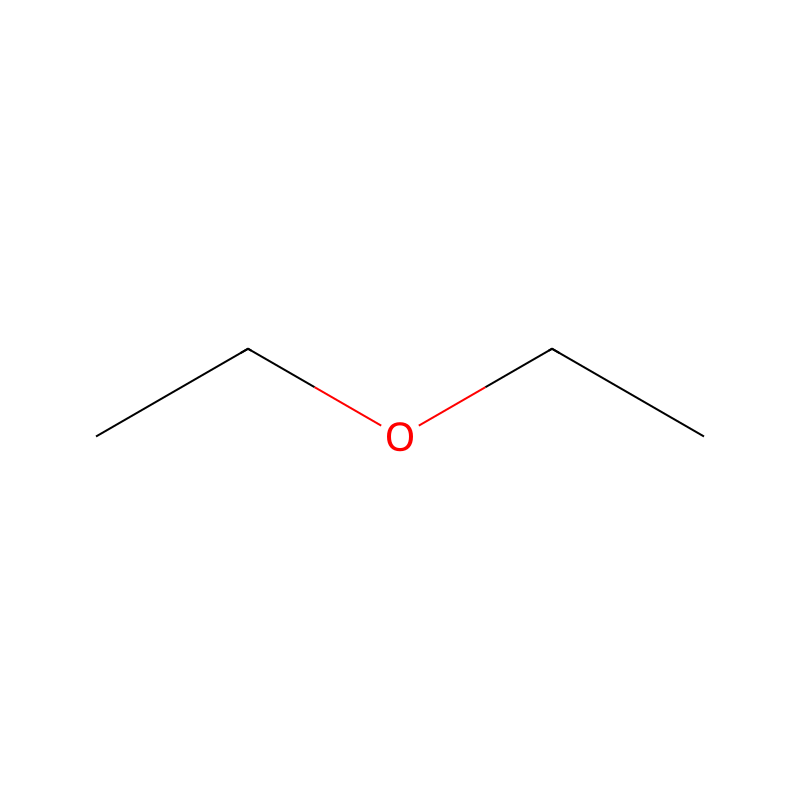
識別子と物理属性
| CAS No. | 60-29-7 |
|---|---|
| 分子式 | C4H10O |
| 平均分子量 | 74.12 g/mol |
| 単同位体質量 | 74.07316494 g/mol |
| SMILES | CCOCC |
| InChIKey | RTZKZFJDLAIYFH-UHFFFAOYSA-N |
| PubChem CID | 3283 |
| ChEMBL | CHEMBL16264 |
| ChEBI | CHEBI:35702 |
| EC No. | 200-467-2 |
| DTXSID | DTXSID3021720 |
| 現地名 | ジエチルエーテル (無水) |
化学・物理的性質
| XLogP | 0.9 |
|---|---|
| 極性表面積 | 9.2 |
| 水素結合供与体数 | 0 |
| 水素結合受容体数 | 1 |
| 回転可能結合数 | 2 |
| 重原子数 | 5 |
| 形式電荷 | 0 |
| 複雑度 | 11 |
| LogP(分配係数) | log Kow= 0.890.89 (calculated) |
| 臭い | Sweetish, pungent odorEthereal odor0.33ppmで検出可能な刺激臭 |
| 味 | Burning and sweet taste |
| 密度 | 0.714 at 68 °F (USCG, 1999) - Less dense than waterwill float0.7134 at 20 °C/4 °CDensity (at 20 °C): 0.7 g/cm³Relative density of the vapour/air-mixture at 20 °C (air = 1): 1.90.7138 @ 20°C |
| Viscosity | 0.2448 centipoise at 20 °C |
| Color/Form | Colorless, volatile, mobile liquidColorless liquid [Note: A gas above 94 degees F]. |
| 溶解度 | greater than or equal to 100 mg/mL at 68 °F (NTP, 1992)Miscible with lower aliphatic alcohols, benzene, chloroform, petroleum ether, fat solvents, many oilssol in concn hydrochloric acidSol in acetonevery sol in ethanolSol in solvent naphtha, benzene, oilsMiscible with most organic solventsIn water, 6.04X10+4 mg/L at 25 °C水に溶け、エタノール (96%)、ジクロロメタン、脂肪油と混和します。可燃性が高い。69g/L(20℃) |
| 引火点 | -49 °F (NTP, 1992)-45 °C-45 °C, -49 °F (CLOSED CUP)-45 °C c.c.-40 °F |
| 沸点 | 94.3 °F at 760 mmHg (NTP, 1992)34.6 °C at 760 mm Hg17.9 °C at 400 mm Hg2.2 °C at 200 mm Hg35 °C94 °F34.5 °C @760 [mm Hg]34.6 °C(lit.) |
| Decomposition | When heated to decomposition it emits acrid smoke and irritating fumes. |
| 融点 | -177.3 °F (NTP, 1992)-116.3 °C (stable crystals)-123.3 °C (metastable crystals)-116 °C-177 °F-116.2 °C |
| 蒸気密度 | 2.6 (NTP, 1992) - Heavier than airwill sink (Relative to Air)2.55 (Air = 1.0)Relative vapor density (air = 1): 2.62.6 (vs air) |
| 蒸気圧 | 28.69 psi ( 55 °C) |
| 屈折率 | n20/D 1.3530(lit.) |
| 貯蔵条件 | Store at RT. |
| 外観・状態 | 液体 |
| 比重 | 0.714 (20/4℃)0.712 (25℃) |
| 色 | clearAPHA: ≤10 |
| 爆発限界 | 1.7-36%(V) |
| 凝固点 | -116.3℃ |
| 比熱容量 | Cp(liquid): 2.33 J/(g·K)Cp(gas): 1.61 J/(g·K), at 25℃ |
| Merck | 14,3806 |
| ヘンリー定数 | 12.50(x 10-4 atmm3/mol at 25 °C) (Signer et al., 1969) |
| 誘電率 | 4.0(40℃) |
| 安定性 | 安定していますが、光に敏感で、空気に敏感です。安定剤として BHT (2,6-ジ-tert-ブチル-4-メチルフェノール) が含まれている場合があります。避けるべき物質には、亜鉛、ハロゲン、ハロゲン-ハロゲン化合物、非金属、非金属オキシハロゲン化物、強力な酸化剤、塩化クロム、テレビン油、テレビン油代替物、硝酸塩、金属塩化物が含まれます。 |
| 化粧品成分の機能 | 溶媒 |
| InChI | 1S/C4H10O/c1-3-5-4-2/h3-4H2,1-2H3 |
| InChIKey | RTZKZFJDLAIYFH-UHFFFAOYSA-N |
| SMILES | CCOCC |
| LogP(分配係数) | 0.890 |
| 表面張力 | 17.153mN/m at 293.15K |
| CAS データベース | 60-29-7(CAS DataBase Reference) |
| NISTの化学物質情報 | Ethoxy ethane(60-29-7) |
| EPAの化学物質情報 | Ethyl ether (60-29-7) |
化学的特性
Ether, (C2H5)2,also known as ethyl ether, is a colorless liquid. It is used as a solvent,a denaturant, and as an anesthetic in medicine. lt is an organic compound in which two hydrocarbon radicals are joined by an atom of oxygen.
安全性と法規制
| GHS 分類 | DangerH224: Extremely flammable liquid and vapor [Danger Flammable liquids]H302: Harmful if swallowed [Warning Acute toxicity, oral]H336: May cause drowsiness or dizziness [Warning Specific target organ toxicity, single exposureNarcotic effects]P210, P233, P240, P241, P242, P243, P261, P264, P270, P271, P280, P301+P317, P303+P361+P353, P304+P340, P319, P330, P370+P378, P403+P233, P403+P235, P405, and P501 (click each P-code to see the statement)This chemical does not meet GHS hazard criteria for 1.9% (12 of 636) of reports. |
|---|---|
| 規制情報 | Chemical: Ethane, 1,1'-oxybis-List II Chemical: A chemical, other than a List I chemical, specified by regulation that, in addition to legitimate uses, is used in manufacturing a controlled substance in violation of the Act. (21 eCFR 1310.02)Ethane, 1,1'-oxybis- is listed on the EPA's Chemical Data Reporting (CDR) system. Manufacturers and importers of Ethane, 1,1'-oxybis- are required to report information about their production and use of this chemical to the EPA under the Toxic Substances Control Act (TSCA). (40 eCFR Part 711)Status: Active Update: 17-10-2022 https://echa.europa.eu/registration-dossier/-/registered-dossier/14887Diethyl ether: HSNO Approval: HSR001124 Approved with controlsThe New Jersey Worker and Community Right to Know Act requires public and private employers to provide information about hazardous substances at their workplaces. (N.J.S.A. 34:5A-1 et. seq.) |
| 輸送ラベル(DOT) | Flammable Liquid |
| 火災危険 | Behavior in Fire: Vapor is heavier than air and may travel considerable distance to a source of ignition and flash back. Decomposes violently when heated. (USCG, 1999)· HIGHLY FLAMMABLE: Will be easily ignited by heat, sparks or flames.CAUTION: Ethanol (UN1170) can burn with an invisible flame. Use an alternate method of detection (thermal camera, broom handle, etc.)· Vapors may form explosive mixtures with air.· Vapors may travel to source of ignition and flash back.· Most vapors are heavier than air. They will spread along the ground and collect in low or confined areas (sewers, basements, tanks, etc.).· Vapor explosion hazard indoors, outdoors or in sewers.· Those substances designated with a (P) may polymerize explosively when heated or involved in a fire.· Runoff to sewer may create fire or explosion hazard.· Containers may explode when heated.· Many liquids will float on water.Extremely flammable. Vapour/air mixtures are explosive. Risk of fire and explosion on contact with oxidants or incompatible substances. See Chemical Dangers. |
| 火災の可能性 | When shaken under absolutely dry conditions ether can generate enough static electricity to start a fire.A very dangerous fire and explosion hazard when exposed to heat or flame.Only electrical equipment of explosion-proof type (group C classification) is permitted to be operated in ether areas. Ether should not be stored near powerful oxidizers or in areas of high fire hazard. /Ethers/ |
| 健康有害性 | Vapor inhalation may cause headache, nausea, vomiting, and loss of consciousness. Contact with eyes will be irritating. Skin contact from clothing wet with the chemical may cause burns. (USCG, 1999)· Inhalation or contact with material may irritate or burn skin and eyes.· Fire may produce irritating, corrosive and/or toxic gases.· Vapors may cause dizziness or asphyxiation, especially when in closed or confined areas.· Runoff from fire control or dilution water may cause environmental contamination. |
| 有害性の概要 | Abnormal liver function tests has been reported in patients anesthetized with ethyl ether. Abuse of ether by workers, ether jags, has been reported. [ACGIH] Ethyl ether is in the list of Some volatile substances which may be abused by inhalation published on the web site of the U.N. International Drug Control Programme, indicating its potential to cause narcosis in workers. [Reference #1] An eye and respiratory tract irritant[ICSC] |
| 輸送番号・ガイド(DOT) | 1155 127 |
| 反応性グループ | Ethers |
| UN 分類 | UN Hazard Class: 3UN Pack Group: I |
| Special Reports | NIOSHNEG and NIOSH Basis for an Occupational Health Standard for Ethyl Ether. Published in Arbete och Halsa 30 (2002) and available at http://www.cdc.gov/niosh/pdfs/93-103a.pdf as of October 31, 2007.European Chemicals BureauIUCLID Dataset, Diethyl Ether (CAS # 60-29-7) p.44 Available from the Database Query page at: http://ecb.jrc.it/esis/esis.php as of September 24, 2007. |
| RCRA 要件 | U117As stipulated in 40 CFR 261.33, when diethyl ether, as a commercial chemical product or manufacturing chemical intermediate or an off-specification commercial chemical product or a manufacturing chemical intermediate, becomes a waste, it must be managed according to Federal and/or State hazardous waste regulations. Also defined as a hazardous waste is any residue, contaminated soil, water, or other debris resulting from the cleanup of a spill, into water or on dry land, of this waste. Generators of small quantities of this waste may qualify for partial exclusion from hazardous waste regulations (40 CFR 261.5).F003When diethyl ether is a spent solvent, it is classified as a hazardous waste from a nonspecific source (F003), as stated in 40 CFR 261.31, and must be managed according to State and/or Federal hazardous waste regulations. |
| TSCA 要件 | Section 8(a) of TSCA requires manufacturers of this chemical substance to report preliminary assessment information concerned with production, exposure, and use to EPA as cited in the preamble in 51 FR 41329. Effective date 1/26/1994Reporting date 3/28/94.Pursuant to section 8(d) of TSCA, EPA promulgated a model Health and Safety Data Reporting Rule. The section 8(d) model rule requires manufacturers, importers, and processors of listed chemical substances and mixtures to submit to EPA copies and lists of unpublished health and safety studies. Diethyl ether is included on this list. Effective date 1/26/1994Sunset date 6/30/1998. |
| 消火 | Excerpt from ERG Guide 127 [Flammable Liquids (Water-Miscible)]:CAUTION: The majority of these products have a very low flash point. Use of water spray when fighting fire may be inefficient. CAUTION: For fire involving UN1170, UN1987 or UN3475, alcohol-resistant foam should be used. CAUTION: Ethanol (UN1170) can burn with an invisible flame. Use an alternate method of detection (thermal camera, broom handle, etc.).SMALL FIRE: Dry chemical, CO2, water spray or alcohol-resistant foam.LARGE FIRE: Water spray, fog or alcohol-resistant foam. Avoid aiming straight or solid streams directly onto the product. If it can be done safely, move undamaged containers away from the area around the fire.FIRE INVOLVING TANKS, RAIL TANK CARS OR HIGHWAY TANKS: Fight fire from maximum distance or use unmanned master stream devices or monitor nozzles. Cool containers with flooding quantities of water until well after fire is out. Withdraw immediately in case of rising sound from venting safety devices or discoloration of tank. ALWAYS stay away from tanks in direct contact with flames. For massive fire, use unmanned master stream devices or monitor nozzlesif this is impossible, withdraw from area and let fire burn. (ERG, 2024)Use alcohol-resistant foam, powder, carbon dioxide. In case of fire: keep drums, etc., cool by spraying with water. |
| 応急処置措置 | Fresh air, rest. Artificial respiration may be needed. Refer immediately for medical attention.First rinse with plenty of water for at least 15 minutes, then remove contaminated clothes and rinse again.First rinse with plenty of water for several minutes (remove contact lenses if easily possible), then refer for medical attention.Do NOT induce vomiting. Rinse mouth. Give nothing to drink. Refer for medical attention . |
| 漏出応急措置 | · CALL 911. Then call emergency response telephone number on shipping paper. If shipping paper not available or no answer, refer to appropriate telephone number listed on the inside back cover.· Keep unauthorized personnel away.· Stay upwind, uphill and/or upstream.· Ventilate closed spaces before entering, but only if properly trained and equipped.· ELIMINATE all ignition sources (no smoking, flares, sparks or flames) from immediate area.· All equipment used when handling the product must be grounded.· Do not touch or walk through spilled material.· Stop leak if you can do it without risk.· Prevent entry into waterways, sewers, basements or confined areas.· A vapor-suppressing foam may be used to reduce vapors.· Absorb or cover with dry earth, sand or other non-combustible material and transfer to containers.· Use clean, non-sparking tools to collect absorbed material.Large Spill· Dike far ahead of liquid spill for later disposal.· Water spray may reduce vapor, but may not prevent ignition in closed spaces. |
| 応急処置 | EYES: First check the victim for contact lenses and remove if present. Flush victim's eyes with water or normal saline solution for 20 to 30 minutes while simultaneously calling a hospital or poison control center. Do not put any ointments, oils, or medication in the victim's eyes without specific instructions from a physician. IMMEDIATELY transport the victim after flushing eyes to a hospital even if no symptoms (such as redness or irritation) develop.SKIN: IMMEDIATELY flood affected skin with water while removing and isolating all contaminated clothing. Gently wash all affected skin areas thoroughly with soap and water. If symptoms such as redness or irritation develop, IMMEDIATELY call a physician and be prepared to transport the victim to a hospital for treatment.INHALATION: IMMEDIATELY leave the contaminated areatake deep breaths of fresh air. If symptoms (such as wheezing, coughing, shortness of breath, or burning in the mouth, throat, or chest) develop, call a physician and be prepared to transport the victim to a hospital. Provide proper respiratory protection to rescuers entering an unknown atmosphere. Whenever possible, Self-Contained Breathing Apparatus (SCBA) should be usedif not available, use a level of protection greater than or equal to that advised under Protective Clothing.INGESTION: DO NOT INDUCE VOMITING. Volatile chemicals have a high risk of being aspirated into the victim's lungs during vomiting which increases the medical problems. If the victim is conscious and not convulsing, give 1 or 2 glasses of water to dilute the chemical and IMMEDIATELY call a hospital or poison control center. IMMEDIATELY transport the victim to a hospital. If the victim is convulsing or unconscious, do not give anything by mouth, ensure that the victim's airway is open and lay the victim on his/her side with the head lower than the body. DO NOT INDUCE VOMITING. IMMEDIATELY transport the victim to a hospital. (NTP, 1992)General First Aid:· Call 911 or emergency medical service.· Ensure that medical personnel are aware of the material(s) involved, take precautions to protect themselves and avoid contamination.· Move victim to fresh air if it can be done safely.· Administer oxygen if breathing is difficult.· If victim is not breathing:-- DO NOT perform mouth-to-mouth resuscitationthe victim may have ingested or inhaled the substance.-- If equipped and pulse detected, wash face and mouth, then give artificial respiration using a proper respiratory medical device (bag-valve mask, pocket mask equipped with a one-way valve or other device).-- If no pulse detected or no respiratory medical device available, provide continuous compressions. Conduct a pulse check every two minutes or monitor for any signs of spontaneous respirations.· Remove and isolate contaminated clothing and shoes.· For minor skin contact, avoid spreading material on unaffected skin.· In case of contact with substance, remove immediately by flushing skin or eyes with running water for at least 20 minutes.· For severe burns, immediate medical attention is required.· Effects of exposure (inhalation, ingestion, or skin contact) to substance may be delayed.· Keep victim calm and warm.· Keep victim under observation.· For further assistance, contact your local Poison Control Center.· Note: Basic Life Support (BLS) and Advanced Life Support (ALS) should be done by trained professionals.Specific First Aid:· Wash skin with soap and water.(General first aid procedures)Eye: Irrigate immediately - If this chemical contacts the eyes, immediately wash (irrigate) the eyes with large amounts of water, occasionally lifting the lower and upper lids. Get medical attention immediately.Skin: Water wash promptly - If this chemical contacts the skin, promptly wash the contaminated skin with water. If this chemical penetrates the clothing, promptly remove the clothing and wash the skin with water. If irritation persists after washing, get medical attention.Breathing: Respiratory supportSwallow: Medical attention immediately - If this chemical has been swallowed, get medical attention immediately. |
| 安全保管 | Fireproof. Separated from oxidants and other incompatible materials. See Chemical Dangers. Cool. Keep in the dark. Store only if stabilized. Ventilation along the floor. |
| 暴露管理・個人防護 | · Wear positive pressure self-contained breathing apparatus (SCBA).· Structural firefighters' protective clothing provides thermal protection but only limited chemical protection.400.0 [ppm] |
| 消火手順 | Water may be ineffective ... But water should be used to keep fire-exposed containers cool. Use water spray dry chemical, foam, or carbon dioxide.If material on fire or involved in fire: Do not extinguish fire unless flow can be stopped. Use water in flooding quantities as fog. Solid streams of water may spread fire. Cool all affected containers with flooding quantities of water. Apply water from as far a distance as possible. Use foam, dry chemical, or carbon dioxide. |
| 保管条件 | Separate from oxidizing materials. Store in a cool, dry, well-ventilated area. Avoid sunlight.Floors of storage rooms should be conductive ... to ground out any possible static charge of individuals working in the room.Ethers should not be stored near powerful oxidizers or in areas of high fire hazard. They should be kept cool and the containers electrically grounded to avoid sparks. /Ethers/ |
| 清掃方法 | Spills and leakage: Absorb with paper. Evaporate completely all spilt surface. Dispose by burning the paper after complete ventilation of vapor.1. Remove all ignition sources. 2. Ventilate area of spill or leak. 3. For small quantities, absorb on paper towels. Evaporate in a safe place (such as a fume hood). Allow sufficient time for evaporating vapors to completely clear the hood ductwork. Burn the paper in a suitable location away from combustible materials. Large quantities can be reclaimed or collected and atomized in a suitable combustion chamber equipped with an appropriate effluent gas cleaning device. Ethyl ether should not be allowed to enter a confined space, such as sewer, because of the possibility of an explosion.A two-well injection withdrawal experiment was conducted at a hazardous waste disposal site near Ottawa, Canada to assess the feasibility of aquifer restoration by means of a purge well network. The six day test involved injecting tracer labeled clean water into one well while withdrawing contaminated water from a well located 5 m away. Samples taken from multilevel sampling points located along flow lines between the two wells were analyzed to determine the concentrations of tracers and of volatile contaminants. Tracer breakthrough data were fitted to an approximate analytic solution to determine average linear velocities and dispersivities. The concentration histories obtained for 3 volatile organic contaminants (including diethyl ether) deviate significantly from that predicted using local equilibrium based transport models. Comparison with results of a one dimensional, kinetics based transport model indicates qualitative agreement between observed transport behavior and that expected for solutes affected by a first order reversible sorption process for which the rate constants are small relative to the groundwater velocity in the induced flow field. |
| 非火災時の漏出対応 | Excerpt from ERG Guide 127 [Flammable Liquids (Water-Miscible)]:ELIMINATE all ignition sources (no smoking, flares, sparks or flames) from immediate area. All equipment used when handling the product must be grounded. Do not touch or walk through spilled material. Stop leak if you can do it without risk. Prevent entry into waterways, sewers, basements or confined areas. A vapor-suppressing foam may be used to reduce vapors. Absorb or cover with dry earth, sand or other non-combustible material and transfer to containers. Use clean, non-sparking tools to collect absorbed material.LARGE SPILL: Dike far ahead of liquid spill for later disposal. Water spray may reduce vapor, but may not prevent ignition in closed spaces. (ERG, 2024) |
| 処分方法 | Generators of waste (equal to or greater than 100 kg/mo) containing this contaminant, EPA hazardous waste number U117, F003, must conform with USEPA regulations in storage, transportation, treatment and disposal of waste.Diethyl ether is a waste chemical stream constituent which may be subjected to ultimate disposal by controlled incineration. If concentrated waste contains no peroxides, discharge liquid at a controlled rate near a pilot flame. If concentrated waste contains peroxides, perforation of a container of the waste from a safe distance is followed by open burning.A good candidate for liquid injection incineration at a temperture range of 650 to 1,600 °C and a residence time 0.1 to 2 seconds. Also, a good candidate for rotary kiln incineration at a temperature range of 820 to 1,600 °C and residence times of seconds for liquids and gases, and hours for solids. Also, a good candidate for fluidized bed incineration at a temperature range of 450 to 980 °C and residence times of seconds for liquids and gases, and longer for solids.This compound should be susceptible to removal from waste water by air stripping.For more Disposal Methods (Complete) data for DIETHYL ETHER (8 total), please visit the HSDB record page. |
| 漏出処分 | Remove all ignition sources. Evacuate danger area! Consult an expert! Personal protection: filter respirator for organic gases and vapours adapted to the airborne concentration of the substance. Collect leaking liquid in sealable containers. Absorb remaining liquid in sand or inert absorbent. Then store and dispose of according to local regulations. |
| 体内負荷 | Diethyl ether was detected in 37.5% of 387 samples of normal expired air from 54 carefully selected normal, healthy, non-smoking, urban, adult human volunteers(1). The geometric mean concn of the positive samples was 0.331 ng/L(1). |
| Treatment | There is no antidote for diethyl ether poisoning, thus treatment is symptomatic and supportive. (T36) |
| 相互作用 | The disposition of diflunisal (DF) at 10 mg/kg iv was investigated over 4 hr in bile-exteriorized male rats continuously anaesthetized with ... diethyl ether inhalation (as required) ... and compared to that obtained in conscious rats. 2. Diethyl ether decreased the plasma clearance of DF to about 30% of control values, by inhibition of both glucuronidation and sulfation of DF. ...... Appears to increase the neuromuscular blockade caused by antibiotics such as neomycin, streptomycin, polymyxin, and kanamycin.... In Guinea pigs ... the sleep induced by barbiturates of ether was prolonged by chlordiazepoxide.... Ether ... sleeping times are prolonged by imipramine but considerably less than by phenothiazine neuroleptics.For more Interactions (Complete) data for DIETHYL ETHER (10 total), please visit the HSDB record page. |
| 標的器官 | Eyes, skin, respiratory system, central nervous system |
| 健康影響 | Diethyl ether causes CNS depression. Death due to respiratory depression may result from severe and prolonged exposure. (T36) |
| 生態毒性値 | LC50 Poecilia reticulata (guppy) 2134 mg/L for 14 dayssemistatic, 22 °CLC50 Pimephales promelas (fathead minnow, age 29 days) 2560 mg/L/96 hrflow-through, 24.8 °C, pH 7.76, dissolved oxygen 7.1 mg/L, hardness 45.1 mg/L CaCO3, alkalinity 41.5 mg/L CaCO3EC50 Pimephales promelas (fathead minnow, age 29 days) 2260 mg/L/96 hrEffect: Affected fish lost schooling behavior and swam in a corkscrew/spiral pattern near the tank surface. They were underreactive to external stimuli, had increased respiration, were darkly colored, and lost equilibrium prior to death.Species: Daphnia magna (Water flea)Conditions: freshwater, static, pH 8.0Concentration: 165 mg/L for 24 hrEffect: behavior, equilibriumFor more Ecotoxicity Values (Complete) data for DIETHYL ETHER (17 total), please visit the HSDB record page. |
| 環境中動態 | TERRESTRIAL FATE: Based on a classification scheme(1), an estimated Koc value of 73(SRC), determined from a log Kow of 0.89(2) and a regression-derived equation(3), indicates that diethyl ether is expected to have high mobility in soil(SRC). Volatilization of diethyl ether from moist soil surfaces is expected to be an important fate process(SRC) given a Henry's Law constant of 1.23X10⁻³ atm-cu m/mole(4). The potential for volatilization of diethyl ether from dry soil surfaces may exist(SRC) based upon an extrapolated vapor pressure of 538 mm Hg(5). Biodegradation of diethyl ether in soil is expected to be a slow process(SRC), based upon its slow biodegradation in an aqueous screening study(6).AQUATIC FATE: Based on a classification scheme(1), an estimated Koc value of 73(SRC), determined from a log Kow of 0.89(2) and a regression-derived equation(3), indicates that diethyl ether is not expected to adsorb to suspended solids and sediment in water(SRC). Diethyl ether is expected to volatilize from water surfaces(3) based on a Henry's Law constant of 1.23X10⁻³ atm-cu m/mole(4). Using this Henry's Law constant and an estimation method(3), volatilization half-lives for a model river and model lake are 3.1 hours and 3.6 days, respectively(SRC). According to a classification scheme(5), BCFs ranging from 0.9 to 9.1 in carp(6) suggest bioconcentration in aquatic organisms is low(SRC). Biodegradation of diethyl ether in water is expected to be a slow process(SRC), based upon its slow biodegradation in an aqueous screening study(6).ATMOSPHERIC FATE: According to a model of gas/particle partitioning of semivolatile organic compounds in the atmosphere(1), diethyl ether, which has an extrapolated vapor pressure of 538 mm Hg at 25 °C(2), is expected to exist solely as a vapor in the ambient atmosphere. Vapor-phase diethyl ether is degraded in the atmosphere by reaction with photochemically-produced hydroxyl radicals and nitrate radicals(SRC)half-lives for these reactions in air are estimated to be 1.2 and 5.8 days, respectively(3,4). Direct photolysis is not expected to be an important removal process since aliphatic ethers do not absorb light in the environmental spectrum(5). |
| 食品調査値 | Diethyl ether has been tentatively identified, but not quantified, as a volatile component of raw chicken breast muscle and caecum(1). Diethyl ether was identified as a volatile component of chicken and pork flavor(2). |
| 有害作用 | Neurotoxin - Acute solvent syndromeOccupational hepatotoxin - Secondary hepatotoxins: the potential for toxic effect in the occupational setting is based on cases of poisoning by human ingestion or animal experimentation. |
| 暴露経路 | The substance can be absorbed into the body by inhalation of its vapour and by ingestion.inhalation, ingestion, skin and/or eye contactOral (T36)inhalation (T36) |
| 毒性の概要 | Diethyl ether inhibits alcohol dehydrogenase. This slows down the metabolism of ethanol and also inhibits the metabolism of other drugs requiring oxidative metabolism. (L1660, A2461) |
| 生態毒性抜粋 | /AQUATIC SPECIES/ The study measured the acute toxicity of Ethane, 1,1'-oxybis- to 2-3 month old guppies /(Poecilia reticulate)/ under static-renewal conditions for 14 days. The test substance was tested at several concentrations in a series with a 1.8-factor geometric progression. Stock solutions were prepared using a solvent (acetone or propanol-2) and diluted with standard water (hardness of 25 mg/L as CaCO3). Each test vessel contained approximately 1 L of test solution and eight guppies. Test solutions were renewed daily. Guppies were fed a commercial fish food 0.5 h before each renewal. The temperature and dissolved oxygen concentration during the test were maintained at 22 + or - 1 °C and 5 mg/L, respectively. The guppies were considered to be dead when gill movements ceased and no reaction occurred when fish were touched with a glass bar. LC50 = 2134 mg/L/14 days./AQUATIC SPECIES/ ... Immobility and abnormal behavior (e.g., erratic swimming) were recorded at 24 hours. ... The definitive test was based on a total of 20 daphnids /(Daphnia magna)/ per concentration tested (i.e., 10 daphnids per replicate, in each of 2 replicates) exposed to each test concentration, as well as a control (100% dilution water). Dilution water: Dilution water for culturing was tap water. Dilution water for testing was a chemically and physically defined standardized culture medium ("artificial fresh water"). Measured water chemistry parameters: Parameters determined at the end of the test: pH (target: pH: 8.0 + or - 0.2)dissolved oxygen (target: 2 mg/L)temperature (constant 20 °C in incubator) ... The 24-hour EC50 was ... 165 mg/L/96 hrimmobility. .../AQUATIC SPECIES/ Flow-through exposures /of Ethane, 1,1'-oxybis-/ were made /to Pimephales promelas (fathead minnow)/ with a continuous flow modified mini-diluter. /Alkalinity 41.5 mg/LDO 7.1 mg/LpH 7.76Temperature 24.8 °Cwater hardness 45.1/ ... Observations of fish behavior and toxic signs were made at 2-8, 24, 48, 72 and 96 hours. ... LC50 = 2560 mg/L/96 hrmortality. EC50 = 2260 mg/L/96 hrbehavior. ... Fish exposed to DEE lost schooling behavior and swam in a cork-screw/spiral pattern near the tank surface. They were under reactive to external stimuli, had increased respiration, were darkly colored and lost equilibrium prior to death. .../PLANTS/ Toxicity to terrestrial plants /was studied using/ ...Mimosa pudica, Oxalis stricta, and Marsillia macropus. Inhibition of opening/closing movements /was observed at 330-510 mg/L. ...Effects were reversible after end of exposure within a few hours. |
| 大気基準 | This action promulgates standards of performance for equipment leaks of Volatile Organic Compounds (VOC) in the Synthetic Organic Chemical Manufacturing Industry (SOCMI). The intended effect of these standards is to require all newly constructed, modified, and reconstructed SOCMI process units to use the best demonstrated system of continuous emission reduction for equipment leaks of VOC, considering costs, non air quality health and environmental impact and energy requirements. Ethyl ether is produced, as an intermediate or a final product, by process units covered under this subpart. |
| CERCLA 報告数量 | Persons in charge of vessels or facilities are required to notify the National Response Center (NRC) immediately, when there is a release of this designated hazardous substance, in an amount equal to or greater than its reportable quantity of 100 lb or 45.4 kg. The toll free number of the NRC is (800) 424-8802. The rule for determining when notification is required is stated in 40 CFR 302.4 (section IV. D.3.b). |
| DHS Chemicals of Interest (COI) | Ethyl ether110000Flammable chemical that can be released at a facility. |
| 州飲料水ガイドライン | (FL) FLORIDA 750 ug/l(MN) MINNESOTA 1000 ug/l(NH) NEW HAMPSHIRE 1,400 ug/l |
| F | 10 |
| 水環境危害等級(WGK) | 1 |
| 生命健康即時危険濃度 | 1,900 ppm [10% LEL] |
| TSCA 収載状態 | TSCA listed |
| RTECS 番号 | KI5775000 |
| 輸送番号(UN) | UN 3271 3/PG II/III (ETHERS, N.O.S.) |
| 毒性 | LD50 oral (rat) 1215 mg/kgLC50 inhal (rat) 73,000 ppm (2 h)PEL (OSHA) 400 ppmSTEL (ACGIH) 500 ppm |
| 税関コード | 2909 11 00 |
| 危険文句(R) | 12-19-22-66-67-39/23/24/25-23/24/25-11 |
| 化審法 | 一般化学物質 |
| 安衛法 | 有機溶剤中毒予防規則:第2種有機溶剤,57,57-2 |
| 消防法 | 危険物第4類特殊引火物 |
| 危険表示 | F+,Xn,T,F |
| 安全措置(S) | 9-16-29-33-45-36/37-7 |
| 危険等級 | 3Acute Tox. 4 OralFlam. Liq. 1STOT SE 3 |
| 包装等級 | I |
| 自然発火温度 | 160 °C |
| 貯蔵分類 | 3 - Flammable liquids |
| 有害物質データ | 60-29-7(Hazardous Substances Data) |
用途
解説
エーテル,エチルエーテルの通称。 (2) 2個の炭化水素残基 R ,R' が酸素原子に結合した R-O-R' の形をとる化合物の総称。 R ,R' が同じものを単一エーテル,異なるものを混成エーテルという。たとえば R と R' が C2H5 のエチルエーテルは単一エーテル,R が C6H5 ,R' が CH3 のフェニルメチルエーテル (アニソール ) は混成エーテルである。脂肪族エーテルは天然には存在せず,アルコールから合成する。芳香族エーテルは植物中に存在する。一般にエーテルは快香のある無色の液体であるが,分子量の大きいものは結晶となる。水にはあまり溶けないが,有機溶媒にはよく溶ける。多くの有機試薬,アルカリに対しては安定であるが,濃硫酸,ヨウ化水素などにより分解される。
用途
生体試料中等のダイオキシン類の分折における溶媒。
用途
有機合成原料、溶剤。
用途
汎用試薬、高純度を要する低沸点溶剤等。
用途
フェノール系化合物の混入禁忌の分析又は有機合成用溶媒。
用途
紫外吸収、蛍光分析用溶媒。
用途
環境ホルモンの分析用溶剤。
用途
精密分析、超高純度溶剤としての個人専用試薬。
用途
有機溶剤、酢酸凝縮剤、麻酔剤
説明
Diethyl ether is a component of starting fluids and is used as a solvent in the manufacture of synthetic dyes and plastics. Because of its characteristics, diethyl ether was widely used in many countries as an anesthetic agent, but was then replaced by other substances in the 1960s.
来歴
Ether was supposedly discovered by Raymundus Lullus (1232–1315) around 1275, although there is no extant evidence of this in his writings. The discoverer of ether is often credited to the German physician and botanist Valerius Cordus (1515–1554), who gave the first description of the preparation of ether in the mid-16th century. Cordus called the substance oleum vitrioli dulce, which is translated as sweet oil of vitriol. Cordus used sulfuric acid (oil of vitriol) to catalyze the conversion of alcohol to ether. At approximately the same time Paracelsus (1493–1541), a Swiss physician who is also cited as a discoverer of ether, observed that chickens were safely put to sleep by breathing vapors from sweet oil of vitriol. In 1730, August Siegmund Frobenius changed the name of sweet vitriol to ether.
使用
Diethyl ether has been used extensively as a general anesthetic.
一般的な説明
A clear colorless liquid with an anesthetic odor. Flash point -49°F. Less dense than water and slightly soluble in water. Hence floats on water. Vapors are heavier than air. Used as a solvent and to make other chemicals.
製法・合成法
調製方法
Ether is produced by the dehydration of ethanol using sulfuric acid: 2CH3CH2OH +2H2SO4 → (CH3CH2)2O + H2SO4 + H2O.the temperature of the reaction is carriedout at about 140°C to control for unwanted products.the volatile ether is distilled from themixture. Ether can also be prepared by Williamson synthesis. In this reaction, ethanol reactswith sodium to form sodium ethanolate (Na+C2H5O). Sodium ethanolate then reacts withchloroethane to form ether and sodium chloride: Na+C2H5O +C2H5Cl → C2H5OC2H5 +NaCl. Ether is also produced as a by-product in the production of ethanol.
合成方法
加熱された濃硫酸にエタノールを添加することにより製造される。また,エチレンからエタノールを製造する際の副生物として得られる。