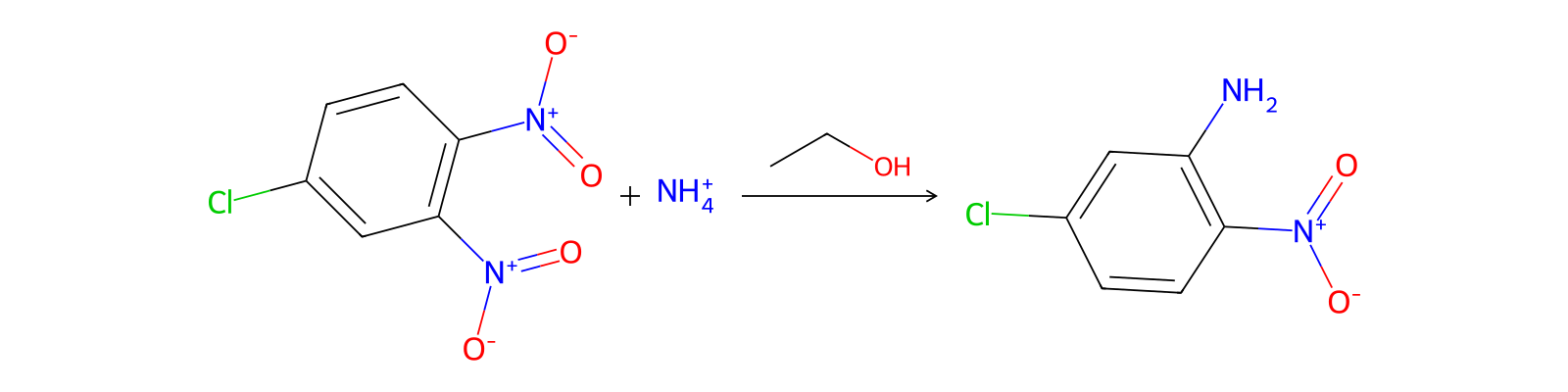
3,4-ジニトロクロロベンゼン
4-Chloro-1,2-dinitrobenzene
データを補完しています。しばらくしてからページを更新すると最新の内容を表示できます

基本情報
- CAS
610-40-2- 標準SMILES
O=[N+]([O-])c1ccc(Cl)cc1[N+](=O)[O-]- InChIKey
QVQSOXMXXFZAKU-UHFFFAOYSA-N- 分子式
- C6H3ClN2O4
- 平均分子量
- 202.55 g/mol
- 単同位体質量
- 201.9781343
名称と識別子
- 優先名称
- 4-Chloro-1,2-dinitrobenzene
- IUPAC
- 4-chloro-1,2-dinitrobenzene
- 現地名
- 3,4-ジニトロクロロベンゼン
- 英語名
- 3,4-Dinitrochlorobenzene
- 分子式
- C6H3ClN2O4
- 分子量
- 202.55
名称と別名
610-40-24-Chloro-1,2-dinitrobenzene1-Chloro-3,4-dinitrobenzeneBenzene, 4-chloro-1,2-dinitro-Z29B1F274E1,2-dinitro-4-chlorobenzeneEINECS 210-223-7NSC 119343NSC-119343DTXSID3060586RefChem:520704DTXCID7042932
名称をさらに表示
3,4-ジニトロクロロベンゼン1-クロロ-3,4-ジニトロベンゼン1,2-ジニトロ-4-クロロベンゼン4-クロロ-1,2-ジニトロベンゼンBendamustine Impurity 544-Chloro-1,2-dinitrobenzen3,4-Dinitrochlorobenzene>1-CHLORO-3,4-DINITROBENZENE1,2-Dinitro-5-chlorobenzene1-Chloro-3,4-dinitrobenzene, 92%+
210-223-73,4-DinitrochlorobenzeneMFCD000072124-chloro-1,2-dinitro-benzene1-Chloro-3.4-dinitrobenzeneSCHEMBL1524058AKOS015889665Q2651784
データベース識別子
- CAS
610-40-2- PubChem CID
- 33097
- DTXSID
DTXSID3060586- UNII
- Z29B1F274E
- EC Number
- 210-223-7
- Nikkaji
- J95.614G
物性
構造計算による物性補完中
- XLogP
- 2.2
- 極性表面積
- 91.6 Ų
- 水素結合供与体数
- 0
- 水素結合受容体数
- 4
- 回転可能結合数
- 0
- 重原子数
- 13
- 形式電荷
- 0
- 複雑度
- 224
実験および物理化学的性質
DensityRelative density (water = 1): 1.687
Flash Point>110 °C
Decomposition315 °C
Melting Point40-41 °C
Physical DescriptionYELLOW CRYSTALS.
Kovats Retention Index1546.8
物理化学的性質
- 融点
- 40 · 40-41 °C
- 沸点
- 16 °C · 16 °C (4 mmHg)
- 比重(密度)
- 1.687 g/mL · 1.687 g/mL at 25 °C(lit.)
- 屈折率
- 20 · n20/D 1.587(lit.)
- 闪点
- 230 °F · >230 °F
- 貯蔵温度
- 0 · 0-10°C
- 外見
- 溶けた後の油状の液体
- 色
- 黄褐色
- 水溶解度
- 不溶性
- BRN
- 521564 · 521564
- CAS データベース
- 610 · 610-40-2(CAS DataBase Reference)
安全と法規制
安全情報は参考情報です。供給元の安全データシート(SDS)、適用法令、専門家による評価に代わるものではありません。
GHS分類
GHS Classification
Danger
H301 (100%): Toxic if swallowed [Danger Acute toxicity, oral];H311 (97.8%): Toxic in contact with skin [Danger Acute toxicity, dermal];H331 (91.1%): Toxic if inhaled [Danger Acute toxicity, inhalation];H373 (97.8%): May causes damage to organs through prolonged or repeated exposure [Warning Specific target organ toxicity, repeated exposure];H400 (100%): Very toxic to aquatic life [Warning Hazardous to the aquatic environment, acute hazard];H410 (97.8%): Very toxic to aquatic life with long lasting effects [Warning Hazardous to the aquatic environment, long-term hazard]
P260, P261, P262, P264, P270, P271, P273, P280, P301+P316, P302+P352, P304+P340, P316, P319, P321, P330, P361+P364, P391, P403+P233, P405, and P501 (click each P-code to see the statement)
Aggregated GHS information provided per 45 reports by companies from 5 notifications to the ECHA C&L Inventory. Each notification may be associated with multiple companies.;Information may vary between notifications depending on impurities, additives, and other factors. The percentage value in parenthesis indicates the notified classification ratio from companies that provide hazard codes. Only hazard codes with percentage values above 10% are shown. For more detailed information, please visit ECHA C&L website.
危険有害性情報
Regulatory InformationBenzene, 4-chloro-1,2-dinitro-: Does not have an individual approval but may be used under an appropriate group standard
Fire HazardsCombustible. Gives off irritating or toxic fumes (or gases) in a fire.
EC ClassificationSymbol: T, N; R: 23/24/25-33-50/53; S: (1/2)-28-36/37-45-60-61; Note: C
UN ClassificationUN Hazard Class: 6.1; UN Pack Group: II
Chemical DangersDecomposes on heating. This produces toxic and corrosive fumes. Reacts with strong oxidants and strong bases.
化学と産業
用途と製造
General Manufacturing InformationBenzene, 4-chloro-1,2-dinitro-: ACTIVE
応用分野
説明Securinine is derived from the leaf of Securinega suffruticosa Rehd., which was first separated by V.I.Murav’eva in 1956 . Securinega suffruticosa Rehd., a kind of subshrub plant, is widely distributed in temperate and subtropical regions . It has strong adaptability and can be planted in most parts of China. Moreover, it is rich in natural resources. Securinega suffruticosa Rehd. is a folk medicine whose root is the main component, with the effects of activating circulation, spleen, and stomach to treat rheumatism waist pain, limb numbness, infant malnutrition, and other diseases. The roots, stems, leaves, flowers, and skin of Securinega suffruticosa Rehd. contain alkaloids, in which securinine is the main ingredient.
来歴Securinine was first isolated by a Soviet scholar from the Wusuli region, but its chemical structure was separated and finally determined by Chinese scholars from local sources . The main structural feature is a tetracyclic compound containing an indolizine, pyrrole elidine, or quinolizine ring and an α, β-unsaturated pentahydrin ring whose basic structural skeleton type is as shown in what follows .Owing to the complexity of the chemical reaction of securinine, reports on its chemical reactivity and structural modification have been relatively scarce since securinine was reported on in 1956. However, the research on chemical total synthesis and biological activities of securinine has made a certain amount of progress.Securinine has a rigid molecular structure containing four rings and three chiral centers, which makes synthesis difficult. From 1974 to 1978, three research groups from Japan, the USA, and Canada studied the biosynthesis of securinine by feeding animals with isotope-labeled S. suffruticosa.
使用3,4-Dinitrochlorobenzene is a useful reactant in organic synthesis.
上流・下流製品情報
下流製品
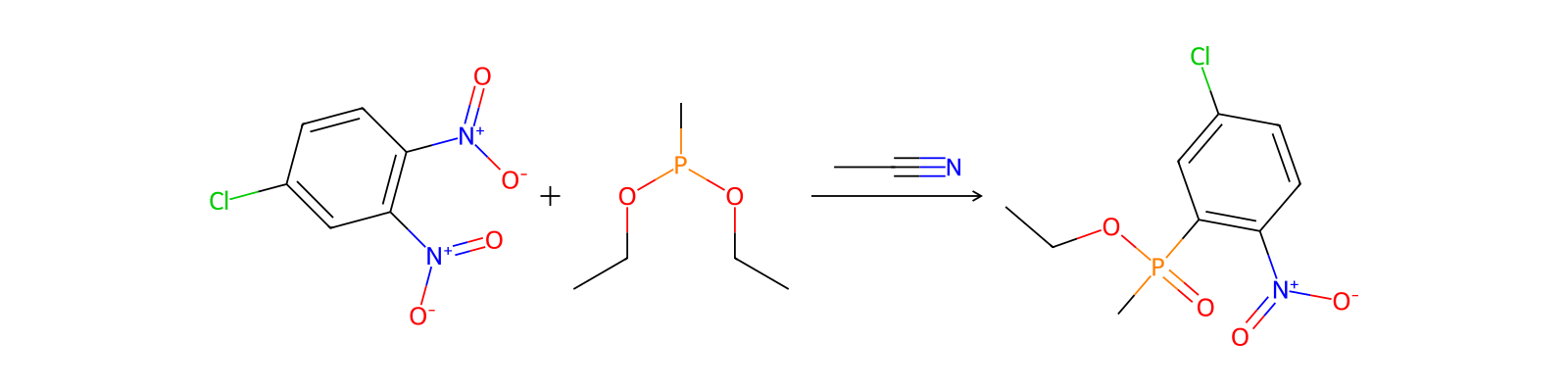
関連反応
39 件




化合物ノート
読み込み中…