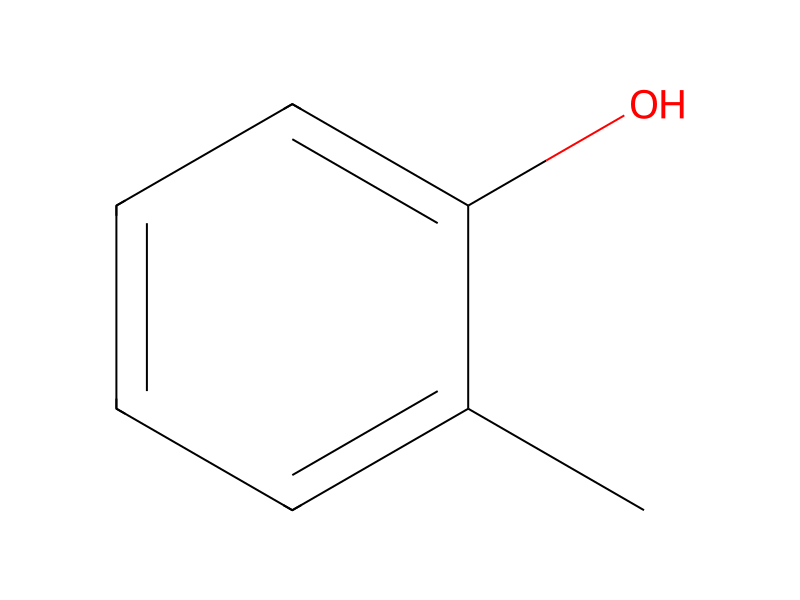
O-Cresol
95-48-7Cc1ccccc1OQWVGKYWNOKOFNN-UHFFFAOYSA-NO-cresol appears as colorless or yellow to brown-yellow or pinkish colored liquid with a phenol-like odor. Toxic by ingestion and/or skin absorption. May have a flash point between 100 and 199 °F. Causes burns to skin, eyes and mucous membranes. Insoluble in water.
95-48-7DTXSID8021808CHEMBL46931CHEBI:28054Other Classes -> Phenols
Carcinogens
Cosmetics ingredient -> Fragrance
Cosmetic ingredients (o-Cresol) -> CIR (Cosmetic Ingredient Review)
Antimicrobial
log Kow = 1.95
1.95
1.95
1.93
Phenolic odor
Sweet, tarry odor
1.047 at 68 °F (EPA, 1998) - Denser than water; will sink
1.047 at 20 °C/4 °C
Density of saturated air at 25 °C = 1.00089 (Air = 1)[
1.05 g/cm³
Relative density of the vapour/air-mixture at 20 °C (air = 1): 1.00
1.041-1.046
安全情報は参考情報です。供給元の安全データシート(SDS)、適用法令、専門家による評価に代わるものではありません。
Danger
H301: Toxic if swallowed [Danger Acute toxicity, oral]
P260, P262, P264, P270, P280, P301+P316, P301+P330+P331, P302+P352, P302+P361+P354, P304+P340, P305+P354+P338, P316, P321, P330, P361+P364, P363, P405, and P501 (click each P-code to see the statement)
Danger
H301 (100%): Toxic if swallowed [Danger Acute toxicity, oral]
P260, P262, P264, P270, P273, P280, P301+P316, P301+P330+P331, P302+P352, P302+P361+P354, P304+P340, P305+P354+P338, P316, P321, P330, P361+P364, P363, P405, and P501 (click each P-code to see the statement)
Chemical: Phenol, 2-methyl-
Hazard Traits - Dermatotoxicity; Neurotoxicity; Respiratory Toxicity
Commission Regulation (EC) No 1565/2000 (Repealed by Com. Implementing Reg. (EU) No 872/2012)
Phenol, 2-methyl- is listed on the EPA's Chemical Data Reporting (CDR) system. Manufacturers and importers of Phenol, 2-methyl- are required to report information about their production and use of this chemical to the EPA under the Toxic Substances Control Act (TSCA). (40 eCFR Part 711)
REACH registered substance: o-cresol (EC: 202-423-8)
2-Cresol: Does not have an individual approval but may be used under an appropriate group standard
Fire may produce irritating or poisonous gases. Runoff from fire control water may give off poisonous gases. This material may burn but does not ignite readily. Container may explode in heat of fire. Slight explosion and fire hazard in the form of vapor when exposed to heat or flame. When heated to decomposition, it emits highly toxic fumes. Reacts violently with nitric acid, oleum, and chlorosulfonic acid. Hazardous polymerization may not occur. (EPA, 1998)
The o- ... cresols are ring-hydroxylated to a small extent ... 2,5-Dihydroxytoluene has been isolated from the urine of rabbits fed o- ... cresol ...
o-Cresol yields o-cresyl-beta-d-glucuronide, o-cresyl sulfate, methylquinol, o-methylanisole, & 3-methylcatechol in rabbits. o-Cresol yields o-cresol sulfate and o-methylanisole in rats. o-Cresol yields o-methylanisole in guinea pigs & mice. /From Table/
Ten healthy men were exposed to approximately 200 ppm toluene for 4 hr. Urinary o-cresol concentration was 1.603 mg/L at the end of the exposure, 1.400 mg/L 4 hr after exposure, and 0.495 mg/l 20 hr after exposure.
In two workers admitted to hospital because of coma due to accidental occupational exposure to mixture of solvents, the level of toluene was respectively 823-1122 ug/L in blood & 53-38 ug/L in alveolar air on second day (36 hr after exposure). On fifth day (112 hr after exposure) the toluene level was 120-45 ug/L in blood & 3-1 ug/L in alveolar air. Urinary excretion of o-cresol, calculated as a toluene equivalent, was 0.8-0.9 mg on second day & 1.7 to 1.6 mg on third day. Urinary hippuric acid, as a toluene equivalent, was 1.7 to 1.4 g on second day & 1.3 to 0.7 g on third day.
For more Metabolism/Metabolites (Complete) data for o-CRESOL (15 total), please visit the HSDB record page.
O-Cresol is a known human metabolite of toluene.
... o-Cresol (in water) /was administered/ to rabbits by gavage. The extent of sulfate conjugation was determined before and after a 290 mg/kg o-Cresol dose. Twenty-two percent of the o-Cresol was excreted as the sulfate conjugate.
... o-Cresol (in NaHCO2) /was administered/ to rabbits by gavage. Urinary metabolites were evaluated after administration of 500 mg of o-Cresol. Fifteen percent of the dose was excreted as ethereal sulfate, 72% as ether glucuronide, 1% as free cresol, and about 3% as 2,5-dihydroxytoluene.
Cresols are slightly more corrosive /to the skin or eyes/ than phenol, but systemic effects may be a little milder because of slower absorption.
A subcutaneous dose of 7.2 to 10.0 mg o-Cresol /was administered/ to guinea pigs. About 38% of the dose was excreted unchanged via urine.
... A cross-sectional study on 100 workers indicated that the biological threshold for o-cresol:creatinine ratio reference value of <1 mg/g could presently be used as a reference for non-industrial human exposure while the <2 mg/g rate is for worker exposure in an industrial environment at a coal combustion plant.
読み込み中…
Crystals in liquid becoming dark with age and exposure to light and air
White crystals [Note: A liquid above 88 degrees F]
Colorless, yellowish, or pinkish crystals
化学的特性o-Cresol has a musty, phenolic aftertaste.
化学性质2,6-キシレノールの副産物として得られる。
Combustible. Gives off irritating or toxic fumes (or gases) in a fire. Above 81 °C explosive vapour/air mixtures may be formed.
Flammable when exposed to /SRP66: spark/ heat, flames, or oxidants.
Combustible liquid. /Cresols (o-,m-,p-)/
The chemical is rated as a very toxic compound with a probable oral lethal dose in humans of 50-500 mg/kg, or between 1 teaspoon and 1 ounce for a 70 kg (150 lb.) person. It is a strong dermal irritant and frequently causes dermatitis. Serious or fatal poisoning may result if large areas of skin are wet with cresol, o- and the substance is not removed immediately. Ingestion of even a small amount may cause paralysis and coma. It is corrosive to body tissues, with toxicity similar to phenol. (EPA, 1998)
Causes burns; Inhalation may cause pulmonary edema; Short-term exposure may have effects on the CNS (lowering of consciousness) and blood (destruction of blood cells); Prolonged or repeated exposure may have effects on the nervous system (impaired functions) and blood (anemia); Can be absorbed through skin; [ICSC] May cause second degree skin burns after a few minutes contact; Effects of chronic exposure may include CNS damage, chronic gastritis, heart and brain lesions, and liver and kidney injury; [CHRIS] More toxic than the m-isomer and less toxic than the p-isomer; May cause skin sensitization; [HSDB] Safe when used as a flavoring agent in food; [JECFA] Causes burns; Inhalation may cause corrosive injuries to upper respiratory tract and lungs; Highly toxic by inhalation; Toxic by ingestion and skin absorption; Targets the CNS, lungs, liver, kidney, pancreas, spleen, and cardiovascular system; [Sigma-Aldrich MSDS] See Cresol, all isomers. See o-Cresol and p-Cresol.
The major hazards encountered in the use and handling of o-cresol stem from its toxicologic properties. Toxic by all routes (ie, inhalation, ingestion, and dermal absorption), exposure to this colorless to white, tar-smelling, crystalline substance may occur from its use in the production of disinfectants, herbicides, dyes, explosives, pharmaceuticals and phenolic resins. Effects from exposure may include nausea, contact burns to skin and eyes, ventricular arrhythmias, pulmonary edema, seizures, coma, and death from cardio-pulmonary failure. Both the OSHA PEL and the ACGIH TLV have been set at a TWA of 5 ppm. In activities or situations where over exposure may occur, wear a self-contained breathing apparatus and full chemical protective clothing which is specifically recommended by the shipper or producer to prevent skin contact with o-cresol. If contact should occur, immediately flush affected skin or eyes with running water for at least 15 minutes, and remove contaminated clothing and shoes at the site. Eyewash and quick drench facilities should be readily available in o-cresol work areas. While o-cresol does not ignite easily, it can burn with the production of irritating and poisonous gases. Also, containers of o-cresol can explode violently in the heat of a fire. Fires involving o-cresol may be extinguished with dry chemical, CO2, Halon, water spray, or standard foam. Fight the fire from a maximum distance and dike runoff from fire control water. o-Cresol should be stored in iron or steel containers, in cool, dark, well-ventilated areas, away from oxidizing materials, and sources of ignition and physical damage. o-Cresol may be shipped via air, rail, road, and water. Small spills of p-cresol may be shovelled into clean, dry, covered containers for later disposal (solutions are first absorbed with sand or other noncombustible material). Large spills on land should be contained in pits or other excavated holding areas that are sealed with an impermeable flexible membrane liner. Any surface flow should be diked with sand bags, foamed concrete, or foamed polyurethane. Once contained, bulk o-cresol solutions can be neutralized with crushed limestone, soda ash, or lime, and absorbed with fly ash, cement powder, or sawdust. For spills in bodies of water, trap the material at the bottom with sand bags, or add activated carbon, then use mechanical dredges to remove the immobilized masses. o-Cresol is a good candidate for fluidized bed and rotary kiln forms of incineration. Prior to implementing land disposal of o-cresol, consult with environmental regulatory agencies for guidance.
HHS/ATSDR; Toxicological Profile for Cresols PB2009-100002 (September 2008). The ATSDR toxicological profile succinctly characterizes the toxicologic and adverse health effects information for the hazardous substance described here. Each peer-reviewed profile identifies and reviews the key literature that describes a hazardous substance's toxicologic properties. Other pertinent literature is also presented, but is described in less detail than the key studies.[Available from, as of March 18, 2015: http://www.atsdr.cdc.gov/toxprofiles/index.asp]
o-Cresol; Dangerous Prop Ind Mater Rep 5 (3): 30-4 (1985). Review of the safety of cresol, and its toxicology.
Gordon p; Air pollution assessment of cresols; US NTIS, PB rep: 1-76 pP (1976) PB-256737. The toxic effects and removal of cresol from waste gases are discussed.
NIOSH; Criteria Document: Cresol (1978) DHEW Pub. NIOSH 78-133
For more Special Reports (Complete) data for o-CRESOL (13 total), please visit the HSDB record page.
Use water to keep fire-exposed containers cool. Fight fire from a maximum distance. Dike fire control water for later disposal; don't scatter the material. Wear positive pressure breathing apparatus and full protective clothing. Keep unnecessary people away; isolate hazard area and deny entry. Stay upwind; keep out of low areas. Ventilate closed spaces before entering them. Remove and isolate contaminated clothing at the site.
Use water spray, foam, powder, carbon dioxide.
Fresh air, rest. Half-upright position. Artificial respiration may be needed. Refer immediately for medical attention.
Remove contaminated clothes. Rinse skin with plenty of water or shower. Refer immediately for medical attention.
Rinse with plenty of water for several minutes (remove contact lenses if easily possible). Refer immediately for medical attention.
Rinse mouth. Do NOT induce vomiting. Refer immediately for medical attention.
Warning: Effects may be delayed. Caution is advised. Vital signs should be monitored closely.
(General first aid procedures)
...Vapors will seek out low-lying areas where they can accumulate.
Sealed closed containers can build up pressure if exposed to heat (fire).
Use water spray, alcohol-resistant foam, dry chemical or carbon dioxide.
Advice for firefighters: Wear self contained breathing apparatus for fire fighting if necessary.
Wear goggles & self-contained breathing apparatus.
Use water spray, dry chemical, foam, or carbon dioxide. Use water spray to keep fire-exposed containers cool.
For more Fire Fighting Procedures (Complete) data for o-CRESOL (6 total), please visit the HSDB record page.
Keep container tightly closed in a dry and well-ventilated place. Air and light sensitive. Keep in a dry place.
Avoid loading together with explosives, oxidizing materials and organic peroxides.
Protect from light.
Store in a cool, dry, well ventilated location. Separate from oxidizing materials.
For more Storage Conditions (Complete) data for o-CRESOL (6 total), please visit the HSDB record page.
Accidental release measures. Personal precautions, protective equipment and emergency procedures: Wear respiratory protection. Avoid dust formation. Avoid breathing vapors, mist or gas. Ensure adequate ventilation. Evacuate personnel to safe areas. Avoid breathing dust.; Environmental precautions: Prevent further leakage or spillage if safe to do so. Do not let product enter drains. Discharge into the environment must be avoided.; Methods and materials for containment and cleaning up: Pick up and arrange disposal without creating dust. Sweep up and shovel. Keep in suitable, closed containers for disposal.
Optimum conditions for removing cresol from wastewater with Lewatit MP 500 (a strong-base, large-pore, polystyrene-based anion exchange resin) were pH 6, 30 °C, and a flow rate of 1 l/hr, and when removing cresol from 10 mg/l solutions, the capacity of the exchanger was 0.46 equiv/l.
Approach release from upwind. Control runoff and isolate discharged material for proper disposal.
Environmental considerations - Water spill: Use natural deep water pockets, excavated lagoons, or sand bag barriers to trap material at bottom. If dissolved, in region of 10 ppm or greater concentration, apply activated carbon at ten times the spilled amount. Use mechanical dredges or lifts to remove immobilized masses of pollutants and precipitates.
For more Cleanup Methods (Complete) data for o-CRESOL (6 total), please visit the HSDB record page.
Generators of waste (equal to or greater than 100 kg/mo) containing this contaminant, EPA hazardous waste numbers F004, U052 and D023, must conform with USEPA regulations in storage, transportation, treatment and disposal of waste.
Chemical Treatability of o-Cresol; Concentration Process: Biological Treatment; Chemical Classification: Phenols; Scale of Study: Unknown; Type of Wastewater Used: Pure (one solute in a solvent); Results of Study: 95% reduction based on chemical oxygen demand; rate of biodegradation 54 mg chemical oxygen demand/g hr. (Activated sludge process).
Chemical Treatability of o-Cresol; Concentration Process: Solvent Extraction; Chemical Classification: Phenols; Scale of Study: Laboratory Scale, continuous flow; Type of Wastewater Used: Industrial wastewater; Results of Study: 90% reduction (Extraction of evaporator condensate from spent caustic processing using isobutylene (S/W= 1.8); spray extractor used).
Chemical Treatability of o-Cresol; Concentration Process: Solvent Extraction; Chemical Classification: Phenols; Scale of Study: Laboratory Scale, continuous flow; Type of Wastewater Used: Industrial wastewater; Results of Study: 99.9% reduction (Sequential extraction of wastewater from lube-oil refining using butyl acetate (S/W= 0.30) and isobutylene (S/W= 0.101); RDC extractor used).
For more Disposal Methods (Complete) data for o-CRESOL (7 total), please visit the HSDB record page.
Personal protection: chemical protection suit and filter respirator for organic gases and particulates adapted to the airborne concentration of the substance. Do NOT let this chemical enter the environment. Sweep spilled substance into covered containers. If appropriate, moisten first to prevent dusting. Carefully collect remainder. Then store and dispose of according to local regulations.
Avoid contact with skin and eyes. Avoid formation of dust and aerosols. Provide appropriate exhaust ventilation at places where dust is formed.
Avoid contact with skin, eyes and clothing. Wash hands before breaks and immediately after handling the product.
Gloves must be inspected prior to use. Use proper glove removal technique (without touching glove's outer surface) to avoid skin contact with this product. Dispose of contaminated gloves after use in accordance with applicable laws and good laboratory practices. Wash and dry hands.
The worker should immediately wash the skin when it becomes contaminated.
For more Preventive Measures (Complete) data for o-CRESOL (12 total), please visit the HSDB record page.
Varnish worker exposed to alkyl benzenes including a very low concn of toluene had 0.2 mg/l of o-cresol in urine(1). Urine of 10 men exposed to approx 200 ppm toluene in air for 4 hr: Urinary o-cresol concn was: 0.159 mg/l, (mean concn before exposure); 1,400 mg/l (mean concn 4 hr after exposure)(2). Printing workers exposed to an average of 139.8 ppm toluene had 3.11 mg/l of o-cresol (mean concn) in urine(3).
Following oral exposure, immediately dilute with 4 to 8 ounces (120 to 240 mL) of water or milk (not to exceed 4 ounces/120 mL in a child). Observe patients with ingestion carefully for the possible development of esophageal or gastrointestinal tract irritation or burns. If signs or symptoms of esophageal irritation or burns are present, consider endoscopy to determine the extent of injury. In case of hypotension, infuse isotonic fluid. If hypotension persists, administer dopamine or norepinephrine. In case of hypertension, monitor vital signs regularly. For mild/moderate asymptomatic hypertension (no end organ damage), pharmacologic treatment is generally not necessary. Following inhalation, move patient to fresh air. Monitor for respiratory distress. If cough or difficulty breathing develops, evaluate for respiratory tract irritation, bronchitis, or pneumonitis. Administer oxygen and assist ventilation as required. Treat bronchospasm with inhaled beta2 agonist and oral or parenteral corticosteroids. In case of acute lung injury, maintain ventilation and oxygenation and evaluate with frequent arterial blood gas or pulse oximetry monitoring. Early use of PEEP and mechanical ventilation may be needed. Following eye exposure, irrigate exposed eyes with copious amounts of room temperature water for at least 15 minutes. Following dermal exposure, remove contaminated clothing and wash exposed area thoroughly with soap and water. Treat dermal irritation or burns with standard topical therapy. Patients developing dermal hypersensitivity reactions may require treatment with systemic or topical corticosteroids or antihistamines. (T36)
Effect of ethanol, cimetidine, and propranolol on toluene metabolism in humans /is discussed/. ... The results indicate that ethanol may prolong the time interval in which toluene is retained in the human body in persons simultaneously exposed to ethanol and toluene. When using o-cresol or hippuric acid in biological monitoring of persons occupationally exposed to toluene, the consumption of ethanol should be considered.
Nervous
Eyes, skin, respiratory system, central nervous system, liver, kidneys, pancreas, cardiovascular system
Cresols breathed, ingested, or applied to the skin at very high levels can be very harmful because they are corrosive substances. Ingestion of high levels results in mouth and throat burns, abdominal pain, vomiting, kidney problems, and effects on the blood and nervous system. Skin contact with high levels of cresols can burn the skin and damage the kidneys, liver, blood, lungs, and brain. Tachycardia, respiratory failure, unconsciousness and death may occur in both cases. Many of these effects may not by caused directly by cresols, but may be a result of secondary reactions to shock caused by external and internal burns. (L482, L528)
LC50; Species: Chironomus thumni (Midge); Conditions: static, 20 °C, pH 7; Concentration: 34 mg/L for 48 hr /from table/
LC50; Species: Asellus aquaticus (Aquatic sowbug); Conditions: static, 20 °C, pH 7; Concentration: 23 mg/L for 48 hr /from table/
LC50; Species: Crangon septemspinosa (Sand shrimp) size 3.8 cm; Conditions: static renewal, 10 °C; Concentration: 14.2 mg/L for 59 hr /from table/
LC50; Species: Gammarus pulex (Scud); Conditions: static, 20 °C, pH 7; Concentration: 21 mg/L for 48 hr /from table/
For more Ecotoxicity Values (Complete) data for o-CRESOL (32 total), please visit the HSDB record page.
TERRESTRIAL FATE: Based on a classification scheme(1), a measured Koc range of 22-246(2-5) indicates that o-cresol is expected to have very high to moderate mobility in soil(SRC). Volatilization of o-cresol from moist soil surfaces is expected to occur(SRC) given a Henry's Law constant of 1.2X10⁻⁶ atm-cu m/mole(6). o-Cresol may volatilize from dry soil surfaces(SRC) based upon a vapor pressure of 0.18 mm Hg at 25 °C(7). Various screening studies have found o-cresol to be readily biodegradable under aerobic conditions(2). One soil study observed o-cresol half-lives of 1.6 and 5.1 days in 2 agricultural soils(8).
AQUATIC FATE: Based on a classification scheme(1), a measured Koc range of 22-246(2-5) indicates that o-cresol is not expected to adsorb to suspended solids and sediment in water(SRC). Volatilization from water surfaces is expected(6) based upon a estimated Henry's Law constant of 1.2X10⁻⁶ atm-cu m/mole(7). Volatilization half-lives for a model river and model lake are 32 and 235 days, respectively(SRC). According to a classification scheme(8), a BCF of 10.7 measured in zebrafish (Brachydanio rerio) suggests the potential for bioconcentration in aquatic organisms is low. Various screening studies have found o-cresol to be readily biodegradable under aerobic conditions(2). Biodegradation half-lives of 50 days in southern California coastal waters(9) and 20 days in gasoline contaminated groundwater(10) have been reported. o-Cresol is a phenol and phenols in surface waters exposed to sunlight react with photo-oxidants (such as hydroxyl radicals, peroxy radicals and singlet oxygen) with a half-life on the order of 13 days(11). An o-cresol photooxidation half-life of 11 days was observed under June sunlight in natural water 1 meter deep(2). o-Cresol is not expected to undergo hydrolysis in the environment due to the lack of functional groups that hydrolyze under environmental conditions(6).
ATMOSPHERIC FATE: According to a model of gas/particle partitioning of semivolatile organic compounds in the atmosphere(1), o-cresol, which has a vapor pressure of 0.18 mm Hg at 25 °C(2), is expected to exist solely as a vapor in the ambient atmosphere. Vapor-phase o-cresol is degraded in the atmosphere by reaction with photochemically-produced hydroxyl radicals(SRC); the half-life for this reaction in air is estimated to be 9 hours(SRC) from its rate constant of 4.32X10⁻¹¹ cu cm/molecule-sec at 21 °C(3). Vapor-phase o-cresol is also degraded in the atmosphere by reaction with nitrate radicals(SRC); the half-life for this reaction in air is estimated to be 3 minutes(SRC) from its rate constant of 1.56X10⁻¹¹ cu cm/molecule-sec at 25 °C(3). The nitrate radical is the dominant atmospheric oxidant during the night-time in most atmospheric environments(4), therefore, night-time degradation appears to be a major atmospheric loss process for o-cresol(SRC). o-Cresol absorbs at wavelengths >290 nm(5) and, therefore, may be susceptible to direct photolysis by sunlight(SRC). o-Cresol has been detected in rain water(6,7) indicating it may be removed from the air by deposition(SRC).
o-Cresol has been identified, not quantified, in the volatiles of cooked pork(1), and frankfurter sausages(2,3). Unspecified cresol isomers were detected in various brands of Scotch whiskey, whiskeys made outside of Scotland, cognac, armagnac, brandy other than cognac and armagnac, and white and dark rums at concentrations ranging from 0.01 to 0.20 ppm, 0.01 to 0.07 ppm, trace to 0.02 ppm, trace to 0.02 ppm, trace to 0.02 ppm, and trace to 0.20 ppm, respectively(4).
The substance can be absorbed into the body by inhalation, through the skin and by ingestion. Serious local effects by all routes of exposure.
inhalation, skin absorption, ingestion, skin and/or eye contact
Oral (L528) ; inhalation (L528) ; dermal (L528)
The CIR Expert panel concludes Sodium p-Chloro-m-Cresol, p-Chloro-m-Cresol, Chlorothymol, m-Cresol, o-Cresol, Isopropyl Cresols, Thymol, o-Cymen-5-ol, Cavacrol are safe at concentrations up to 0.5% in cosmetics; however, the available data are insufficient to support the safety of p-Cresol and Mixed Cresols for use in cosmetic products.
Safe for use in cosmetics, with qualifications
IDENTIFICATION AND USE: o-Cresol forms crystals in liquid becoming dark with age and exposure to light and air. It has been used in explosive, petroleum, photographic, paint, and agricultural industries, as an intermediate for the production of pesticides, epoxy resins, dyes and pharmaceuticals, but also as a component of disinfectants and cleaning agents. HUMAN EXPOSURE AND TOXICITY: o-Cresol is a respiratory irritant in humans. Eight of 10 subjects exposed to "brief exposure" to a concentrated aerosol of 6 mg/cu m o-Cresol complained of dryness, nasal constriction, and throat irritation. Dose-dependent SCE increases were not observed in cultured human fibroblasts at concentrations up to 8 mM. There was a small but significant increase in SCE frequency compared to control at 8 mM. ANIMAL STUDIES: In an acute dermal toxicity study, technical grade o-cresol caused severe skin damage on at least 2/6 shaved, female, albino rabbits within 4 hours of application of 890 mg/kg . o-Cresol can cause severe local irritation and corrosion following dermal and ocular exposure. Eye irritation can be severe and include corneal opacity. All three cresols isomers are more toxic to mice than to rats when administered by gavage. o-Cresol is the most toxic, followed by p-cresol and then m-cresol. The effects are similar to, but less severe than, those following phenol exposure. Phenol, o- and p-cresol have about equal toxicity in cats while m-cresol is slightly less toxic. An assortment of respiratory effects, including inflammation and irritation of the upper respiratory tract, pulmonary edema, and hemorrhage and perivascular sclerosis in the lungs were seen in animals exposed to 9-50 mg/cu m of o-cresol 2-6 hours/day for 1 month or more. In mice exposed to a mixture of o-cresol aerosol and vapor 2 hr/day, 6 days/week for 1 month no mortality was recorded. Clinical signs of toxicity during the daily exposure periods were limited to signs of respiratory irritation at the start of the exposure, followed by a period of hypoactivity lasting until the end of the exposure. Microscopic examination revealed signs of irritation in the respiratory tract. Other lesions included degeneration of heart muscle, liver, kidney and nerve cells and glial elements of the central nervous system. A detailed oral neurotoxicity study of intermediate duration was performed on rats using all three cresol isomers. A host of clinical observations indicative of neurotoxicity (including hypoactivity, rapid labored respiration, excessive salivation, and tremors) was reported at doses of 50 mg/kg/day or higher for all three isomers. Convulsions were reported at 450 mg/kg/day or higher. o-Cresol appeared to lengthen the estrus cycle in treated female rats and mice. Developmental effects have been reported in animals given cresols, but only at maternally toxic doses. Maternal effects in rats dosed throughout gestation occurred at 450 mg/kg/day. At this dose o-cresol produced slight fetotoxicity, but had no effect on malformation incidence or gestation parameters. In rabbits dosed throughout gestation, maternal effects, such as audible respiration, ocular discharge, and hypoactivity, were seen following exposure to o-cresol at 50 mg/kg/day. At 100 mg/kg/day, o-cresol produced fetotoxicity, but no other effects at any dose. Chromosomal aberrations were induced in Chinese hamster (CHO) cells in both the presence and absence of S9 mix, following treatment with o-cresols. Mice were given a single dermal application of 9,10-dimethyl-1,2-benzanthracene (DMBA), a cancer initiator, followed by application of 20% solutions of o-cresol in benzene twice a week for 12 weeks. Promotion with o-cresol led to increases in the average number of skin papillomas per mouse and the percentage of exposed mice with at least one papilloma. Carcinomas were not observed following cresols exposure, although the observed papillomas have the potential to develop into carcinomas. ECOTOXICITY STUDIES: Sarotherodon mossambicus (a teleost) was exposed to a sublethal concentration of o-cresol for 30 days and observed to show degenerative changes. LC50 value for 96 hr exposure of 23.5 mg/L. Growth studies have shown that o-cresols are moderately toxic to aquatic bacteria, cyanobacteria (blue-green algae) and protozoa. Growth inhibition thresholds were 33 mg/L for the bacterium Pseudomonas putida; 6.8 mg/L for the cyanobacterium Microcystis aeruginosa; 17 mg/L for the bacterivorous flagellate protozoan Entosiphon sulcatum and 132 mg/L for the saprozoic flagellate protozoan, Chilomonas paramecium.
U052; As stipulated in 40 CFR 261.33, when cresol, as a commercial chemical product or manufacturing chemical intermediate or an off-specification commercial chemical product or a manufacturing chemical intermediate, becomes a waste, it must be managed according to Federal and/or State hazardous waste regulations. Also defined as a hazardous waste is any residue, contaminated soil, water, or other debris resulting from the cleanup of a spill, into water or on dry land, of this waste. Generators of small quantities of this waste may qualify for partial exclusion from hazardous waste regulations (40 CFR 261.5). /Cresol/
F004; When cresols are a spent solvent, they are classified as a hazardous waste from a nonspecific source (F004), as stated in 40 CFR 261.31, and must be managed according to State and/or Federal hazardous waste regulations.
D023; A solid waste containing o-cresol may become characterized as a hazardous waste when subjected to testing for toxicity as stipulated in 40 CFR 261.24, and if so characterized, must be managed as a hazardous waste. If o-, m-, and p-cresol concentrations cannot be differentiated, the total cresol (D026) concentration is used.
Pursuant to section 8(d) of TSCA, EPA promulgated a model Health and Safety Data Reporting Rule. The section 8(d) model rule requires manufacturers, importers, and processors of listed chemical substances and mixtures to submit to EPA copies and lists of unpublished health and safety studies. o-Cresol is included on this list. Effective date: 10/04/82; Sunset date: 10/04/92.
This action promulgates standards of performance for equipment leaks of Volatile Organic Compounds (VOC) in the Synthetic Organic Chemical Manufacturing Industry (SOCMI). The intended effect of these standards is to require all newly constructed, modified, and reconstructed SOCMI process units to use the best demonstrated system of continuous emission reduction for equipment leaks of VOC, considering costs, non air quality health and environmental impact and energy requirements. o-Cresol is produced, as an intermediate or a final product, by process units covered under this subpart.
Releases of CERCLA hazardous substances are subject to the release reporting requirement of CERCLA section 103, codified at 40 CFR part 302, in addition to the requirements of 40 CFR part 355. o-Cresol is an extremely hazardous substance (EHS) subject to reporting requirements when stored in amounts in excess of its threshold planning quantity (TPQ) of 1,000 or 10,000 lbs. Extremely hazardous substances that are solids are subject to either of two threshold planning quantities ... The lower quantity applies only if the solid exists in powdered form and has a particle size less than 100 microns; or is handled in solution or in molten form; or meets the criteria for a National Fire Protection Association (NFPA) rating of 2, 3 or 4 for reactivity. If the solid does not meet any of these criteria, it is subject to the upper ... threshold planning quantity ... .
Persons in charge of vessels or facilities are required to notify the National Response Center (NRC) immediately, when there is a release of this designated hazardous substance, in an amount equal to or greater than its reportable quantity of 100 lb or 45.4 kg. The toll free number of the NRC is (800) 424-8802. The rule for determining when notification is required is stated in 40 CFR 302.4 (section IV. D.3.b).
o-Cresol is designated as a hazardous substance under section 311(b)(2)(A) of the Federal Water Pollution Control Act and further regulated by the Clean Water Act Amendments of 1977 and 1978. These regulations apply to discharges of this substance. This designation includes any isomers and hydrates, as well as any solutions and mixtures containing this substance.
(MN) MINNESOTA 30 ug/L
(NH) NEW HAMPSHIRE 40 ug/L
(FL) FLORIDA 350 ug/L
CIR ingredient: o-Cresol
Used to make synthetic resins; Also used as an industrial solvent and in disinfectants and fungicides; [Merck Index] Used to make herbicides, pesticides, dyes, drugs, antioxidants, perfumes, and other chemicals; Also used as a food antioxidant, textile scouring agent, surfactant, metal cleaner, and ore flotation agent; Exposure may occur in the explosives, petroleum, photographic, paint, and agricultural industries; [HSDB] Used primarily as an intermediate; Other uses for o-cresol and cresol mixtures include cleaning compounds, degreasers, paints and paint strippers, adhesives, fiber treatment, wood preservatives, and cutting oils; [OECD SIDS: o-Cresol] Used as flavoring agent or adjuvant; [FDA]
Metal Degreasing [Category: Clean]
For making synthetic resins; in disinfectants and fumigants /SRP: Former use/; as industrial solvent.
The majority of 2-methylphenol is used in the production of novolak phenolic resins. High purity novolaks based on 2-methylphenol are used in photoresist applications. Novolaks based on 2-methylphenol are also epoxidized with epichlorohydrin, yielding epoxy resins after dehydrohalogenation, which are used as encapsulating resins in the electronics industry. Other uses of 2-methylphenol include its conversion to a dinitro compound, 4,6-dinitro-2-methylphenol (DNOC), which is used as a herbicide.
Chemical intermediate for phenolic and epoxy cresol-novolac resins, 4,6-dinitro-o-cresol (DNOC) and other herbicides (eg, MCPA, MCPB, & MCPP), dyes (eg, sulfur and chromium dyes), 2-methyl-6-t-butylphenol, magnet wire coatings (as cresylic acid), phosphate esters (as cresol mixture), and for pharmaceuticals (eg, mephenesin); solvent; disinfectant (as mixed cresols); fiber treatment agent (as cresols/cresylic acid); tanning agent (as cresols/cresylic acid); metal degreasing agent (as cresols/cresylic acid)
2023: 10,000,000 - <25,000,000 lb
(1978) 9.14X10+9 g
(1982) 1.76X10+10 g
(1984) 3.49X10+10 g /includes (o,m,p)- cresol from coal tar, m-cresol, p-cresol, cresylic acid refined from petroleum and coal tar, and (m,p)- cresol from petroleum/
(1985) 24,014X10+3 lb
For more U.S. Production (Complete) data for o-CRESOL (12 total), please visit the HSDB record page.
... Produced synthetically by the gas phase alkylation of phenol with methanol using modified alumina catalysis or it may be recovered from naturally occurring petroleum streams and coal tars. Most is produced synthetically. Reaction of phenol with methanol using modified zeolite catalysts is a concerted dehydration of the methanol and alkylation of the aromatic ring.
Most nonsynthetic cresol used in industry is derived from petroleum or coal tar acids ... Coal tar acids are obtained from coke oven by-products, gas-retort oven tars and distilled tar by-products. The initial fractionation of petroleum or coal tar acids yields a phenolic mixture composed mainly of cresol, phenol, and xylenols. Pure o-cresol can be obtained by further distillation of this mixture ...
o-Cresol is a 2-methyl derivative of phenol and is prepared from o-toluic acid or obtained from coal tar or petroleum. Crude cresol is obtained by distilling "gray phenic acid" at a temperature of 180 to 201 °C. o-Cresol may be separated from the crude or purified mixture by repeated fractional distillation in vacuo. It can also be prepared synthetically by diazotization of the specific toluidine, or by fusion of the corresponding toluenesulfonic acid with sodium hydroxide.
Byproduct of naphtha cracking recovered from the spent caustic liquor used to wash petroleum distillates & isolated by fractional distillation as mixed cresols or as higher purity grades.
Grades: according to freezing point: 25, 29, 30, 30.5 °C, etc.
Pure cresol is a mixture of ortho-, meta- and para- isomers. Crude cresol (commercial cresol) is a mixture of aromatic cmpd containing about 20% of o-cresol, 40% of m-cresol, and 30% of p-cresol with small amount of phenol and xylenols.
Fragrance Ingredients
Flavouring Agent -> FLAVOURING_AGENT -> JECFA Functional Classes
Flavoring Agents -> JECFA Flavorings Index
Flavouring Agent -> FLAVOURING_AGENT -> JECFA Functional Classes
All Other Chemical Product and Preparation Manufacturing
Phenol, 2-methyl-: ACTIVE
Inert pesticide ingredient, Approved for Nonfood Use Only
用途防腐剤、消毒剤
用途水質試験用
用途有機合成原料、溶剤。
天然物の起源Reported in Acacial farnesiana, ylang-ylang oil (probably as p-cresyl acetate), jasmine absolute, orange oil from leaves, the essence from flowers of Lilium candidum, anise seed oil, the essence of Artemisia santolinoflia, and some sea algae. Also reported found in asparagus, peppermint oil, cheddar cheese, provolone cheese, butter, milk, lean fish, boiled egg, smoked pork, rum, Scotch whiskey, red wine, white wine, coffee and mango.Reported found in cinnamon, coffee, Oriental tobacco, rum, sherry, tea, tomato and whiskey.
使用o-Cresol is used as a disinfectant and solvent. Lysol disinfectant is a 50% (v/v) mixed-cresol isomer in a soap emulsion formed on mixing with water. Besides disinfection products at solutions of 1–5%, the cresols are used as degreasing compounds, paintbrush cleaners, and additives in lubricating oils. Cresols were previously widely used for disinfection of poultry houses, but this use was discontinued because of their toxicity; they cause respiratory problems and abdominal edema in young chicks. o-Cresol has been used in synthetic resins, explosives, petroleum, photographic, paint, and agricultural industries.
一般的な説明Colorless or yellow to brown-yellow or pinkish colored liquid with a phenol-like odor. Toxic by ingestion and/or skin absorption. May have a flash point between 100 and 199°F. Causes burns to skin, eyes and mucous membranes. Insoluble in water.
Approximately 60% of o-cresol is obtained from coal-tar and crude oil by using classical techniques such as distillation, stripping, and liquid–liquid extraction. The remaining 40% is obtained synthetically by the alkylation of phenol with methanol. The cresols (cresylic acids) are methyl phenols and generally appear as a mixture of isomers. o-Cresol is a 2-methyl derivative of phenol and is prepared from o-toluic acid or obtained from coal tar or petroleum. Crude cresol is obtained by distilling “gray phenic acid” at a temperature of ≈180–201°C. o-Cresol may be separated from the crude or purified mixture by repeated fractional distillation in vacuo. It can also be prepared synthetically by diazotization of the specific toluidine or by fusion of the corresponding toluenesulfonic acid with sodium hydroxide.
合成方法フェノールとメタノールを金属酸化物(たとえばAl2O3)触媒存在下で反応させる
純化方法It can be freed from m-and p-isomers by repeated fractional distillation, It crystallises from *benzene by addition of pet ether. It has been fractionallly crystallised by partial freezing of its melt. The 3,5-dinitrobenzoate (prepared with 3,5-dinitrobenzoyl chloride in dry pyridine, and recrystallised from EtOH or aqueous Me2CO) has m 138o. [Beilstein 6 IV 1940.]
定義ChEBI: A cresol that is phenol substituted by a methyl group at position 2. It is a minor urinary metabolite of toluene.
Target organs of ingested cresols in humans are the blood, kidneys, lungs, liver, heart, and central nervous system. Cresols impair the stratum corneum and produce coagulation necrosis by denaturating and precipitating proteins. They may also induce changes in neurotransmitter levels, affect the activities of some enzymes, increase lipid peroxidation, and change membrane fluidity in the brain. (L528)