ナイロン 6/6
Nylon-66
HCID 36070
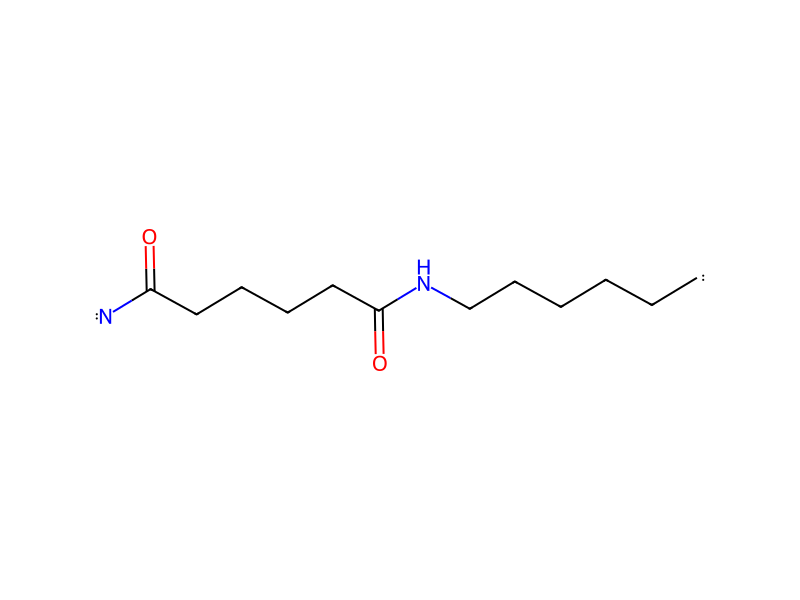
基本情報
- CAS
32131-17-2- 標準SMILES
[CH]CCCCCNC(=O)CCCCC([N])=O- InChIKey
LOCYSVHOSYQGOV-UHFFFAOYSA-N- 分子式
- C12H20N2O2
- 平均分子量
- 224.3 g/mol
- 単同位体質量
- 224.15247789
名称と識別子
- 優先名称
- Nylon-66
- 現地名
- ナイロン 6/6
- 英語名
- Nylon 6/6
- 分子式
- C36H66N6O6X2
- 分子量
- 678.95
名称と別名
Nylon-66RefChem:1093341608-706-6ナイロン6/6ナイロン 6/6ナイロン-66ナイロン66ナイロン-6/6NYLON 6Poly[imino(1,6-dioxo-1,6-hexanediyl)imino-1,6-hexanediyl]Nylon 6/6 pelletsPOLY(HEXAMETHYLENE ADIPAMIDE)
名称をさらに表示
Nylon 6/6,Poly(N,N′-hexamethyleneadipinediamide, Poly(hexamethylene adipamide)Nylon 66 powderNYLON 6,6 POLYMERS[-CO(CH2)4CONH(CH2)6NH-]nPOLY(HEXAMETHYLENE DODECANEDIAMIDE)PA-66
データベース識別子
- CAS
32131-17-2- PubChem CID
- 36070
- EC Number
- 608-706-6
物性
構造計算による物性
- XLogP
- 1.4
- 極性表面積
- 47.2 Ų
- 水素結合供与体数
- 1
- 水素結合受容体数
- 2
- 回転可能結合数
- 10
- 重原子数
- 16
- 形式電荷
- 0
- 複雑度
- 205
実験および物理化学的性質
Cosmetics
Cosmetic ingredients (Nylon-66) -> CIR (Cosmetic Ingredient Review)
Bulking; Viscosity controlling; Opacifying
物理化学的性質
- 融点
- 250 · 250-260 °C(lit.)
- 比重(密度)
- 1.47 g/mL · 1.47 g/mL at 25 °C
- 屈折率
- 20 · n20/D 1.565
- 溶解性
- 強プロトン供与溶媒、酢酸、フェノール類:可溶
- 外見
- ペレット
- 安定性
- 安定。強酸化剤、強塩基とは相容れない。
- 化粧品成分の機能
- 増量剤不透明剤粘度制御
- InChI
- 1S/C12H24N2O2/c1-2-3-4-7-10-14-12(16)9-6-5-8-11(13)15/h2-10H2,1H3,(H2,13,15)(H,14,16)
- InChIKey
- QDBQXOAICGSACD-UHFFFAOYSA-N
- SMILES
- C(CC(=O)NCCCCCCNC(=O)CCCCC(=O)NCCCCCCN*)CCC(=O)NCCCCCCNC(=O)CCCCC(*)=O |$;;;;;;;;;;;;;;;;;;;;;;;;;;;;*;;;;;;;;;;;;;;;;;;;;*;$|
- 表面張力
- 46.5 mN/m · 46.5mN/m at 20°C
- EPAの化学物質情報
- 1 · Poly[imino(1,6-dioxo-1,6-hexanediyl)imino-1,6-hexanediyl] (32131-17-2)
安全と法規制
安全情報は参考情報です。供給元の安全データシート(SDS)、適用法令、専門家による評価に代わるものではありません。
GHS分類
GHS Classification
This chemical does not meet GHS hazard criteria for 88.5% (177 of 200) of all reports.
Warning
H315 (11.5%): Causes skin irritation [Warning Skin corrosion/irritation]
P264, P280, P302+P352, P321, P332+P317, and P362+P364 (click each P-code to see the statement)
Aggregated GHS information provided per 200 reports by companies from 2 notifications to the ECHA C&L Inventory.
危険有害性情報
Hazard Classes and CategoriesSkin Irrit. 2 (11.5%)
毒性情報
Toxicity SummarySafe in the present practices of use and concentration. Ingredient, concentration, and use information are available in documents discoverable at https://cir-reports.cir-safety.org
安全データ
- wgk
- 3
- tsca
- TSCA listed
- safety_code
- 24/25
- 自然発火温度
- 752 °F
- ストレージクラス
- 11 - Combustible Solids
化学と産業
用途と製造
UsesCIR ingredient: Nylon-66
Use ClassificationCosmetics -> Bulking; Viscosity controlling; Opacifying
応用分野
用途衣料,産業資材
説明Nylon 6,6 was first developed in 1935 by W.H. Carothers at DuPont and patented in 1938 for use as a textile fiber. It was originally given the name Fiber #66. The fibers are known to be strong, tough, and elastic. Importantly, as opposed to traditional fibers such as cotton, wool, and rayon, nylon fibers are glossy. They are extruded through a spinneret with a circular or trilobal cross section shape. Nylon 6,6 fibers can be used individually, i.e., as monofilaments, for brushes, surgical sutures, tennis strings, and fishing lines. Nylon 6,6 fibers are used for clothing, carpets, tire cords, conveyor belts, and brushes. Nylon 6,6 exhibits excellent dyeability and are twice as durable as Cotton (see Canvasetc.com). Nylon is sometimes coated with plastic, such as vinyl, to produce thin, lightweight waterproof fabrics.
使用Nylon 6/6 can be used as nanofibers for the fabrication of support materials for osmosis membranes. It can also be used in the formation of the nanofibrous membranes as separators in lithium-ion batteries.
一般的な説明Nylon 6/6 is a thermoplastic material with good mechanical properties like elastic modulus (~21 MPa) and peak stress (~6.5 MPa). It also has good thermal stability and flexibility that makes it useful in the packaging of food items.
解説絹糸のような繊維を人工的に作ることをめざし,米のデュポン社で 1927 年からカロザースがポリマ ーの合成研究を始めた.(分子が単独な状態を単量体 monomer, 2分子が合体したものが二量体 dimer, 分子が多数連結したものを多量体 polymer という).小さい分子を無限に連結させて巨大な分子を生成 する反応を重合という.カロザースは2種類の分子を反応させて交互に連結させようとしたが,重合 反応が途中で止まり,ある一定の長さを超えられない,という問題に直面した.種々検討したところ, 反応の際に生じる水分が重合を止めていることがわかった. そこで,水分を徹底的に除去することで,人工繊維の合成 に成功した.ただし,熱や薬品に弱いと商品価値はない. カロザースはさらに開発を進め,1934 年にナイロンを発明 した.それは強くて弾力性があり,高温にも耐えられる繊 維であり,ストッキングなどの商品として販売され人気を 博した. ナイロンといっても,合成原料の種類によって色々なものが できる.現在では,これらすべてをまとめてナイロンと呼ぶ. 上の図のような 2 種類の分子からなる直鎖状の脂肪族ナイロン の場合には,ジアミン成分の炭素数を前に,ジカルボン酸成分 の炭素数を後につけて区別する.上の例では炭素の数が両方と も 6 個なのでナイロン 66 と呼ばれる.欧米ではナイロン 66 が 主力であるが,日本ではナイロン 6 が主力である.
関連反応
0 件
関連する反応はまだありません